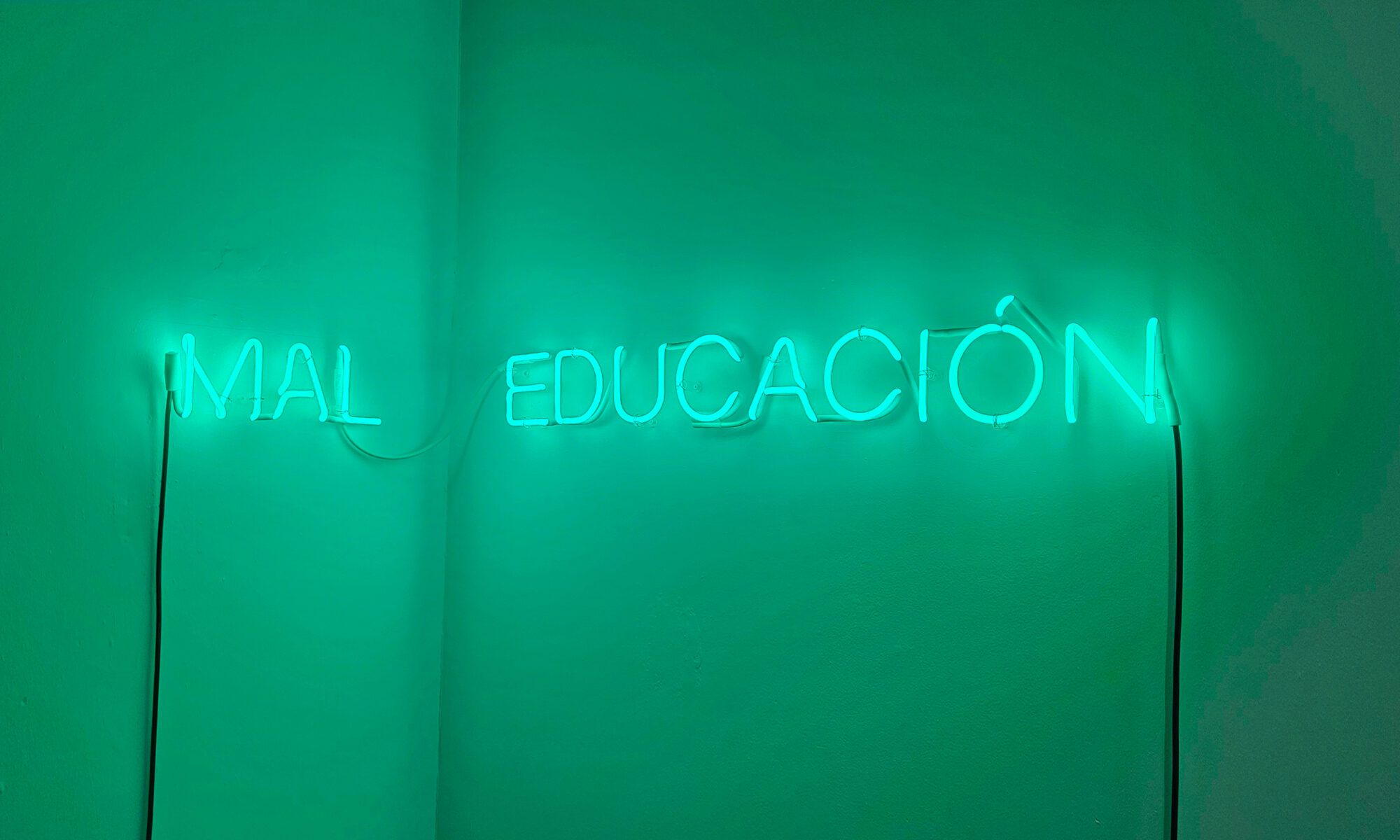
Crossing the threshold of the “Veieja Escuelera” exhibition at Synesthesia Gallery, Brooklyn, visitors find themselves enveloped in an eerie haze of green light that is both sensuous and disquieting. This is not the only defamiliarizing element since the floor is carpeted with artificial grass and the light works encompass phrases in multiple languages. On Anne Katrine Senstad’s turf, nothing is what it seems at first sight. A Norwegian artist living between New York and Oslo, she uses light both environmentally and sculpturally to expose the interdependence between perceptual experience, cognition, and ideological beliefs. Her practice engages both with the phenomenological inquiries of minimalist artists such as Dan Flavin and Robert Irwin and with the tongue-in-cheek propositions of Conceptual artists such as Joseph Kosuth and Bruce Nauman who have paired neon light with text to invite reflection on the function of art as sign.
Continue reading “Anne Katrine Senstad – Being (Un)schooled”Fugue Gallery Finds a New Home with Forbidden Fruit
Located along the central artery of Little Italy, amid a glut of red sauce joints with checkered tablecloths, sits the new home of Fugue Gallery. Having recently relocated from Canal Street to Mulberry Street, the space, a 1,000-square-foot brick loft, eschews white box sterility for something more atypical.
Continue reading “Fugue Gallery Finds a New Home with Forbidden Fruit”Dakota Gearhart: All Matter Is Alive
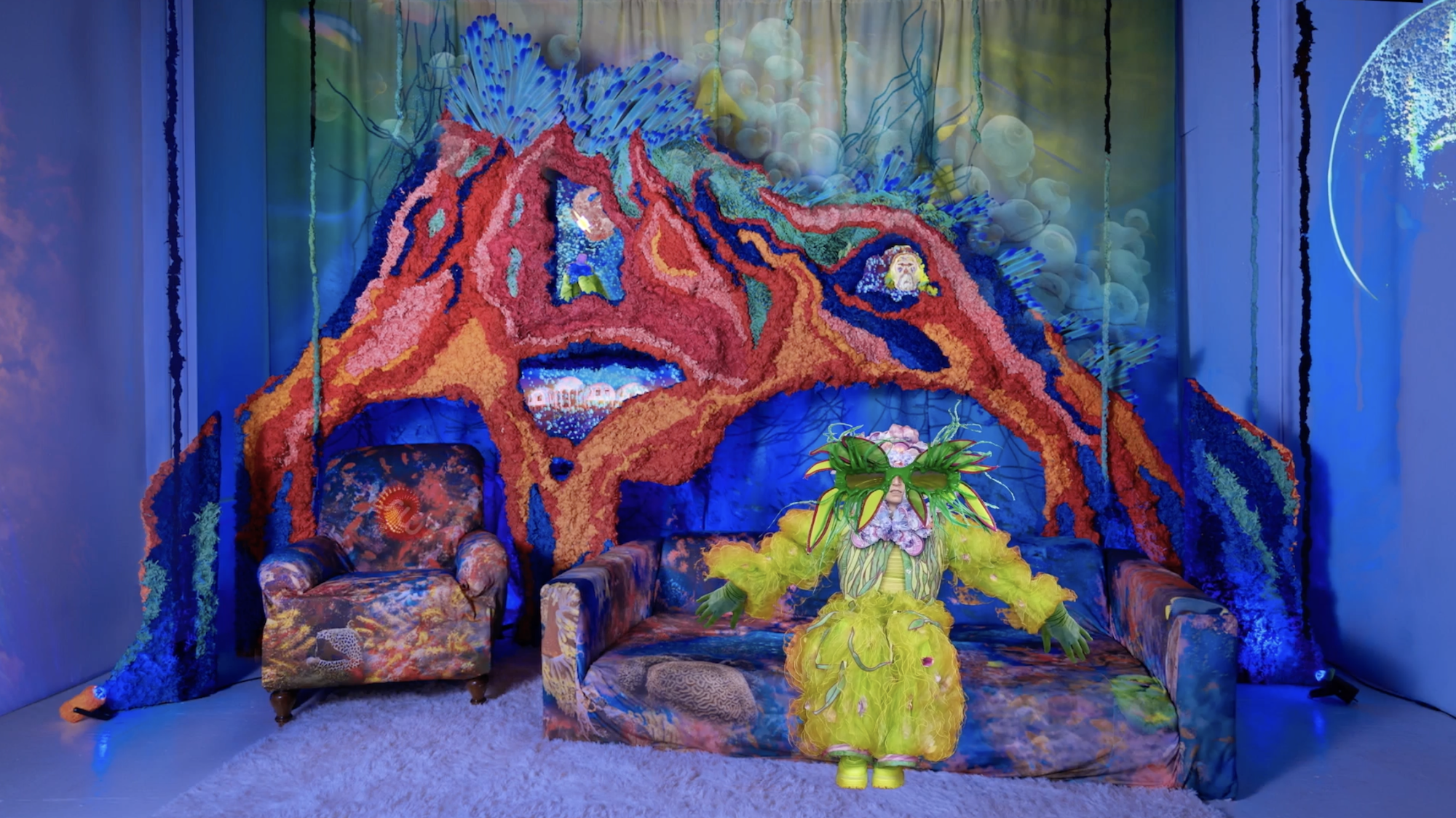
Dakota Gearhart grew up on a Florida coastline where algae blooms, sewage outflows, and bikini contests share the same shoreline, and her work has been carrying that mix of beauty, decay, and amusement into a much bigger frame ever since. Across animation, sculpture, performance, and sound, she builds video worlds where pixels sing, electricity becomes sentient, and the nonhuman shows up on equal footing with the rest of the cast. Her ongoing animated series Life Touching Life is hosted by Tiffany, a half-algae, half-woman figure who guides viewers through episodes shaped with collaborators — poets, scientists, activists, caretakers — whose lives already reflect the worldview the work is reaching toward. It’s funny, strange, and serious in roughly equal measure, which turns out to be the right register for the worlds it stages.
Continue reading “Dakota Gearhart: All Matter Is Alive”The Whole Water of a River at TSA Brooklyn with Byron Toledo
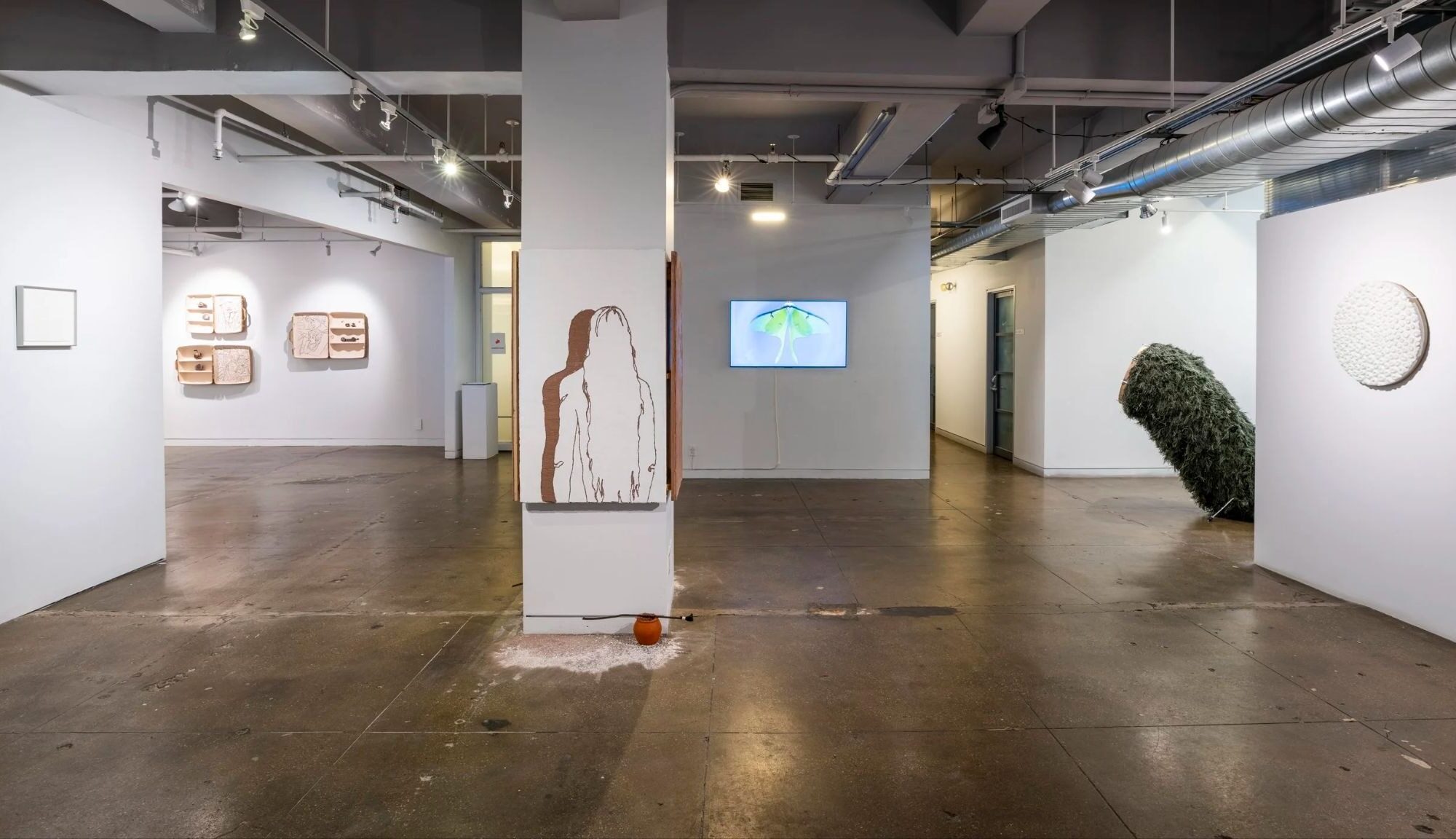
A dead opossum lying in a fetal position along a contaminated riverbank in Quito became, for Byron Toledo, both an encounter and a sculpture. That moment, tender and violent at once, is at the heart of The Whole Water of a River at Tiger Strikes Asteroid Brooklyn, an exhibition that follows the Machángara River from its mountain source through the city. Ceramic animals, distilled plant aromas, and sound recordings gathered along the watershed map the river as a living system that connects hills, ravines, plants, people, and the city itself. The project carries unusual stakes: in 2024, an Ecuadorian court ruled that the rights of the Machángara had been violated, a ruling for which Toledo’s own video work served as evidence. We spoke with the artist about walking the river, collaborating across disciplines, and what it means to make art inside an ecosystem fighting to survive.
Continue reading “The Whole Water of a River at TSA Brooklyn with Byron Toledo”After the Rains – How Nature Roots Us Home
When one thinks of nature, the first thing that comes to mind would be a park filled with leafy trees or perhaps a bouquet of vibrant flowers. With EFA Studio’s newest exhibition, After the Rains, artists challenge the idea of how nature can be represented.
Continue reading “After the Rains – How Nature Roots Us Home “Sound Art for the Ecological Turn by EndGrain at SMFA Boston
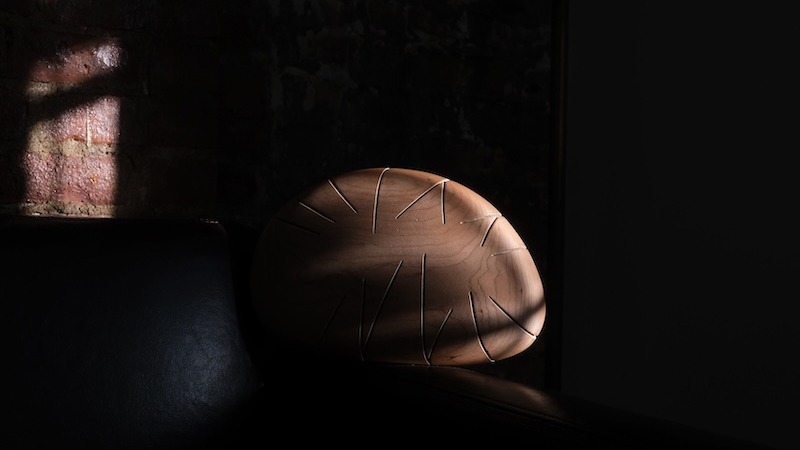
What can sound art contribute to the ecological turn? When the Taiwanese sound artist Huichun Yang described her process as getting to know the entire life of the tree that became her instrument, she had my attention. The entire creative arc of her process is rooted in reverence toward materials. Yang selects the wood, sculpts it into an arbrosan—an instrument first introduced to the world in 1996—and plays it by directly sensing its surface with her hands, using gestures that evoke repair and tending.
Continue reading “Sound Art for the Ecological Turn by EndGrain at SMFA Boston”How Malta Biennale 2026 Reimagines Site-Specificity
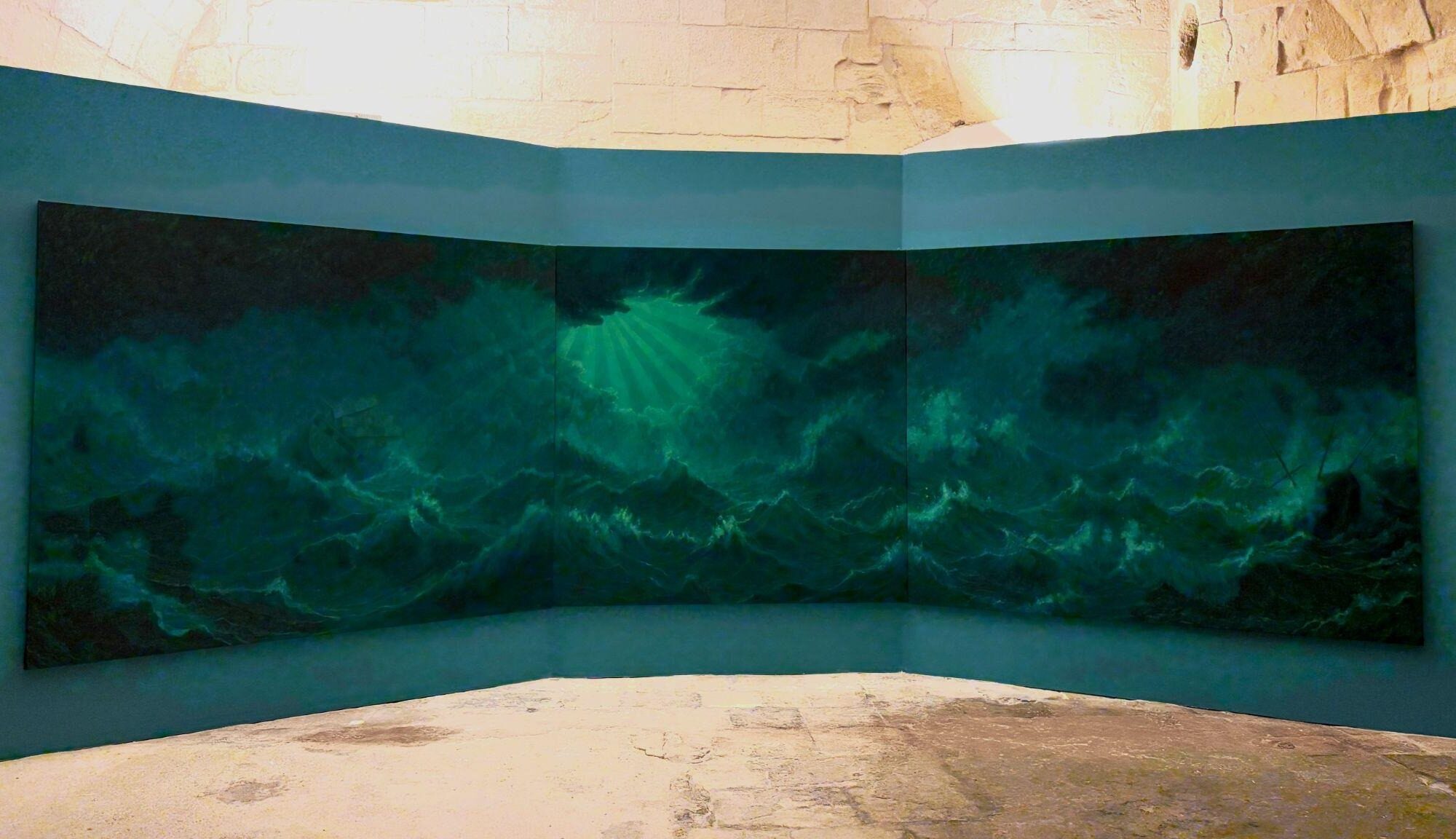
One is never prepared for the Maltese archipelago and its vertiginous dichotomy of antiquity and modernity; an exhilarating compound of ethnicities, languages, and cultures. Though one might consider it diminutive, during the three-day press preview, I traversed the main island, Malta, and its quieter, more pastoral and bucolic sister island, Gozo, in a flurry of taxis, ferries, and buses. (Comino, a nature lover’s sanctuary, remains largely uninhabited.) Malta occupies a distinctly liminal position within the Mediterranean world: a central island shaped across centuries by exchanges among Europe, North Africa, and the Near East. Situated a mere 60 miles south of Sicily and roughly an hour’s flight from Tunis, it has long functioned as a site of passage, encounter, and cultural layering—a geographic palimpsest upon which successive civilizations have inscribed themselves again and again.
Continue reading “How Malta Biennale 2026 Reimagines Site-Specificity”Floating in Three Acts- Keren Anavy at SUNY
Floating names a state of suspension, between sinking and surviving, between grief and the body’s refusal to stop. In Keren Anavy’s landmark solo exhibition, Floating in Three Acts, this condition is both subject and structure. The exhibition is built the way floating feels: without firm ground, without clear direction, with the question of outcome left open.
Continue reading “Floating in Three Acts- Keren Anavy at SUNY”Magical Thinking of Systems and Beliefs, at Tufts University Art Galleries
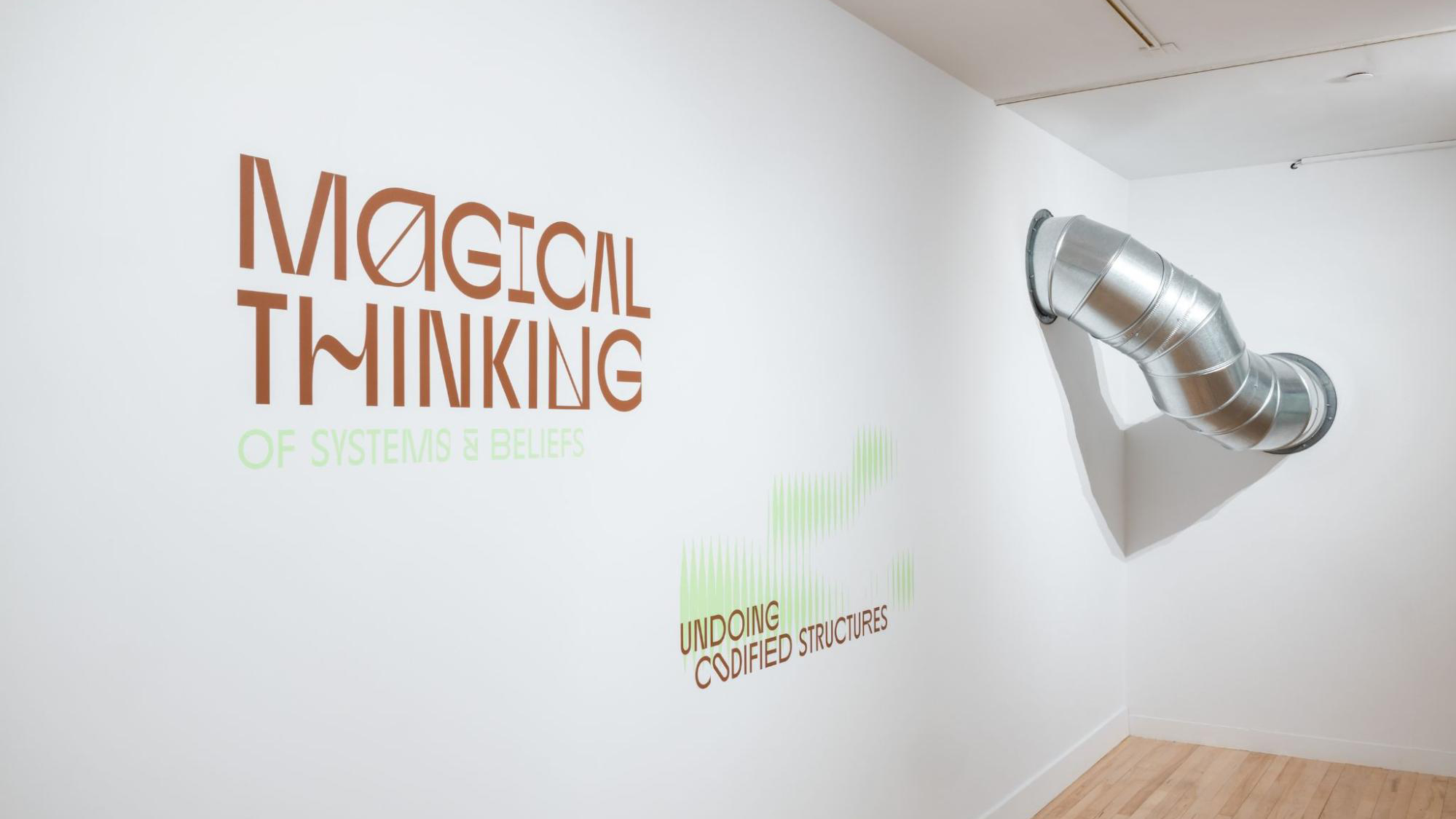
Would you have believed the sun revolved around the Earth? Possibly, since that was the ironclad determination of the bureaucracies in the 16th century. Slavery legally existed in the United States for centuries before there was even the slightest abolitionist movement. Which brings to mind, why do we adhere to beliefs today simply because they are propagated by governments and institutions?
Continue reading “Magical Thinking of Systems and Beliefs, at Tufts University Art Galleries”The 15th Shanghai Biennale: Does the Flower Hear the Bees?
Botany, I read in Zoë Schlanger’s bestseller The Light Eaters: How the Unseen World of Plant Intelligence Offers a New Understanding of Life on Earth, is full of groundbreaking discoveries these days (Schlanger 2024). We now know that plants have cellular conduits that allow propagation of electrical charges, that some plants release chemicals in the air to alert neighbors of insects, and that evening primrose increases its nectar’s sweetness when it senses the frequency of the hum of bee wings. While such plant-feeling, plant-talking, and plant-listening are not sustained by the same biological apparatus as ours, the functional parallel is apparent. Perhaps it is time to broaden our understanding of intelligence.
Continue reading “The 15th Shanghai Biennale: Does the Flower Hear the Bees?”