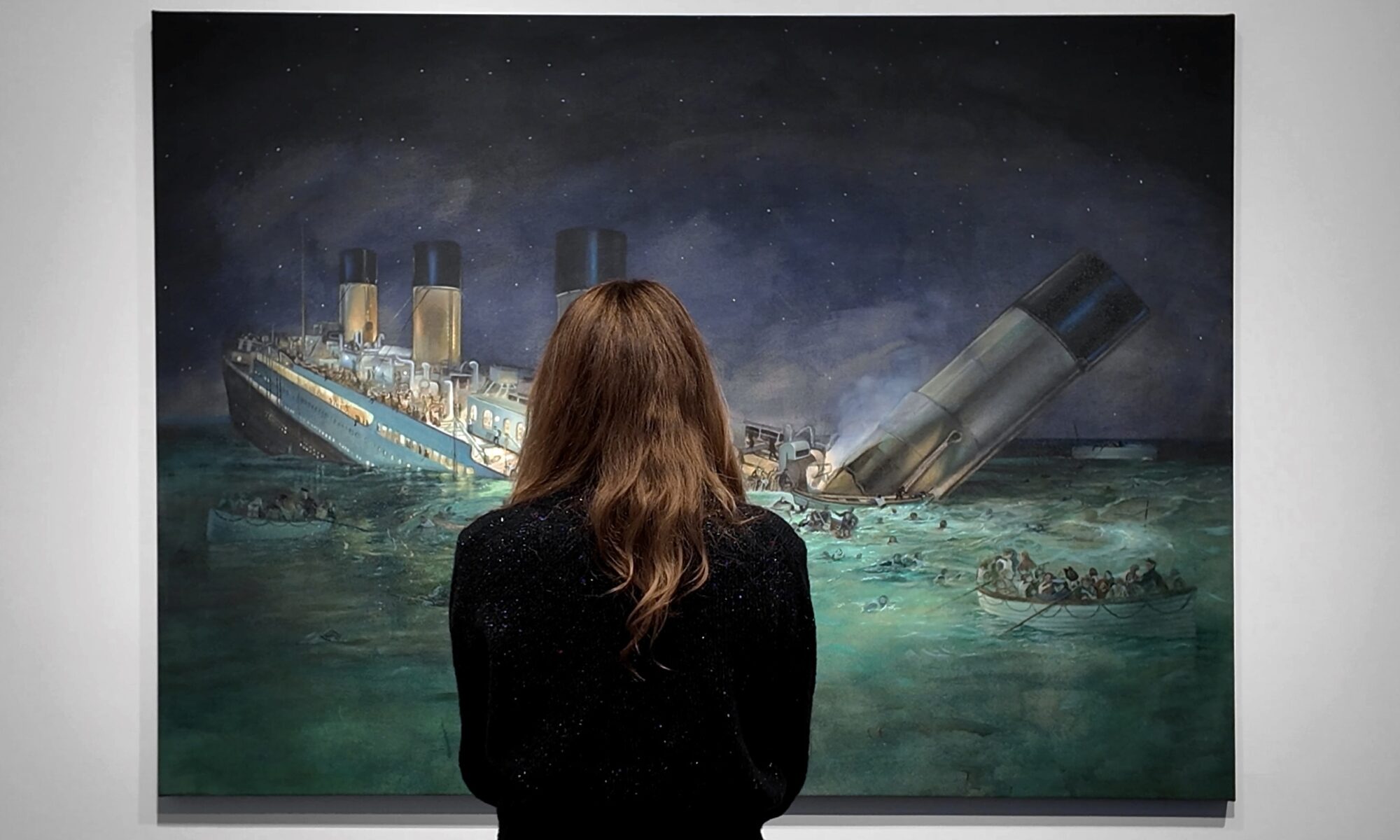
As a young girl, Claudia Bitrán would patiently wait for Britney Spears to come across the screen, then hurriedly hit Play and Record on the VCR, ready to rewind, rewatch, pause, and then pose, memorizing every nuance, note, mannerism, and movement. Born in Boston, raised in Chile, and now a Brooklyn-based multimedia artist, Bitrán’s work often imitates, recreates, and reimagines iconic artistry, from impersonating, painting, and paying homage to Britney Spears to recreating James Cameron’s 1997 film, Titanic, which Bitrán produced over the span of twelve years. Having first watched Titanic as a young girl, the splendor and sublimity of the ship, both in its triumph and tragedy on the seas, mesmerized her from the get-go, leading to a lifelong dedication to honoring and recreating the film through her own practice. Fascinated by spectacle, inspired by iconic artistry, Bitrán shares a glimpse into her artistic world and practice.
You first watched the world-renowned film, Titanic, as a young girl; what was it that you first connected to, and how has your relationship with the film evolved?
The sinking scenes were what first shocked me: the ship tilting, the plates crashing, the passages flooding, the ship cracking, the people falling into the water, the wide shot with all of the small details of the ship in the dark night. When I saw it, I vividly remember thinking, “Don’t blink, this is the most amazing thing I’ve ever seen in my life.” Then there was Rose and Jack’s relationship, which fed my teenage discovery of romance. In my remake, I’ve used endless ways of translating the ship sinking and the romance developing. Because how could I even begin translating that enormity? No option would suffice; that is why I ended up experimenting with so many materials and inviting so many different people. And as years go by, my perspectives and fantasies around love and production value have become more nuanced. Spending a third of your life working on something will most likely show how your relationship to that something evolves.
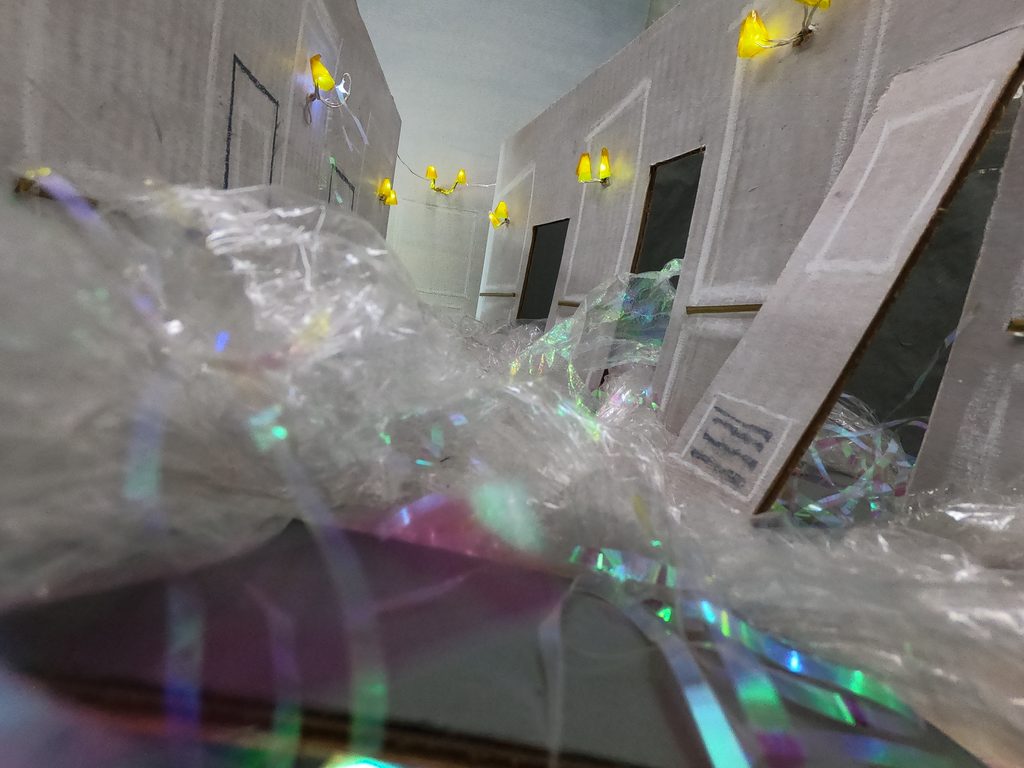
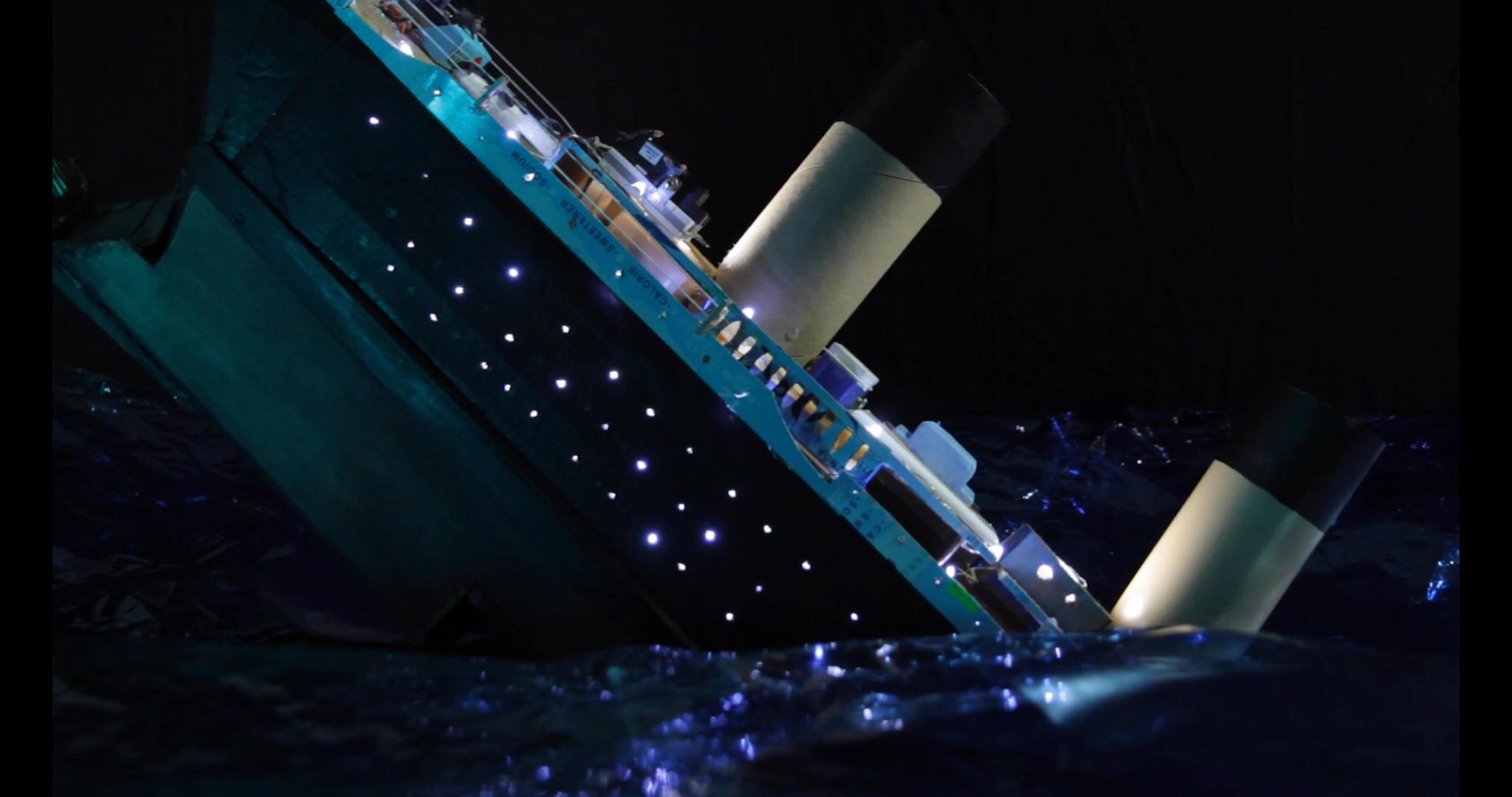
Your imaginative remake of James Cameron’s 1997 Titanic, most recently exhibited at Cristin Tierney Gallery, was filmed and produced across a span of 12 years. The cast members for each role constantly changed, but you consistently played Rose. What was it like to collaborate with over a thousand participants throughout filming, and what was the experience of living in Rose’s world alongside your own for so long?
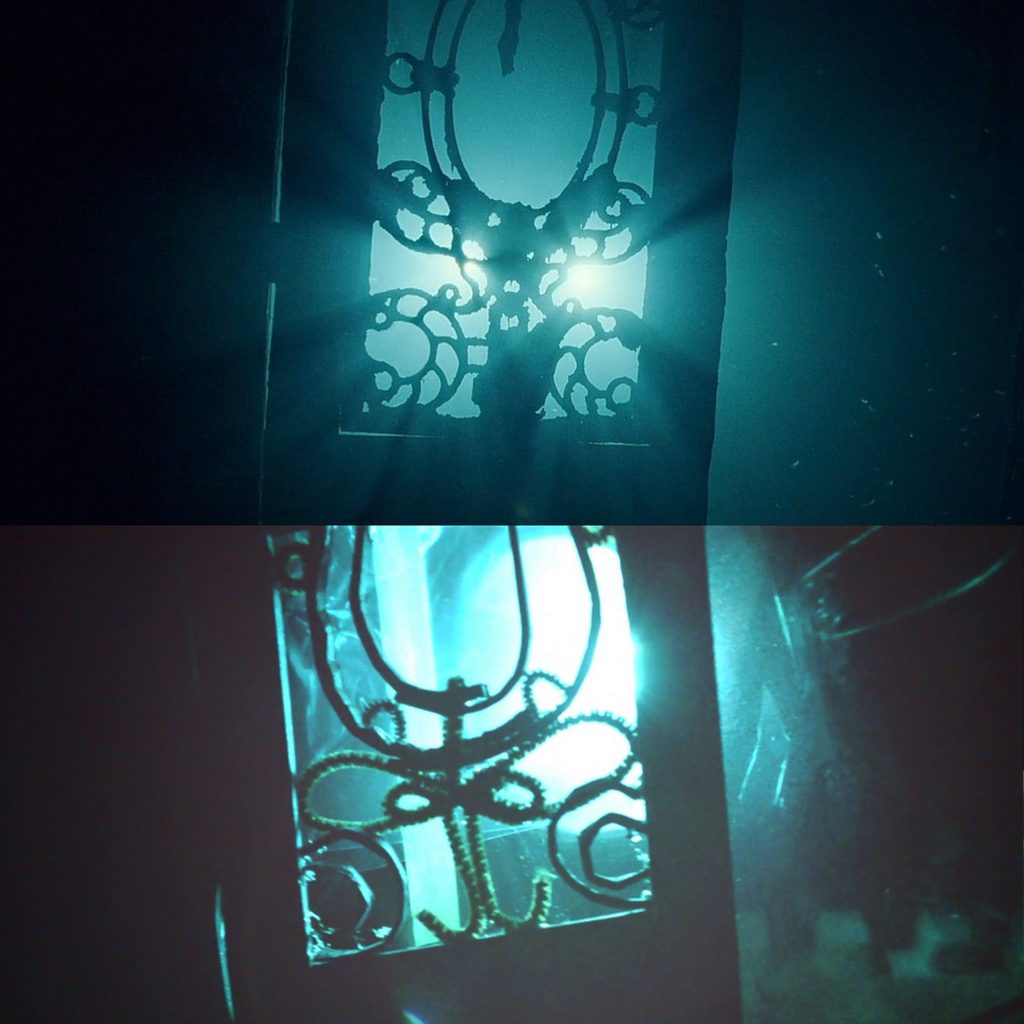
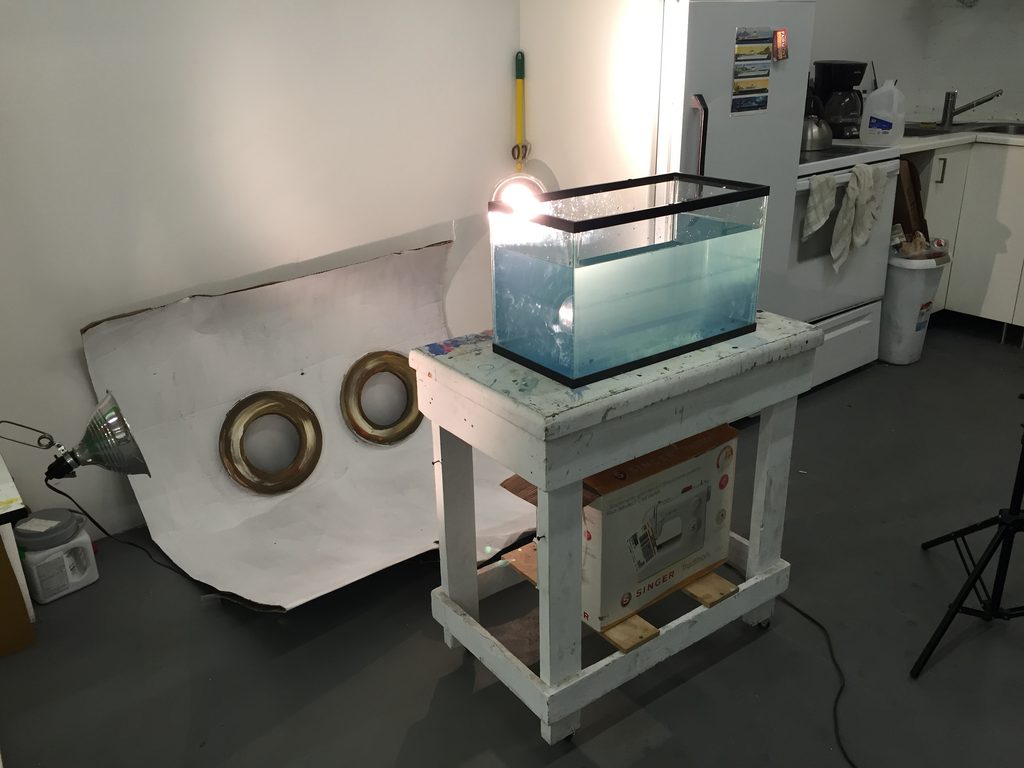
When I first started the project, I was told multiple times that it was too shallow an idea to become an “artwork.” So, pretty discouraged but still convinced, I started alone, making animations with small maquettes for the underwater scenes. After two weeks of animating 24/7, and after confirming that it was possible to imitate the scenes using cardboard, a light, and trash, I felt capable of doing the same with people. If I was able to draw it, it felt possible to remake it. I just had to scale up the models and paint the backdrops at a human scale, and so I did. I was able to recruit friends from my cohort at Skowhegan School of Painting and Sculpture to act in the party scene, draw me nude as Rose, and then act in some chaotic deck scenes. We had such a good time. Everyone chose who they wanted to be, and each person added their own take on the character they chose to become. That was the beginning of an avalanche of play, social experiments, and dynamics. I was possessed by the project and the infinite surprises and meanings that could derive from each material and from each individual.
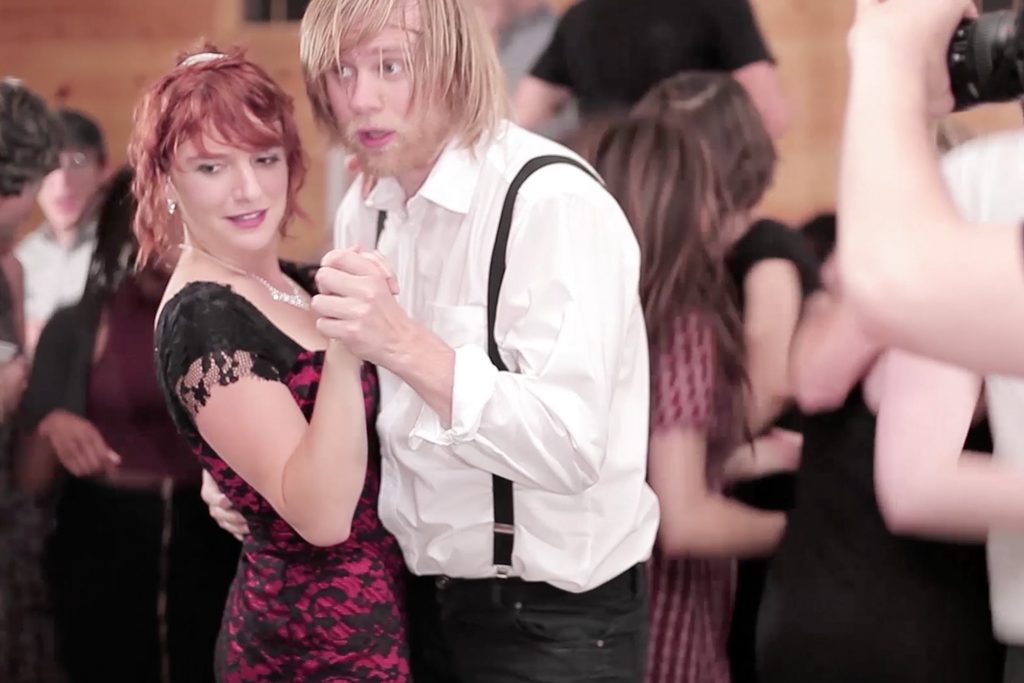
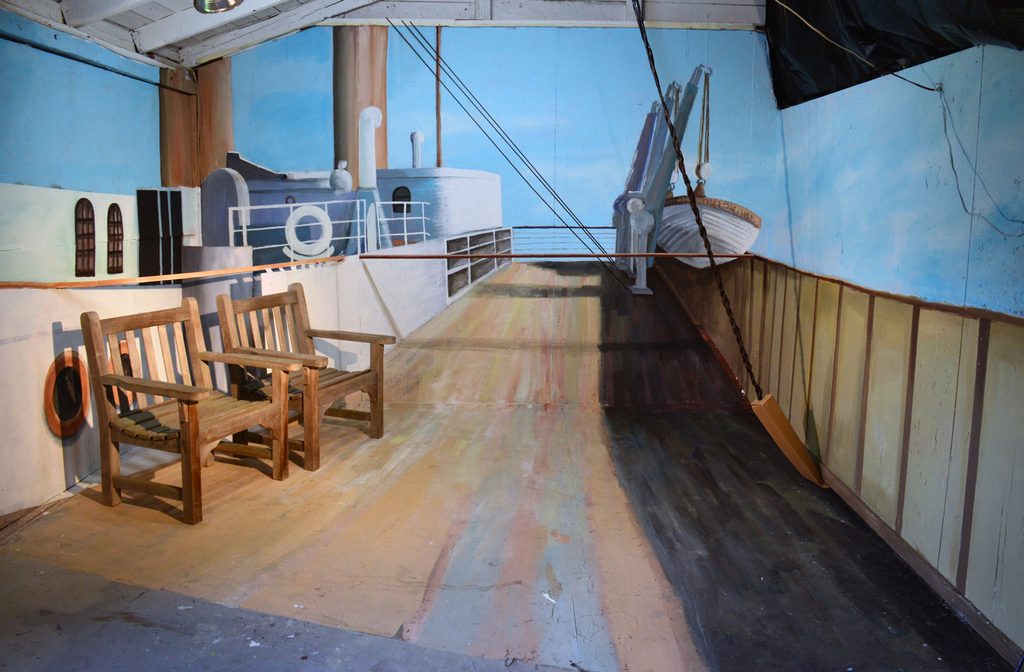
Remaking iconic artistry seems integral to your practice, from homages and impersonations of Britney Spears to your remake of the Titanic. What is the role of remaking and recreating within your practice?
Remaking popular spectacles is a method that I use to produce immediate and direct interaction with the viewer. It’s in the “find the differences” game that I can activate the viewer’s memory and projection. In imitation, I hope for viewers to relate to what I present on a practical and personal level. DIY production does not come without humor, accidents, improvisation, and openness. Translation has always been important to me, as my upbringing came with turbulent family dynamics as a child, 3 languages, navigating two religions at home, living between hemispheres, etc. I learned how to translate from a young age, adapt, perform, get into character, and get into the shoes of others very quickly. Imitation always changes the original, even if just slightly. The variations that I can get through playing with that coefficient of alteration are what inspire me.
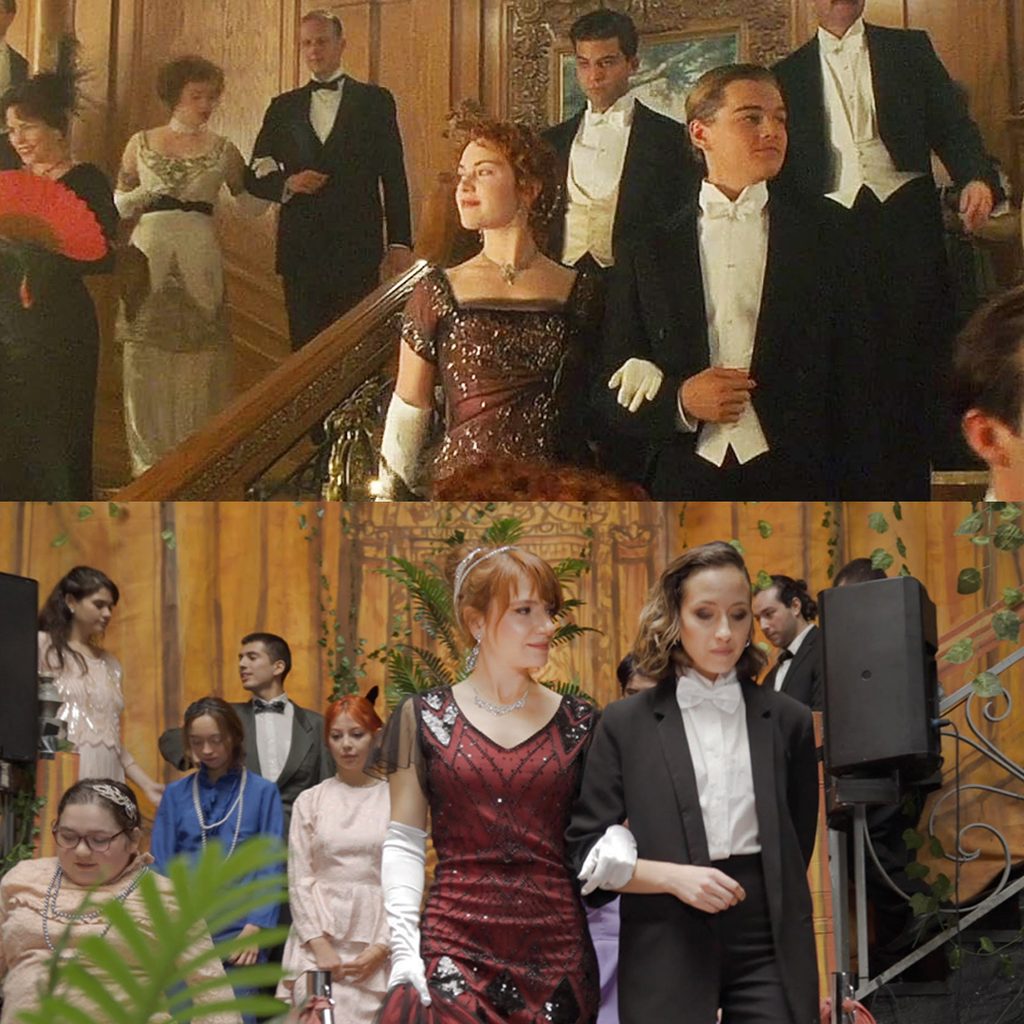
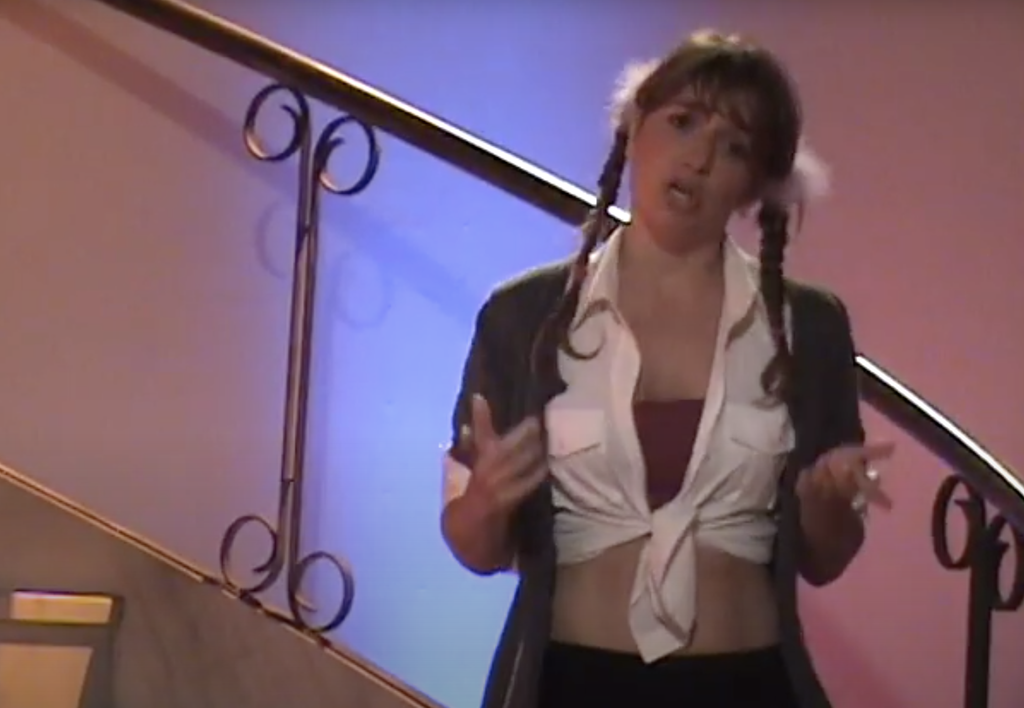
Part of your practice as a painter examines the circulation of photographs taken of pop culture’s iconic women, through your paintings of Britney Spears. How did Spears become your muse, and how do you approach sourcing and selecting the reference images as well as the compositional choices?
My fingers were always ready to press “Play+Rec” on the VCR. I was watching MTV all day, waiting for a Britney music video or interview to come on… I was recording everything Britney, then rewatching and pausing on stills, drawing her sets, and looking into the mirror, aiming to copy her tongue modulation (especially the letter L, tilting her head slightly to the left). Britney became a hardcore focus for me a little after Titanic became one. It was a time when my body was changing, and I looked at Spears and Winslet as possible futures of what my body might do as it developed. I copied their voices and movements. I did everything Britney did (and when I couldn’t, I faked it). When she was in crisis, I followed; I had a Blackout era. Jump 15 years in time, I was imitating Britney on a talent TV show in Chile. A few years after, I remade her videos using trash and a green screen. Five years after, I won a dance competition and was able to meet her in Las Vegas. I was also part of the Free Britney Movement. I then made portraits, paintings, and animations of her. I have never stopped making responses to her life. Britney Spears and Titanic keep me grounded.
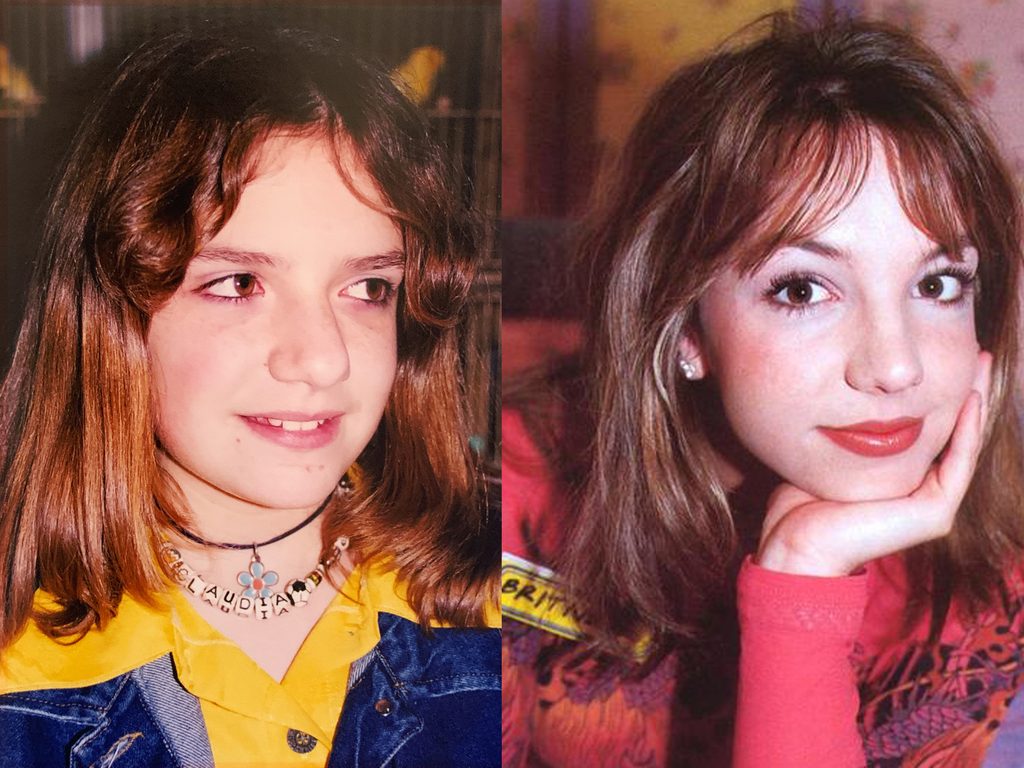
Your practice focuses on subject matter often associated with spectacle. How do you approach conveying and celebrating the beauty, marvel, and fantasy in the artistry that you are remaking whilst simultaneously navigating the elements of tragedy or adversity involved?
I have various bodies of work, very different from one another formally speaking, but they all have one thing in common, which is the fall and/or the failure of their central character. Titanic sinks every time we retell it; Britney twirls in her repeated scandals, epic fails multiply exponentially and loop accidents forever and ever, backup dancers will always age and break, white shoes will inevitably get dirty. The fact that we know the tragic outcome and want to watch it over and over is what moves me. Basic storytelling! With which materials and in which manner can I depict the glory and the disgrace of models that are ubiquitous, while trying to make these stories worth watching again and again?
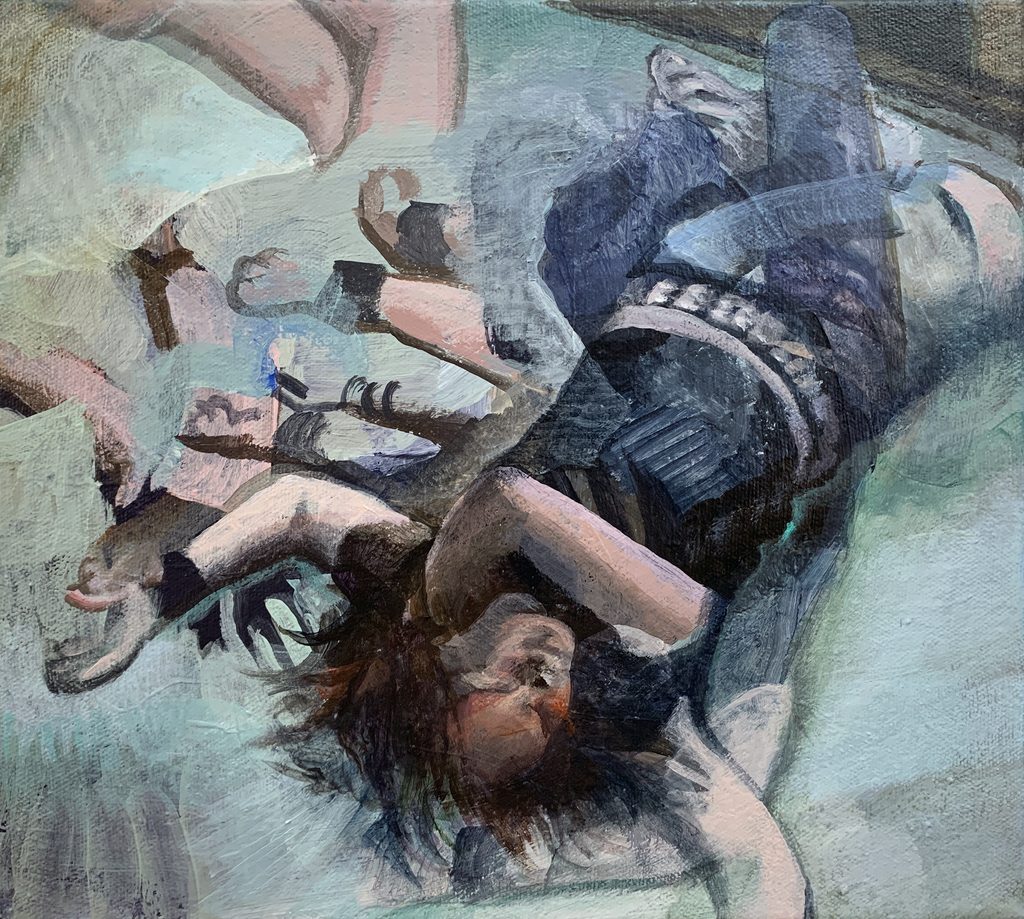
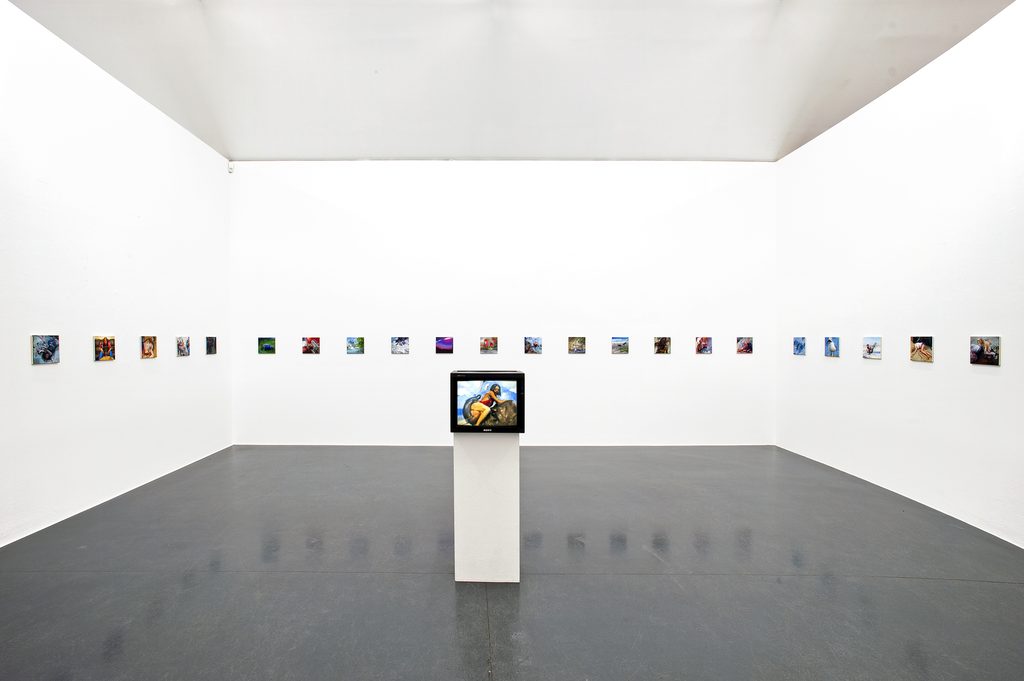
The resourceful, innovative, and craft-like visuals within your production differ from James Cameron’s Titanic, bringing new life to Jack and Rose’s world whilst making the retelling entirely your own. What is the role of materiality within your work, and how did you source the materials used?
For me, material choices and processes come first and foremost, as a gut response. Only after that -but not too long after- I look for the words to make sense of that intuition. Materiality is meaning, and translating materiality can inject uncanny parallels, comparisons, therefore commentary, and sometimes entirely new meaning. If you record cardboard cracking inside a bathroom, it will sound like the deck of a transatlantic splitting in half. A janky, low-frame-rate painting animation will parallel the low resolution of a GIF. Making a miniature submarine out of a sponge, and so on. I spend most of the day looking at the stuff in my surroundings and thinking, “What if this thing was made out of that?” How literal or what level of rawness do I want to apply? I don’t like buying stuff, so I usually make things as I find materials or opportunities. There’s so much stuff everywhere!
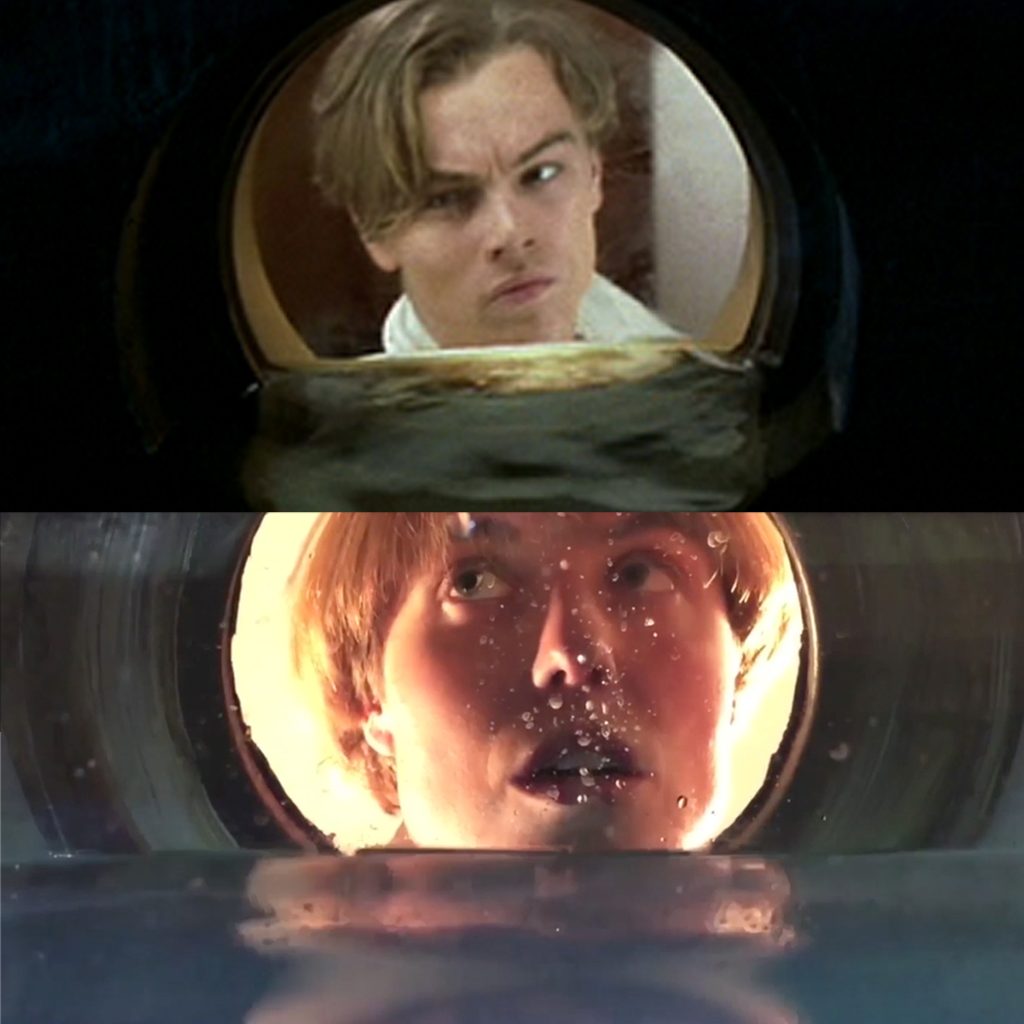
A film production of this duration must have resulted in copious amounts of footage. Can you take us through the process of filming and how you approached the editing?
I have 16 TB of material for my remake of Titanic. Because I am a self-taught video maker, and because I’m a nostalgic hoarder, I always chose to film more rather than less, just in case I need it, and just so that I don’t forget it. More cameras for the backstage, more angles, more options! It is kind of daunting, but the beauty lies in being able to relive memories every day when I open the hard drive and edit. I love editing.
After over a decade dedicated to creating something so grand, what was it like to “finish” and screen the final film? When and how did you reach the conclusion that it was completed and ready for debut?
I don’t think I finished anything!!!
As a multi-media artist, working across film, performance/impersonation, painting, drawing, sculpture, and dance, can you take us into your studio practice outside of filming? What might a studio day look like?
Fun question! My studio is relatively small, but it is a bit like a Transformer; I built it out so that it can become a whole new space every time I move between projects. The various stations are kind of ready when I need them; I just need to play Tetris a bit: pull the projection screen or the green screen down, flip the mirror, extend the tripod, everything is on wheels, the camera holders are clipped in different spots, and all painting drawers are labeled; there are hangers for large drawings, pulleys for paintings… I even have a merch-making station and a costume box.
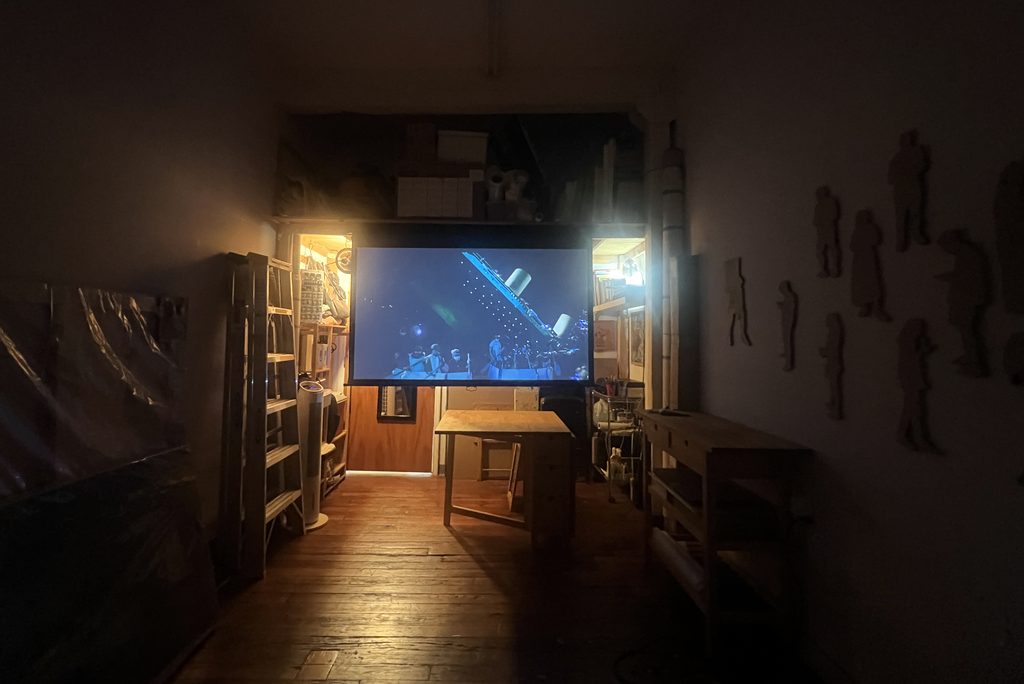
Where do you envision your work going next?
Recently, I have been pushing my White Shoes series to outdoor and public spaces. For Titanic, my show at Cristin Tierney was incredible this year, and we are preparing a touring schedule, hoping that it can continue its life in various museums and exhibition formats. (Open to receiving more invitations!) It will be shown next year at the Museum of the Moving Image, among other Museums. I also hope to show Titanic as a single-channel film that can be screened in movie theaters… like a documentary of sorts.
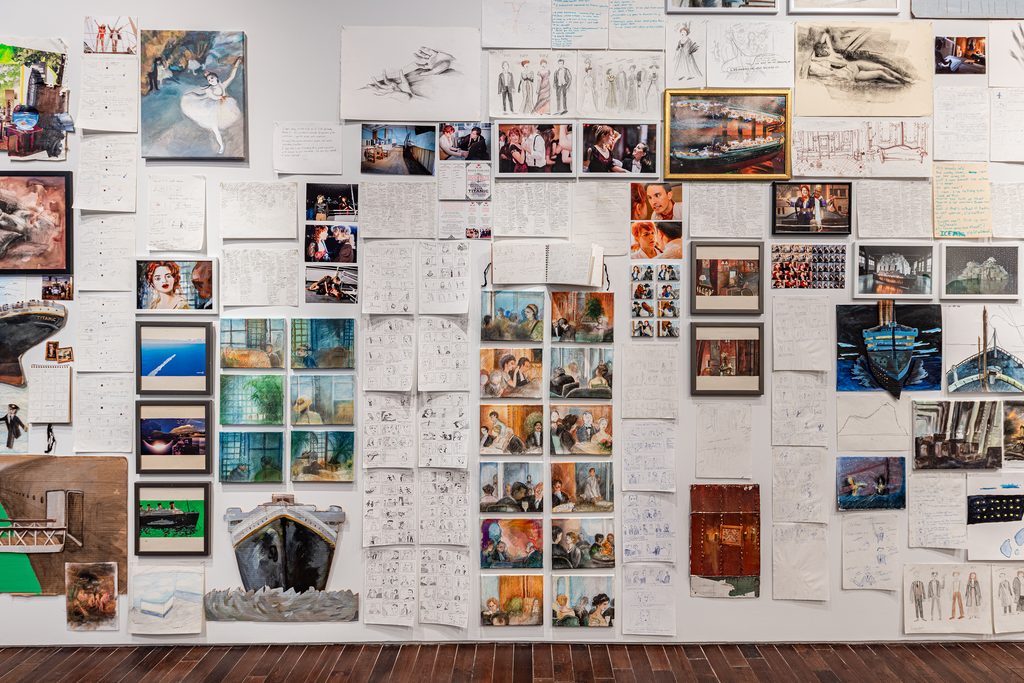
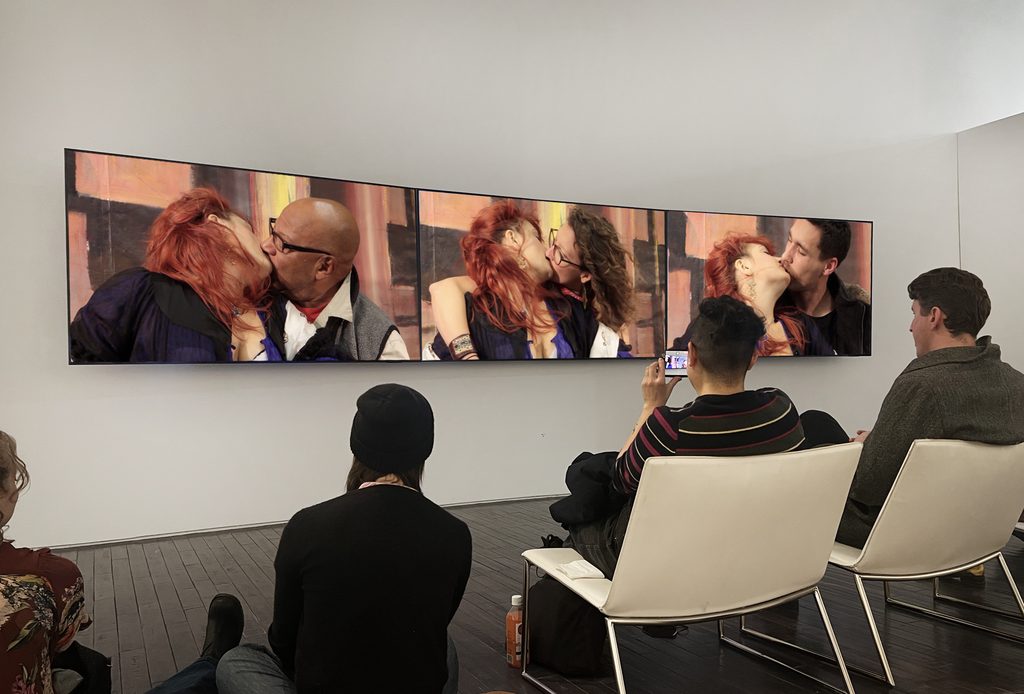
Many artists express the importance of a certain level of obsession with one’s craft to fully develop their practice and body of work. You mentioned on Spectrum News NY1 that at one point you rewatched the Titanic daily; what role does that level of dedication and passion play within your practice?
In a world that is unpredictable and completely out of whack, we can count on very few things that stay the same. Movies stay the same. Titanic is an anchor for me; it’s grounding to rewatch it because it is a form of stability. Yes, I still watch parts of it every day, and if I don’t, I just kind of murmur the lines as I’m walking around.
Make your tax-deductible donation today and help Art Spiel continue to thrive. DONATE
About the artist: Claudia Bitrán is a Chilean painter, video artist, and educator based in Brooklyn, NY. She holds an MFA from Rhode Island School of Design (2013) and a BFA from Universidad Católica de Chile (2009).
Her upcoming solo exhibition opens in 2027 at the Museum of the Moving Image in New York. Selected solo exhibitions include Cristin Tierney Gallery (NY), KIOSK (Belgium), Centro Cultural Matucana 100 (Chile), and Walter Storms Galerie (Germany). Her awards include a Guggenheim Fellowship (2023), FondArt Nacional Audiovisual grants (2022, 2023), and grants from the Foundation for Contemporary Arts and Jerome Foundation (2015).
Bitrán has participated in numerous residencies, including Skowhegan School of Painting and Sculpture, Roswell Artist-in-Residence Program, Smack Mellon, Wassaic Project, and Bemis Center. She currently teaches painting at Lehman College and lectures internationally. Her work has received coverage in publications such as The New York Times, Artnet, and The Brooklyn Rail. @claudiabitran
About the writer: Ella Jackson is a New York–based painter and creative, serving as Editorial Coordinator at Art Spiel. She earned her Bachelor of Fine Arts in Painting from Pratt Institute, where she developed a rigorous studio practice grounded in compositional exploration and critical dialogue. Her curatorial work includes an exhibition at The Blanc Gallery, and her artwork has been presented in shows such as her solo exhibition at Steuben Gallery and a group exhibition at IW Gallery. @ellagracejackson_