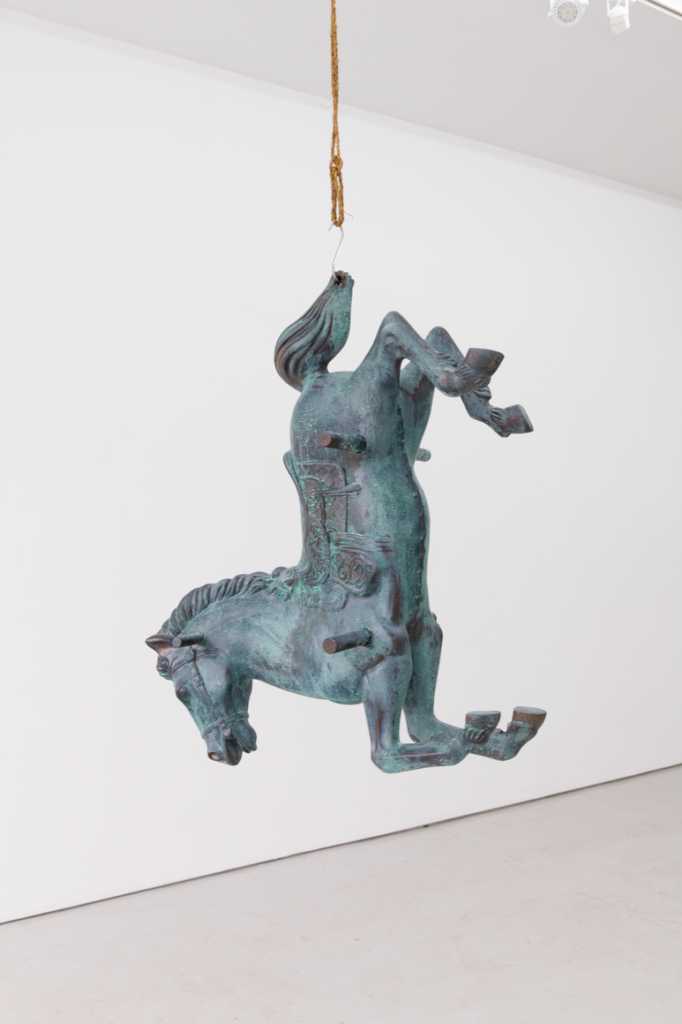
In Andrius Alvarez-Backus’s solo exhibition, I Want to Know, I Need to Know, at Eli Klein Gallery, the work Are You Still Strong Enough? (2025) emerges as the visual center of the show’s underlying tension. A My Little Pony toy hangs vertically, the surface covered in bronze patina, while the incision along its abdomen is carefully stitched closed. What was once a lighthearted and slightly absurd object becomes, through this treatment, both fragile and solemn. Its form evokes a body after surgery, yet also resembles a preserved specimen. However, the meticulous stitching does not suggest that the wound has truly healed. Instead, the seam runs along the body, leaving the incision exposed and gradually becoming part of the sculpture’s structure. The suturing does not erase the rupture; it keeps the rupture visible. The wound is no longer simply a trace of intervention, but the structural element through which the work sustains its tension.
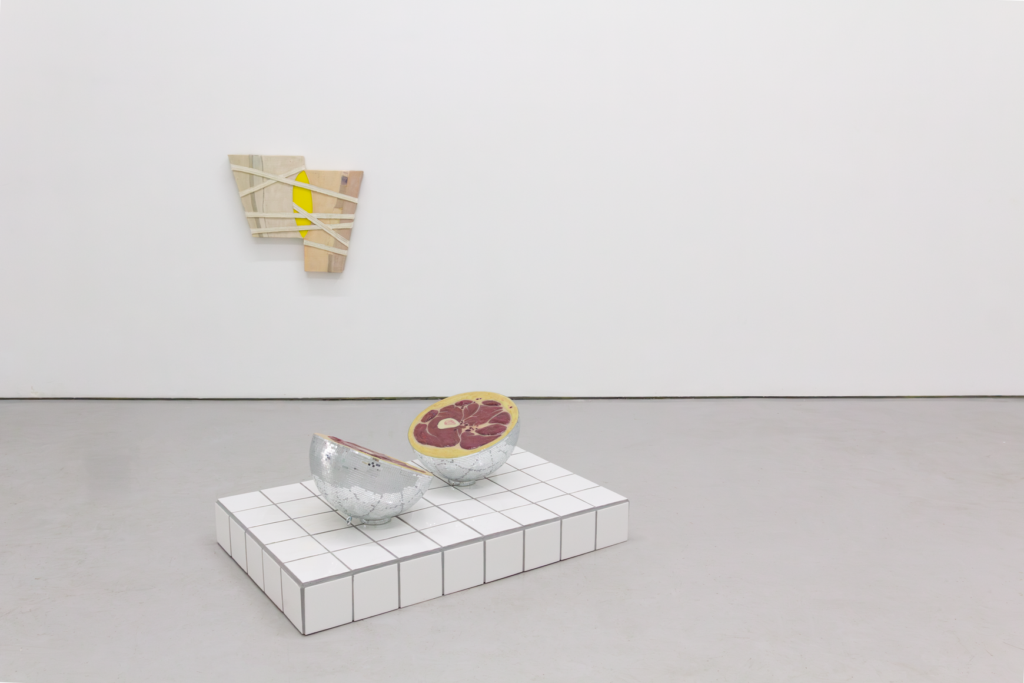
This condition of being opened yet never fully explained runs throughout the exhibition. Born into a family of Filipino medical practitioners, Alvarez-Backus has long been influenced by surgical research, translating gestures of dissection, incision, and suturing into a sculptural language. In I Was Softer Then (2025), a disco ball is dismantled and reassembled, exposing its internal structure like a cross-section of an anatomized body. The work seems to invite the viewer to read its interior, yet that reading quickly collapses. Even when the inside is revealed, meaning remains suspended near the surface. What the work produces is not knowledge, but a condition that approaches knowledge without ever fully arriving at it.
The exhibition’s title, I Want to Know, I Need to Know, itself suggests a form of epistemic anxiety. There is a subtle distinction between wanting to know and needing to know: the former resembles desire, while the latter carries a more urgent compulsion. The two phrases nearly overlap in meaning, yet diverge slightly in tone. In many cultural frameworks, opening the interior is often imagined as the beginning of understanding. Yet, as Édouard Glissant writes, “opacity is not enclosure; it is the right to remain irreducible.” In Alvarez-Backus’s sculptures, the open structure does not yield a definitive answer. Incisions appear repeatedly, yet the interior remains resistant to full interpretation. Although these works continuously suggest a pathway inward, understanding itself is held in suspension.
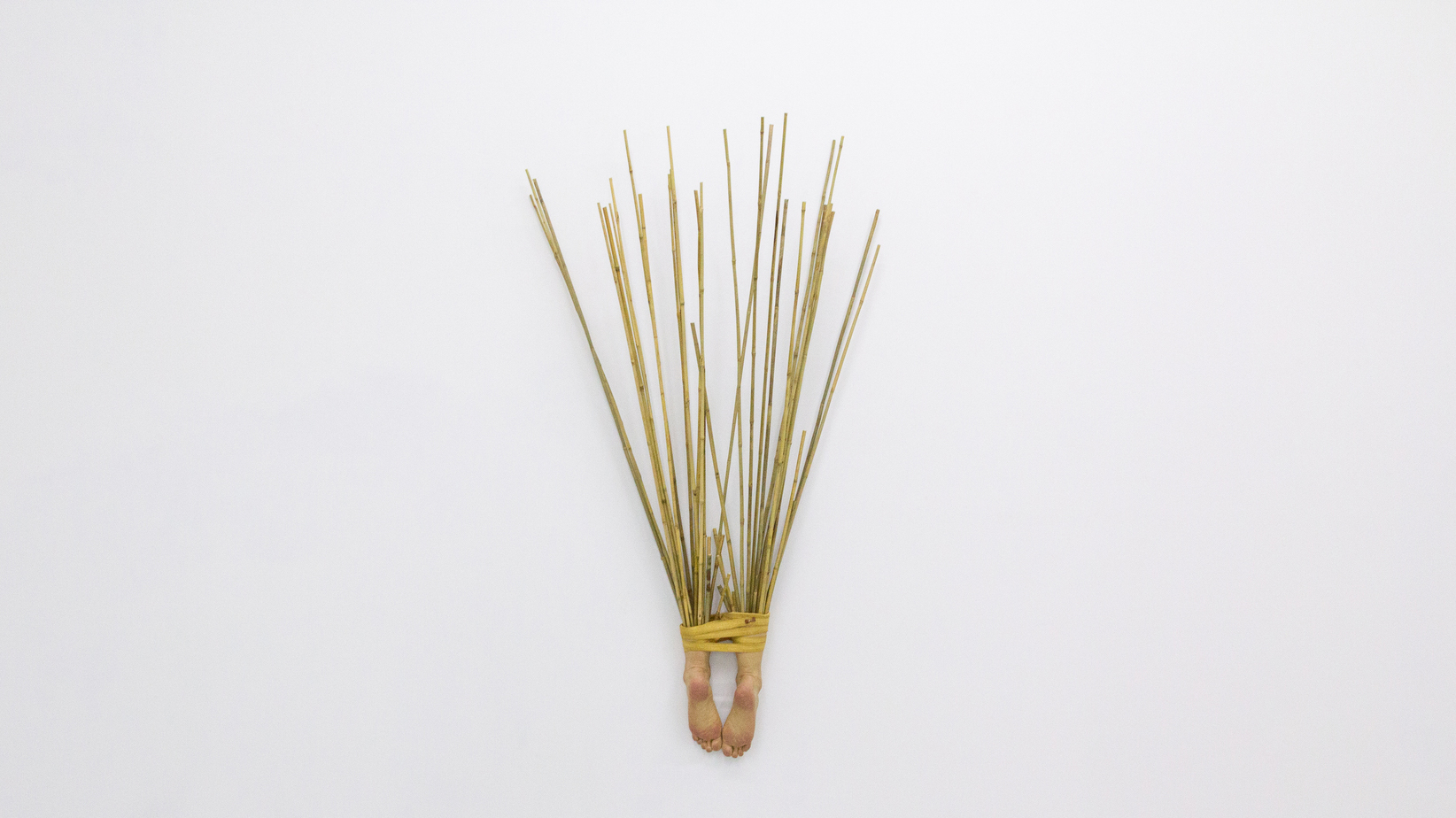
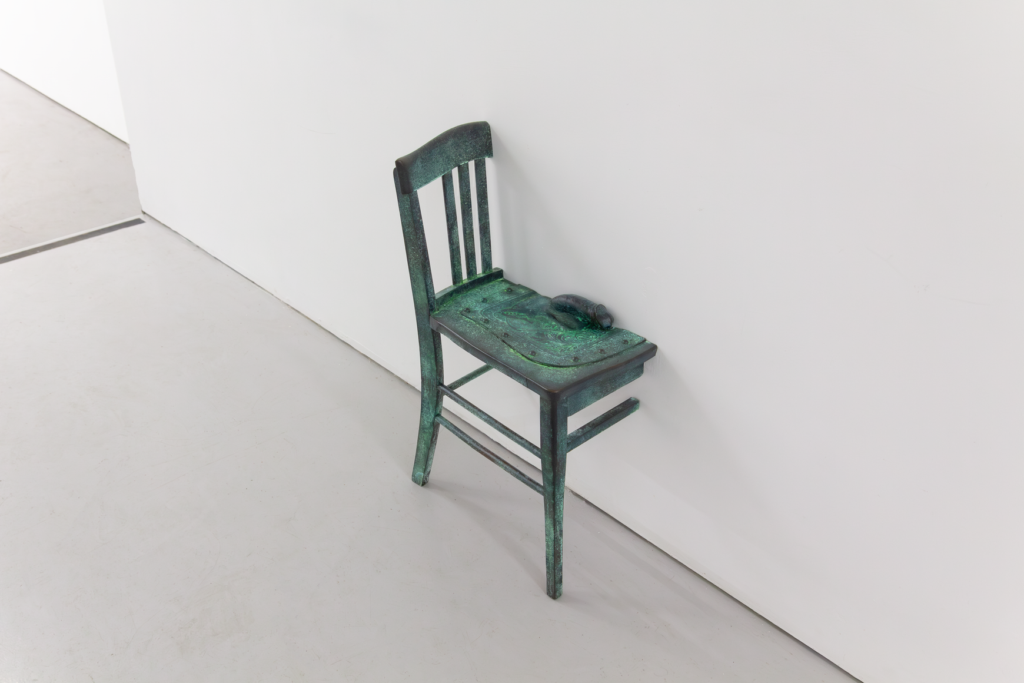
This instability gradually extends into the shifting boundary between body and object. In You Took Your Slow With Me (2025), bamboo shoots grow from a displaced pair of feet, their new limbs supple and elastic, as if the body were extending into another form of life. Meanwhile, in Mine Belongs to Who (2025), a fractured chair appears to support half of a body, blurring the line between furniture and anatomy. Along the gallery wall, textile collages further intensify this sensation. Torn fabrics are reconnected and stretched back together, resembling a layer of peeled-back skin that maintains tension between rupture and repair.
As Édouard Glissant suggests in Poetics of Relation, “the right to opacity” does not demand that everything be fully explained. In I Want to Know, I Need to Know, the meaning of these sculptures does not reside simply in the exposed structure itself, but in Alvarez-Backus’s persistent maintenance of this unreadability as a material condition. Incisions and sutures do not lead toward resolution; they hold the interior in suspension. This opacity becomes generative. It exposes, delays, and moves between rupture and structure. It remains restrained yet unstable, charged with a continuous tension of becoming. The works in I Want to Know, I Need to Know seem to linger in an unfinished moment, as if one more incision or another act of suturing might once again shift the meaning of what we see.
Andrius Alvarez-Backus: I Want to Know, I Need to Know, at Eli Klein Gallery
398 West Street, New York, NY 10014. On view through May 9, 2026. @elikleingallery
About the writer: Shuhan Zhang is a writer and curator based in New York. She is currently pursuing an MA in Visual Arts Administration at New York University. Her writing focuses on contemporary art, exhibition-making, and the politics of visibility, with particular interest in how curatorial practice shapes the legibility of bodies, identities, and cultural narratives. Her broader research engages digital exhibitions, platform culture, and the relationship between representation, infrastructure, and audience experience.