Rebecca Morgan at Asya Geisberg Gallery: Traversing the Apocalypse 

Painting in the Age of Apocalyps

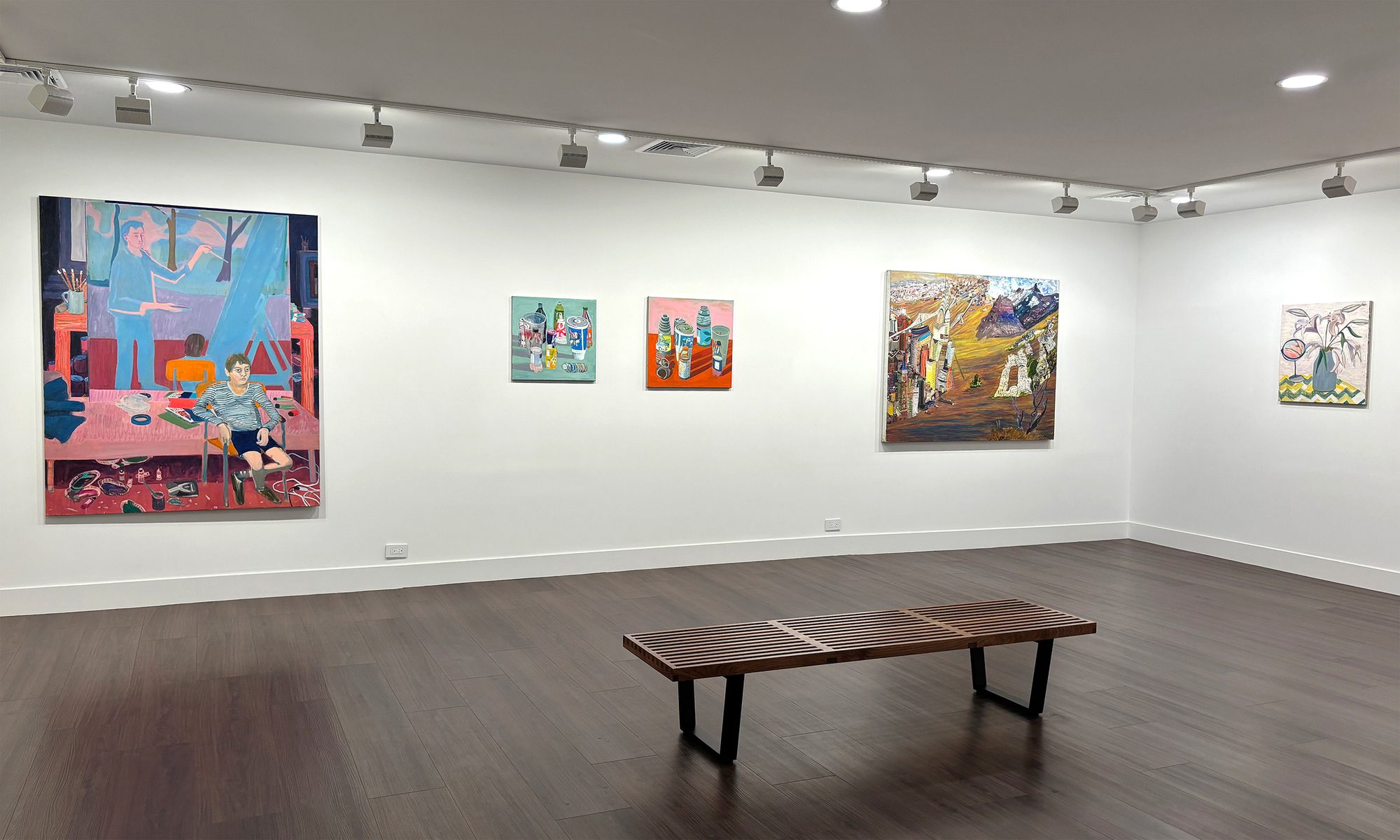
Rebecca Morgan’s exhibition Painting in the Age of Apocalypse is a bit of a roadmap for viewers. Morgan tackles the question of how to present images in the face of a raging political landscape,  how to keep moving forward, and how to maintain oneself and some humor about it all. And most importantly to me, how to open up one’s painting style and allow both the work and the process to support you through this tumultuous and often unbelievable terrain we may find ourselves within. In this exhibition, Morgan engages potent themes from all her eras: sympathy for her rural background, feminist reappraisal of art history, and an unbridled excitement at infusing humor and technical prowess into her critique. Here, Morgan fuses all of these themes well, all the while showing us a fresh, looser style of painting that captures the frenetic energy of the moment. 

Continue reading “Rebecca Morgan at Asya Geisberg Gallery: Traversing the Apocalypse “

Anne Katrine Senstad – Being (Un)schooled

Anne Katrine Senstad, MAL EDUCACIÓN

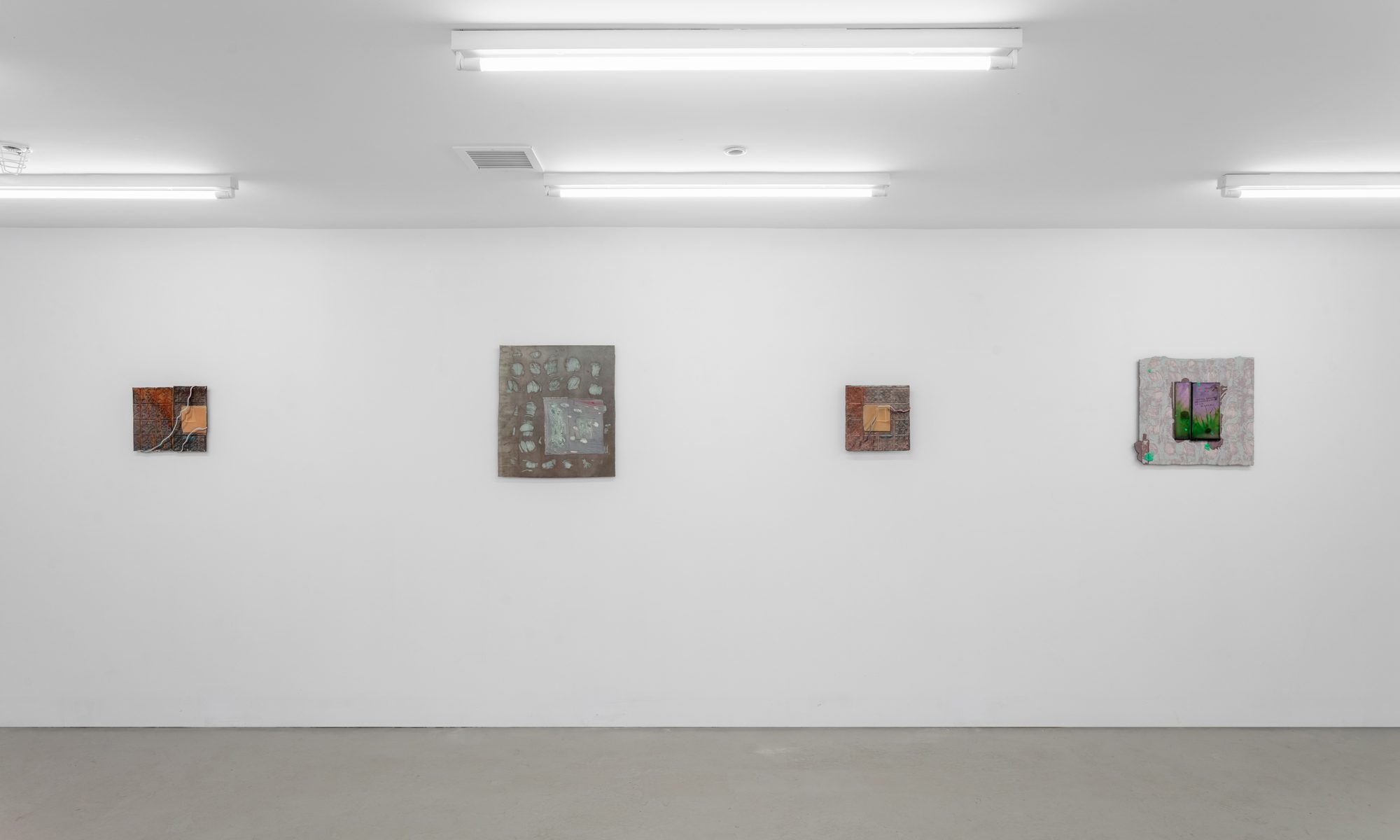
Crossing the threshold of the “Veieja Escuelera” exhibition at Synesthesia Gallery, Brooklyn, visitors find themselves enveloped in an eerie haze of green light that is both sensuous and disquieting. This is not the only defamiliarizing element since the floor is carpeted with artificial grass and the light works encompass phrases in multiple languages. On Anne Katrine Senstad’s turf, nothing is what it seems at first sight. A Norwegian artist living between New York and Oslo, she uses light both environmentally and sculpturally to expose the interdependence between perceptual experience, cognition, and ideological beliefs. Her practice engages both with the phenomenological inquiries of minimalist artists such as Dan Flavin and Robert Irwin and with the tongue-in-cheek propositions of Conceptual artists such as Joseph Kosuth and Bruce Nauman who have paired neon light with text to invite reflection on the function of art as sign.

Continue reading “Anne Katrine Senstad – Being (Un)schooled”

Le Alchemiste by Anselm Kiefer at the Palazzo Reale

Anselm Kiefer’s Le Alchemiste

I saw “Le Alchemiste” by Anselm Kiefer at the Palazzo Reale in Milan, and although I have seen many exhibitions by this German artist, I have never seen anything like this. He creates large vertical portraits of about forty women who worked as alchemists and healers in various European communities in the period between antiquity and the nineteenth century.

Continue reading “Le Alchemiste by Anselm Kiefer at the Palazzo Reale”

Saxon-Hill’s Flower Escapism at SHRINE

Blair Saxon-Hill, Installation View

I think it’s safe to say that everyone dreads turning on the news nowadays, with the turmoil of politics and world events. If it’s not on the TV, stressful headlines take over email news updates or flood social media platforms. However, for an artist, it can either bring one’s mood down or inspire one to take action by creating one’s own interpretation of a solution. Blair Saxon-Hill is the latter. With Saxon-Hill’s newest solo show at SHRINE, Saxon-Hill’s oil paintings, which portray mostly flowers, provide serenity to this chaotic state of American politics. 

Continue reading “Saxon-Hill’s Flower Escapism at SHRINE”

Laurie Fader: Opium Dreams

Opium Dreams, the exhibition of Laurie Fader’s pictures at the Susan Moremen Gallery, is an update of the artist’s bold transition from oil sketches of Umbrian hillsides to a psychological map of contemporary insecurities and vulnerabilities. She addresses our economic, political, and ecological ructions with exuberant irrationality, improbable scale-shifting, and a highly personal landscape vocabulary. Surreal humor and fantasy are her touch points, rather than anguish and despair.  

Continue reading “Laurie Fader: Opium Dreams”

Melora Kuhn’s Power of Erasure and Material Revision

Melora Kuhn, Eruption

History has always depended on materials. Marble, oil paint, bronze, woodcuts, engravings, museum vitrines, and photographic reproductions preserve the past as well as determine how events, ideas, and narratives are represented. Over time, images become durable, gaining a certain kind of truth value because they acquire material permanence and spread through copies. Mythological heroines, biblical women, allegorical figures, and historical subjects return across centuries through the persistence of artistic media, carrying with them the assumptions, hierarchies, and ideologies embedded in their forms. Melora Kuhn‘s solo exhibition, The Legacy of Disembodiment, on view at Private Public Gallery, starts with the recognition that if representation has helped naturalize and proliferate the narratives these images and forms carry, then materials themselves can be a site of political intervention.

Continue reading “Melora Kuhn’s Power of Erasure and Material Revision”

Cecily Brown at the Serpentine: Everything Everywhere All at Once

Cecily Brown, Nature Walk with Paranoia

Entering the first room of the gallery, one is instantly struck by the richness of movement in Cecily Brown’s paintings. Several recent works, drawn from nature walks, centre on the motif of a log laid across a blue stream. This fairy-tale imagery, bordering on kitsch, was borrowed from a jigsaw puzzle Brown was completing at the time. Yet the jagged shrubbery and turbulence surrounding these scenes point towards something darker.

Continue reading “Cecily Brown at the Serpentine: Everything Everywhere All at Once”

Andreas Schulze’s exploration of color in the cool pastures of cake

Andreas Schulze, Untitled (Her)

In his show Cake (2026) at Sprüth Magers, New York, Andreas Schulze explores the visual effects of saturated color and geometric form, using cake as the setting for his investigation.

In his paintings, Schulze creates an inner three-dimensional universe, which serves as a bell jar. In his imaginary pastures, Schulze creates surreal interiorscapes, built of geometric shapes and flat backdrops of color-gradient skies, juxtaposed with rounded spheres and spirals painted in three-dimensional perspective, with depth and shadow. The pictorial space he builds gives a stage for him to explore various phenomena, in this case, cake, and he does so with a playful seriousness, experimenting with the basic forms and images that make up cakes: candles, frosting, fruit, sprinkles, and layers.

Continue reading “Andreas Schulze’s exploration of color in the cool pastures of cake”

Hollis Heichemer: Transcension over Anthropocentrism and Breakaway into Landscapes

Hollis Heichemer, Come to the Surface

Hollis Heichemer’s solo exhibition at Hollis Taggart titled “moving in stillness” is a profound investigation of existence and the meaning of the world through the study of landscapes and Mother Nature. Is Humanism an anthropocentric perspective that is ultimately flawed and furnishes humanity with the arrogance to destroy the environment and disregard the principles of empathy? How can we overcome the diseased thought that humans have the right to master or exploit nature for profit? And how has the artist found great peace and liberation through her lifelong study of Mother Nature and her generous nourishment and wisdom? Does Heichemer apply the paint purely as a formal exercise of abstract colors and relationships, or does the paint become the flesh of Mother Nature, by the observation of which we can become and live through the painting as landscapes?

Continue reading “Hollis Heichemer: Transcension over Anthropocentrism and Breakaway into Landscapes”

Growing After the Embers: A Review of Bùi Thanh Tâm’s Solo Exhibition Here on and after

Installation view of Here on and after

For a long time, when I was young, I felt distant from the idea of “history.” In textbooks, history always appeared through years, wars, reforms, and changes of political power, as if it were made of events already organized and settled. Yet the history that truly remains in the body often appears in more hidden forms. It may be a silence within family narratives, a memory that one generation chooses to avoid, a recurring pattern in festive images, or a color that seems joyful while quietly carrying a wound. Very often, history continues to exist in another form, lingering in images, bodies, and everyday experience.

Continue reading “Growing After the Embers: A Review of Bùi Thanh Tâm’s Solo Exhibition Here on and after”