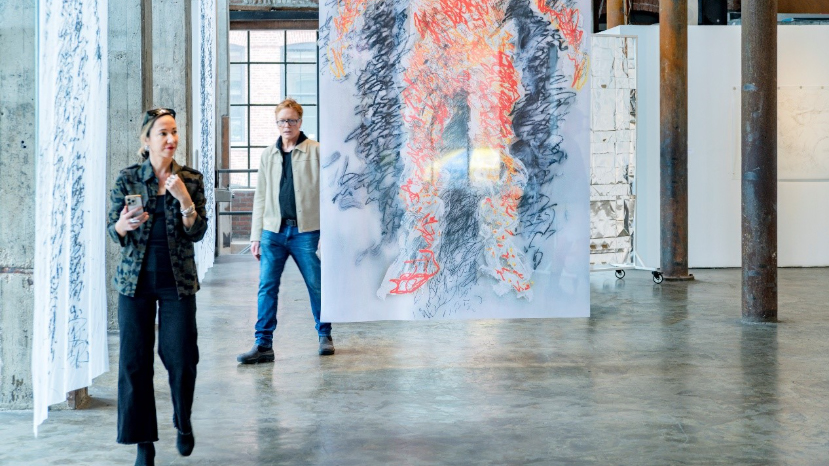
As Cultural Affairs Director at Two Trees and the Walentas Family Foundation in DUMBO, Ariel Willmott plays a central role in the neighborhood’s cultural life — overseeing initiatives including DUMBO Open Studios, Smack Mellon, the Sharpe Residency, and Two Trees’ studio subsidy program. Ahead of DUMBO Open Studios weekend, we spoke with her.
What brought you to the field of cultural programming and artist support, and how did your path lead to your current role at the Walentas Family Foundation?
I’ve always worked in roles that support artists and use the visual arts to build community and bring people together. I studied Art History at SUNY Albany, where I worked at the University Art Museum, which deepened my interest in supporting folks in creating meaningful connections with themselves and others through art.
After I graduated, I worked at a Marriott hotel and then at MoMA. After that, I served for seven years as the Director of Fountain House Gallery, a social-service organization that provides support for artists living with mental illness.
I took that role thinking I’d be more inspired to pursue social work, but I found the most excitement in creating partnerships, growing the organization, and trying to understand how we fit into the larger arts ecosystem in the city. We were able to expand the program to include Fountain House Studio, offering free space, supplies, and additional services for artists, and we built partnerships with organizations like the American Folk Art Museum, White Columns, and Saks Fifth Avenue. Working with artists who, in many cases, were navigating serious systemic barriers, taught me a lot about how to support people both in their artistic practice and their daily lives.
I realized I was more interested in strategic community-building and wanted a role that explored the infrastructure of arts support in New York City, and that led me to Two Trees and the Walentas Family Foundation. It is exciting to work for a company that invests in the arts in its community, and at the intersection of private and public partnerships, where a lot of cultural infrastructure gets built.
You oversee programs that materially affect artists’ ability to remain in New York City. How do you define what meaningful support looks like today, beyond visibility or short-term opportunity?
It’s a real privilege to be in a role that has such a significant impact on the arts community in New York City. Two Trees and the Walentas Family Foundation support artists beyond a single moment in time. We’ve created a structure that helps many different artists simultaneously, across numerous programs, at different points in their careers, creating multiple touchpoints to help artists grow and sustain their practice.
Artists are being priced out of New York City, and without affordable, stable studio space, they leave. The Cultural Space Subsidy Program offers three years of subsidized studio space at $18 per square foot, in a city where comparable spaces are significantly more costly. It becomes the difference between someone staying and building their career here versus another city.
The tiered approach, from our support of residencies at Triangle, BRIClab, and Smack Mellon, to the Sharpe-Walentas Studio Program, to three years through CSSP, lets us sustain an ecosystem of artists at different stages. And Dumbo artists aren’t siloed into arts-specific spaces. They’re woven into the broader creative community of the neighborhood, which creates opportunities for cross-disciplinary connections and collaboration. Through Art in DUMBO, First Thursdays, and Open Studios, we’re also connecting artists and arts organizations directly with the public.
For me, meaningful support isn’t about any one program. It’s about recognizing all the different levers that make a whole system work, and supporting artists across all of them.
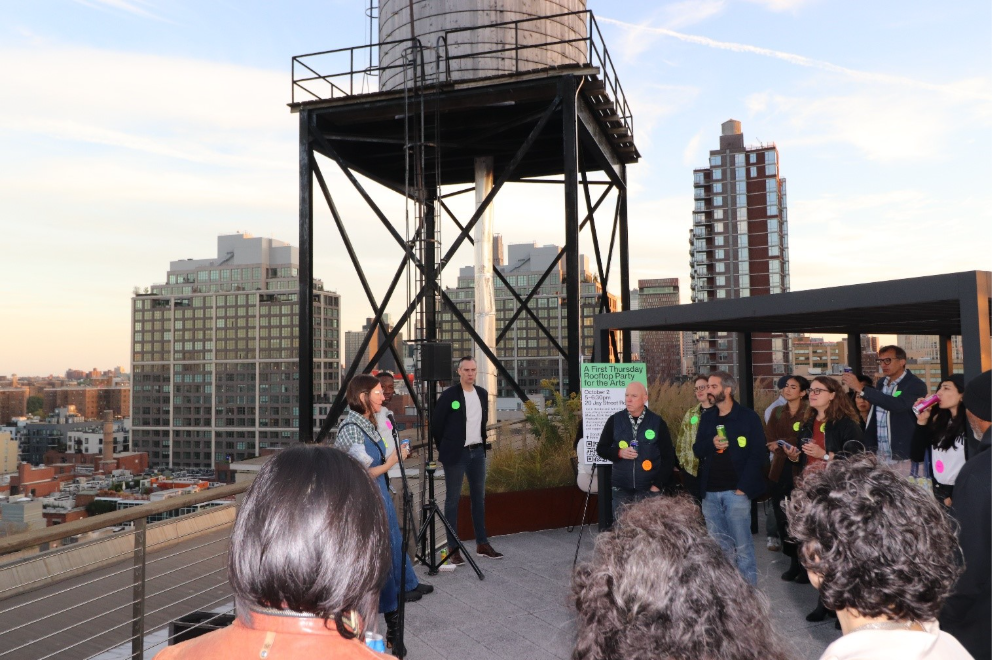
The Cultural Space Subsidy Program (CSSP) addresses affordability. Where does subsidy actually make a lasting difference, and where does it fall short?
The subsidy makes a real difference. CSSP recipients receive, on average, a subsidy of $25,000 a year, making three years of subsidy roughly $75,000 in relief. The average studio is 1,100 square feet, which is large enough to accommodate ambitious, large-scale work. The spaces are well-kept, the building has freight elevators, loading docks, and all the necessary infrastructure for a professional practice. It’s easy for curatorial and institutional folks to get to Dumbo (and they can also schedule multiple visits in one day because of the proximity to Manhattan, which, as artists note, allows for regular studio visits and the ease of building curatorial and institutional relationships that transform careers over time). Artists in the program have shown at The Met, Art Basel Paris, and the Brooklyn Museum, presented at the Biennale of Sydney, and one artist created her largest commission yet while in the program, citing the program as a main reason they were able to build relationships with decision-makers of these institutions. Since 2015, we’ve supported 88 artists and provided over $11 million in studio rent relief, and the impact goes well beyond the numbers.
Where it falls short is just the honest reality of what happens at the end of three years. The subsidy is more than 50% off the market rate, so for many artists, the next step is a challenge. Some find that rates in other parts of Brooklyn are workable, but many struggle to find something comparable, especially if their income didn’t grow enough during those three years to close the gap. It’s less a flaw in the program and more the reality of the market it exists within.
What’s heartening is that more and more artists are finding ways to stay in Dumbo even after the subsidy ends. I support the program and will continue researching and listening to find ways to make it even more effective.
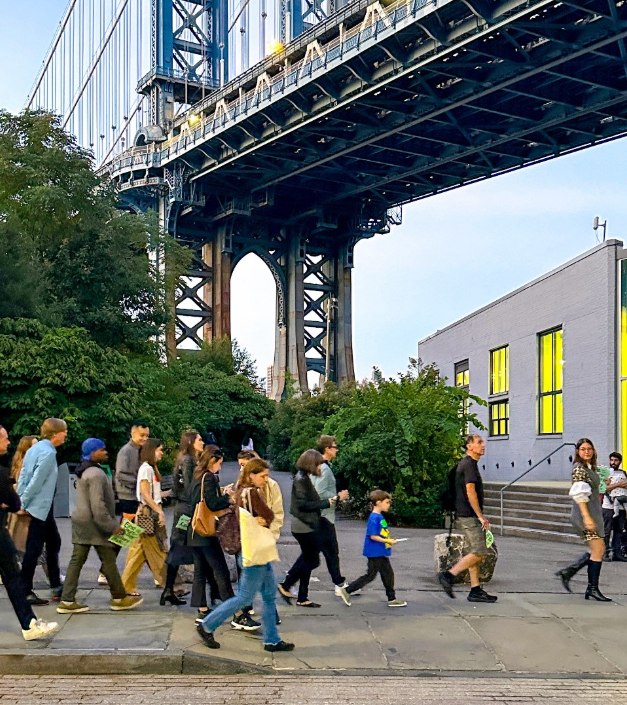
The Sharpe-Walentas Studio Program (SWSP) offers a concentrated year of studio space and support. What distinguishes artists who make the most of that time?
Artists who make the most of that time are consistently in their space and build relationships with their fellow residents. They tend to be at a period in their career where they’ve had some visibility and a stable studio practice over time, and they can take the year they’re awarded to focus on growing or evolving their practice. They tend to come into the program with a direction in mind and follow that idea to whatever outcome happens. They’re working towards something larger than Open Studios or an exhibition, but are in pursuit of a creative answer.
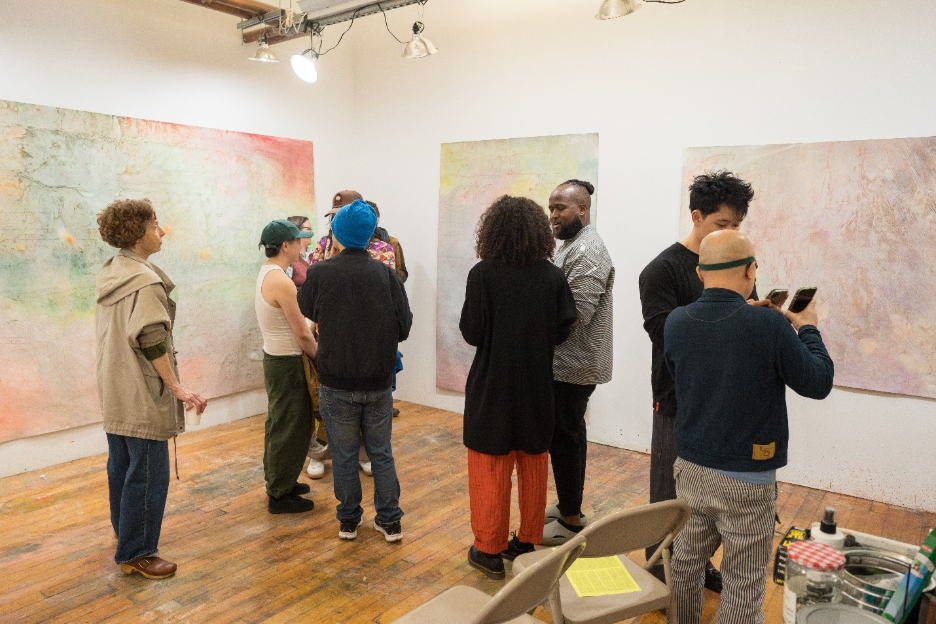
DUMBO has evolved from an industrial area into a dense cultural and commercial zone. Within that model, what conditions are necessary for an arts community to remain viable?
DUMBO continues to have a strong arts community through so much change because of a real commitment by Two Trees and the Walentas Family to create and maintain a thriving creative neighborhood. Two Trees believes a healthy neighborhood includes a vibrant, creative, and cultural scene, and that takes intentional investment to maintain.
I think a few things must work together to keep an arts community flourishing. The most important thing is that the community remains connected to and relevant within the larger arts ecosystem, and that the larger system is functioning.
On a neighborhood level, artists need spaces to work and show their work. They require affordable, quality studios and exhibition spaces. (That’s what CSSP, the Sharpe-Walentas Studio Program, and our support of residencies at Triangle, BRIClab, and Smack Mellon are designed to provide.) Without that infrastructure, artists will go elsewhere to meet these needs.
Dumbo’s proximity to Manhattan and multiple subway lines means artists, curators, and collectors can actually get here, which is a big part of what keeps studio visits happening and institutional attention flowing into the neighborhood. This creates a direct line to the broader art scene in Manhattan. I think that at any given time, numerous exhibitions in Chelsea, Tribeca, LES, or at major institutions stem from artists currently working in Dumbo (or are a product of work made at one of the well-regarded residency programs).
You also need an engaged community of arts supporters who show up, collect work, and feel connected to the cultural life of the neighborhood. Art in DUMBO, First Thursdays, and DUMBO Open Studios are about building and sustaining that audience over time. When all of those things are working together, a neighborhood can hold onto its creative community even as it evolves, and that’s what we’re trying to protect and foster.
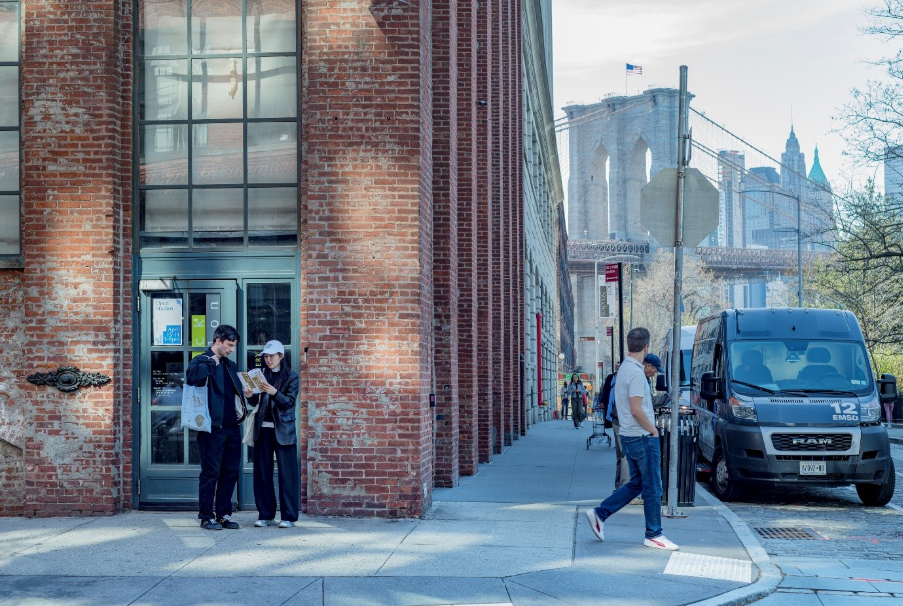
Programs like the First Thursday Gallery Walk and Open Studios shape how audiences encounter art. What kinds of engagement are you trying to foster, and what becomes harder to sustain in these formats?
These programs are about creating the conditions for a healthy ecosystem and keeping all the different kinds of support flowing in a sustainable way. Open Studios give curators, writers, gallerists, and collectors a reason to show up in Dumbo, to see what artists are making, and to plant seeds for future opportunities.
These events give the public a chance to see what’s behind a studio door, to understand what it actually means for an artist to have space and a place to be in a community. And I think that matters more than it might seem, because the public shapes the conversation about whether artists belong in a neighborhood and whether they should remain a part of it.
What becomes harder to sustain in these formats is filtering for intention. Not everyone who comes through is going to be a collector or curator, and I think it can be difficult, both for the artist and the visitor, to communicate the value of a casual interaction. But honestly, I think those interactions are meaningful too. Access to the arts fosters interest, and we don’t always know what happens beyond a one-off event. Someone who wanders into an open studio today might become a collector, an advocate, or just someone who understands why artists need to stay in this city. That feels worth sustaining.
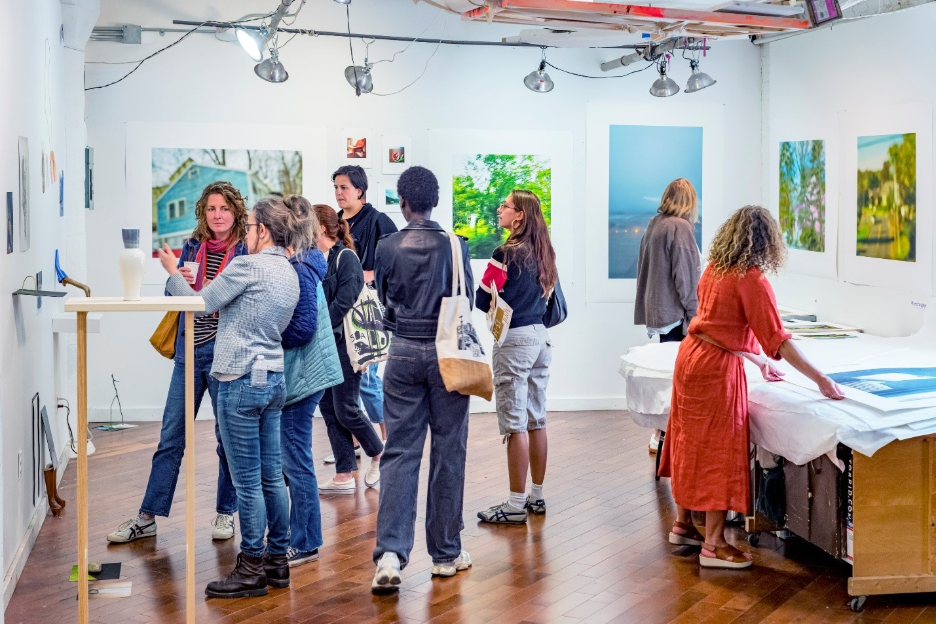
Your work also includes education and neighborhood-based initiatives. How do you think about the relationship between local community engagement and the broader art ecosystem in New York?
There is a direct relationship between what we do locally in Dumbo and the greater arts ecosystem. The artists who work in our buildings contribute to the great institutions of New York (and beyond) that make our city a place people want to live and work. Artists currently in Dumbo, or who have gone through a residency program here, are exhibiting at the Whitney, the Met, and writing for the Brooklyn Rail, or running a gallery on the Lower East Side. The impact of our support of the artists here extends beyond the walls of our buildings. Our Neighborhood School Grant initiative isn’t arts-specific but relates to our philosophy of supporting the cultivation of healthy neighborhoods. Where public schools thrive, kids and parents thrive. A space is created for the passion, pursuit, and support of the arts when families are thriving.
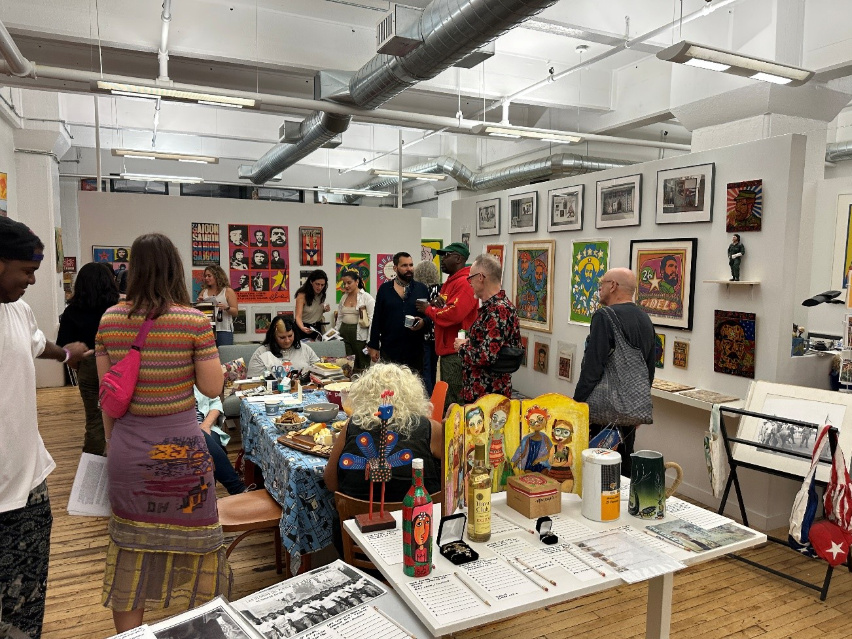
Looking ahead, what shifts or changes feel necessary in how artists are supported in New York?
I hope to see more people of all ages investing in the arts with both their time and their money. That can look like folks visiting exhibitions more regularly, becoming museum members, supporting local arts nonprofits, and buying artwork from living artists. Individuals’ interests can then deepen into something more, such as ongoing support and an understanding of why artists are essential.
We crucially need to expand and diversify the financial streams that go directly to artists so they can afford to live and work here. That can happen through increased government support of institutions that prioritize paying artists, or through more direct-to-artist funding. I’d love to see something like a New York City “New Deal” that creates opportunities for artists to contribute to public life and infrastructure in meaningful, paid ways.
I think there’s room for more businesses to recognize the benefits of keeping the arts thriving and to find thoughtful and mutually beneficial ways to engage with artists.
The arts need to be seen as a vital part of what makes a city worth living in. That means investing in artists at every level and, as an arts administrator and supporter, continuing to share the broader impact of the arts on individuals, neighborhoods, and the city as a whole.
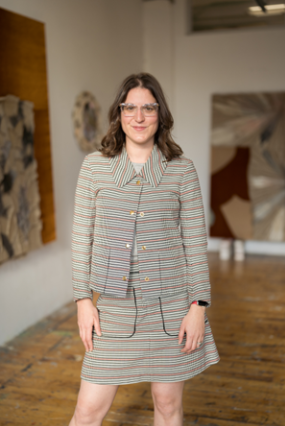
About the Interviewee: Ariel Willmott is a cultural programmer and arts administrator based in Brooklyn, New York currently the Cultural Affairs Director for the Walentas Family Foundation and Two Trees Management. Her work focuses on building sustainable support systems for artists through studio programs, residencies, and community-based initiatives in Dumbo. Previously, she served as Director of Fountain House Gallery, where she expanded opportunities for artists living with mental illness and developed partnerships with leading cultural institutions. Ariel holds a degree in Art History from SUNY Albany and has worked at institutions including the Albany University Art Museum and MoMA. Across her career, she has been committed to fostering meaningful connections between artists and their communities while strengthening the broader arts ecosystem in New York City.
DUMBO Open Studios: DUMBO Open Studios, organized by Art in DUMBO and the Dumbo Business Improvement District, is an annual event that invites artists across the neighborhood to open their doors, offering visitors a rare opportunity to step inside working studios, creative spaces, and exhibitions throughout one of New York City’s most dynamic design districts. Long a hub for artists at every stage of their careers, DUMBO fosters a culture of creativity, growth, and sustained momentum through supportive residency programs and an engaged community. The event allows both new and longtime audiences to experience artistic processes firsthand while highlighting the broader ecosystem championed by Two Trees Management and The Walentas Family Foundation, whose initiatives—including the Sharpe-Walentas Studio Program and the Cultural Space Subsidy Program (CSSP)—provide artists with vital resources such as below-market studio space and opportunities for public engagement. Together with ongoing programs like Art in DUMBO’s First Thursdays and Shop the Studios, Open Studios reflects and reinforces a neighborhood now home to more than 160 design firms and galleries, alongside a vibrant mix of retailers set within its historic architecture and waterfront setting.