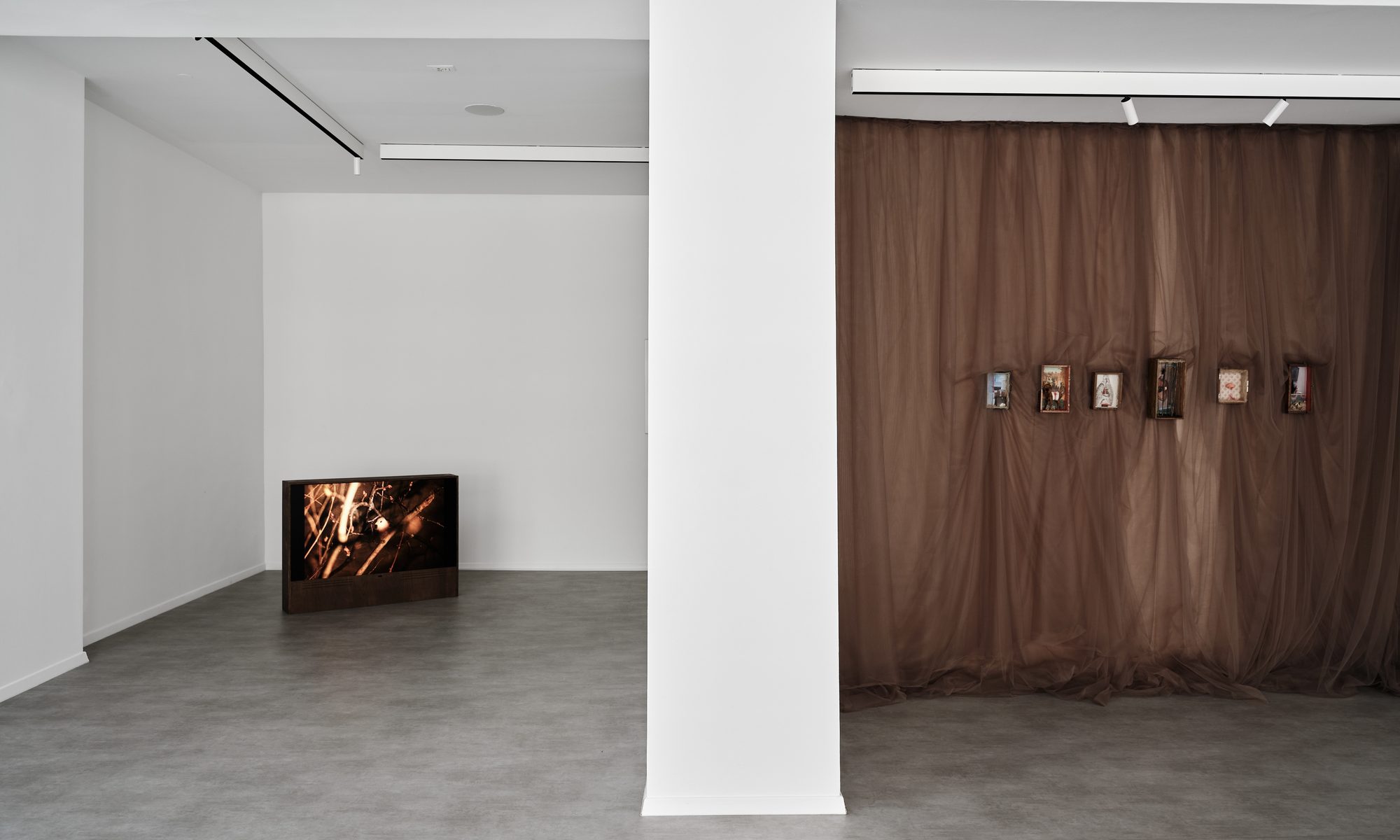
Ivana Fischer’s work often begins with things that already carry a history: found images, old books, dolls, inherited symbols, and memories whose origins are not entirely our own. In The Wild Gene, her solo exhibition at Trotoar Gallery in Zagreb, these materials become a way of thinking through how a sense of self is formed, resisted, and revised. Moving between collage, objects, and stop-motion animation, Fischer returns to childhood, female experience, and the uneasy space between social roles and individual agency. The Wild Gene features her new film After Belonging, which follows a doll through shifting identities and imposed roles. It raises the question of how these structures shape our sense of self, and whether the “wild gene” can permeate them and flourish. The artist discusses the ideas and process behind her work.
Your recent show, Wild Gene, directly continues your earlier series Tribe, which explored collective and social identity. How did you move from one to the other, and how does the film After Belonging fit into the exhibition?
With the exhibition Are We Hungry for a Tribe?, I explored collective identity and our need to belong. I was interested in how contemporary “tribes” are no longer necessarily based on blood ties or family, but rather on closeness, belonging, and mutual care.
The Wild Gene moves from that question toward the individual. After asking whom we belong to, I began thinking about what actually constitutes our “self”. How much of us is inherited, learned, or taken on from others, and how much can we shape for ourselves? For me, identity is not fixed, but constantly rearranged.
After Belonging enters the exhibition through this idea. Through the doll and the different dresses she wears throughout her life, I explore the roles assigned to us and what happens when we no longer want simply to belong to those roles.
You quote Schopenhauer: “Human beings are, at their core, wild animals rather than civilized creatures.” The exhibition text links the wild gene to the part of the female “I” that yearns for freedom and pleasure outside all systems of belonging. Do you see the wild gene as more specific to women, or as universal?
For me, the “wild gene” is not exclusively female, but a universal part of human nature. We all carry something within us that resists rules, expectations, and the need to be completely defined.
Still, in this exhibition I approach it through female experience, because women’s identities and bodies have for centuries been strongly shaped by social expectations. I am interested in what happens at the boundary between belonging and the need to step away from it.
I see the wild gene as an inner force that reminds us we are not only what has been prescribed for us. It exists in all of us, but manifests itself differently through different experiences.
The collages explore the tension between the desire for freedom and the need to belong. Where do your collage materials come from, and how does that tension appear in the works?
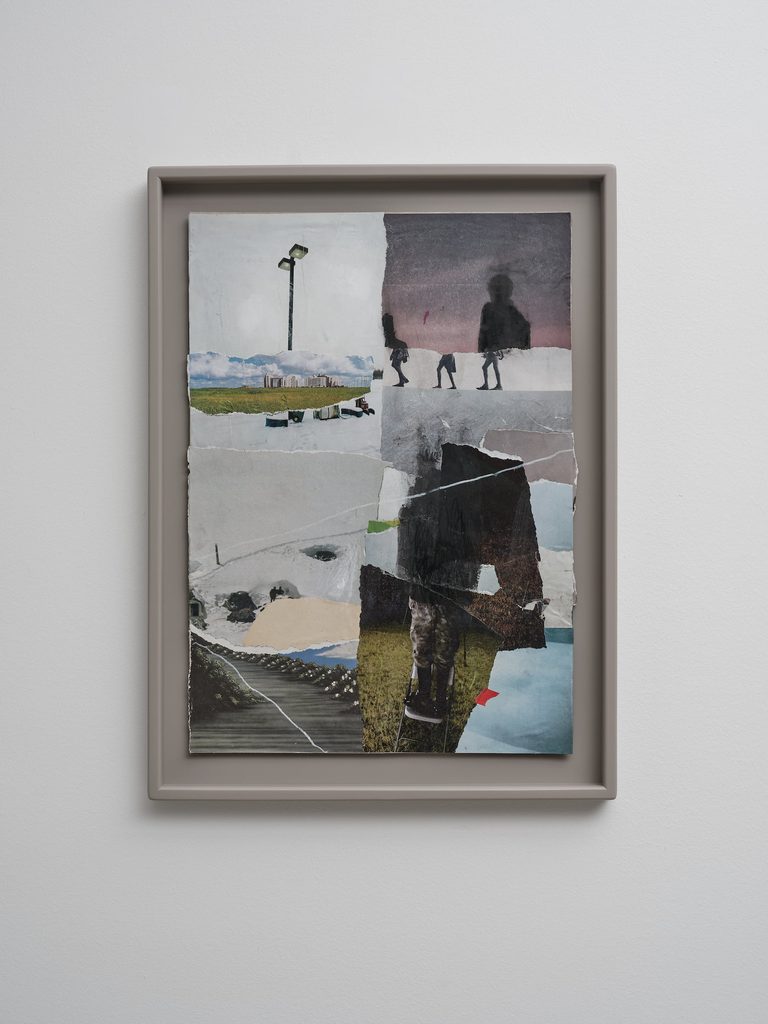
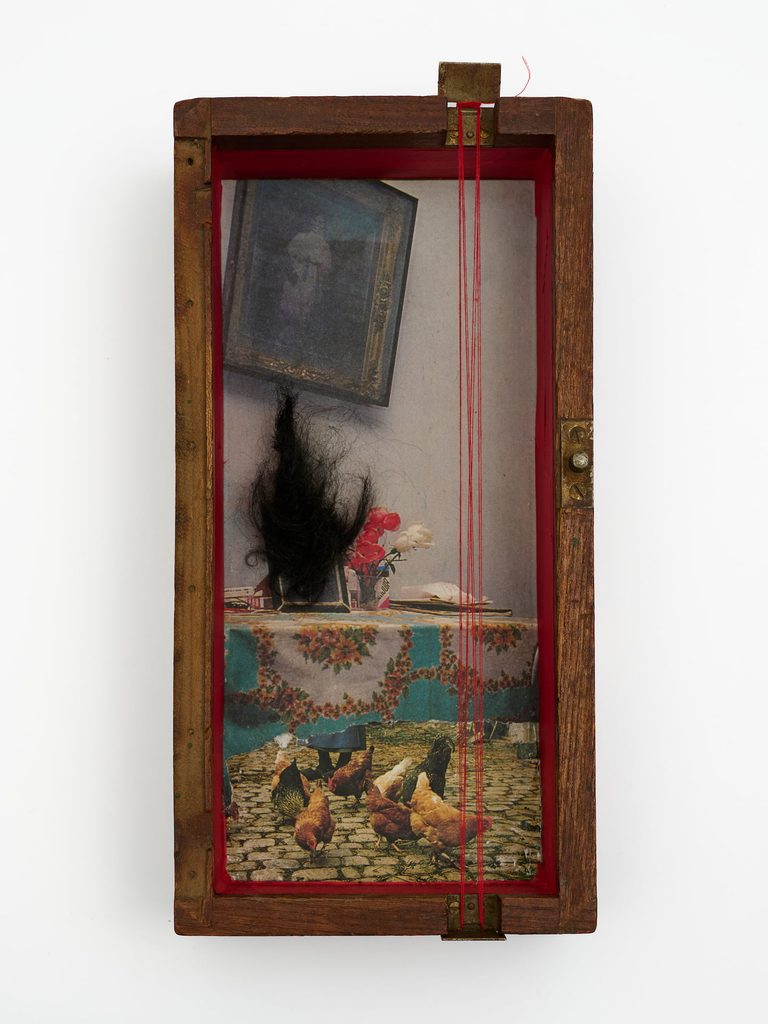
I use old magazines, children’s encyclopedias, books, and other found materials. Some I find at flea markets and second-hand bookshops, while others date back to my own childhood.
I am drawn to the fact that these materials already carry their own histories, images, and meanings. Through collage, I reconnect them and give them a new context. In a way, the process of collaging also speaks about identity: we are given certain materials, but the way we connect them is still our own choice.
The exhibition text opens with the line “Childhood is a frightening place” and refers to Peter Weir’s film Picnic at Hanging Rock. What role does childhood play in your work, and does that film resonate with you?
Childhood is constantly present in my work because I see it as the origin point of identity. It is the period in which we begin to form an image of ourselves, learn how to belong, accept our first roles, and absorb patterns that will later shape us.
I am interested in childhood not only as nostalgia, but as a time when our first relationships to ourselves and the world are formed. I am also fascinated by how our memories become constructions. Other people’s stories, photographs, and our own interpretations become woven into them.
I explored this in the film Déjà Vu, which preceded After Belonging. I returned to places from my early childhood and used dolls to evoke memories from that period. The film also features three generations of women from my family, allowing personal memory to intertwine with family inheritance.
Picnic at Hanging Rock is important to me because of the contrast between the girls’ controlled world of uniforms and rules and the untamed nature they enter. That encounter between what is ordered and controlled and something that escapes control is very close to the themes I explore in The Wild Gene.
In After Belonging, an old-fashioned plastic toy doll changes dresses throughout her life, yet never uncovers the power to choose her own dress. You describe her as a symbolic body rather than a psychologically defined character. Can you elaborate on that?
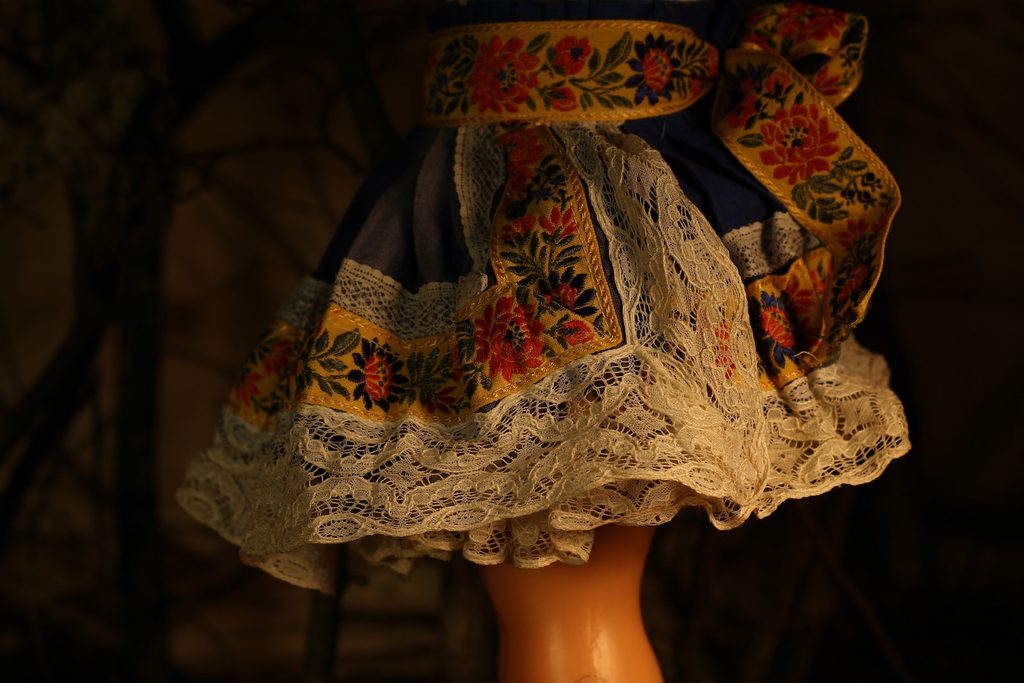
I chose the doll as the protagonist because she has no biography of her own and no clearly defined character. She is an empty, yet highly symbolic body onto which different roles, expectations, and experiences can be projected.
In the film, her dresses change through different stages of life, and in this way she becomes a girl, a woman, a wife, a mother, and an old woman. But she does not choose these roles herself — they simply appear as part of life. I was interested precisely in that passivity, but also in the possibility for the viewer to project their own experiences onto her.
That is why it was important to me that the doll didn’t become a psychologically developed character. She is more like a body through which we can observe the different roles that society, family, and time inscribe upon us.
The changing seasons structure the film, suggesting cyclicality but also, as you put it, an illusion of order and meaning. The exhibition text says the figure finds a safe space in the world of plants and animals. What role does nature play in the film?
Nature in the film is a reminder of what we are inextricably made of, even though we spend our lives trying to separate ourselves from it. We build systems, rules, and identities through which we try to establish control, while nature reminds us that we are part of the same cycle as plants and animals, birth and death.
The world of plants and animals therefore appears as a space beyond social rules, but also as a return to something elemental. There is no need there to define who we are. There is only presence, change, and the rhythm of life.
The seasons change; life is born, grows, disappears, and reappears in another form. We cannot stop time, just as we cannot stop ourselves from changing. Nature becomes a counterpoint to a world that tries to name, organize, and control everything.
You describe the visible materiality of the puppets, the jolts of movement, and the irregularities of the animation as deliberate choices, and you write that the puppets exist on the threshold between the living and the inanimate. What draws you to that space?
For me, the space between the living and the inanimate is the space in which animation itself comes into being — the moment when an object acquires the illusion of life while never ceasing to be an object.
The doll remains visibly a doll. Its materiality, the stiffness of its movement, the imperfections, and the trace of the human hand all remain visible. It is precisely in this disjunction between an inanimate body and the illusion of life that the space I am interested in emerges.
As an animator, I can determine every movement and every moment, but life itself can never be completely shaped or controlled. This is where I see the connection between animation and life: we try to shape our own world while constantly encountering that which escapes us.
Make your tax-deductible donation today and help Art Spiel continue to thrive. DONATE
Ivana Fischer – The Wild Gene; Text by: Višnja Pentić; Curated by: Martina Rodrigues
On view: 18 September – 7 November 2026; at Trotoar, Mesnička 7, Zagreb @trotoar.gallery @ivanafischer.multimediaart @martina__rodrigues