Anne Katrine Senstad – Being (Un)schooled
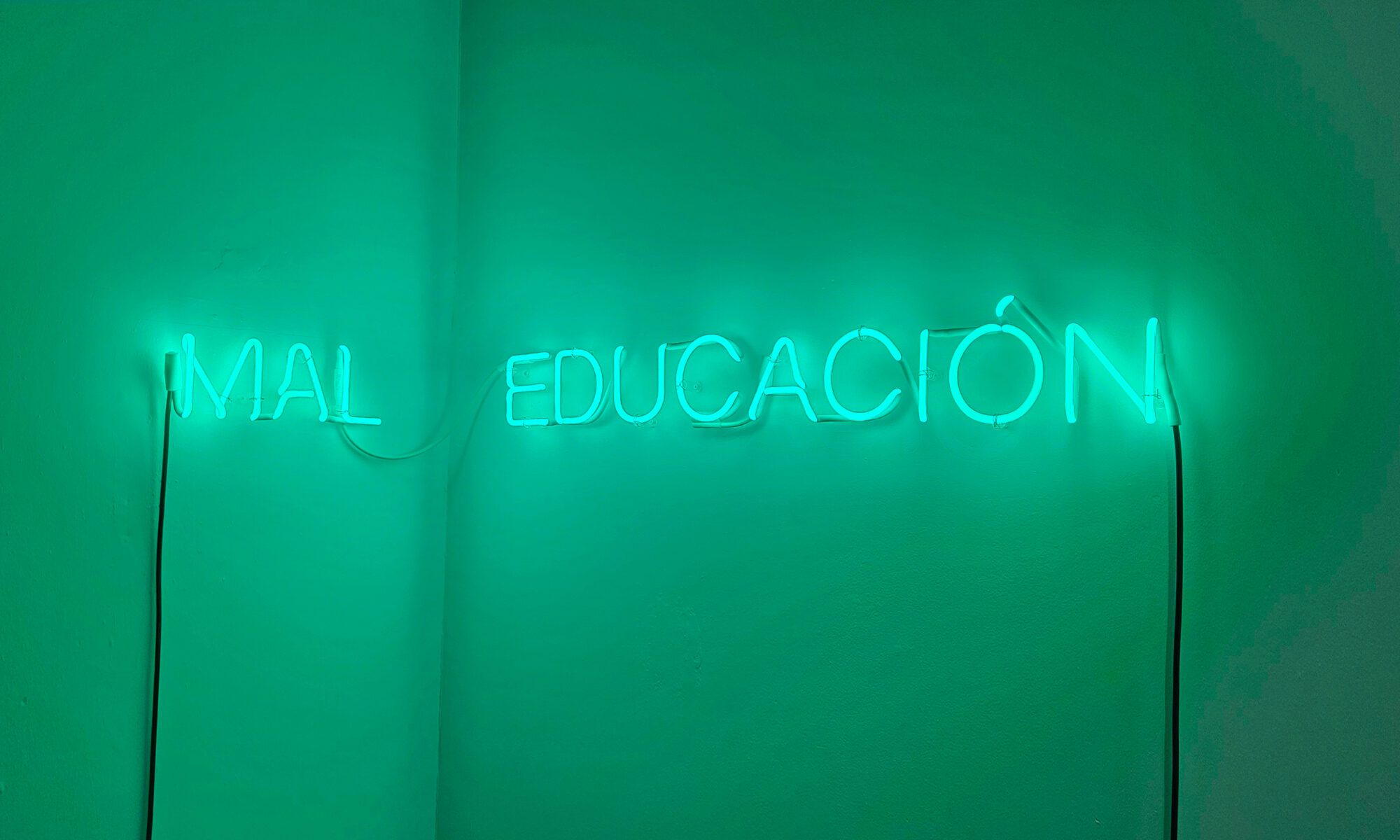
Anne Katrine Senstad, MAL EDUCACIÓN

Crossing the threshold of the “Veieja Escuelera” exhibition at Synesthesia Gallery, Brooklyn, visitors find themselves enveloped in an eerie haze of green light that is both sensuous and disquieting. This is not the only defamiliarizing element since the floor is carpeted with artificial grass and the light works encompass phrases in multiple languages. On Anne Katrine Senstad’s turf, nothing is what it seems at first sight. A Norwegian artist living between New York and Oslo, she uses light both environmentally and sculpturally to expose the interdependence between perceptual experience, cognition, and ideological beliefs. Her practice engages both with the phenomenological inquiries of minimalist artists such as Dan Flavin and Robert Irwin and with the tongue-in-cheek propositions of Conceptual artists such as Joseph Kosuth and Bruce Nauman who have paired neon light with text to invite reflection on the function of art as sign.

Continue reading “Anne Katrine Senstad – Being (Un)schooled”

Hospitality, Narrative Grace, and the Warm Head

Derrida once pursued the question of hospitality. Can you welcome someone whose name you do not yet know? Can you open the door before knowing who is arriving? If you can, the welcome is sincere; if you cannot, hospitality has already become part of border management. Unconditional hospitality is therefore always impossible: if the host retains sovereignty, they cannot be fully open; if they become fully open, they are no longer the host. The name thus becomes the first step in the subject’s enclosure. This exhibition is built precisely upon this impossibility.

Continue reading “Hospitality, Narrative Grace, and the Warm Head”

The Absence is in the Fingers 

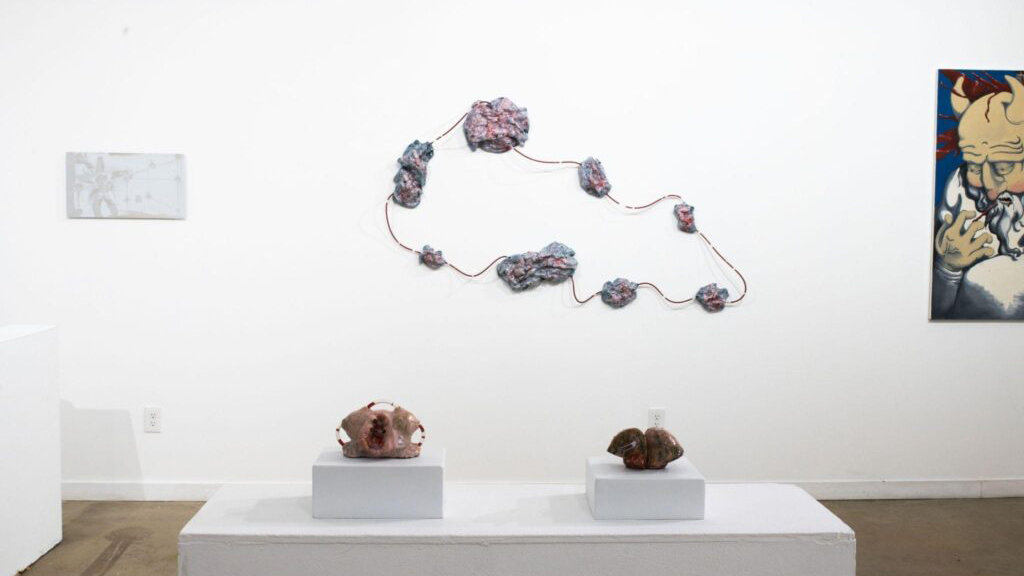
There are exhibitions shaped less by what is installed than by what fails to arrive. I did not plan for this to be one of them. Where Form Remembers was conceived as a two-person presentation: Julie Gladstone’s mixed-media works traveling from Toronto, Avani Patel’s drawings from Brooklyn. The premise was a dialogue between two practices in proximity, each distinct enough that the distance between them would produce something worth engaging over time. What it became was different.

Continue reading “The Absence is in the Fingers “

At Some Point, Every Household Object Stops Being Innocent

No one ever thinks the plate is going to become a problem.

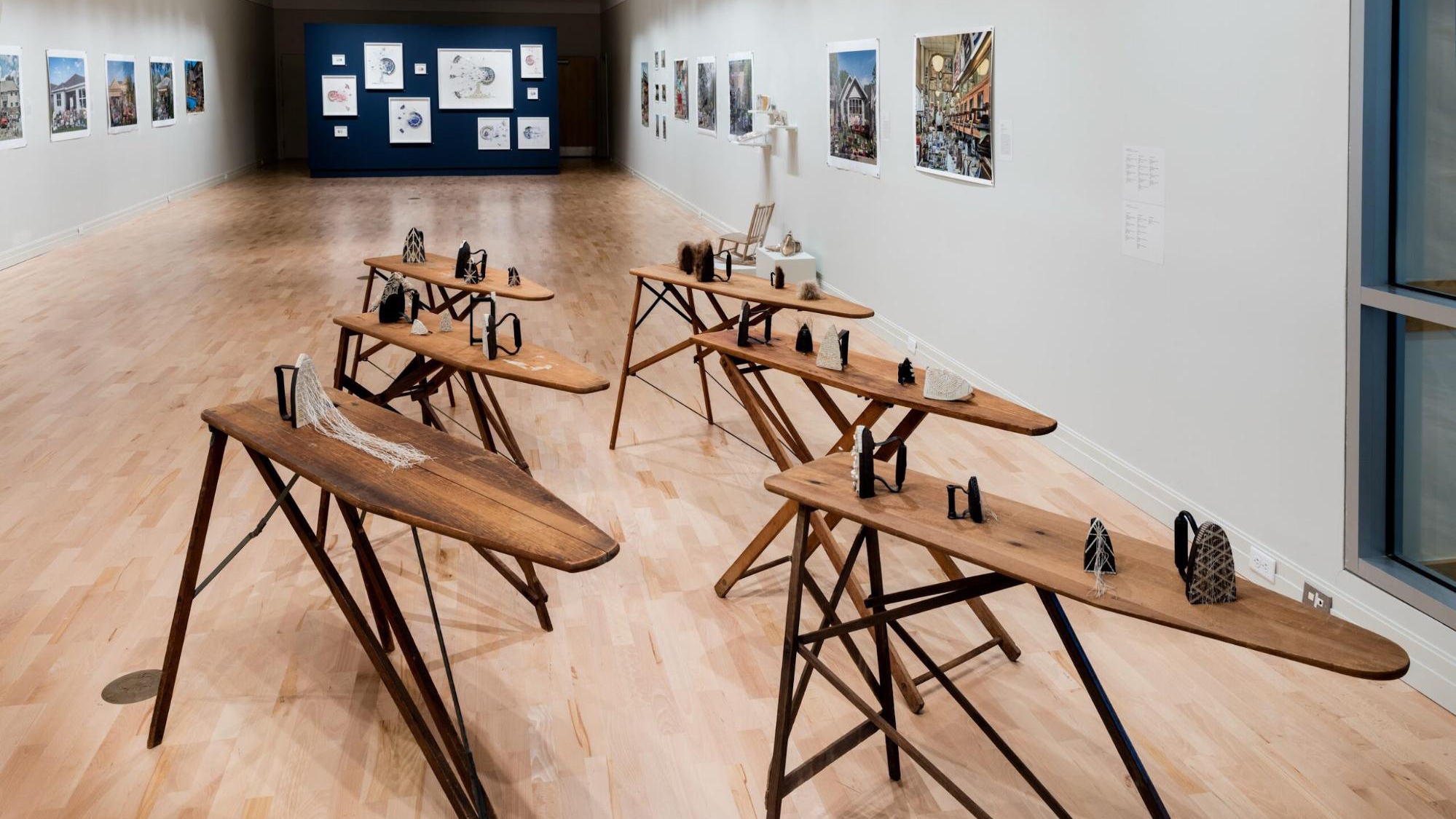
A plate survives three apartments and one bad Thanksgiving. A suitcase gets hauled across borders or shoved beneath beds; sometimes it is packed in hope, sometimes because someone has no choice. An iron presses school clothes and funeral clothes, then outlives its usefulness and sits in a closet somewhere, still holding the pressure of human hands.

That is the animating idea behind extraORDINARY things, the quietly arresting exhibition at the Flinn Gallery in Greenwich Library.

Continue reading “At Some Point, Every Household Object Stops Being Innocent”

Departing From The Flat World: Jong Oh’s Sixth Solo Exhibition At Marc Straus Gallery

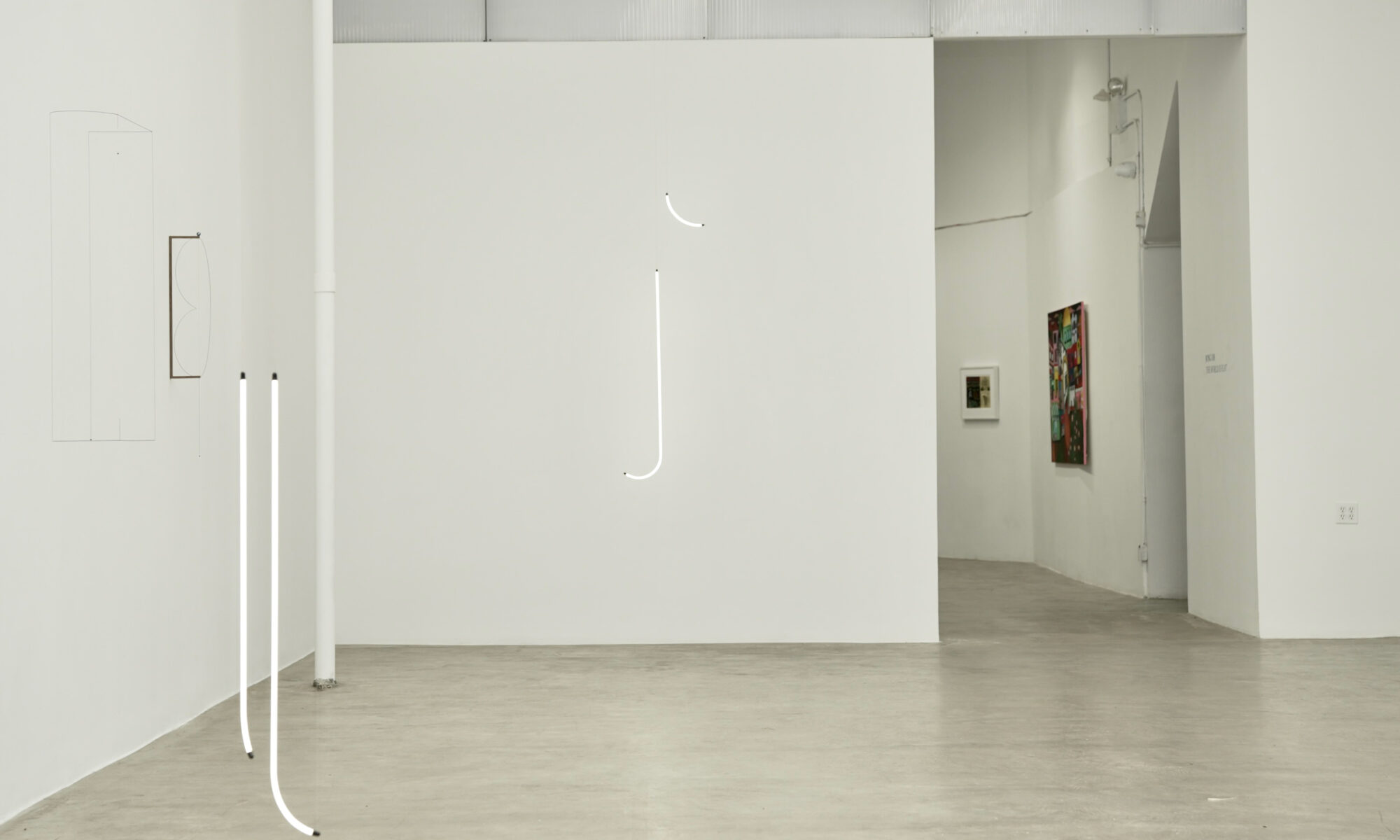
“The world is flat” is perhaps humans’ most primitive sense of physical surroundings. It was also a cosmological conclusion drawn from honest bodily perception, because the land beneath our feet is indeed still and level, and the universe unfolds as an infinitely extending plane. This perceptual honesty is where Jong Oh begins. 

Continue reading “Departing From The Flat World: Jong Oh’s Sixth Solo Exhibition At Marc Straus Gallery”

Floating in Three Acts- Keren Anavy at SUNY

Floating names a state of suspension, between sinking and surviving, between grief and the body’s refusal to stop. In Keren Anavy’s landmark solo exhibition, Floating in Three Acts, this condition is both subject and structure. The exhibition is built the way floating feels: without firm ground, without clear direction, with the question of outcome left open.

Continue reading “Floating in Three Acts- Keren Anavy at SUNY”

Andrius Alvarez-Backus: I Want to Know, I Need to Know

In Andrius Alvarez-Backus’s solo exhibition, I Want to Know, I Need to Know, at Eli Klein Gallery, the work Are You Still Strong Enough? (2025) emerges as the visual center of the show’s underlying tension. A My Little Pony toy hangs vertically, the surface covered in bronze patina, while the incision along its abdomen is carefully stitched closed. What was once a lighthearted and slightly absurd object becomes, through this treatment, both fragile and solemn. Its form evokes a body after surgery, yet also resembles a preserved specimen. However, the meticulous stitching does not suggest that the wound has truly healed. Instead, the seam runs along the body, leaving the incision exposed and gradually becoming part of the sculpture’s structure. The suturing does not erase the rupture; it keeps the rupture visible. The wound is no longer simply a trace of intervention, but the structural element through which the work sustains its tension.

Continue reading “Andrius Alvarez-Backus: I Want to Know, I Need to Know”

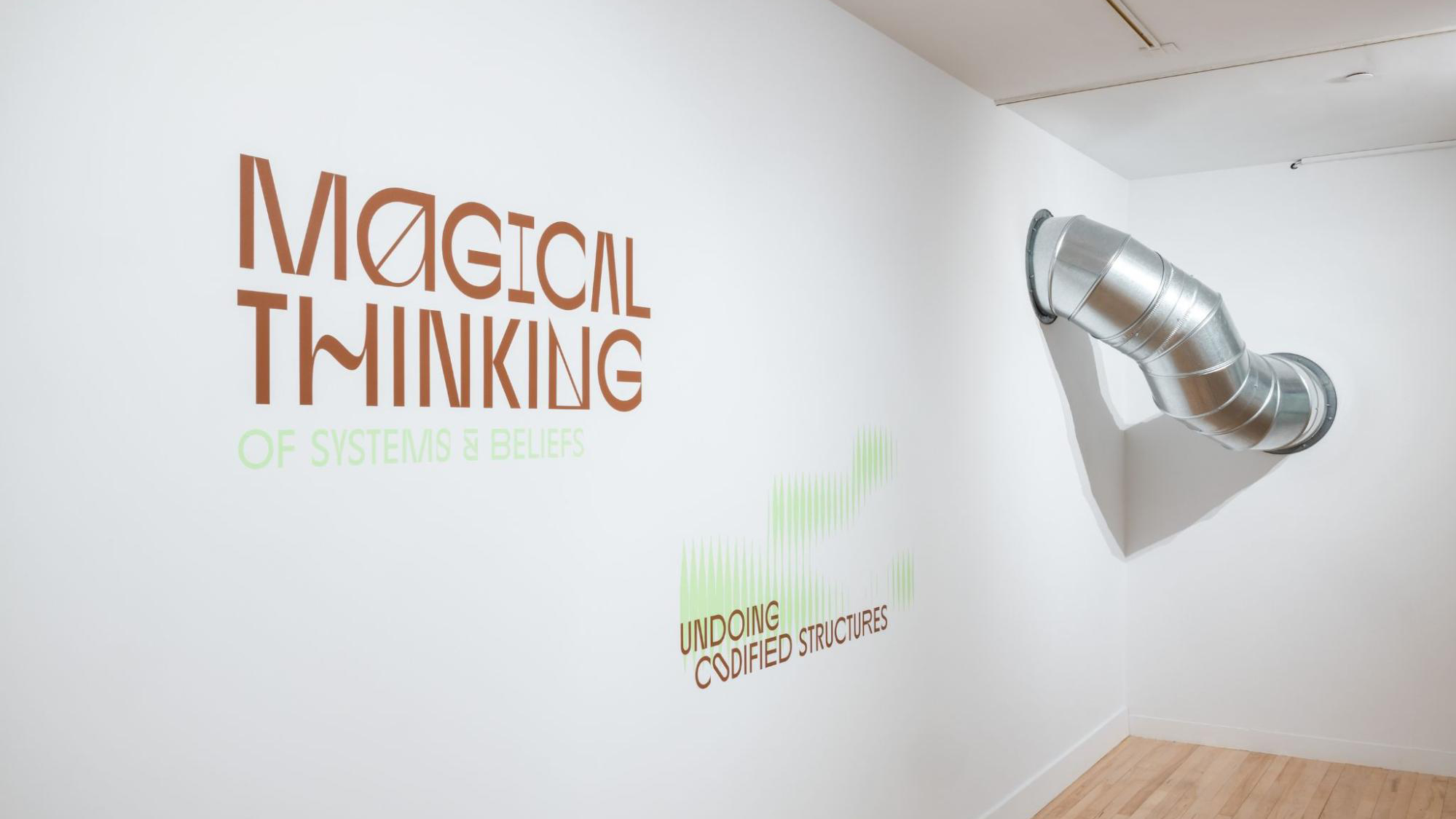
Magical Thinking of Systems and Beliefs, at Tufts University Art Galleries

Installation view of Magical Thinking of Systems and Beliefs

Would you have believed the sun revolved around the Earth? Possibly, since that was the ironclad determination of the bureaucracies in the 16th century. Slavery legally existed in the United States for centuries before there was even the slightest abolitionist movement. Which brings to mind, why do we adhere to beliefs today simply because they are propagated by governments and institutions?

Continue reading “Magical Thinking of Systems and Beliefs, at Tufts University Art Galleries”

The 15th Shanghai Biennale: Does the Flower Hear the Bees?

Botany, I read in Zoë Schlanger’s bestseller The Light Eaters: How the Unseen World of Plant Intelligence Offers a New Understanding of Life on Earth, is full of groundbreaking discoveries these days (Schlanger 2024). We now know that plants have cellular conduits that allow propagation of electrical charges, that some plants release chemicals in the air to alert neighbors of insects, and that evening primrose increases its nectar’s sweetness when it senses the frequency of the hum of bee wings. While such plant-feeling, plant-talking, and plant-listening are not sustained by the same biological apparatus as ours, the functional parallel is apparent. Perhaps it is time to broaden our understanding of intelligence. 

Continue reading “The 15th Shanghai Biennale: Does the Flower Hear the Bees?”