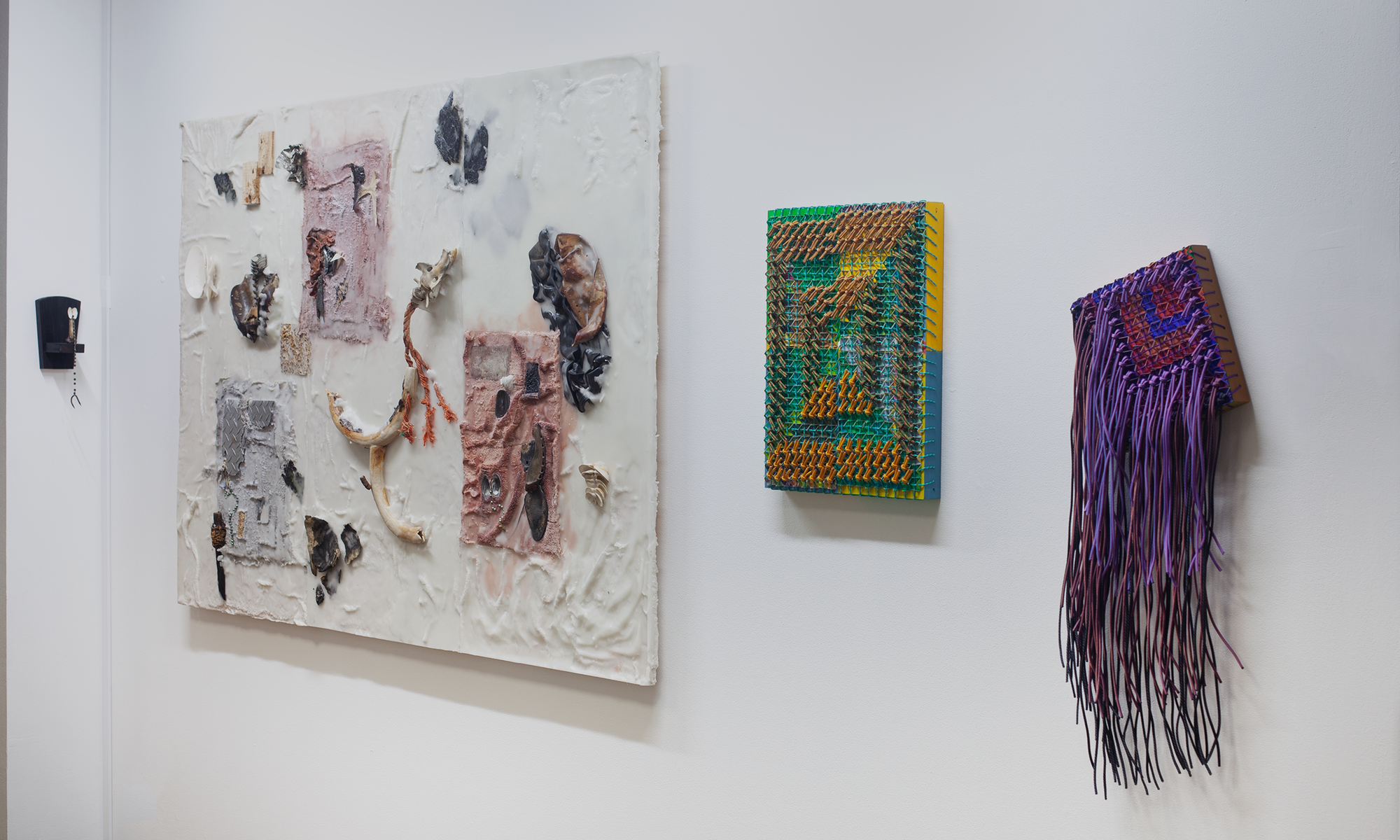
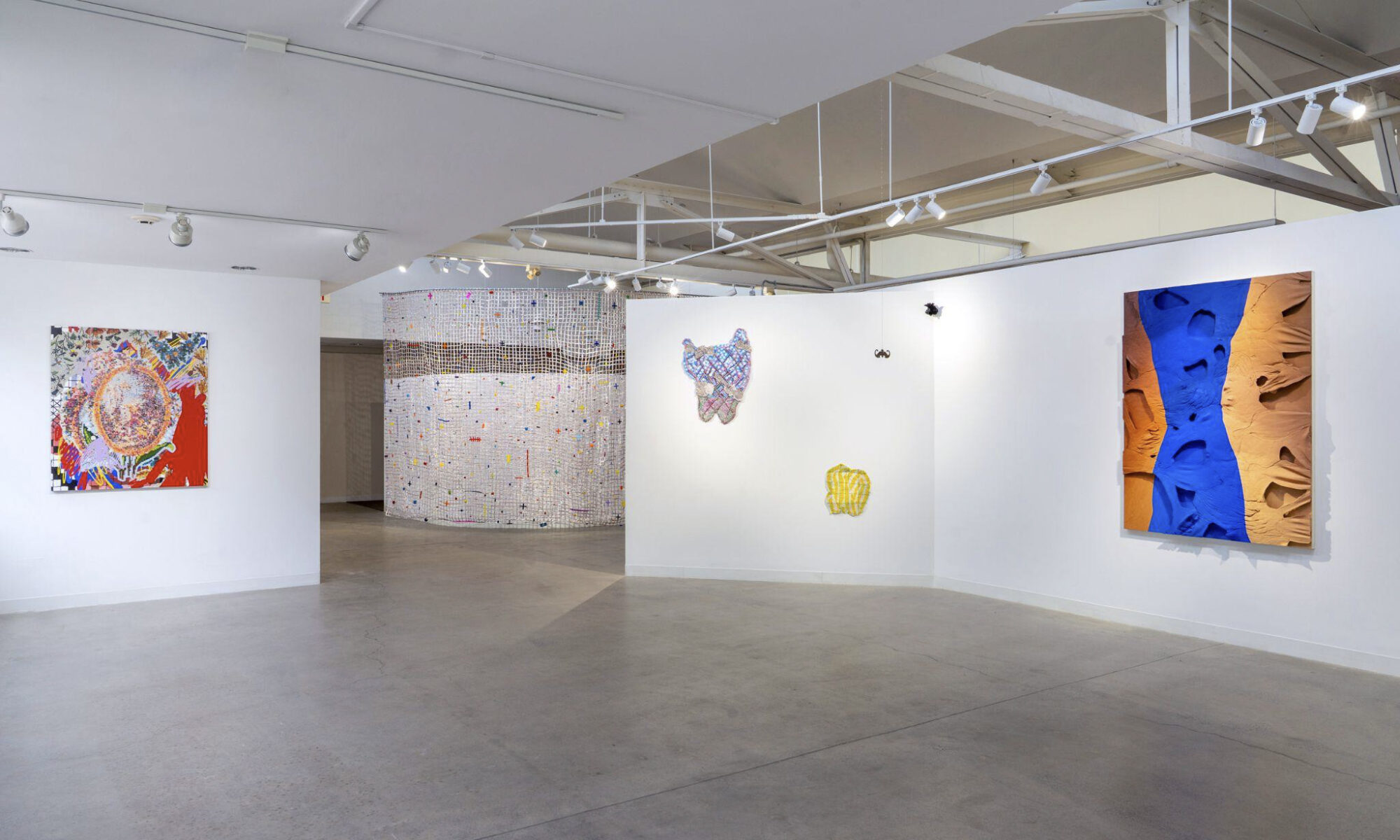
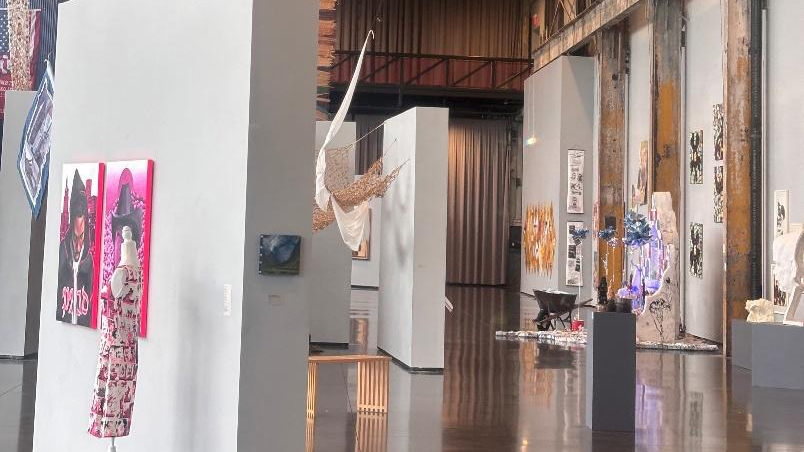
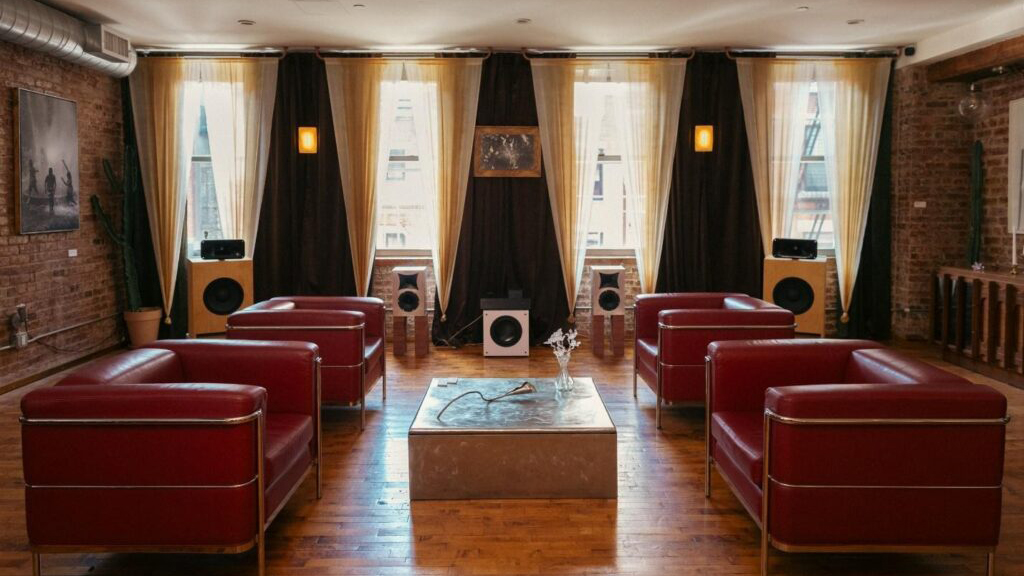
It is difficult for anyone to tell a story about being Chinese. On the surface, we have consummatory trends like “At A Very Chinese Time of My Life”; otherwise, we often see over-sensationalized narratives about geopolitical maneuverings. Yet, in the undertow, Chinese people work and make in conditions full of positional and situational complexity, and they belong to nuanced communities. Under the Common Sea is a group exhibition where artists and cultural workers came together to showcase the range and diversity of experiences, relationalities, and perspectives on identity among Chinese and Sinophone diasporic peoples in NY and across the United States.
Continue reading “Under the Common Sea | 海的下面还有海”Vessels: Bodies, Tales & Machines at Westbeth Gallery
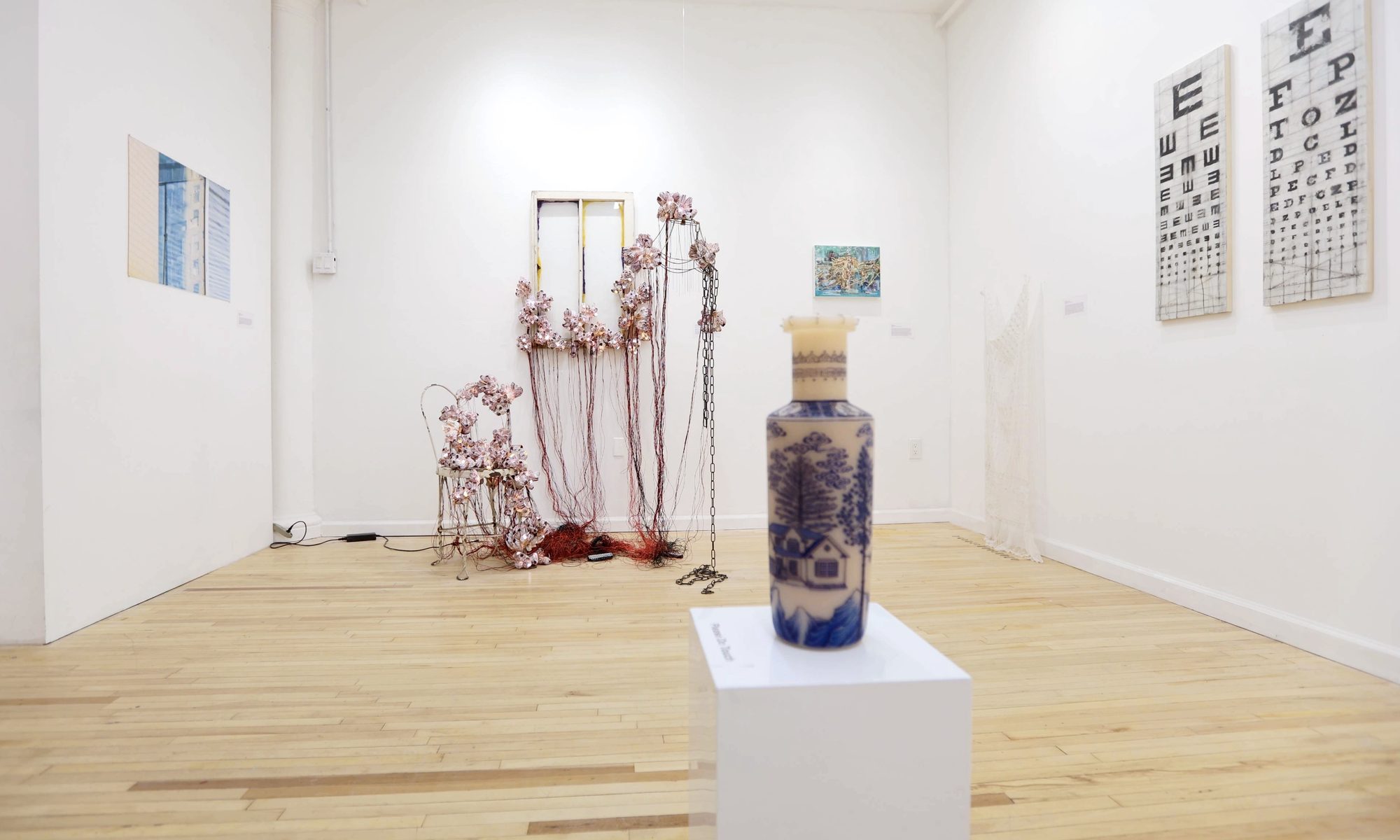
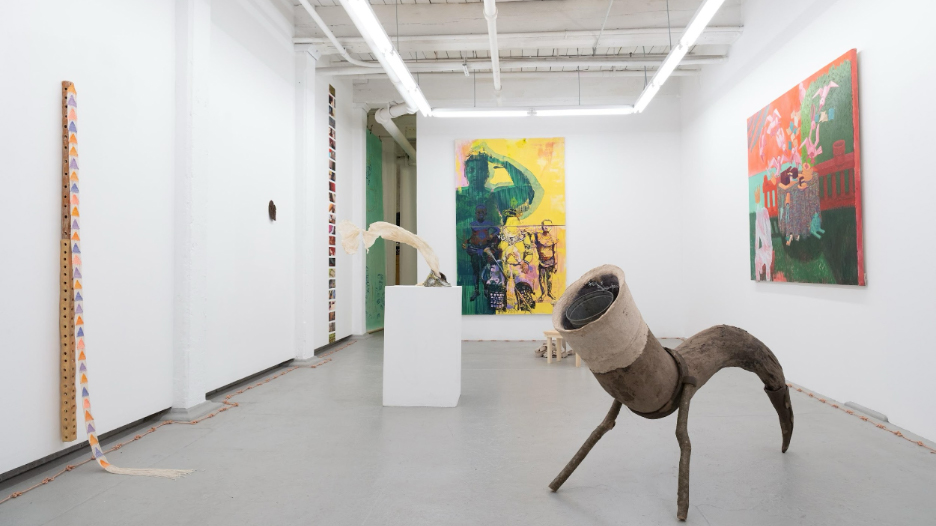
The concept of a vessel offers multiple realities and interpretations that can vary, grow, and expand. In this exhibition titled Vessels: Bodies, Tales & Machines, the idea of a vessel takes the shape of both three-dimensional and two-dimensional works–all of which flow throughout the meandering Westbeth Gallery space. The term vessel itself can be considered a container: its external surroundings, the content, and the internal parts that are often unseen are included with it. These visible aspects of form and material, along with the invisible stories that are nested within the forms, are present throughout the works of the four artists: Jeanne Verdoux, Fanny Allié, and the collaboration between Nicolas Touron and Amy Lemaire. Each artist’s interpretation of a vessel connects the inside to the outside in their own ways and allows viewers to experience each artist’s narrative within their work.
Continue reading “Vessels: Bodies, Tales & Machines at Westbeth Gallery “The Artist, the Loom, and the Microchip: Marilou Schultz’s Replica of a Chip
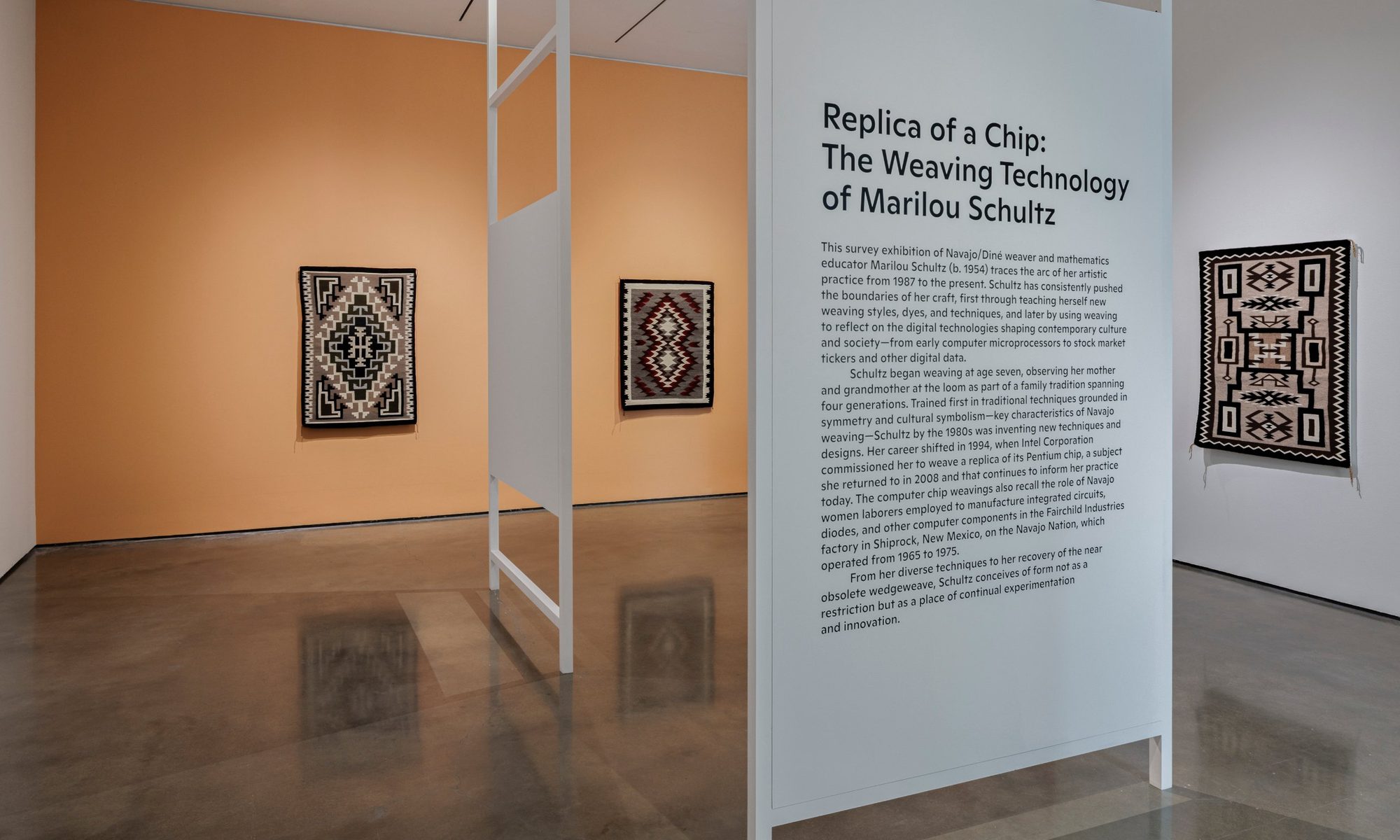
A microchip replicated in hand-spun Churro wool sounds like a conceptual provocation, but the actual object is even more compelling. The title of Marilou Schultz’s exhibition, Replica of a Chip: The Weaving Technology of Marilou Schultz, refers both to the artist’s feat and an unlikely pairing between computer architecture and Diné (Navajo) weaving. In 1994, Schultz was commissioned by Intel to reproduce the company’s Pentium microprocessor as a textile, translating its intricate geometry into interlaced threads. She followed through, replicating a device associated with the precision and abstraction of computing through the material intelligence of the loom. The success of this artistic translation inspired the replication of other chips in wool thread — Nizhóní AMD (2008), Integrated Circuit Chip & AI Diné Weaving (2024), Popular Chip (2025), and Golden Computer Chip Diné Weaving (2026) are included in the exhibition — and to a body of work translating complex systems and new ideas into color and pattern.
Continue reading “The Artist, the Loom, and the Microchip: Marilou Schultz’s Replica of a Chip”“Best by 07/21/2026” at Eli Klein Gallery
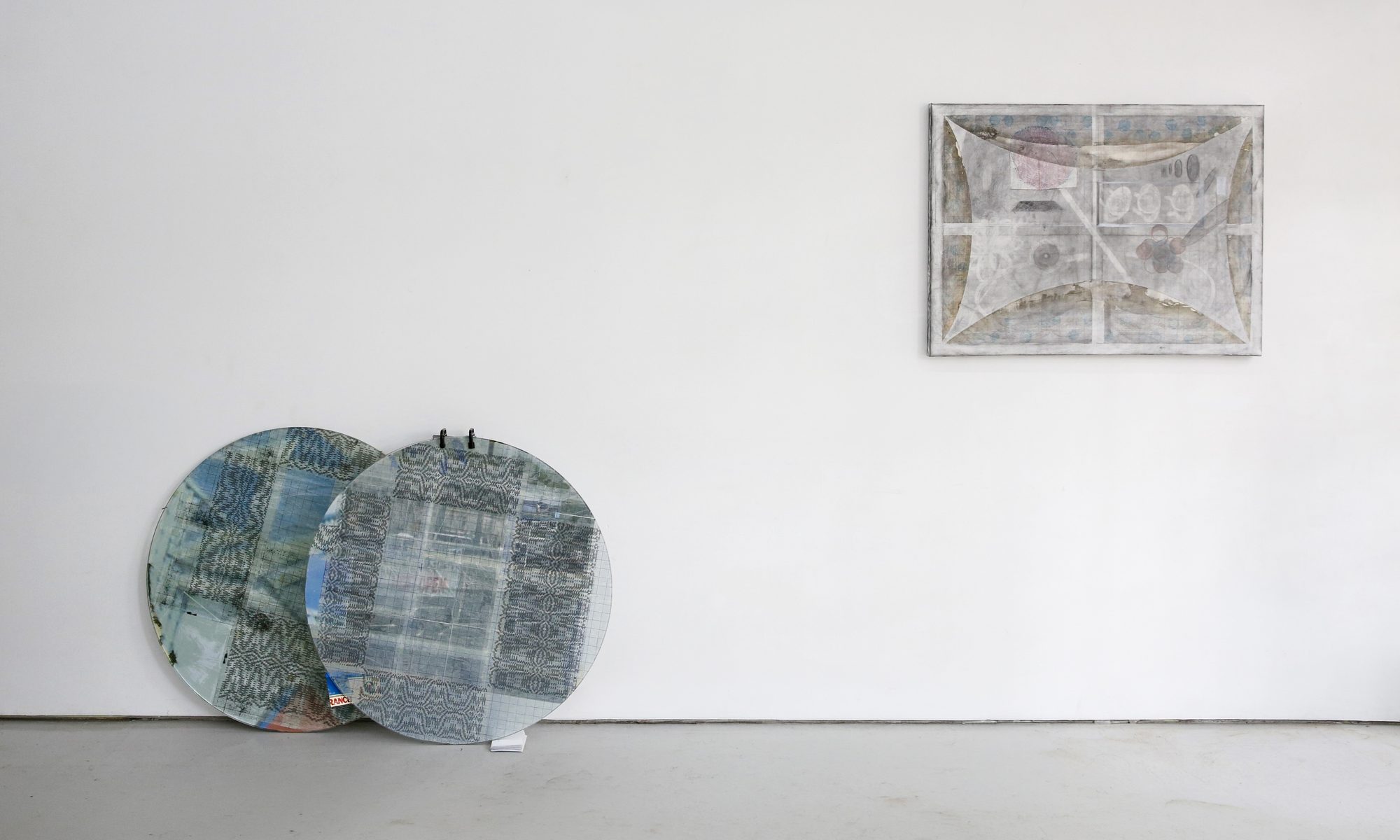
For artists Clare Hu, Tianyi Sun, and Shaan Ken Rao, their residency-then-exhibition is already well past its expiration date. Entering the group show Best by 07/21/2026 may feel more like intruding on a gallery’s installation or deinstallation than attending its finished presentation. Moving blankets are spread across the walking path, with splashes of white paint visible on the quilted fabric. Glass tables lean on white walls. Enter the back room, and you may trip over one of many sandbags, or duck your head under the arm of a swinging C-stand.
Continue reading ““Best by 07/21/2026” at Eli Klein Gallery”SPRING/BREAK highlights: Hide and Seek
This year’s theme for SPRING/BREAK Art Show was Hide and Seek. The fair was within this new and exciting office space that felt like a labyrinth at first, but then it evolved into a wonderful journey- meeting new artists and old friends. Full of amazing works and installations, the booths caught my attention through either a detail, a connection, or a wonderful conversation. The themes varied, from Peter Gynd’s focus on the joys of the everyday to Juan-Manuel Pinzon and Matthew Logsdon’s connections through material, action, and discovery. David Howe and Jesus Benavente’s team brings urgency and humor, showing how decisions from up high affect our everyday lives. My experience of the fair concluded with the works of Noa Charuvi and Shmuel Charuvi, exploring connections to a sense of place and ways of viewing the world, often influenced by the works of family, while Braden Bandel’s paintings and drawings bring us into another world entirely- allowing us a place to rest and contemplate.
Continue reading “SPRING/BREAK highlights: Hide and Seek”Cutaway at Brandeis University
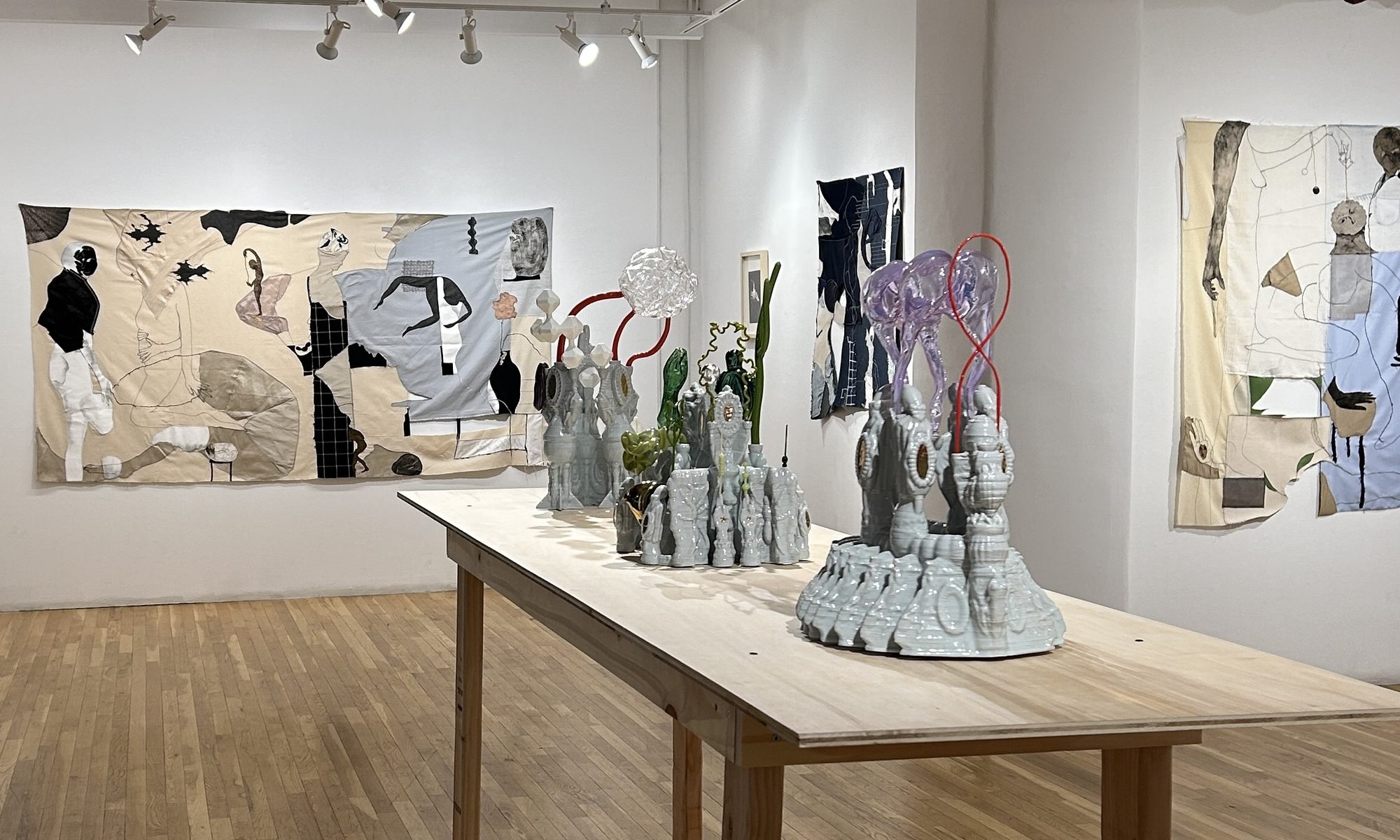
For Cutaway, curator Olivia Baldwin worked the way she does in her own studio — building from the ground up, beginning with the artists rather than a theme. She had followed Eleanor Anderson, J Stoner Blackwell, Lucy Kim, Kirstin Lamb, and Hai-Wen Lin for years, looking for where their materials might overlap and where they might productively rub against one another. Meeting with them, a shared concern surfaced: how each artist asserts and then loosens the limits of an object, a body, a pattern. Their means are strikingly varied — discarded plastic bags, cross stitch, dyed silk and chain, cast flounder and teeth, a kite pitched toward the upper windows — bound by saturated color and touch. The body recurs throughout, rarely pictured, more often left as a trace in the material. Baldwin discusses the show’s bottom-up beginnings, what its materials share, and the withholding behind its title.
Continue reading “Cutaway at Brandeis University”America, Unfinished?! at WaterFire Arts Center
America, Unfinished?!, a national exhibit at WaterFire Arts Center in Providence, RI, features the work of 80 artists from 13 states and territories. I visited the 15,000-square-foot former rubber factory on a hot July day. The light-filled space is several stories high and could dwarf almost anything smaller than a jet, so it took me a while to find my bearings and focus on the work.
Continue reading “America, Unfinished?! at WaterFire Arts Center”Fugue Gallery Finds a New Home with Forbidden Fruit
Located along the central artery of Little Italy, amid a glut of red sauce joints with checkered tablecloths, sits the new home of Fugue Gallery. Having recently relocated from Canal Street to Mulberry Street, the space, a 1,000-square-foot brick loft, eschews white box sterility for something more atypical.
Continue reading “Fugue Gallery Finds a New Home with Forbidden Fruit”Run by Artists, Built for Artists: OyG and the Cornell MFA
What does a gallery look like when the artists are in charge? Founded in 2013, Ortega y Gasset Projects (OyG) is an artist-run collective with no fixed curatorial line and a non-hierarchical structure shared equally among its eight co-directors. Since 2023, it has become the annual New York home for Cornell University’s MFA thesis exhibition — a partnership built on a simple premise: artist-run spaces value experimentation, innovation, and risk-taking, giving graduate artists the freedom to present work without commercial constraints or curatorial imperatives.
Continue reading “Run by Artists, Built for Artists: OyG and the Cornell MFA”The Absence is in the Fingers
There are exhibitions shaped less by what is installed than by what fails to arrive. I did not plan for this to be one of them. Where Form Remembers was conceived as a two-person presentation: Julie Gladstone’s mixed-media works traveling from Toronto, Avani Patel’s drawings from Brooklyn. The premise was a dialogue between two practices in proximity, each distinct enough that the distance between them would produce something worth engaging over time. What it became was different.
Continue reading “The Absence is in the Fingers “