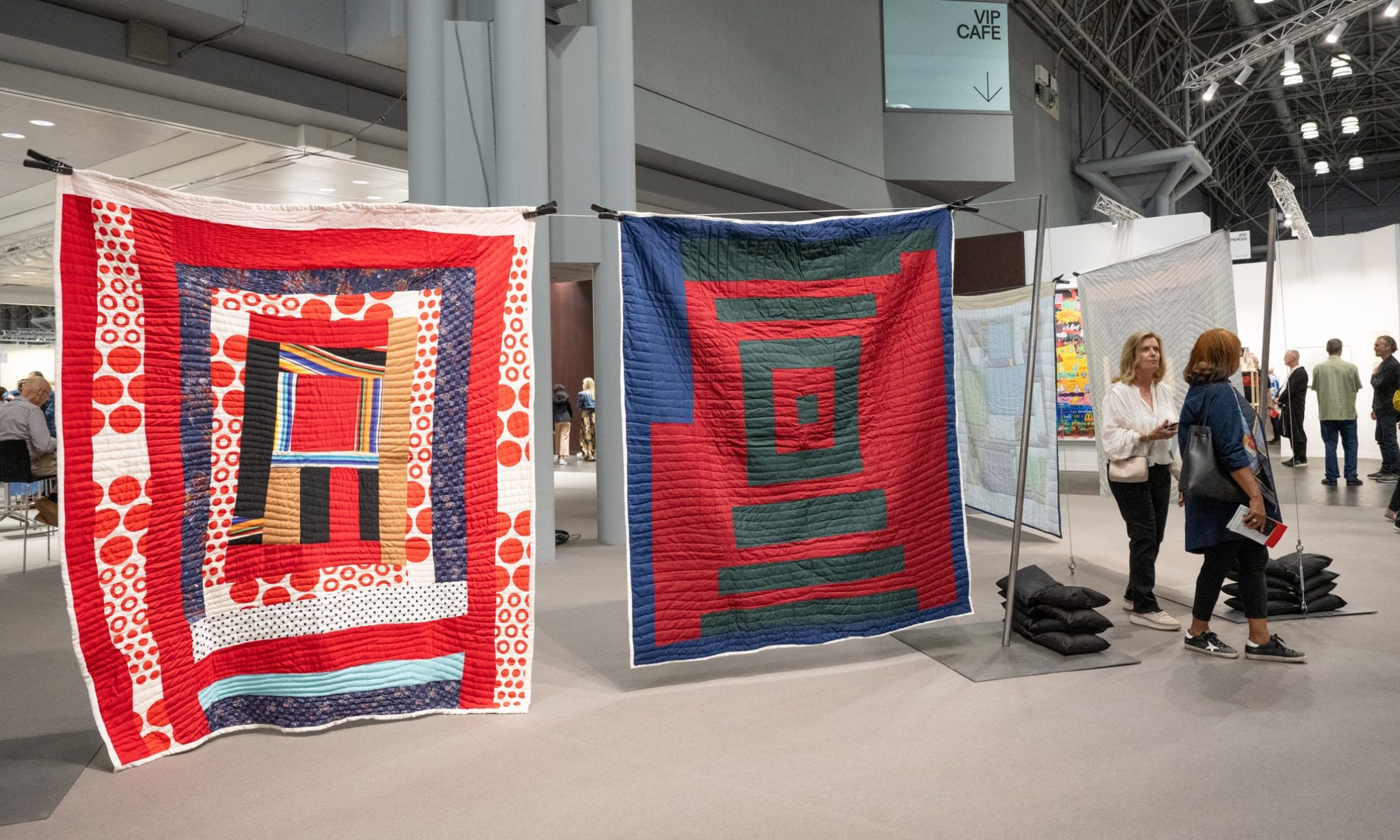
When The Armory Show announced its 2026 early-bird tickets, one promotional image immediately caught my attention: an installation of quilts by Loretta Pettway and Nancy Pettway, presented at the 2025 fair by Souls Grown Deep. A month after visiting the fair in September, I am still reflecting on what my encounters reveal about fiber’s place in contemporary art.
I kept looking at the image with a kind of wonder that was hard to put into words. I had noticed the trend mainly around works that moved between painting and fiber art, but I still feel that fiber is not fully accepted or understood as a medium in itself. I was curious to ask galleries presenting fiber what questions they receive from visitors. Several told me that visitors often ask about longevity: Will the materials last? This concern seems to reveal how unfamiliar many audiences still are with fiber as fine art. After all, a painter’s canvas is also woven from fibers, yet its familiarity allows us to accept it as a foundation for art.
In the 1960s and 1970s, fiber artists gained international recognition for exploring the medium’s sculptural possibilities. Artists such as Sheila Hicks, who studied with former Bauhaus teacher Josef Albers at Yale, and Olga de Amaral in Colombia contributed to a movement shaped by diverse textile traditions and artistic voices. Yet despite the recognition, much of the critical writing remained within craft publications, keeping fiber at a distance from broader conversations about contemporary art. I found myself wondering: Has the recognition achieved by pioneers such as Hicks translated into a deeper understanding and appreciation of fiber art today?
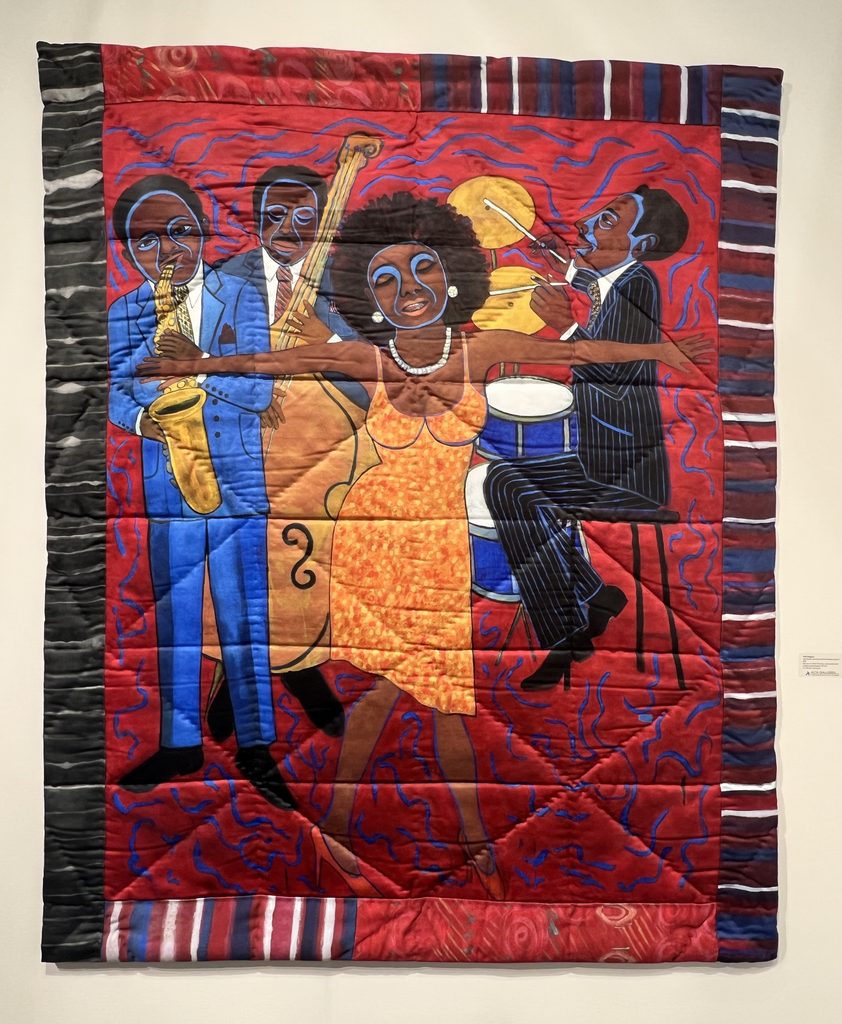
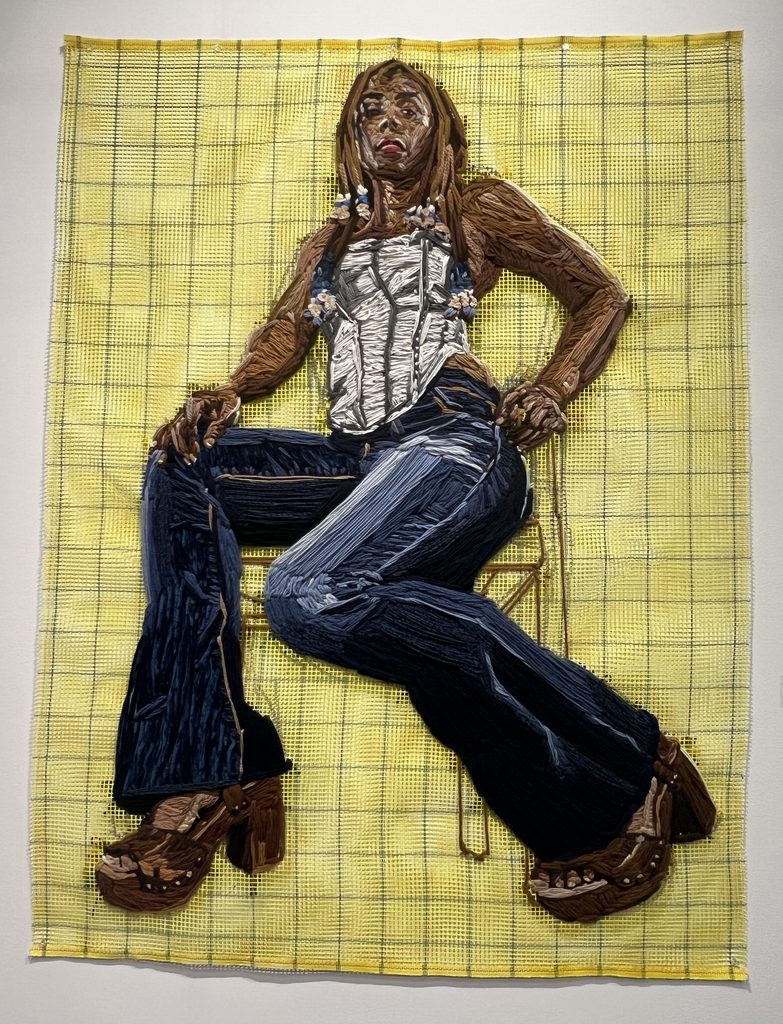
At ACA Galleries’ Women in Fiber, the Black female jazz singer in Faith Ringgold’s quilt Jazz Stories: Mama Can Sing, and the embroidered portraits in Kandy G. Lopez’s work exude power. Lopez’s portraits of Black women extend sculpturally from the rug-hooking mesh through meticulously worked, thickly stitched yarn. The figures face the audience from above, reminding me of contemporary goddesses. In a recent interview with Vogue, Lopez describes the contrast between the meticulously embroidered front of her portraits and the knotted, almost violent reverse, connecting this material duality to the strength and vulnerability of her subjects.
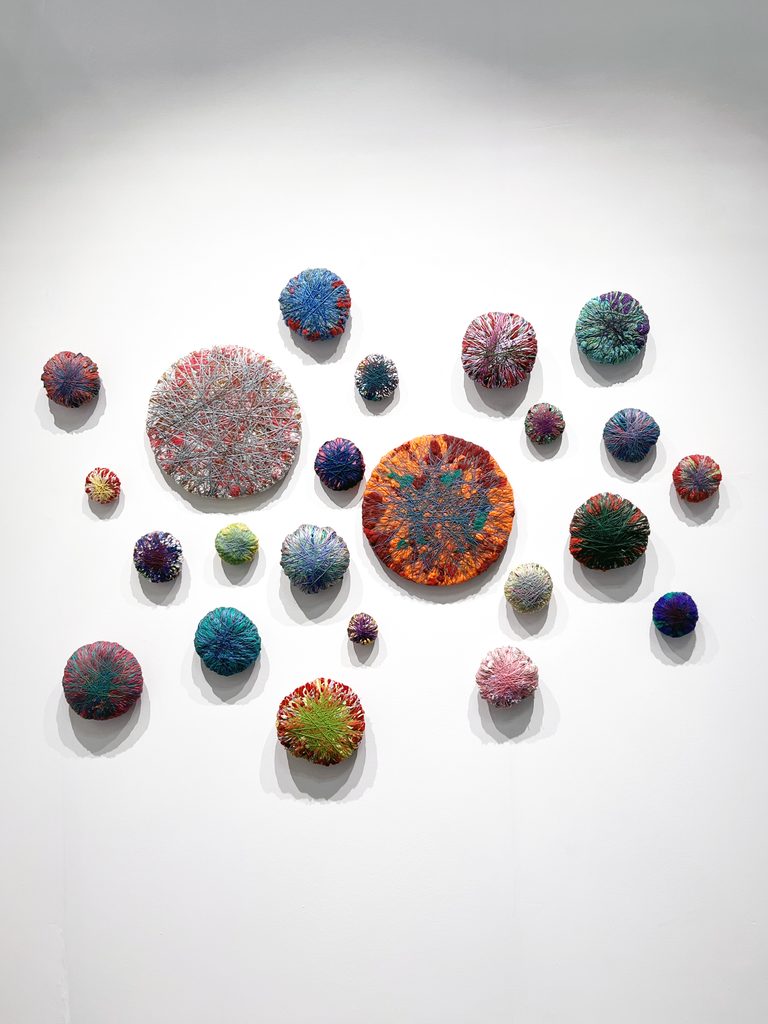
At Alison Jacques’s booth, Sheila Hicks’s Constellation d’Anniversaires invited a closer look. The densely wrapped circular forms reminded me of planets, each holding its own cosmic web of threads stretched across its surface. I was captivated by their rich, individual colors and the free, continuous gesture of wrapping. There is something primordial and universal about these forms, yet also an almost childlike trust in the material that I find so precious.
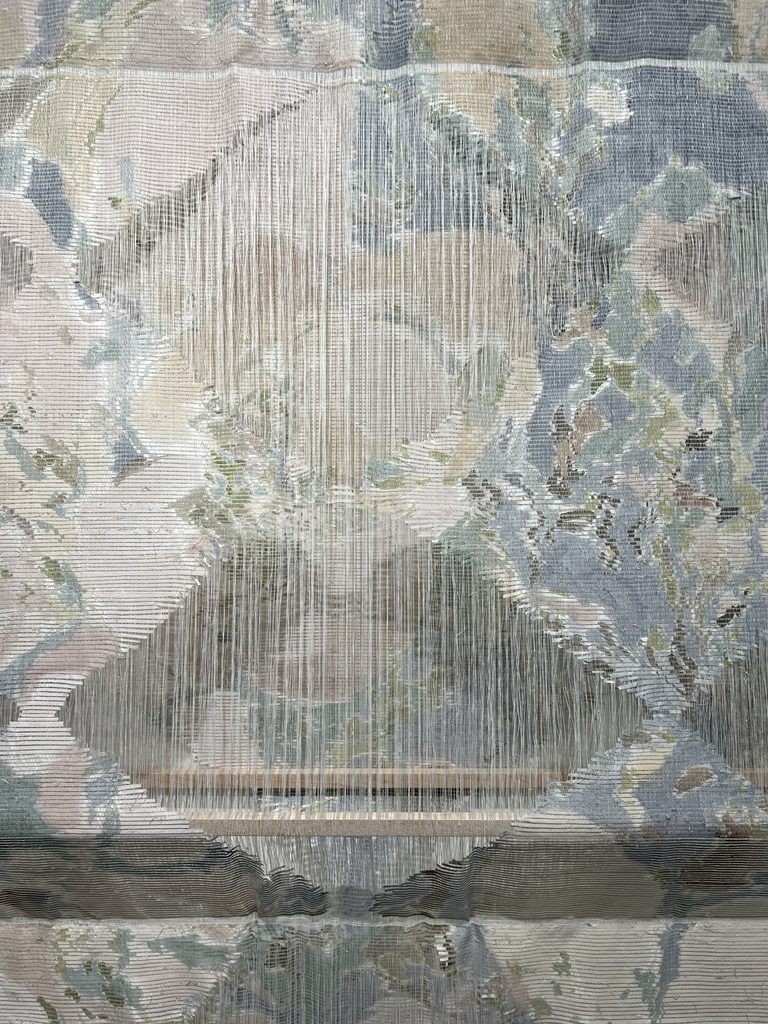
Elise Peroï’s work, presented by Carvalho Gallery, challenges the familiar flat surfaces of painting and historical tapestry by restructuring the fabric on which images are created. Painting on silk, cutting it into narrow strips, and weaving them into an open warp, she transforms the image into a sculptural form.
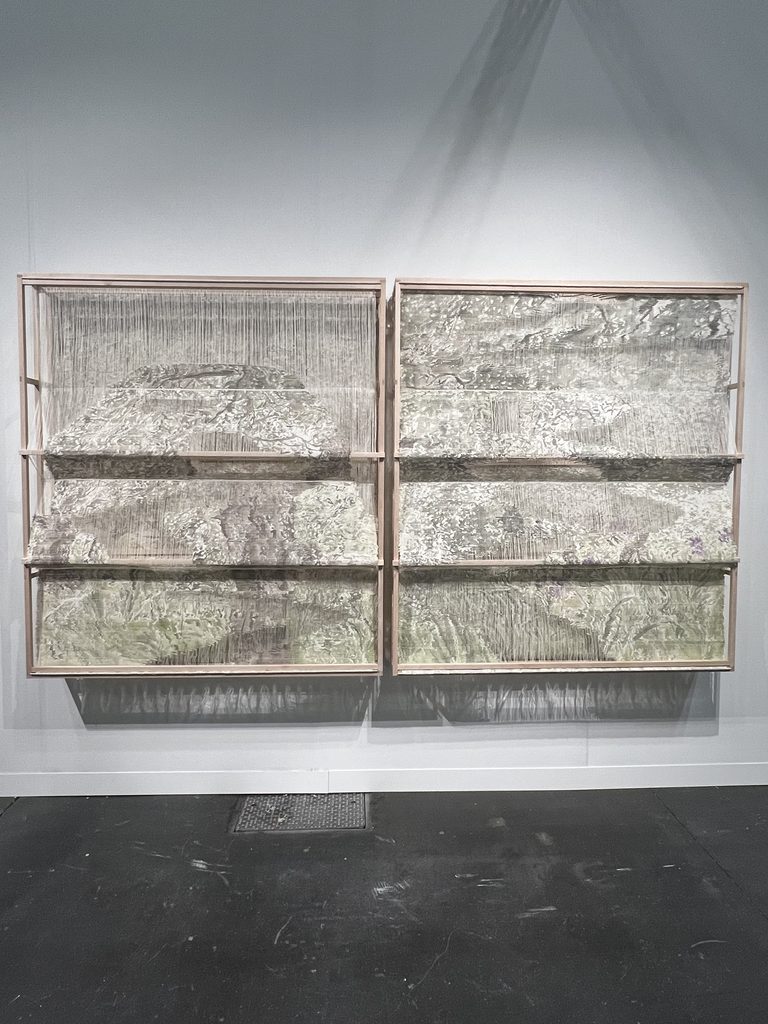
I asked the gallery how visitors respond to these delicate woven surfaces. The gallerist mentioned that people often question their fragility and durability. With a smile, he described guiding concerned visitors toward works combining stretched silk with harder-seeming materials like selenite and mica.
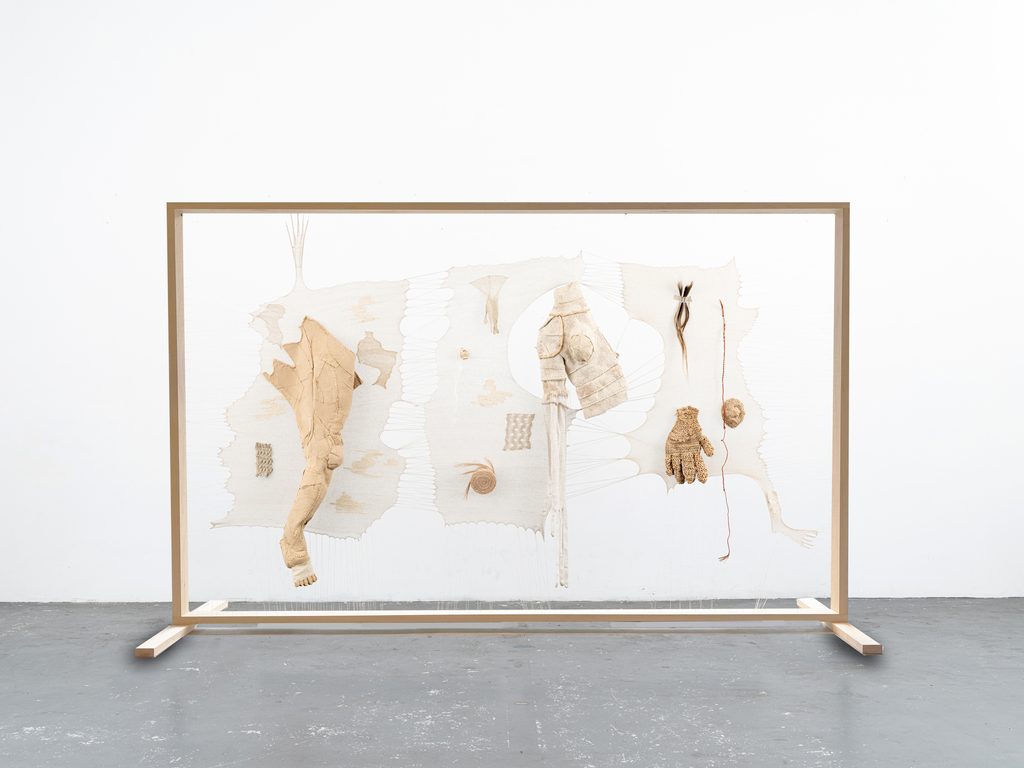
Elisa Lutteral’s A Moment of Silence or a Millennia of Silencing, presented by Praxis Gallery, evokes an archive, yet refuses enclosure. Within a single frame, textile fragments hover, unsettled. The work breathes with time rather than being pinned as a relic. Lutteral spoke about textiles as inherently ephemeral and bound to the body through language and touch.
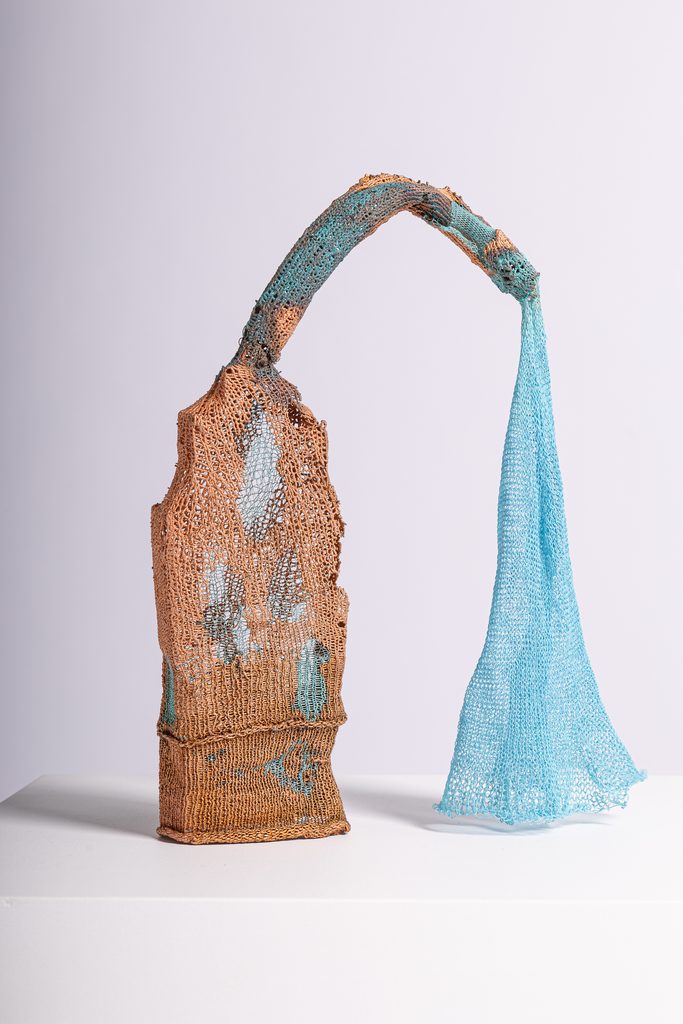
That questioning of permanence carries into her series Topographies of Delusional Immortality. The small sculptures gathered on a single pedestal made me smile. Rather than towering over us, these monuments appeared shrunken, almost drooping. Their peculiar forms and humorous titles, such as All Those Years Without Sunscreen, added to the irony. There was something delightfully absurd about these little monuments, which, rather than defying time, seemed to be undergoing it.
At Constanza Camila Kramer Garfias’s sculptural textiles immediately sparked my curiosity. Her textiles reimagine historical maps associated with Amerigo Vespucci and Ptolemy. She playfully intervenes in these maps, changing the wording from terra incognita to terra cognita. There is something almost childlike in this act of drawing and playing with maps, yet the questions it raises are far from innocent. How could lands inhabited for generations be considered unknown simply because Europeans hadn’t documented them?
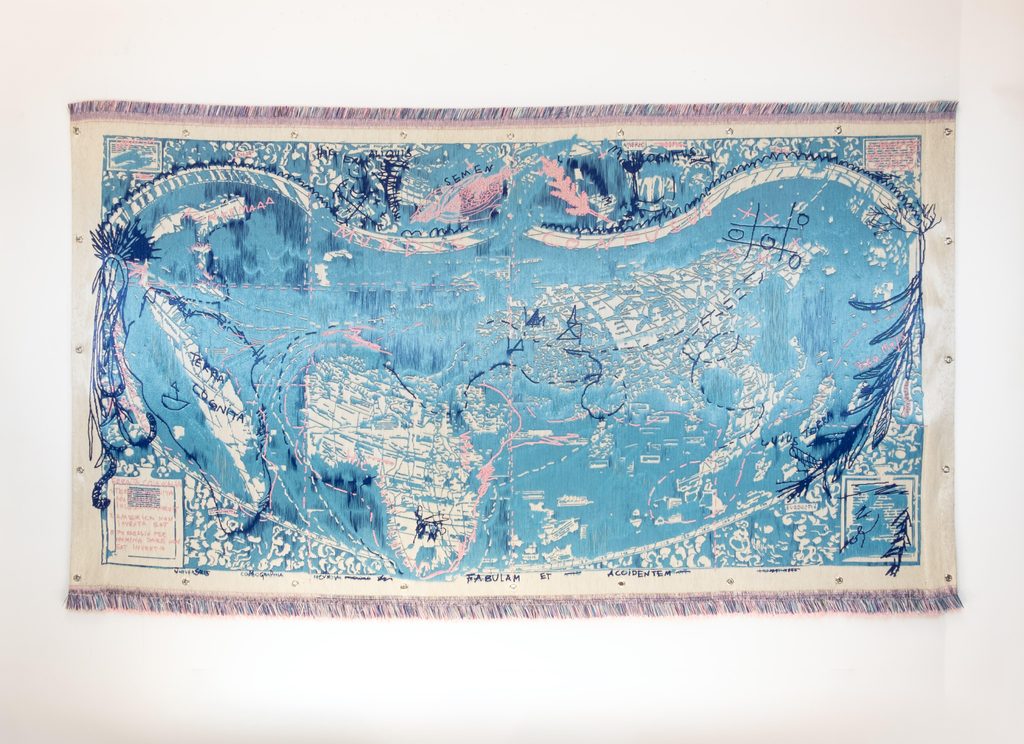
What also stayed with me was how the artist experiments with weaving on industrial and TC2 Jacquard looms. Cutting and reusing earlier woven samples, Kramer Garfias introduces fringes and unexpected joins between fragments, bringing spontaneity into a technique that requires a preplanned image.
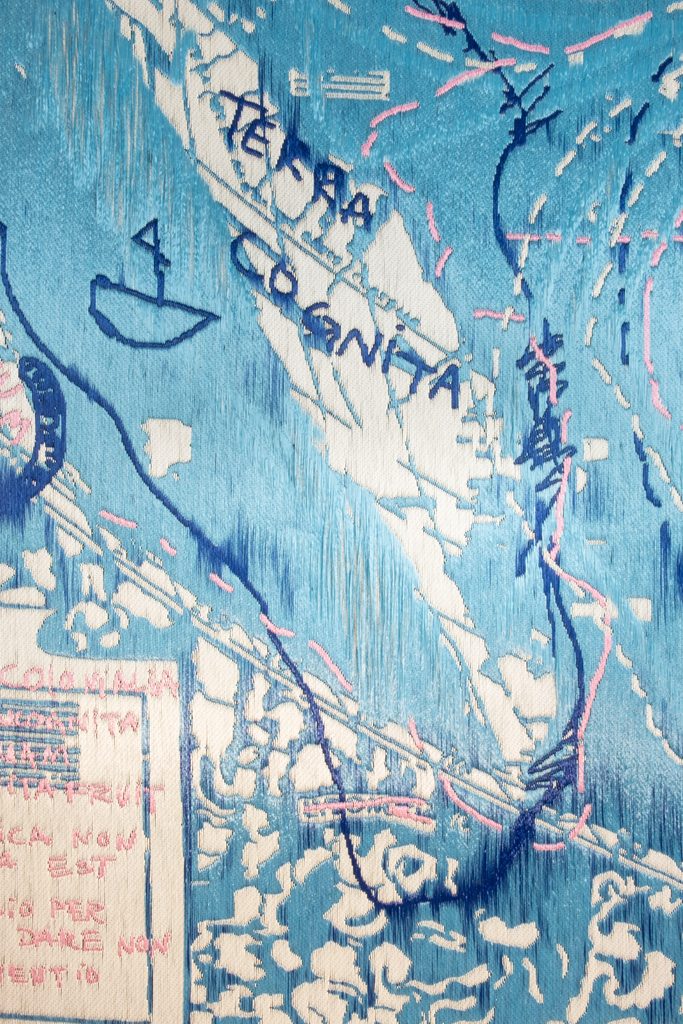
When I asked gallerist Kendra Jayne Patrick about fiber, she resisted making the medium a category apart. “I just care about good art,” she said. Her collectors, she explained, were less concerned with durability than with process: had the artist woven the work herself? In Kramer Garfias’s work, Patrick recognized authorship across both hand and industrial production: “You can just tell that this is an artist who made every little decision.” Her words conveyed a heartfelt recognition of the artist’s presence in the work—through the labor of making and the thinking behind each decision.
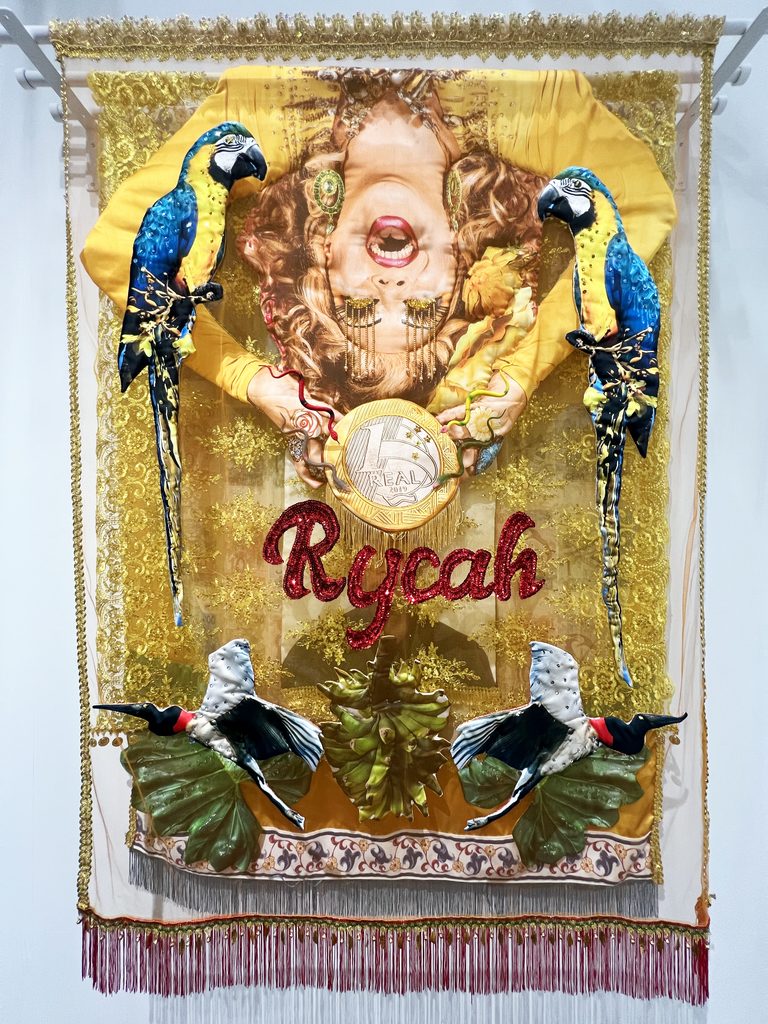
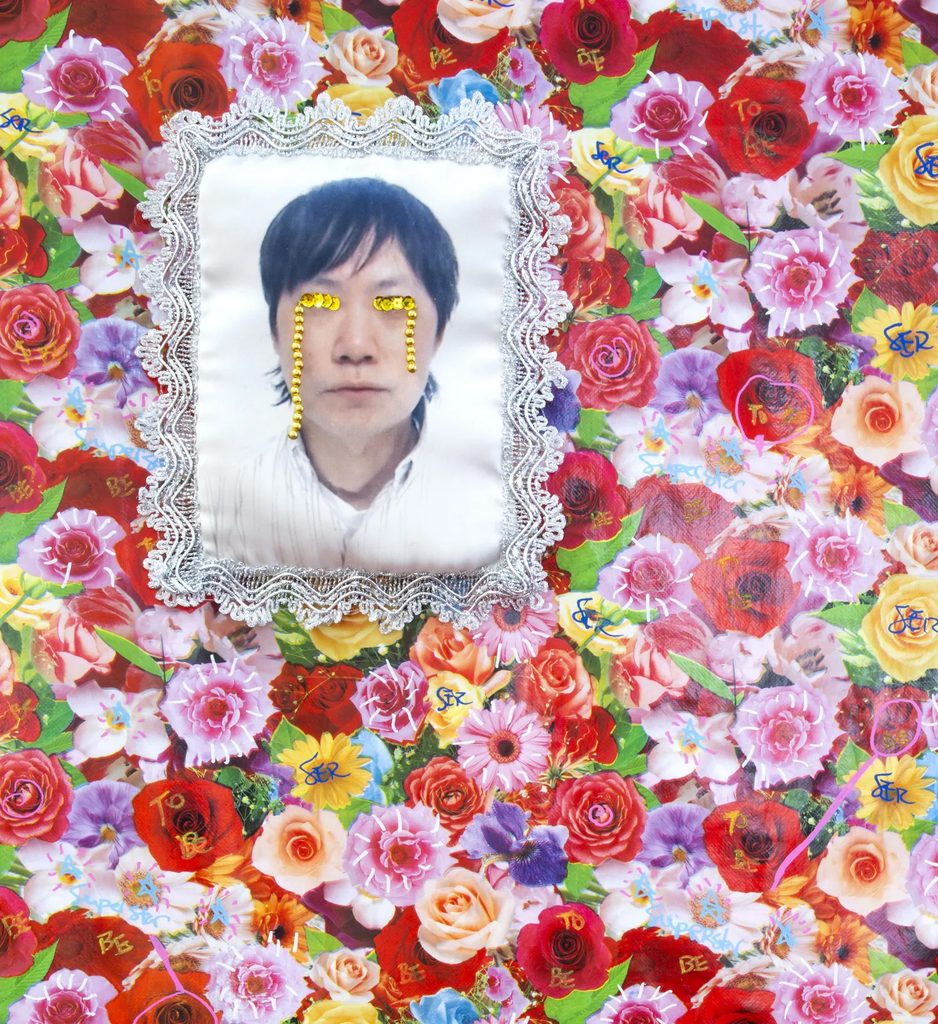
At 193 Gallery, Shinji Nagabe’s wall hangings, Bunitah and Rycah (2026), stood out for their theatrical color and tropical imagery. Drawing on his Japanese background and Brazilian upbringing, Nagabe explores queer identity through drag and carnival. Transparent organza layers create screen-like, three-dimensional surfaces, contrasting exuberant front imagery with subdued, passport-like portraits of the artist on the reverse. To me, there is something deeply vulnerable beneath this celebration, as though it carries traces of sadness, suppression, and transience.
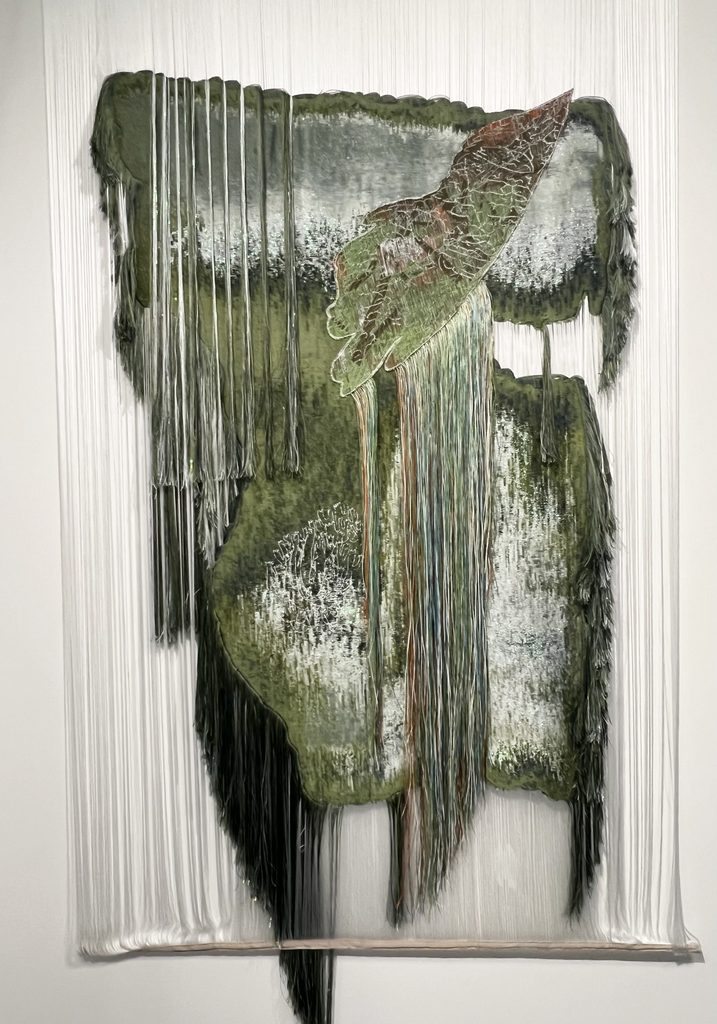
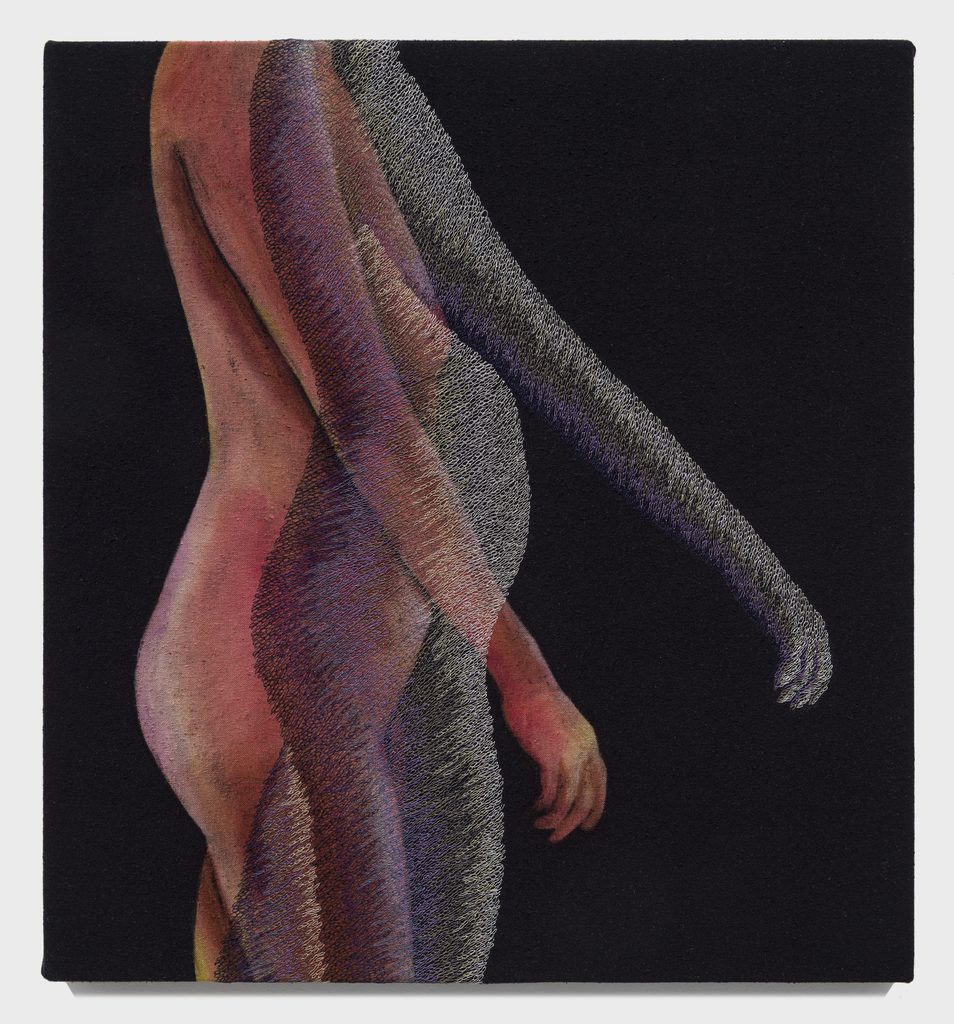
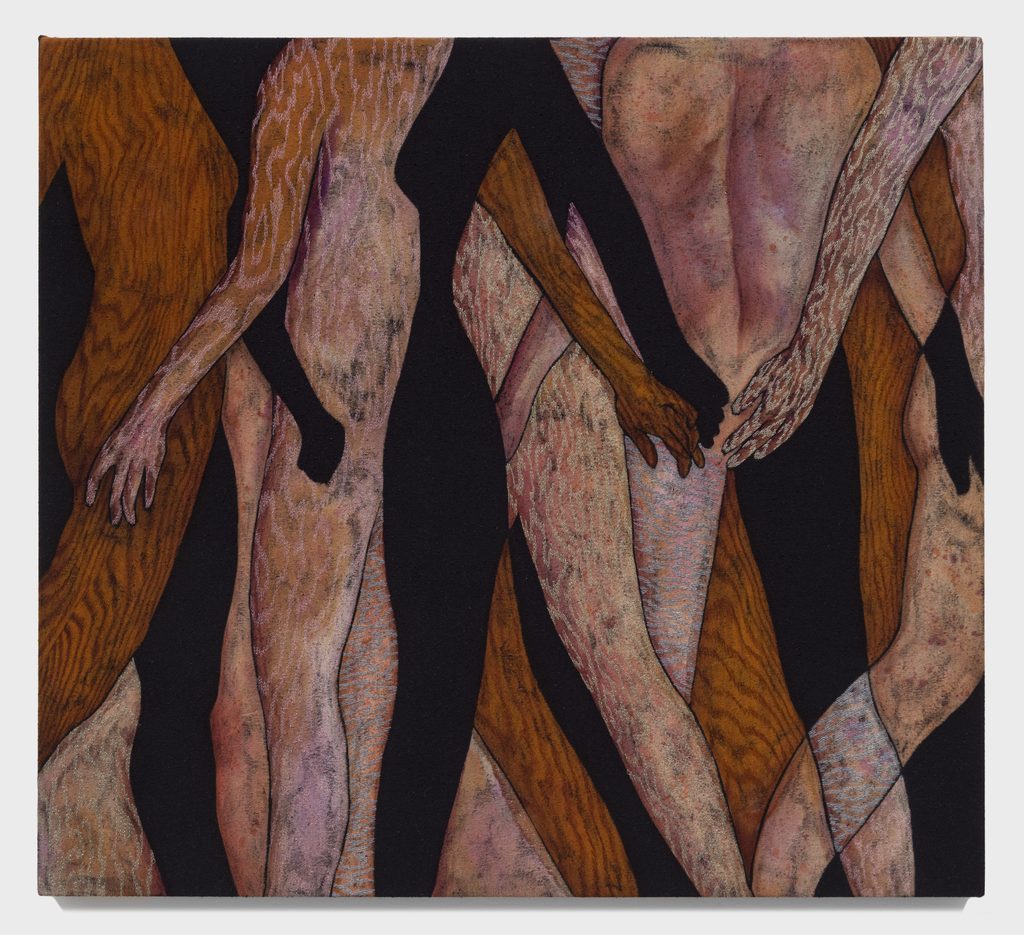
At Asya Geisberg Gallery, Katarina Riesing’s solo presentation explores the shifting sense of self following motherhood. Working with dye and hand embroidery on silk, Riesing depicts bodies that intertwine and disappear into patterns resembling the wood grain of domestic interiors. Looking closely, I was struck by the painstakingly hand-stitched gold and silver threads, simultaneously revealing and obscuring the figures. The gallery shared that Riesing learned embroidery directly from her mother, bringing an achingly beautiful layer of personal history into the work.
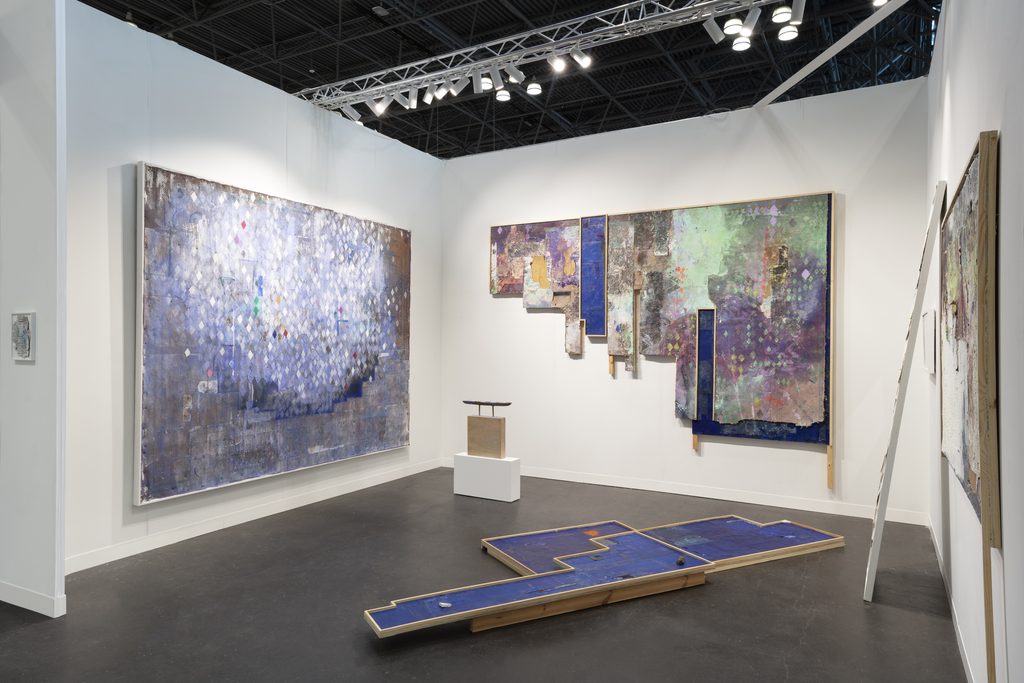
At Mindy Solomon Gallery, Yanira Collado’s large-scale work immediately captivated me with its intensely saturated blue surface. Looking more closely, I noticed subtle patterns beneath the color. What initially appeared to be a painted canvas was, in fact, the reverse side of a Persian rug. Mindy Solomon thoughtfully shared the layered history of the Dominican Republic and the diverse communities that have shaped its cultural landscape. She also connected the blue in Collado’s work to Caribbean blue-soap cleansing rituals. Beneath the saturated ultramarine, the textile carries traces of cultural exchange, migration, and histories that continue to reveal themselves through the material.
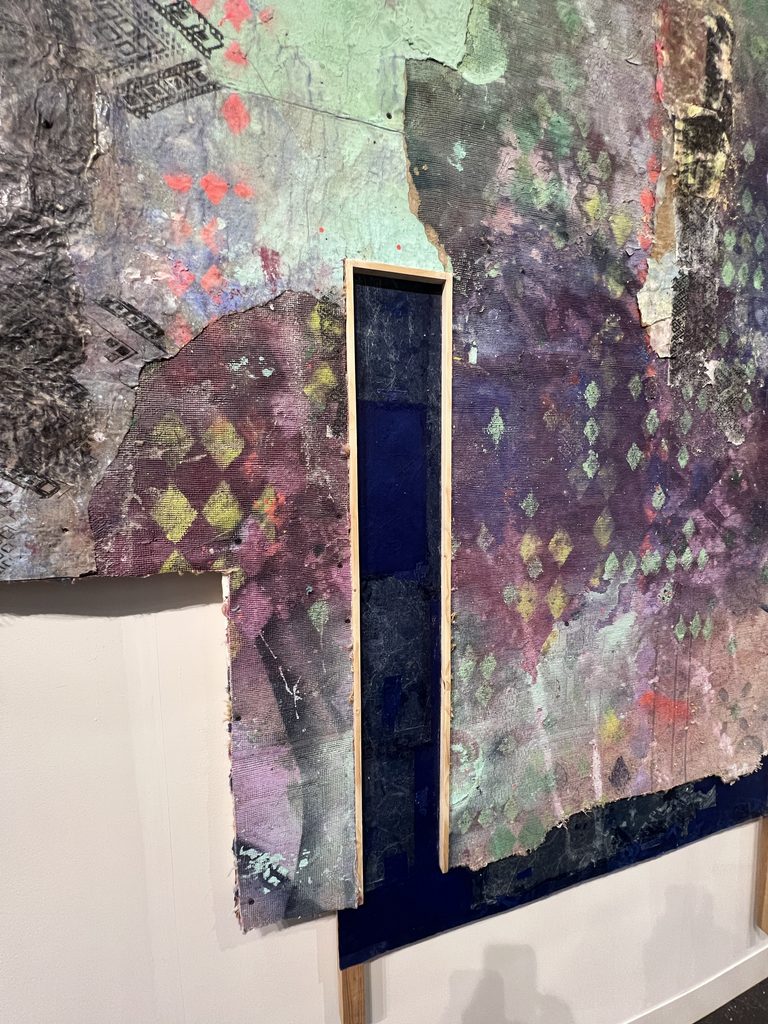
Constanza Kramer Garfias brought up a beautiful visual of a spider sensing every vibration through her web and spinning her own pattern. Working with fiber becomes an active mode of thinking: knowledge emerges as artists gather materials, explore histories, cultures, and landscapes, and become immersed in the present moment of making.
After encountering such a diverse range of fiber practices, I am left with a stronger sense that the significance of textiles’ growing presence within contemporary art lies in the questions they ask us to reconsider. I wonder what we miss when concern for a work’s longevity and attachment to established ideas of art overshadow our attention to what the material allows us to feel and understand.
This momentum also calls on curators and the press to develop a deeper understanding of fiber and articulate its complexity through a rigorous critical discourse that brings the medium into broader conversations about contemporary art.
Make your tax-deductible donation today and help Art Spiel continue to thrive. DONATE
About the writer: Kathie Halfin is a Brooklyn-based interdisciplinary fiber artist whose woven sculptures explore plant intelligence, migration, and the relationship between body and land. She spins paper into yarn by hand and weaves it into sculptures that take shape slowly, echoing the ways plants root, climb, and reach. Her interest in weaving as an active mode of thinking extends to her research, writing, and curatorial work. In 2026, she curated Fiber Thinks! at Elza Kayal Gallery during New York Textile Month. The group exhibition explored how contemporary artists think through fiber’s materials and processes, drawing on textile traditions across cultures. Halfin’s work has been exhibited internationally, including at the Bronx Museum of the Arts, Scandinavia House, A.I.R. Gallery, the Ukrainian Institute of America, and the Herzliya Museum of Contemporary Art. @eclectic_body