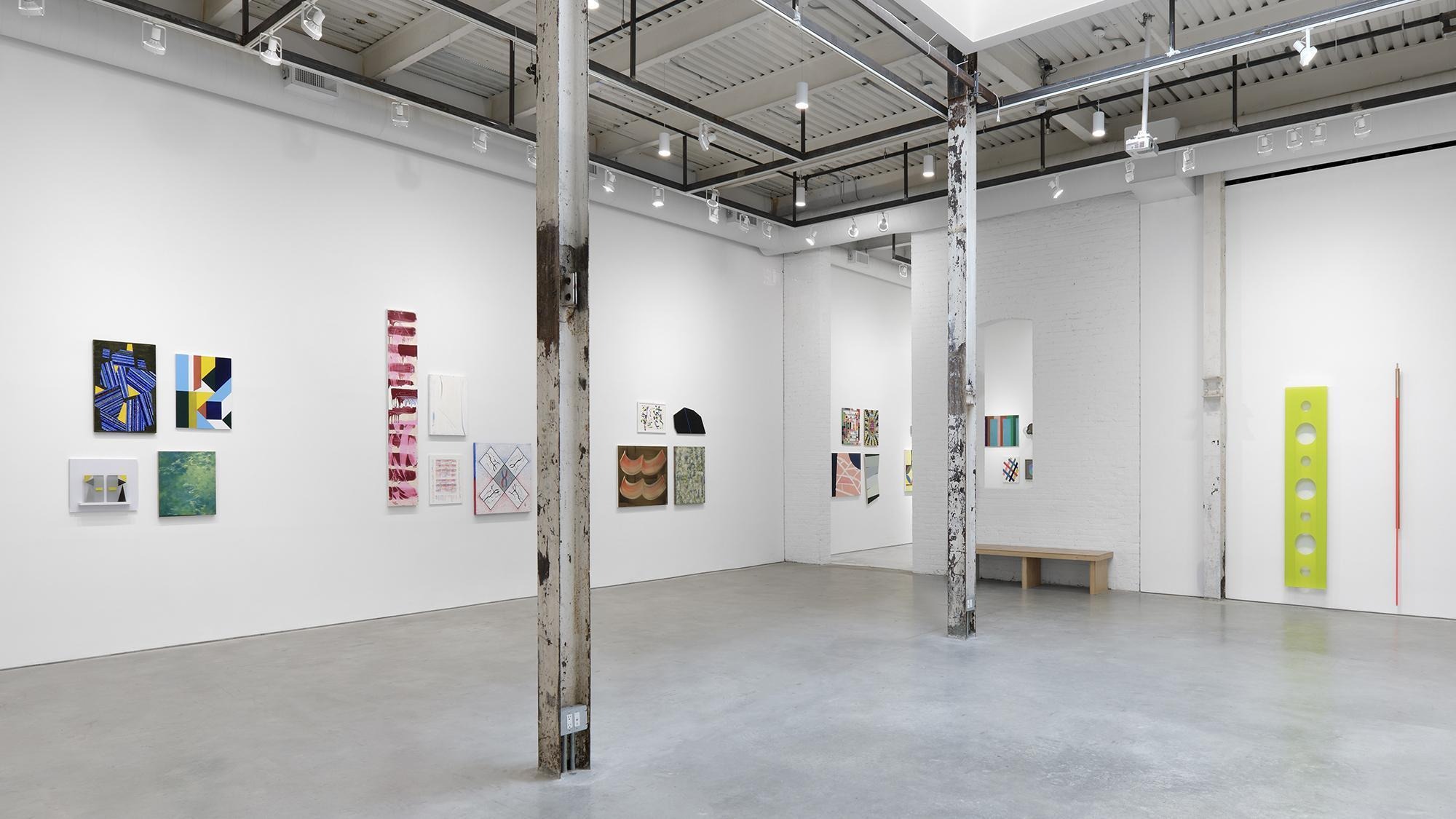
American Abstract Artists turns 90 this year, an unusual achievement for an artist-run group. Its anniversary show, Abstract by Definition: An Index, opened in April at Art Cake in Brooklyn, curated by Saul Ostrow, who brought 88 current members together under a single roof: a curatorial puzzle, an organizational feat, and a long-running argument about what abstraction can be. A companion exhibition at D. Wigmore Fine Art on West 57th Street focuses on the group’s founders and work made between 1936 and 1950 and runs through July. Here, painter Jacob Cartwright, who serves as AAA’s Secretary, reflects on the group’s nomination-only structure, how a show this size actually comes together, and where he wants AAA to go next.
Continue reading “Still Abstract at 90: American Abstract Artists “At Some Point, Every Household Object Stops Being Innocent
No one ever thinks the plate is going to become a problem.
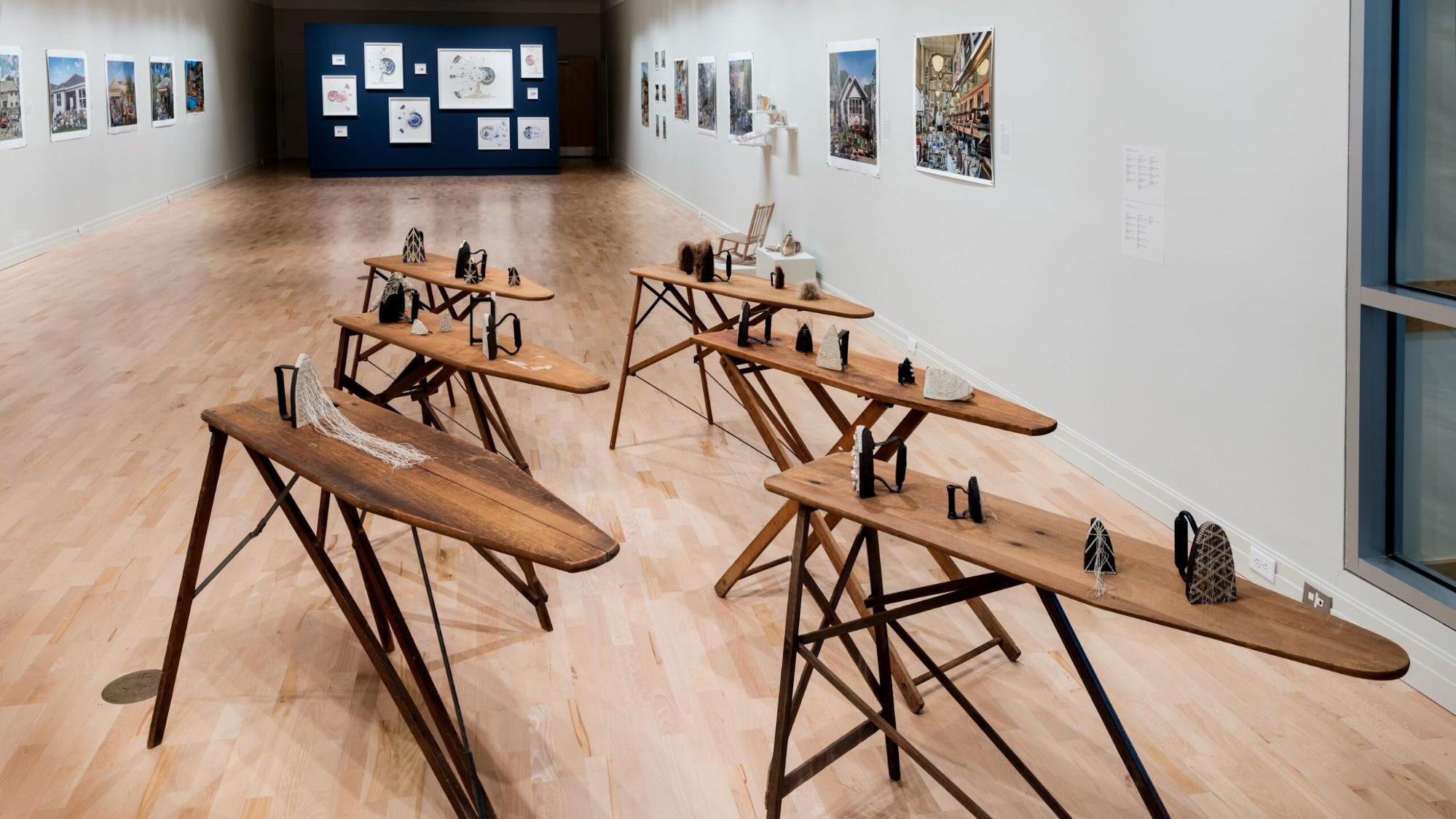
A plate survives three apartments and one bad Thanksgiving. A suitcase gets hauled across borders or shoved beneath beds; sometimes it is packed in hope, sometimes because someone has no choice. An iron presses school clothes and funeral clothes, then outlives its usefulness and sits in a closet somewhere, still holding the pressure of human hands.
That is the animating idea behind extraORDINARY things, the quietly arresting exhibition at the Flinn Gallery in Greenwich Library.
Continue reading “At Some Point, Every Household Object Stops Being Innocent”Xinyu Liu’s Fool’s Hour at Art Cake: Finding a home to Carry Onward
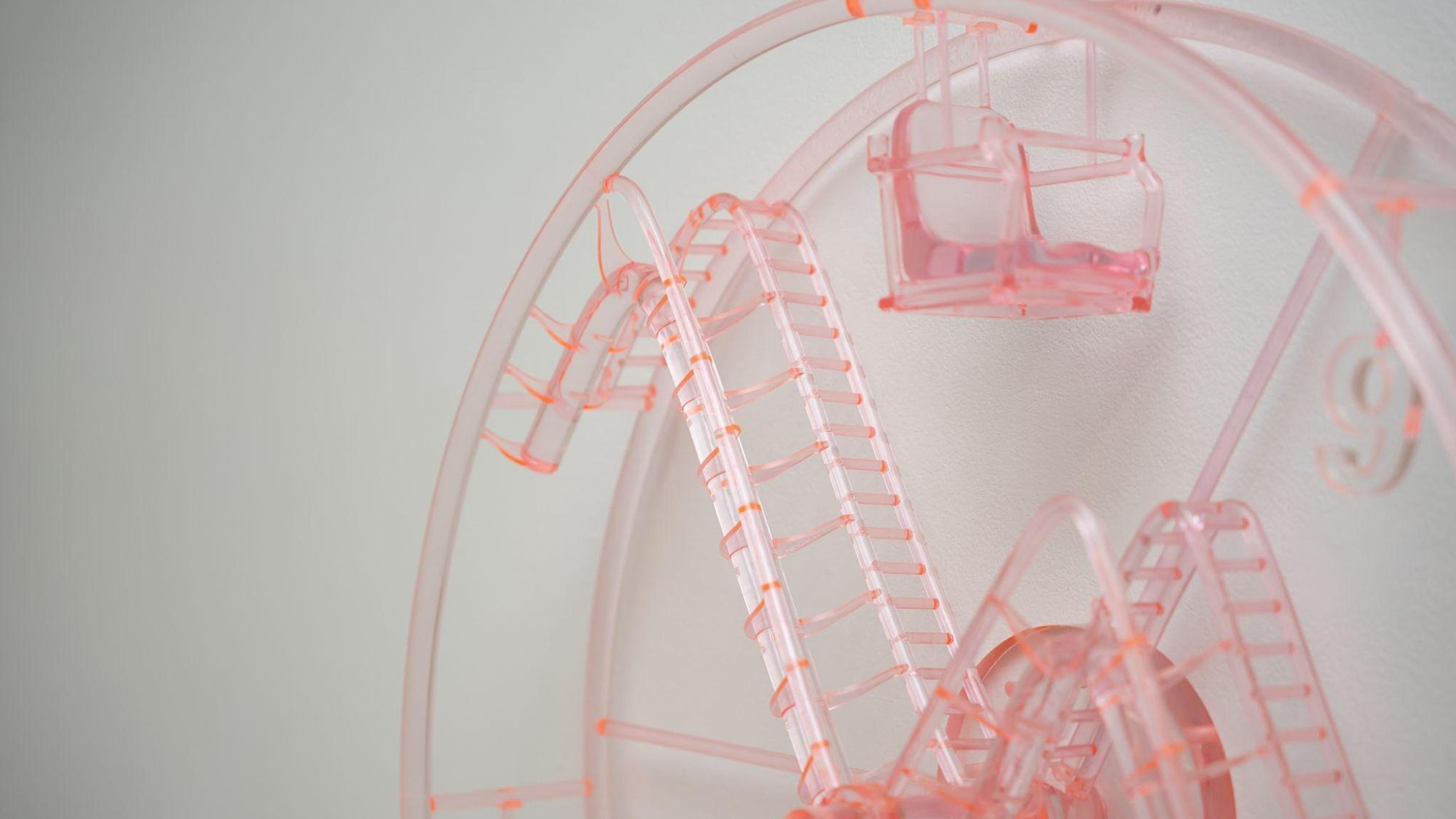
Upon entering the exhibition, you are greeted by pieces of various sizes and mediums, full of intricacies and exploration. With the pieces being smaller in size, besides the Ferris wheel, you have to get close to see the small details or the depth of space that opens into a world of its own within each piece. Within the works, Liu offers locations such as cities, darkened spaces, carnivals, and other places of transition. Places that one may find themselves when they are beginning to traverse or transition into someplace new. I appreciated that each work was either on the wall or a shelf, giving each a sense of its own place. The space around the pieces gives them an opportunity to breathe and allows viewers to look closely at one and flow seamlessly into the next.
Continue reading “Xinyu Liu’s Fool’s Hour at Art Cake: Finding a home to Carry Onward”Departing From The Flat World: Jong Oh’s Sixth Solo Exhibition At Marc Straus Gallery
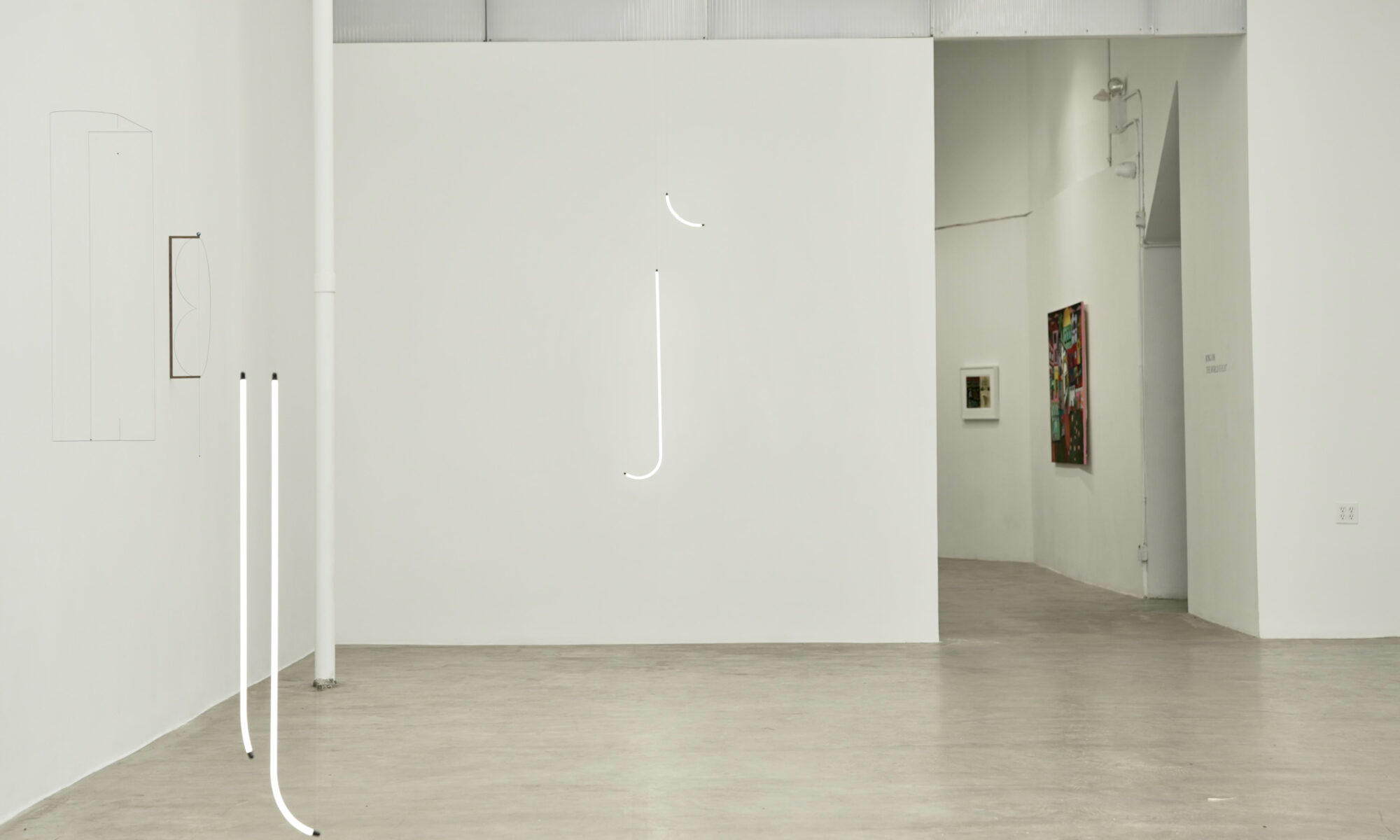
“The world is flat” is perhaps humans’ most primitive sense of physical surroundings. It was also a cosmological conclusion drawn from honest bodily perception, because the land beneath our feet is indeed still and level, and the universe unfolds as an infinitely extending plane. This perceptual honesty is where Jong Oh begins.
Continue reading “Departing From The Flat World: Jong Oh’s Sixth Solo Exhibition At Marc Straus Gallery”Gabriele Münter – Contouring a World
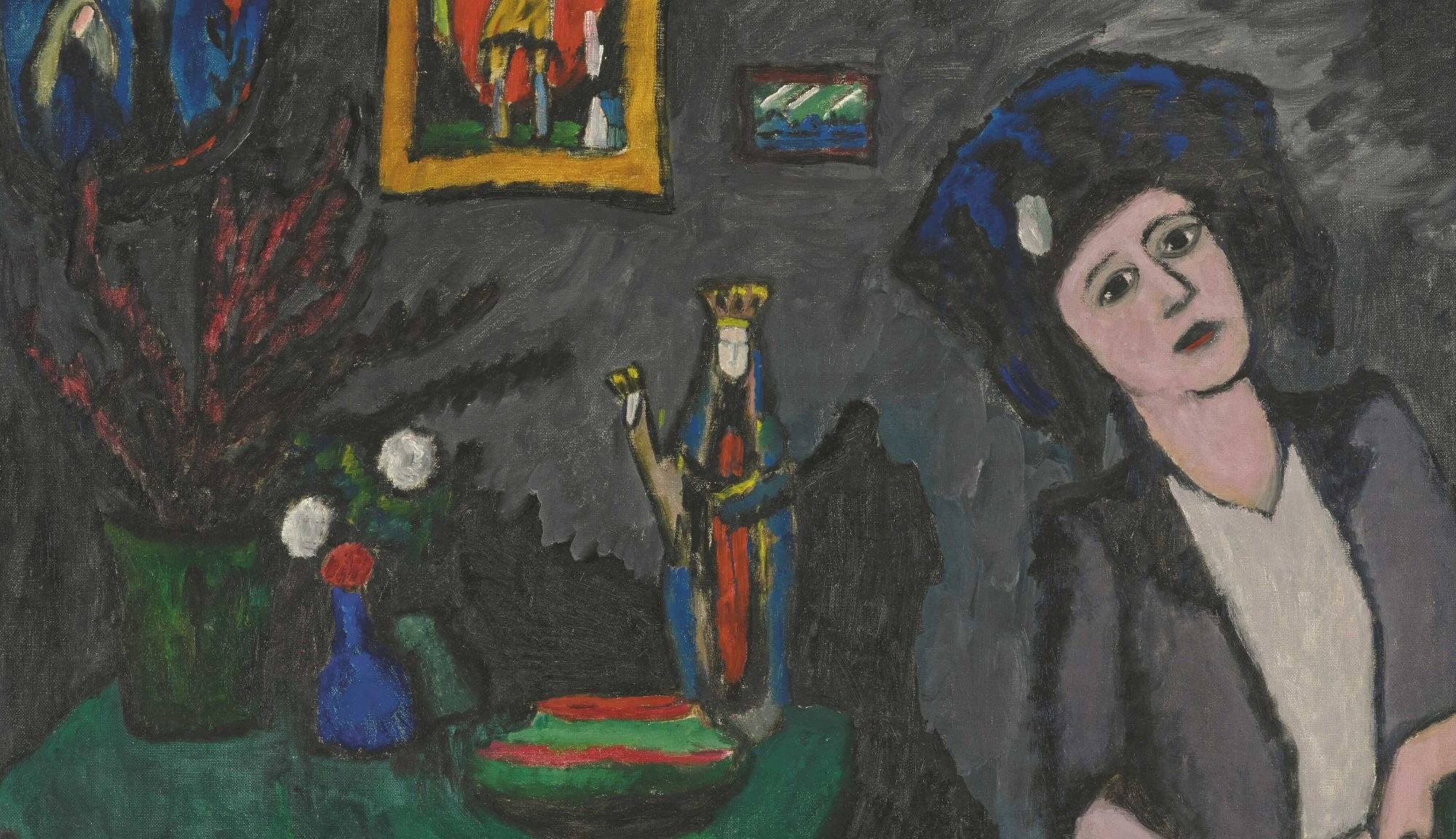
Entering the fourth floor of the Guggenheim, you are met with fields, mountains, lakes of the Bavarian Alps, daily objects, and people—bright, saturated colors held together by dark edges. The exhibition brings together landscapes, portraits, and still lifes, with a focus on Münter’s early Expressionist years alongside later paintings.
Continue reading “Gabriele Münter – Contouring a World”Floating in Three Acts- Keren Anavy at SUNY
Floating names a state of suspension, between sinking and surviving, between grief and the body’s refusal to stop. In Keren Anavy’s landmark solo exhibition, Floating in Three Acts, this condition is both subject and structure. The exhibition is built the way floating feels: without firm ground, without clear direction, with the question of outcome left open.
Continue reading “Floating in Three Acts- Keren Anavy at SUNY”Memories, Recollections and Everyday Life, Xiangjie Rebecca Wu at Latitude Gallery
Upon entering the exhibition at Latitude Gallery, you are greeted with a poem as a silent welcome, the cadence of the poem setting both the scene and the pace of the exhibition, titled A Room Rehearses its Own. In this exhibition, the paintings of Xiangjie Rebecca Wu piece together place, memory, and silence, with an impactful portrayal through both presence and absence.
Continue reading “Memories, Recollections and Everyday Life, Xiangjie Rebecca Wu at Latitude Gallery “Yuko Oda – Decaying into Bloom
Yuko Oda’s recent exhibit, Decaying into Bloom, currently on view at the Brodigan Gallery at the Groton School, located west of Boston, seduces with beauty and delivers a gut-punch from the moment you enter. It is the best kind of artistic experience: being pulled in by the sensuality of the materials, then hit hard with the poignancy of the message. Living things have always had to adapt to new conditions, and Oda imagines for us some ingenious possibilities.
Continue reading “Yuko Oda – Decaying into Bloom”Andrius Alvarez-Backus: I Want to Know, I Need to Know
In Andrius Alvarez-Backus’s solo exhibition, I Want to Know, I Need to Know, at Eli Klein Gallery, the work Are You Still Strong Enough? (2025) emerges as the visual center of the show’s underlying tension. A My Little Pony toy hangs vertically, the surface covered in bronze patina, while the incision along its abdomen is carefully stitched closed. What was once a lighthearted and slightly absurd object becomes, through this treatment, both fragile and solemn. Its form evokes a body after surgery, yet also resembles a preserved specimen. However, the meticulous stitching does not suggest that the wound has truly healed. Instead, the seam runs along the body, leaving the incision exposed and gradually becoming part of the sculpture’s structure. The suturing does not erase the rupture; it keeps the rupture visible. The wound is no longer simply a trace of intervention, but the structural element through which the work sustains its tension.
Continue reading “Andrius Alvarez-Backus: I Want to Know, I Need to Know”Eric Wolf’s Two Waters: Nature, Observation, and Exploration at Abri Mars
Eric Wolf’s works at Abri Mars take us through misty, expansive landscapes. Their ethereality and tranquility pull viewers into new places to explore and settle into. Within Two Waters, Wolf recreates the landscapes he observes directly, using a limited ink palette to bring the pieces to life. Through a combination of controlled and reactive strokes, Wolf uses hard and soft edges to render his figures of nature. While the figures are more abstract- mountains, bodies of water, trees, etc, these works are expanding on the process of plein air, bringing the environment into the works directly. With the gallery’s natural light from the front windows, the darkness of the ink becomes velvety, drawing you in, while the light of the paper glows beneath, pushing outward. This push and pull makes the work feel dynamic and lively.
Continue reading “Eric Wolf’s Two Waters: Nature, Observation, and Exploration at Abri Mars”