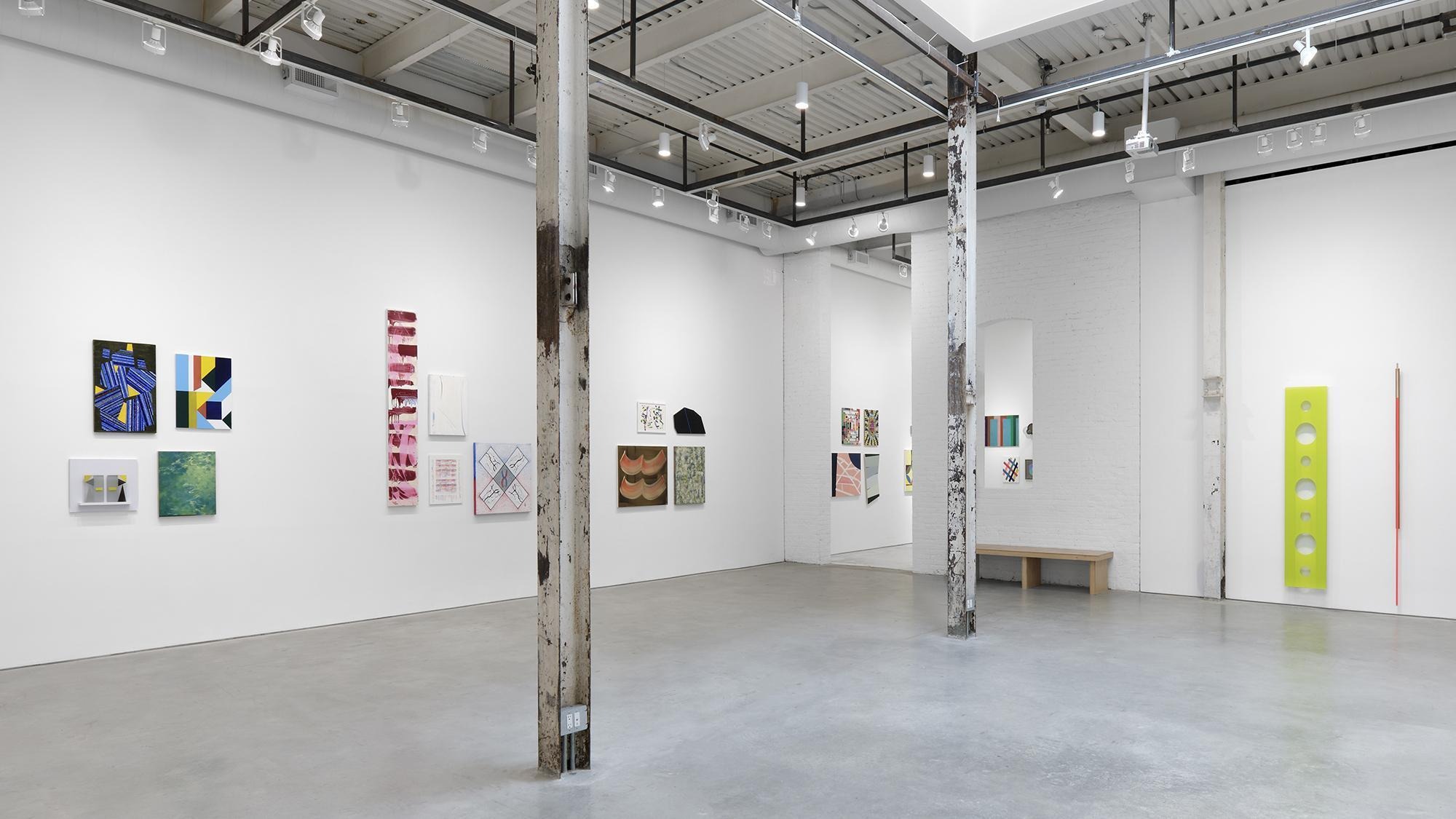
American Abstract Artists turns 90 this year, an unusual achievement for an artist-run group. Its anniversary show, Abstract by Definition: An Index, opened in April at Art Cake in Brooklyn, curated by Saul Ostrow, who brought 88 current members together under a single roof: a curatorial puzzle, an organizational feat, and a long-running argument about what abstraction can be. A companion exhibition at D. Wigmore Fine Art on West 57th Street focuses on the group’s founders and work made between 1936 and 1950 and runs through July. Here, painter Jacob Cartwright, who serves as AAA’s Secretary, reflects on the group’s nomination-only structure, how a show this size actually comes together, and where he wants AAA to go next.
Tell us a bit about yourselves and your own work, how you came to AAA, and the
role you play in the organization today, a little about the history of the group
itself, and how you see AAA and its mission now — nearly 90 years in — heading into the recent show at Art Cake.
I’m an abstract painter, based in the New York City area (I live across the Hudson in New Jersey). I came to AAA more or less as a member of its audience. There were a number of artists I knew in the group, and an even greater number I didn’t know but whose work I admired, so I started showing up when they staged an exhibition. My engagement with AAA’s members and activities made me a natural candidate when it came time to do an intake in 2017.
In terms of AAA’s mission, it remains essentially unchanged, in terms of a core focus on organizing group shows dedicated to non-objective art. AAA was founded in 1936, and by the end of 1938, the group had staged nine exhibitions across the country. At this point, the total number of exhibitions numbers well into the hundreds. The implicit focus, as a group historically based in New York City, is to solidify the community of artistic peers whose work is in active conversation with one another.
My role has primarily been the front-facing aspects of AAA’s program: our exhibitions, catalogs, social media, and other public outreach.
The online exhibition is now live:
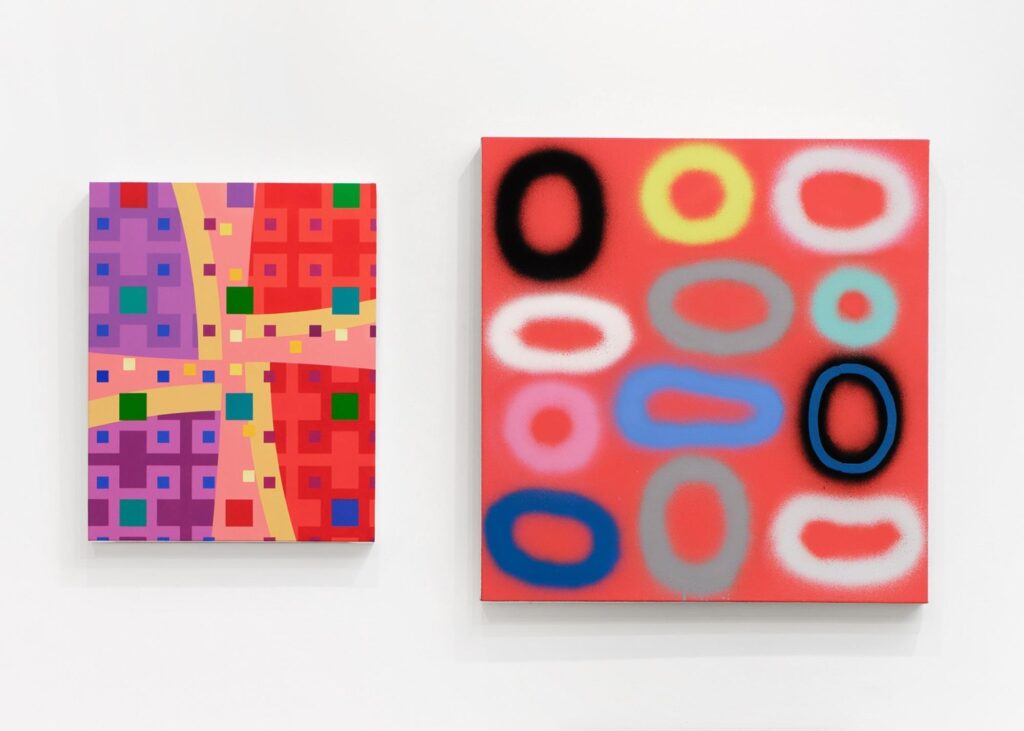
Left to right: Jacob Cartwright, John Phillips
Photo Credit: KC Crow Maddux
AAA has been around for nearly 90 years—one of the only artist groups to survive from the 1930s to now. What do you think explains that longevity?
AAA has always been a bit of a scrappy organization, and I think its longevity relates to its spirit of no-frills self-reliance. The perception has often been that the group was formed in response to resistance to abstraction among American audiences, which raises questions about its continued relevance. Based on my reading, however, the prime motivator was really the curatorial bias at museums like MoMA in the 1930s, which viewed abstraction as a purely European movement, whose activities and influence had peaked. Of course, none of that sat well with the young American artists who were passionately making work in an abstract mode—many of them under the tutelage of Hans Hoffman—so they took the attitude of “fine, we’ll exhibit it ourselves”. AAA’s activities in the 1940s played an instrumental role in setting the stage for the emergence of the New York School, making it crystal clear that abstract art was alive and well in North America.
While the exact circumstances have changed over the years, it’s common for institutional support to wax and wane due to shifting trends, even for the most successful artists, so there’s a natural appeal for having a forum that’s a kind of bedrock that AAA’s member artists, and also the work’s audience, can rely upon.
Membership is by nomination only. Why does AAA work that way, and how do you decide who to bring in?
That process was formalized in 1937, within the group’s first year, and has remained consistent since. The nature of the group is collegial, and that character of fraternity is reflected in the nomination process. Many members have intuitively embraced the ethos that AAA ought to encompass, or at least approximate, the full range of artistic practices that fall within the “abstract” descriptor, and thus look for artists who might round out the organization. Another key consideration is that, while the quality of the work is a fundamental criterion, we’re a volunteer-run group, so the ideal nominee is someone who won’t purely regard membership as a form of recognition, but will think just as much about what they can contribute.
The show at Art Cake, curated by Saul Ostrow, includes roughly 90 members. Walk us through how a show that big comes together and what the process looks like from where you sit?
The show has 88 artists, which is an organizational challenge, to say the least. Of course, a suitable venue is key, and we’ve been very lucky in that regard to have secured the space at Art Cake, which is a beautiful playground for a show like this. The other fundamental consideration is the curator, who in this case is Saul Ostrow. Saul has brought a rigorously intellectualized approach to the exhibition, which is a stimulating perspective to offer a group that tends towards a get-it-done pragmatism. I would argue that soliciting fresh curatorial perspectives is precisely what keeps AAA from veering into the insularity of an exhibiting society. My approach is to try and stay out of the curator’s way, and primarily offer logistical support, which, as an artist, can be a funny role to step into—I’m more used to being the dreamer.
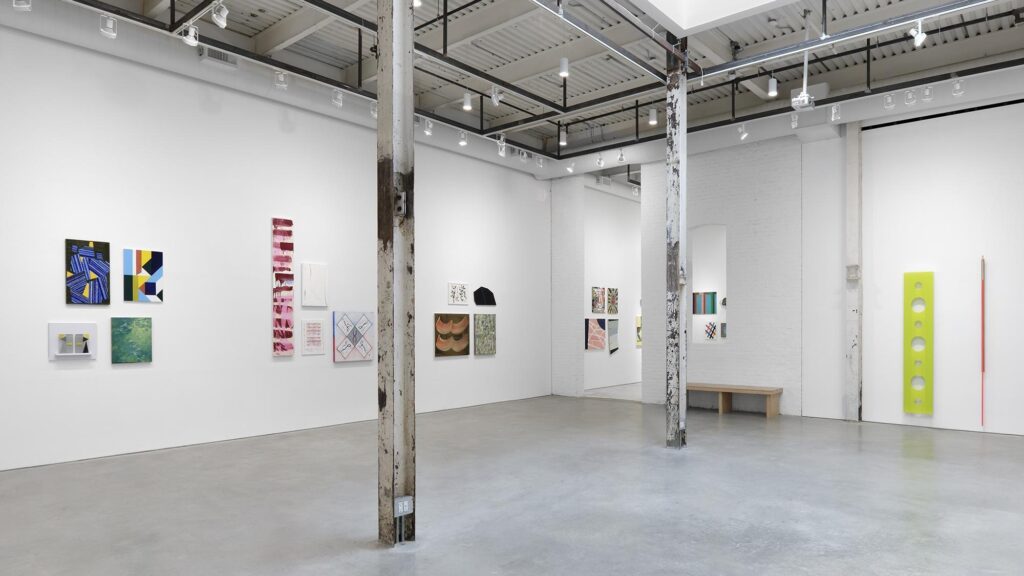
Photo Credit: KC Crow Maddux
When you stand in the room at Art Cake and look at all the work together, what surprises you about where abstraction is right now?
It’s both a peculiarity and a strength that AAA shows have evolved, more or less unintentionally, into a multi-generational symposia. I actually regard that as the heart of the group at this stage. When we’re talking about “where abstraction is right now,” there’s the understanding that there’s a whole history to grapple with. I think an interesting thing that happens when you bring a multigenerational group of artists together is that it becomes clear that default assumptions about linearity in terms of artistic and art historical chronologies are inadequate. This current show offers an ideal illustration of this with the fascinating and really elegant piece that Manfred Mohr is exhibiting. Manfred will be 88 years old this year—almost the same vintage as AAA itself—and he’s contributing a non-repeating algorithmic animation that is easily the most technologically sophisticated work in the show.
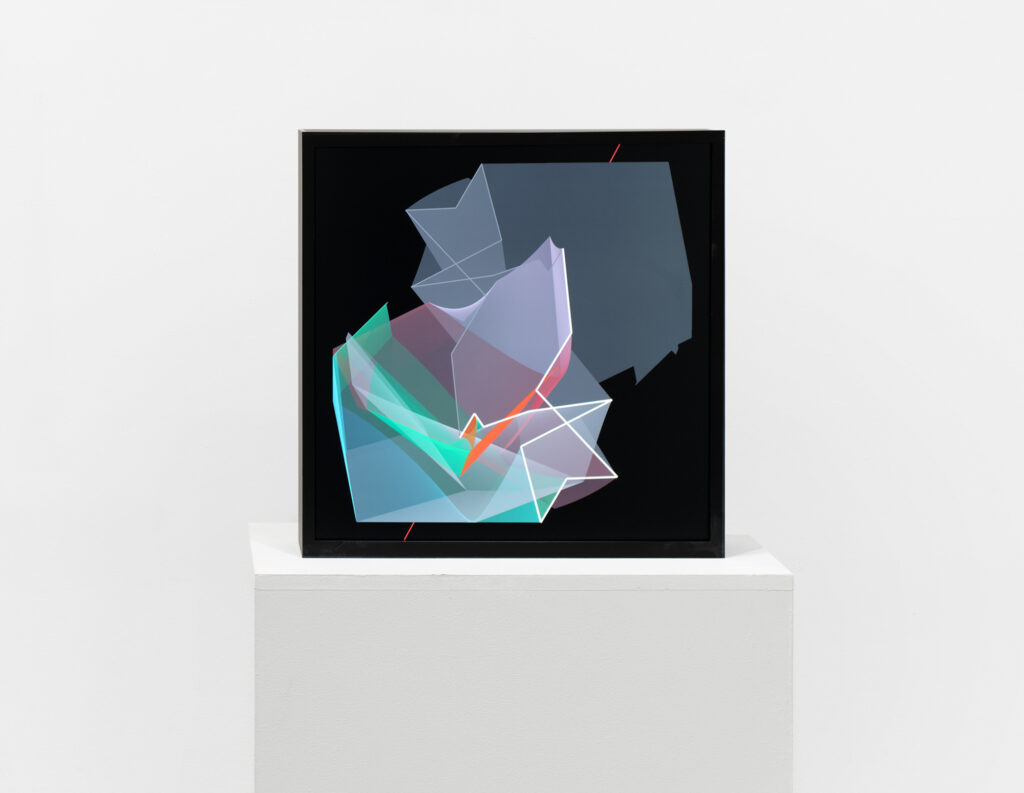
Photo Credit: KC Crow Maddux
AAA has published journals and print portfolios for decades. What role does that work play for the group, alongside the exhibitions?
The early members were certainly inclined to tackle the big issues in print, describing abstraction as a struggle between “the opposing forces of modern life”. AAA has sometimes been characterized as non-political, although I’d describe it as an artistically focused group that emerged from a highly political context—specifically, the 1930s-era New York City amid the Great Depression. Founding members were active in Leftist groups like the American Artists’ Congress and writing for socialist publications like New Masses. To the extent that their writing and activities were regarded as apolitical, this had a lot to do with the perception at the time that social realists like Diego Rivera were the leading edge in political art. Certainly, the group’s early activities were notable for their rabble-rousing in relation to institutions, and I think that spirit, along with the group’s collectivist nature, was directly connected to the political environment the group emerged from.
AAA’s main publishing focus in recent decades has been exhibition catalogs, which include essays by the show’s curators. This is an important flame to keep alive at a time when most shows only present supporting materials online. We’ve produced a hardcover catalog for this exhibition, with an essay by Saul that I’m very pleased with, and I believe will serve as a lasting document of the show.
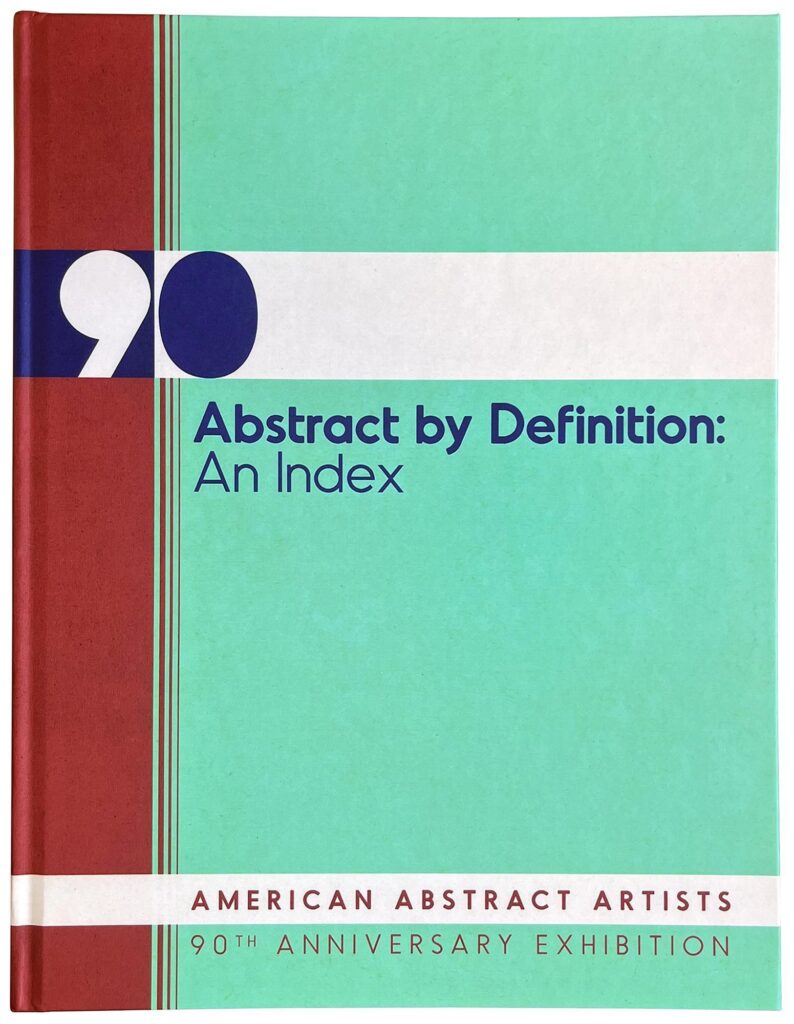
Cover design: Rob Carmichael, SEEN Studios
The other publishing tradition within the group, as you noted, is print portfolios. Our most recent portfolio created the opportunity for a more agile form of our all-member exhibitions. That show traveled to a number of venues—I was perpetually losing track of where the show was at any given point.
Looking ahead, where would you like to see AAA go from here?
That idea of more nimble activities is a good summation of the direction I’d like to see AAA explore. These big shows are fabulous and great for marking these historic milestones, but they’re like steering an ocean liner. Jared Linge curated Future Proof, an AAA show in 2025 at Westbeth Gallery, which could be a model for this leaner approach. That show included 18 artists, so it wasn’t small by any measure, but its relatively streamlined size allowed it to take on a unique character, and a small series of shows like that could encompass the group’s range. When you’re including the full membership, one of the first challenges for a curator is identifying an approach that won’t feel like an iteration of the last show—when you start to look at smaller groupings within the membership, the possibilities are endless.
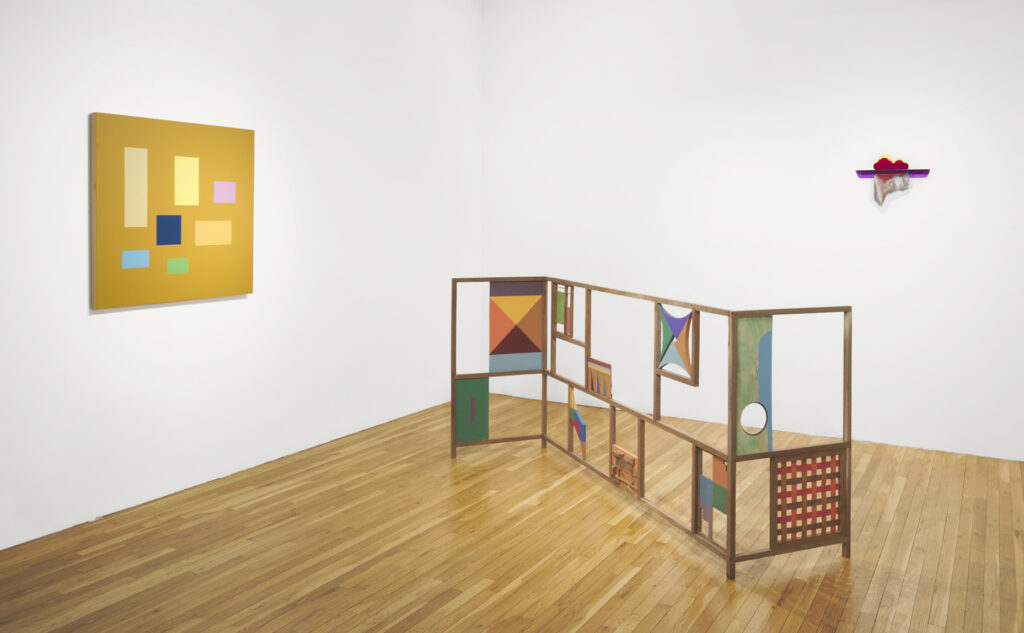
Left to right: Tom McGlynn, Jim Osman, Lisa E. Nanni
Photo Credit: KC Crow Maddux
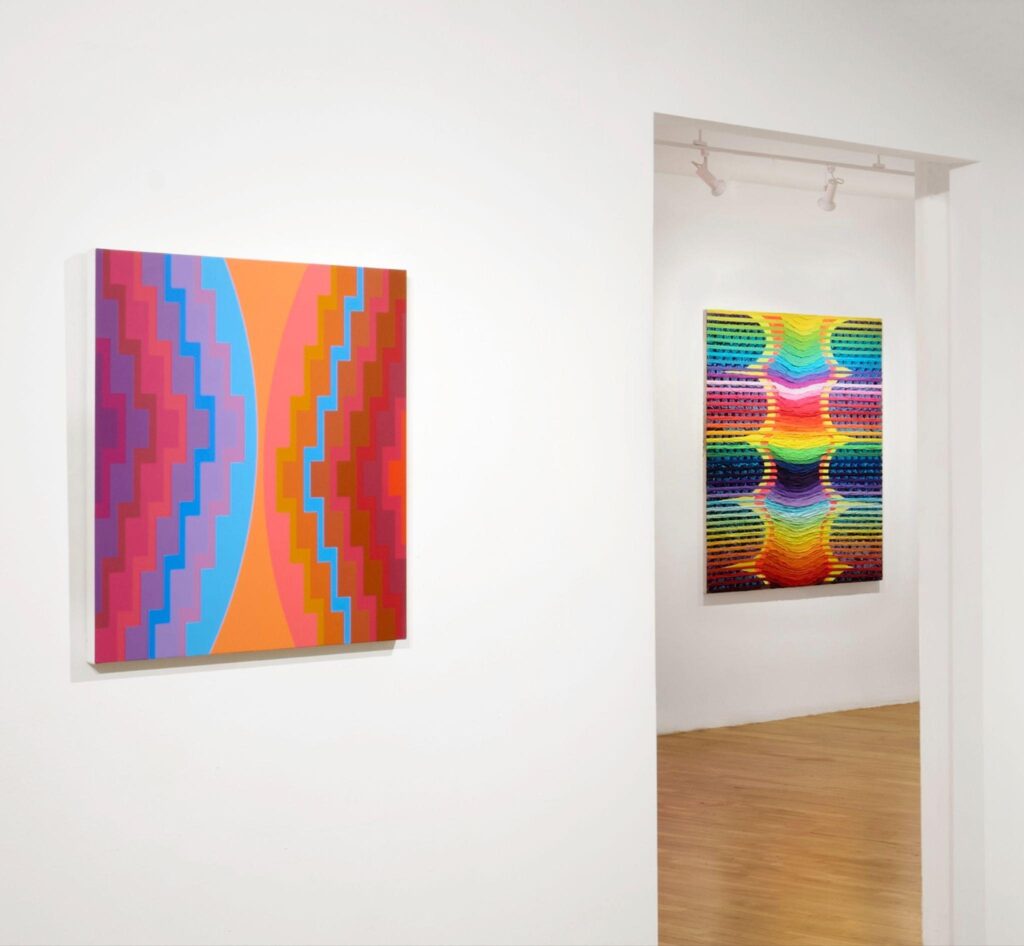
Left to right: Jacob Cartwright, Melissa Staiger
Photo Credit: KC Crow Maddux
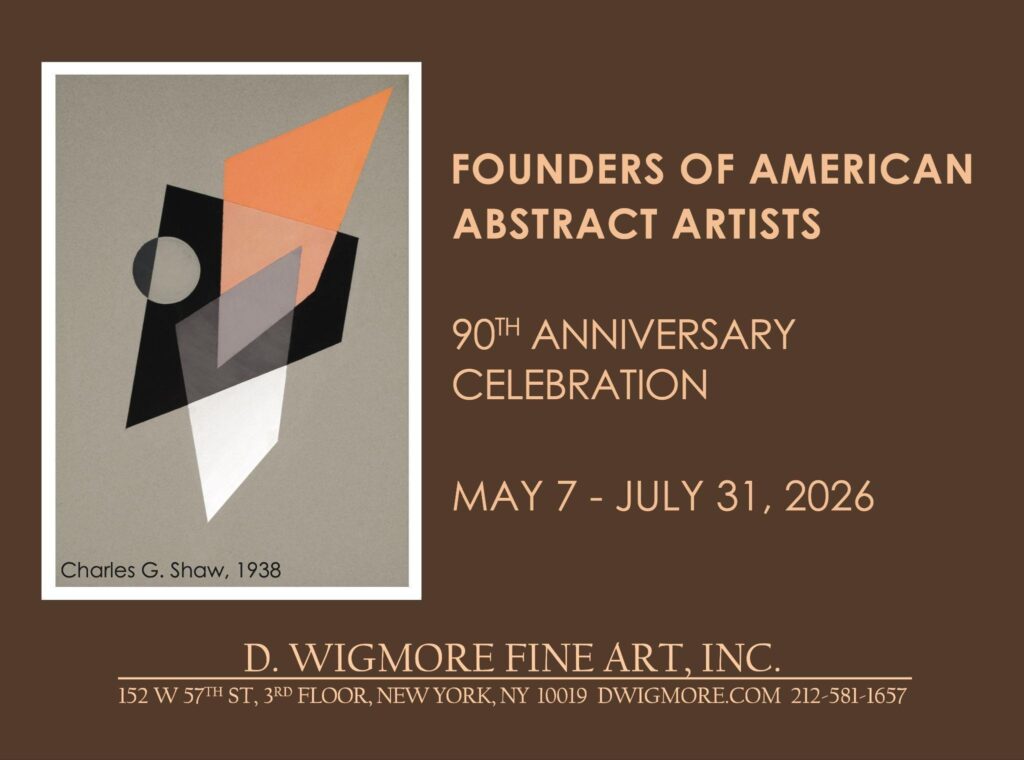
On a final note, in addition to the show at Art Cake, D. Wigmore Fine Art in Manhattan will present a historic, very well-researched show featuring 40 pieces made between 1936 and 1950 by the group’s founding and early members, on view through July 31st.
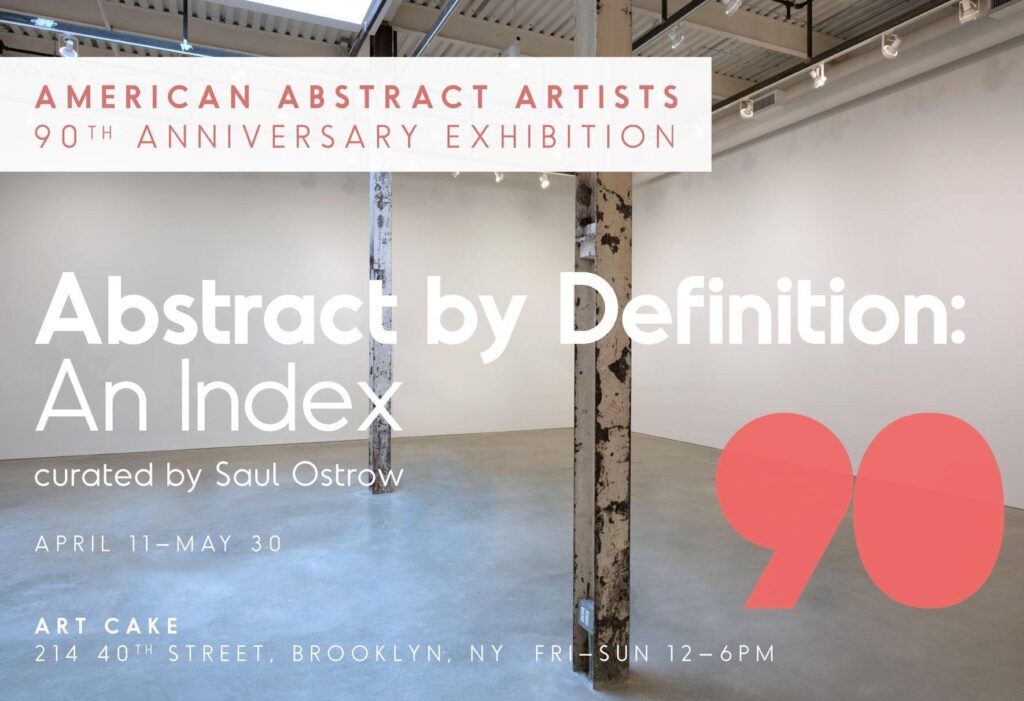
Abstract by Definition: An Index, American Abstract Artists 90th Anniversary Exhibition
April 11–May 30, 2026
ART CAKE
214 40th St, Brooklyn, NY
Founders of American Abstract Artists, 90th Anniversary Celebration
May 7–July 31, 2026
D. Wigmore Fine Art
152 W 57th St, 3rd floor, New York, NY
Make your tax-deductible donation today and help Art Spiel continue to thrive. DONATE
About the writer: Etty Yaniv is a Brooklyn-based artist, writer, curator, and founder of Art Spiel. She works in installation, painting, and mixed media, and has shown her art in exhibitions across the United States and abroad. Since 2018 she has published interviews and reviews through Art Spiel, often focusing on underrecognized voices and smaller venues. More about her art can be found at ettyyanivstudio.com and on Instagram @etty.yaniv