Melora Kuhn’s Power of Erasure and Material Revision

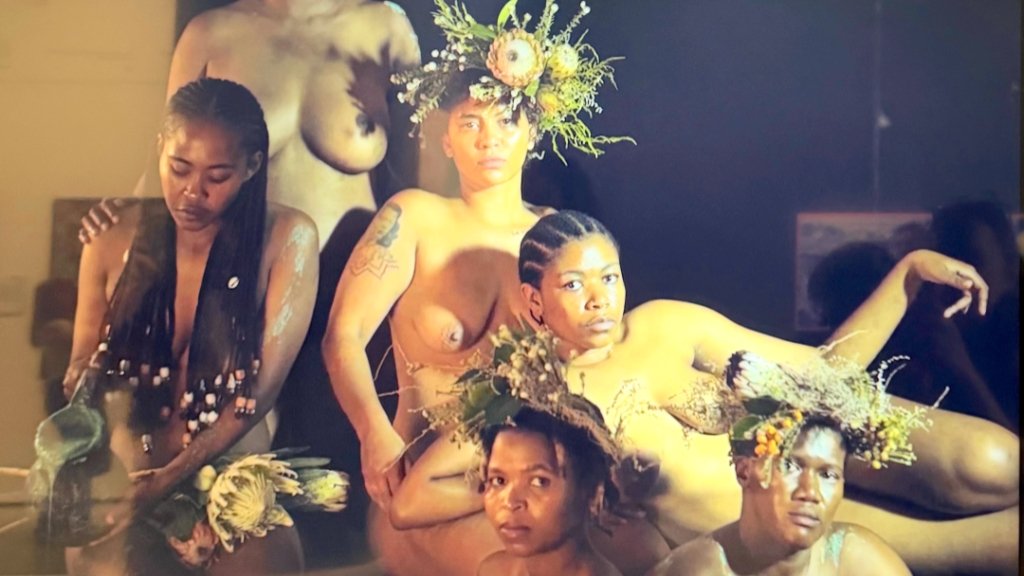
Melora Kuhn, Eruption

History has always depended on materials. Marble, oil paint, bronze, woodcuts, engravings, museum vitrines, and photographic reproductions preserve the past as well as determine how events, ideas, and narratives are represented. Over time, images become durable, gaining a certain kind of truth value because they acquire material permanence and spread through copies. Mythological heroines, biblical women, allegorical figures, and historical subjects return across centuries through the persistence of artistic media, carrying with them the assumptions, hierarchies, and ideologies embedded in their forms. Melora Kuhn‘s solo exhibition, The Legacy of Disembodiment, on view at Private Public Gallery, starts with the recognition that if representation has helped naturalize and proliferate the narratives these images and forms carry, then materials themselves can be a site of political intervention.

Continue reading “Melora Kuhn’s Power of Erasure and Material Revision”

Cecily Brown at the Serpentine: Everything Everywhere All at Once

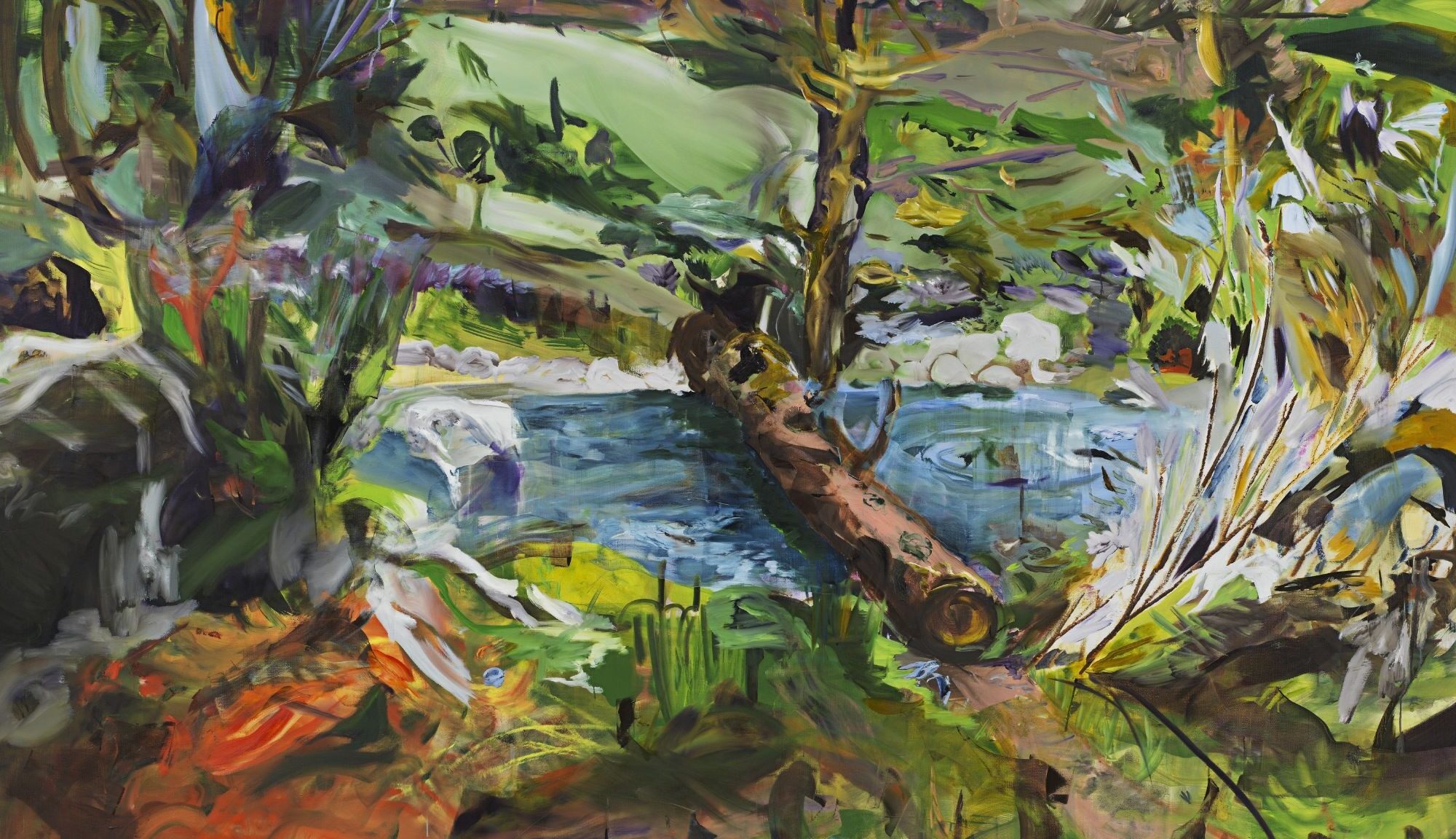
Cecily Brown, Nature Walk with Paranoia

Entering the first room of the gallery, one is instantly struck by the richness of movement in Cecily Brown’s paintings. Several recent works, drawn from nature walks, centre on the motif of a log laid across a blue stream. This fairy-tale imagery, bordering on kitsch, was borrowed from a jigsaw puzzle Brown was completing at the time. Yet the jagged shrubbery and turbulence surrounding these scenes point towards something darker.

Continue reading “Cecily Brown at the Serpentine: Everything Everywhere All at Once”

Andreas Schulze’s exploration of color in the cool pastures of cake

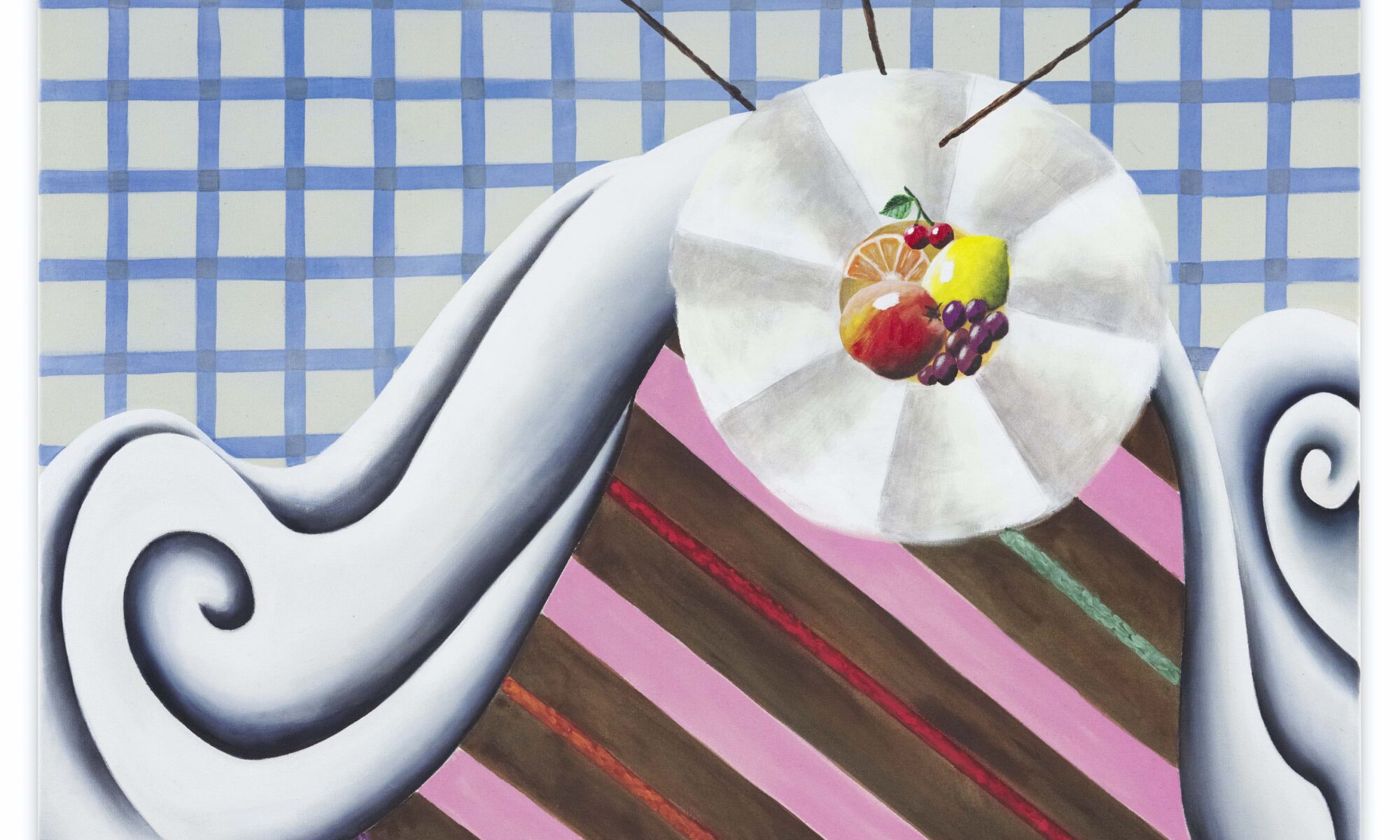
Andreas Schulze, Untitled (Her)

In his show Cake (2026) at Sprüth Magers, New York, Andreas Schulze explores the visual effects of saturated color and geometric form, using cake as the setting for his investigation.

In his paintings, Schulze creates an inner three-dimensional universe, which serves as a bell jar. In his imaginary pastures, Schulze creates surreal interiorscapes, built of geometric shapes and flat backdrops of color-gradient skies, juxtaposed with rounded spheres and spirals painted in three-dimensional perspective, with depth and shadow. The pictorial space he builds gives a stage for him to explore various phenomena, in this case, cake, and he does so with a playful seriousness, experimenting with the basic forms and images that make up cakes: candles, frosting, fruit, sprinkles, and layers.

Continue reading “Andreas Schulze’s exploration of color in the cool pastures of cake”

Hollis Heichemer: Transcension over Anthropocentrism and Breakaway into Landscapes

Hollis Heichemer, Come to the Surface

Hollis Heichemer’s solo exhibition at Hollis Taggart titled “moving in stillness” is a profound investigation of existence and the meaning of the world through the study of landscapes and Mother Nature. Is Humanism an anthropocentric perspective that is ultimately flawed and furnishes humanity with the arrogance to destroy the environment and disregard the principles of empathy? How can we overcome the diseased thought that humans have the right to master or exploit nature for profit? And how has the artist found great peace and liberation through her lifelong study of Mother Nature and her generous nourishment and wisdom? Does Heichemer apply the paint purely as a formal exercise of abstract colors and relationships, or does the paint become the flesh of Mother Nature, by the observation of which we can become and live through the painting as landscapes?

Continue reading “Hollis Heichemer: Transcension over Anthropocentrism and Breakaway into Landscapes”

Growing After the Embers: A Review of Bùi Thanh Tâm’s Solo Exhibition Here on and after

Installation view of Here on and after

For a long time, when I was young, I felt distant from the idea of “history.” In textbooks, history always appeared through years, wars, reforms, and changes of political power, as if it were made of events already organized and settled. Yet the history that truly remains in the body often appears in more hidden forms. It may be a silence within family narratives, a memory that one generation chooses to avoid, a recurring pattern in festive images, or a color that seems joyful while quietly carrying a wound. Very often, history continues to exist in another form, lingering in images, bodies, and everyday experience.

Continue reading “Growing After the Embers: A Review of Bùi Thanh Tâm’s Solo Exhibition Here on and after”

Women Across America 1945-1979 at Eric Firestone

Eric Firestone Gallery, in its continuing support of underrepresented and female artists in the 20th and 21st centuries, has mounted an ambitious and interesting exhibition on now through July 11 at the gallery’s location on Great Jones Street in NYC. The exhibition is devoted to women who worked in abstraction from 1945 to 1979, thus giving the curators a very specific window within which to work.

Continue reading “Women Across America 1945-1979 at Eric Firestone”

What Remains: in dialogue with Arghavan Khosravi

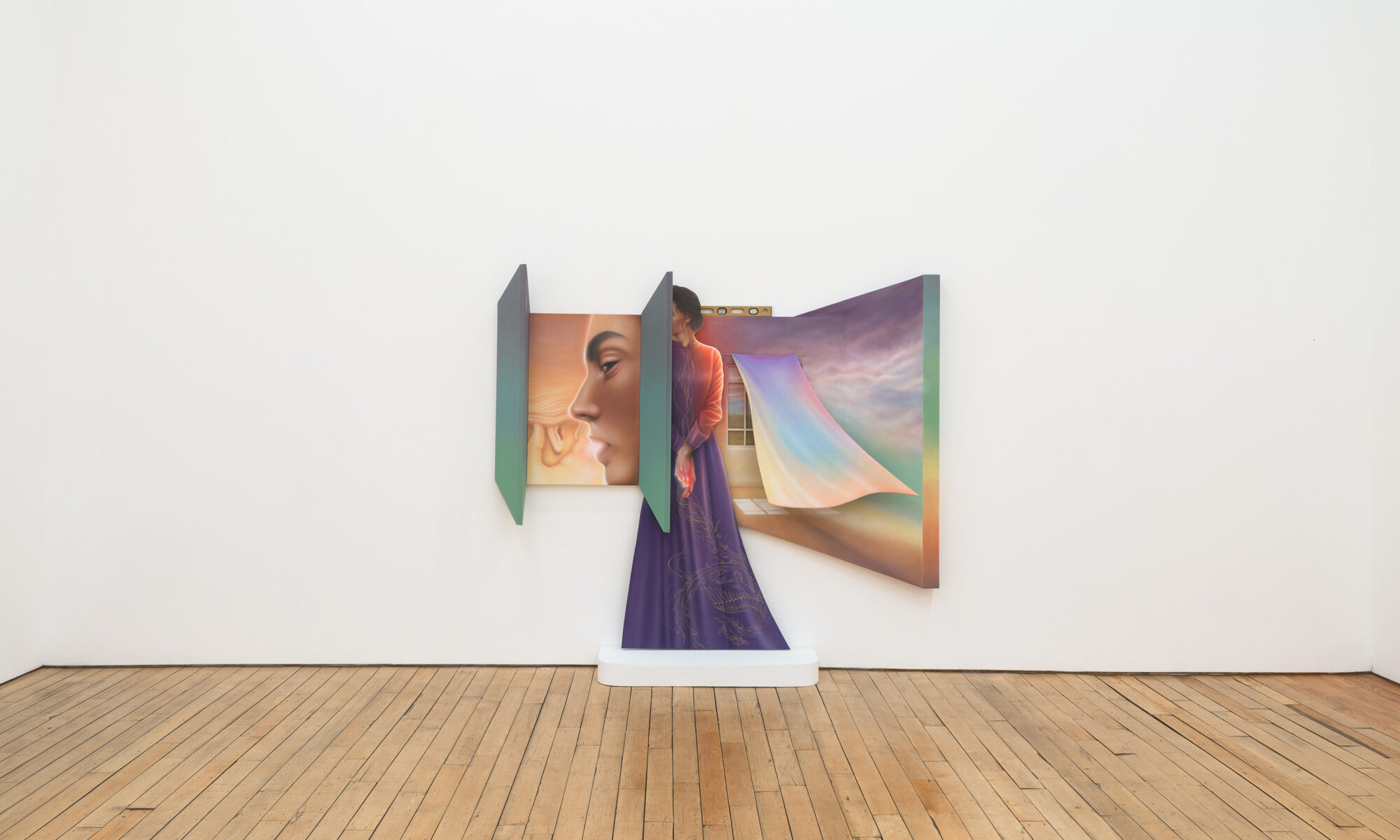
Arghavan Khosravi

Altarpieces—historically sites of devotion, revelation, and spiritual certainty—become something altogether different in Arghavan Khosravi’s What Remains, currently on view at Uffner & Liu through July 2. The exhibition brings together large-scale wall works, a freestanding sculpture, and an intimate suite of new altar-inspired paintings that continue Khosravi’s ongoing exploration of the forces that shape women’s lives under political, cultural, and religious systems of control. Drawing equally from Persian miniature painting and medieval European iconography, the artist constructs layered worlds where architectural structures become psychological spaces, symbols migrate across histories, and moments of resistance emerge within conditions of constraint. Rather than offering resolution, the works linger in states of suspension—between freedom and captivity, memory and displacement, devotion and doubt.

Continue reading “What Remains: in dialogue with Arghavan Khosravi”

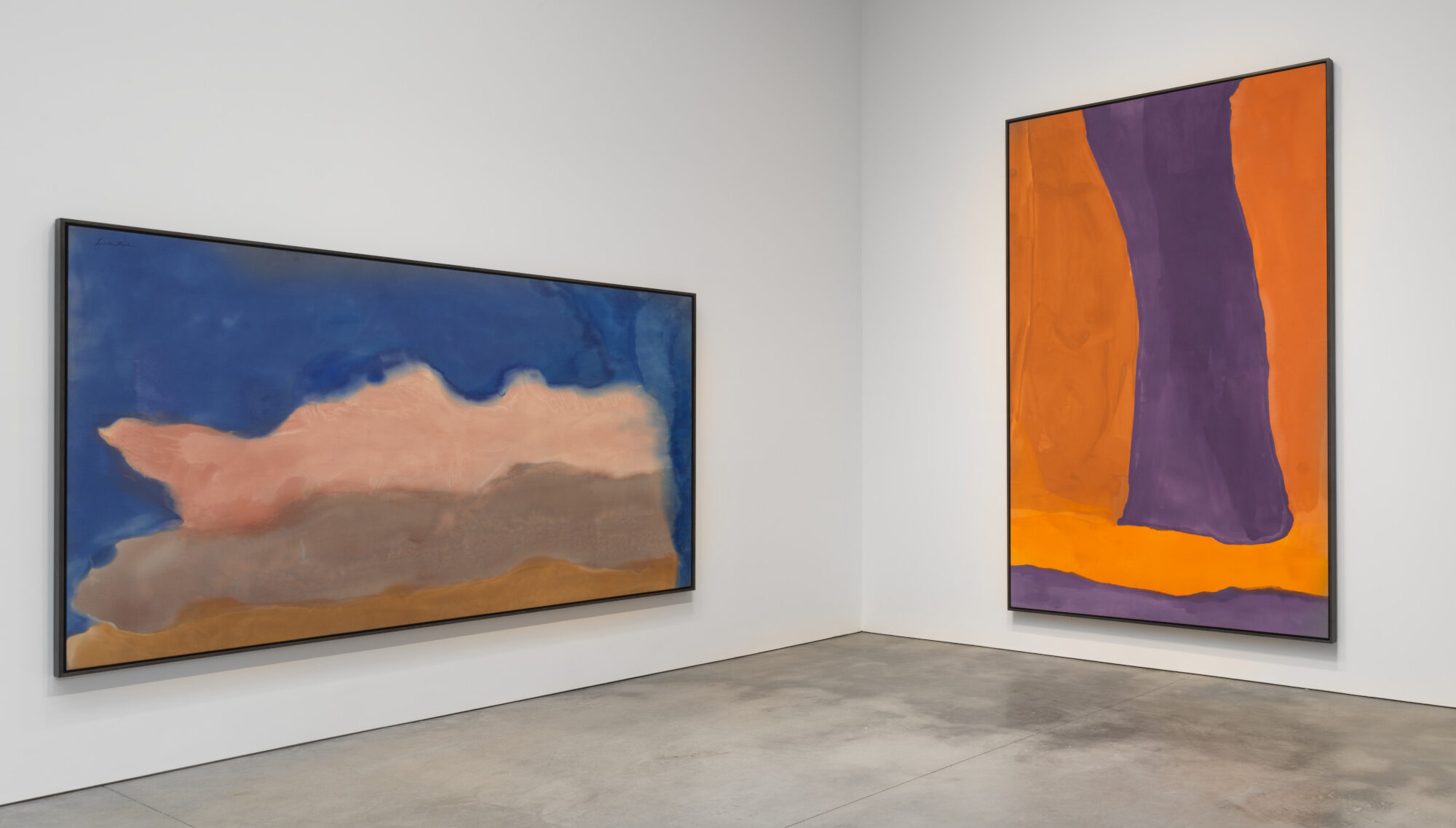
Hum and Song: Helen Frankenthaler’s The Moment and the Distance at Gagosian examined alongside Babara Guest’s writings

Helen Frankenthaler, The Moment and the Distance, 2026, installation view

Helen Frankenthaler’s show at Gagosian New York, The Moment & The Distance is a beautiful retrospective survey of her work. The title is inspired by a mid-career essay by Barbara Guest that encapsulates the essence of Frankenthaler’s work. In the  1975 essay Guest defines Frankenthaler’s oeuvre in terms of music. She reflects that while there is beautiful “humming” in Frankenthaler’s early work, over her career it becomes  “song”. As her work matures, Guest argues, Frankenthaler becomes more decisive, methodical and assured in her practice, less spontaneous or reliant on happy accidents. Beyond demonstrating the present moment in the paintings, she walks the effortful distance to “consolidate her terms”.  

Continue reading “Hum and Song: Helen Frankenthaler’s The Moment and the Distance at Gagosian examined alongside Babara Guest’s writings”

Voices In Minor Keys: 2026 Venice Biennale

In Minor Keys, the central exhibition of the 61st Venice Biennale, arrived with a quiet proposition. The late curator Koyo Kouho envisioned a show that reflects practices requiring time and sustained commitment — some of them lifetime, even generational — and in doing so created a deliberate antithesis to the Biennale spectacle. Drawing almost exclusively on artists from Africa, the Middle East, and the Caribbean, the exhibition is anchored in political concerns — identity, immigration, the environment — yet so many of the works felt personal, while reaching toward art history and even toward Venice itself. What follows is an account of its visual depth and strength.

Continue reading “Voices In Minor Keys: 2026 Venice Biennale”

The Absence is in the Fingers 

There are exhibitions shaped less by what is installed than by what fails to arrive. I did not plan for this to be one of them. Where Form Remembers was conceived as a two-person presentation: Julie Gladstone’s mixed-media works traveling from Toronto, Avani Patel’s drawings from Brooklyn. The premise was a dialogue between two practices in proximity, each distinct enough that the distance between them would produce something worth engaging over time. What it became was different.

Continue reading “The Absence is in the Fingers “