Unreliable Narrators: Rochelle Voyles
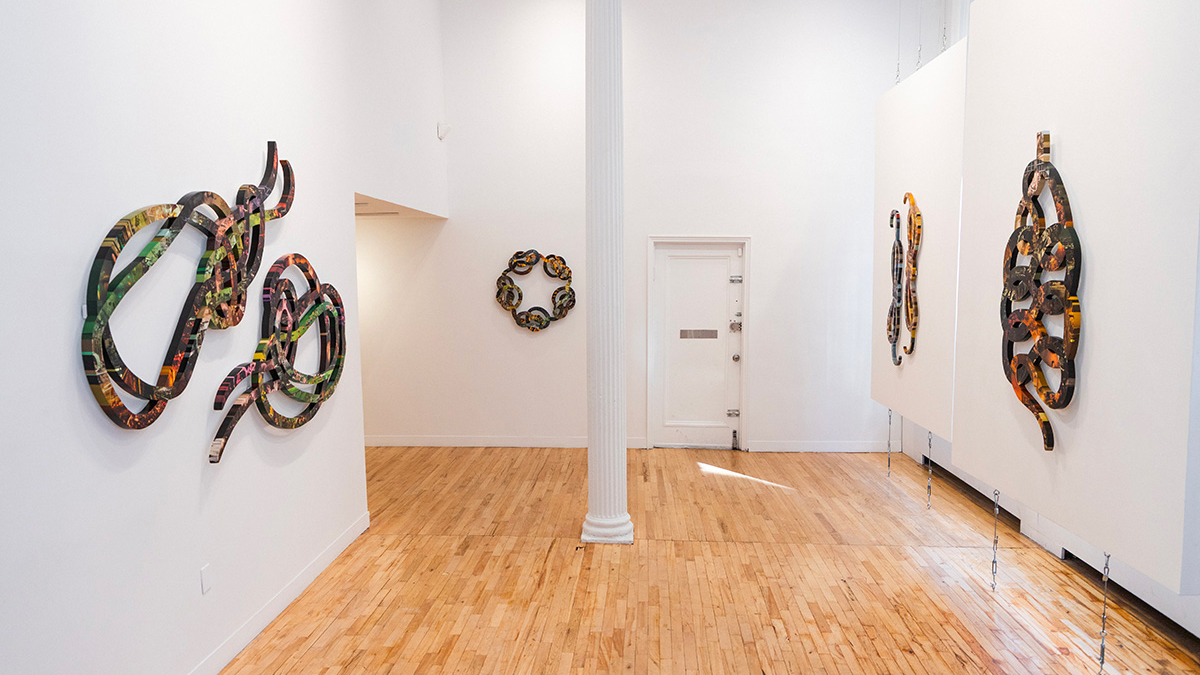
In Unreliable Narrators, Rochelle Voyles’s collages hold both a capacious nihilism and a hope to build stories from the void. From this fulcrum, I think of Joan Didion’s classic essay The White Album, and its opening truism: “We tell ourselves stories in order to live.”  Voyles’s compositions of found photographs extend to viewers, a branch, a bone, a tool in making sense of the randomness that seems to rule our lives. Cutouts layered into loops capture chaos, but the care in each cut, the curation, and the collision of hyperspecific images betray a belief in an idiosyncratic order. These works are at once figurative mazes of manifold meaning, and objects calculated to short-circuit our thinking and experience pure sensation. 

Continue reading “Unreliable Narrators: Rochelle Voyles”

The 15th Shanghai Biennale: Does the Flower Hear the Bees?

Botany, I read in Zoë Schlanger’s bestseller The Light Eaters: How the Unseen World of Plant Intelligence Offers a New Understanding of Life on Earth, is full of groundbreaking discoveries these days (Schlanger 2024). We now know that plants have cellular conduits that allow propagation of electrical charges, that some plants release chemicals in the air to alert neighbors of insects, and that evening primrose increases its nectar’s sweetness when it senses the frequency of the hum of bee wings. While such plant-feeling, plant-talking, and plant-listening are not sustained by the same biological apparatus as ours, the functional parallel is apparent. Perhaps it is time to broaden our understanding of intelligence. 

Continue reading “The 15th Shanghai Biennale: Does the Flower Hear the Bees?”

Zhang Huan: The Ash Paintings, at 125 Newbury Gallery

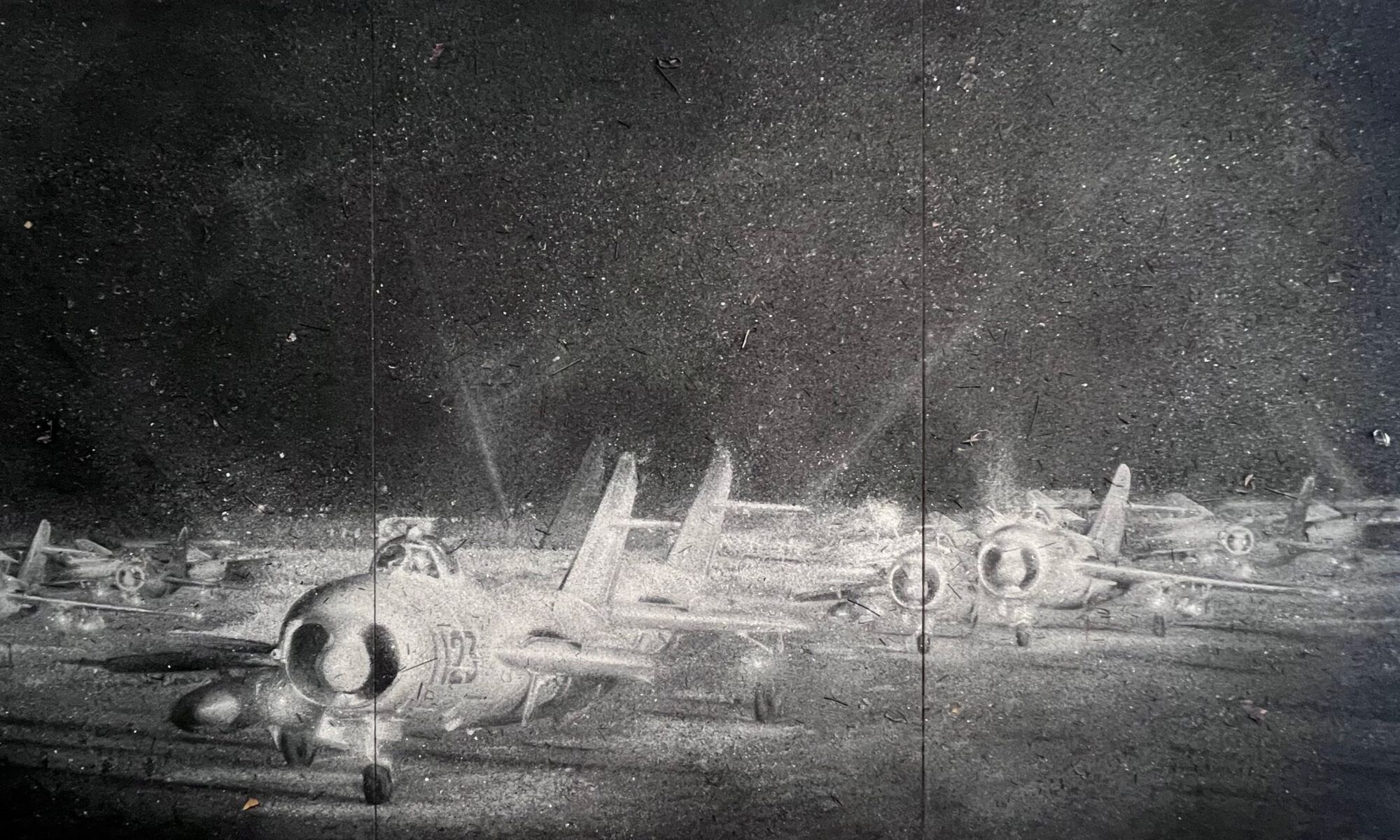
It has been over ten years since the last New York exhibition of the Chinese artist Zhang Huan, known for his edgy political performance pieces documented at the exhibition. What captured me on this visit was his ash paintings, which extended across the entire front hall of the gallery. It feels entirely appropriate that this social activist artist, who later turned to Buddhism, should exhibit these works in New York at such a tense moment. Ash, as a medium, touches on absolute destruction. It carries deep meaning in Buddhist practice, but these days it also pulls toward something harder to name: the daily accumulation of impure ash on the ground of cities being destroyed.

Continue reading “Zhang Huan: The Ash Paintings, at 125 Newbury Gallery”

Vuillard Was Already in the Future

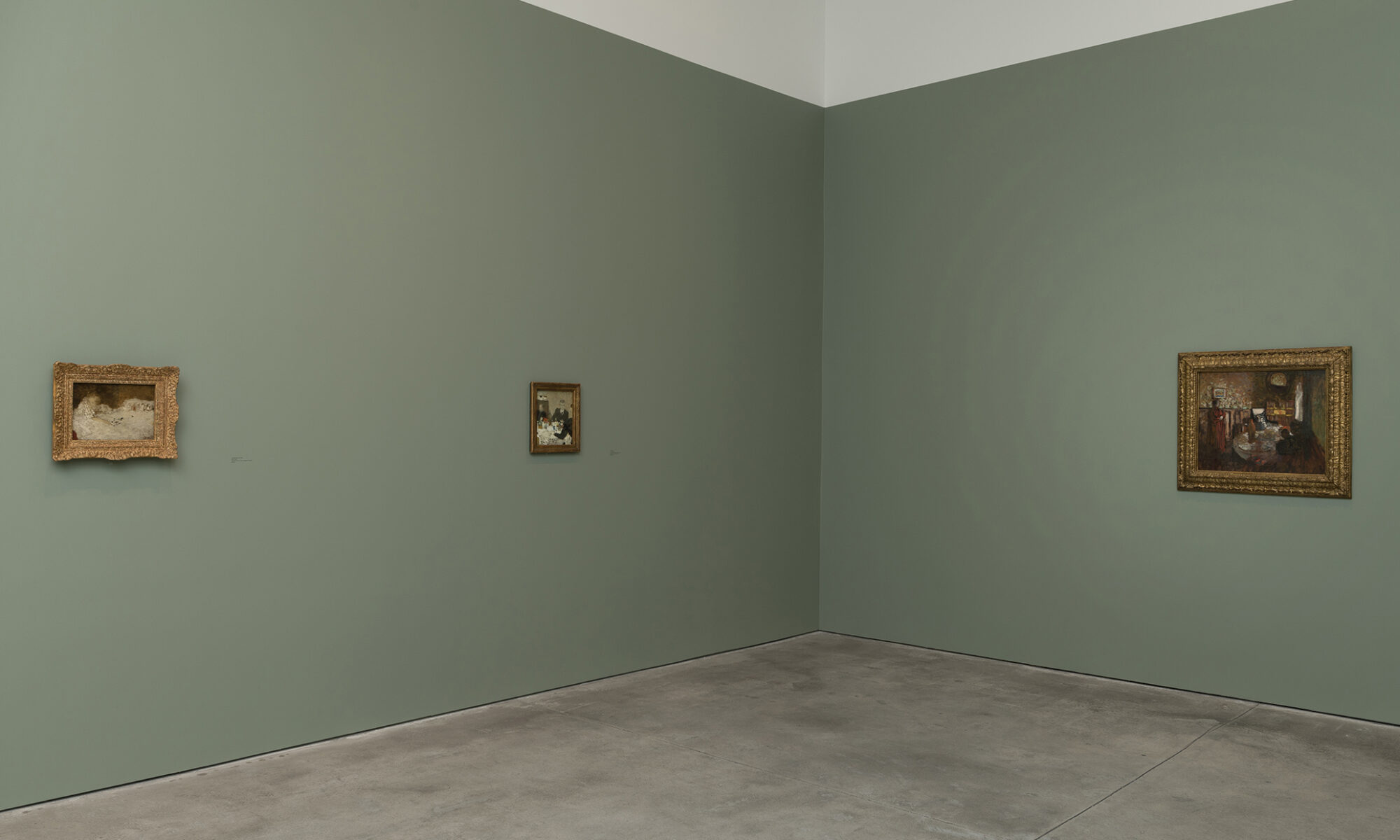
After the Impressionists blew open painting and reset Paris, rearranging everyone’s eyes, one might assume the dust would take a minute to settle. But almost immediately, a cluster of kids at the Académie Julian decided to reroute the whole thing again. Among them, Édouard Vuillard. To get to Vuillard, one must start with Paul Sérusier and Paul Gauguin standing by a lake in Brittany.

Continue reading “Vuillard Was Already in the Future”

Kylie Heidenheimer: Attenuated Figuration

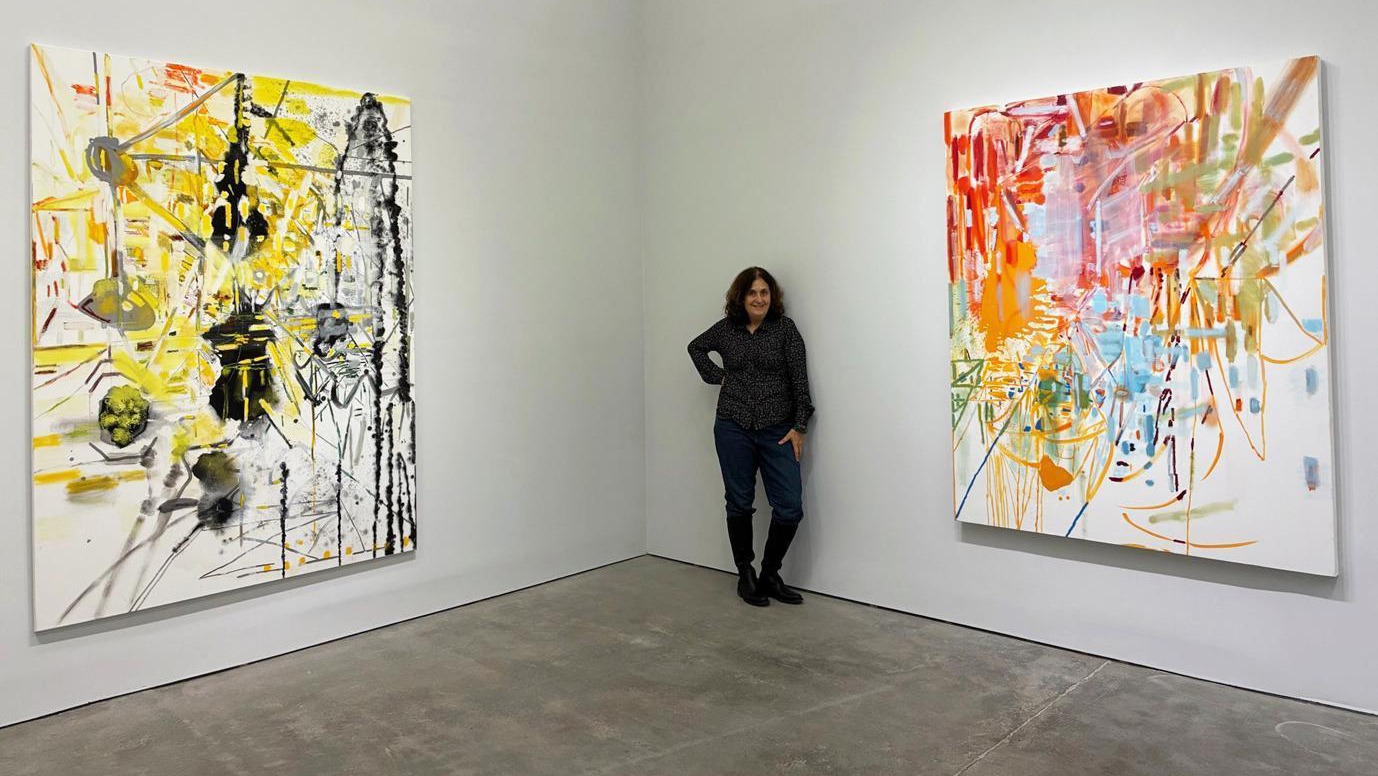
Kylie Heidenheimer came to painting through an early interest in art restoration. After high school, she attended Grinnell College in Iowa, where she studied chemistry, art history, and 2-D studio art. Following her freshman year, she spent the summer as an art restoration intern at the Museum für Völkerkunde in then West Berlin. While there, she began drawing and painting with gouache on paper on her own. By the end of that summer, she had decided to pursue art seriously. Not long after, her focus shifted to oil painting. 

Her path toward abstraction grew out of a strong foundation in figurative work. After her sophomore year at Grinnell, she returned to St. Louis to attend art school at Washington University. The core program was rigorous and heavily figurative, with intensive anatomy drawing and figure sculpture classes, followed by a return to painting.

Continue reading “Kylie Heidenheimer: Attenuated Figuration”

Call Of The Mountain

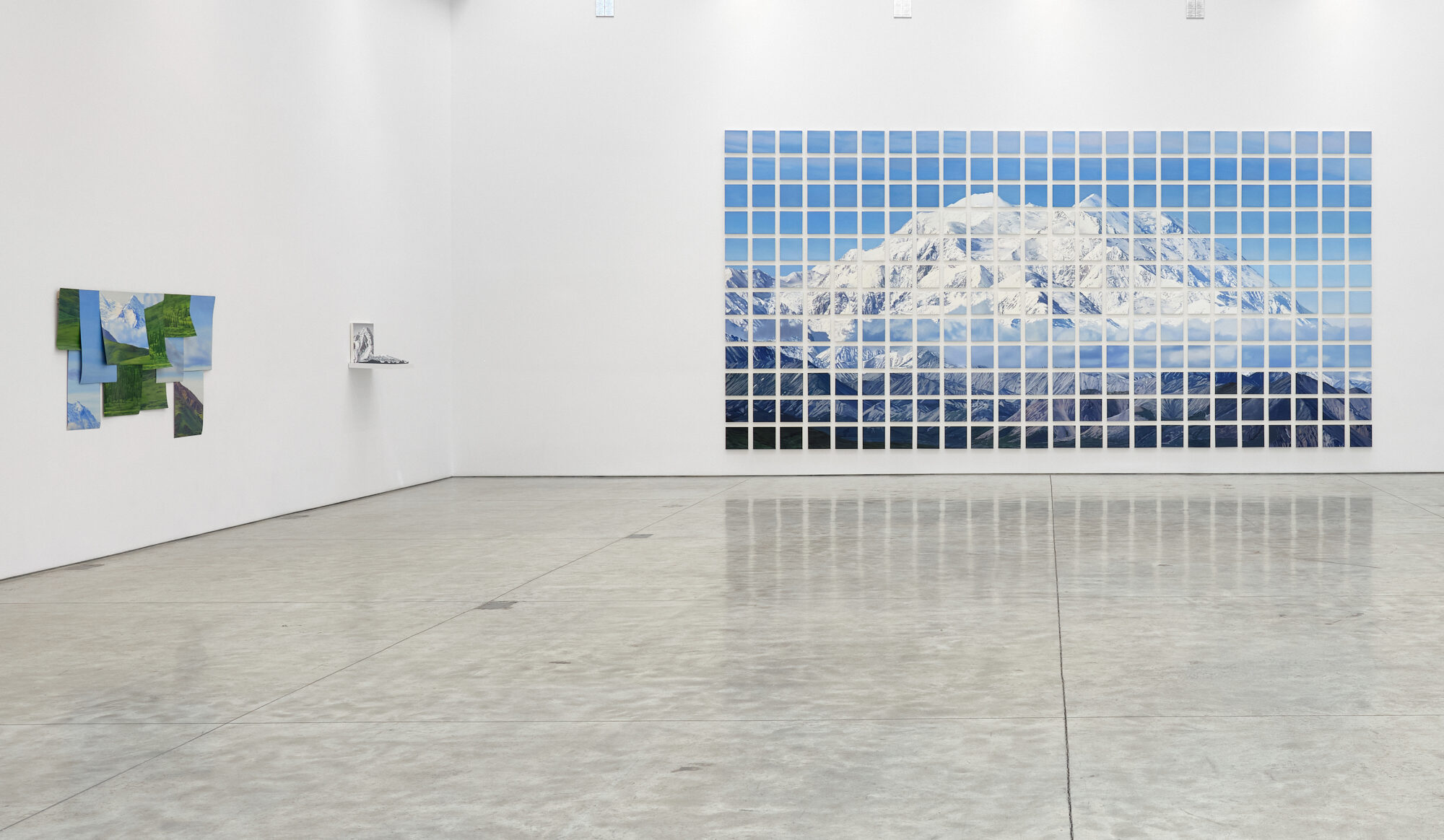
In Cynthia Daighnault’s exhibition at Olney Gleason, the walls are covered with different versions of the same subject: Denali, the tallest mountain in North America. A natural wonder and a national treasure at risk, Denali has lost over 60 percent of its glacier mass, and rising temperatures have accelerated permafrost thaw and disrupted local ecosystems, directly affecting the wildlife that depend on it. The paintings in this exhibition preserve their likelihood like the sculpture of the last three rhinos (by Gillie and Marc, now installed at 441 Ninth Avenue), but this documentation of endangered species contains an underlying criticism of American megalomania, without escaping the artist’s own American identity and ambitions. A big, beautiful white thing, Denali’s demise mirrors the nation’s uncertain future and the accumulative effect of its past. 

Continue reading “Call Of The Mountain”

Kate Teale: Vanishing Points and New Places at Smack Mellon

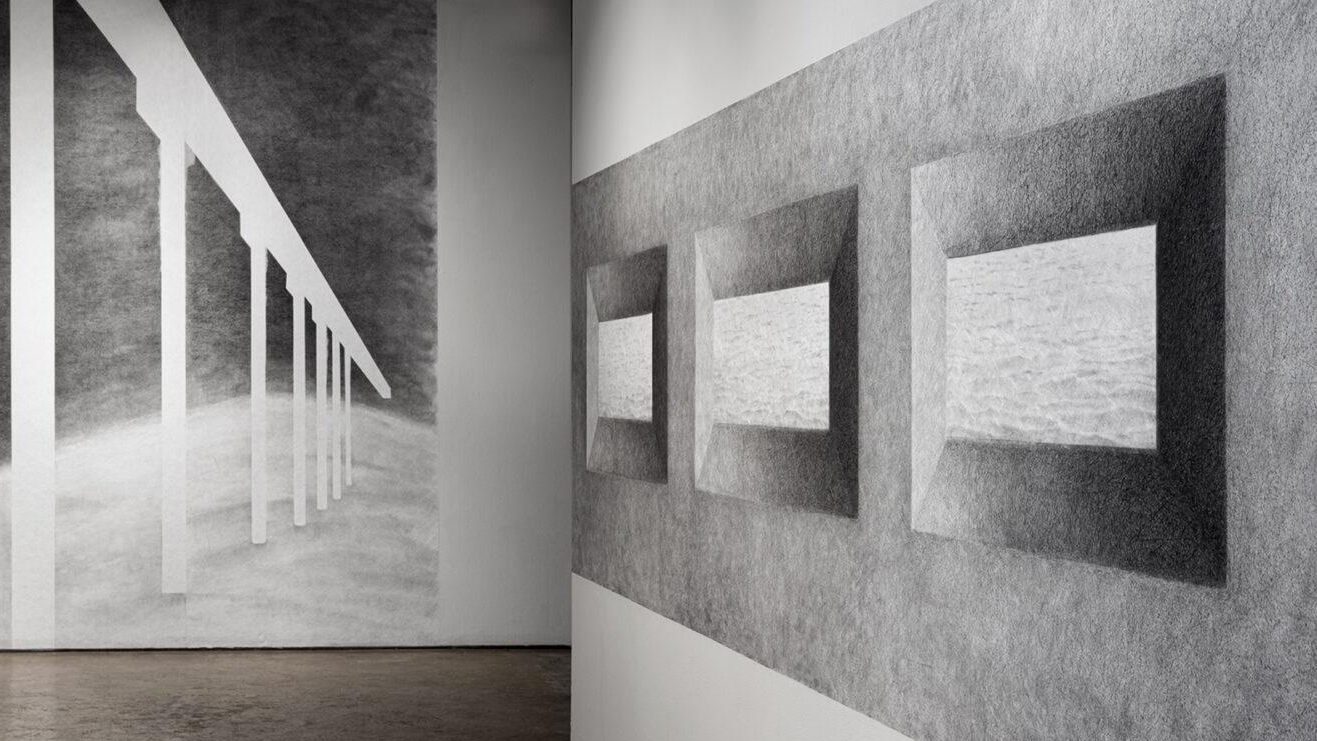
The space in Smack Mellon’s back gallery welcomes you as Kate Teale’s exhibition, Vanishing Points, fills the room, bringing the history of Dumbo into the space. Teale expands space itself through her studies of edge, architecture, and place. The work is a seamless connection of drawings adhered to the walls using Tyvek, making the illusion of space and the real blur into one. The gallery is transformed into a combination of several places, and as visitors turn, they adjust to each new location, finding details offering hints of the places Teale wants us to wander into. 

Continue reading “Kate Teale: Vanishing Points and New Places at Smack Mellon”

The Writing on the Wall: Becky Brown’s Pleasure Reading at Freight + Volume

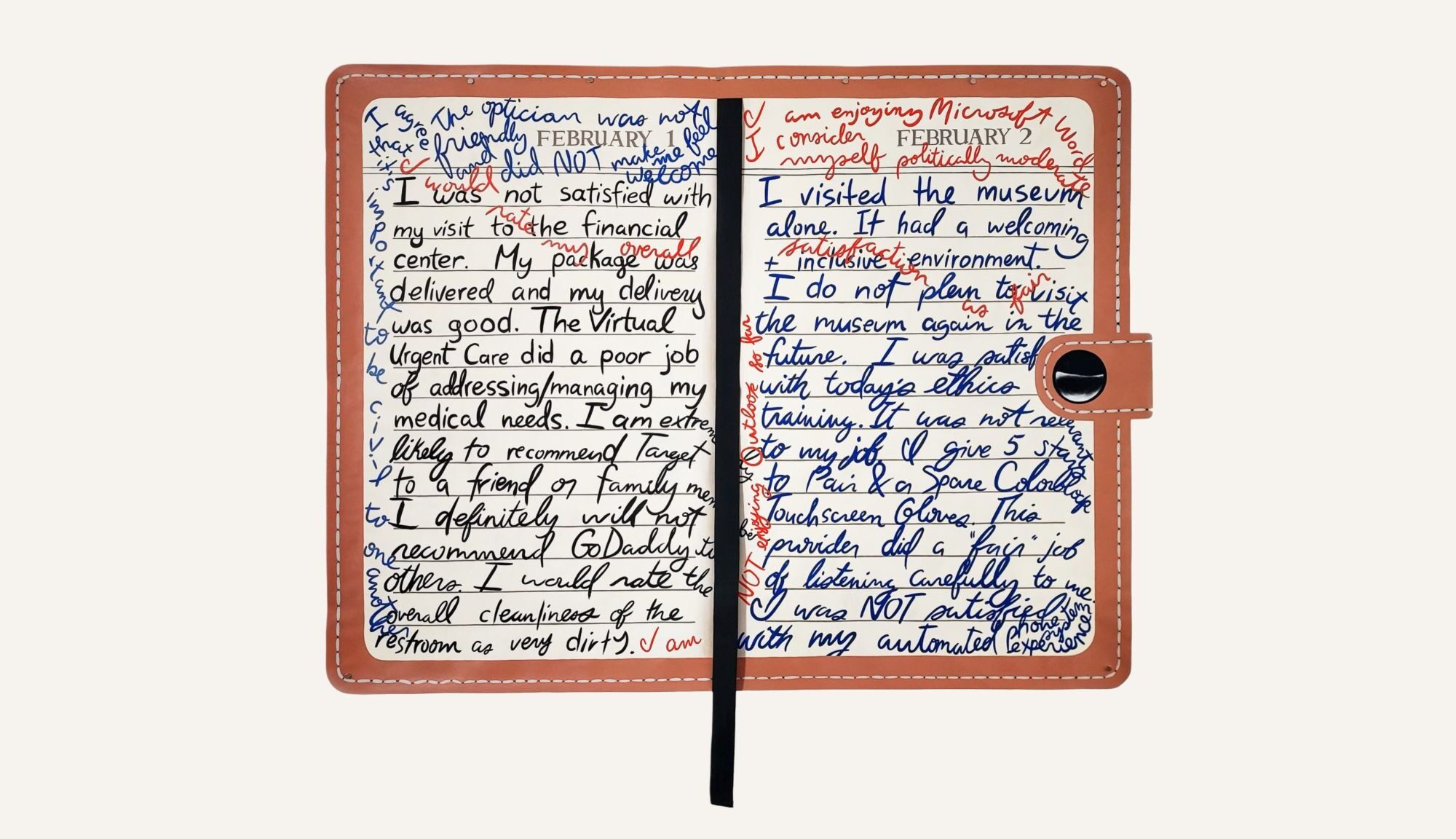
Language is having a moment—again—but it no longer behaves as it once did. Words now arrive compressed, automated, endlessly replicated, stripped of duration even as they multiply. Becky Brown has been tracking this condition for years, painting language not as message but as environment: something we live inside, skim through, and increasingly struggle to feel.

Continue reading “The Writing on the Wall: Becky Brown’s Pleasure Reading at Freight + Volume”

John Kelly: A FRIEND GAVE ME A BOOK at PPOW 

I walked into the PPOW gallery the morning my friend Riki died. The 182-panel illustrated small drawings by New York artist John Kelly, which extend as an open graphic memoir around the gallery, captured me instantly, letting me in on a personal journey of mortality, pain, and beauty. There was something generous in the way Kelly handed his notebook and shared the manuscript of his injury. It resonated with my thoughts of investigating and dwelling on mourning and mortality. 

Continue reading “John Kelly: A FRIEND GAVE ME A BOOK at PPOW “