In Minor Keys, the central exhibition of the 61st Venice Biennale, arrived with a quiet proposition. The late curator Koyo Kouho envisioned a show that reflects practices requiring time and sustained commitment — some of them lifetime, even generational — and in doing so created a deliberate antithesis to the Biennale spectacle. Drawing almost exclusively on artists from Africa, the Middle East, and the Caribbean, the exhibition is anchored in political concerns — identity, immigration, the environment — yet so many of the works felt personal, while reaching toward art history and even toward Venice itself. What follows is an account of its visual depth and strength.
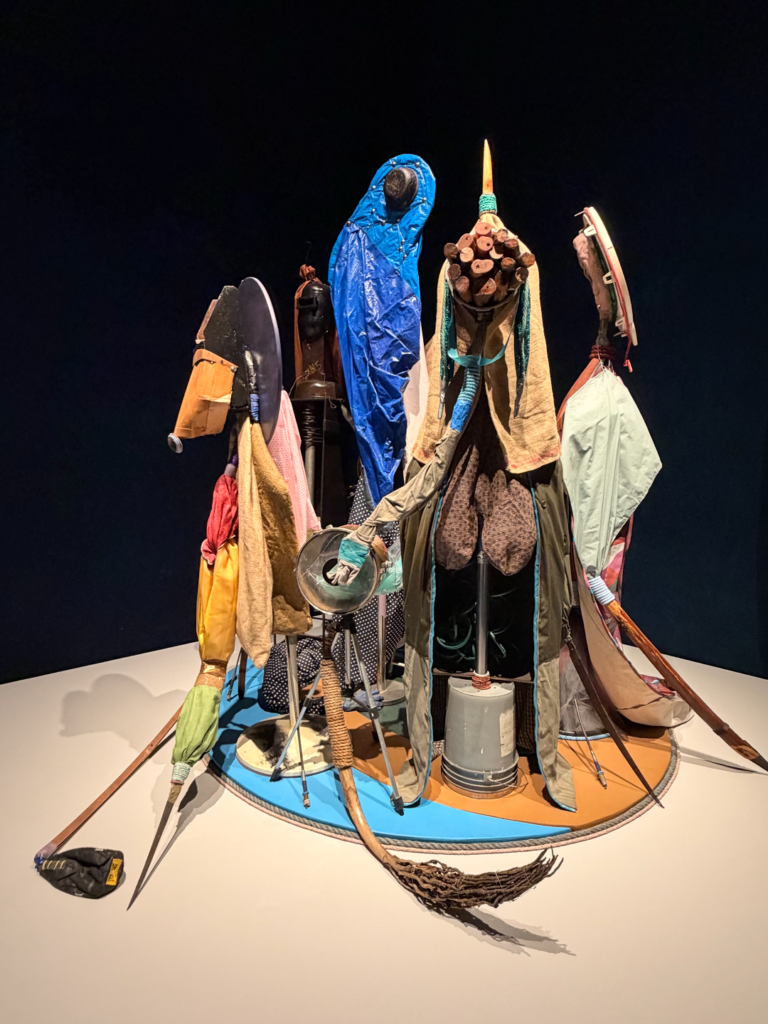
Using found objects, Daniel Lind-Ramos builds medium-sized assemblages of sea rafts carrying humans and cargo. The sea-less rafts recreate the crowded images of escape boats, referring to the historical waves of Black slaves fleeing into Puerto Rico from the 17th through 19th centuries, while also standing as an ode to the vulnerability and inventiveness of ongoing naval refugee journeys. His modest collections carry the weight of Géricault’s Raft of the Medusa — resonating with the same sheer fear, compressed into humbler materials.
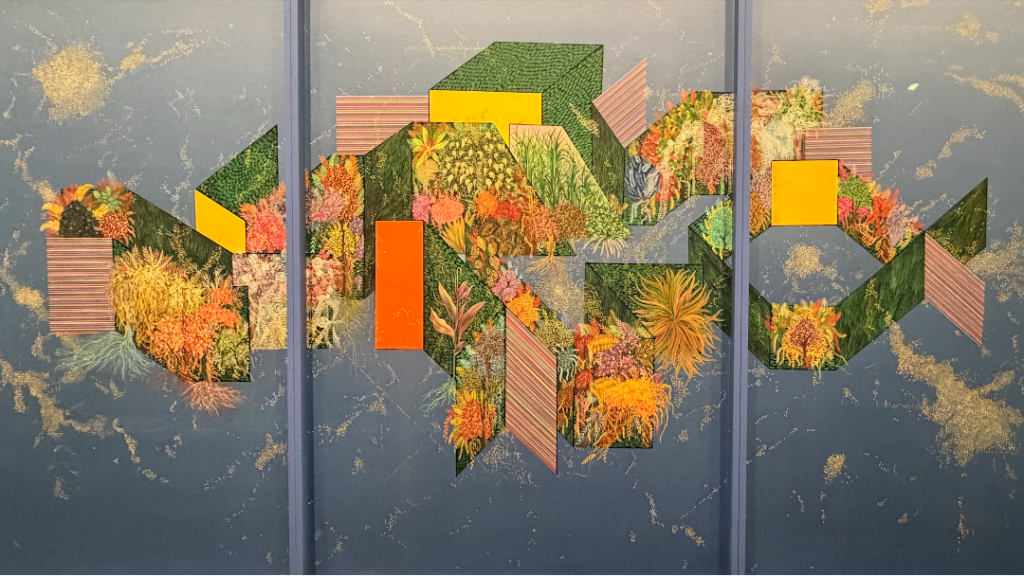
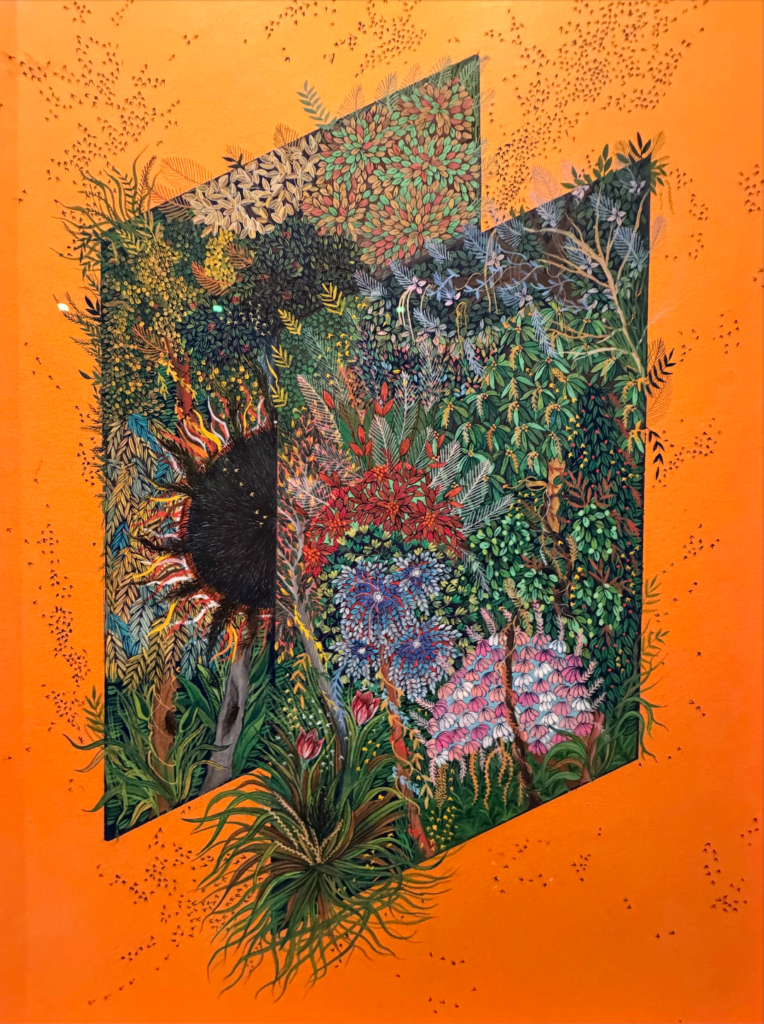
The show’s contemplative intentions are felt most directly in the smaller works filling the white cube halls of the Giardini. Among these, the miniature embroidery-paintings of Wardah Shabbir from Pakistan stand out. She stitches imagery of bloom and vegetation, juxtaposing and confining it within painted geometrical shapes — fantastic blooms carefully worked in needle and brush, evoking an ancient desert tradition of walled gardens. Beyond honoring miniature painting tradition, Shabbir pushes her happy compositions into something botanical and almost scientific.
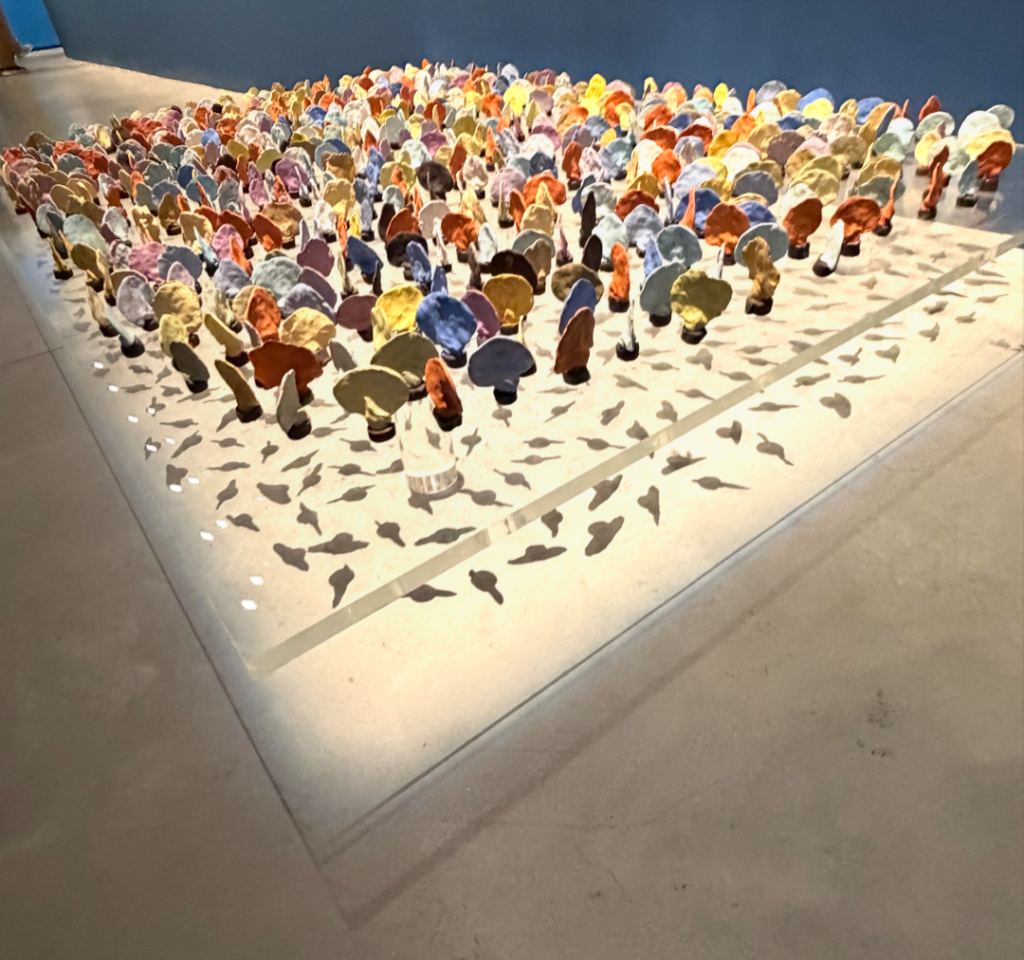
In another modestly scaled clay installation, Vera Tamari arranges an array of grid-like pastel-colored olive tree figurines on a glass stage. The tiny objects cast geometrically spaced shadows onto the white floor, producing a dreamy image of a crafted grove and its dissolving reflection. The Palestinian artist takes one of the most overused icons of her cultural heritage and returns to it a fresh, poignant visual life.
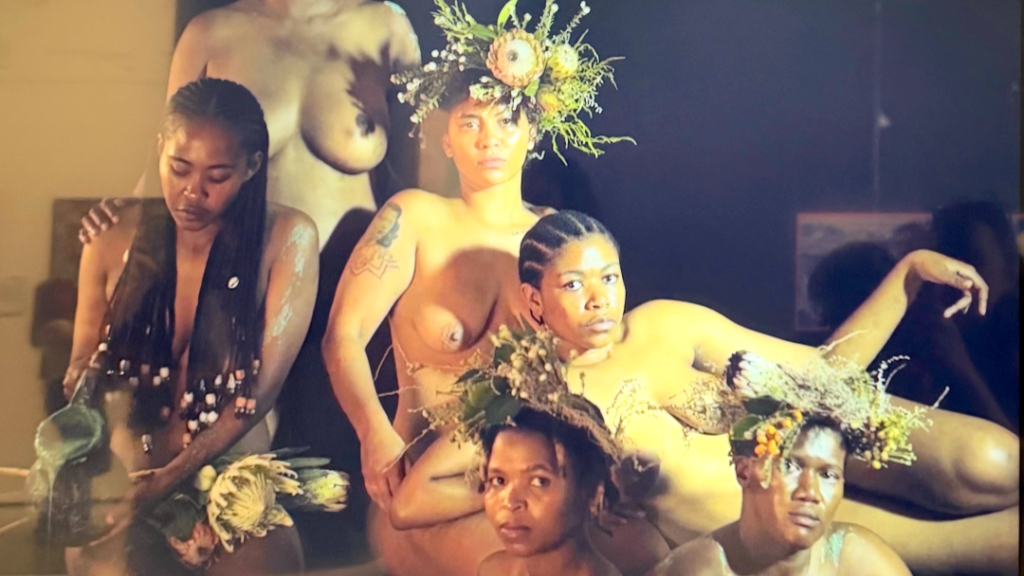
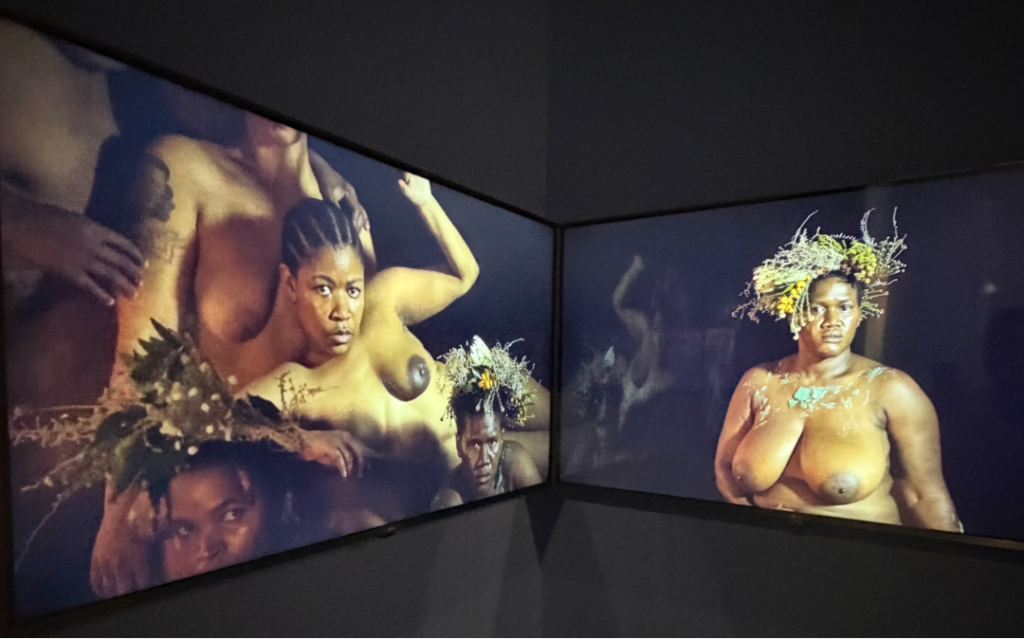
Buhlebezwe Siwani portrays an assembly of seated and reclining Black women, including herself, in a five-channel video installation. She presents the sequence of medium-sized screens as a set of figure paintings, and the painterly reference becomes specific: direct and frontal nudes, adorned with colorful floral crowns, set against black backgrounds in a Caravaggesque arrangement. Siwani renders their bodies in a commanding chiaroscuro, enhancing the unapologetic beauty of full figures who swing their arms in slow, dreamy motions to vocal music.
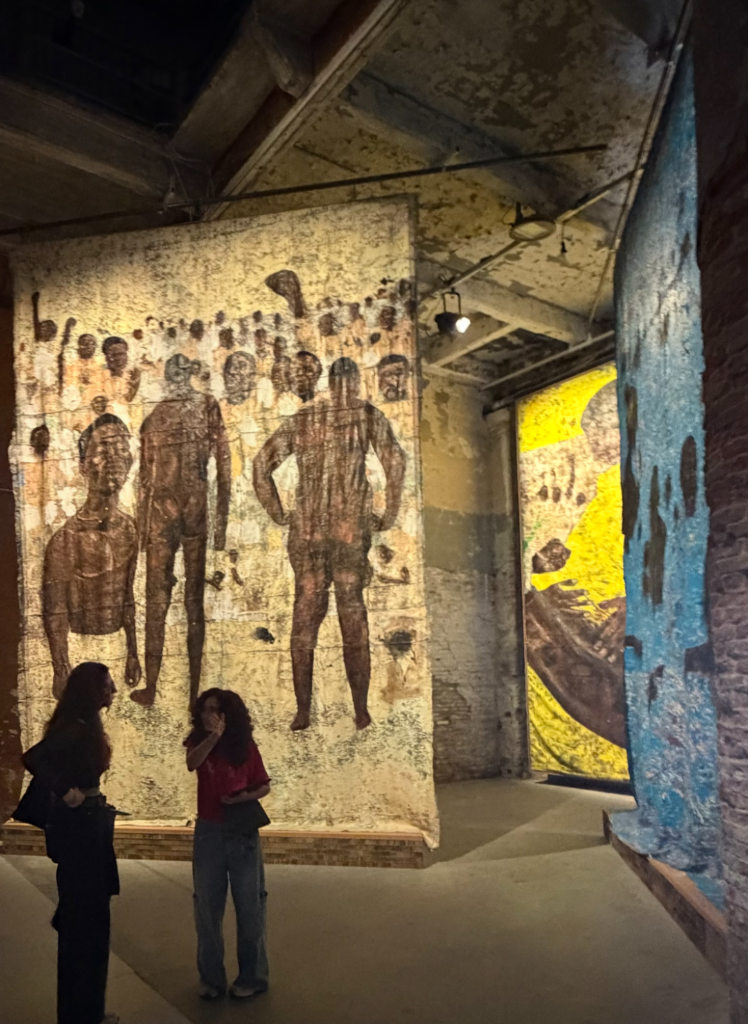
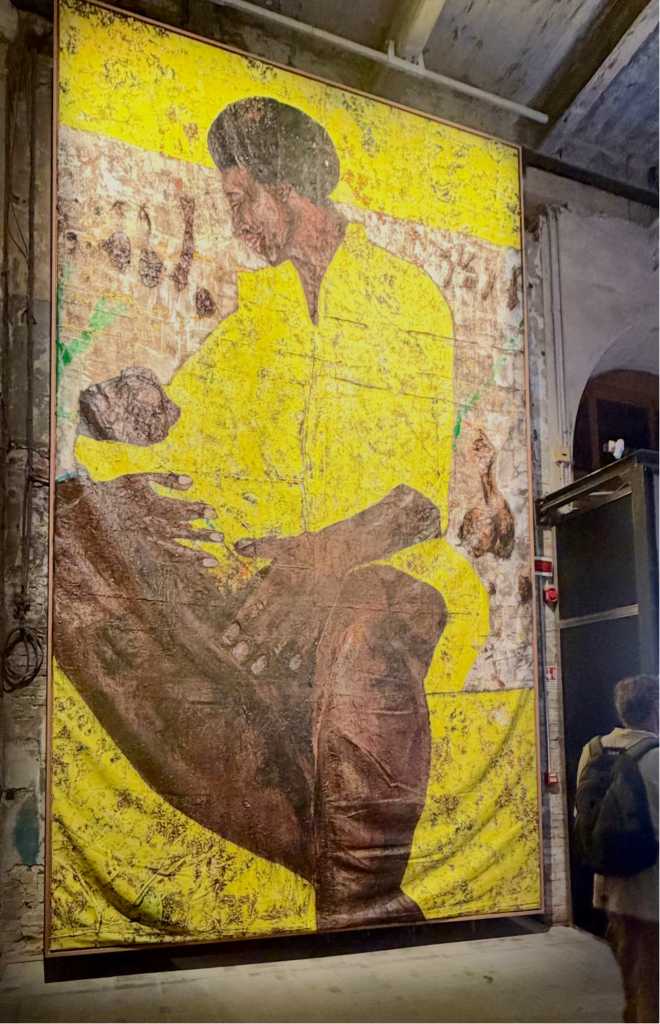
In Minor Keys extends to the Arsenale site, where the tall warehouse spaces call for larger work. In a suite of gigantic figure paintings, Kaloki Nyamai from Kenya presents gatherings of full-figured men in earth tones, or, in another work, heads and arms floating over a shining ultramarine ground. An enclosed installation allows the canvases to be experienced from both sides, seams and attachments exposed, the figures looming from below like something from a cave wall. Despite their scale and primary color grounds, Nyamai keeps these works quiet. His strongest is a full-body portrait of a figure enveloped in process yellow, cradling an infant in giant arms with immense fingers — a triangular Madonna-and-Child composition that resonates, in Venice, with the weight of the Renaissance tradition. Yet the free-hanging canvas makes the work earthlier, less precious, and a question mark opens around the missing mother and the non-European experience behind it.
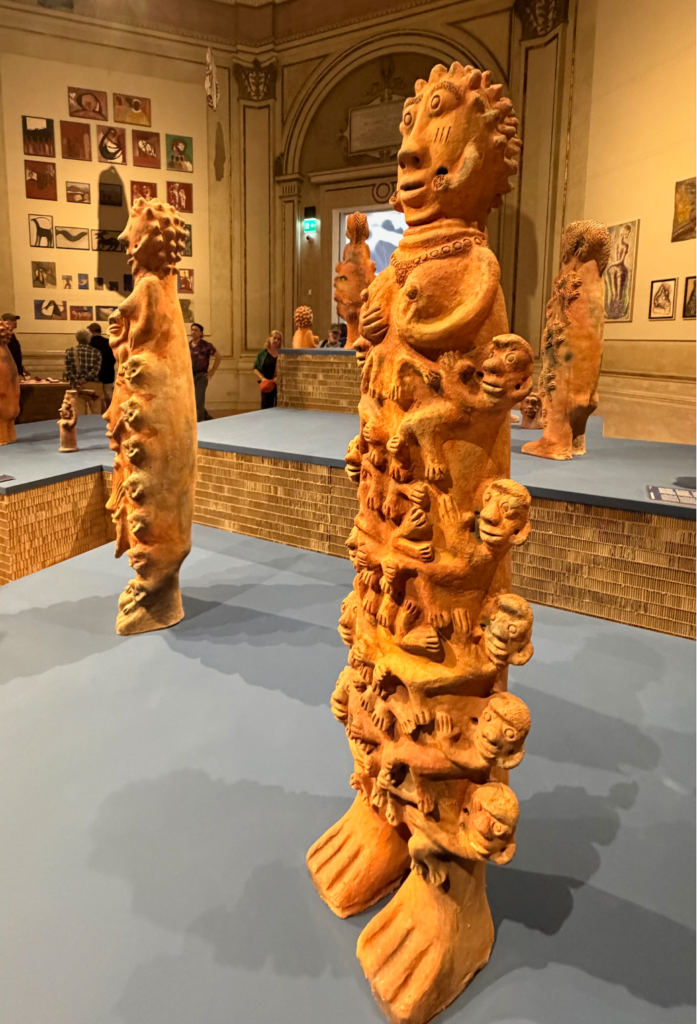
Mythological figures recur across the exhibition. The clay figures of Senegalese potter Seyni Awa Camara stand erect, as if watching or about to move, their bulging eyes neither quite human nor animal. Covered with smaller creatures, the large figures become steep landscapes as multiple tiny arms and numerous figures keep clinging to their arms and dresses, turning into motherly towers.
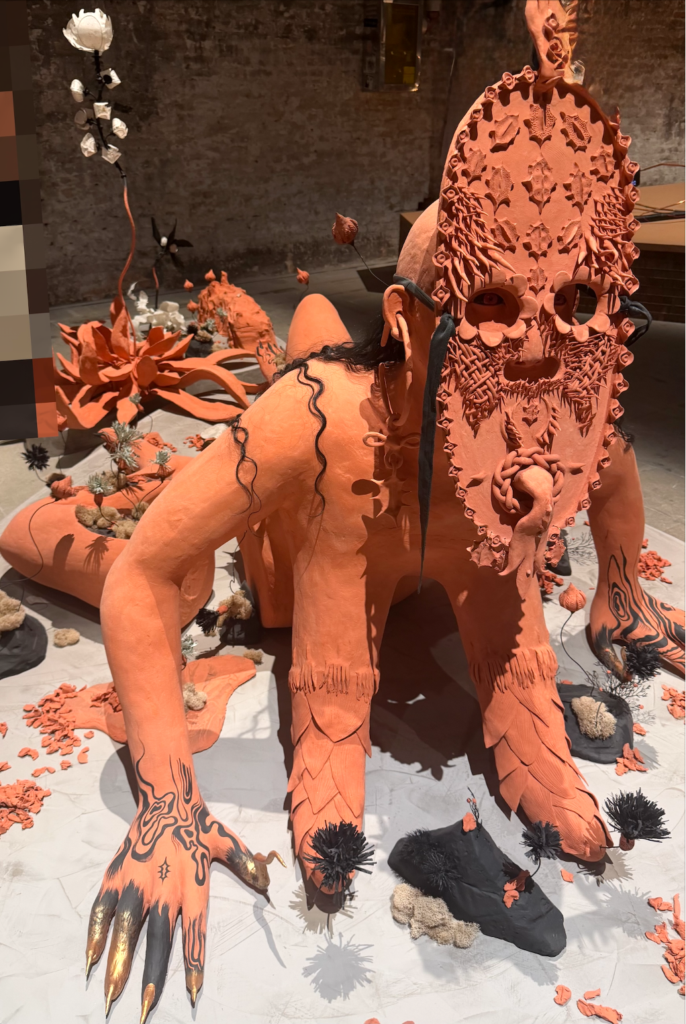
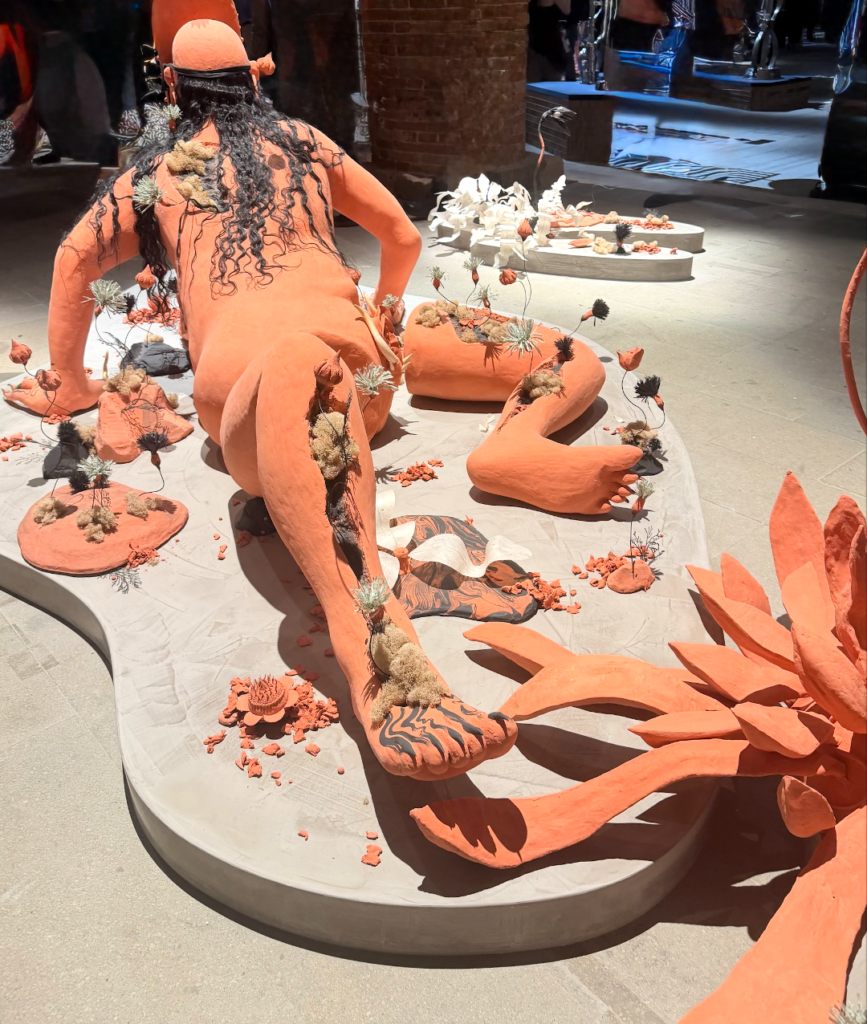
The Sri Lankan duo Rajni Perera and Marigold Santos have sculpted a life-size creature in terracotta — a sphinx-shaped figure with a menacing human face, resting on its forearms. Walking around it, you discover detached limbs laid unassembled among the detailed clay vegetation of a primordial tropical garden. The face of this shattered figure holds both power and heartbreak, carrying mythology into the territory of dream and nightmare.
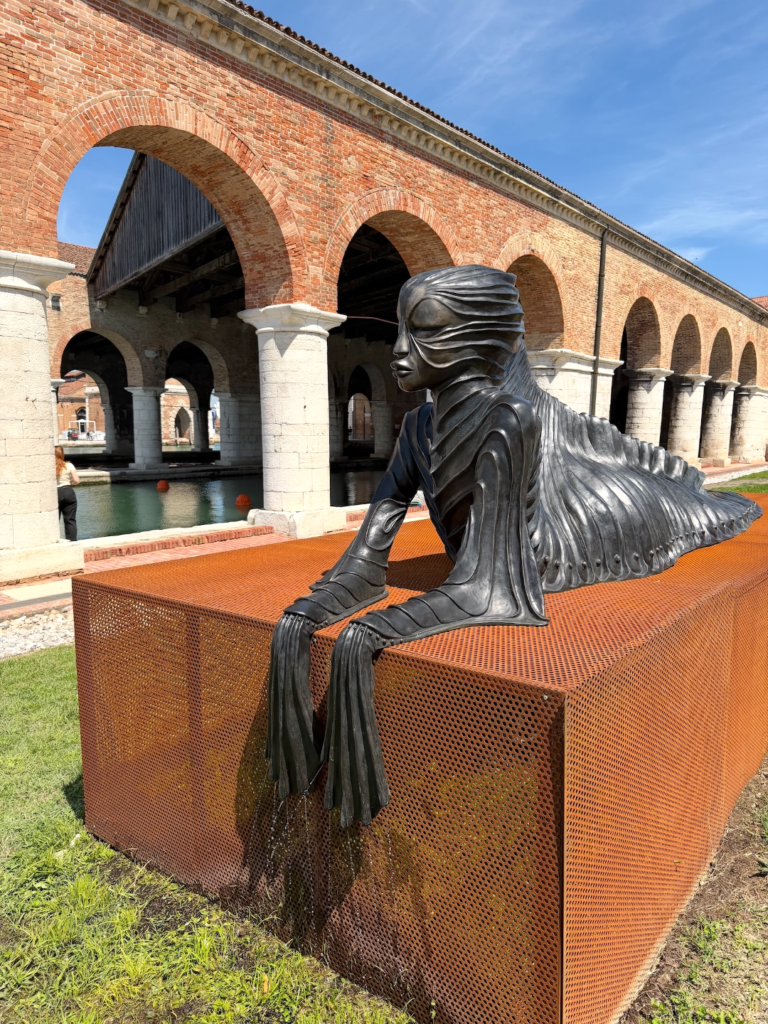
These semi-human presences accumulate throughout the show, arriving finally at the bronze sculpture by Wangechi Mutu standing on a pedestal outside the Arsenale, against a spectacular arched quay. Unperturbed and unhesitant, this monumental feminine figure seals the exhibition — a memorial to African culture, legend, and dream, and a salute to contemporary womanhood. Yet for all the extravagance of this finale, and for all that In Minor Keys achieves, its placement at the edge of the Biennale grounds is not incidental. The central grand European pavilions hold their priority unquestioned, as they always have.
All photos courtesy of Michal Gavish
Voices In Minor Keys, 2026 Venice Biennale Group Exhibition Through Nov 22, 2026
About the writer: Michal Gavish is a multi-media artist splitting her time between NYC and Washington, DC. She received her MFA from the San Francisco Art Institute. Previously, she had earned a PhD in Physical Chemistry, which continues to influence her art and science practice. She currently has a solo show at the Delaware Contemporary. Her works were exhibited in solo shows at the Budapest Museum, LIU Brooklyn, Hillyer DC, Garrison New York, Spinerei Leipzig, Germany and Sandra Lee San Francisco to name a few. Among her group shows were the Biobat Art Space in Brooklyn, Radiator Gallery NYC, Yerba Buena Center for the Arts San Francisco, Plain Site DC, Stanford University, ZeroOne Silicon Valley Biennale, Venus Knitting Brooklyn, Tachles Berlin, Sonoma Art Museum, Bogota Art Fair, Columbia. Gavish writes reviews for Sciart Magazine and lectures on Art and Science. She was awarded several projects and artist residencies in NYC and Europe.
Make your tax-deductible donation today and help Art Spiel continue to thrive. DONATE