Interview for He Spoke to the Birds: Matter, Memory, and Nonhuman Voices
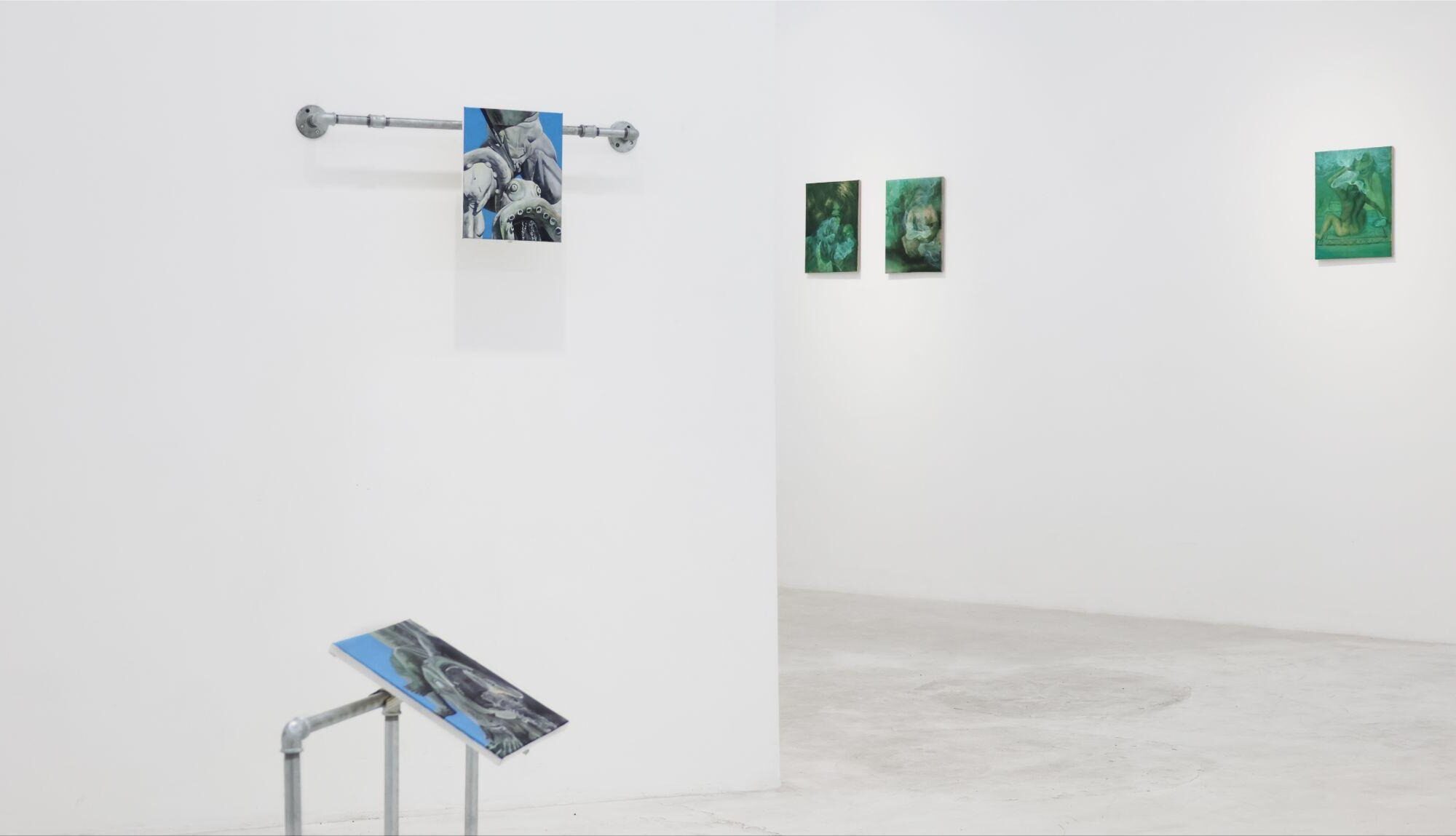
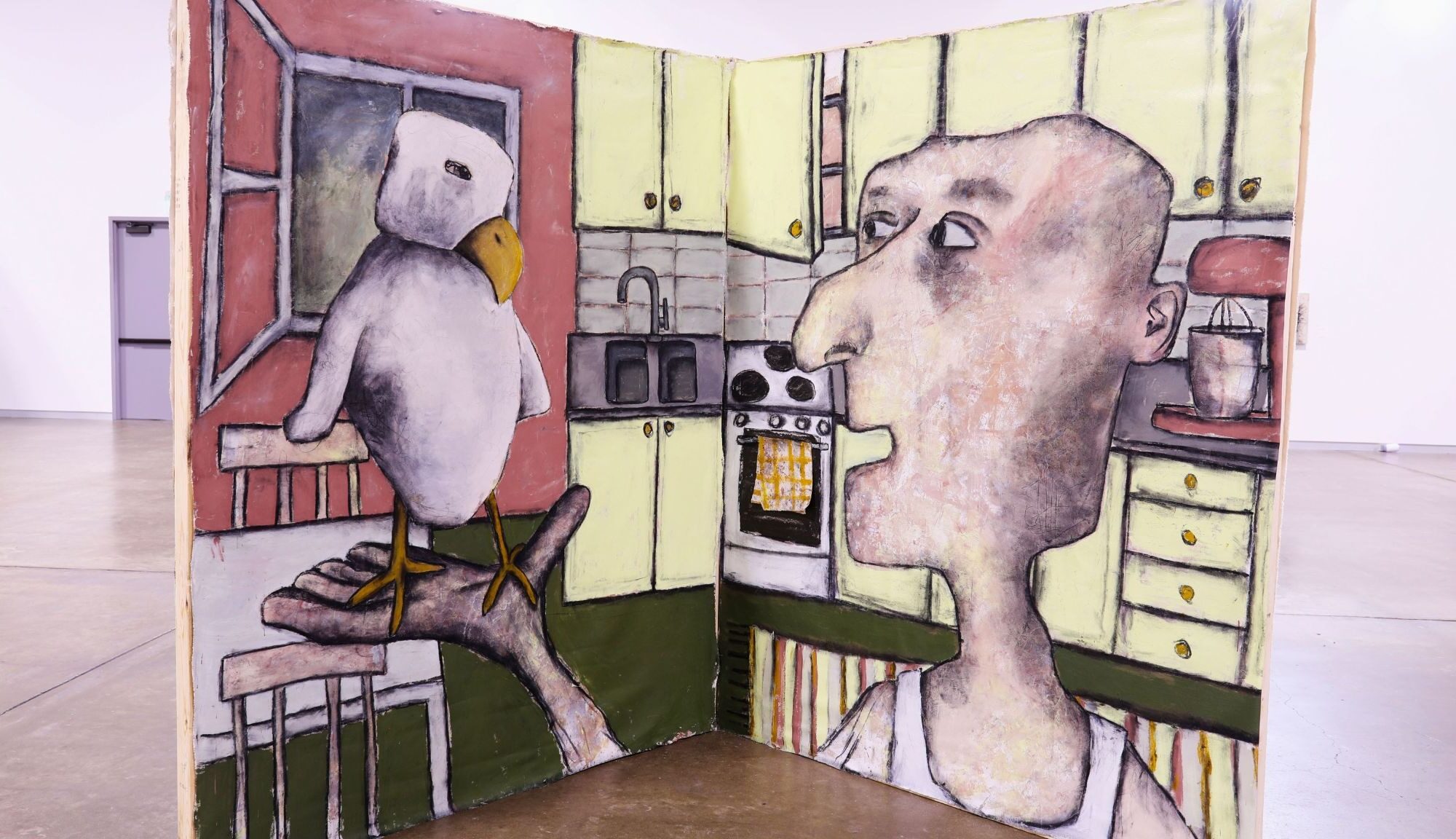
Diego Azzola, Huang Zhe, Installation view of He Spoke To The Birds

Presented at the AAIE Center for Contemporary Art in Rome, He Spoke to the Birds brings together works by Jeremias Rumpl, Diego Azzola, and Huang Zhe in an exhibition curated by Fanfan Yuxuan Fan. Taking its title from Carolyn Christov-Bakargiev’s reflection on Saint Francis of Assisi and Arte Povera, the exhibition asks what it might mean to listen not only to human voices, but also to birds, ruins, pipes, smoke, and matter itself.

Continue reading “Interview for He Spoke to the Birds: Matter, Memory, and Nonhuman Voices”

How Unexpected: Encounters With the Divine, Emelie Stenhammar

Emelie Stenhammar, How Unexpected

Emelie Stenhammar’s works echo the aims of Elizabeth Murray to reshape our relationship with painting. Cozy rectangular formats are denied. Twisted Perspective prevails. Both artists’ depictions of domestic spaces reflect a mutual fondness for cartoons and whimsy. Stenhammar paints compelling allegory about the human condition, with a compassionate gaze akin to that of Kathe Kollwitz. 

Continue reading “How Unexpected: Encounters With the Divine, Emelie Stenhammar”

Cecily Brown at the Serpentine: Everything Everywhere All at Once

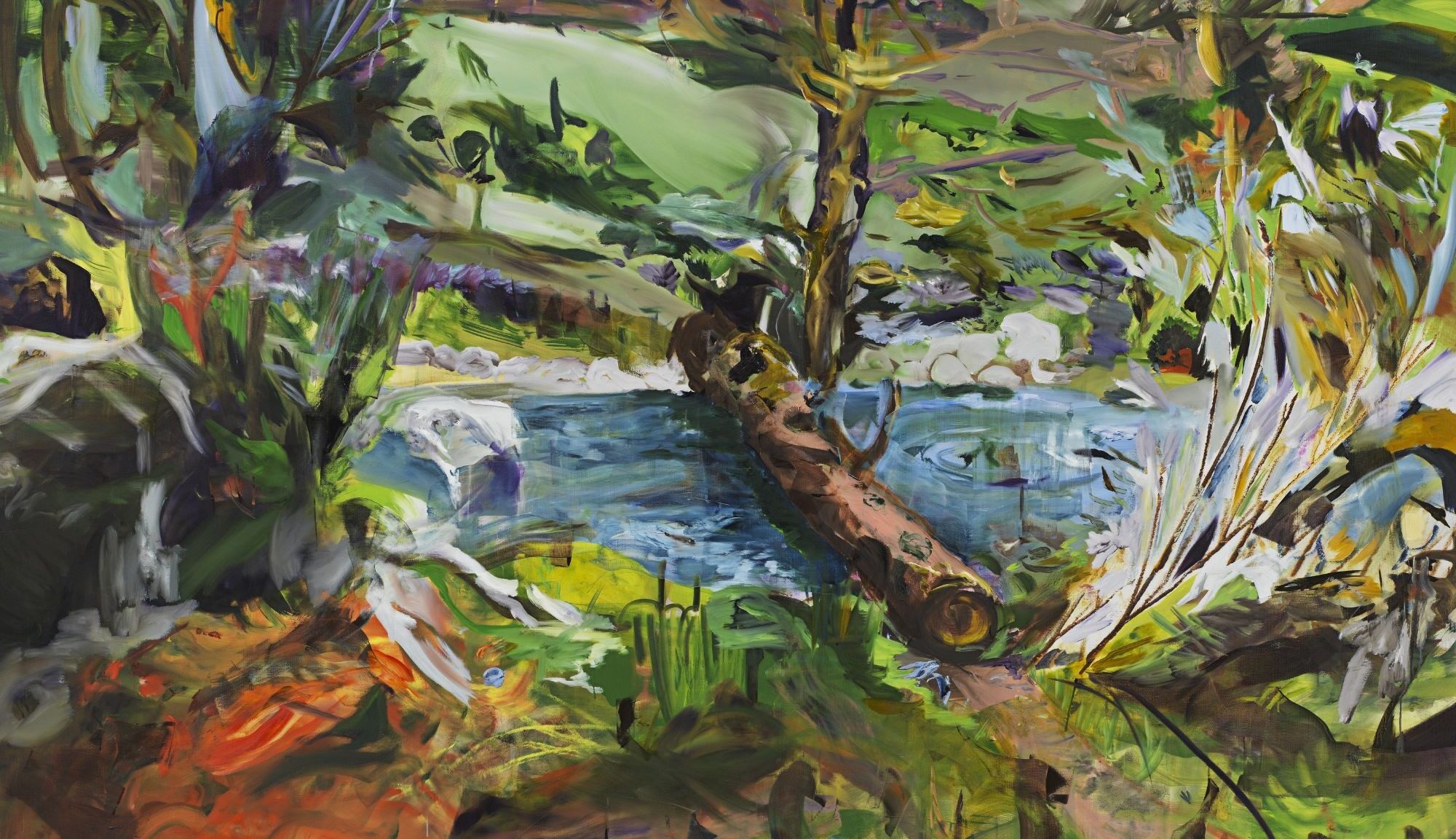
Cecily Brown, Nature Walk with Paranoia

Entering the first room of the gallery, one is instantly struck by the richness of movement in Cecily Brown’s paintings. Several recent works, drawn from nature walks, centre on the motif of a log laid across a blue stream. This fairy-tale imagery, bordering on kitsch, was borrowed from a jigsaw puzzle Brown was completing at the time. Yet the jagged shrubbery and turbulence surrounding these scenes point towards something darker.

Continue reading “Cecily Brown at the Serpentine: Everything Everywhere All at Once”

Andreas Schulze’s exploration of color in the cool pastures of cake

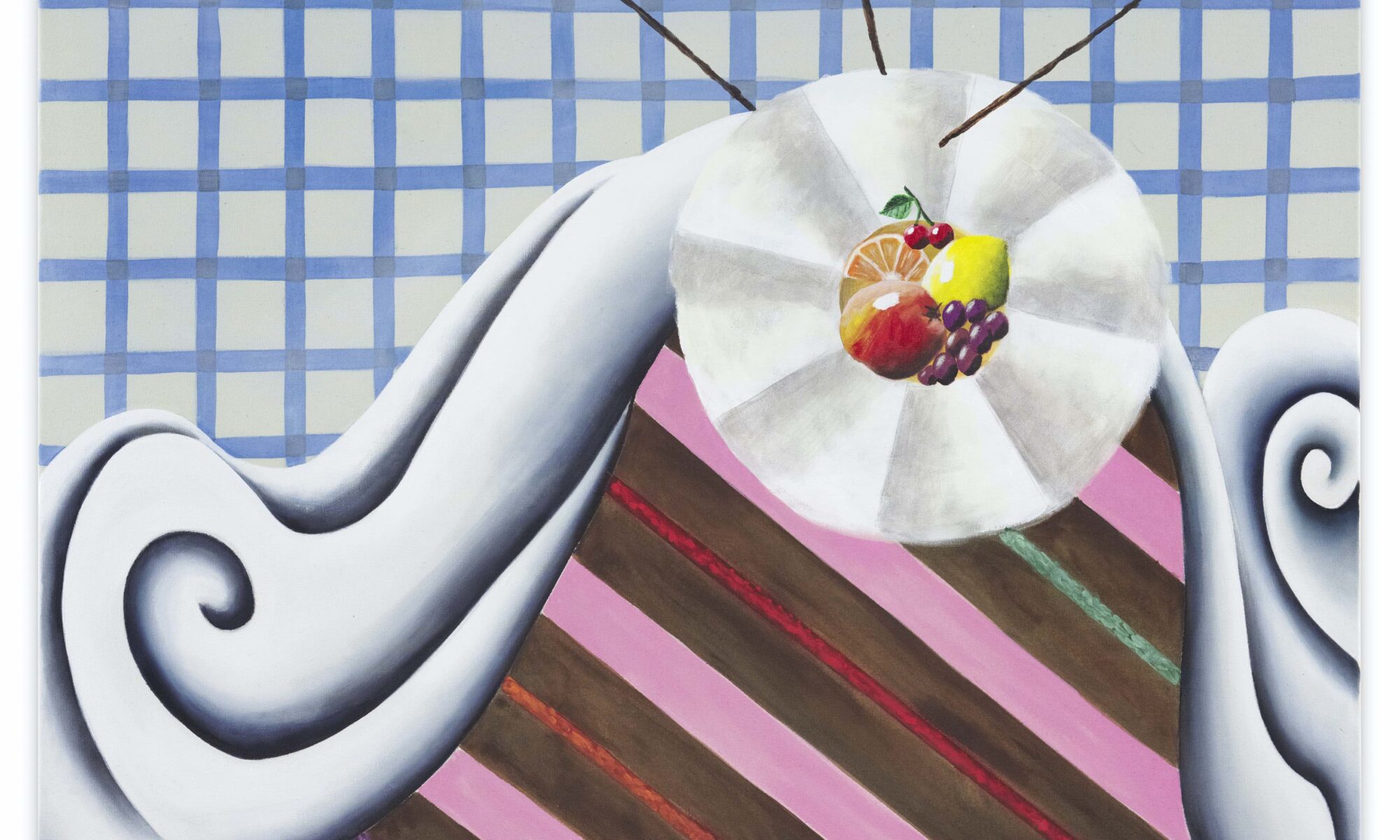
Andreas Schulze, Untitled (Her)

In his show Cake (2026) at Sprüth Magers, New York, Andreas Schulze explores the visual effects of saturated color and geometric form, using cake as the setting for his investigation.

In his paintings, Schulze creates an inner three-dimensional universe, which serves as a bell jar. In his imaginary pastures, Schulze creates surreal interiorscapes, built of geometric shapes and flat backdrops of color-gradient skies, juxtaposed with rounded spheres and spirals painted in three-dimensional perspective, with depth and shadow. The pictorial space he builds gives a stage for him to explore various phenomena, in this case, cake, and he does so with a playful seriousness, experimenting with the basic forms and images that make up cakes: candles, frosting, fruit, sprinkles, and layers.

Continue reading “Andreas Schulze’s exploration of color in the cool pastures of cake”

Hollis Heichemer: Transcension over Anthropocentrism and Breakaway into Landscapes

Hollis Heichemer, Come to the Surface

Hollis Heichemer’s solo exhibition at Hollis Taggart titled “moving in stillness” is a profound investigation of existence and the meaning of the world through the study of landscapes and Mother Nature. Is Humanism an anthropocentric perspective that is ultimately flawed and furnishes humanity with the arrogance to destroy the environment and disregard the principles of empathy? How can we overcome the diseased thought that humans have the right to master or exploit nature for profit? And how has the artist found great peace and liberation through her lifelong study of Mother Nature and her generous nourishment and wisdom? Does Heichemer apply the paint purely as a formal exercise of abstract colors and relationships, or does the paint become the flesh of Mother Nature, by the observation of which we can become and live through the painting as landscapes?

Continue reading “Hollis Heichemer: Transcension over Anthropocentrism and Breakaway into Landscapes”

Growing After the Embers: A Review of Bùi Thanh Tâm’s Solo Exhibition Here on and after

Installation view of Here on and after

For a long time, when I was young, I felt distant from the idea of “history.” In textbooks, history always appeared through years, wars, reforms, and changes of political power, as if it were made of events already organized and settled. Yet the history that truly remains in the body often appears in more hidden forms. It may be a silence within family narratives, a memory that one generation chooses to avoid, a recurring pattern in festive images, or a color that seems joyful while quietly carrying a wound. Very often, history continues to exist in another form, lingering in images, bodies, and everyday experience.

Continue reading “Growing After the Embers: A Review of Bùi Thanh Tâm’s Solo Exhibition Here on and after”

The Luckiest Show You Will See This Summer

Gail M Boykewich, Lover’s Eye

What would you do if you wanted to bring more luck into your life? Drawing from her observations of how people across cultures use rituals and superstitions to summon luck, Gail M Boykewich’s show Into the Wolf’s Mouth feels almost like a field guide to how we pray, wish for good fortune, and stay hopeful enough to keep moving forward. Rather than treating luck as simple optimism, Gail presents it as a language of survival — a way people negotiate uncertainty, longing, heartbreak, and the desire for a better future. The title is inspired by the Italian idiom “in bocca al lupo”, a phrase used to wish someone luck as they enter danger. It beautifully implies a universal experience: the desire for more, for solutions, for security, or simply for a way to feel better, especially within our current turbulent and unstable political status quo.

Continue reading “The Luckiest Show You Will See This Summer”

Dynamic and tender moments in Angelo Vasta’s Luci Spente Exhibition at Tappeto Volante’s new gallery location

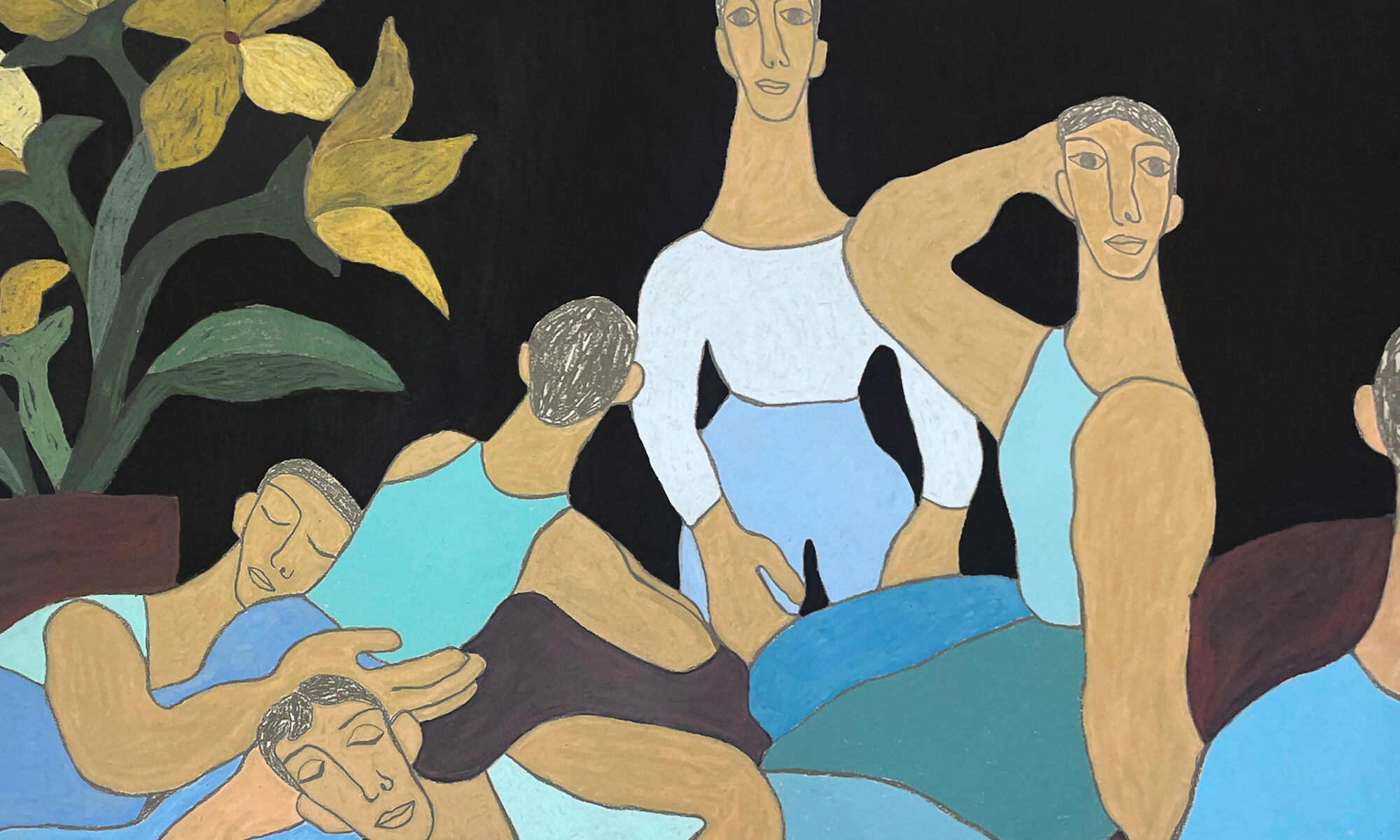
Angelo Vasta, Deserto Rosso

Angelo Vasta’s exhibition, Luci Spente, meaning Lights Off, at Tappeto Volante’s newest gallery in Tribeca, greets you with energetic works on paper in which bodies overlap, lean into one another, and drift across the surface. The figures carry a deeply personal connection as Vasta stresses the importance of closeness, exchange, and intimacy within domestic spaces. While not as brightly colored as his previous works, the colors here are deeper and softer, carrying a more somber tone. Vasta welcomes us into the spaces. He welcomes us as if we are a part of the group. 

Continue reading “Dynamic and tender moments in Angelo Vasta’s Luci Spente Exhibition at Tappeto Volante’s new gallery location”

What Remains: in dialogue with Arghavan Khosravi

Arghavan Khosravi

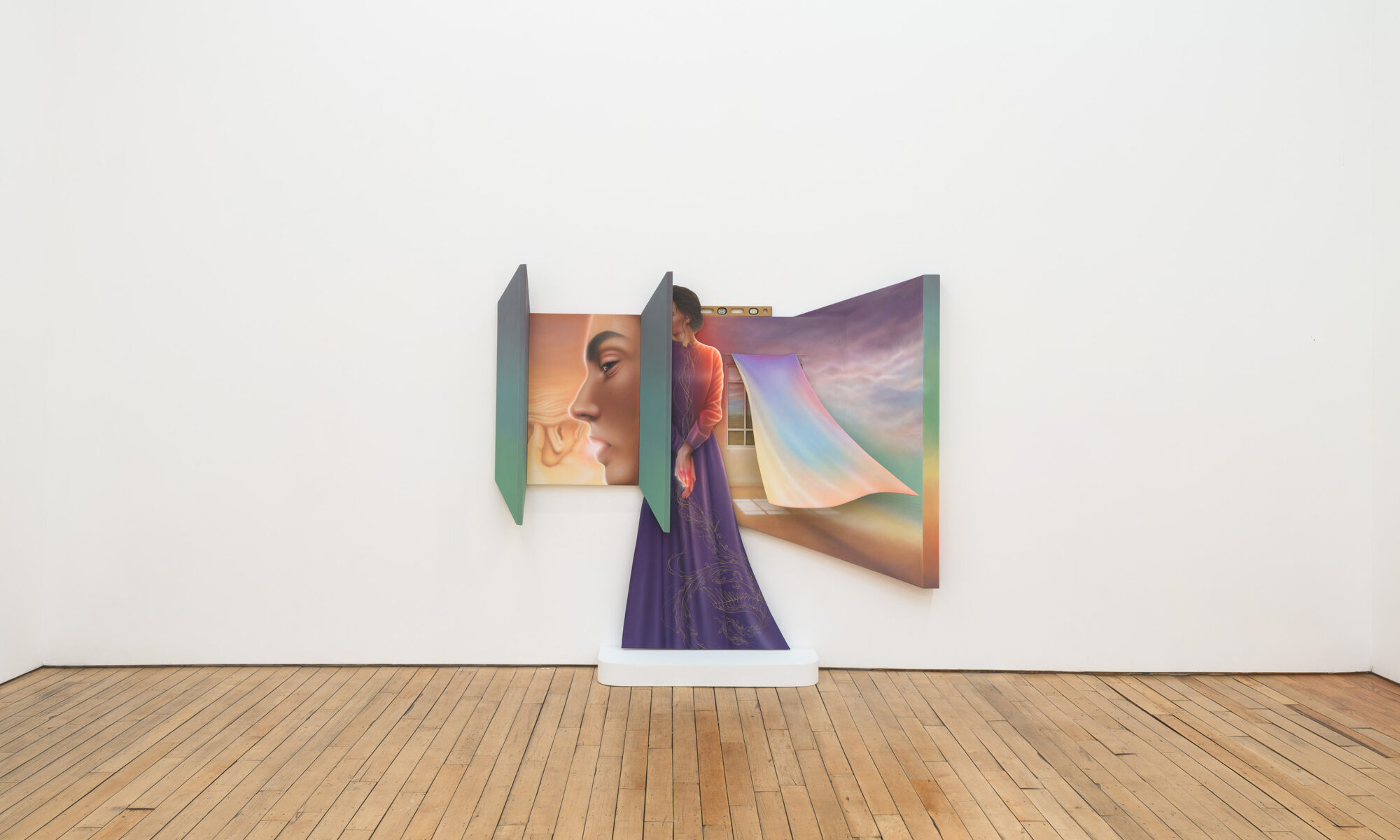
Altarpieces—historically sites of devotion, revelation, and spiritual certainty—become something altogether different in Arghavan Khosravi’s What Remains, currently on view at Uffner & Liu through July 2. The exhibition brings together large-scale wall works, a freestanding sculpture, and an intimate suite of new altar-inspired paintings that continue Khosravi’s ongoing exploration of the forces that shape women’s lives under political, cultural, and religious systems of control. Drawing equally from Persian miniature painting and medieval European iconography, the artist constructs layered worlds where architectural structures become psychological spaces, symbols migrate across histories, and moments of resistance emerge within conditions of constraint. Rather than offering resolution, the works linger in states of suspension—between freedom and captivity, memory and displacement, devotion and doubt.

Continue reading “What Remains: in dialogue with Arghavan Khosravi”

Hum and Song: Helen Frankenthaler’s The Moment and the Distance at Gagosian examined alongside Babara Guest’s writings

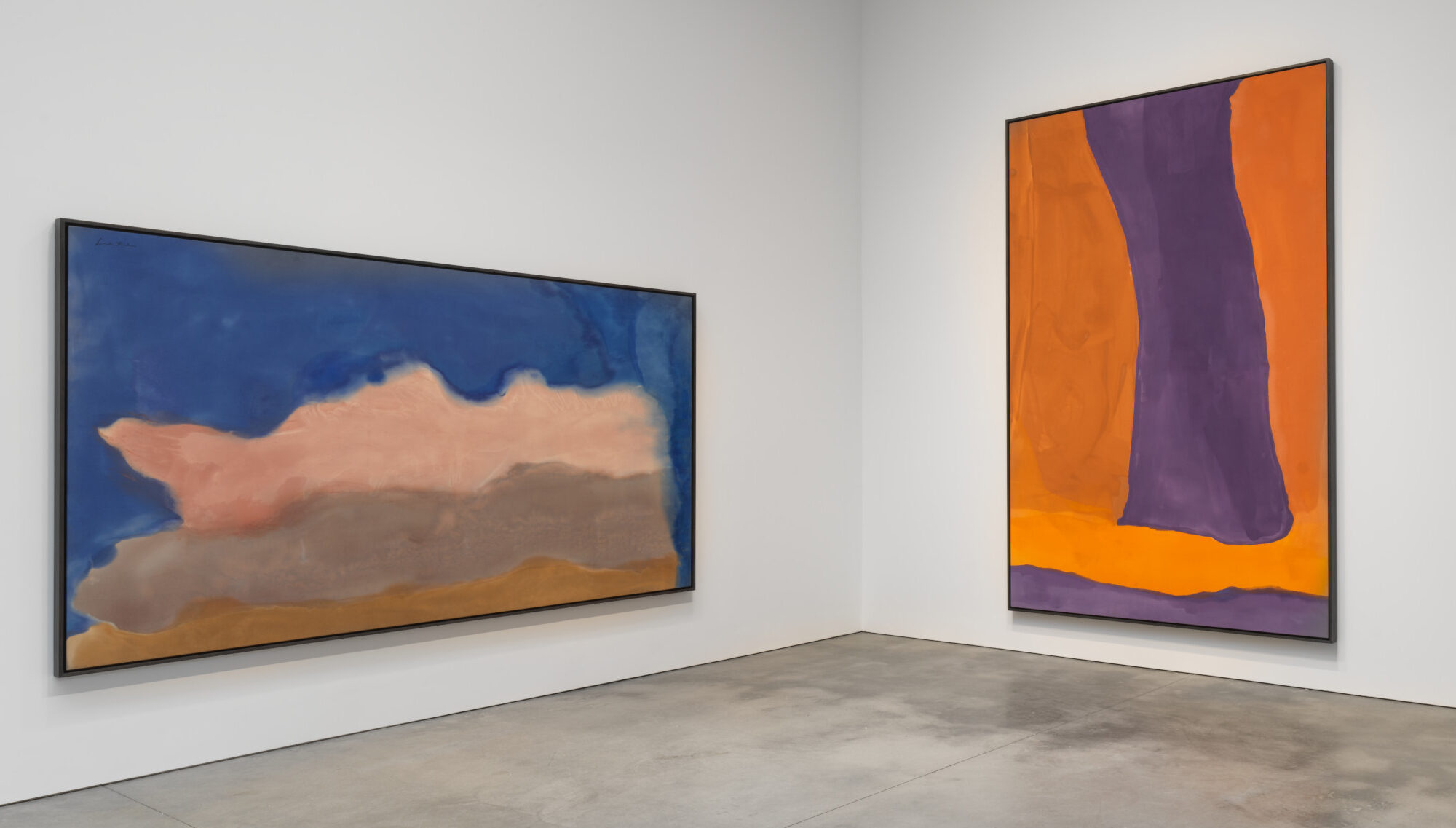
Helen Frankenthaler, The Moment and the Distance, 2026, installation view

Helen Frankenthaler’s show at Gagosian New York, The Moment & The Distance is a beautiful retrospective survey of her work. The title is inspired by a mid-career essay by Barbara Guest that encapsulates the essence of Frankenthaler’s work. In the  1975 essay Guest defines Frankenthaler’s oeuvre in terms of music. She reflects that while there is beautiful “humming” in Frankenthaler’s early work, over her career it becomes  “song”. As her work matures, Guest argues, Frankenthaler becomes more decisive, methodical and assured in her practice, less spontaneous or reliant on happy accidents. Beyond demonstrating the present moment in the paintings, she walks the effortful distance to “consolidate her terms”.  

Continue reading “Hum and Song: Helen Frankenthaler’s The Moment and the Distance at Gagosian examined alongside Babara Guest’s writings”