Alice Pixley Young: Still Life at AIR

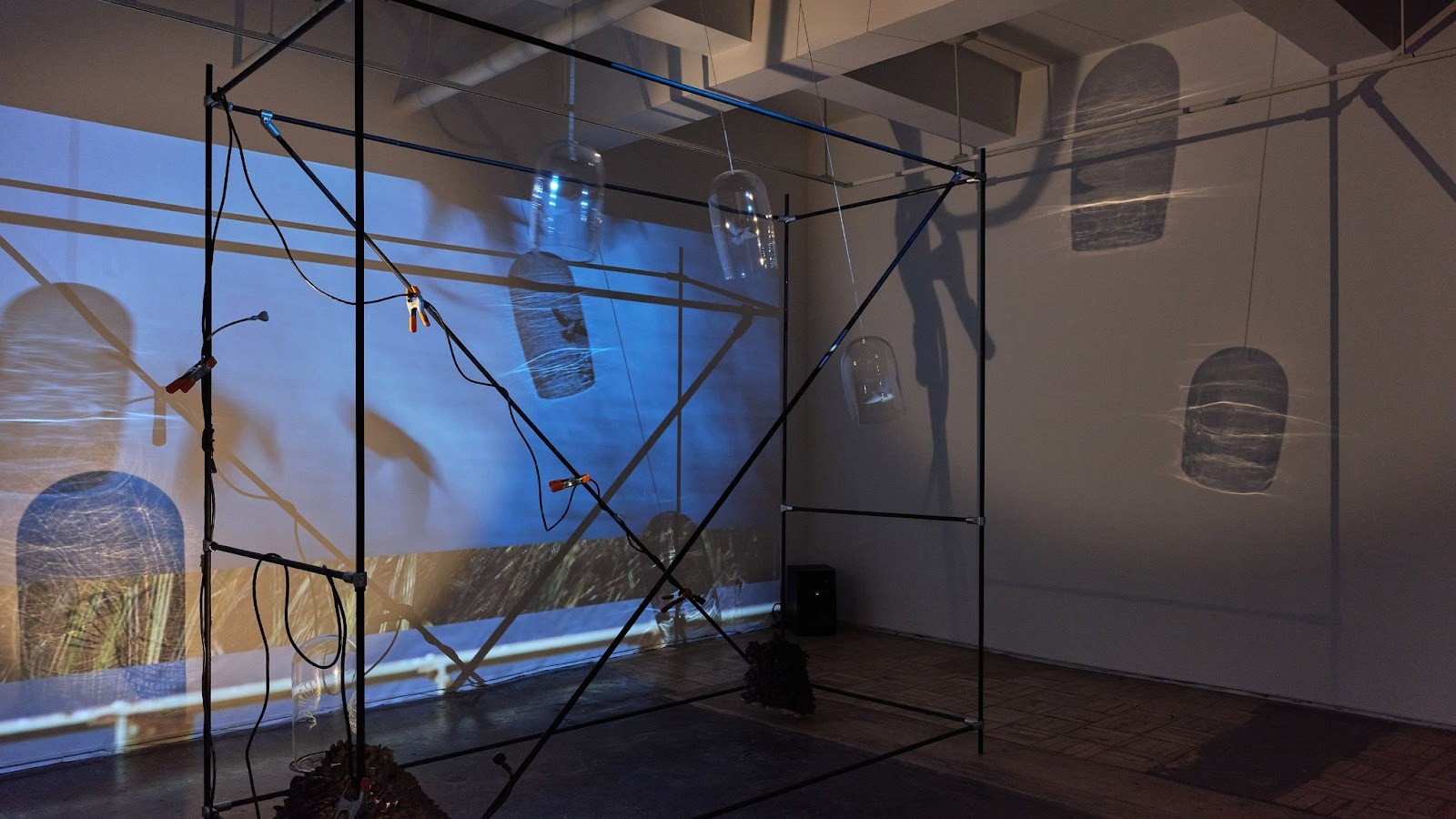
Alice Pixley Young’s Still Life takes shape in semi-darkness at A.I.R. Gallery as an immersive meditation on ecological time, stratified and shadowed by industrial residue. Installed as a multisensory environment of video projection, sound, industrial scaffolding, and glass bell jars, the installation places viewers in a space where remediation and damage coexist. Suspended from tall black scaffolding, the glass containers move like dimly illuminated pendulums, casting shadows across the walls and establishing the installation’s temporal pulse from the outset.

The work’s rootedness in place is central. Young’s studio is located on an Ordovician fossil bed near a nuclear Superfund site in the Rust Belt. Her exhibition in Brooklyn hints at another Superfund site, the Gowanus Canal, linking two contaminated landscapes across geography. The central video shows horizontal strata in constant motion. Below the upper dusky blue sky, you can travel slowly through narrow moving bands — grasses and wildflowers filmed at the Fernald site in southwest Ohio — creating a lateral sense of passing through a remediated landscape. Alongside it, a thinner strip shows water seen from a bridge, evoking an industrial waterway shaped by contamination and cleanup. The cross sections are clean-cut and suggestive, tinged with a bluish monochrome.
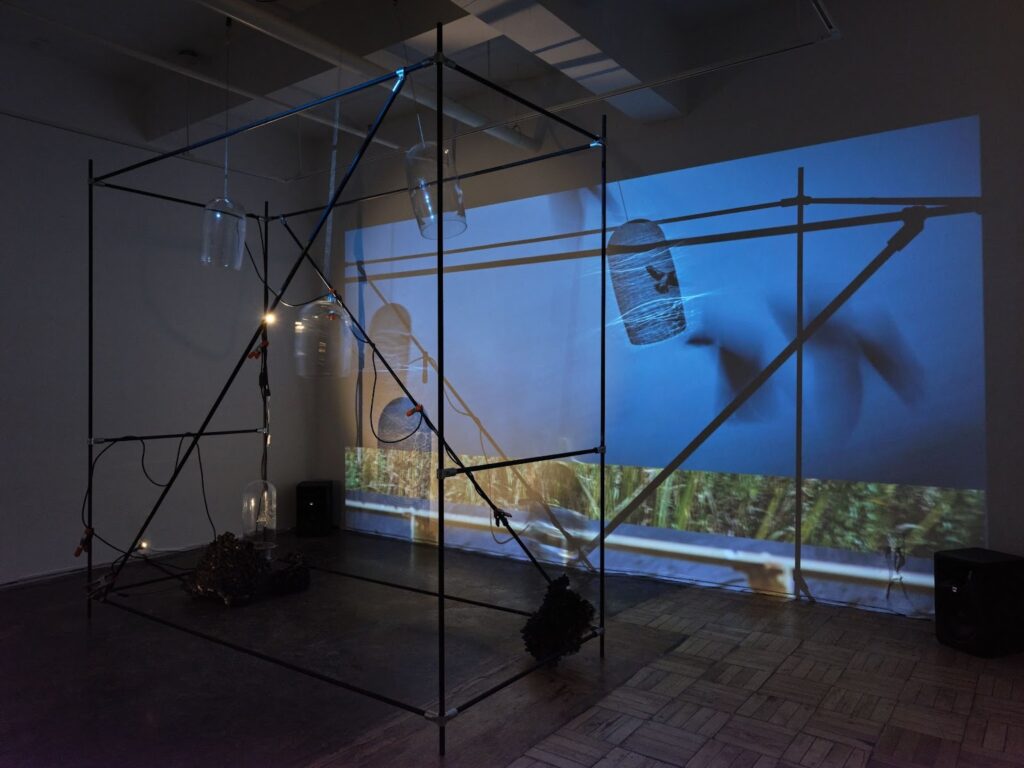
Exhibition view, Alice Pixley Young, Still Life, 2026, A.I.R. Gallery, Brooklyn, NY. Photography by Matthew Sherman

Birds enter through sound and sight. The birds’ calls, recorded by the artist, continuously shift and reorganize, gradually overtaken by industrial noise. They suggest a tough migration. The suspended glass bell jars are engraved with imagery of Eastern Meadowlarks (one of the bird speciesin population decline). The glass pieces swing slowly like pendulums of grandfather clocks, casting moving bird shadows across the projection, encapsulating past, present, and future. These dome-shaped transparent jars are recognizable as decorative containers used to showcase collected specimens, typically placed on a safe shelf. In Young’s installation, they lose their ground, engraved on, and swing side to side hypnotically. Here, these fragile containers of life also signal warnings, becoming what she calls “active image-makers.” I can imagine those glass jars holding the souls of vanished birds. The birds’ blurred wings flicker as their cries reverberate through the space, at times piercing, at times distant. 
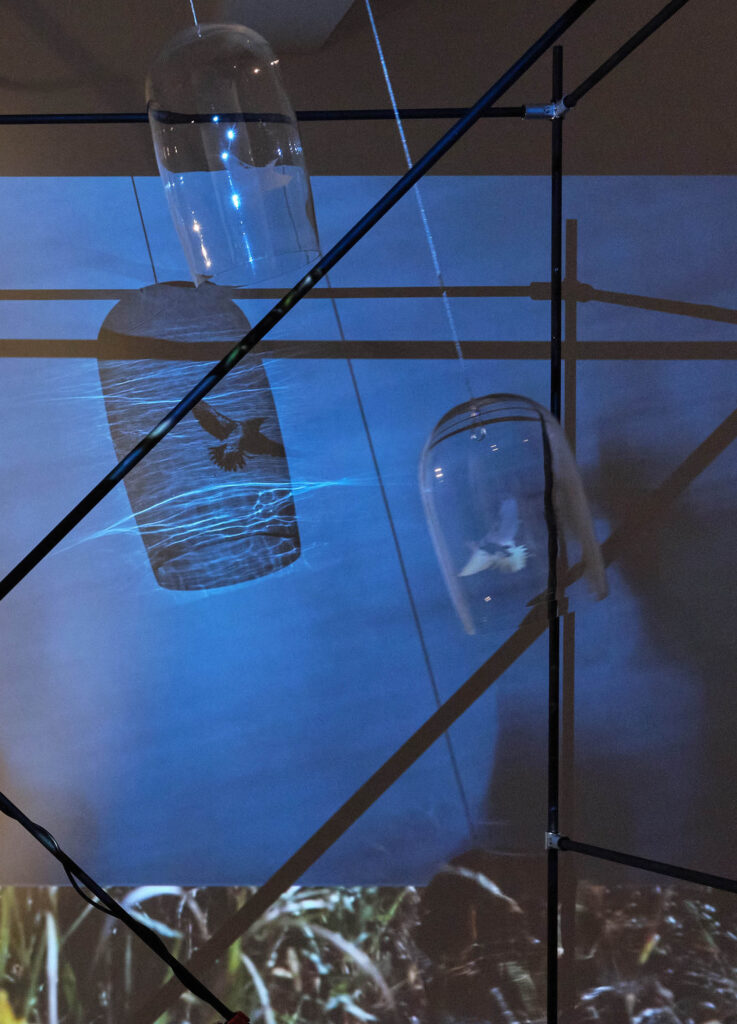
Alice Pixley Young, Detail, Still Life, 2026, A.I.R. Gallery, Brooklyn, NY. Photography by Matthew Sherman

The birds’ imagery appears in motion, blurred and only partially formed, more hinted at than fully seen. The birds seem to move as if traveling between sites, from Young’s Rust Belt landscape toward Brooklyn’s Gowanus Canal, some vanishing along the way. The black scaffolding structure stands before the screen, geometric, imposing, and bare. It interrupts the projected space, holding the blurred flight behind it in tension with containment. Objects, shadows, and projected imagery fold into one another. The present physical space bleeds into its layered past, reaching toward an unknown future. The disappearing birds, the scientific monitoring of contaminated landscapes, and the broader theme of environmental time link seamlessly. Or as the artist says, the projection reads like a “cross-section connecting atmosphere, land and contaminated infrastructure.”

As projected forms lengthen and shift, they spill beyond the screen and into the room, animating the gallery with a haunting beauty that is eerie, grim, but not yet fatalistic. Still Life does not settle into elegy. It resists the stillness implied by its title. It operates as a poetic wake-up call.
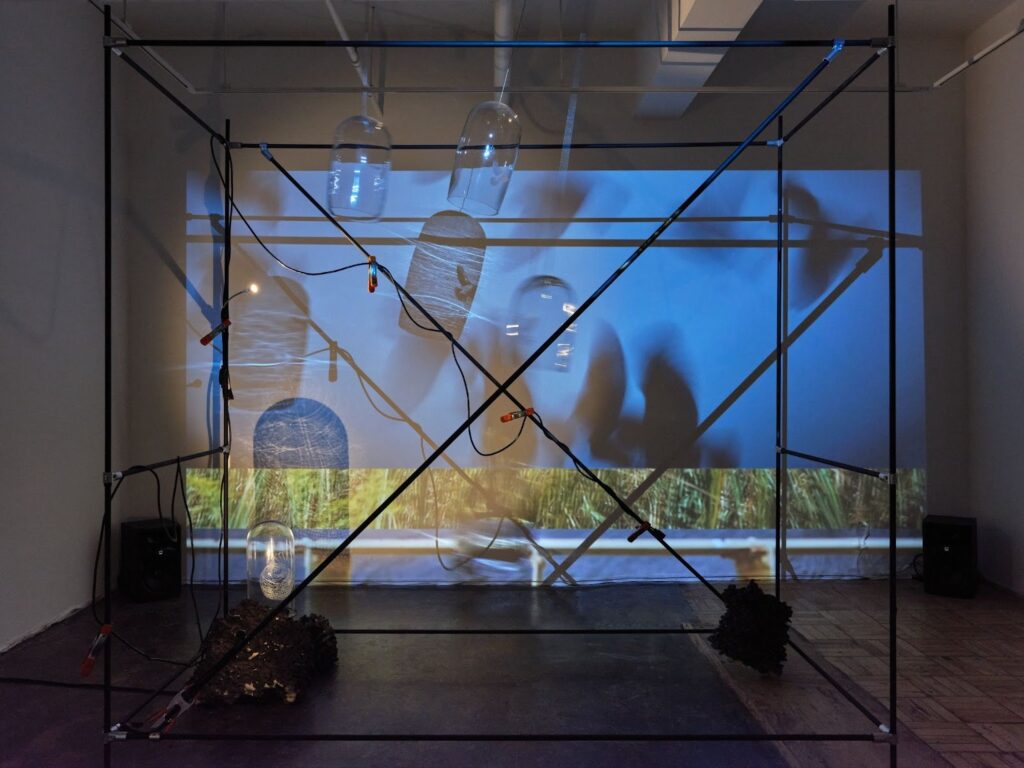
Exhibition view, Alice Pixley Young, Still Life, 2026, A.I.R. Gallery, Brooklyn, NY. Photography by Matthew Sherman

Alice Pixley Young: Still Life at AIR, 155 Plymouth Street
Brooklyn, NY 11201.On view throughMarch 15, 2026. Wed–Sun, 12–6 pm

About the Writer: Etty Yaniv is a Brooklyn-based artist, writer, curator, and founder of Art Spiel. She works in installation, painting, and mixed media, and has shown her art in exhibitions across the United States and abroad. Since 2018, she has published interviews and reviews through Art Spiel, often focusing on underrecognized voices and smaller venues. @etty.yaniv
The Writing on the Wall: Becky Brown’s Pleasure Reading at Freight + Volume

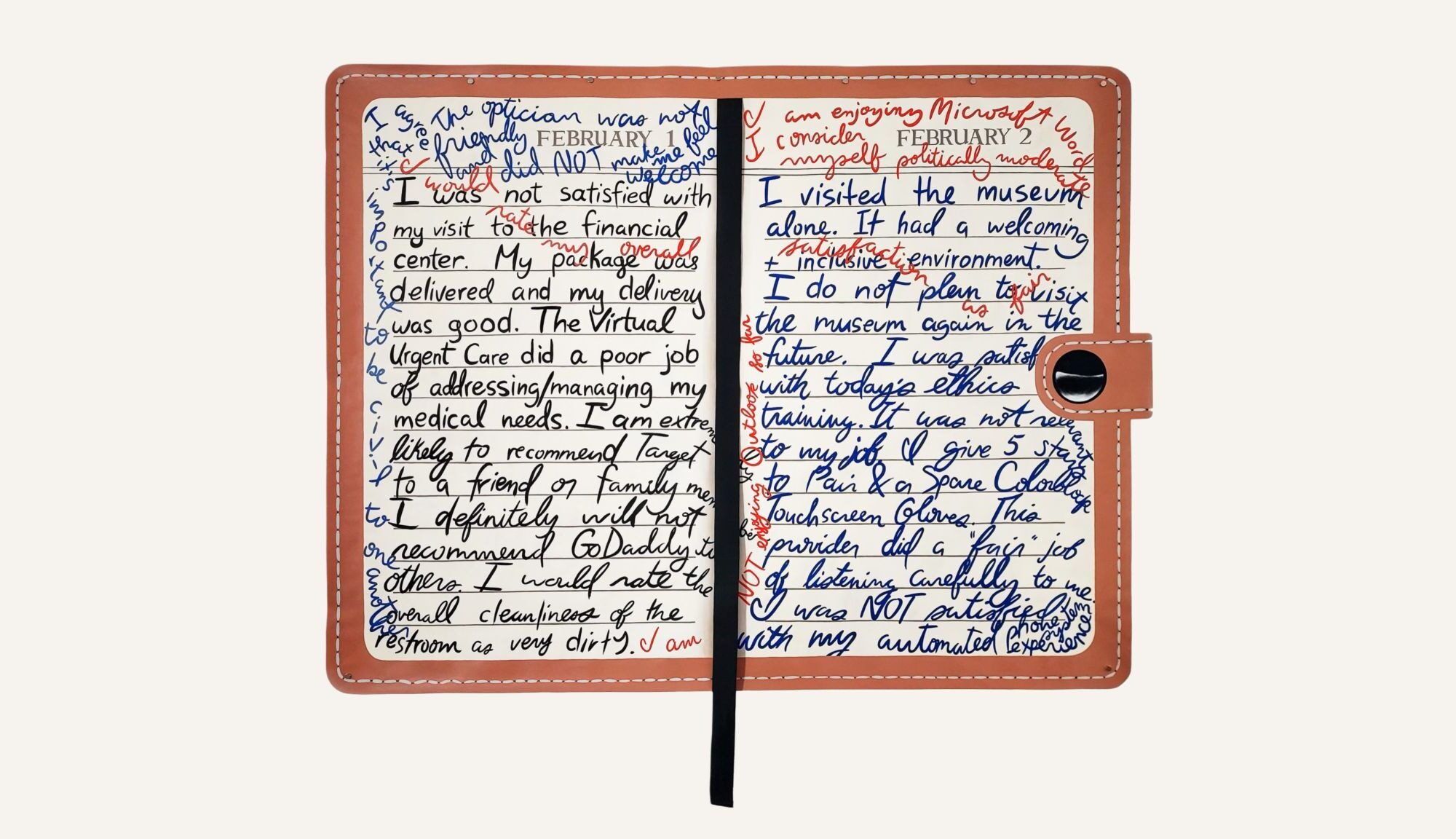
Language is having a moment—again—but it no longer behaves as it once did. Words now arrive compressed, automated, endlessly replicated, stripped of duration even as they multiply. Becky Brown has been tracking this condition for years, painting language not as message but as environment: something we live inside, skim through, and increasingly struggle to feel.

Continue reading “The Writing on the Wall: Becky Brown’s Pleasure Reading at Freight + Volume”

Against Erasure, Toward Presence: Anastacia-Reneé and the Labor of Care

As one enters the space, the air changes first.

Nag champa. Sage. The faint illusion of burning wax.

The scent settles low and heavy, as if the room itself is breathing. The atmosphere feels dense and slow, yet charged. Fixed and fluid at once. Calm and alert. Sacred and unsettled.

This is not simply an exhibition to be viewed. It is a room to be entered with the whole body.

Continue reading “Against Erasure, Toward Presence: Anastacia-Reneé and the Labor of Care”

John Kelly: A FRIEND GAVE ME A BOOK at PPOW 

I walked into the PPOW gallery the morning my friend Riki died. The 182-panel illustrated small drawings by New York artist John Kelly, which extend as an open graphic memoir around the gallery, captured me instantly, letting me in on a personal journey of mortality, pain, and beauty. There was something generous in the way Kelly handed his notebook and shared the manuscript of his injury. It resonated with my thoughts of investigating and dwelling on mourning and mortality. 

Continue reading “John Kelly: A FRIEND GAVE ME A BOOK at PPOW “

Community and Belonging: Grit of the Hearth Beyond the Brambles at Field of Play

The exhibition titled Grit of the Hearth Beyond the Brambles creates a sense of place, wonder, and belonging. The title itself invites introspection, especially after reading the poem in the press release. It offers an exhale to the stressed, a release from tension, and a bright light to those who may be unsure.

Continue reading “Community and Belonging: Grit of the Hearth Beyond the Brambles at Field of Play”

Tradition Goes On: To The Studio at JJ Murphy Gallery 

To the Studio, a three-person exhibition at JJ Murphy Gallery in LES brings together paintings by Elisa Jensen, John Lees, and Liam Murphy-Torres, whose works collectively explore shared traditions of observation, light, and painterly practice. The title is inspired by a series of paintings by Frank Auerbach depicting a view of three artists’ studios, but also alludes to the New York Studio as an institution, tying them together. Both Jensen and Lees have been professors of Murphy-Torres at this historic institution.  

Continue reading “Tradition Goes On: To The Studio at JJ Murphy Gallery “

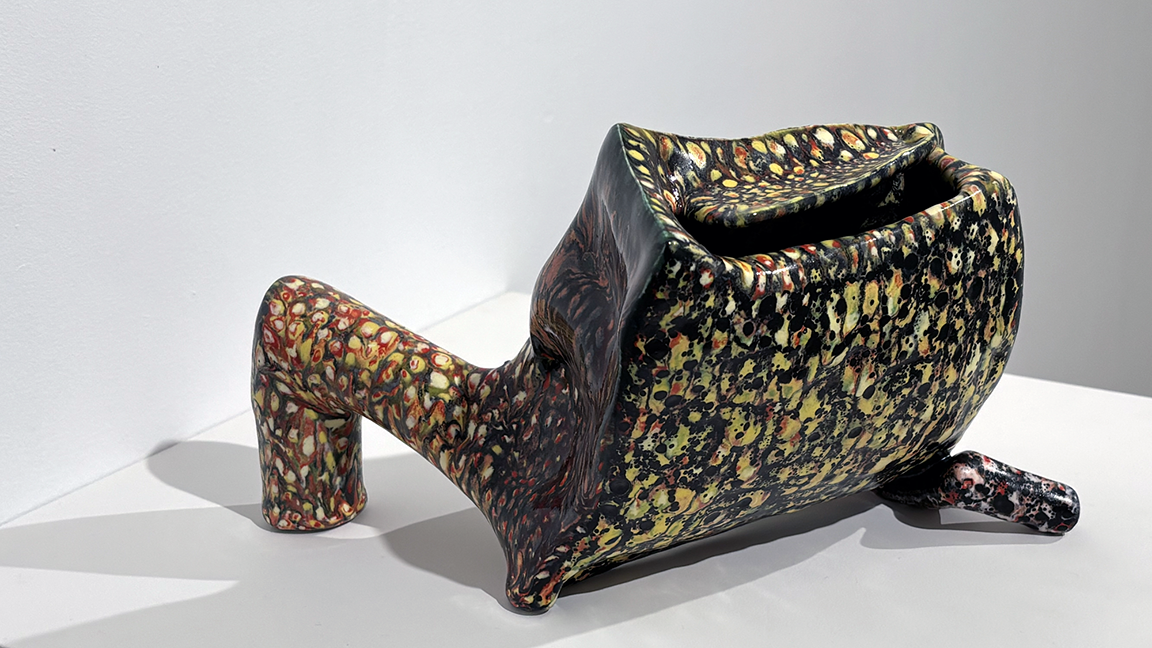
Elisa D’Arrigo: Slouching Sculpture Forward at George Adams

Downtown in Tribeca, beneath the Derek Eller Gallery, the George Adams Gallery sits like a quiet afterthought. Easy to pass by. Down a short flight of stairs, away from the street glare, Elisa D’Arrigo’s recent sculptures gather in a small white room and hold their ground. The scale is modest. The presence is not.

Continue reading “Elisa D’Arrigo: Slouching Sculpture Forward at George Adams”

Art Seen Philadelphia: Winter 2026

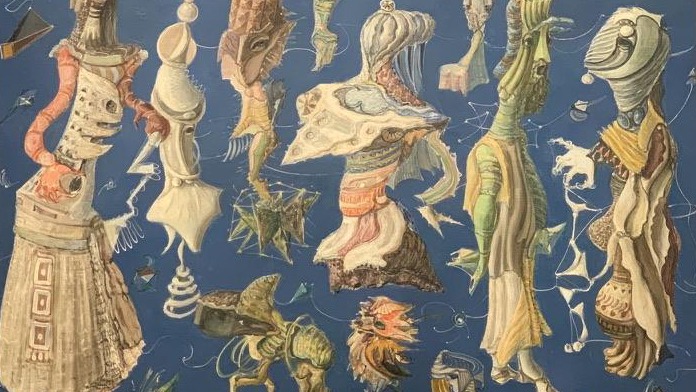
Suzanne Van Damme, Surrealist Composition
HIGHLIGHTS

As the vague New Year comes barreling in, trailing behind is a hazy fog that distorts perceptions of time and space, folding into one another like delicate parchment paper. It reads as hopeful uncertainty, especially as artists create in response to their surroundings. It is in those folds that art and dreams converge to inspire fantastical work that propels us into a new reality.

Continue reading “Art Seen Philadelphia: Winter 2026”

John Avelluto: AI, Synthetic Memory, and the Fabrication of Identity

John Avelluto

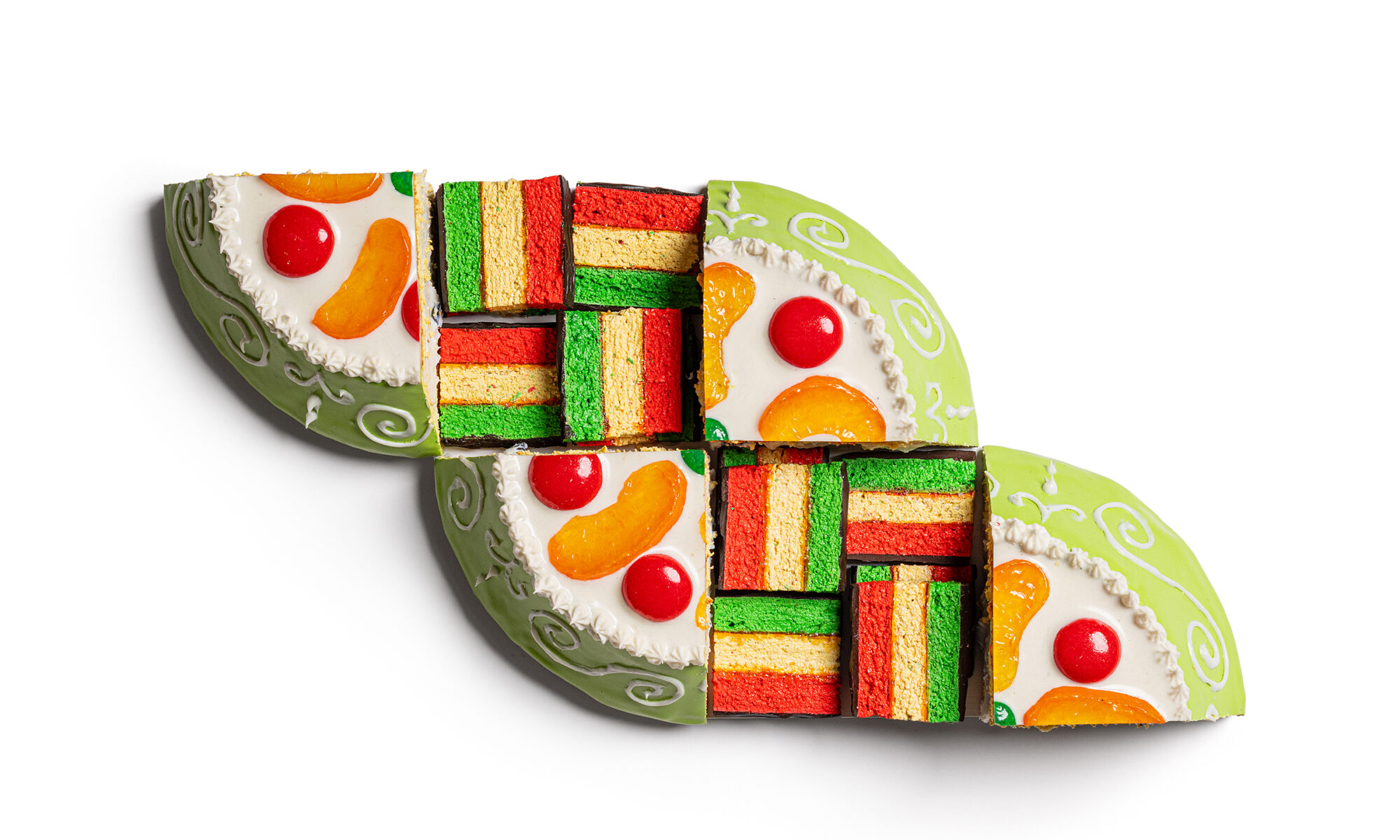
For many years now, John Avelluto has used trompe-l’œil and sculptural hyperrealism to unsettle the stereotypical trappings of Italian American identity, particularly its relationship to food. As in many other migrant communities, food functions as a vessel of memory and belonging, often bearing a disproportionate symbolic charge. Avelluto’s lifelike slices of acrylic mortadella and mounds of rainbow cookies confront this issue directly: they turn the charged history of foodways and their role in shaping communal narratives into something at once seductive and ridiculous. Viewers are forced to contend with the absurdity of articulating an entire national identity through piles of candies, pastries, and cold cuts elevated to the status of icons.

Continue reading “John Avelluto: AI, Synthetic Memory, and the Fabrication of Identity”

Mia Westerlund Roosen: Then and Now

Mia Westerlund Roosen: Then and Now

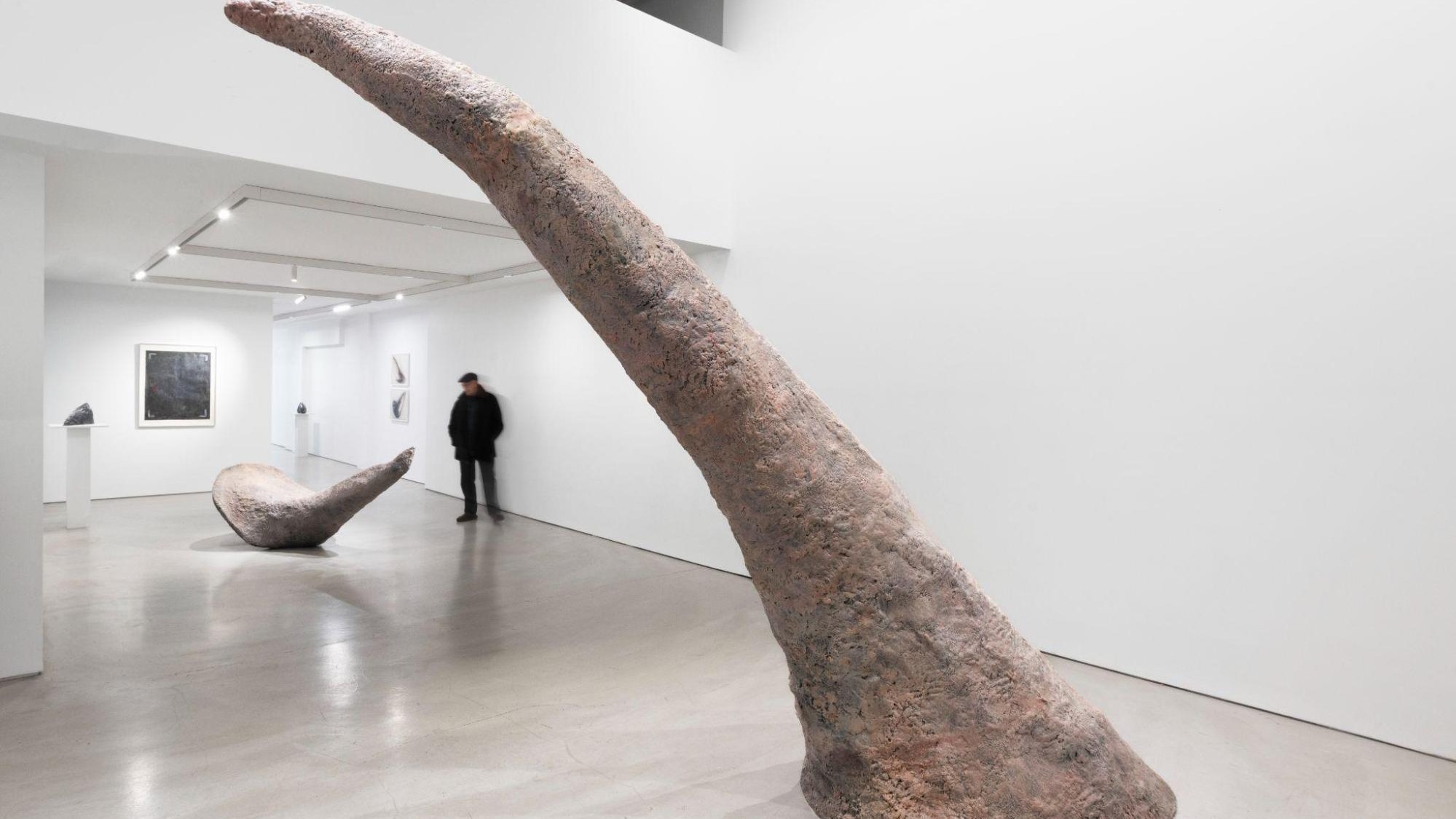
When I enter Nunu Fine Art in SoHo, New York, my body registers Mia Westerlund Roosen’s work before my mind does. Two tall forms, Heat (1981) and Conical (1981), lean into the room with a quiet insistence, their weight felt rather than announced. They rise from the floor with muscular arcs, tapering upward, commanding space without spectacle. I slow down instinctively, adjusting my path. These are not sculptures to be glanced at; they ask to be circled, negotiated, endured.

Continue reading “Mia Westerlund Roosen: Then and Now”