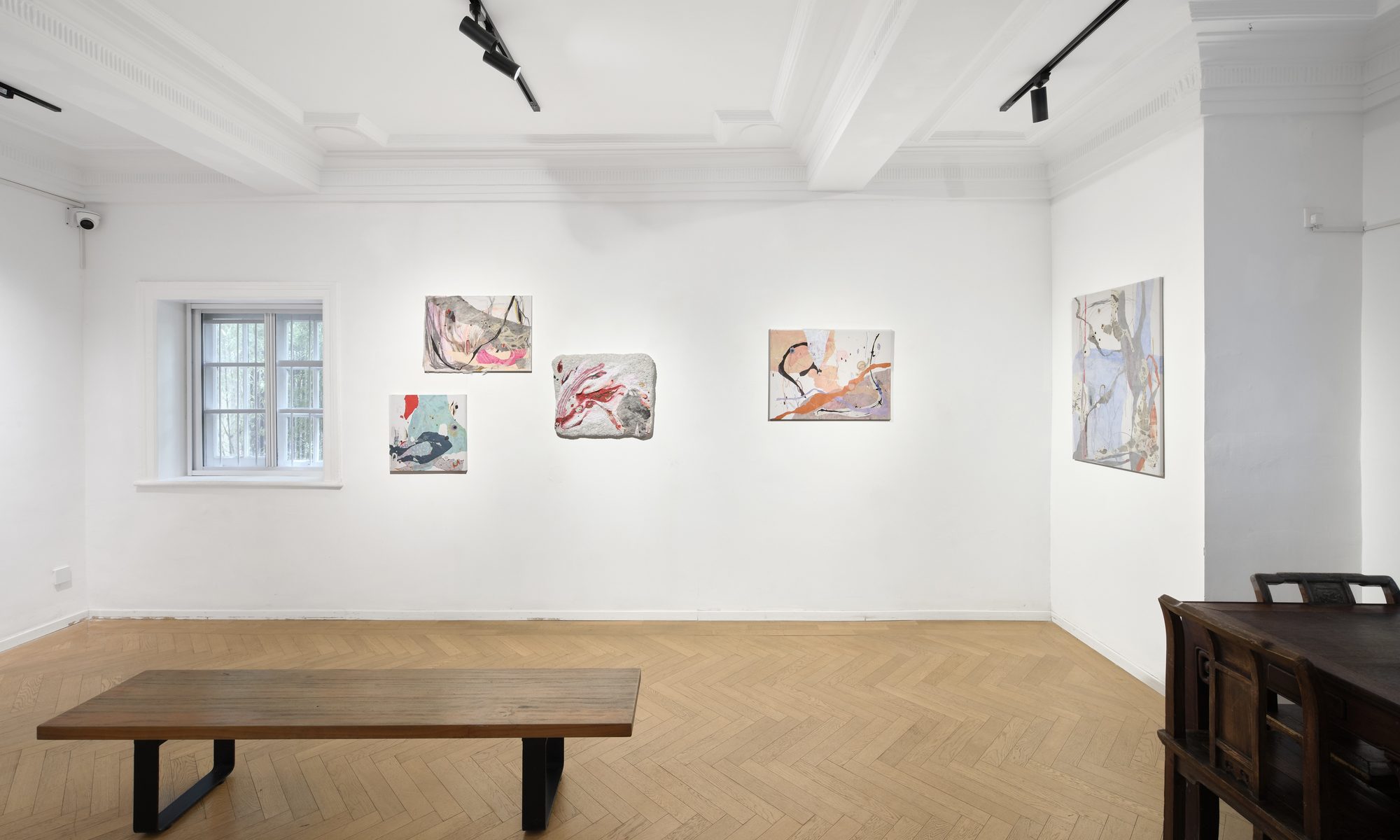
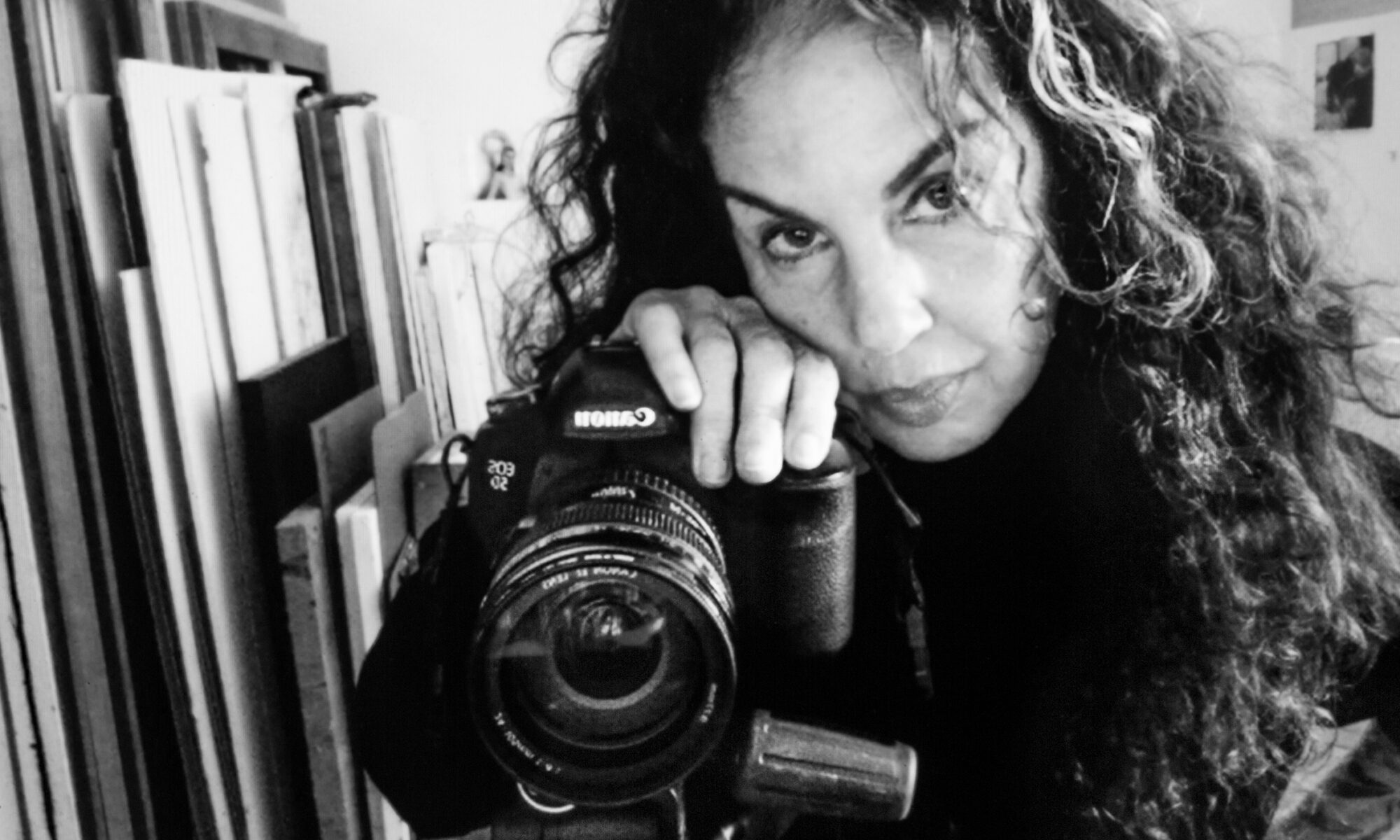
Grace Roselli’s Pandora’s BoxX Project began as something personal: a way to reconnect with a world of artists she’d drifted from while raising two daughters, much of it as a single mother. She started by photographing the few women artists she still knew; each led her to another, and the project grew by conversation and recommendation rather than plan. Nearly 360 portraits later — of artists alongside curators, writers, historians, educators, and museum directors — it had become a record of a community whose influence has rarely been seen whole. Roselli photographs each sitter in their own home or studio, in available light. She then lets them choose the final image, because the portrait isn’t finished until both of them recognize the person in it. Roselli discusses the project’s origins, her way of working, and what nearly 360 encounters revealed.
Continue reading “The Pandora’s BoxX Project: Grace Roselli”Cutaway at Brandeis University
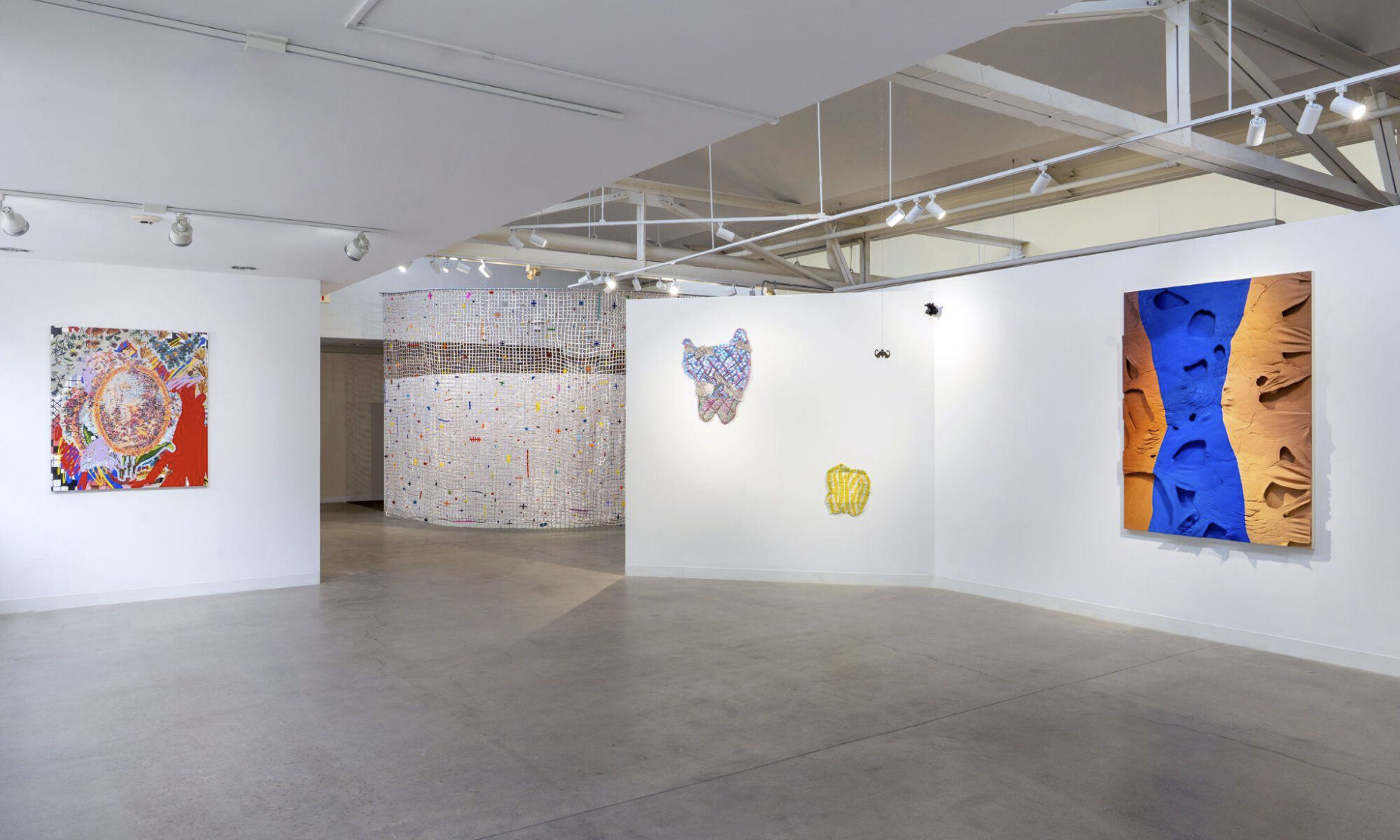
For Cutaway, curator Olivia Baldwin worked the way she does in her own studio — building from the ground up, beginning with the artists rather than a theme. She had followed Eleanor Anderson, J Stoner Blackwell, Lucy Kim, Kirstin Lamb, and Hai-Wen Lin for years, looking for where their materials might overlap and where they might productively rub against one another. Meeting with them, a shared concern surfaced: how each artist asserts and then loosens the limits of an object, a body, a pattern. Their means are strikingly varied — discarded plastic bags, cross stitch, dyed silk and chain, cast flounder and teeth, a kite pitched toward the upper windows — bound by saturated color and touch. The body recurs throughout, rarely pictured, more often left as a trace in the material. Baldwin discusses the show’s bottom-up beginnings, what its materials share, and the withholding behind its title.
Continue reading “Cutaway at Brandeis University”Interview with Daina Higgins: On Graffiti, Risk, and the Art of Impermanence
Pioneer graffiti artist and painter Daina Higgins explores the shifting visual identity of urban spaces across the American Northeast. Our conversation, centered on Daina, also reads as a message to the emerging women graffiti artists she encounters on the streets. A how-to guide including the rules- yes, graffiti has rules- a way to value yourself as an artist, and a sisterhood joining the past and present.
Continue reading “Interview with Daina Higgins: On Graffiti, Risk, and the Art of Impermanence”Cecily Brown at the Serpentine: Everything Everywhere All at Once
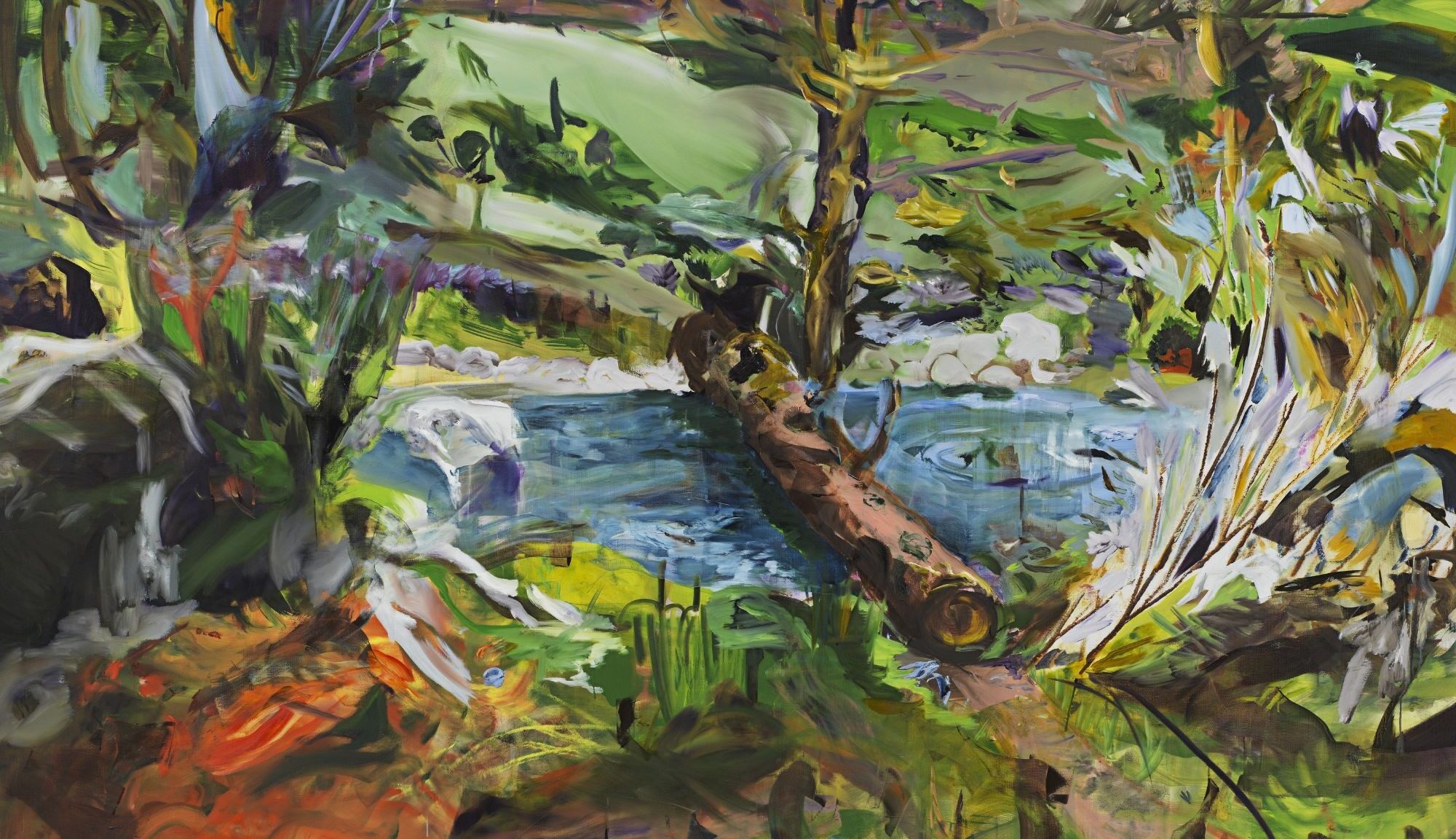
Entering the first room of the gallery, one is instantly struck by the richness of movement in Cecily Brown’s paintings. Several recent works, drawn from nature walks, centre on the motif of a log laid across a blue stream. This fairy-tale imagery, bordering on kitsch, was borrowed from a jigsaw puzzle Brown was completing at the time. Yet the jagged shrubbery and turbulence surrounding these scenes point towards something darker.
Continue reading “Cecily Brown at the Serpentine: Everything Everywhere All at Once”Dakota Gearhart: All Matter Is Alive
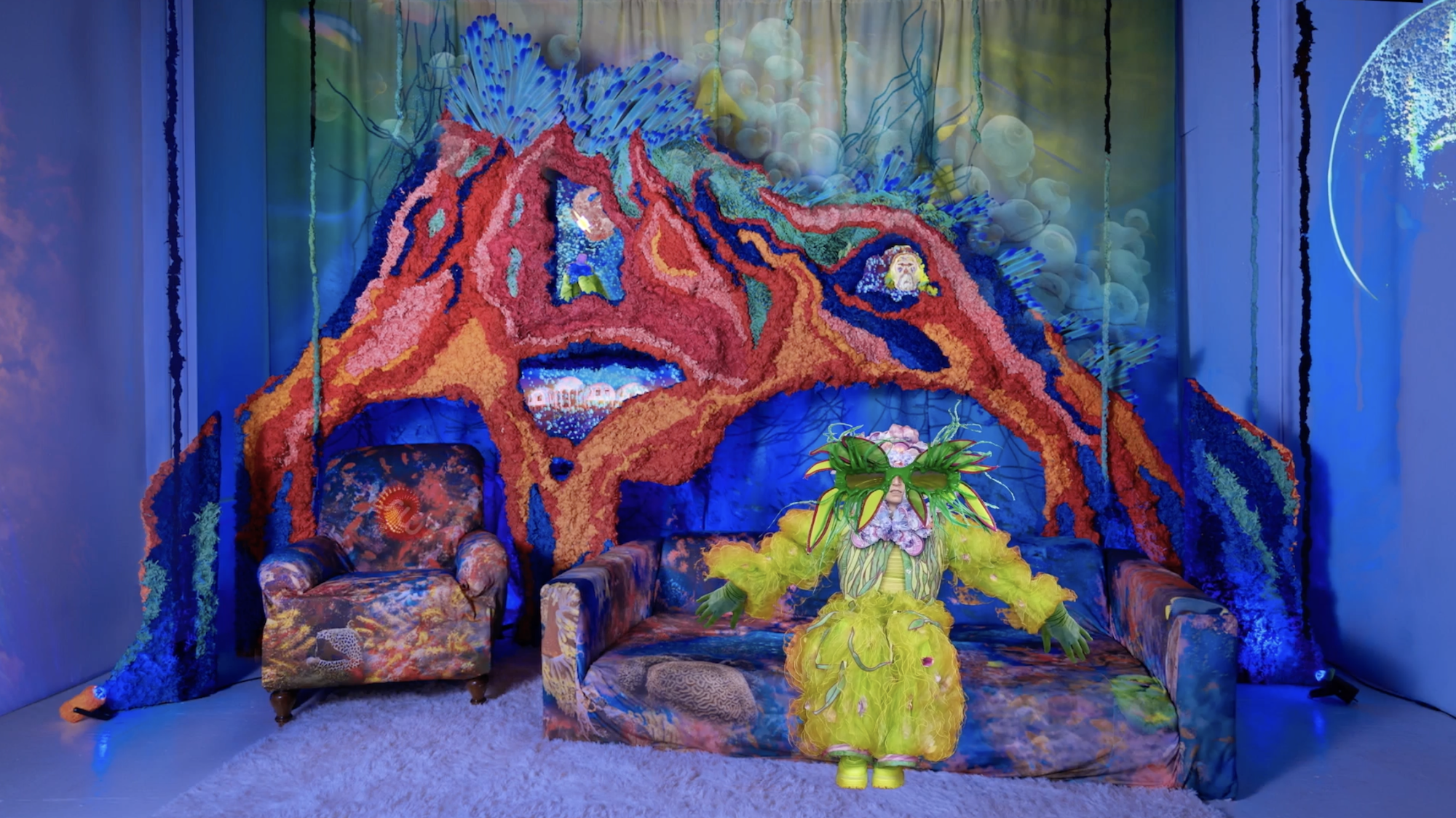
Dakota Gearhart grew up on a Florida coastline where algae blooms, sewage outflows, and bikini contests share the same shoreline, and her work has been carrying that mix of beauty, decay, and amusement into a much bigger frame ever since. Across animation, sculpture, performance, and sound, she builds video worlds where pixels sing, electricity becomes sentient, and the nonhuman shows up on equal footing with the rest of the cast. Her ongoing animated series Life Touching Life is hosted by Tiffany, a half-algae, half-woman figure who guides viewers through episodes shaped with collaborators — poets, scientists, activists, caretakers — whose lives already reflect the worldview the work is reaching toward. It’s funny, strange, and serious in roughly equal measure, which turns out to be the right register for the worlds it stages.
Continue reading “Dakota Gearhart: All Matter Is Alive”The Luckiest Show You Will See This Summer
What would you do if you wanted to bring more luck into your life? Drawing from her observations of how people across cultures use rituals and superstitions to summon luck, Gail M Boykewich’s show Into the Wolf’s Mouth feels almost like a field guide to how we pray, wish for good fortune, and stay hopeful enough to keep moving forward. Rather than treating luck as simple optimism, Gail presents it as a language of survival — a way people negotiate uncertainty, longing, heartbreak, and the desire for a better future. The title is inspired by the Italian idiom “in bocca al lupo”, a phrase used to wish someone luck as they enter danger. It beautifully implies a universal experience: the desire for more, for solutions, for security, or simply for a way to feel better, especially within our current turbulent and unstable political status quo.
Continue reading “The Luckiest Show You Will See This Summer”Women Across America 1945-1979 at Eric Firestone
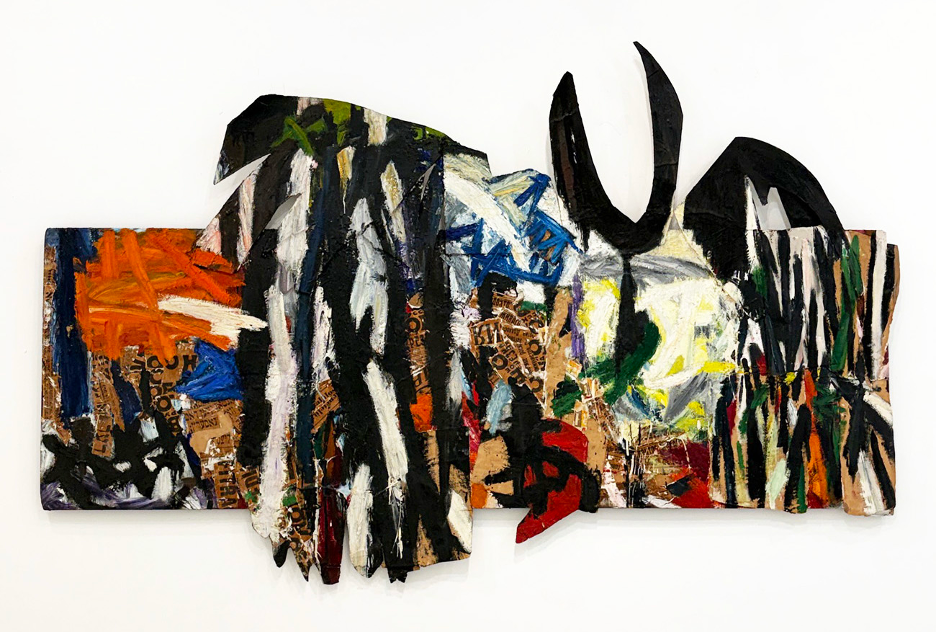
Eric Firestone Gallery, in its continuing support of underrepresented and female artists in the 20th and 21st centuries, has mounted an ambitious and interesting exhibition on now through July 11 at the gallery’s location on Great Jones Street in NYC. The exhibition is devoted to women who worked in abstraction from 1945 to 1979, thus giving the curators a very specific window within which to work.
Continue reading “Women Across America 1945-1979 at Eric Firestone”What Remains: in dialogue with Arghavan Khosravi
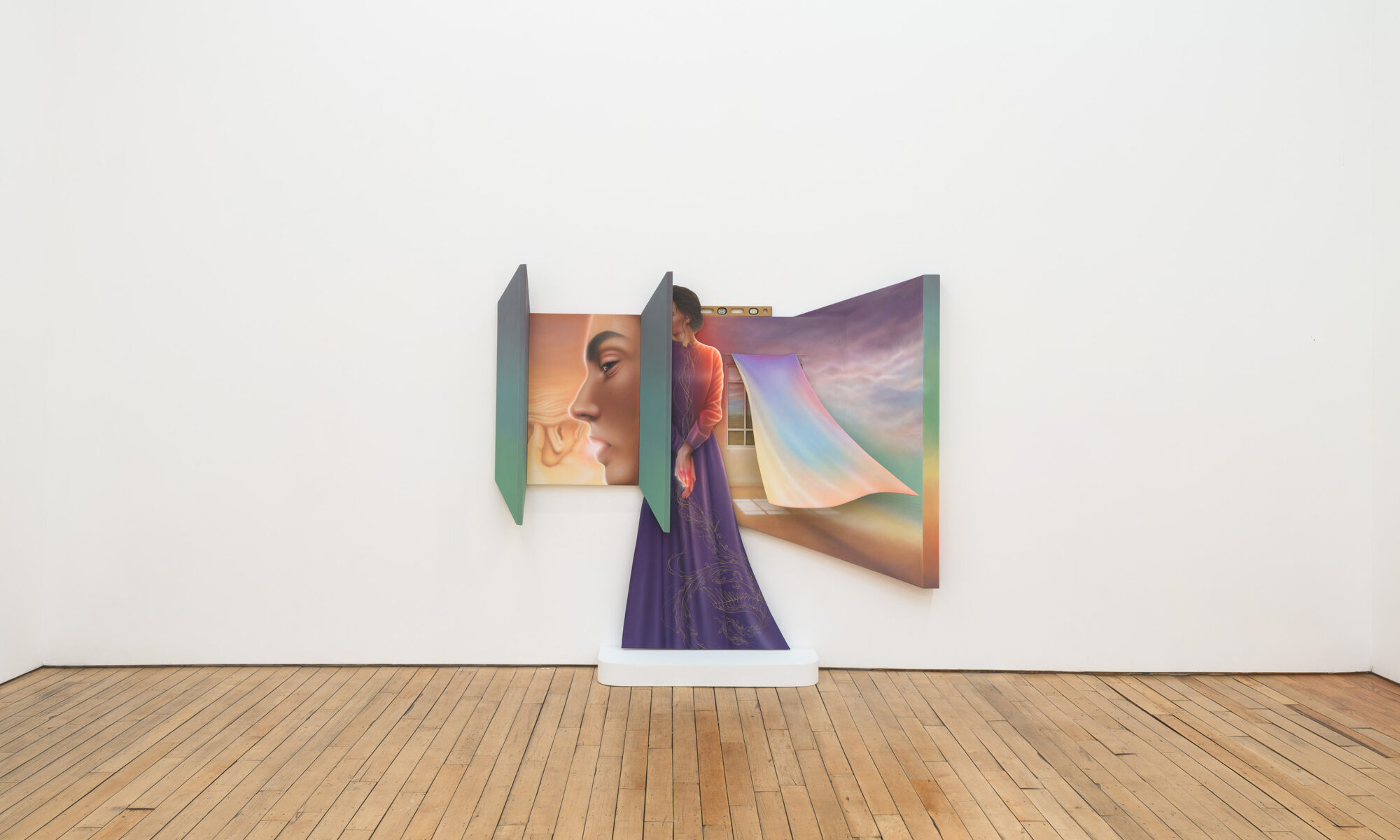
Altarpieces—historically sites of devotion, revelation, and spiritual certainty—become something altogether different in Arghavan Khosravi’s What Remains, currently on view at Uffner & Liu through July 2. The exhibition brings together large-scale wall works, a freestanding sculpture, and an intimate suite of new altar-inspired paintings that continue Khosravi’s ongoing exploration of the forces that shape women’s lives under political, cultural, and religious systems of control. Drawing equally from Persian miniature painting and medieval European iconography, the artist constructs layered worlds where architectural structures become psychological spaces, symbols migrate across histories, and moments of resistance emerge within conditions of constraint. Rather than offering resolution, the works linger in states of suspension—between freedom and captivity, memory and displacement, devotion and doubt.
Continue reading “What Remains: in dialogue with Arghavan Khosravi”Seeing and Recognition: The Paintings of Lee Sherry
Lee Sherry (1947–2012) showed paintings in New York and Boston through the 1970s and 1980s, moved in the circles of the Language poets, and left behind a body of work that almost no one knew existed. Seeing and Recognition, on view at Field of Play Gallery in Brooklyn through June 28th, is the first survey of her paintings — assembled by curator and artist David McDonough, artist Susan Bee, who was a close friend of Sherry’s in the 1970s, and artist and archivist Zak Vreeland, who acquired works directly from her studio after her death. The show brings together paintings that span decades, from early experiments made in dialogue with minimalism to luminous, layered late work that unfolds the longer you look. We spoke with David McDonough, Susan Bee, and Zak Vreeland about how the show came together, what the paintings do, and why Sherry’s work went unseen for so long.
Continue reading “Seeing and Recognition: The Paintings of Lee Sherry”Maria Gil Lucientes: Letting the Materials Misbehave
Maria Gil Lucientes paints in the slim margin where a system starts to come undone. She begins with a constraint, a single color, a periodic screen, a piece of medical gauze, then lets the materials misbehave. In Pareidolia, gauze shifted by air becomes the suggestion of a face. A Spanish-born painter who studied mathematics, physics, and computer science before a decade in tech, Lucientes brings a system-builder’s discipline to a practice that hinges on chance. Here, she reflects on the path from science to painting, the dialogue between control and surprise in her process, and the new Moiré series taking shape in her studio.
Continue reading “Maria Gil Lucientes: Letting the Materials Misbehave”