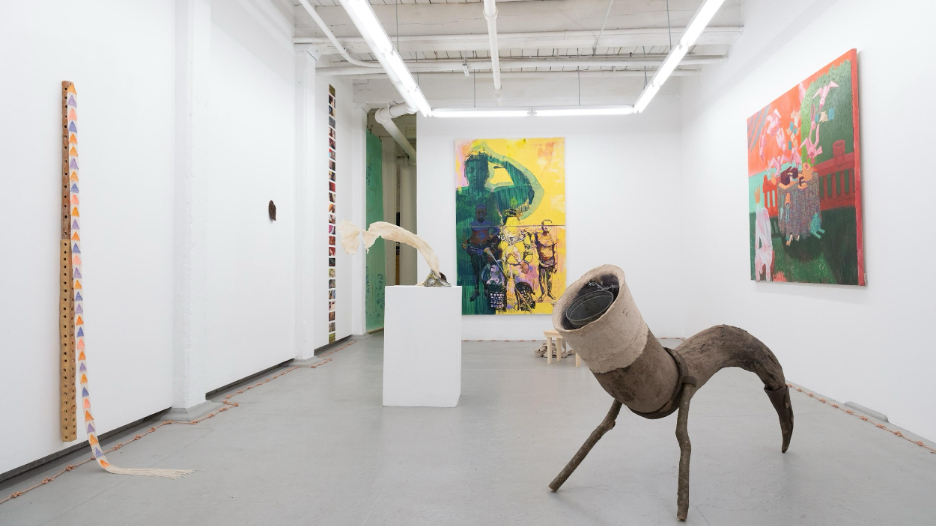
A dead opossum lying in a fetal position along a contaminated riverbank in Quito became, for Byron Toledo, both an encounter and a sculpture. That moment, tender and violent at once, is at the heart of The Whole Water of a River at Tiger Strikes Asteroid Brooklyn, an exhibition that follows the Machángara River from its mountain source through the city. Ceramic animals, distilled plant aromas, and sound recordings gathered along the watershed map the river as a living system that connects hills, ravines, plants, people, and the city itself. The project carries unusual stakes: in 2024, an Ecuadorian court ruled that the rights of the Machángara had been violated, a ruling for which Toledo’s own video work served as evidence. We spoke with the artist about walking the river, collaborating across disciplines, and what it means to make art inside an ecosystem fighting to survive.
Continue reading “The Whole Water of a River at TSA Brooklyn with Byron Toledo”What Remains: in dialogue with Arghavan Khosravi
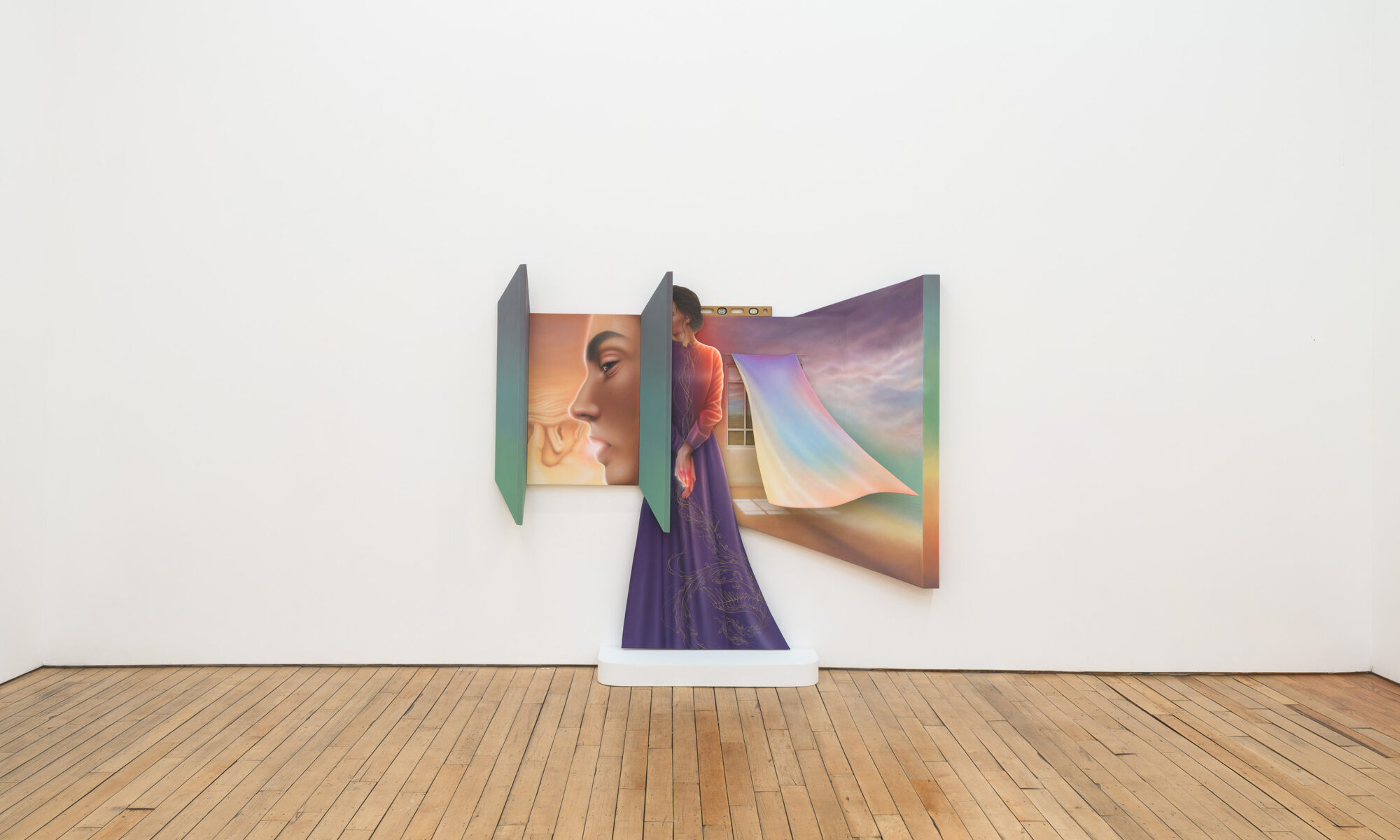
Altarpieces—historically sites of devotion, revelation, and spiritual certainty—become something altogether different in Arghavan Khosravi’s What Remains, currently on view at Uffner & Liu through July 2. The exhibition brings together large-scale wall works, a freestanding sculpture, and an intimate suite of new altar-inspired paintings that continue Khosravi’s ongoing exploration of the forces that shape women’s lives under political, cultural, and religious systems of control. Drawing equally from Persian miniature painting and medieval European iconography, the artist constructs layered worlds where architectural structures become psychological spaces, symbols migrate across histories, and moments of resistance emerge within conditions of constraint. Rather than offering resolution, the works linger in states of suspension—between freedom and captivity, memory and displacement, devotion and doubt.
Continue reading “What Remains: in dialogue with Arghavan Khosravi”Run by Artists, Built for Artists: OyG and the Cornell MFA
What does a gallery look like when the artists are in charge? Founded in 2013, Ortega y Gasset Projects (OyG) is an artist-run collective with no fixed curatorial line and a non-hierarchical structure shared equally among its eight co-directors. Since 2023, it has become the annual New York home for Cornell University’s MFA thesis exhibition — a partnership built on a simple premise: artist-run spaces value experimentation, innovation, and risk-taking, giving graduate artists the freedom to present work without commercial constraints or curatorial imperatives.
Continue reading “Run by Artists, Built for Artists: OyG and the Cornell MFA”The Absence is in the Fingers
There are exhibitions shaped less by what is installed than by what fails to arrive. I did not plan for this to be one of them. Where Form Remembers was conceived as a two-person presentation: Julie Gladstone’s mixed-media works traveling from Toronto, Avani Patel’s drawings from Brooklyn. The premise was a dialogue between two practices in proximity, each distinct enough that the distance between them would produce something worth engaging over time. What it became was different.
Continue reading “The Absence is in the Fingers “Departing From The Flat World: Jong Oh’s Sixth Solo Exhibition At Marc Straus Gallery
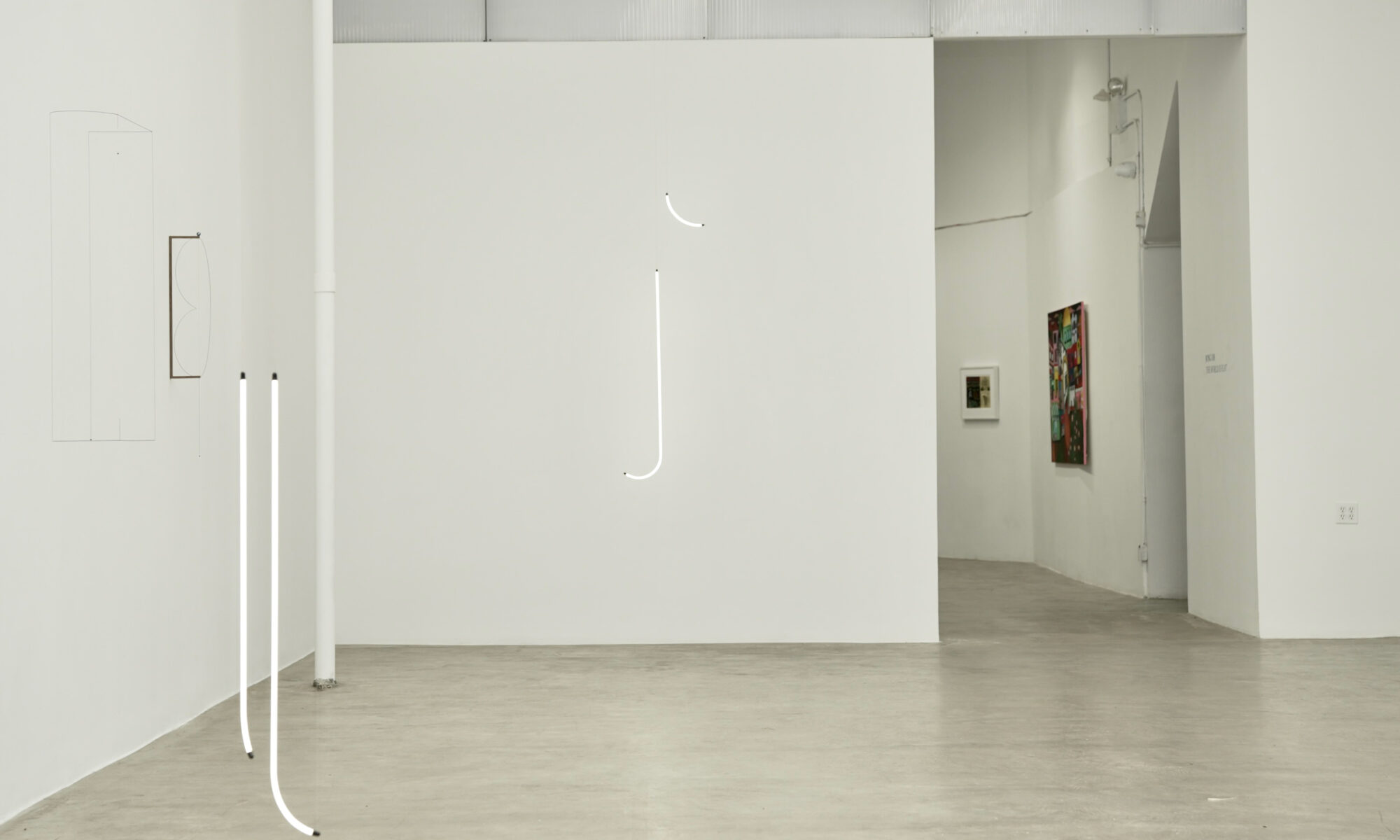
“The world is flat” is perhaps humans’ most primitive sense of physical surroundings. It was also a cosmological conclusion drawn from honest bodily perception, because the land beneath our feet is indeed still and level, and the universe unfolds as an infinitely extending plane. This perceptual honesty is where Jong Oh begins.
Continue reading “Departing From The Flat World: Jong Oh’s Sixth Solo Exhibition At Marc Straus Gallery”Zhang Huan: The Ash Paintings, at 125 Newbury Gallery
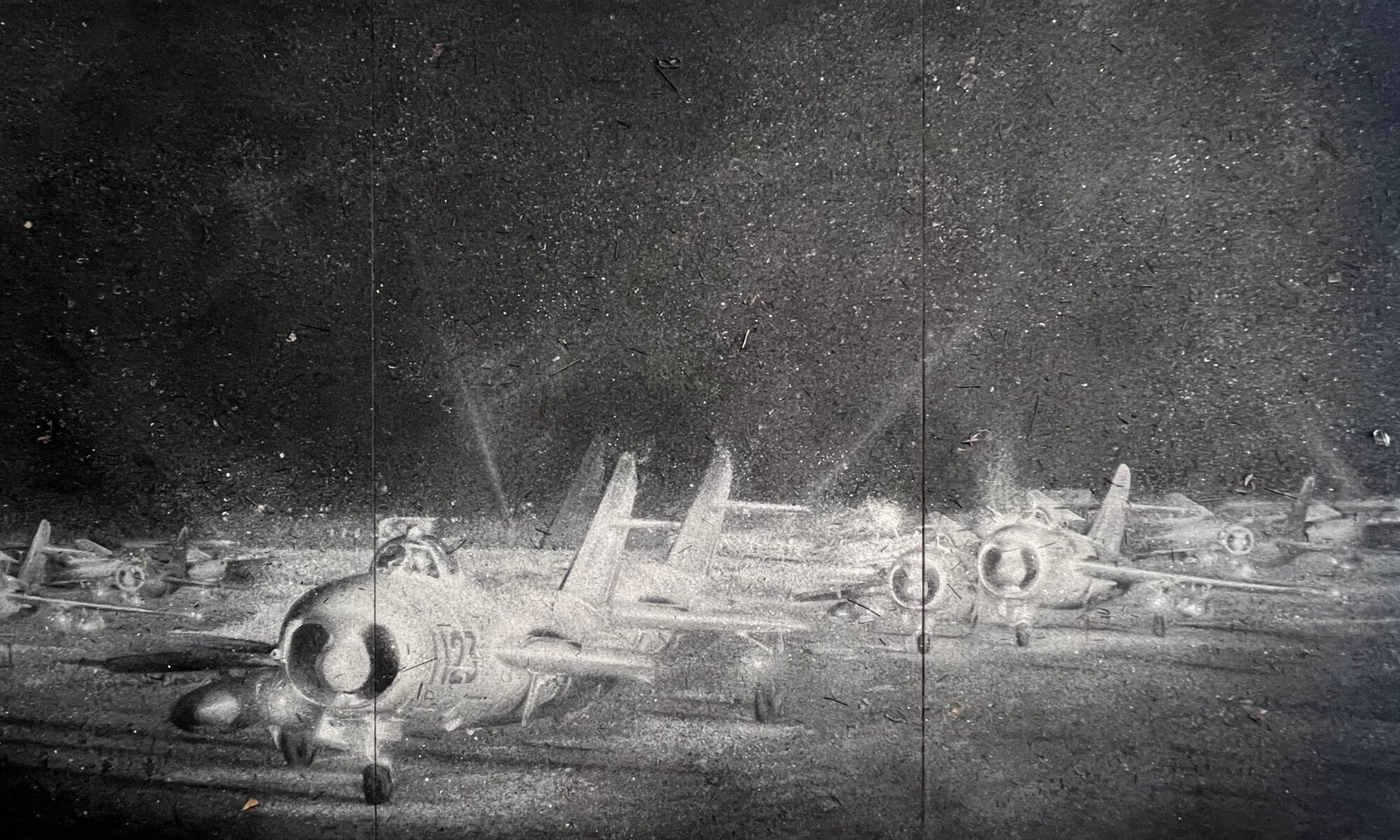
It has been over ten years since the last New York exhibition of the Chinese artist Zhang Huan, known for his edgy political performance pieces documented at the exhibition. What captured me on this visit was his ash paintings, which extended across the entire front hall of the gallery. It feels entirely appropriate that this social activist artist, who later turned to Buddhism, should exhibit these works in New York at such a tense moment. Ash, as a medium, touches on absolute destruction. It carries deep meaning in Buddhist practice, but these days it also pulls toward something harder to name: the daily accumulation of impure ash on the ground of cities being destroyed.
Continue reading “Zhang Huan: The Ash Paintings, at 125 Newbury Gallery”Cathleen Clarke: The Past Won’t Stay Put at Margot Samel
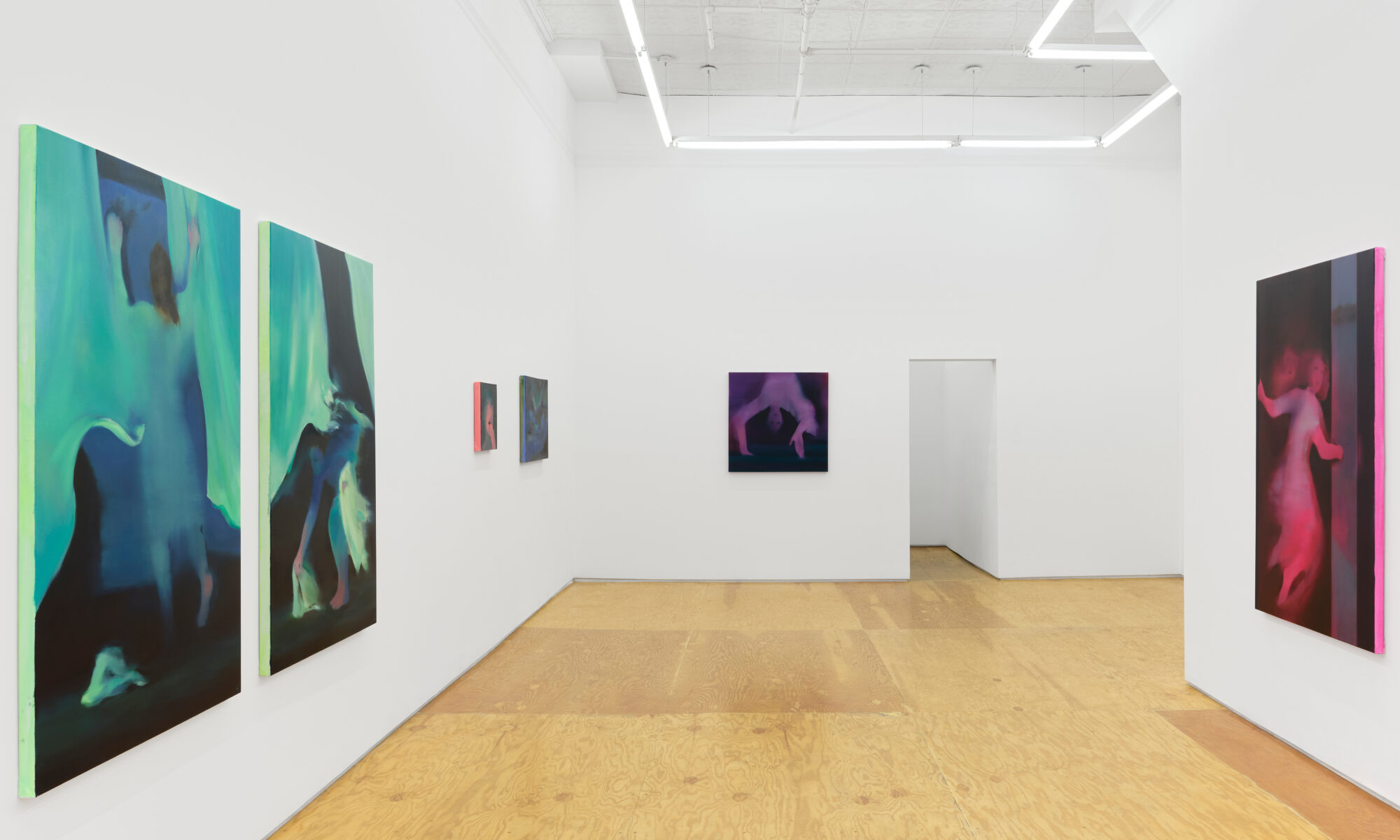
It had just rained in New York City when the smell of wet grass and pine in Central Park transported me somewhere else entirely: back in my hometown, a place I hadn’t lived in for a decade. I could’ve sworn I heard the same birds I woke up to every morning. The reminiscence was completely involuntary, but for a few seconds, I found myself caught inside an instant that felt like a different lifetime. This is the feeling that Episodes, Cathleen Clarke’s new exhibitionat Margot Samel, creates. There is no nostalgia or comfort, but instead, the disorienting realization that the past has intruded on the present uninvited.
Continue reading “Cathleen Clarke: The Past Won’t Stay Put at Margot Samel”Spectral Evidence: A deeper introspection on Color, Light, and Energy

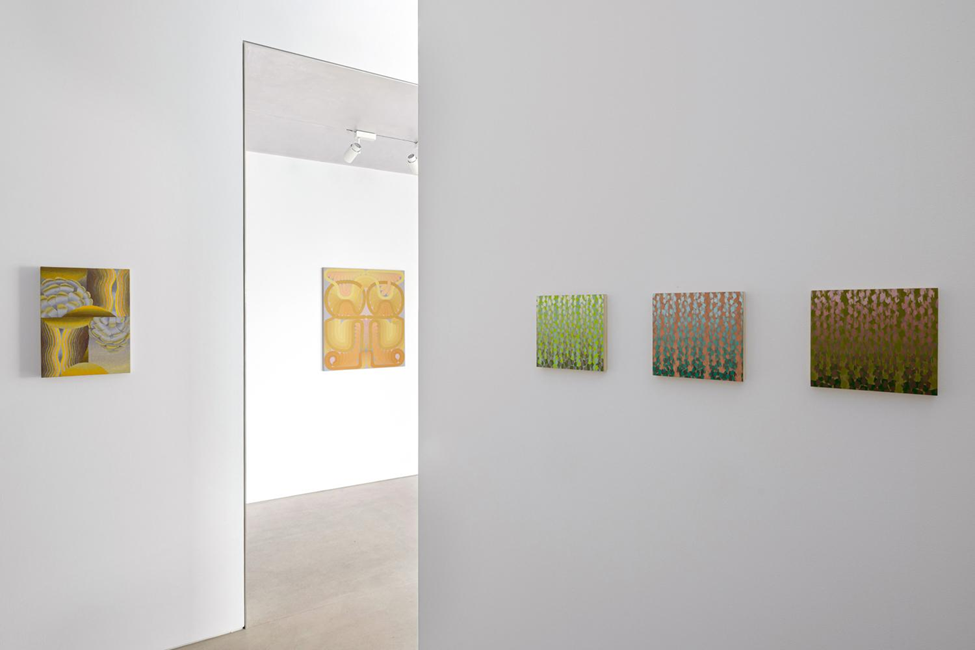
Walking into this show on a cold, blustery night, you are greeted by large windows illuminated out by gallery light. Inside, you are met with a collection of color, light, and energy. Each piece in the exhibition Spectral Evidence uses mainly acrylic to illuminate new spaces by dissolving edges, blending colors, and allowing gradients to calmly and smoothly envelope the space within the works. While each artist in the show has their own take on creating their own spaces, they use many conventions of painting and abstraction to create new forms and environments to experience, and each piece seems to flow well into the next. The gallery layout lends itself to a meandering space.
Continue reading “Spectral Evidence: A deeper introspection on Color, Light, and Energy”Beamsplitter curated by David Shaw at Field of Play

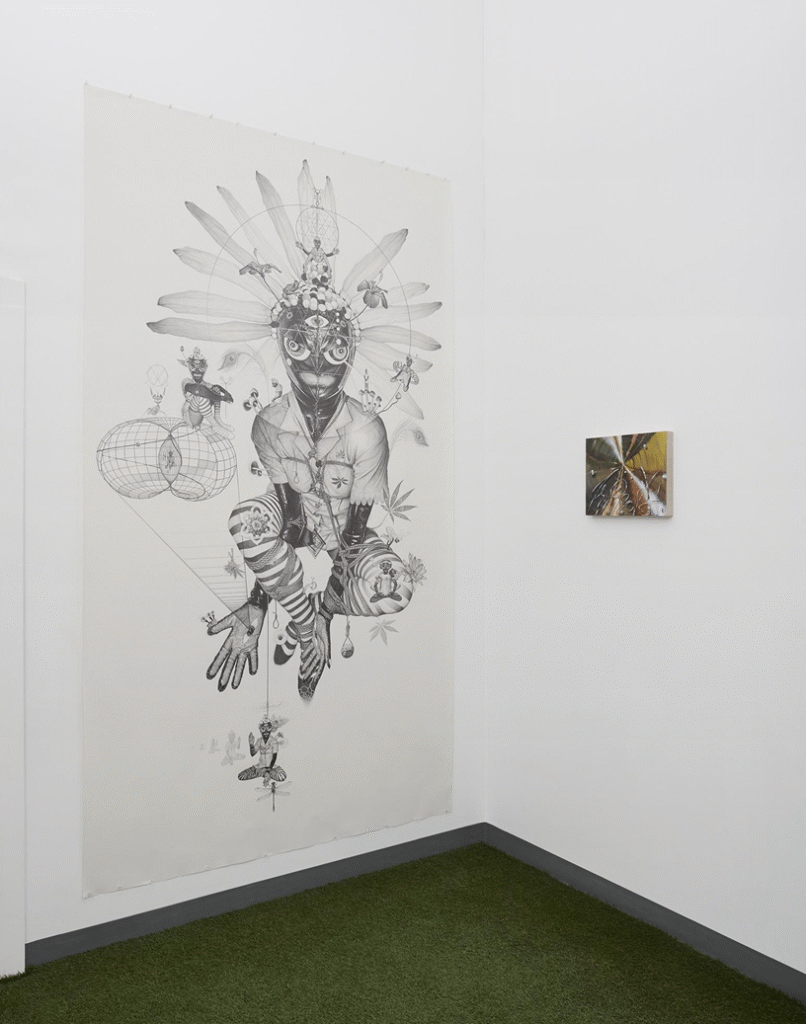
The artwork in Beamsplitter, a six-person show at Field of Play, functions as a series of portals. Named for a scientific device that both transmits and reflects light, Beamsplitter opens up spectrums of material, concept, and time. Using a mix of large and small works from artists across generations, curator David Shaw expands the Gowanus gallery’s 9 x 15-foot footprint into a dynamic array of gateways. The recurrence of circular forms and apertures presents a menu of windows to the artist’s interiority or world-view. Field of Play’s signature astroturf floor provides an idiosyncratic arena to home these loci.
Continue reading “Beamsplitter curated by David Shaw at Field of Play”Singing in Unison, Part 12: Painting in Space

It began, as many enduring ideas do, over wine and conversation. Michael David, painter, curator, and gallerist of M. David & Co., was speaking at a dinner with Judy Pfaff about her close friend and early champion Al Held. The talk drifted to another dear friend, Elizabeth Murray, and then to her admiration for Frank Stella. From that exchange evolved the idea for Singing in Unison, Part 12: Painting in Space, curated by Michael David, and now on view at Art Cake in cooperation with The Brooklyn Rail.
Continue reading “Singing in Unison, Part 12: Painting in Space”