Interview with Daina Higgins: On Graffiti, Risk, and the Art of Impermanence

Daina Higgins

Pioneer graffiti artist and painter Daina Higgins explores the shifting visual identity of urban spaces across the American Northeast. Our conversation, centered on Daina, also reads as a message to the emerging women graffiti artists she encounters on the streets. A how-to guide including the rules- yes, graffiti has rules- a way to value yourself as an artist, and a sisterhood joining the past and present.

Continue reading “Interview with Daina Higgins: On Graffiti, Risk, and the Art of Impermanence”

The Biennale That Broke Itself

Kambui Olujimi, In Minor Keys

The 61st International Art Exhibition arrives in grief, political fury, and institutional crisis. It is one of the more galvanizing editions in recent memory.

The lagoon light still flatters everything it touches, but this year, Venice has the feel of a city that stayed up too late arguing. May 7, 2026 — the one morning of the press preview period spared by both rain and protest — was the kind of day Venice is famous for: blue sky and large cinematic cumuli drifting above the Queen of the Adriatic. Police stood watch outside the Israeli and Russian pavilions. The queues at the Giardini were long; those at the Arsenale were longer. In years of attending press previews, I have rarely encountered such a congested or physically demanding environment — the crowd, indistinguishable from a general-public opening, consumed by the compulsive and indiscriminate act of photographing everything in sight.

Continue reading “The Biennale That Broke Itself”

What Remains: in dialogue with Arghavan Khosravi

Arghavan Khosravi

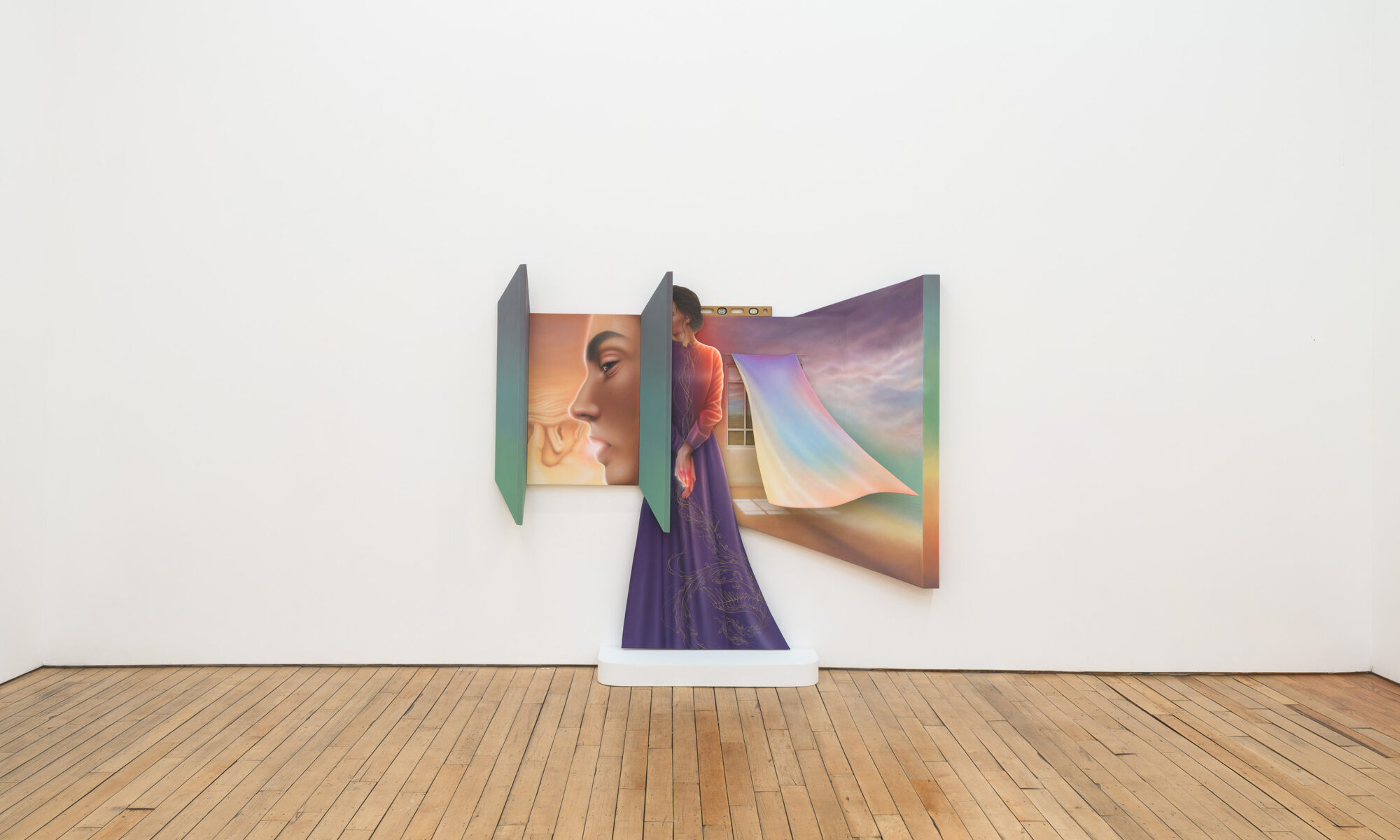
Altarpieces—historically sites of devotion, revelation, and spiritual certainty—become something altogether different in Arghavan Khosravi’s What Remains, currently on view at Uffner & Liu through July 2. The exhibition brings together large-scale wall works, a freestanding sculpture, and an intimate suite of new altar-inspired paintings that continue Khosravi’s ongoing exploration of the forces that shape women’s lives under political, cultural, and religious systems of control. Drawing equally from Persian miniature painting and medieval European iconography, the artist constructs layered worlds where architectural structures become psychological spaces, symbols migrate across histories, and moments of resistance emerge within conditions of constraint. Rather than offering resolution, the works linger in states of suspension—between freedom and captivity, memory and displacement, devotion and doubt.

Continue reading “What Remains: in dialogue with Arghavan Khosravi”

Hum and Song: Helen Frankenthaler’s The Moment and the Distance at Gagosian examined alongside Babara Guest’s writings

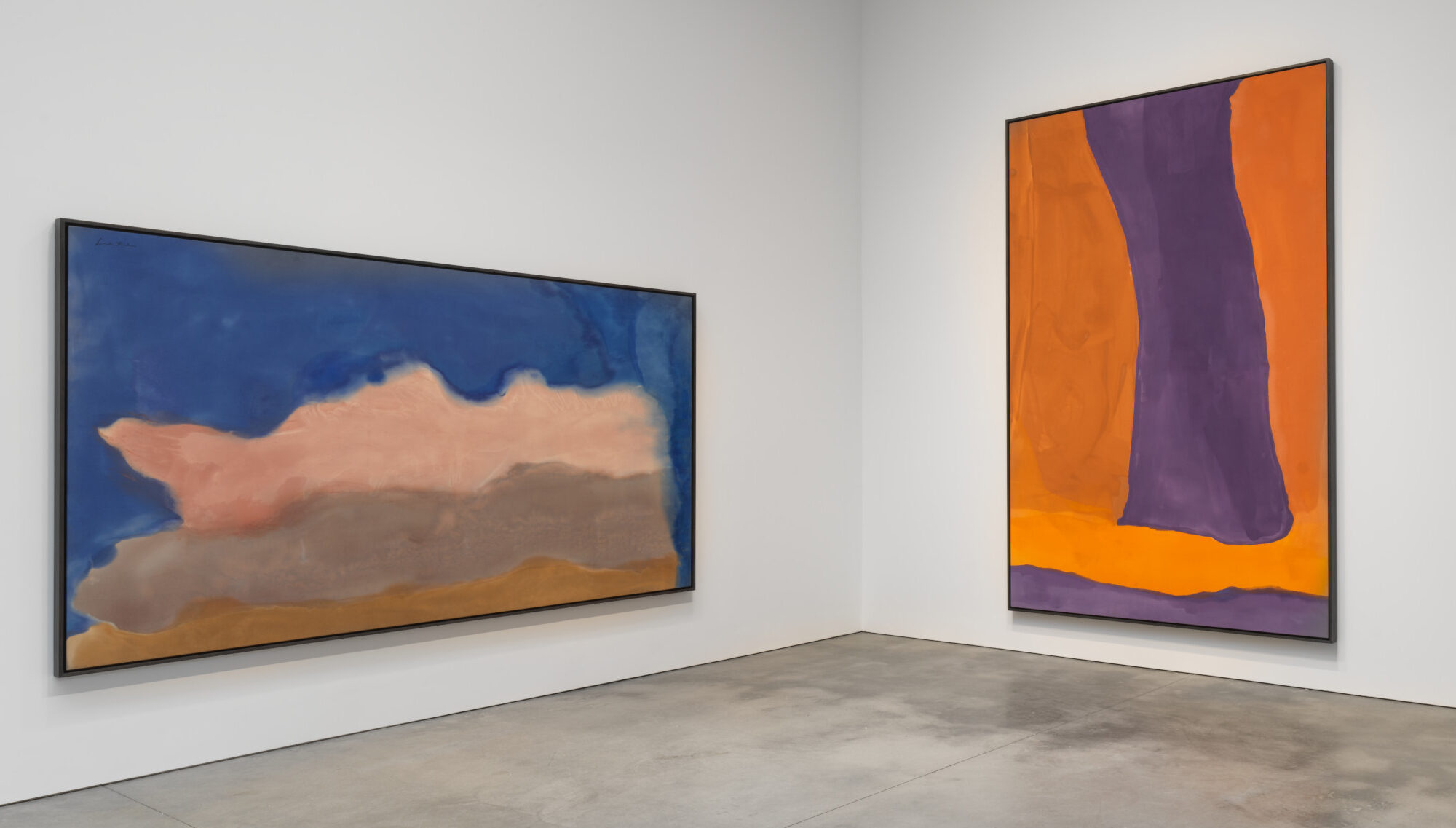
Helen Frankenthaler, The Moment and the Distance, 2026, installation view

Helen Frankenthaler’s show at Gagosian New York, The Moment & The Distance is a beautiful retrospective survey of her work. The title is inspired by a mid-career essay by Barbara Guest that encapsulates the essence of Frankenthaler’s work. In the  1975 essay Guest defines Frankenthaler’s oeuvre in terms of music. She reflects that while there is beautiful “humming” in Frankenthaler’s early work, over her career it becomes  “song”. As her work matures, Guest argues, Frankenthaler becomes more decisive, methodical and assured in her practice, less spontaneous or reliant on happy accidents. Beyond demonstrating the present moment in the paintings, she walks the effortful distance to “consolidate her terms”.  

Continue reading “Hum and Song: Helen Frankenthaler’s The Moment and the Distance at Gagosian examined alongside Babara Guest’s writings”

Voices In Minor Keys: 2026 Venice Biennale

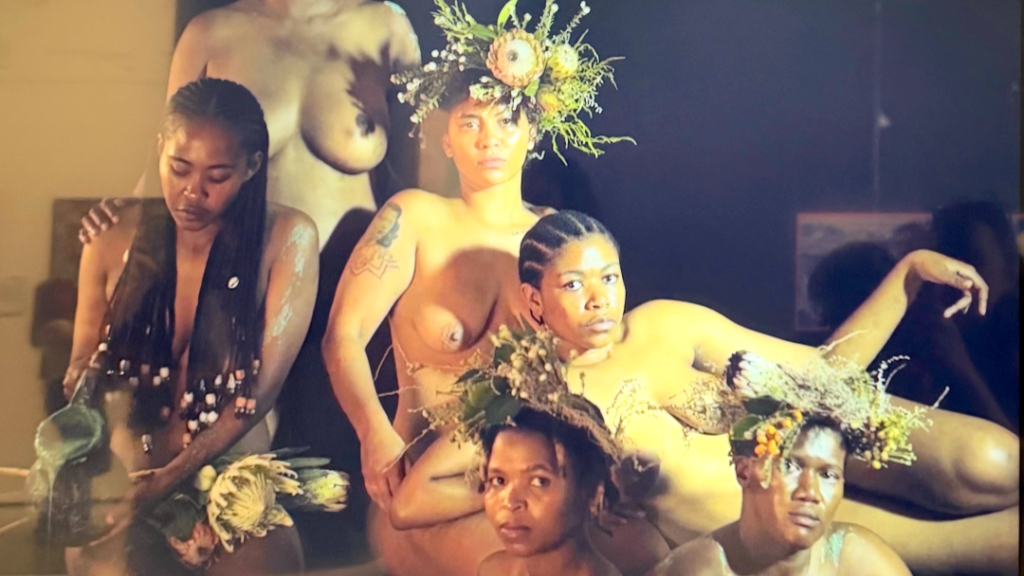
In Minor Keys, the central exhibition of the 61st Venice Biennale, arrived with a quiet proposition. The late curator Koyo Kouho envisioned a show that reflects practices requiring time and sustained commitment — some of them lifetime, even generational — and in doing so created a deliberate antithesis to the Biennale spectacle. Drawing almost exclusively on artists from Africa, the Middle East, and the Caribbean, the exhibition is anchored in political concerns — identity, immigration, the environment — yet so many of the works felt personal, while reaching toward art history and even toward Venice itself. What follows is an account of its visual depth and strength.

Continue reading “Voices In Minor Keys: 2026 Venice Biennale”

Hospitality, Narrative Grace, and the Warm Head

Derrida once pursued the question of hospitality. Can you welcome someone whose name you do not yet know? Can you open the door before knowing who is arriving? If you can, the welcome is sincere; if you cannot, hospitality has already become part of border management. Unconditional hospitality is therefore always impossible: if the host retains sovereignty, they cannot be fully open; if they become fully open, they are no longer the host. The name thus becomes the first step in the subject’s enclosure. This exhibition is built precisely upon this impossibility.

Continue reading “Hospitality, Narrative Grace, and the Warm Head”

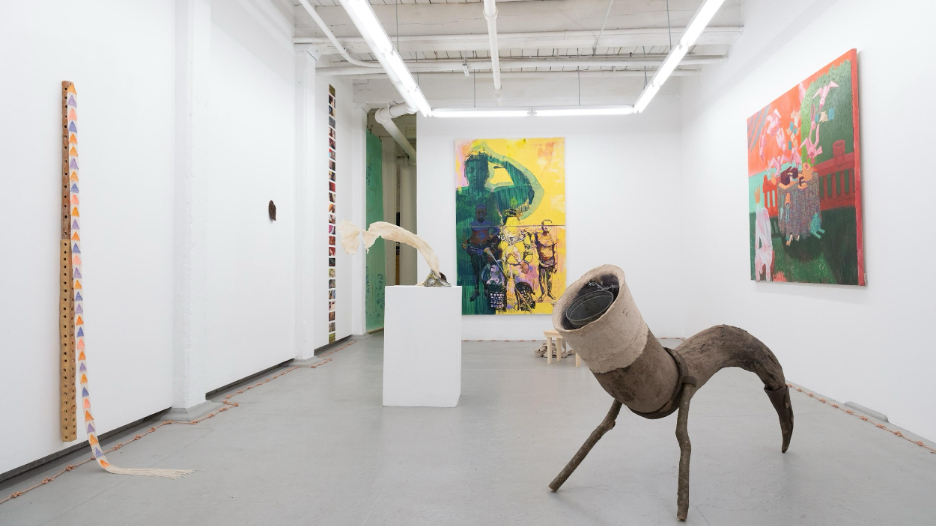
Run by Artists, Built for Artists: OyG and the Cornell MFA

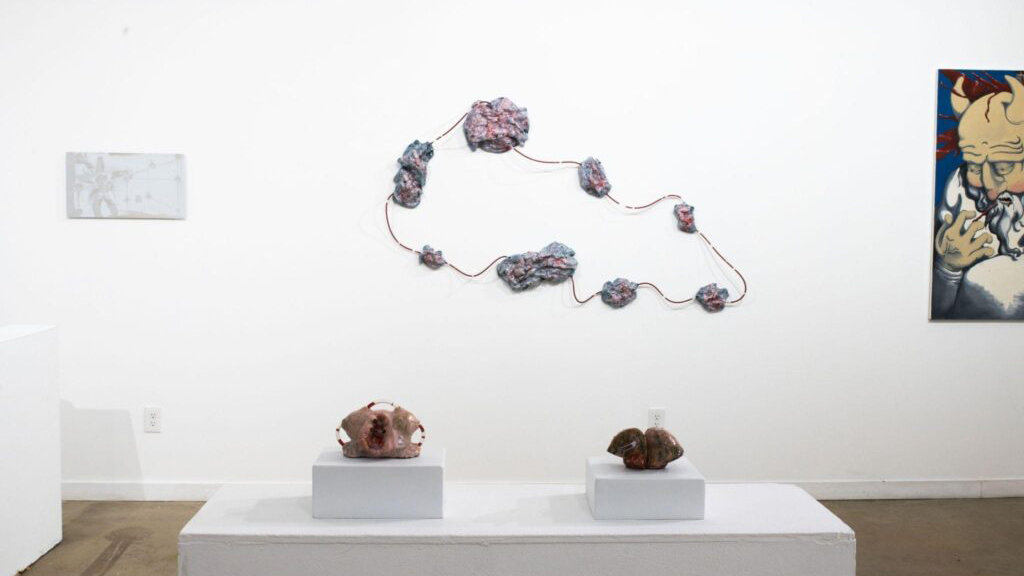
What does a gallery look like when the artists are in charge? Founded in 2013, Ortega y Gasset Projects (OyG) is an artist-run collective with no fixed curatorial line and a non-hierarchical structure shared equally among its eight co-directors. Since 2023, it has become the annual New York home for Cornell University’s MFA thesis exhibition — a partnership built on a simple premise: artist-run spaces value experimentation, innovation, and risk-taking, giving graduate artists the freedom to present work without commercial constraints or curatorial imperatives.

Continue reading “Run by Artists, Built for Artists: OyG and the Cornell MFA”

Kosuke Kawahara’s Without Innocence, Dissecting and Reassembling at RAINRAIN Gallery

Kosuke Kawahara, Untitled

Stepping into the exhibition Without Innocence at RAINRAIN gallery, you are greeted with a plethora of various mediums, ideas, influences, and experimentations. The paintings carry with them several levels of looking, small details to explore, and multiple dimensions within the edges. The photographs set the scene, allowing you to enter another space just as the paintings do, left to explore the worlds that Kawahara creates and builds within it all. The press release introduces a quote from Donna Haraway’s A Cyborg Manifesto, “…we are living through a movement from an organic, industrial society to a polymorphous, information system—from all work to all play, a deadly game (p 28).” This statement lingers alongside my thoughts throughout the exhibition, as I begin to notice more details, connections, and mechanisms that make this exhibition immensely similar to a cyborg in the making. Kawahara takes pieces of the body and fractions of different spaces within the canvas to build something entirely new out of all of these information systems. 

Continue reading “Kosuke Kawahara’s Without Innocence, Dissecting and Reassembling at RAINRAIN Gallery”

It Takes a Village at Freight and Volume

The most subtle acts are often the most cathartic. In times of relentless upheaval and injustice, simple moments can feel Herculean by measure. The current exhibition at Freight and Volume, It Takes A Village, focuses on daily ritual as a gate of entry. Artists Andrea Castillo, Nancy Elsamanoudi, and Baran Shafiey blend nuanced elements with doses of surreality, resulting in invitations into spaces that delightfully offer more questions than answers. Each work is a reckoning with the quietude of in-betweenness. Each artist is a painter working in figuration; yet the similarities end there, and the departures are as varied as one can imagine. 

Continue reading “It Takes a Village at Freight and Volume”

The Absence is in the Fingers 

There are exhibitions shaped less by what is installed than by what fails to arrive. I did not plan for this to be one of them. Where Form Remembers was conceived as a two-person presentation: Julie Gladstone’s mixed-media works traveling from Toronto, Avani Patel’s drawings from Brooklyn. The premise was a dialogue between two practices in proximity, each distinct enough that the distance between them would produce something worth engaging over time. What it became was different.

Continue reading “The Absence is in the Fingers “