
Fanfan Yuxuan is a New York–based curator who has worked with galleries and art fairs in Paris and New York. Through this experience, she became attentive to how exhibitions shape the presentation and understanding of artists’ work, and to the gaps that can emerge between artistic intention and exhibition context. Fan develops projects that create platforms for artists, including those connected to graduate programs in the New York metropolitan area, and approaches curating as an evolving practice informed by collaboration and the logistical realities of exhibition-making.
Could you introduce yourself? Where did you study art, and how did you develop an interest in curatorial practice?
I began drawing at a very young age, and it felt almost instinctive, but after years of intensive training in figurative painting and the pressure of exams, I realized that I was not suited to the path of becoming an artist. I was drawn to a more synesthetic and integrative role within the art world.
Over the years, I have accumulated experience with art fairs and galleries in Paris and New York on the for-profit side. I also became aware that not all exhibitions articulate an artist’s practice clearly or accurately. Curating, for me, became a creative way to connect artists and interpret their work thoughtfully and concisely. In that sense, curatorial practice feels like a natural extension of my long immersion in the contemporary art world.
How does your own affinity for subtlety and nuance as a person influence your curatorial practice and your conceptualization, planning, and curation of exhibitions as a curator? What is the most important principle or truth that guides you as a person, an art professional, and a curator?
My curation often begins as conversations with artists that help me ground the exhibition’s conceptual framework within the realities of their practice. I look for subtle convergences between their work and the reflections that I am actively contemplating. Because of my background in figurative painting, I am highly sensitive to first impressions and nuanced visual atmospheres, and I tend to hold onto images that strike me in an immediate, instinctive way. They become intuitive anchors that accompany me as the exhibition develops.
Once my curatorial concept is set, I prefer to create the floor plan myself and carefully map out how each work should inhabit and activate the space. I imagine the dialogues that unfold amongst the artworks, why their energies converge or diverge, what tensions or harmonies arise, and how the viewer’s movement through the space becomes part of this evolving exchange.
As a curator and art professional, the principle that grounds me most is an unwavering honesty with myself and a commitment to trust my intuition and follow what feels true, with both discipline and intellectual rigor. I believe in committing fully to an idea and carrying it out with precision and care.
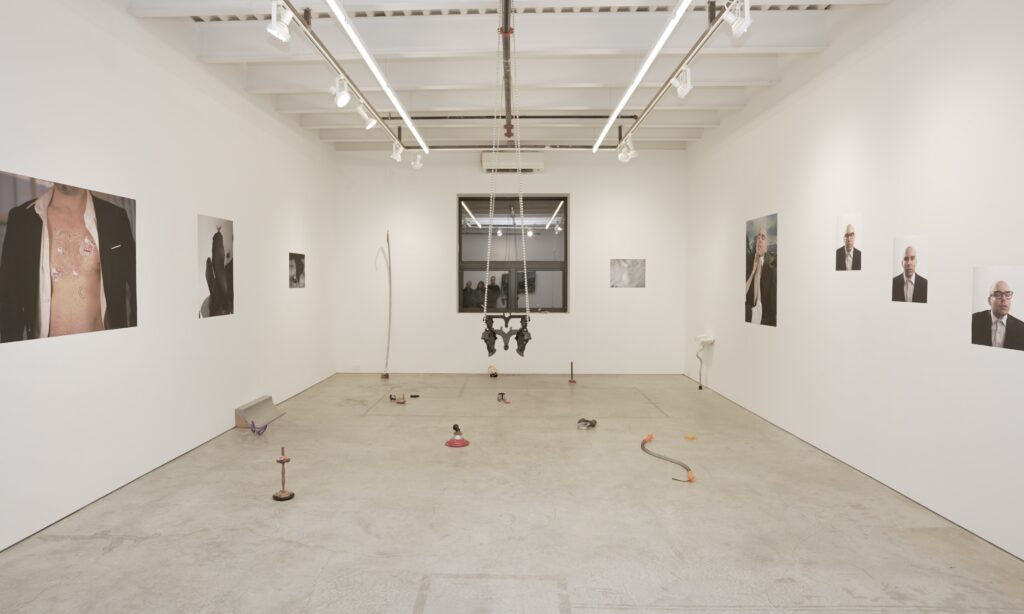
Do you have a preference in terms of abstract or representational work, or works that are conceptual or narrative-based? What are the strengths and weaknesses of each type/direction, and how do you make sure that various kinds of works by different artists or even the same artist communicate with one another in a cohesive manner in an exhibition setting?
I don’t have a fixed preference for abstract, representational, conceptual, or narrative-based work. What matters most to me is that a piece feels visually complete, well-crafted, and formally resolved. Beyond that, I look for the conceptualization behind the work that is genuinely compelling, something that can sustain the viewer’s attention and deepen the encounter.
In terms of exhibition setting, I aim to ensure that works communicate with one another without creating a sense of rupture. Visual resonance, whether through material, tone, rhythm, or spatial dynamics, is essential. Even when the works differ in terms of approach, I think carefully about how their conceptual threads are embedded within the curatorial framework. This allows the exhibition to hold multiple artistic directions while still feeling cohesive as a whole.
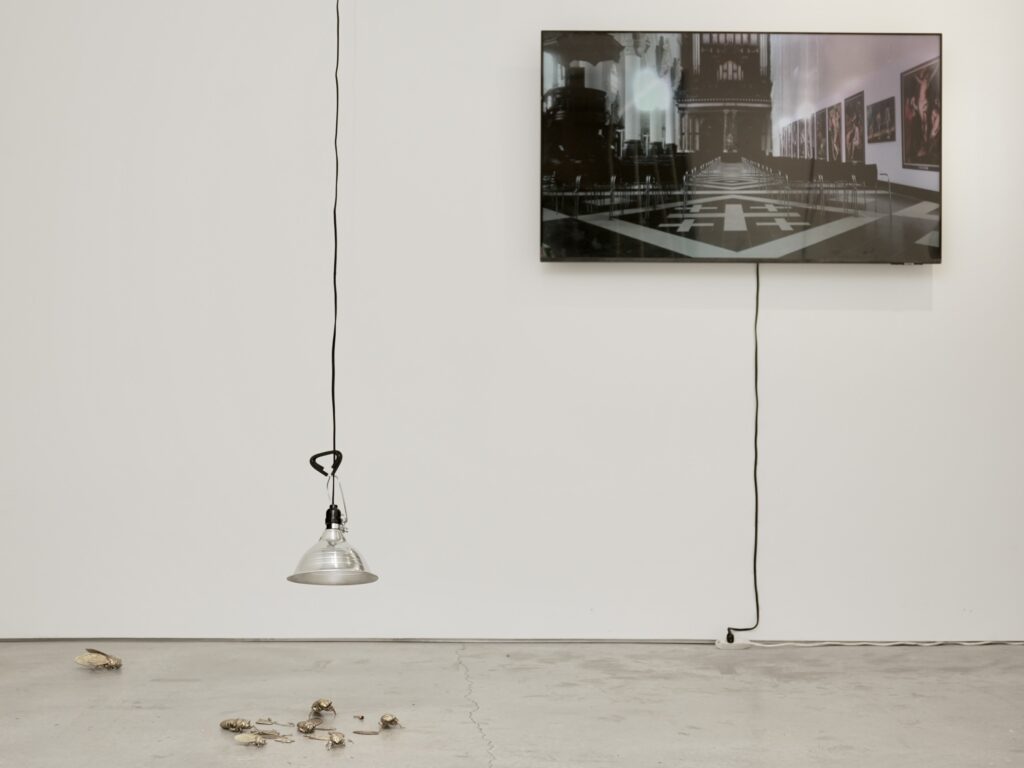
What is the concept behind your cross-cultural curatorial collective FanFlus? What drove you towards founding the collective? How do you seek to provide opportunities to emerging artists through FanFlus, and why do you think it’s important to nurture emerging artists?
I founded FanFlus with the vision of building a cross-cultural curatorial collective that spotlights and supports emerging artists from the post-90s generation. Flus combines flux and plus, capturing our commitment to fluidity, extension, and the generative potential of collaboration. Rooted in a nomadic ethos of openness and inclusiveness, FanFlus champions cross-cultural narratives, interdisciplinary explorations, and experimental curatorial approaches.
My goal is to present pioneering practices by emerging artists and to create spaces where new ideas can take shape. I’m especially interested in the challenges and aspirations shared by our generation. Even as we grow through uncertainty, I see FanFlus as a way to respond to the present moment while embracing the complexities of the future. I seek out emerging artists by visiting open studios and MFA thesis exhibitions and spending time in spaces where new practices are taking shape. Building relationships through thoughtful curatorial projects allows us to support artists early in their trajectories and grow alongside them.
Nurturing emerging artists feels especially important today. Many galleries, including those in China, are actively looking for fresh voices with global relevance. Being based in New York gives me access to a diverse, international pool of young artists. Supporting artists at this formative stage strengthens their practice and contributes to a more dynamic and inclusive contemporary art ecosystem.
Is there any glass barrier or form of discrimination that you have faced as a (Northeast) Asian woman curator in the art world? How do you seek to overcome these challenges? What keeps you going and motivated as a woman and a curator?
I prefer not to frame my practice through identity, race, or gender. My curatorial work is focused purely on engaging with artists’ practices and understanding their creative processes. I don’t want to approach exhibitions through the lens of these labels or measure my work against predefined frameworks. Instead, I aim to construct projects that are attentive, rigorous, and responsive to the artists themselves. What keeps me motivated is the opportunity to deeply explore artistic practices, to create spaces where artists’ visions can be understood and experienced fully, and to contribute meaningfully to the ongoing discourse on contemporary art.
Is there something that people might miss or misinterpret about your recent exhibition Threshold in Relations? Or are you a strong proponent of multiple interpretations and the need to allow the audience to formulate their own viewpoints and opinions? What would you say to someone who does not observe the ideas that you describe in your curatorial statement?
As I wrote in the curatorial statement, relations are often most powerfully formed at perceptual thresholds, moments of visual, emotional, or multisensory saturation in which vision, attention, or affect destabilize and must reorganize. These moments press us against a limit and prompt a recalibration of our engagement with the work.
My initial framing used the term relational threshold. This phrase may inadvertently evoke Nicolas Bourriaud’s relational aesthetics, which is not my focus. Instead, Threshold in Relations centers on how viewers sense and explore threshold states within relations, across relations, or even in relations that have not yet fully formed.
I welcome multiple interpretations and viewers to bring their own perspectives. If someone does not immediately perceive the threshold or threshold phenomena described in my curatorial statement, I would encourage them to attend to moments of hesitation and disorientation as they move through the works. Thresholds often emerge subtly through shifts in perception; what matters most is remaining open to how one’s ways of seeing, sensing, or relating may change in the encounter.
How important do you think it is for curators to understand foundational training, theoretical knowledge, and art history to be able to accurately and/or objectively assess the works produced by the emerging artists?
My undergraduate and graduate studies included rigorous training in art history and art theory. I am particularly interested in postwar American art, particularly the period when the art world’s center shifted from Paris to New York. I am also deeply familiar with Chinese contemporary art from the late 1990s through the early 2000s. This historical grounding certainly informs how I recognize, contextualize, and interpret the practices of emerging artists.
Assessing artists solely through art historical or theoretical frameworks is only one dimension of curatorial work. I am careful not to let these structures become limiting. Equally important to me is understanding the artist as a person, including their lived experiences, working processes, and ways of thinking, through sustained dialogue. For me, curating grows out of a deep attentiveness to artists in the present moment, shaped through dialogue, observation, and shared reflection.

Is color an important consideration to you? How about materiality? And the degree of labor involved? Or do you think some of these are outdated considerations because of the evolution of the contemporary art landscape?
For me, visual coherence and immediate visual appeal are primary considerations, since the first impression is often what opens the space for deeper attention and reflection. I am attentive to whether a work feels visually resolved and convincing. Concept, intention, and critique are equally vital, but they reveal themselves after that initial encounter. While different artists may engage with similar conceptual concerns, what I look for is how those ideas are articulated in a personal and distinctive way.
The uniqueness of an artist’s conceptual approach, the refinement of form, and the appropriateness of material, color, and medium become key indicators of the maturity of their practice. Rather than seeing considerations such as color, materiality, or labor as outdated, I view them as integral elements that must be meaningfully aligned with an artist’s ideas and sensibility.
How do you approach understanding and situating emerging art within the context of art history and the current movements or dialogues in contemporary art? Do certain texts help with this aspect of your curatorial practice?
For me, understanding the practices of emerging artists does not necessarily require situating their work within an art historical lineage. Approaching art too rigidly through historical frameworks can feel restrictive and, at times, even counterproductive. I prefer to encounter a work on its own terms first, through close looking and attentiveness to how it operates in the present.
Living in New York, I regularly visit galleries and pay close attention to the press releases available at the gallery’s front desk. These texts have become one of my most immediate and effective learning resources. Reading them alongside the works allows me to understand how artists and galleries frame current concerns and how contemporary conversations are actively taking shape. This approach keeps my curatorial thinking grounded in the artists’ current practices.
About the writer: Chunbum Park, also known as Chun, is an artist from South Korea, where they were born in 1991. They received their BFA in Fine Arts from the School of Visual Arts in 2020 and their MFA in Fine Arts Studio from the Rochester Institute of Technology in 2022, where they changed their pronouns. Born a male, Park likes to cross-dress and depicts themselves as a woman in their paintings. They are the inventor of the ArtBid art auction card game and run the Roundcube Collective (currently merged with the Brooklyn to Gangnam website), where they interview other artists. Park writes exhibition reviews for various print and online magazines, including the New Visionary Magazine. They currently reside in Cliffside Park, New Jersey. @chun.park.7
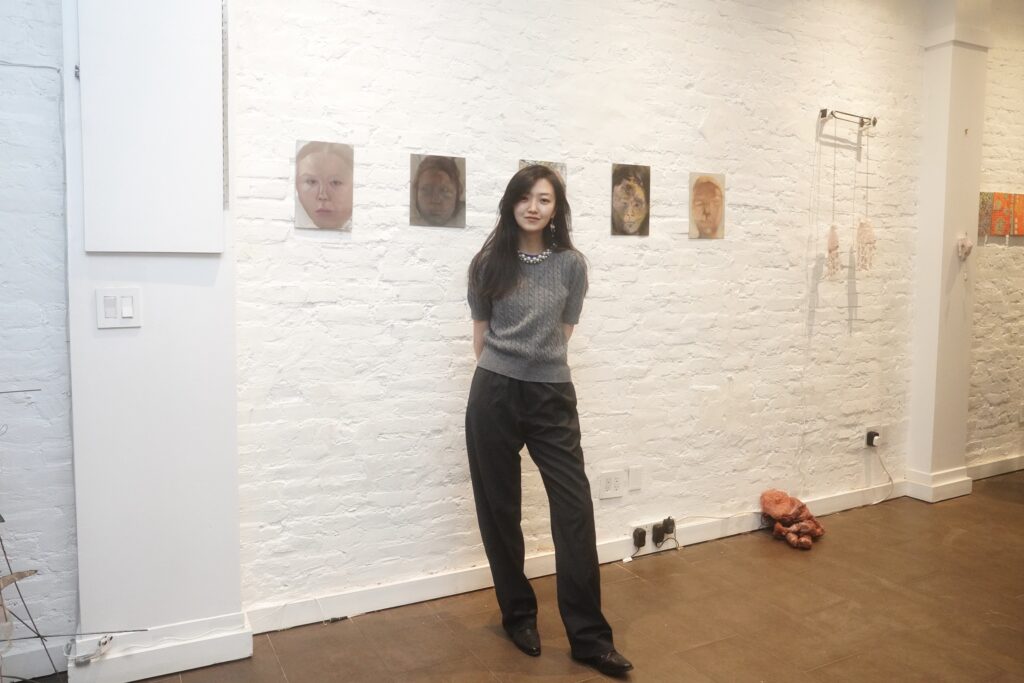
About the curator: Fanfan Yuxuan Fan is currently pursuing her M.A. in Visual Arts Administration at New York University. She holds dual bachelor’s degrees in Arts Administration from the Central Academy of Fine Arts and KEDGE Business School. She has worked for Asia NOW Paris Art Fair in Paris as well as Eli Klein Gallery and Marc Straus Gallery in New York. Her curatorial approach is grounded in artist-practice–driven methodology, spotlighting emerging artists and examining the shared challenges and aspirations of her generation through nomadic, site-responsive projects. She has curated group shows: Subcurrents (Shanghai), Threshold in Relations (Nguyen Wahed, New York), and Soft Instructions (Art Cake, Brooklyn). Her curation has been featured in Whitehot Magazine, Hot Coffee Conversations, DART Magazine, TUSSLE Magazine, and LI TANG.