Andreas Schulze’s exploration of color in the cool pastures of cake

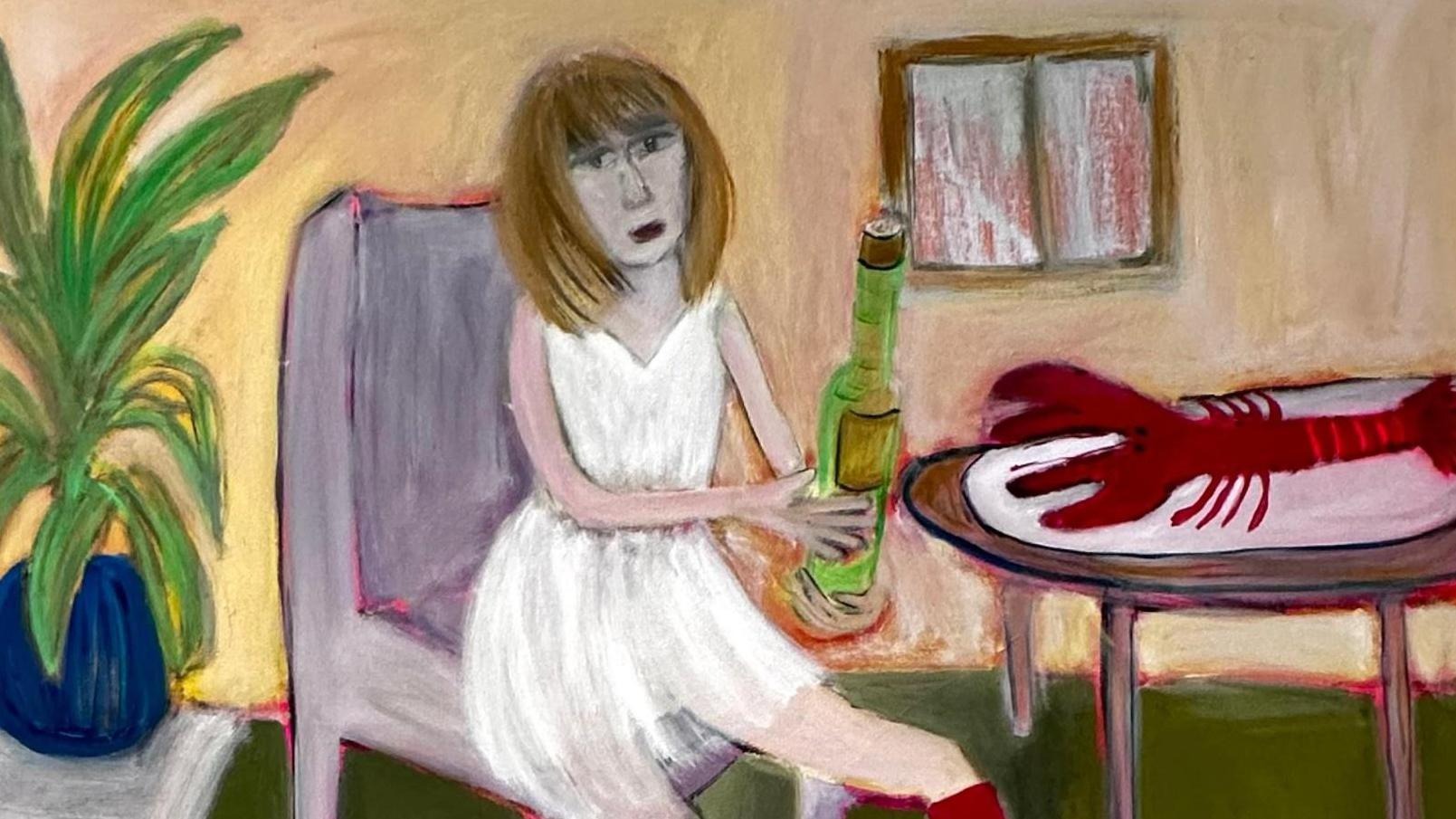
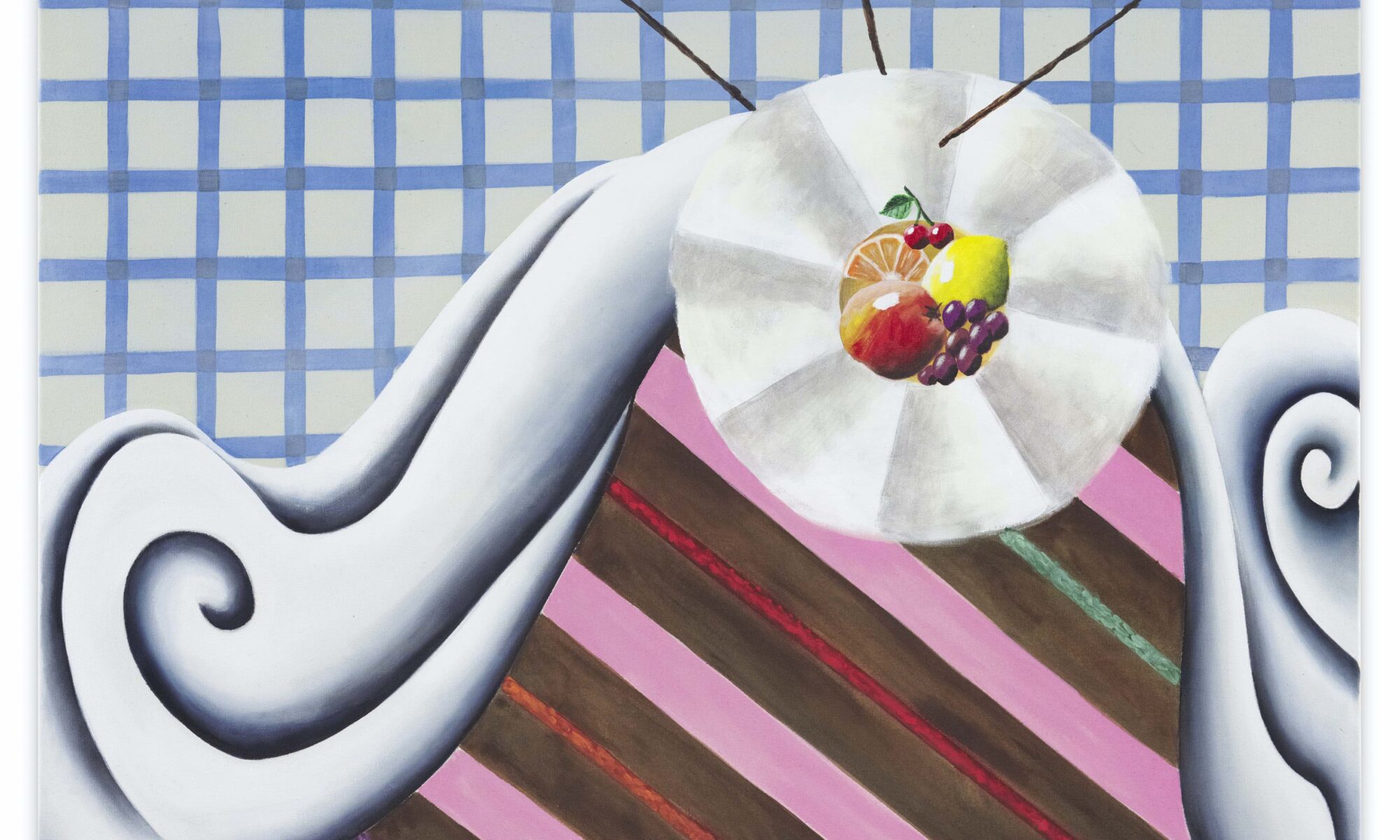
Andreas Schulze, Untitled (Her)

In his show Cake (2026) at Sprüth Magers, New York, Andreas Schulze explores the visual effects of saturated color and geometric form, using cake as the setting for his investigation.

In his paintings, Schulze creates an inner three-dimensional universe, which serves as a bell jar. In his imaginary pastures, Schulze creates surreal interiorscapes, built of geometric shapes and flat backdrops of color-gradient skies, juxtaposed with rounded spheres and spirals painted in three-dimensional perspective, with depth and shadow. The pictorial space he builds gives a stage for him to explore various phenomena, in this case, cake, and he does so with a playful seriousness, experimenting with the basic forms and images that make up cakes: candles, frosting, fruit, sprinkles, and layers.

Continue reading “Andreas Schulze’s exploration of color in the cool pastures of cake”
Growing After the Embers: A Review of Bùi Thanh Tâm’s Solo Exhibition Here on and after

Installation view of Here on and after

For a long time, when I was young, I felt distant from the idea of “history.” In textbooks, history always appeared through years, wars, reforms, and changes of political power, as if it were made of events already organized and settled. Yet the history that truly remains in the body often appears in more hidden forms. It may be a silence within family narratives, a memory that one generation chooses to avoid, a recurring pattern in festive images, or a color that seems joyful while quietly carrying a wound. Very often, history continues to exist in another form, lingering in images, bodies, and everyday experience.

Continue reading “Growing After the Embers: A Review of Bùi Thanh Tâm’s Solo Exhibition Here on and after”

Strata of Time: a burying and unearthing of new discoveries at Elorea 

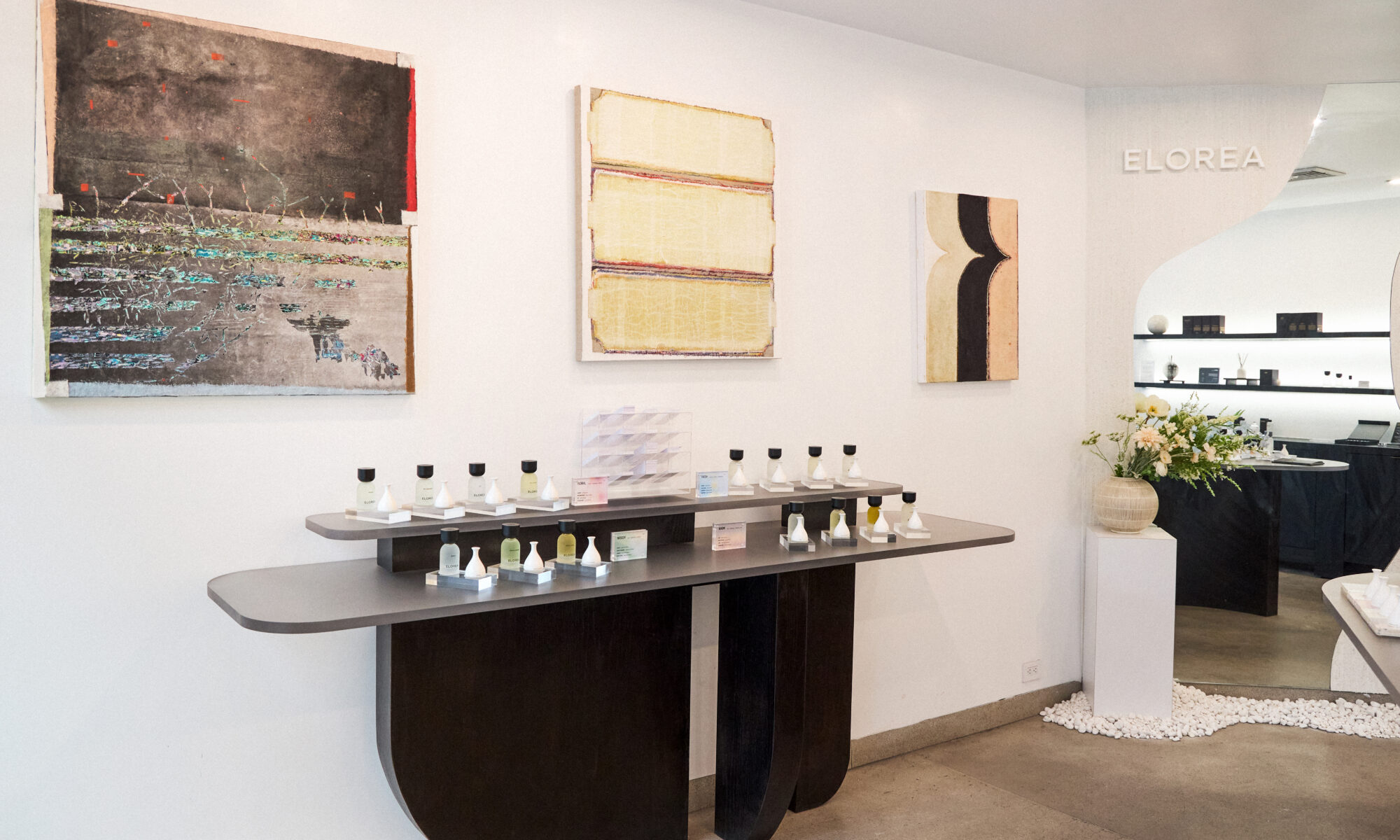
Installation view, Strata of Time

Stepping into the exhibition Strata of Time at Elorea, the focus is not only on the works hanging on the walls but also the fragrances around them as well. With works placed throughout a perfume shop, Herok was given the opportunity to respond to the fragrances surrounding his works. He uses his process of layering to overlay different colors, materials, and experiences of both to mimic the processes the perfume makers used to create their products, as they mix and meld various scents. The works are nicely displayed throughout the space; some works, like Out of Field 5, Out of Field 4, and See You Again, are displayed alongside products, while other walls allow works to stand on their own. This is an interesting exhibition collaboration that grew from studying the products and interviewing store personnel, a process that generated a new body of work carrying as many small details within the surfaces as the fragrances carry within the perfumes. 

Continue reading “Strata of Time: a burying and unearthing of new discoveries at Elorea “

Kosuke Kawahara’s Without Innocence, Dissecting and Reassembling at RAINRAIN Gallery

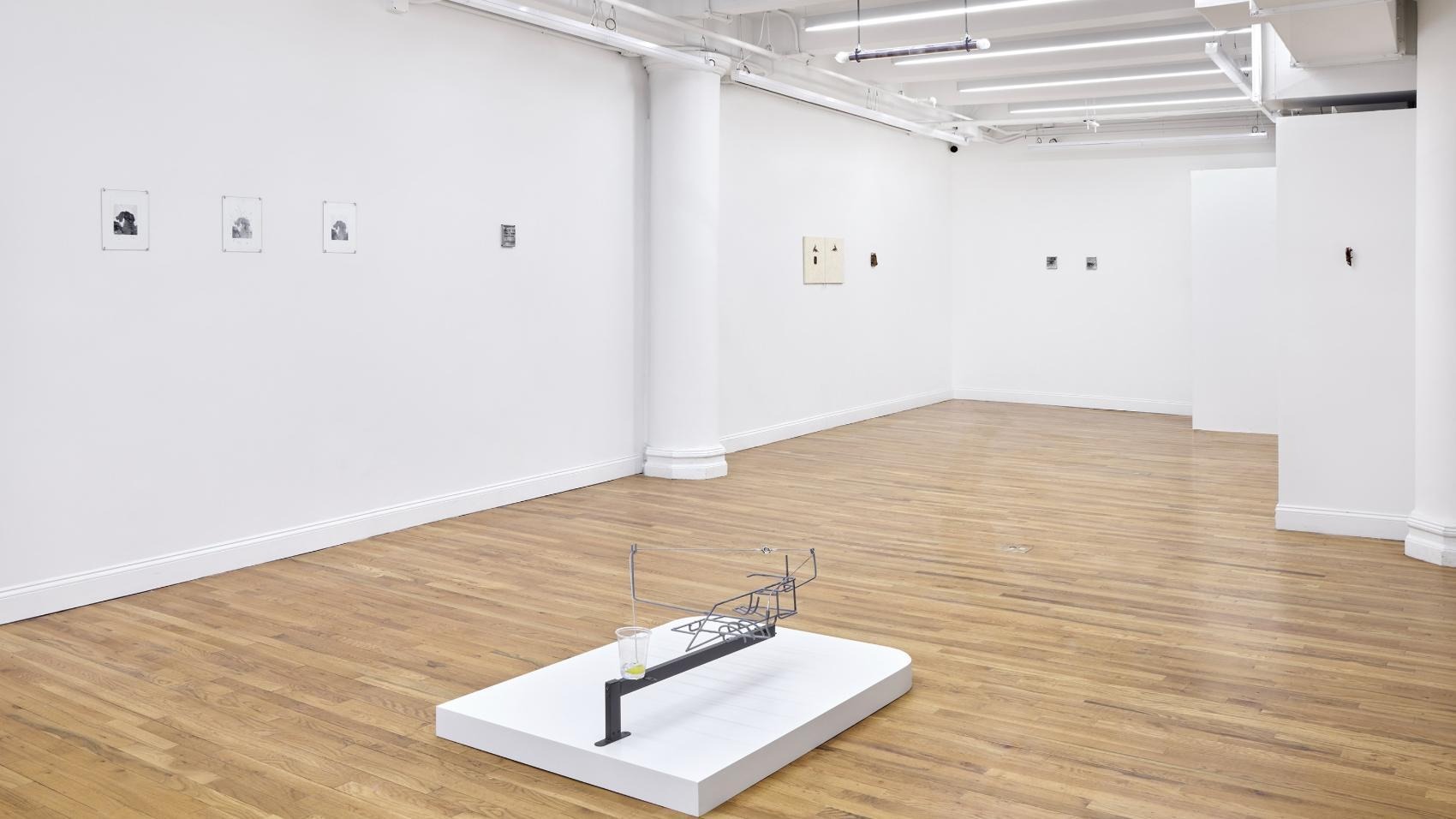
Kosuke Kawahara, Untitled

Stepping into the exhibition Without Innocence at RAINRAIN gallery, you are greeted with a plethora of various mediums, ideas, influences, and experimentations. The paintings carry with them several levels of looking, small details to explore, and multiple dimensions within the edges. The photographs set the scene, allowing you to enter another space just as the paintings do, left to explore the worlds that Kawahara creates and builds within it all. The press release introduces a quote from Donna Haraway’s A Cyborg Manifesto, “…we are living through a movement from an organic, industrial society to a polymorphous, information system—from all work to all play, a deadly game (p 28).” This statement lingers alongside my thoughts throughout the exhibition, as I begin to notice more details, connections, and mechanisms that make this exhibition immensely similar to a cyborg in the making. Kawahara takes pieces of the body and fractions of different spaces within the canvas to build something entirely new out of all of these information systems. 

Continue reading “Kosuke Kawahara’s Without Innocence, Dissecting and Reassembling at RAINRAIN Gallery”

It Takes a Village at Freight and Volume

The most subtle acts are often the most cathartic. In times of relentless upheaval and injustice, simple moments can feel Herculean by measure. The current exhibition at Freight and Volume, It Takes A Village, focuses on daily ritual as a gate of entry. Artists Andrea Castillo, Nancy Elsamanoudi, and Baran Shafiey blend nuanced elements with doses of surreality, resulting in invitations into spaces that delightfully offer more questions than answers. Each work is a reckoning with the quietude of in-betweenness. Each artist is a painter working in figuration; yet the similarities end there, and the departures are as varied as one can imagine. 

Continue reading “It Takes a Village at Freight and Volume”

Learning Where There Is No Bottom: On the Thresholds of Swim Lessons

When I first learned how to swim as a child, my instructor told me to hold onto the edge of the pool and practice kicking. He counted the rhythm aloud, occasionally adjusting the angle of my body. Water kept splashing into my face, yet I could not make myself move forward. The actions had been broken down into steps: kicking, stroking, breathing, and I seemed to complete each one, but they never came together as a whole. Then, at some point, I stopped sinking. I still cannot say what exactly happened in that moment.

Continue reading “Learning Where There Is No Bottom: On the Thresholds of Swim Lessons”

Cynthia Pareja Dubin at the Oyster Point Hotel 

The Artist in Residence program at The Oyster Point Hotel was launched in 2020 and curated by Ellen Martin, with the support of Kevin Barry, the hotel’s President. Its premise is straightforward: contemporary art belongs not only in galleries but in the spaces where people actually live, rest, and move through their days. Each year, a selected artist’s work inhabits the hotel’s guest rooms, common areas, and the fabric of the place itself, encountered by thousands of visitors during their stay.

Continue reading “Cynthia Pareja Dubin at the Oyster Point Hotel “

Tobias Pils: Shh at Mumok Vienna

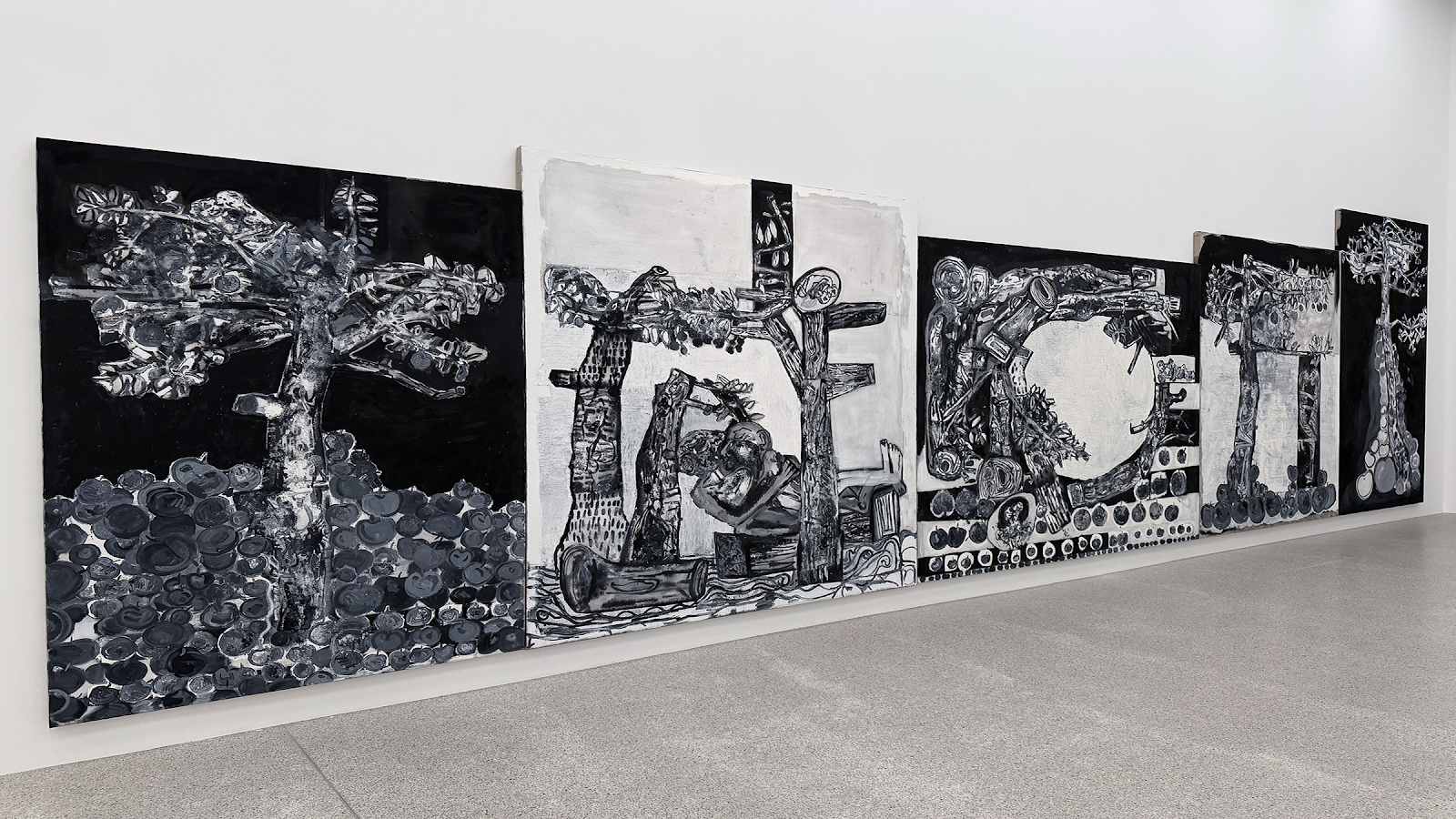
Tobias Pils’s paintings do not give themselves up quickly. It took me two long visits to begin to grasp his extensive solo exhibition at Mumok, curated by Manuela Ammer across two floors and ten years of work. The show traces a practice rooted in personal experience and daily life, charting a shift from floor to easel painting and revealing how drawing and painting remain in constant dialogue throughout. The layout rewards sustained attention and makes the changes over time visible. I viewed the exhibition in reverse, starting with the floor of Pils’s most recent works.

Continue reading “Tobias Pils: Shh at Mumok Vienna”

Unreliable Narrators: Rochelle Voyles

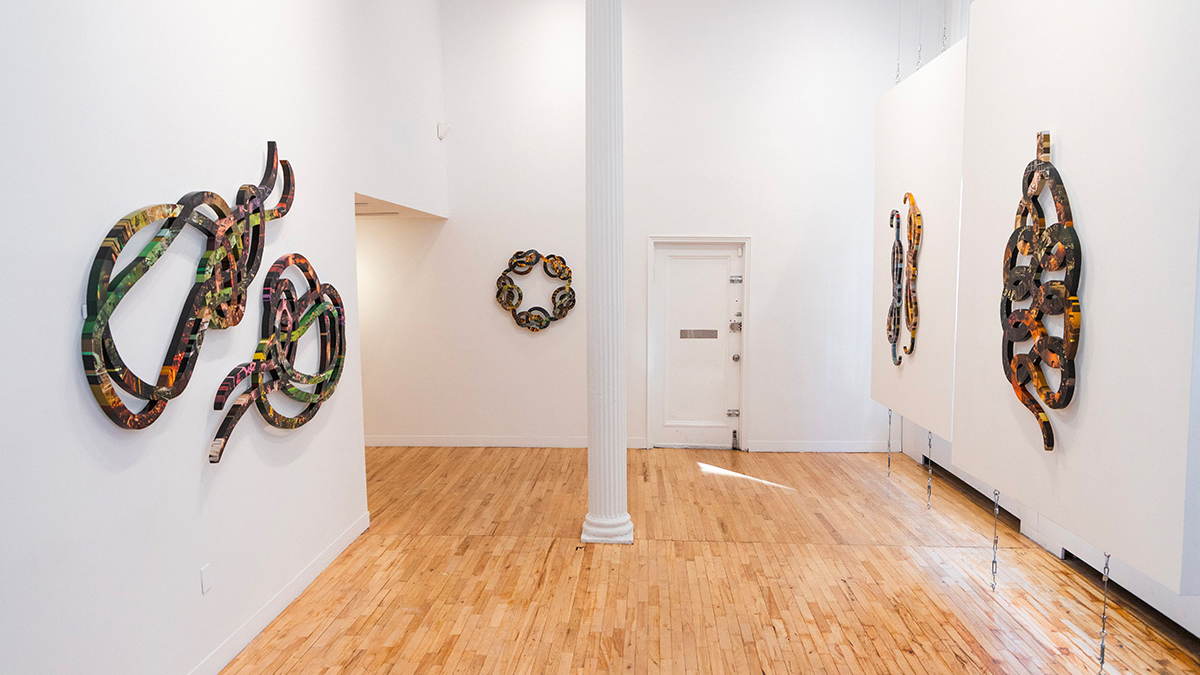
In Unreliable Narrators, Rochelle Voyles’s collages hold both a capacious nihilism and a hope to build stories from the void. From this fulcrum, I think of Joan Didion’s classic essay The White Album, and its opening truism: “We tell ourselves stories in order to live.”  Voyles’s compositions of found photographs extend to viewers, a branch, a bone, a tool in making sense of the randomness that seems to rule our lives. Cutouts layered into loops capture chaos, but the care in each cut, the curation, and the collision of hyperspecific images betray a belief in an idiosyncratic order. These works are at once figurative mazes of manifold meaning, and objects calculated to short-circuit our thinking and experience pure sensation. 

Continue reading “Unreliable Narrators: Rochelle Voyles”