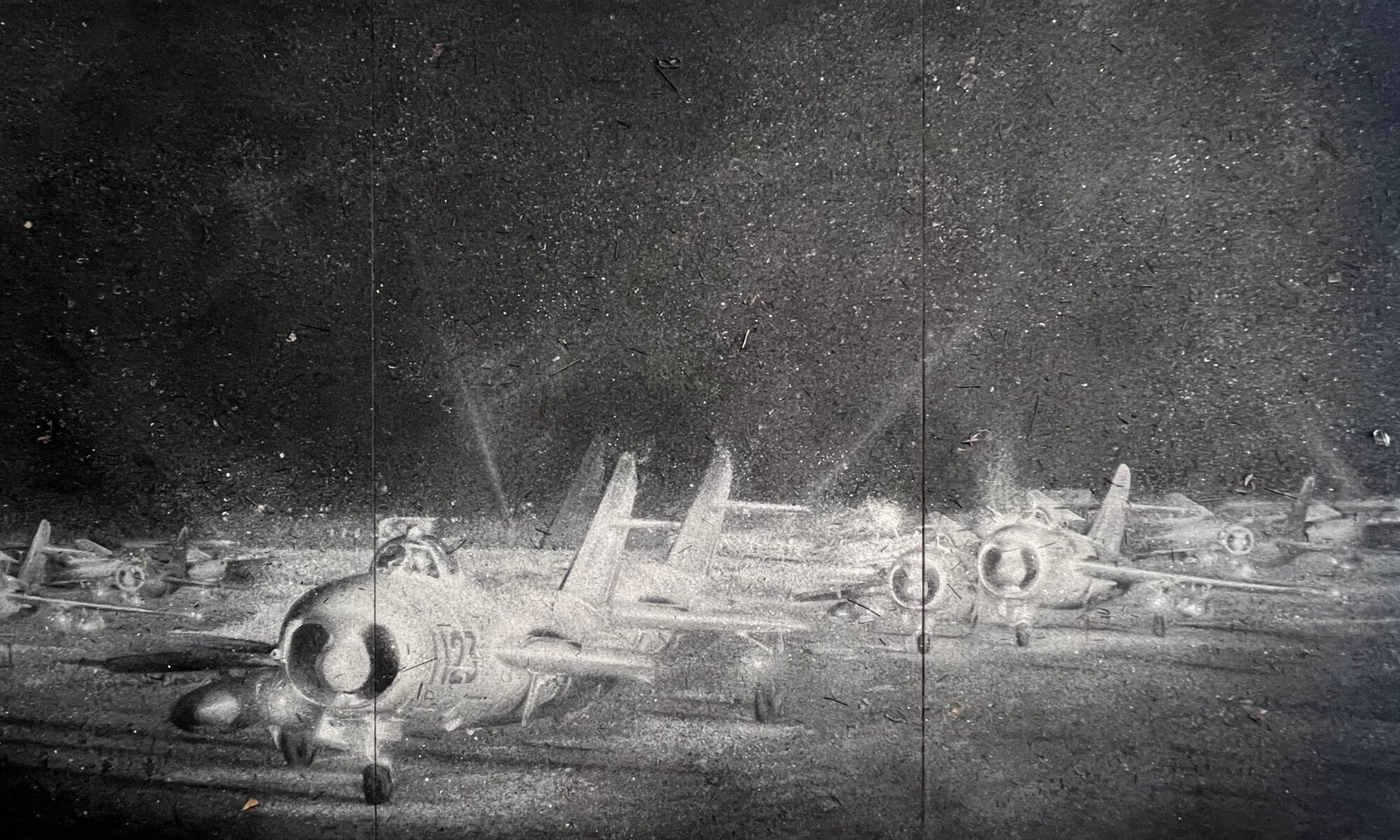
The Biennale That Broke Itself

Kambui Olujimi, In Minor Keys

The 61st International Art Exhibition arrives in grief, political fury, and institutional crisis. It is one of the more galvanizing editions in recent memory.

The lagoon light still flatters everything it touches, but this year, Venice has the feel of a city that stayed up too late arguing. May 7, 2026 — the one morning of the press preview period spared by both rain and protest — was the kind of day Venice is famous for: blue sky and large cinematic cumuli drifting above the Queen of the Adriatic. Police stood watch outside the Israeli and Russian pavilions. The queues at the Giardini were long; those at the Arsenale were longer. In years of attending press previews, I have rarely encountered such a congested or physically demanding environment — the crowd, indistinguishable from a general-public opening, consumed by the compulsive and indiscriminate act of photographing everything in sight.

Continue reading “The Biennale That Broke Itself”
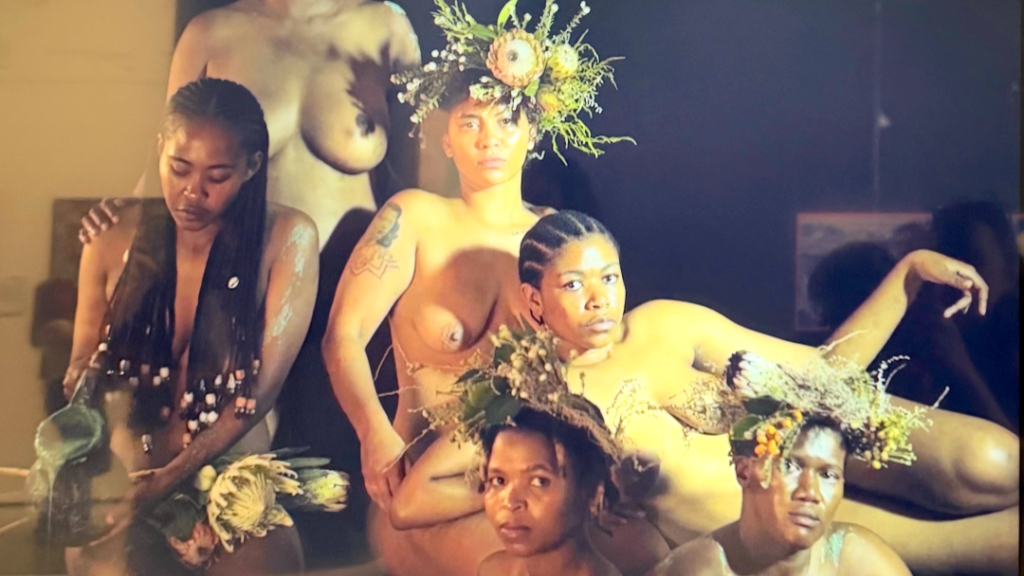
Voices In Minor Keys: 2026 Venice Biennale

In Minor Keys, the central exhibition of the 61st Venice Biennale, arrived with a quiet proposition. The late curator Koyo Kouho envisioned a show that reflects practices requiring time and sustained commitment — some of them lifetime, even generational — and in doing so created a deliberate antithesis to the Biennale spectacle. Drawing almost exclusively on artists from Africa, the Middle East, and the Caribbean, the exhibition is anchored in political concerns — identity, immigration, the environment — yet so many of the works felt personal, while reaching toward art history and even toward Venice itself. What follows is an account of its visual depth and strength.

Continue reading “Voices In Minor Keys: 2026 Venice Biennale”

The 15th Shanghai Biennale: Does the Flower Hear the Bees?

Botany, I read in Zoë Schlanger’s bestseller The Light Eaters: How the Unseen World of Plant Intelligence Offers a New Understanding of Life on Earth, is full of groundbreaking discoveries these days (Schlanger 2024). We now know that plants have cellular conduits that allow propagation of electrical charges, that some plants release chemicals in the air to alert neighbors of insects, and that evening primrose increases its nectar’s sweetness when it senses the frequency of the hum of bee wings. While such plant-feeling, plant-talking, and plant-listening are not sustained by the same biological apparatus as ours, the functional parallel is apparent. Perhaps it is time to broaden our understanding of intelligence. 

Continue reading “The 15th Shanghai Biennale: Does the Flower Hear the Bees?”

Zhang Huan: The Ash Paintings, at 125 Newbury Gallery

It has been over ten years since the last New York exhibition of the Chinese artist Zhang Huan, known for his edgy political performance pieces documented at the exhibition. What captured me on this visit was his ash paintings, which extended across the entire front hall of the gallery. It feels entirely appropriate that this social activist artist, who later turned to Buddhism, should exhibit these works in New York at such a tense moment. Ash, as a medium, touches on absolute destruction. It carries deep meaning in Buddhist practice, but these days it also pulls toward something harder to name: the daily accumulation of impure ash on the ground of cities being destroyed.

Continue reading “Zhang Huan: The Ash Paintings, at 125 Newbury Gallery”

FanFlus: a cross-cultural curatorial collective

Soft Instructions, Yshao Lin, Soomin Kang

Fanfan Yuxuan is a New York–based curator who has worked with galleries and art fairs in Paris and New York. Through this experience, she became attentive to how exhibitions shape the presentation and understanding of artists’ work, and to the gaps that can emerge between artistic intention and exhibition context. Fan develops projects that create platforms for artists, including those connected to graduate programs in the New York metropolitan area, and approaches curating as an evolving practice informed by collaboration and the logistical realities of exhibition-making.

Continue reading “FanFlus: a cross-cultural curatorial collective”