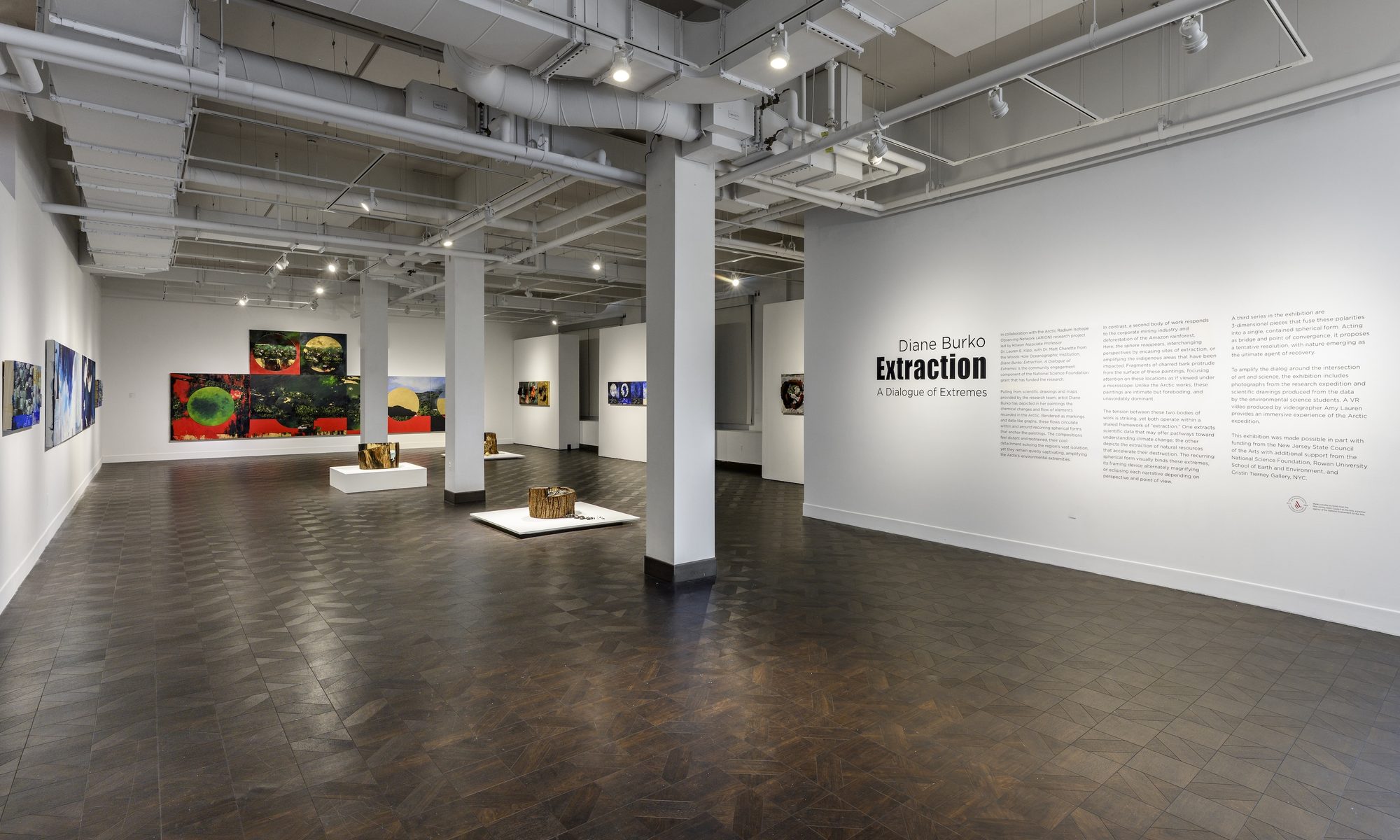
Extraction, A Dialogue of Extremes, Diane Burko’s solo exhibition at Rowan University Museum of Contemporary Art, pairs two bodies of work: Arctic paintings based on NSF-funded climate research and works on Amazon mining and deforestation. The show was created as the research grant’s community engagement component. In this interview, curator Mary Salvante discusses how the exhibition came together, the tension between the two series, how the work uses beauty to address climate change, and what the museum hopes visitors take away.
Continue reading “Diane Burko: Extraction, A Dialogue of Extremes at Rowan”Gamaliel Rodríguez: What is etched from what has been lived at Pace Prints
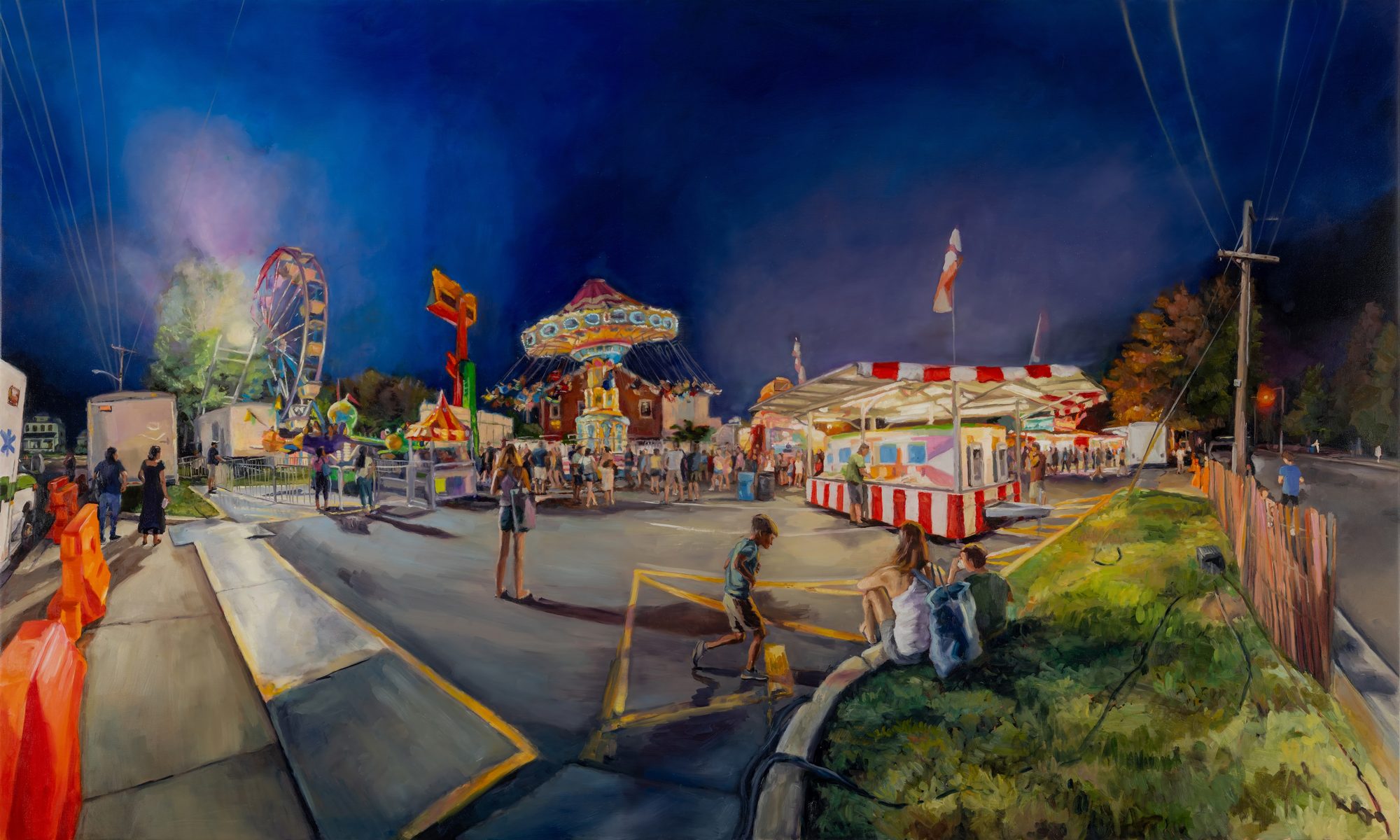
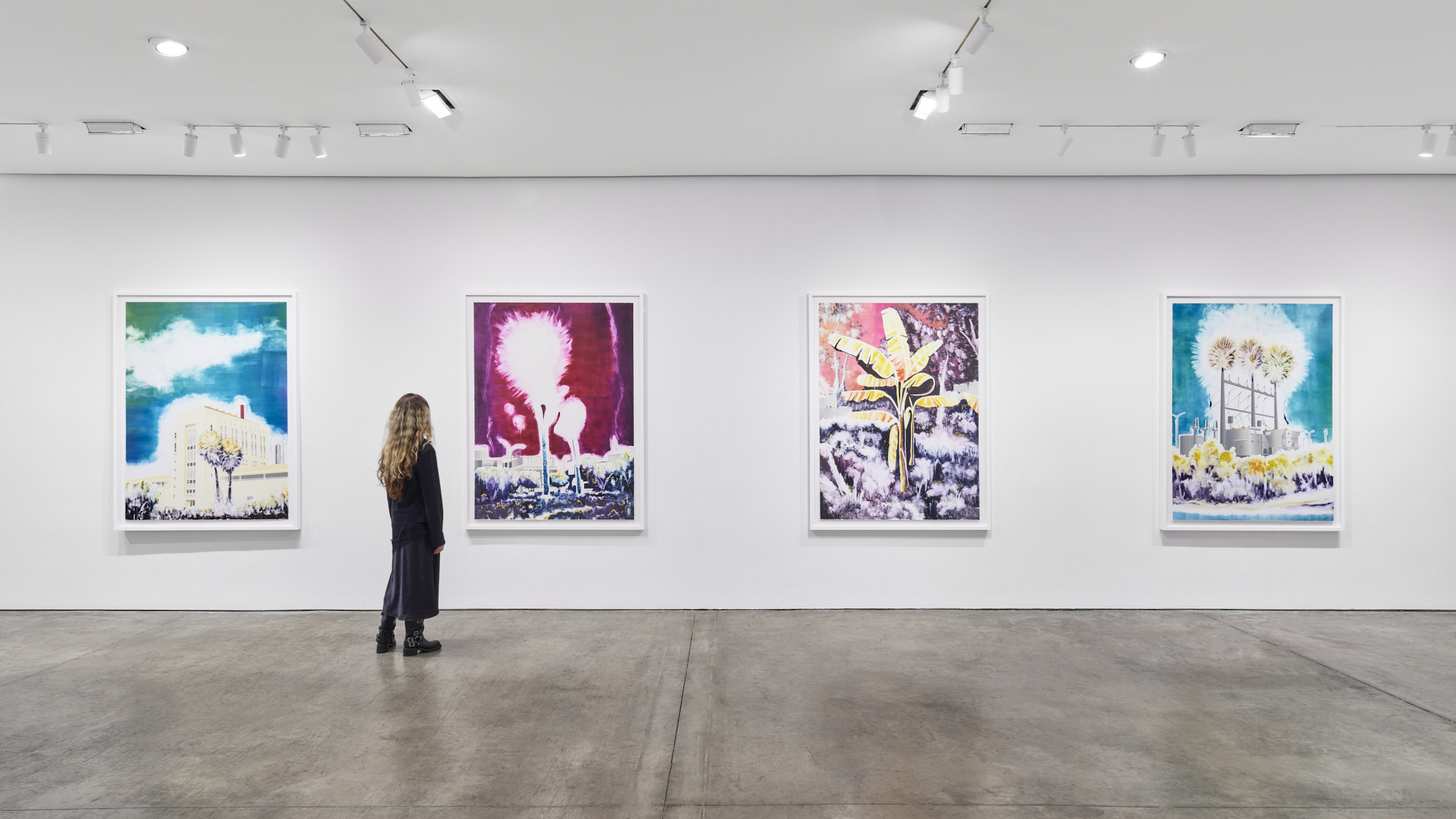
At first glance, Gamaliel Rodríguez’s monoprints look like postcards of tropical lands: saturated palms and skies that evoke Caribbean tourism imagery. The paradise turns more industrial and quite specific as you look longer: an ethanol plant in Medina, New York, the Bacardi distillery in Cataño, Puerto Rico. Following Rodriguez’s first solo show with Pace Prints, we discussed this new body of work.
Continue reading “Gamaliel Rodríguez: What is etched from what has been lived at Pace Prints”Orly Cogan and Robert Mann: Behind the Lens & Through the Needle
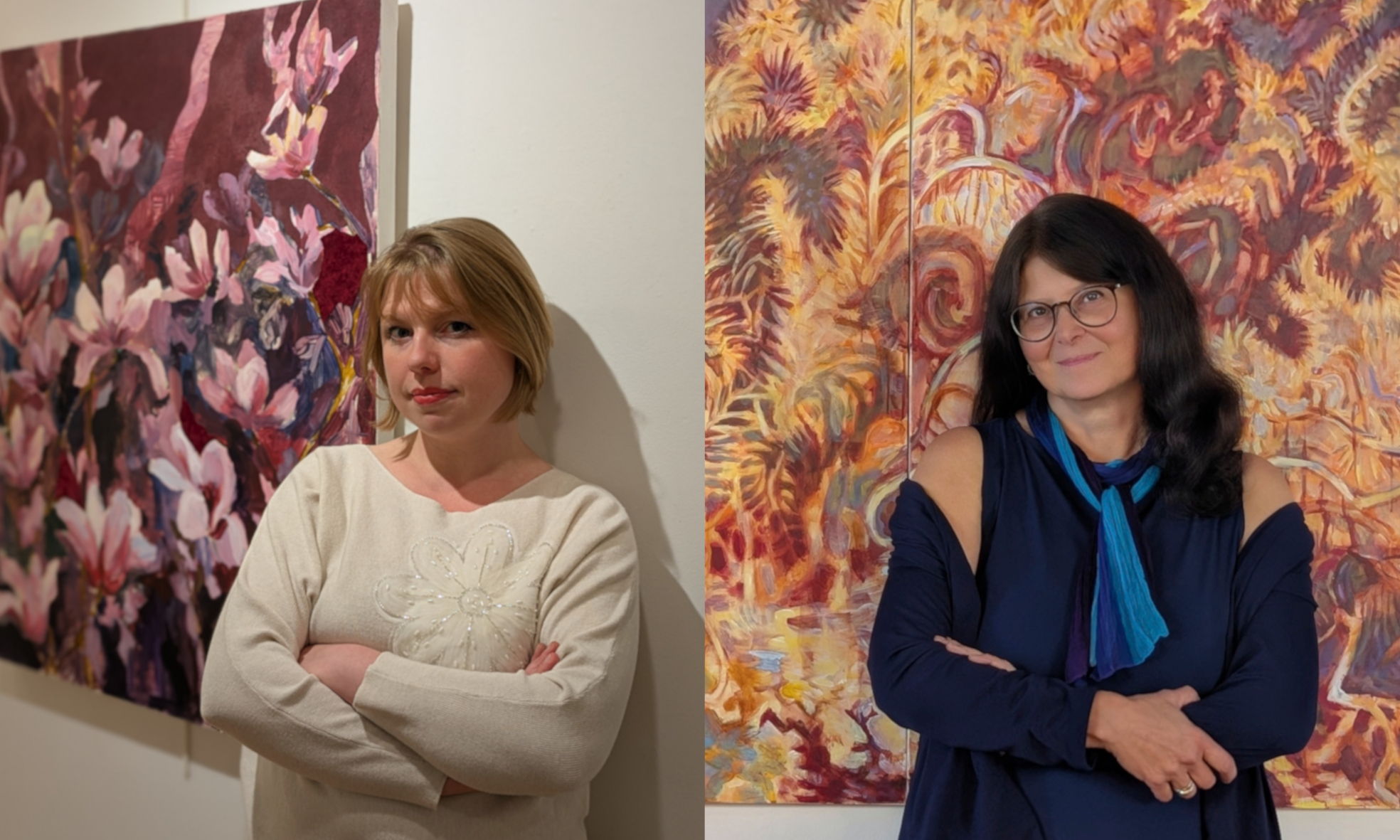
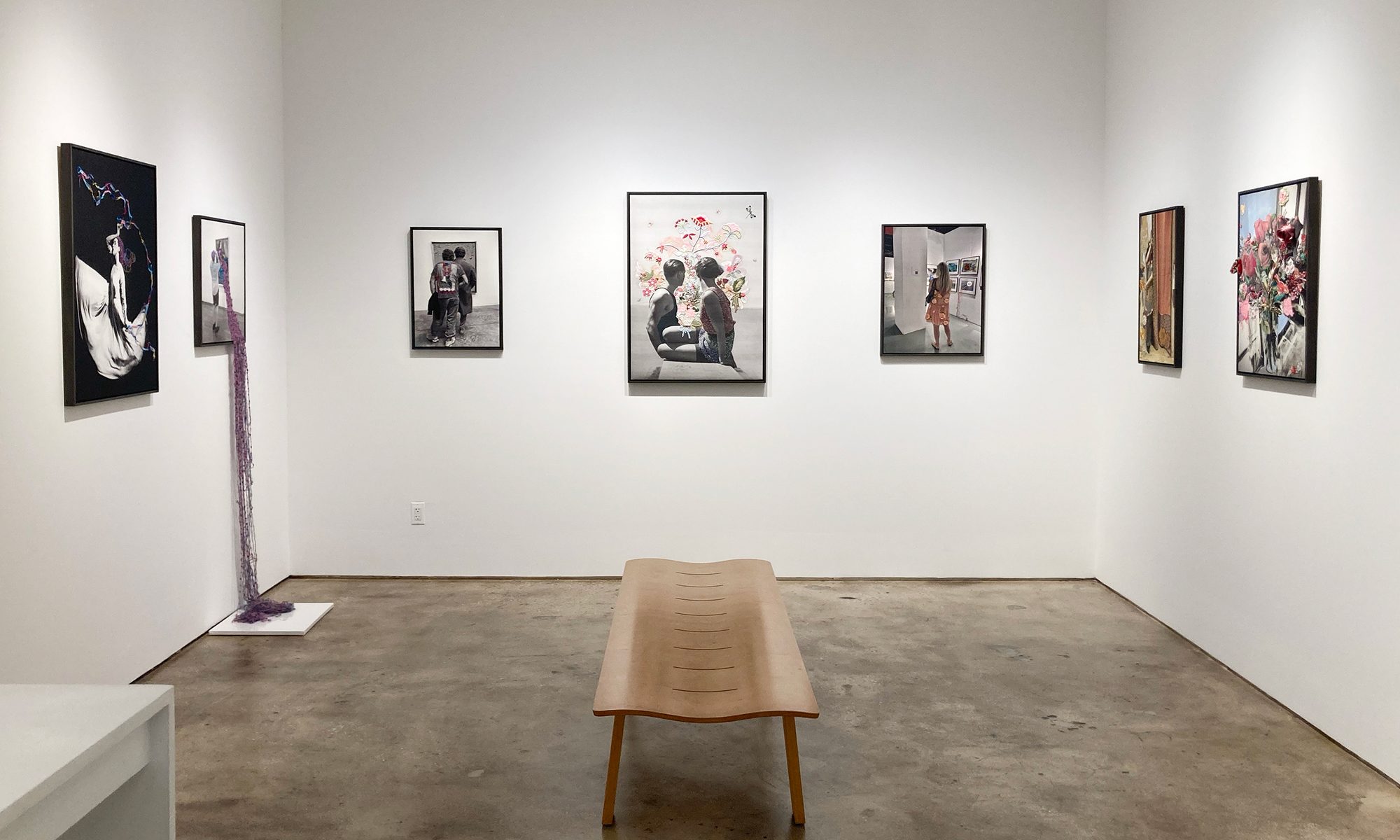
Orly Cogan stitches, crochets, and paints directly onto photographs. Under her needle, figures loosen from their frames, and in some pieces the thread spills past the edge onto the floor. Her work on photographs owes much to twenty years alongside the photography dealer Robert Mann. The two met at an art fair, reconnected at a collector’s party, and had their first date in her studio talking about her work; across years of openings, fairs, and long studio hours since, each has shaped how the other looks. Cogan, trained as a painter, came to read a photograph as an object with its own history and materiality, while Mann, whose gallery was built on photography, became an advocate for embroidery and its feminist history. That shared education first reached his gallery walls in 2014.
Behind the Lens and Through the Needle gathers the work that grew from that exchange and opens Mann’s newly built West Chelsea space in his thirty-fifth year with a public gallery. In Cogan’s hands, the two mediums hold different kinds of time: the camera’s caught instant and the needle’s slow, cumulative one. The photograph gives her the frozen scene; the embroidery reopens it, adding labor, touch, and imagination until the captured moment seems to keep unfolding.
Continue reading “Orly Cogan and Robert Mann: Behind the Lens & Through the Needle”Joyce Polance: The Patient Looks Back: Portraits of My Therapist
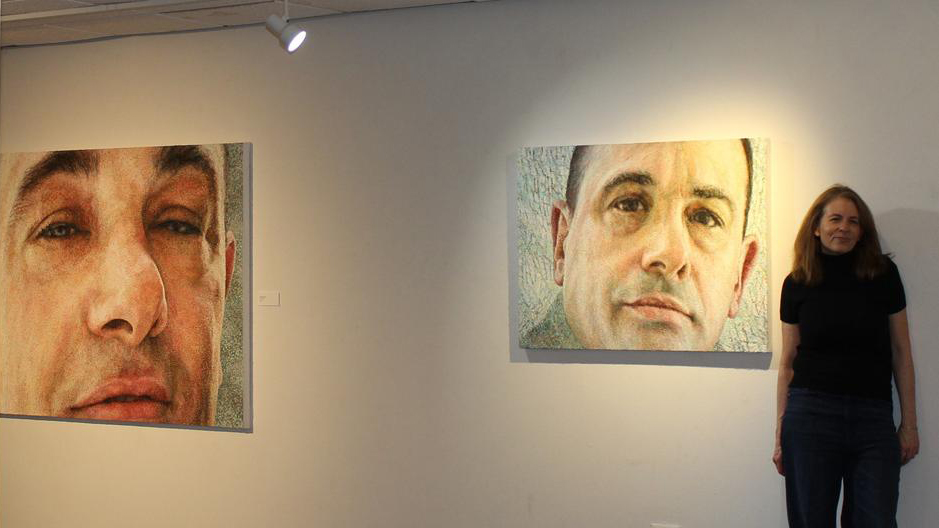
Joyce Polance has spent three years painting the same therapist nineteen times, in oil with fingers, and always from photographs taken at the close of a session. Polance inverts a familiar asymmetry: in therapy, Polance is the one exposed and observed, and here the therapist is the subject of long study, a figure whose features have grown more familiar to Polance yet, in many ways, remain a stranger. That paradox drives this body of work and gives the exhibition its title, The Patient Looks Back. It opened this September at Vassar College’s James W. Palmer III Gallery. What began as a single painting became something more persistent: a reflection on how difficult it is to truly know another person, even under the closest attention.
Continue reading “Joyce Polance: The Patient Looks Back: Portraits of My Therapist”Beyond the Sky
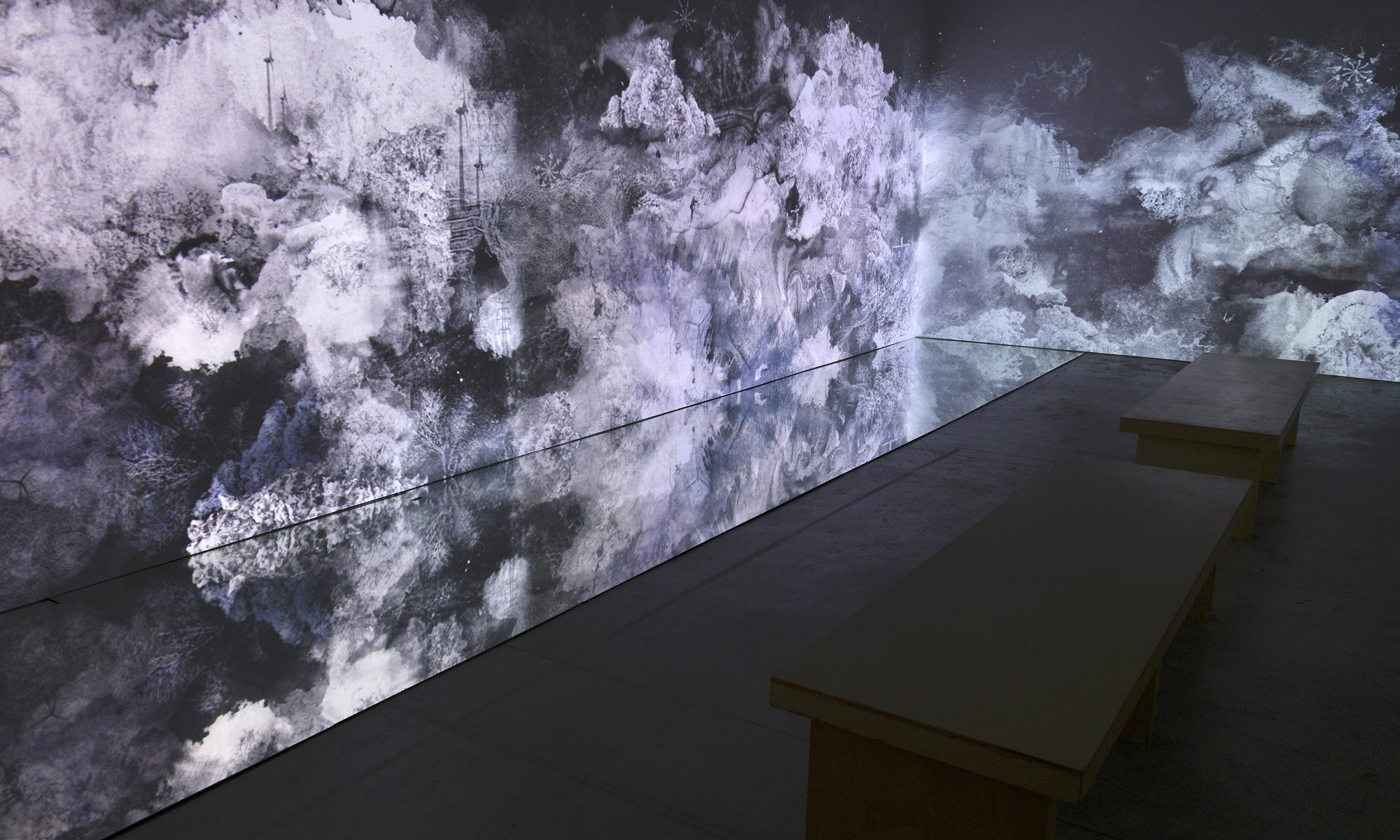
Beyond the Sky is an immersive, large-scale video installation projected at Art Cake through Monday, September 21st. The story behind it begins and ends with a spirit of collaboration—with the tragic note of the Red Hook fire in between. Simona Prives, the visual artist behind the project, shares her collaborative journey, beginning with her work alongside Kyle Luntz and Ryan Vahey.
Continue reading “Beyond the Sky”Serena Scapagnini: Painting Memory
Memory is a fickle thing. However, when viewed through a neuroscientific lens, memory is also a biological process. Serena Scapagnini’s artistic practice, her recent Saliency, La Memoria Cangiante (2026) in particular, explores the retrieval of memory in its interdisciplinary entirety. Inaugurated on June 4th as a permanent installation at the Wu Tsai Institute at Yale University, Saliency, La Memoria Cangiante opens a wider reflection on the position of memory, whether as process or personal attachment, in Scapagnini’s work and current projects.
Continue reading “Serena Scapagnini: Painting Memory”The Pandora’s BoxX Project: Grace Roselli
Grace Roselli’s Pandora’s BoxX Project began as something personal: a way to reconnect with a world of artists she’d drifted from while raising two daughters, much of it as a single mother. She started by photographing the few women artists she still knew; each led her to another, and the project grew by conversation and recommendation rather than plan. Nearly 360 portraits later — of artists alongside curators, writers, historians, educators, and museum directors — it had become a record of a community whose influence has rarely been seen whole. Roselli photographs each sitter in their own home or studio, in available light. She then lets them choose the final image, because the portrait isn’t finished until both of them recognize the person in it. Roselli discusses the project’s origins, her way of working, and what nearly 360 encounters revealed.
Continue reading “The Pandora’s BoxX Project: Grace Roselli”Atay Ilgun and Jonathan Carmel on ./spiral at Fondazione Aversano
How does a field barely a decade old start to have a past? ./spiral takes up that question, gathering eleven artists who were present at the early days of AI, code, and blockchain art and asking each to pick up a formative work, tool, or loose end and carry it forward from where they are now. For co-curator Atay Ilgun, a London-based artist and technologist, the burst of new tools between 2017 and 2022 has only lately settled far enough into the past to be seen clearly. His fellow curator, SuperRare’s Jonathan Carmel, describes the return as a way of moving forward by first turning around. The works cross from screen into matter along the way, Helena Sarin’s ceramics drawing AI imagery toward ancient clay, Robbie Barrat’s Plexiglas prints nudging it back toward the glow of a monitor. Presented by SuperRare at Justin Aversano’s Fondazione Aversano in New York, September 3–10. Here, Ilgun and Carmel discuss how the show came together, the move from screen to object, and the histories their artists carry forward.
Continue reading “Atay Ilgun and Jonathan Carmel on ./spiral at Fondazione Aversano”Serpentine Sibyls at Snug Harbor
A chance meeting in October 2024 set Serpentine Sibyls in motion. Wandering into the Newhouse Center for Contemporary Art, Daniel Rothbart met its director and senior curator Melissa West, and a shared bond with the late critic and curator John Perreault — who ran the center in the 1980s — opened a collaboration that grew from the main pond to the two reflecting pools beside the Glass House. Rothbart’s floating forms in aluminum and glass, buoyed by salvaged Japanese fishing floats, drift and turn with wind, light, and water, so no two hours look alike. Named by West for the ancient prophetesses and for the serpentinite stone in Staten Island’s own hills, the work holds history and forecast at once, using the climate crisis as its undertow. Sited at a former sailors’ home along a tidal waterway, it runs through September 28 at Snug Harbor. The artist and curator discuss the project’s origins, its shifting forms, and the myth and history beneath the title.
Continue reading “Serpentine Sibyls at Snug Harbor”Cutaway at Brandeis University
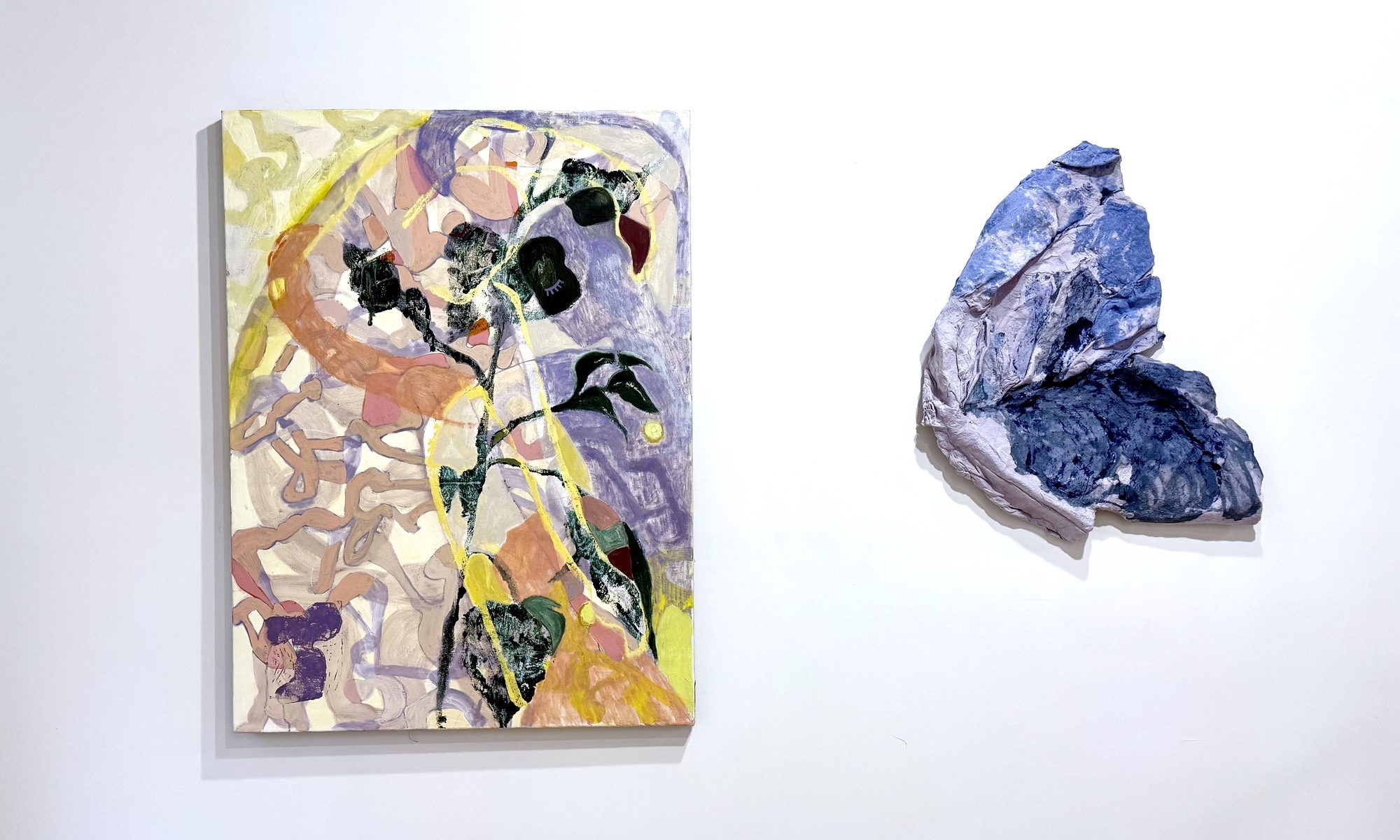
For Cutaway, curator Olivia Baldwin worked the way she does in her own studio — building from the ground up, beginning with the artists rather than a theme. She had followed Eleanor Anderson, J Stoner Blackwell, Lucy Kim, Kirstin Lamb, and Hai-Wen Lin for years, looking for where their materials might overlap and where they might productively rub against one another. Meeting with them, a shared concern surfaced: how each artist asserts and then loosens the limits of an object, a body, a pattern. Their means are strikingly varied — discarded plastic bags, cross stitch, dyed silk and chain, cast flounder and teeth, a kite pitched toward the upper windows — bound by saturated color and touch. The body recurs throughout, rarely pictured, more often left as a trace in the material. Baldwin discusses the show’s bottom-up beginnings, what its materials share, and the withholding behind its title.
Continue reading “Cutaway at Brandeis University”