Hospitality, Narrative Grace, and the Warm Head

Derrida once pursued the question of hospitality. Can you welcome someone whose name you do not yet know? Can you open the door before knowing who is arriving? If you can, the welcome is sincere; if you cannot, hospitality has already become part of border management. Unconditional hospitality is therefore always impossible: if the host retains sovereignty, they cannot be fully open; if they become fully open, they are no longer the host. The name thus becomes the first step in the subject’s enclosure. This exhibition is built precisely upon this impossibility.

Continue reading “Hospitality, Narrative Grace, and the Warm Head”

Kosuke Kawahara’s Without Innocence, Dissecting and Reassembling at RAINRAIN Gallery

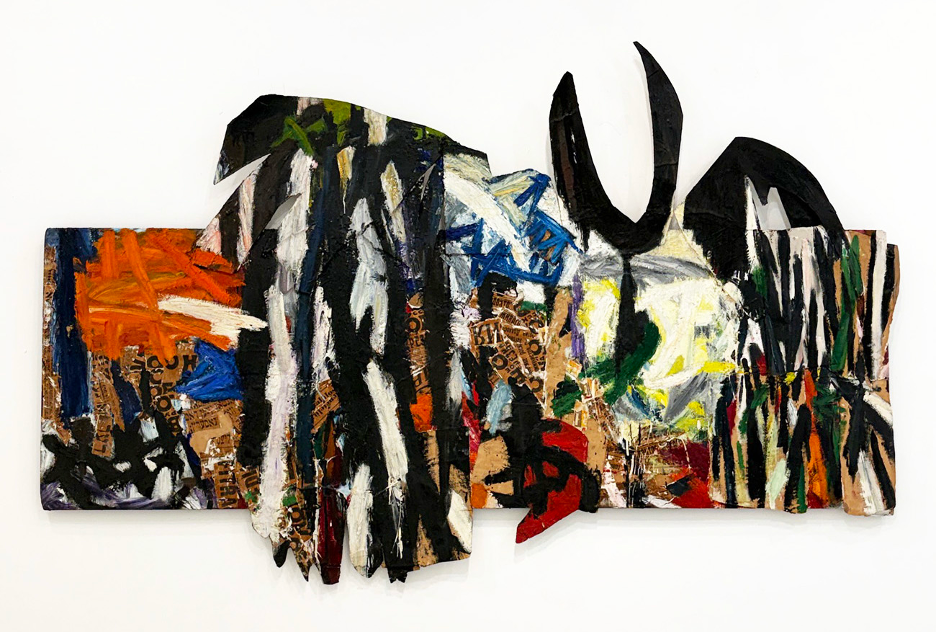
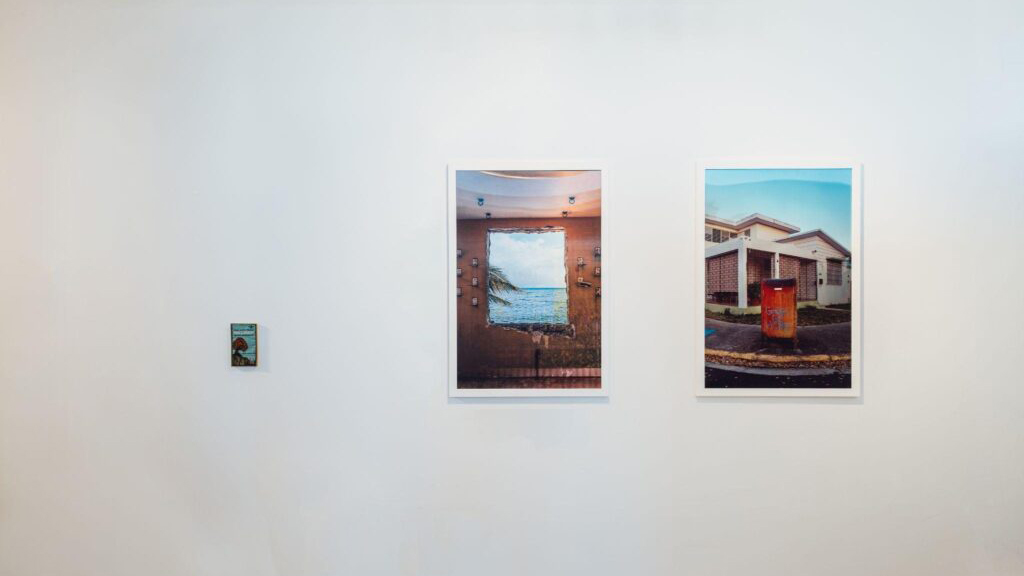
Kosuke Kawahara, Untitled

Stepping into the exhibition Without Innocence at RAINRAIN gallery, you are greeted with a plethora of various mediums, ideas, influences, and experimentations. The paintings carry with them several levels of looking, small details to explore, and multiple dimensions within the edges. The photographs set the scene, allowing you to enter another space just as the paintings do, left to explore the worlds that Kawahara creates and builds within it all. The press release introduces a quote from Donna Haraway’s A Cyborg Manifesto, “…we are living through a movement from an organic, industrial society to a polymorphous, information system—from all work to all play, a deadly game (p 28).” This statement lingers alongside my thoughts throughout the exhibition, as I begin to notice more details, connections, and mechanisms that make this exhibition immensely similar to a cyborg in the making. Kawahara takes pieces of the body and fractions of different spaces within the canvas to build something entirely new out of all of these information systems. 

Continue reading “Kosuke Kawahara’s Without Innocence, Dissecting and Reassembling at RAINRAIN Gallery”

It Takes a Village at Freight and Volume

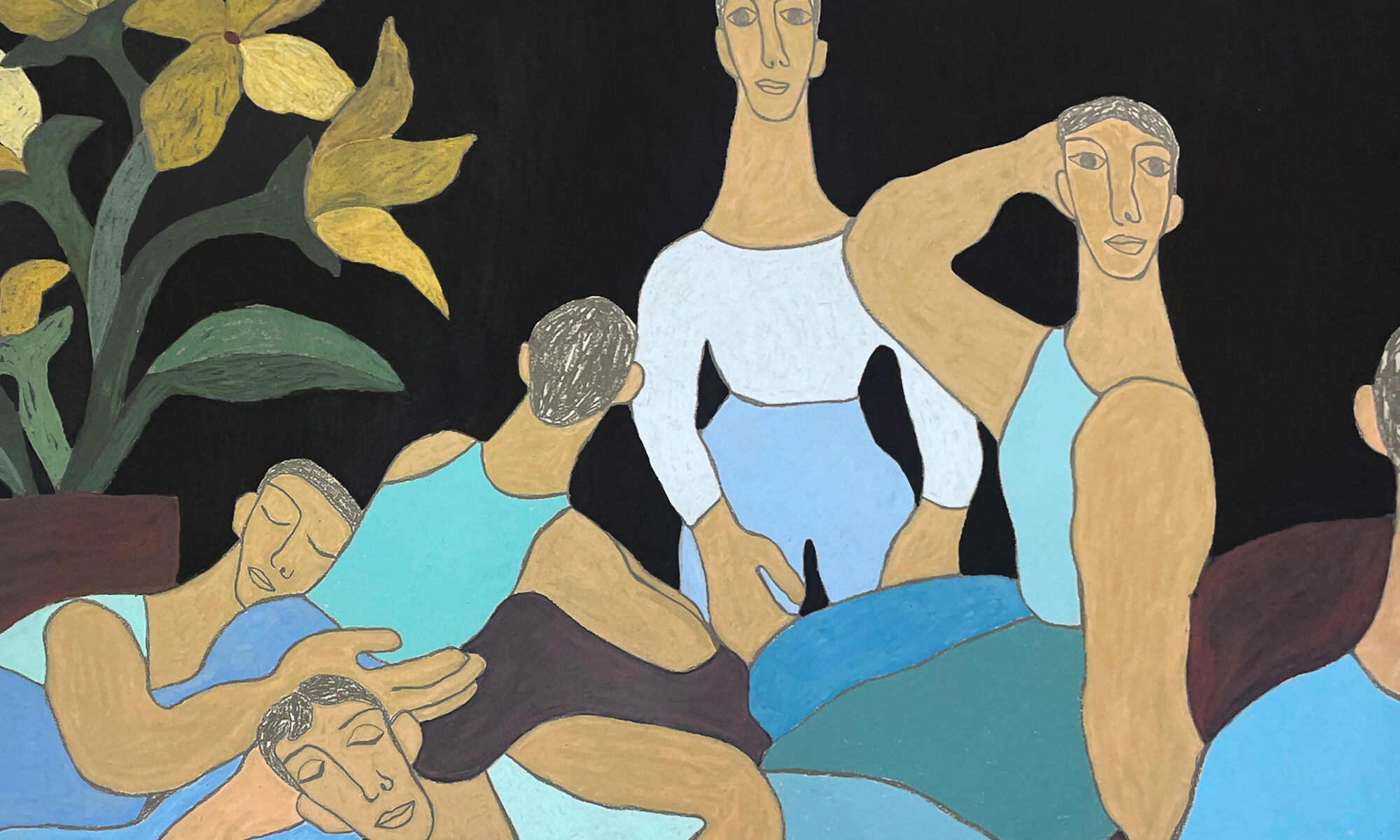
The most subtle acts are often the most cathartic. In times of relentless upheaval and injustice, simple moments can feel Herculean by measure. The current exhibition at Freight and Volume, It Takes A Village, focuses on daily ritual as a gate of entry. Artists Andrea Castillo, Nancy Elsamanoudi, and Baran Shafiey blend nuanced elements with doses of surreality, resulting in invitations into spaces that delightfully offer more questions than answers. Each work is a reckoning with the quietude of in-betweenness. Each artist is a painter working in figuration; yet the similarities end there, and the departures are as varied as one can imagine. 

Continue reading “It Takes a Village at Freight and Volume”

The Absence is in the Fingers 

There are exhibitions shaped less by what is installed than by what fails to arrive. I did not plan for this to be one of them. Where Form Remembers was conceived as a two-person presentation: Julie Gladstone’s mixed-media works traveling from Toronto, Avani Patel’s drawings from Brooklyn. The premise was a dialogue between two practices in proximity, each distinct enough that the distance between them would produce something worth engaging over time. What it became was different.

Continue reading “The Absence is in the Fingers “

Daniel Wiener at Satchel Projects: Out in front of the back of beyond

Out in Front of the Back of Beyond, the title of Daniel Wiener’s current solo exhibition at Satchel Projects, is a perfect pitch for the work on view. The notion of “front and back” strikes a strong chord throughout — explicit in the freestanding sculptures, hinted at in the wall pieces.

Continue reading “Daniel Wiener at Satchel Projects: Out in front of the back of beyond”

Still Abstract at 90: American Abstract Artists 

American Abstract Artists turns 90 this year, an unusual achievement for an artist-run group. Its anniversary show, Abstract by Definition: An Index, opened in April at Art Cake in Brooklyn, curated by Saul Ostrow, who brought 88 current members together under a single roof: a curatorial puzzle, an organizational feat, and a long-running argument about what abstraction can be. A companion exhibition at D. Wigmore Fine Art on West 57th Street focuses on the group’s founders and work made between 1936 and 1950 and runs through July. Here, painter Jacob Cartwright, who serves as AAA’s Secretary, reflects on the group’s nomination-only structure, how a show this size actually comes together, and where he wants AAA to go next.

Continue reading “Still Abstract at 90: American Abstract Artists “

Art Seen Philadelphia: Spring 2026

HIGHLIGHTS

During this season, art spaces across Philadelphia step up to demonstrate the voices of underrepresented communities as the city prepares to celebrate the semi-quincentennial of the signing of the Declaration of Independence. While institutions and sports fans are celebrating, artists take this moment to reflect on America’s 250 years, and how definitions of liberty, equality, and justice have evolved beyond what the Founding Fathers drafted.

Continue reading “Art Seen Philadelphia: Spring 2026”

Sound Art for the Ecological Turn by EndGrain at SMFA Boston

What can sound art contribute to the ecological turn? When the Taiwanese sound artist Huichun Yang described her process as getting to know the entire life of the tree that became her instrument, she had my attention. The entire creative arc of her process is rooted in reverence toward materials. Yang selects the wood, sculpts it into an arbrosan—an instrument first introduced to the world in 1996—and plays it by directly sensing its surface with her hands, using gestures that evoke repair and tending.

Continue reading “Sound Art for the Ecological Turn by EndGrain at SMFA Boston”

Karla Black civilizes the drives in her pastel-colored Gilded Age-style show at Rodder

Karla Black presents her first show in New York City since 2016, and inaugurates Rodder’s expanded Upper East Side gallery space.

Karla Black is a canonized Scottish artist known for working with basic art materials like plaster, paper, and chalk, alongside beauty products like bath bombs, rouge, Vaseline, and lipstick, all in shy pastel colors to create womb-like, abstracted dreamscapes. At Rodder, she creates a site-specific installation, painting Rococo silhouettes in light hues on mirrors as well as constructing monumentally delicate, scented sculptures that glide through the space, chiming in on somatic echoes of the building’s historical narrative, and celebrating feminine beautification rituals.

Continue reading “Karla Black civilizes the drives in her pastel-colored Gilded Age-style show at Rodder”