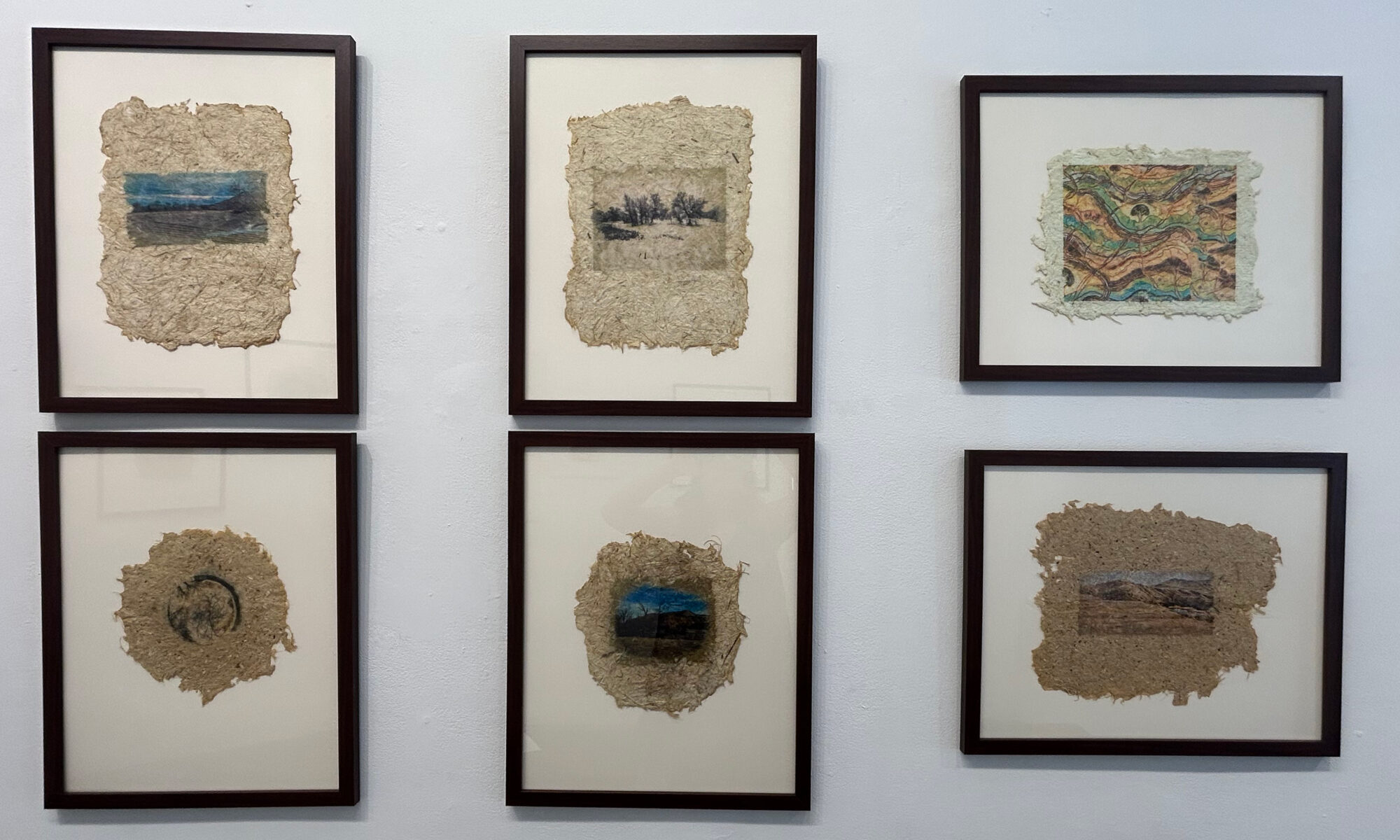
In What Remains, What Connects: Stories in Assembly, on view at Amos Eno Gallery, Tulu Bayar brings together two distinct yet deeply connected bodies of work that approach the question of “what is home?” from different perspectives. Together, they reveal home not as a fixed location but as something more amorphous, continually assembled through lived experience, collective memory, and our relationship to place.
The exhibition marks a thoughtful convergence in Bayar’s practice. While Mosaic: Immigrant Stories looks outward, gathering the voices and experiences of a diverse immigrant community, Cultivated turns inward, emerging from the artist’s own encounter with the landscape during a residency at Ucross in Wyoming. One project expands into a collective portrait of belonging; the other slows down to examine the intimate relationship between artist, land, and material.
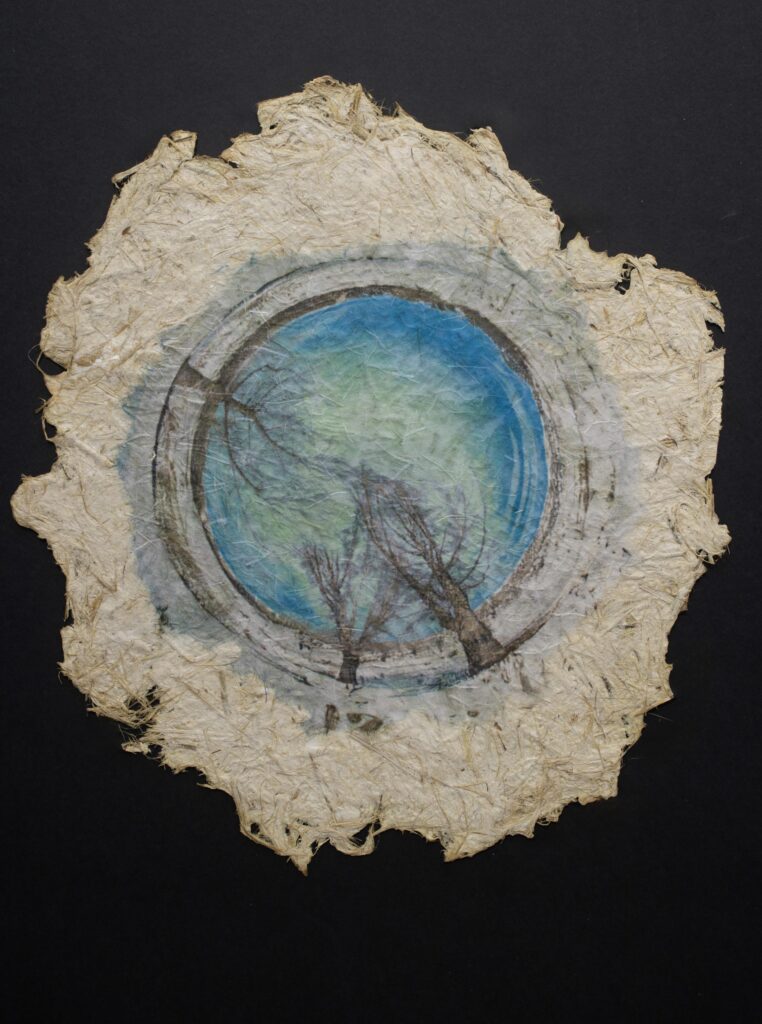
Throughout Bayar’s practice, material is never simply a vehicle for image—it is a bearer of memory. Working across photography, handmade paper, textiles, soil, and plant matter, she transforms ordinary materials into repositories of history and experience. Images are transferred, layered, fragmented, and softened, leaving behind traces of touch and process that mirror the ways memory itself is accumulated, altered, and carried forward.
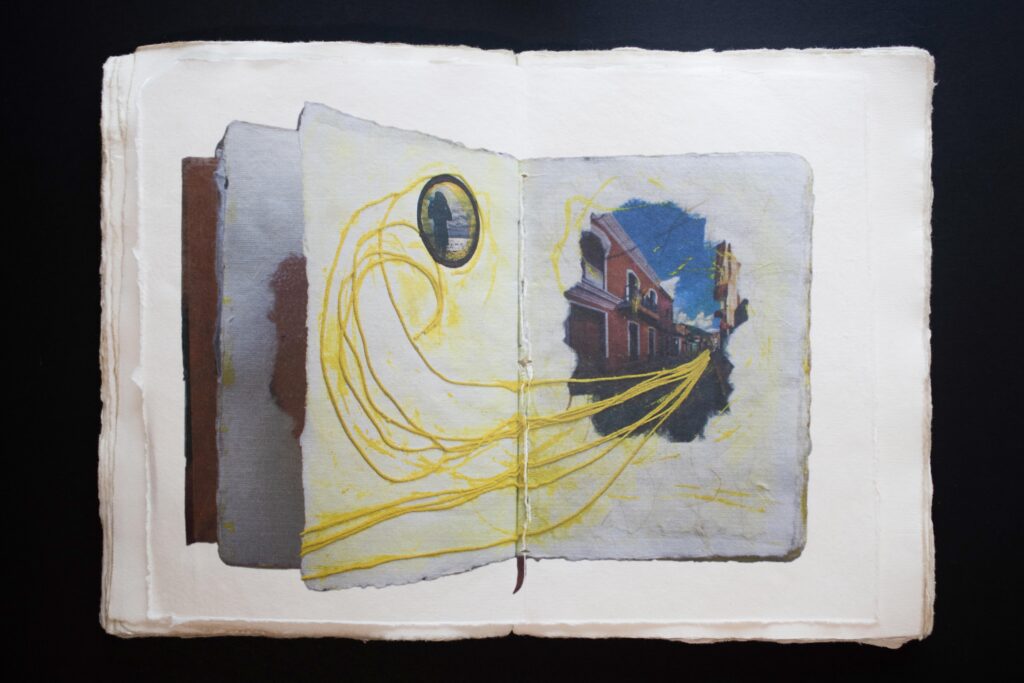
In Mosaic: Immigrant Stories, Bayar collaborated with immigrant participants through a series of workshops centered around the question: What does home mean? Participants contributed photographs and personal reflections, which Bayar translated through photographic transfer onto handmade paper. Rather than preserving these images intact, the transfer process allows them to shift and dissolve, emphasizing memory’s fluidity over photographic certainty.
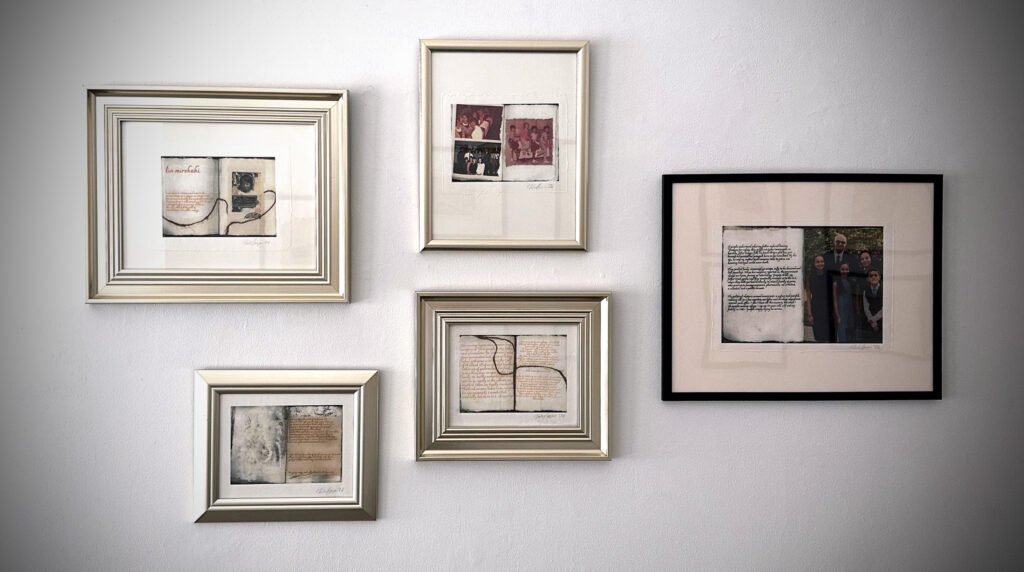
The resulting works resist singular authorship. Individual stories become part of a larger visual language that speaks to migration, adaptation, and belonging across cultures. The project ultimately expands into an artist book that gathers these many voices together, creating a collective archive that is both deeply personal and remarkably universal. By zooming out from individual narratives, Bayar reveals common threads that connect experiences often understood as separate, suggesting that home is constructed not only through place but through shared acts of remembering, storytelling, and care.
If Mosaic asks what home means through community, Cultivated asks the same question through direct engagement with the land itself. Developed during Bayar’s residency at Ucross in Wyoming, the series emerged from close observation of the surrounding landscape and a desire to work with its physical materials rather than simply represent them. Soil, native plants, and organic debris gathered on site were transformed into handmade paper, embedding the substance of the landscape into each work before photographic images were transferred onto their surfaces.
Here, photography becomes less about documenting a place than entering into a relationship with it. The expansive Wyoming landscape is translated through slow, tactile processes that invite viewers to consider how memory can be held not only in images but in the material itself. By incorporating the land into the paper, Bayar collapses the distance between subject and object, allowing place to become both image and medium.
Seen together, these two bodies of work reveal a significant evolution in Bayar’s practice. One is grounded in conversation, collaboration, and collective authorship; the other in solitude, observation, and personal reflection. Yet both are united by a belief that meaning is assembled rather than fixed. Whether working with community members or with the landscape itself, Bayar approaches making as an act of listening—collecting fragments that accumulate into larger stories.
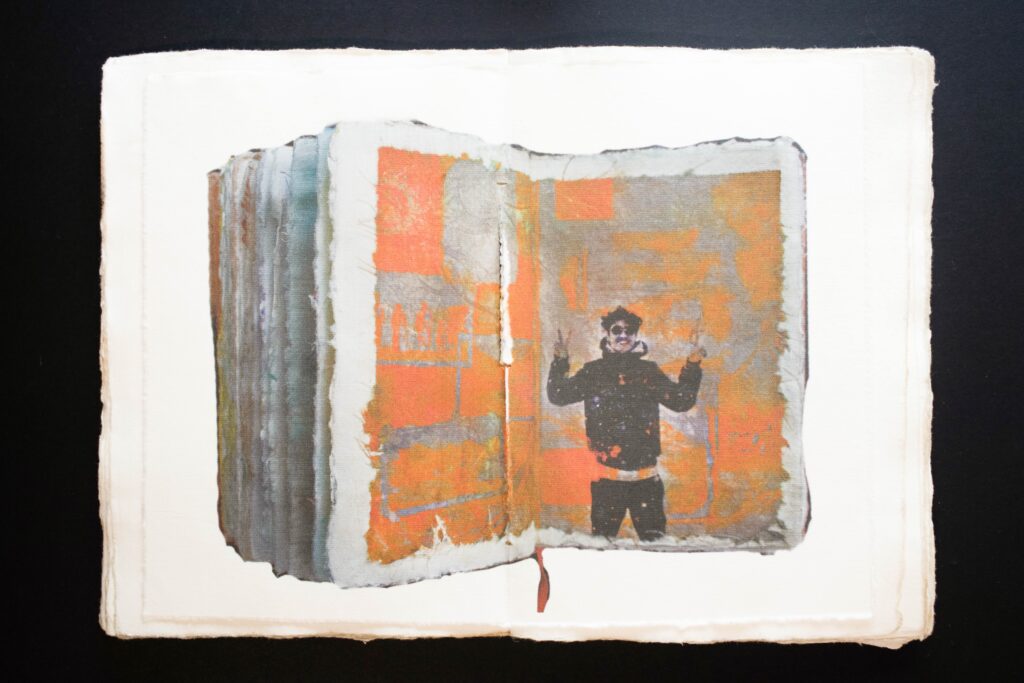
Edition 1 of 5
At a moment when migration, identity, and belonging are often framed through political boundaries and rigid definitions, What Remains, What Connects offers another perspective. Bayar suggests that home is neither singular nor static. Instead, it exists in relationships: between people, between materials, and between ourselves and the places we inhabit. Her work reminds us that stories are carried not only across borders but through paper, soil, photographs, gestures, and acts of exchange.
Ultimately, the exhibition proposes that the search for home is both deeply personal and profoundly collective. By placing these two projects in dialogue, Bayar reveals that our most individual experiences are often connected by shared patterns of memory, care, and belonging. It is through this movement— between the universal and the personal, between image and material—that What Remains, What Connects suggests that our understanding of home is shaped both by shared narratives and individual experience.
Photos courtesy of the artist and Amos Eno Gallery.
TULU BAYAR, What Remains, What Connects: Stories in Assembly, Amos Eno Gallery, 191 Henry St, New York, NY 10002. On view through July 19, 2026. Thurs–Sun, 12 pm–6 pm.
Make your tax-deductible donation today and help Art Spiel continue to thrive. DONATE
About the writer: Hayley Ferber is a Brooklyn-based independent curator, educator, and artist with a professional mission to support a creative community of multidisciplinary artists. She has curated more than 20 exhibitions for institutions including Westbeth Gallery, BronxArtSpace, Residency Unlimited, SVA Residencies, All Street Gallery, Art Gotham, Lichtundfire, Equity Gallery, and the Consulate General of Brazil in New York, among others. Hayley holds an MAT in Art & Design Education from RISD and a BS in Studio Art from NYU.