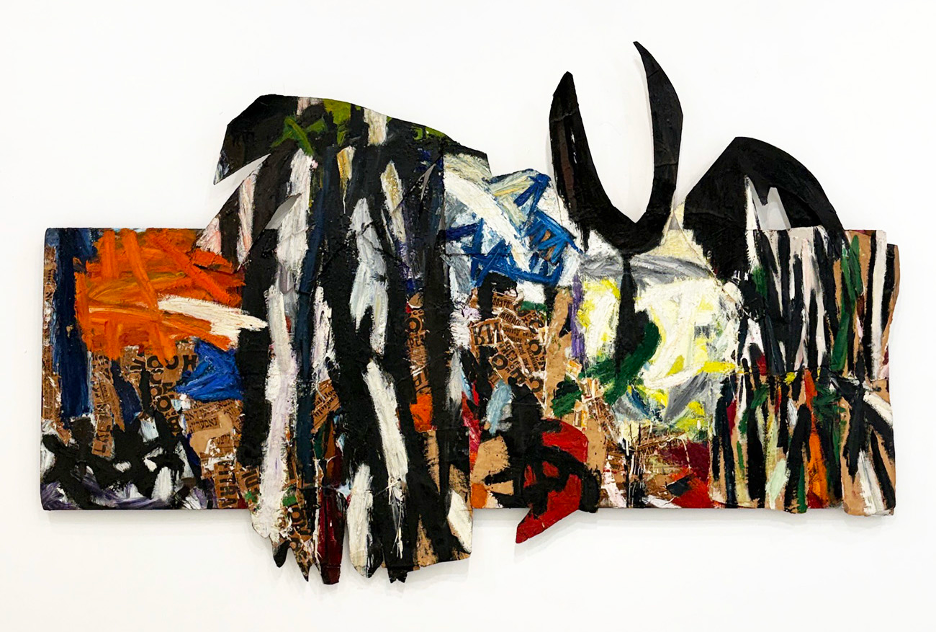
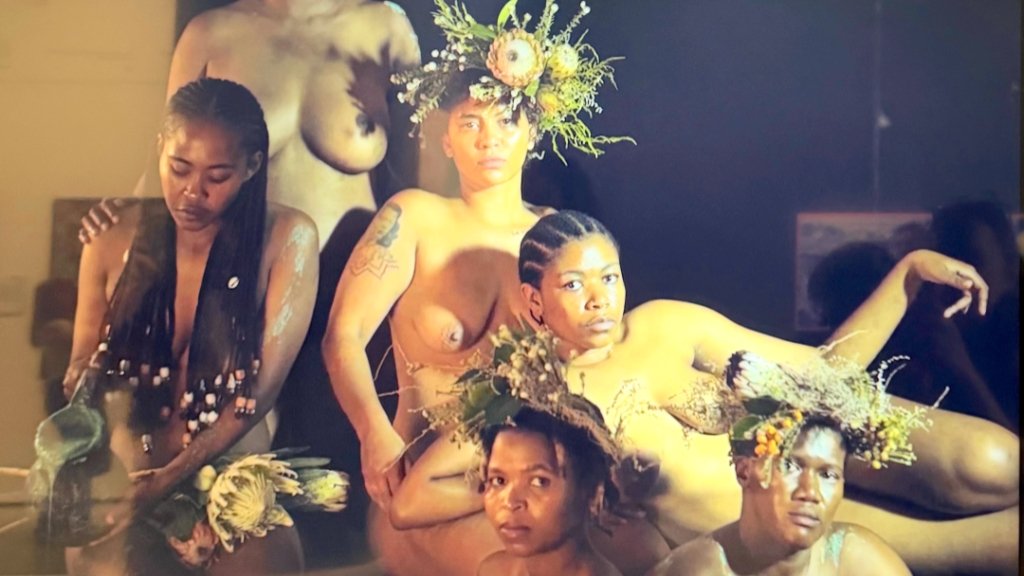
What would you do if you wanted to bring more luck into your life? Drawing from her observations of how people across cultures use rituals and superstitions to summon luck, Gail M Boykewich’s show Into the Wolf’s Mouth feels almost like a field guide to how we pray, wish for good fortune, and stay hopeful enough to keep moving forward. Rather than treating luck as simple optimism, Gail presents it as a language of survival — a way people negotiate uncertainty, longing, heartbreak, and the desire for a better future. The title is inspired by the Italian idiom “in bocca al lupo”, a phrase used to wish someone luck as they enter danger. It beautifully implies a universal experience: the desire for more, for solutions, for security, or simply for a way to feel better, especially within our current turbulent and unstable political status quo.
Continue reading “The Luckiest Show You Will See This Summer”The Biennale That Broke Itself
The 61st International Art Exhibition arrives in grief, political fury, and institutional crisis. It is one of the more galvanizing editions in recent memory.
The lagoon light still flatters everything it touches, but this year, Venice has the feel of a city that stayed up too late arguing. May 7, 2026 — the one morning of the press preview period spared by both rain and protest — was the kind of day Venice is famous for: blue sky and large cinematic cumuli drifting above the Queen of the Adriatic. Police stood watch outside the Israeli and Russian pavilions. The queues at the Giardini were long; those at the Arsenale were longer. In years of attending press previews, I have rarely encountered such a congested or physically demanding environment — the crowd, indistinguishable from a general-public opening, consumed by the compulsive and indiscriminate act of photographing everything in sight.
Continue reading “The Biennale That Broke Itself”From A to Z and the Bodies In Between at Nunu
Borges once described a fictional Chinese encyclopedia that classified animals into categories so incompatible — beings that belong to the Emperor, embalmed ones, those that look like flies from a distance — that the whole idea of classification begins to feel like a kind of absurd fiction. Nancy Bowen’s first solo exhibition at Nunu Fine Art invokes exactly that suspicion: that the dictionary, the archive, the great pre-internet repositories of everything, are not neutral records but constructions, and that constructions can be dismantled, embellished, and made to mean something new.
Continue reading “From A to Z and the Bodies In Between at Nunu”Women Across America 1945-1979 at Eric Firestone
Eric Firestone Gallery, in its continuing support of underrepresented and female artists in the 20th and 21st centuries, has mounted an ambitious and interesting exhibition on now through July 11 at the gallery’s location on Great Jones Street in NYC. The exhibition is devoted to women who worked in abstraction from 1945 to 1979, thus giving the curators a very specific window within which to work.
Continue reading “Women Across America 1945-1979 at Eric Firestone”Dynamic and tender moments in Angelo Vasta’s Luci Spente Exhibition at Tappeto Volante’s new gallery location
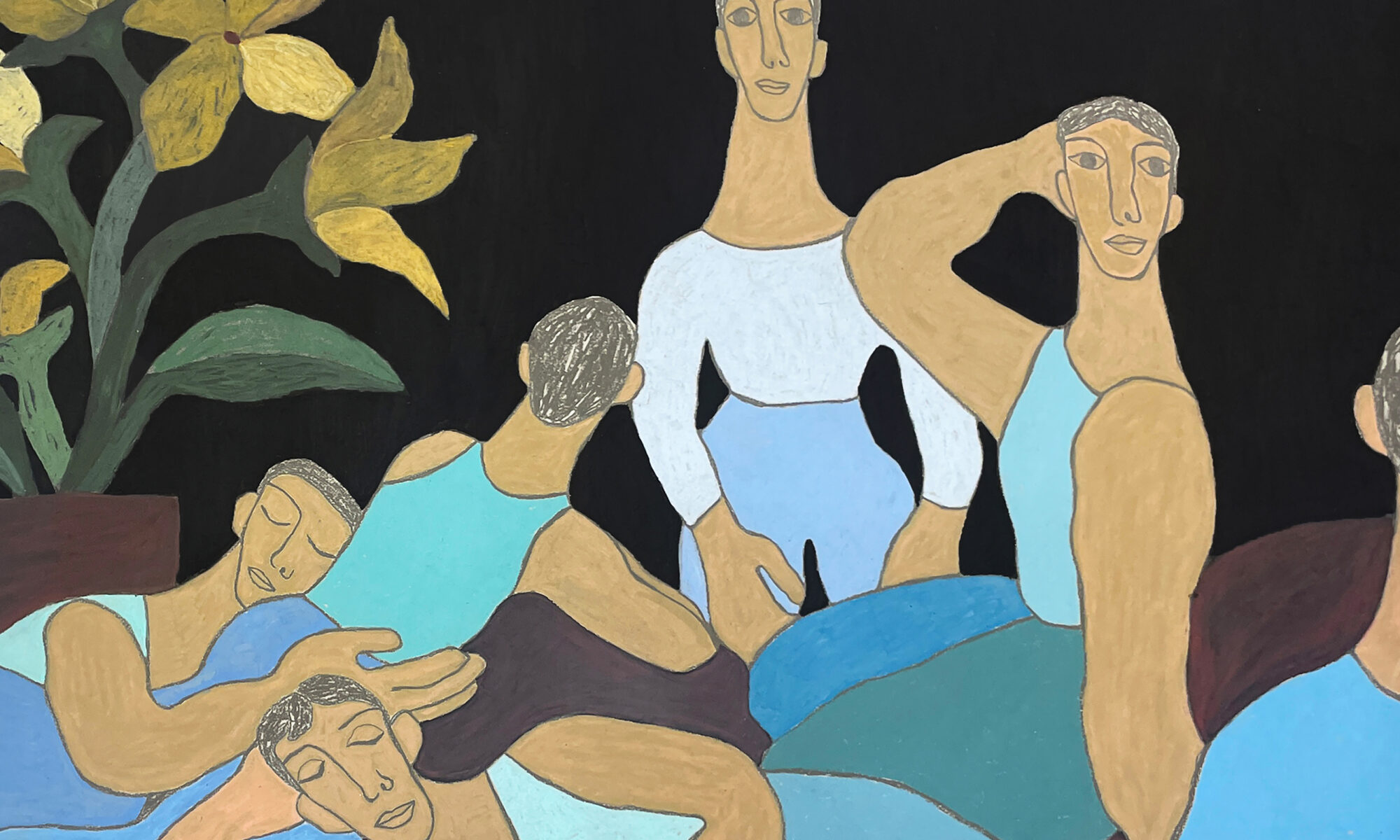
Angelo Vasta’s exhibition, Luci Spente, meaning Lights Off, at Tappeto Volante’s newest gallery in Tribeca, greets you with energetic works on paper in which bodies overlap, lean into one another, and drift across the surface. The figures carry a deeply personal connection as Vasta stresses the importance of closeness, exchange, and intimacy within domestic spaces. While not as brightly colored as his previous works, the colors here are deeper and softer, carrying a more somber tone. Vasta welcomes us into the spaces. He welcomes us as if we are a part of the group.
Continue reading “Dynamic and tender moments in Angelo Vasta’s Luci Spente Exhibition at Tappeto Volante’s new gallery location”Basis: Gabriela Vainsencher at Asya Geisberg
At Basis, Gabriela Vainsencher’s second solo exhibition at Asya Geisberg Gallery, the artist continues to explore themes of motherhood, domestic life, the female body, and her relationship with art history as an artist-mother, a figure traditionally marginalized. Vainsencher’s work resonates within a broader context of artists who have embraced domesticity and motherhood as central creative subjects, such as Louise Bourgeois, who explored maternal forms and the body. Vainsencher explains that she chose the title thinking about how early childhood forms the foundation for all experiences going forward, as having children does to the parent, and also since she finds herself physically becoming a basis or pedestal when her kids climb on her, a familiar experience to all parents of small children.
Continue reading “Basis: Gabriela Vainsencher at Asya Geisberg”Hum and Song: Helen Frankenthaler’s The Moment and the Distance at Gagosian examined alongside Babara Guest’s writings
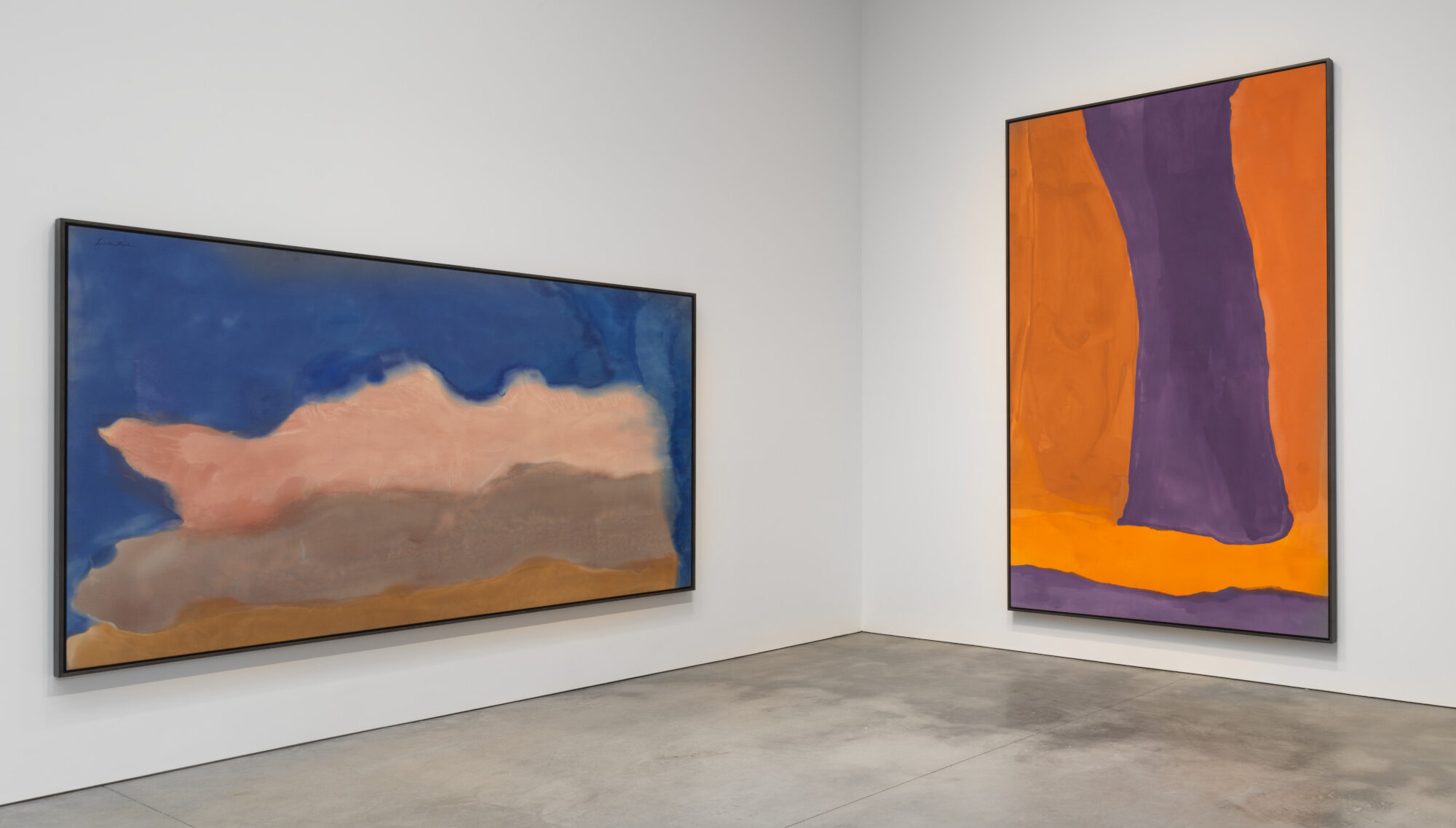
Helen Frankenthaler’s show at Gagosian New York, The Moment & The Distance is a beautiful retrospective survey of her work. The title is inspired by a mid-career essay by Barbara Guest that encapsulates the essence of Frankenthaler’s work. In the 1975 essay Guest defines Frankenthaler’s oeuvre in terms of music. She reflects that while there is beautiful “humming” in Frankenthaler’s early work, over her career it becomes “song”. As her work matures, Guest argues, Frankenthaler becomes more decisive, methodical and assured in her practice, less spontaneous or reliant on happy accidents. Beyond demonstrating the present moment in the paintings, she walks the effortful distance to “consolidate her terms”.
Continue reading “Hum and Song: Helen Frankenthaler’s The Moment and the Distance at Gagosian examined alongside Babara Guest’s writings”Strata of Time: a burying and unearthing of new discoveries at Elorea
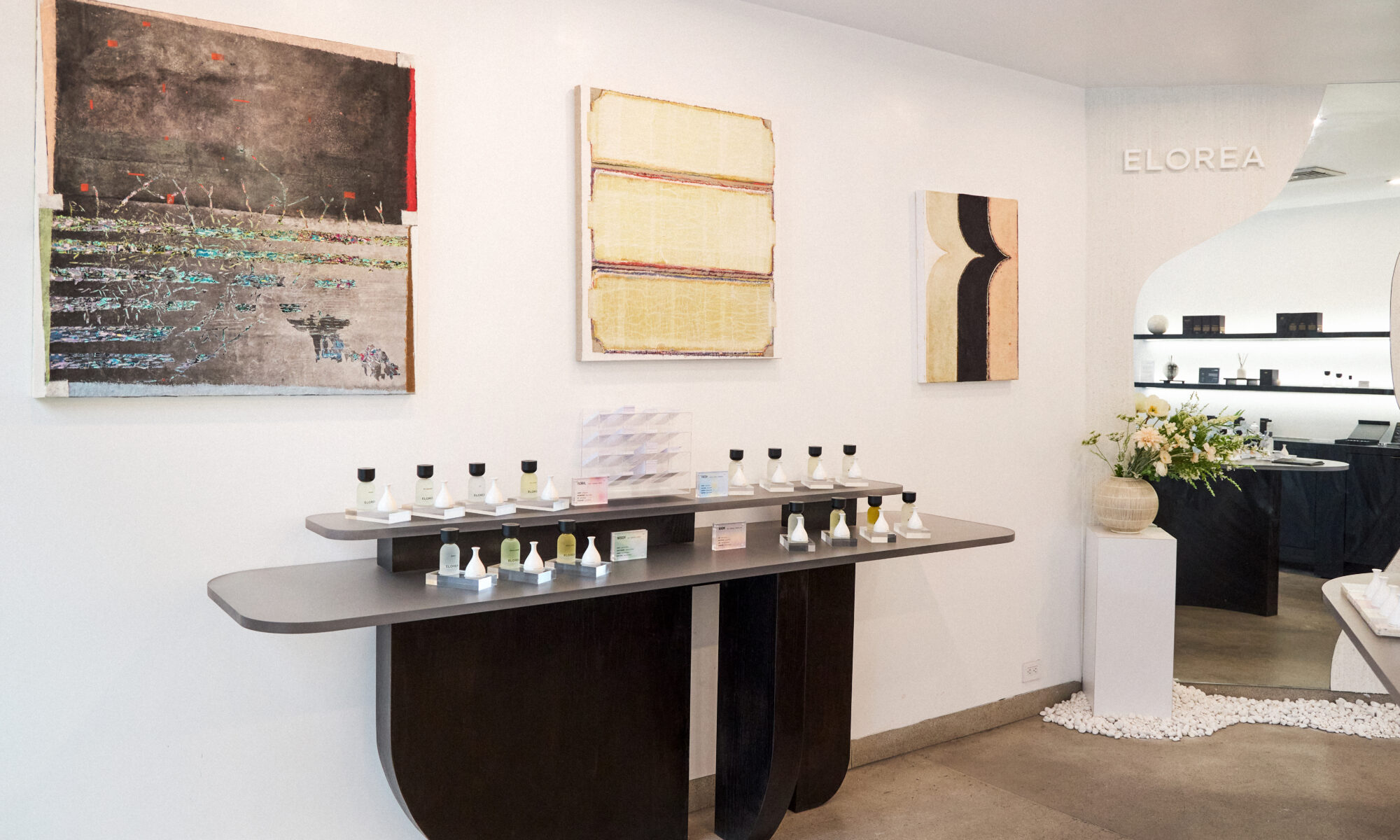
Stepping into the exhibition Strata of Time at Elorea, the focus is not only on the works hanging on the walls but also the fragrances around them as well. With works placed throughout a perfume shop, Herok was given the opportunity to respond to the fragrances surrounding his works. He uses his process of layering to overlay different colors, materials, and experiences of both to mimic the processes the perfume makers used to create their products, as they mix and meld various scents. The works are nicely displayed throughout the space; some works, like Out of Field 5, Out of Field 4, and See You Again, are displayed alongside products, while other walls allow works to stand on their own. This is an interesting exhibition collaboration that grew from studying the products and interviewing store personnel, a process that generated a new body of work carrying as many small details within the surfaces as the fragrances carry within the perfumes.
Continue reading “Strata of Time: a burying and unearthing of new discoveries at Elorea “Well, Hell. Beautiful. Mary Shah and Rachael Wren at Rick Wester Fine Art
No one was supposed to say “beautiful.” Oh God, no. Not in the mid-1990s art scene I knew, when I worked at a then-trendy, high-gloss art magazine and beauty had all the social standing of a shrimp cocktail at a theory seminar. Beauty was too easy and too ready to come in smiling and ruin everyone’s severe little mood. A serious work could resist you from across the room. But beautiful? Beautiful was what your aunt said when she had run out of things to say.
Then I walked into Mary Shah and Rachael Wren’s In the Ecstasy of the Sun at Rick Wester Fine Art and thought: well, hell. Beautiful.
Continue reading “Well, Hell. Beautiful. Mary Shah and Rachael Wren at Rick Wester Fine Art”Voices In Minor Keys: 2026 Venice Biennale
In Minor Keys, the central exhibition of the 61st Venice Biennale, arrived with a quiet proposition. The late curator Koyo Kouho envisioned a show that reflects practices requiring time and sustained commitment — some of them lifetime, even generational — and in doing so created a deliberate antithesis to the Biennale spectacle. Drawing almost exclusively on artists from Africa, the Middle East, and the Caribbean, the exhibition is anchored in political concerns — identity, immigration, the environment — yet so many of the works felt personal, while reaching toward art history and even toward Venice itself. What follows is an account of its visual depth and strength.
Continue reading “Voices In Minor Keys: 2026 Venice Biennale”