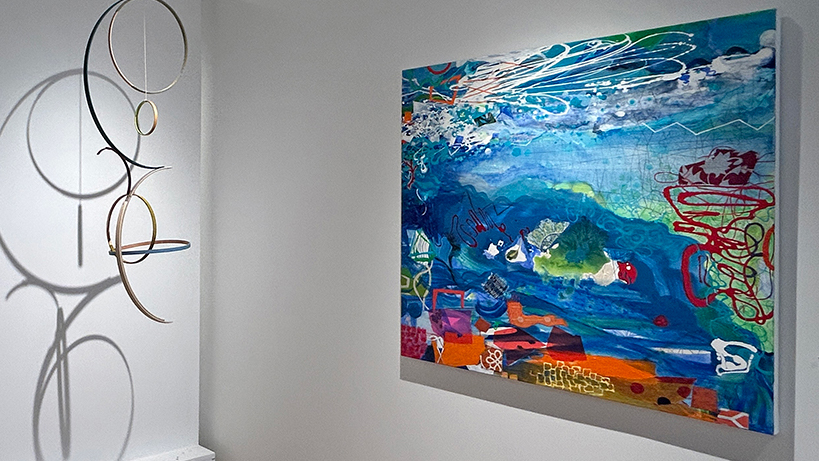
Few New York galleries build their programs around the kind of organizing principle that anchors Carter Burden Gallery. Since 2008, the Chelsea space has focused on artists with long careers that haven’t followed conventional commercial arcs. Here, Associate Executive Director Marlena Vaccaro and Assistant Director Sarah Leon discuss the gallery’s mission, the values guiding their curatorial choices, the thinking behind the current exhibition, Material Matters, and what that focus has opened up.
Carter Burden Gallery occupies a distinctive position in the New York art world. Could you start by telling us about the gallery’s origins and the values that shape your programming?
Carter Burden Gallery was founded as part of the Carter Burden Network’s broader mission to support older adults and foster creative community in New York City. From the beginning, the gallery has focused on providing exhibition opportunities to re-emerging and underrecognized professional artists over the age of 60. These are artists who have sustained serious creative practices over decades. That mission shapes every aspect of our programming.
We are interested in presenting work that reflects a lifetime of observation, experimentation, and commitment to process. Many of our artists continue to evolve in exciting ways later in life, and the gallery creates space for those voices to be seen within the broader conversation of contemporary art. Our exhibitions often emphasize dialogue across mediums, generations, and approaches to making, while also fostering a sense of accessibility and community. We see the gallery not only as an exhibition space, but as a place where artistic practice, lived experience, and public engagement intersect.
What draws you to a particular artist or practice? Are there qualities or sensibilities that you find yourself returning to in the work you choose to exhibit?
What consistently draws me to an artist’s work is a sense of authenticity, both in their relationship to their medium and in the clarity of their artistic voice. I am interested in work that feels deeply personal rather than derivative, where you can sense a sustained engagement with process, craft, and material. Often, we are looking for artists who approach familiar mediums in ways we have not encountered before, or whose techniques and sensibilities create compelling dialogues with other artists in our program. Craftsmanship is also incredibly important to me; even when work is highly conceptual or abstract, there should be a rigor and intentionality behind it.
While much of the work we exhibit leans toward abstraction (which is also my personal preference), I deeply value strong representational work as well. For me, representational work has to move beyond technical skill alone; it needs to offer a distinct point of view or emotional resonance that feels necessary and innovative.
At the same time, building exhibitions is also about building community. Beyond the work itself, we look for artists who are collaborative, thoughtful, and professional, artists who can meet deadlines, communicate clearly, and contribute positively to the supportive and inclusive environment we have cultivated at the gallery. Because our mission is rooted so strongly in community, the relationships between artists matter just as much as the relationships between the artworks themselves.
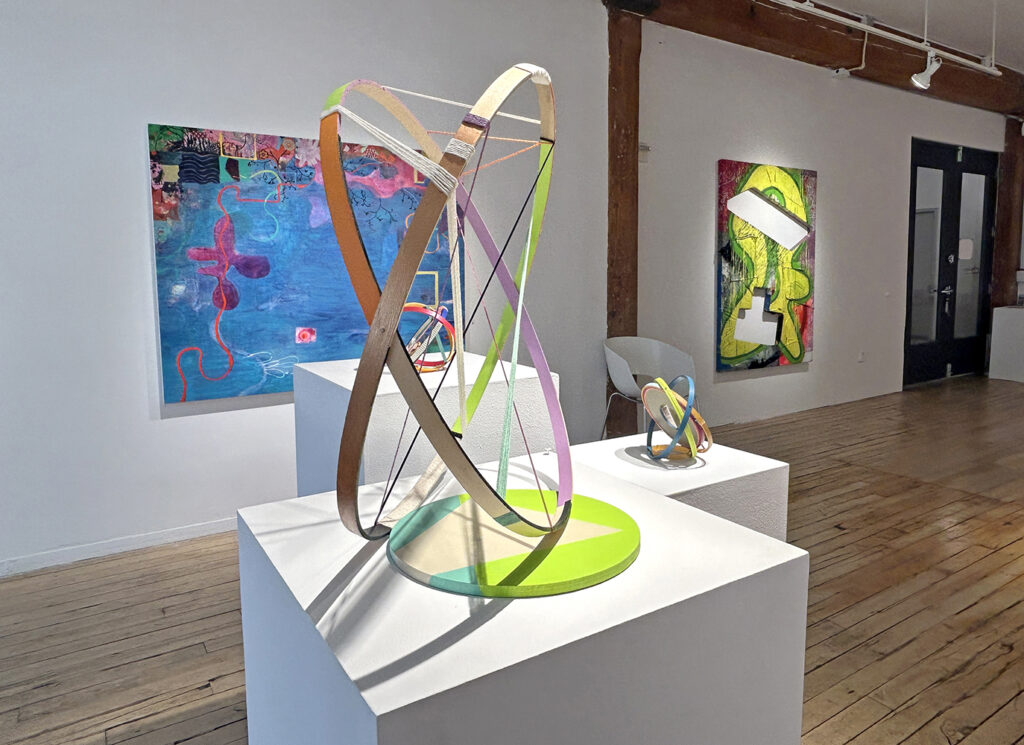
Material Matters is a title that works two ways — material as the substance an artist works with, and material matters as a claim about what’s at stake. What was the curatorial thinking behind this framing, and how did you arrive at putting Alyce Gottesman, Gail Meyers, and Alan Neider together?
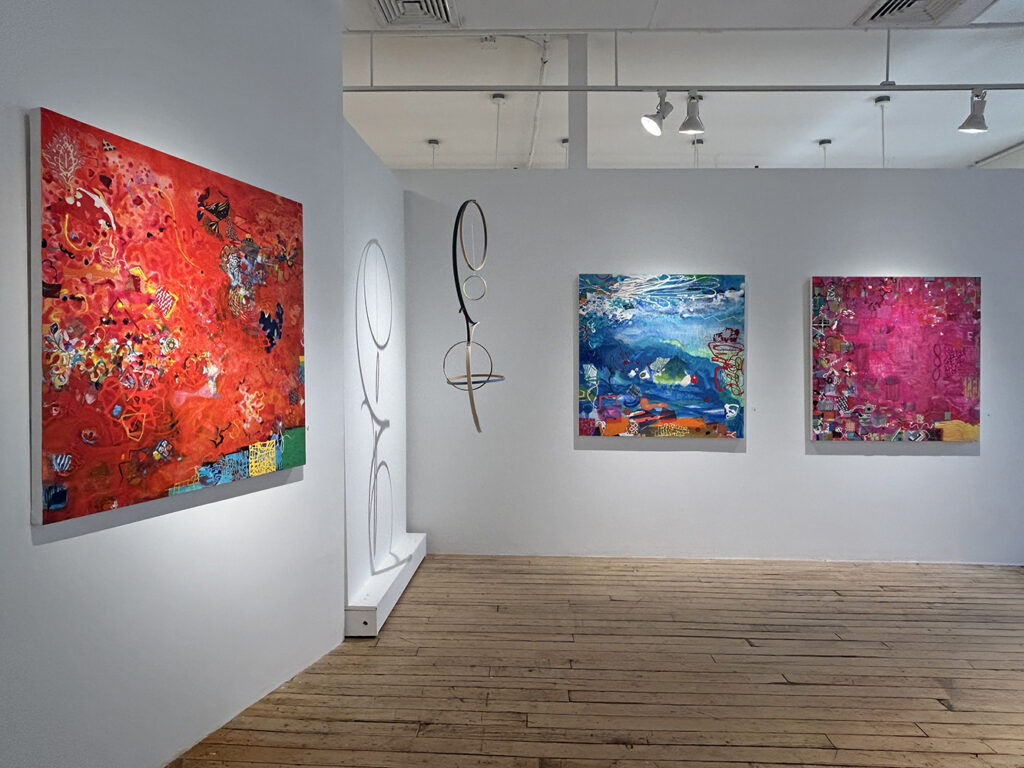
The title emerged from thinking about material not simply as a vehicle for image-making, but as an active force within each artist’s practice. In different ways, Alyce Gottesman, Gail Meyers, and Alan Neider all allow their chosen materials to shape meaning, process, and perception. The exhibition considers how texture, structure, accumulation, and transformation can carry emotional and conceptual weight.
What made these three artists compelling together was the way their practices diverge while still sharing a deep sensitivity to process and form. Gottesman’s layered surfaces emphasize tactility and physical presence, Meyers’s woven constructions explore rhythm and structure through repetition and handwork, and Neider’s sculptural approach engages ideas of balance, spatial tension, and material transformation. Though they work in distinct mediums and visual languages, each artist reveals an attentiveness to how materials behave and evolve.
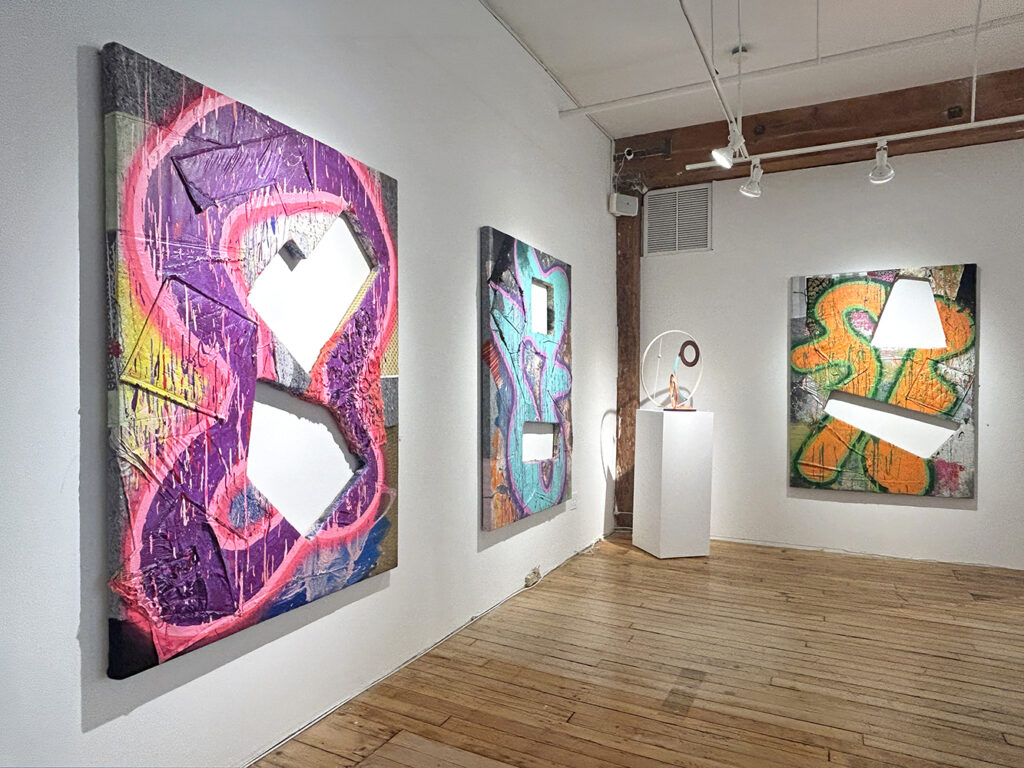
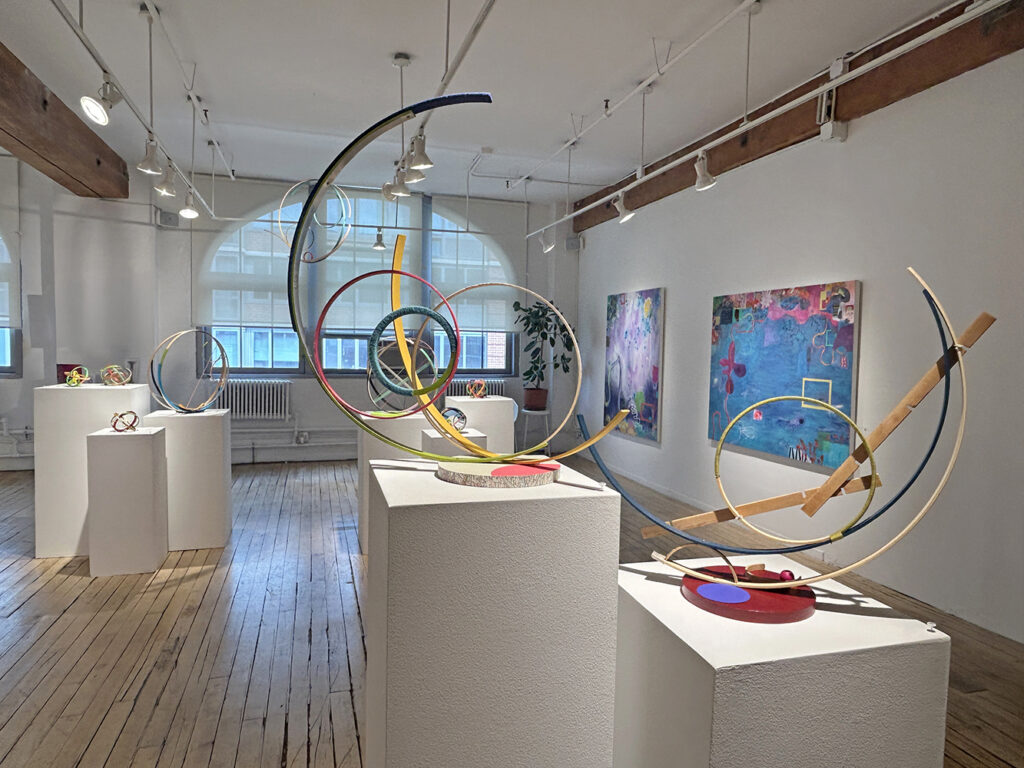
Each of the three artists in the show approaches material from a different vantage point. Could you walk us through what each practice brings to the conversation — and where you see the most generative tensions or kinships between them?
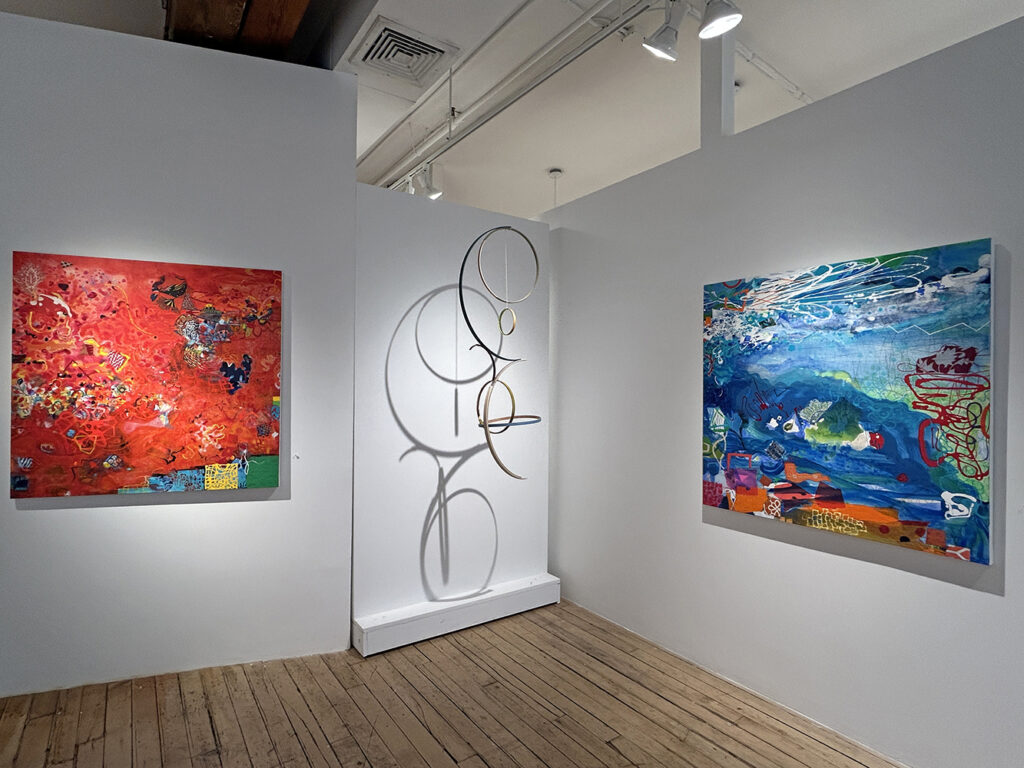
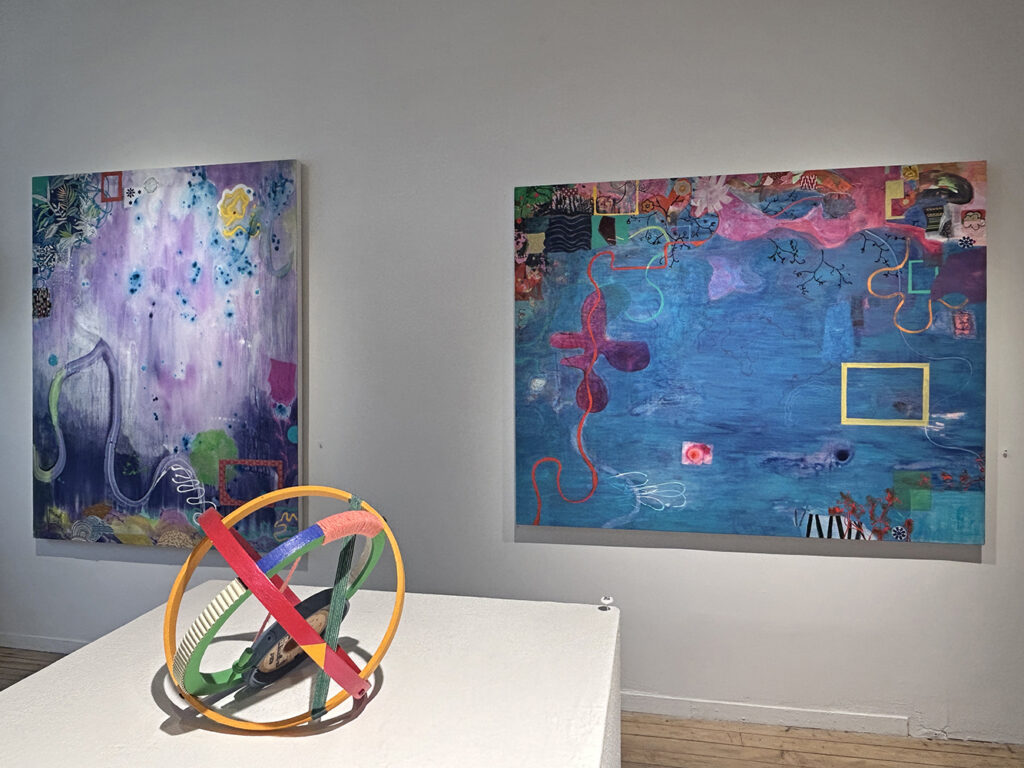
Each artist approaches material through a distinct process, but all three share an interest in construction, layering, and the expressive potential of unconventional materials. Alan Neider’s paintings emphasize tension and physicality, combining sewn fabrics, cut geometric voids, and graffiti-inspired forms to create surfaces that feel raw and improvisational. Alyce Gottesman’s work is more atmospheric and intuitive, integrating fabric, decorative paper, and drawn elements into luminous abstract compositions rooted in memory and landscape. Gail Meyers extends these material concerns into sculpture, transforming embroidery hoops, string, and found objects into intricate works that explore balance, movement, and negative space. The strongest kinships emerge through their shared use of textile-based materials and vivid color, while the most generative tensions come from the contrast between density and openness, gesture and structure, and two-dimensional versus three-dimensional space.
Is there a particular work or pairing in the exhibition that you find yourself returning to, or that has prompted unexpected conversations with visitors?
What continues to stand out throughout the exhibition is the overall energy created by the works together. The exhibition is visually bright, layered, and active, with each artist maintaining a highly distinctive voice while still complementing one another through color, geometry, and material. There is a compelling dialogue between the tactile surfaces of the paintings and the spatial quality of Meyers’s sculptures, particularly the suspended works, which seem to activate the surrounding space in conversation with the paintings nearby. Visitors often move through the exhibition noticing how the works echo one another formally, even while their processes and compositions remain very different.
There’s a long lineage of artists arguing that material isn’t a neutral vehicle for meaning but carries meaning of its own. How does Material Matters sit within that lineage, and what does this particular grouping add to it?
Across the exhibition, fabric, found objects, stitched elements, and layered surfaces retain a sense of their physical origins, bringing associations of labor, domesticity, construction, and reuse into the work. What this grouping adds is a conversation between materiality and abstraction: rather than using these materials descriptively, the artists transform them into an energetic. The exhibition highlights how materials can simultaneously ground a work in the physical world while also creating something atmospheric.
Carter Burden Gallery foregrounds artists in the later stages of their careers — a focus relatively rare in the New York gallery system. How does that shape your work as a director, and what do you think it offers audiences that they might not encounter elsewhere?
Almost all of the artists we work with have been developing their practices for decades, often through major shifts in the art world and in their own lives. That depth of experience brings a remarkable level of clarity, experimentation, and resilience to the work, but when someone walks into the gallery for the first time, ignorant of our mission, they would not assume these works were created by someone older. That is part of it too, to show that older artists are just as relevant, just as much a part of the current zeitgeist.
As a director, part of the role is creating meaningful visibility for artists whose contributions may have been overlooked or insufficiently recognized within traditional commercial systems. That often means thinking carefully about context, how to present the work in a way that highlights both its relevance and the broader arc of an artist’s practice.
For audiences, I think the gallery offers an opportunity to encounter work that imbues those decades of practice and reflects long-term engagement with materials, ideas, and process. There is often a sense of freedom in the work because these artists are continuing to evolve rather than working toward market expectations. Visitors regularly respond to the authenticity they encounter here.
In many ways, the gallery challenges assumptions about aging and creativity by demonstrating that artistic innovation and experimentation do not diminish over time, but expand. At the same time, we also challenge some of the conventions of the commercial gallery system around accessibility and exclusivity.
We are deeply committed to creating an environment where people feel genuinely welcome, whether they are seasoned collectors, practicing artists, or first-time visitors who may never have stepped into a gallery before. That sense of openness extends not only to the space’s atmosphere but also to how we think about collecting and living with art. We intentionally present works across a range of scales and price points, including smaller works that make collecting accessible to a broader audience.
In that sense, the gallery is not only pushing back against ageism within the art world but also against the idea that viewing and collecting art must feel exclusive or inaccessible. We believe that meaningful engagement with art should be available to everyone, and that galleries can function as spaces of conversation, discovery, and community.
What’s next for the gallery, and are there projects or directions you’re particularly excited to explore in the coming year?
We are currently in the midst of several exciting projects that expand both the gallery’s visibility and the ways we engage with our community. One major initiative is a documentary film about the gallery, which is currently being produced with filmmaker Eli Eshaghpour. The film will highlight the gallery’s mission, our artists, and the unique role the space plays within New York’s cultural landscape.
Alongside that project, we are also working to expand our digital presence. This year, we have an intern focused on developing more artist-centered social media content, including short interviews and studio-focused features that allow audiences to engage more directly with the artists and their processes. Because so much of our mission focuses on conversation and accessibility, these digital projects feel like a natural extension of the gallery itself.
We are also very proud of our ongoing partnership with EmmEmm Publishing through Art Explorers Workshops, an intergenerational arts program designed to inspire young artists and foster creative exchange across generations. The workshops, generously sponsored by NewYork-Presbyterian, take place monthly and are led by artists from Carter Burden Gallery. Participants ranging in age from four to twelve engage directly with practicing artists through hands-on creative activities. The program has become an especially meaningful extension of our mission because it creates opportunities for connection, mentorship, and artistic exploration outside of the traditional gallery setting.
At the same time, we are beginning to think ahead to our 2027 exhibition calendar, which is always an exciting process. Much of our programming emerges through ongoing conversations with artists and unexpected connections, so we are looking forward to seeing what new exhibitions and programming take shape in the coming year.
Material Matters: Alyce Gottesman, Gail Meyers, and Alan Neider
April 23 – May 19, 2026. Curated by Marlena Vaccaro
www.carterburdengallery.org
548 West 28th Street, #534, New York, NY 10001
@carter_burden_gallery
About the writer: Etty Yaniv is a Brooklyn-based artist, writer, curator, and founder of Art Spiel. She works in installation, painting, and mixed media, and has shown her art in exhibitions across the United States and abroad. Since 2018 she has published interviews and reviews through Art Spiel, often focusing on underrecognized voices and smaller venues. More about her art can be found at ettyyanivstudio.com and on Instagram @etty.yaniv