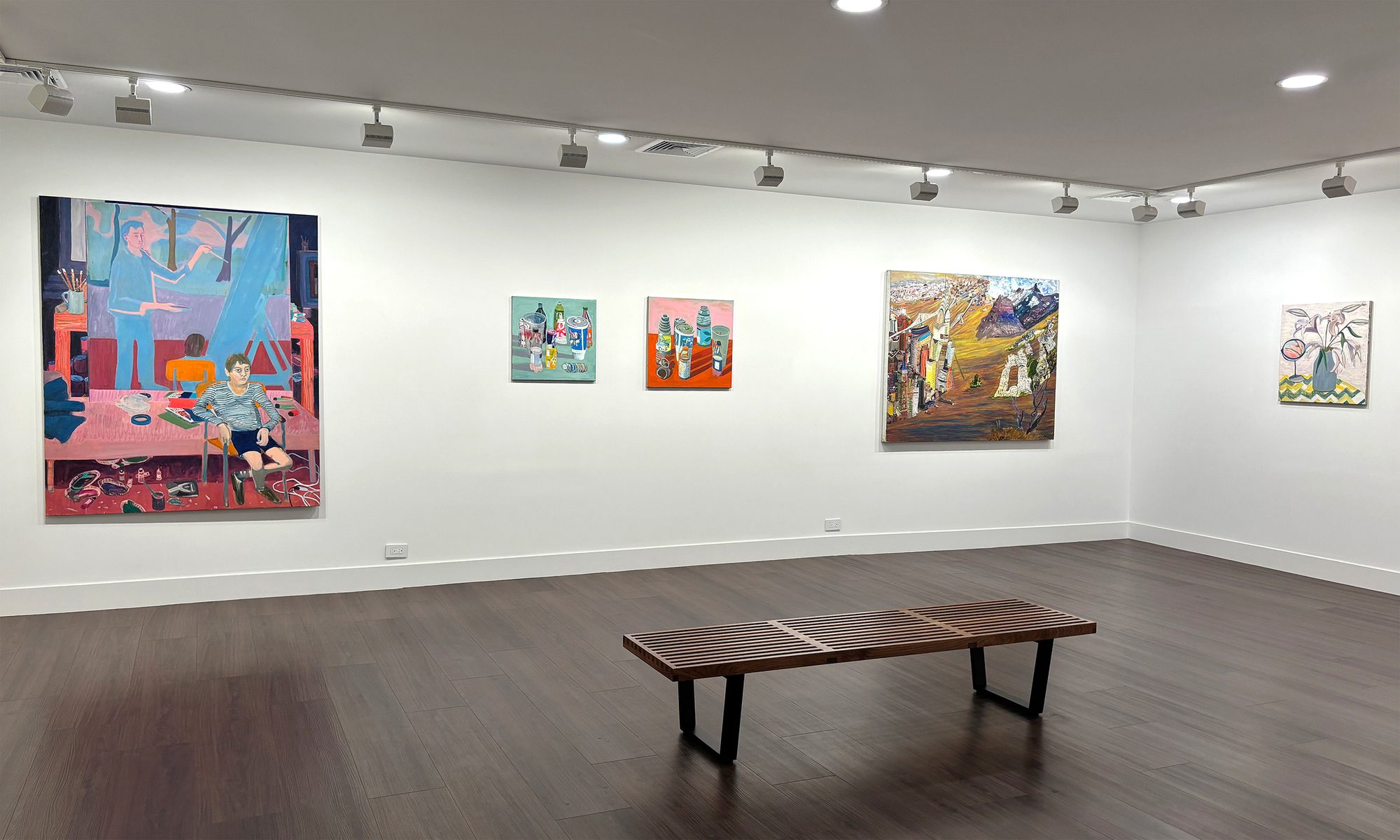
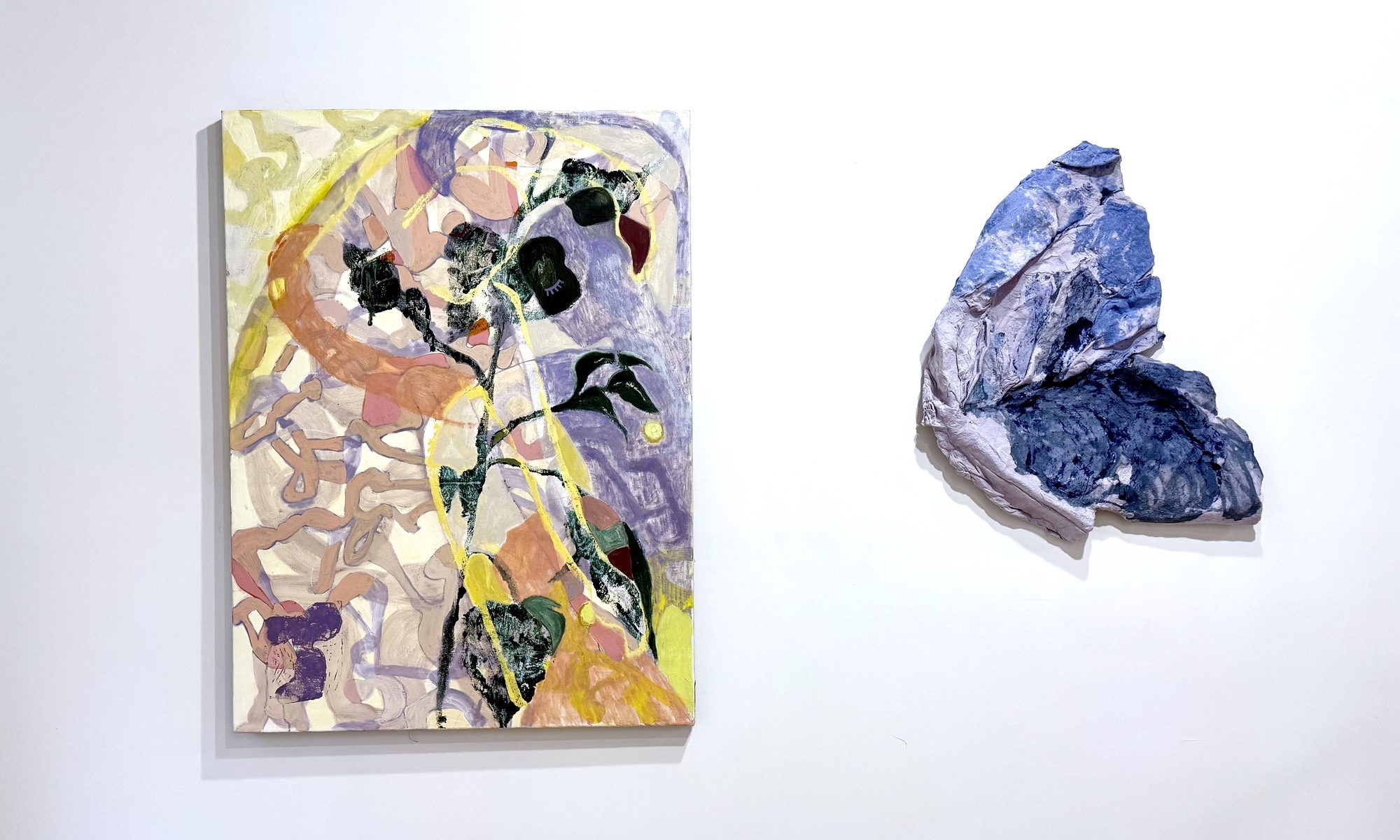
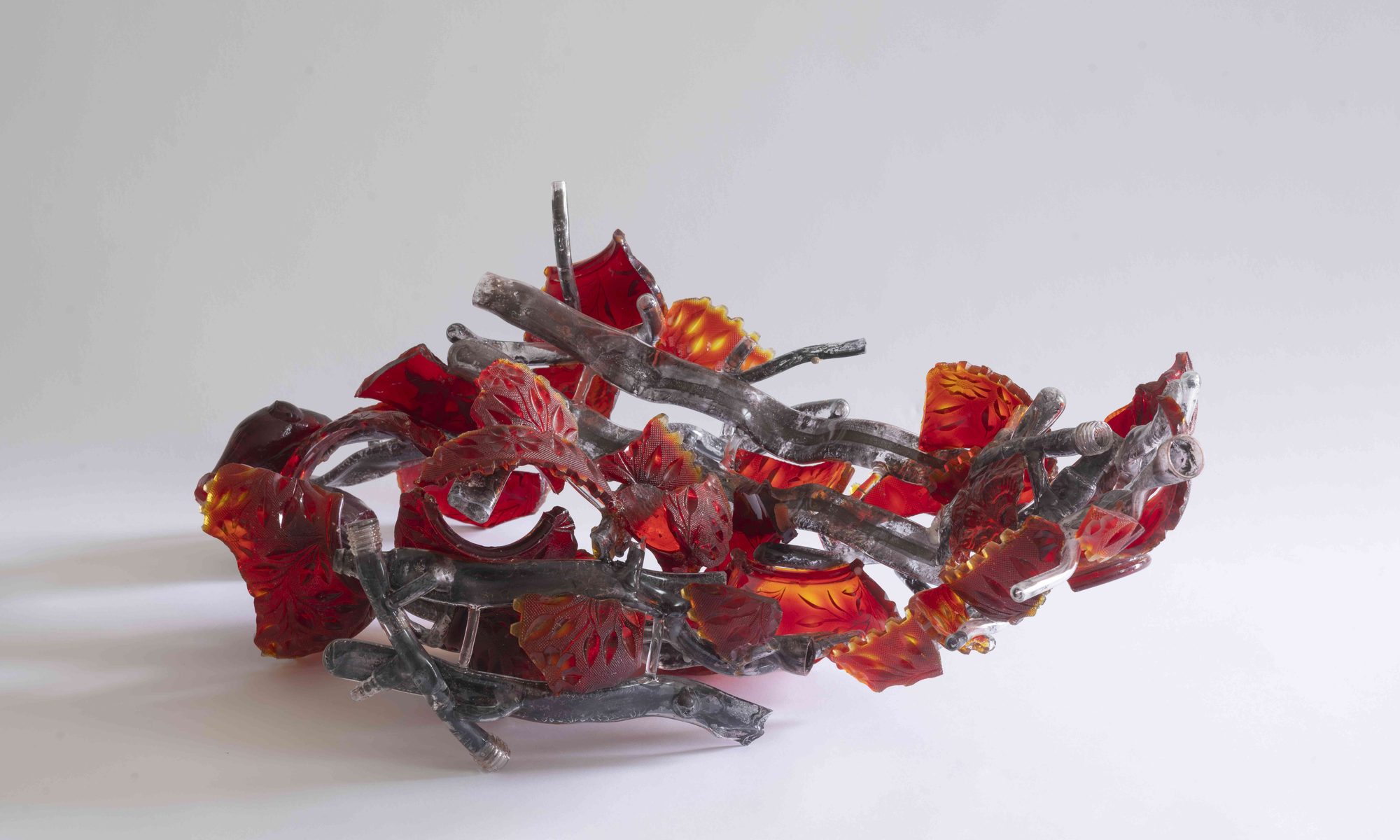
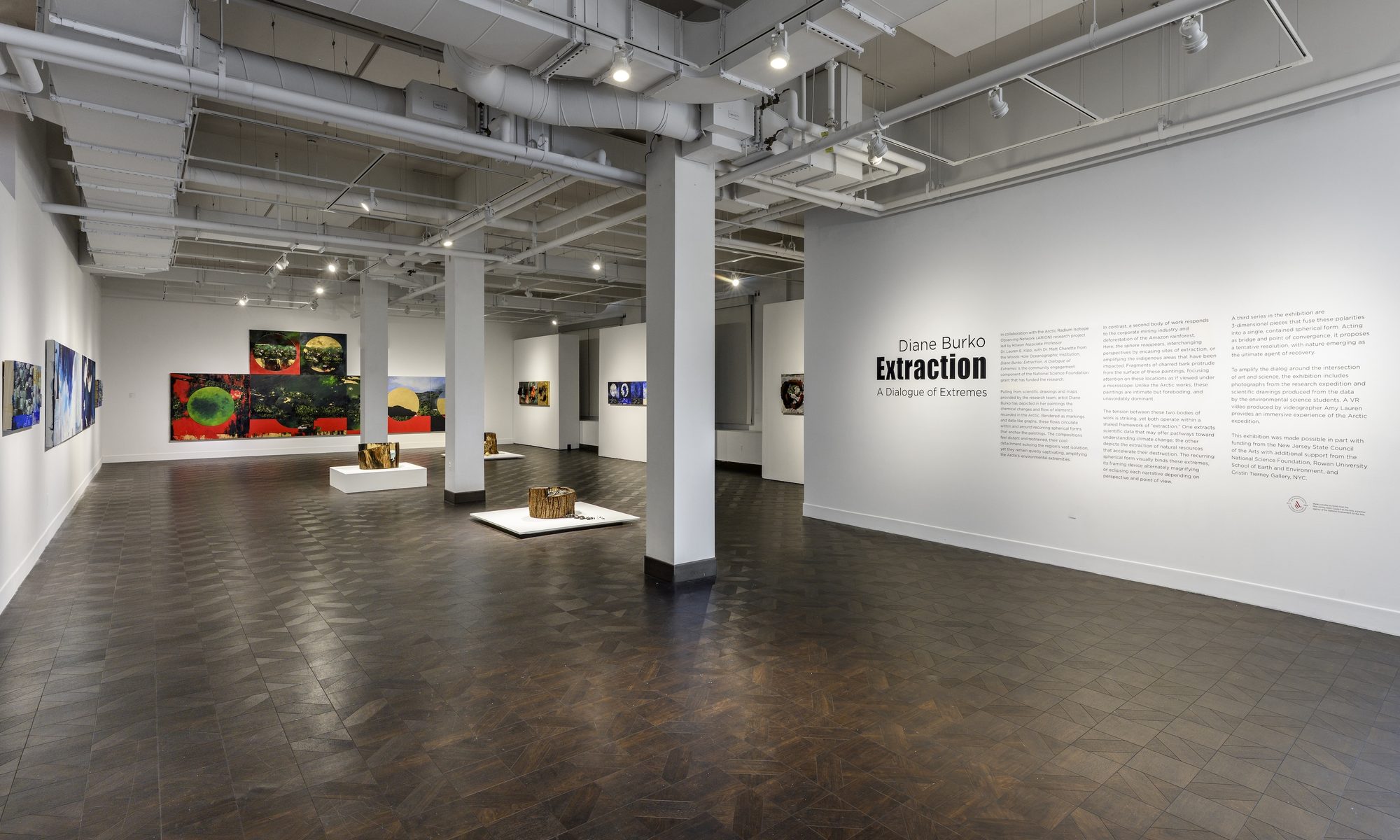
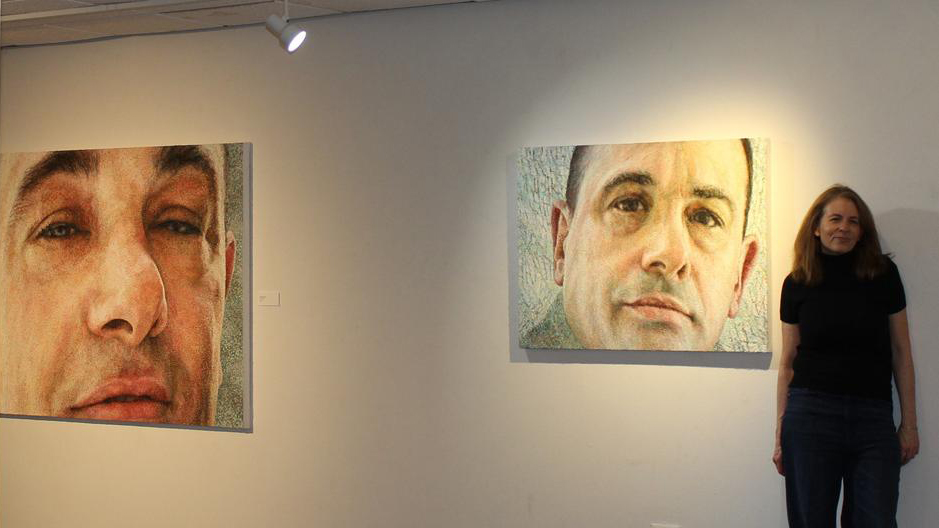
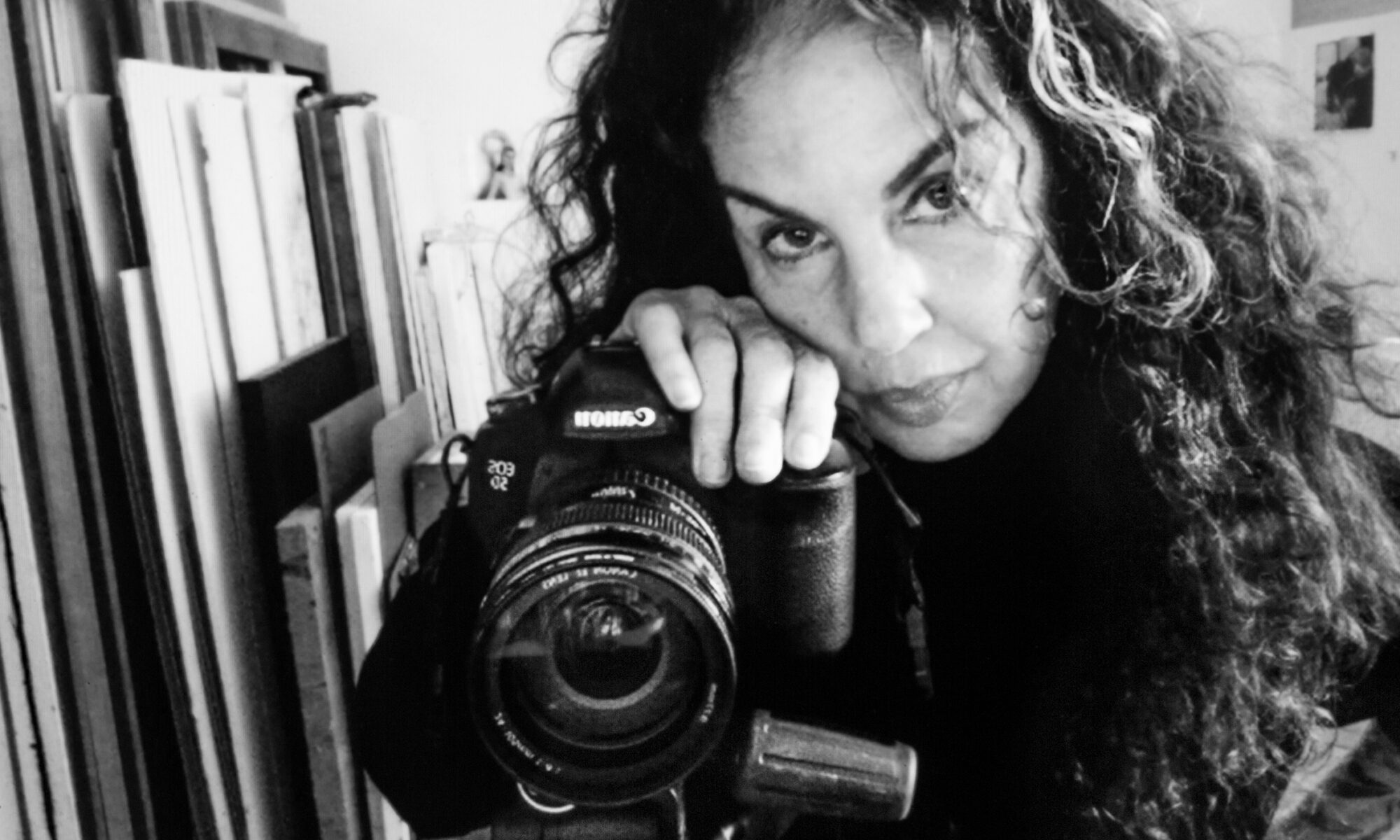
Grace Roselli’s Pandora’s BoxX Project began as something personal: a way to reconnect with a world of artists she’d drifted from while raising two daughters, much of it as a single mother. She started by photographing the few women artists she still knew; each led her to another, and the project grew by conversation and recommendation rather than plan. Nearly 360 portraits later — of artists alongside curators, writers, historians, educators, and museum directors — it had become a record of a community whose influence has rarely been seen whole. Roselli photographs each sitter in their own home or studio, in available light. She then lets them choose the final image, because the portrait isn’t finished until both of them recognize the person in it. Roselli discusses the project’s origins, her way of working, and what nearly 360 encounters revealed.
Continue reading “The Pandora’s BoxX Project: Grace Roselli”Atay Ilgun and Jonathan Carmel on ./spiral at Fondazione Aversano
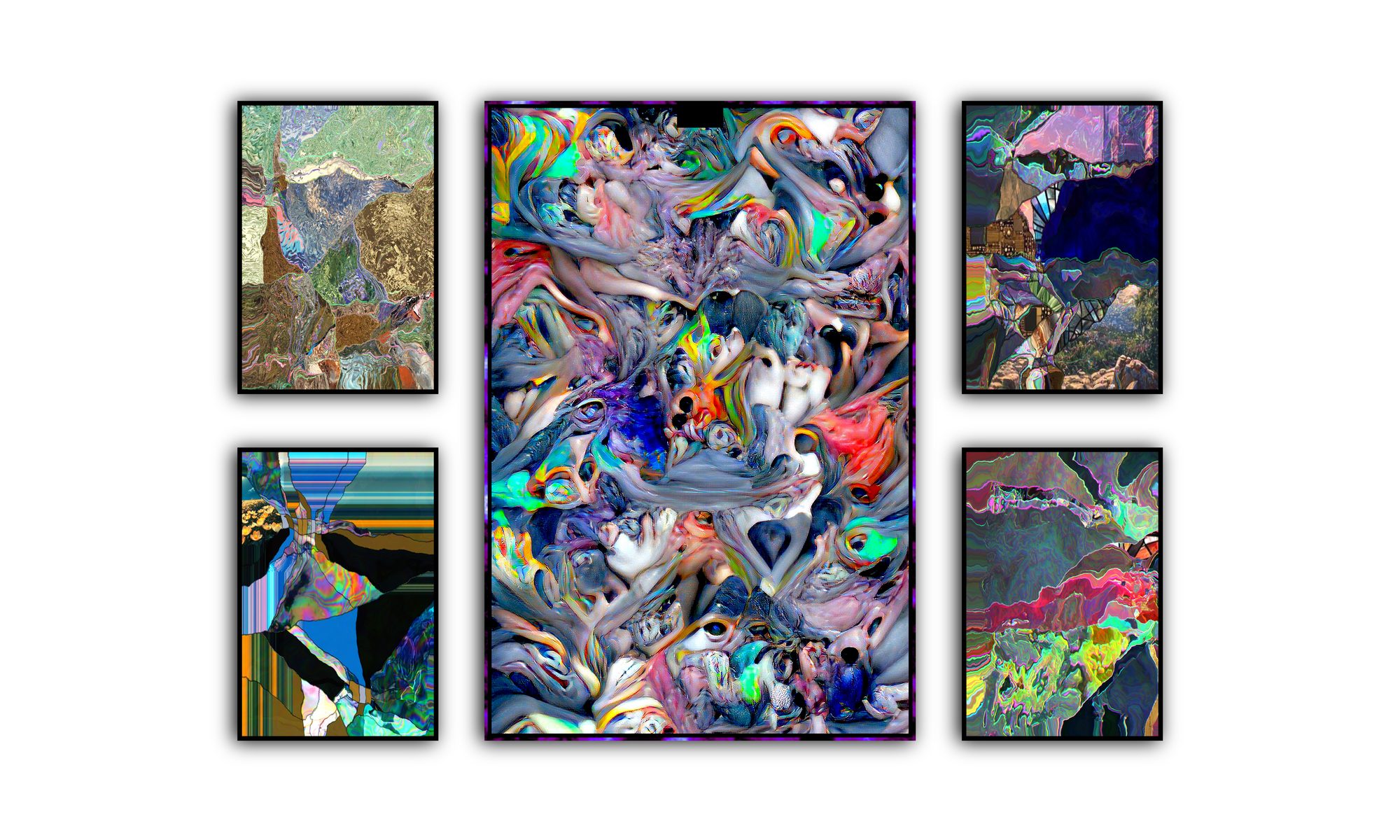
How does a field barely a decade old start to have a past? ./spiral takes up that question, gathering eleven artists who were present at the early days of AI, code, and blockchain art and asking each to pick up a formative work, tool, or loose end and carry it forward from where they are now. For co-curator Atay Ilgun, a London-based artist and technologist, the burst of new tools between 2017 and 2022 has only lately settled far enough into the past to be seen clearly. His fellow curator, SuperRare’s Jonathan Carmel, describes the return as a way of moving forward by first turning around. The works cross from screen into matter along the way, Helena Sarin’s ceramics drawing AI imagery toward ancient clay, Robbie Barrat’s Plexiglas prints nudging it back toward the glow of a monitor. Presented by SuperRare at Justin Aversano’s Fondazione Aversano in New York, September 3–10. Here, Ilgun and Carmel discuss how the show came together, the move from screen to object, and the histories their artists carry forward.
Continue reading “Atay Ilgun and Jonathan Carmel on ./spiral at Fondazione Aversano”Serpentine Sibyls at Snug Harbor
A chance meeting in October 2024 set Serpentine Sibyls in motion. Wandering into the Newhouse Center for Contemporary Art, Daniel Rothbart met its director and senior curator Melissa West, and a shared bond with the late critic and curator John Perreault — who ran the center in the 1980s — opened a collaboration that grew from the main pond to the two reflecting pools beside the Glass House. Rothbart’s floating forms in aluminum and glass, buoyed by salvaged Japanese fishing floats, drift and turn with wind, light, and water, so no two hours look alike. Named by West for the ancient prophetesses and for the serpentinite stone in Staten Island’s own hills, the work holds history and forecast at once, using the climate crisis as its undertow. Sited at a former sailors’ home along a tidal waterway, it runs through September 28 at Snug Harbor. The artist and curator discuss the project’s origins, its shifting forms, and the myth and history beneath the title.
Continue reading “Serpentine Sibyls at Snug Harbor”Cutaway at Brandeis University
For Cutaway, curator Olivia Baldwin worked the way she does in her own studio — building from the ground up, beginning with the artists rather than a theme. She had followed Eleanor Anderson, J Stoner Blackwell, Lucy Kim, Kirstin Lamb, and Hai-Wen Lin for years, looking for where their materials might overlap and where they might productively rub against one another. Meeting with them, a shared concern surfaced: how each artist asserts and then loosens the limits of an object, a body, a pattern. Their means are strikingly varied — discarded plastic bags, cross stitch, dyed silk and chain, cast flounder and teeth, a kite pitched toward the upper windows — bound by saturated color and touch. The body recurs throughout, rarely pictured, more often left as a trace in the material. Baldwin discusses the show’s bottom-up beginnings, what its materials share, and the withholding behind its title.
Continue reading “Cutaway at Brandeis University”Cantilevers at Roundabouts Now
Katy Fischer and Marie Lorenz go back to the mid-90s and the printmaking department at RISD, where the sheer amount there was to learn on a technical level sealed both of their paths as artists. Cantilevers, their two-person exhibition at Roundabouts Now in Kingston, includes no printmaking at all — yet a printmaker’s habit of setting up a repeatable process and then letting it devolve runs through both bodies of work. Lorenz, who has operated a tide taxi in New York Harbor since 2005 in boats she designs and builds, shows kinetic, pendulum-based sculptures weighted with porcelain casts of objects found on the beach. Fischer’s script-like porcelain shapes and new mosaics draw on techniques with roots reaching back 1,500 years. In the conversation that follows, the two artists discuss their shared history, the systems behind their work, and the tension of balancing porcelain on a single point.
Continue reading “Cantilevers at Roundabouts Now”Timothy Makepeace: From Thirty Feet to One Million Miles
Timothy Makepeace has spent nine years making art about one of the most complex machines humanity has ever built. Since his first visit to NASA’s Goddard Space Flight Center in 2016, the artist has developed an expansive body of work in response to the James Webb Space Telescope — its gold-plated beryllium mirrors, its acoustic test chambers, the light it gathers from increasingly distant points in time. The culmination of that inquiry is Ghost in the Machine, on view at the American University Museum at the Katzen Arts Center in Washington, DC, through August 9, 2026. We spoke with Makepeace about working with NASA engineers, the formal decisions behind his square-format drawings, and what kept drawing him back to a telescope now orbiting the Sun a million miles from Earth.
Continue reading “Timothy Makepeace: From Thirty Feet to One Million Miles “Dakota Gearhart: All Matter Is Alive
Dakota Gearhart grew up on a Florida coastline where algae blooms, sewage outflows, and bikini contests share the same shoreline, and her work has been carrying that mix of beauty, decay, and amusement into a much bigger frame ever since. Across animation, sculpture, performance, and sound, she builds video worlds where pixels sing, electricity becomes sentient, and the nonhuman shows up on equal footing with the rest of the cast. Her ongoing animated series Life Touching Life is hosted by Tiffany, a half-algae, half-woman figure who guides viewers through episodes shaped with collaborators — poets, scientists, activists, caretakers — whose lives already reflect the worldview the work is reaching toward. It’s funny, strange, and serious in roughly equal measure, which turns out to be the right register for the worlds it stages.
Continue reading “Dakota Gearhart: All Matter Is Alive”The Whole Water of a River at TSA Brooklyn with Byron Toledo
A dead opossum lying in a fetal position along a contaminated riverbank in Quito became, for Byron Toledo, both an encounter and a sculpture. That moment, tender and violent at once, is at the heart of The Whole Water of a River at Tiger Strikes Asteroid Brooklyn, an exhibition that follows the Machángara River from its mountain source through the city. Ceramic animals, distilled plant aromas, and sound recordings gathered along the watershed map the river as a living system that connects hills, ravines, plants, people, and the city itself. The project carries unusual stakes: in 2024, an Ecuadorian court ruled that the rights of the Machángara had been violated, a ruling for which Toledo’s own video work served as evidence. We spoke with the artist about walking the river, collaborating across disciplines, and what it means to make art inside an ecosystem fighting to survive.
Continue reading “The Whole Water of a River at TSA Brooklyn with Byron Toledo”From A to Z and the Bodies In Between at Nunu
Borges once described a fictional Chinese encyclopedia that classified animals into categories so incompatible — beings that belong to the Emperor, embalmed ones, those that look like flies from a distance — that the whole idea of classification begins to feel like a kind of absurd fiction. Nancy Bowen’s first solo exhibition at Nunu Fine Art invokes exactly that suspicion: that the dictionary, the archive, the great pre-internet repositories of everything, are not neutral records but constructions, and that constructions can be dismantled, embellished, and made to mean something new.
Continue reading “From A to Z and the Bodies In Between at Nunu”Pouch Power Women: with Brenda Zlamany
What starts as an open call and a group text to trusted friends becomes, two years later, an exhibition that feels inevitable. Seven Women Chase Icebergs, on view at The Re Institute in Millerton, NY, brings together seven painters whose friendships span decades and continents: Rome, Skowhegan, Triangle, Braziers. Organized by Brooklyn-based artist Brenda Zlamany — creator of The Itinerant Portraitist and a painter whose practice has long centered on community as both subject and method — the show grew from a month-long residency at Pouch Cove, Newfoundland, where the group painted, hiked, shared meals, and chased icebergs along the edge of the Atlantic. We spoke with Zlamany about friendship as curatorial logic, landscape as psychological mirror, and what it means to build something together at the edge of the world.
Continue reading “Pouch Power Women: with Brenda Zlamany”