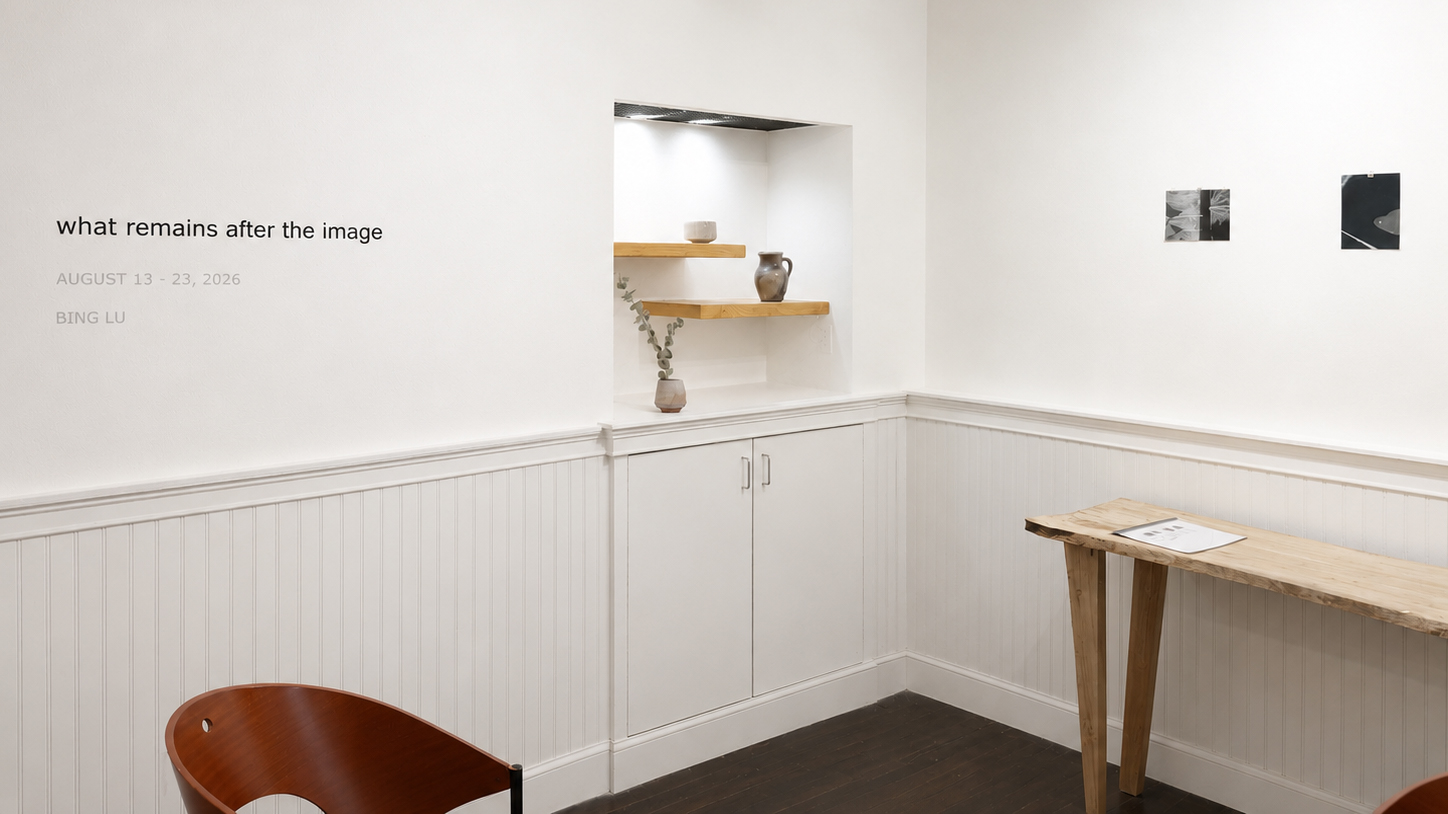
Bing Lu’s solo exhibition, “what remains after the image,” at Gallery 60 NYC is an endeavor of multifaceted inquiries concerning the nature of photography and image production, abstraction, and the artist’s own personal life. Featuring 13 photographic works that utilize digital collaging and color manipulation techniques, the exhibition is an exercise in experimental spirit for Lu to continually push the boundaries and investigate the abstract and experimental language of photography.
What is a photograph that acknowledges itself as an image? What is a photograph that investigates the abstract and experimental language of photography? What is an image that questions its own existence in terms of the institutional and the personal contexts in which the work is created or displayed? Lu’s photographs are no longer traditional images: they foray into the realm of an experimental mode of conceiving and experiencing the image. Digital noise substitutes for the texture of the brush on an oil painting. Information acknowledges itself as information by being copy-pasted into a scene or a composition. Unexpected encounters and convergence of pattern, color, and object renderings give birth to new combinations carrying novelty of meanings and visual qualia.
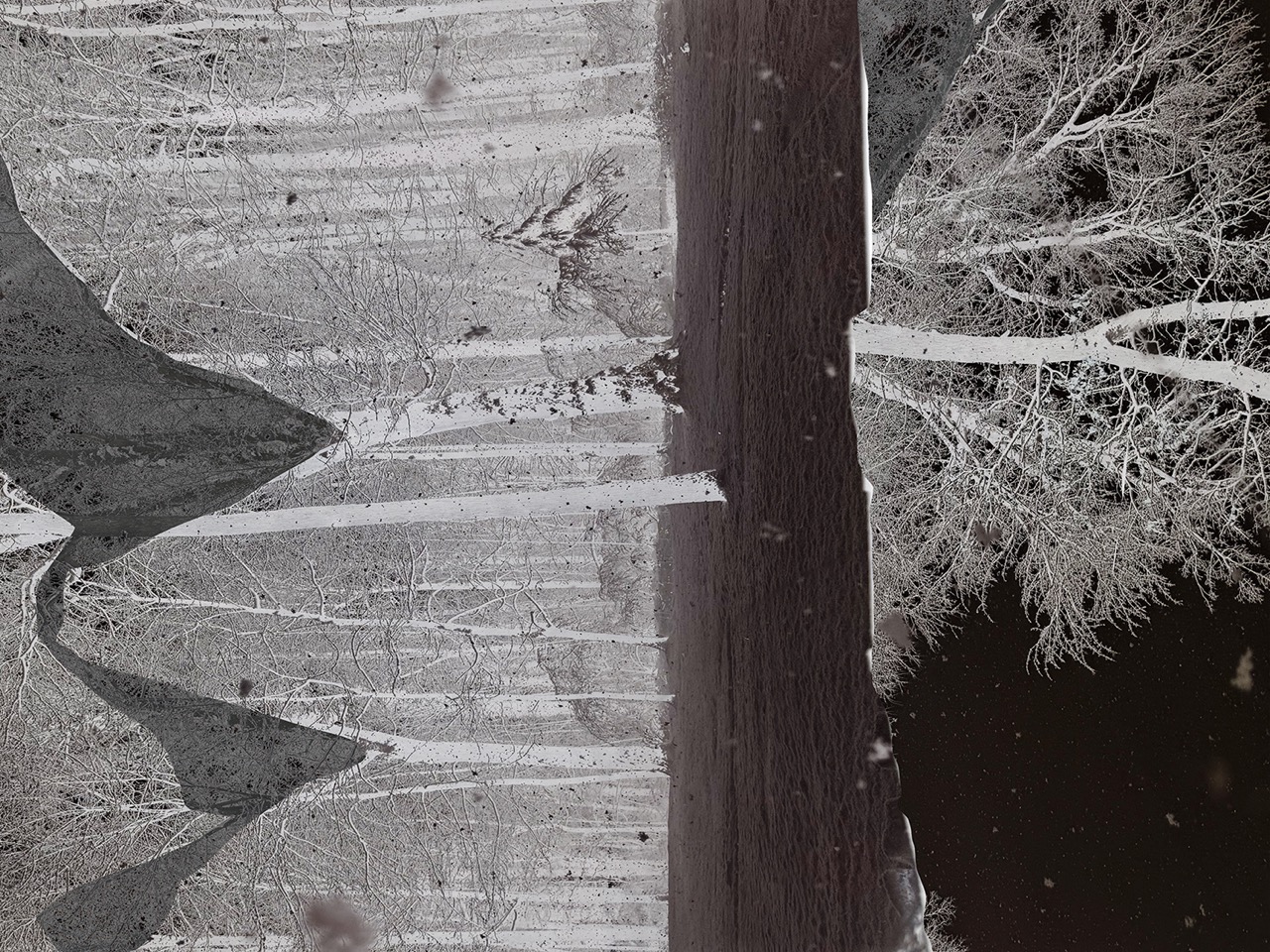
“snow #78” (2026) is a 6 by 8 inch archival inkjet print, composed of collaged landscapes that are oriented at a 90-degree angle from the viewer’s orientation. This sideways view of the treescapes helps to de-orient the viewer and make us question if we are looking at a landscape, or if we must find a hidden meaning within this abstract collage. The image can be understood as a situation like a helicopter or a fighter jet swerving sideways while making a hard turn in a dogfight. Perhaps the work is trying to dissociate the viewer from the notion of a fixed ground or foundation of truth: if there is no true up and down, then direction becomes only a subjective consideration in this winter landscape. It is an experimental posture that seeks to perceive the world from a position or an angle unfamiliar to most of us.
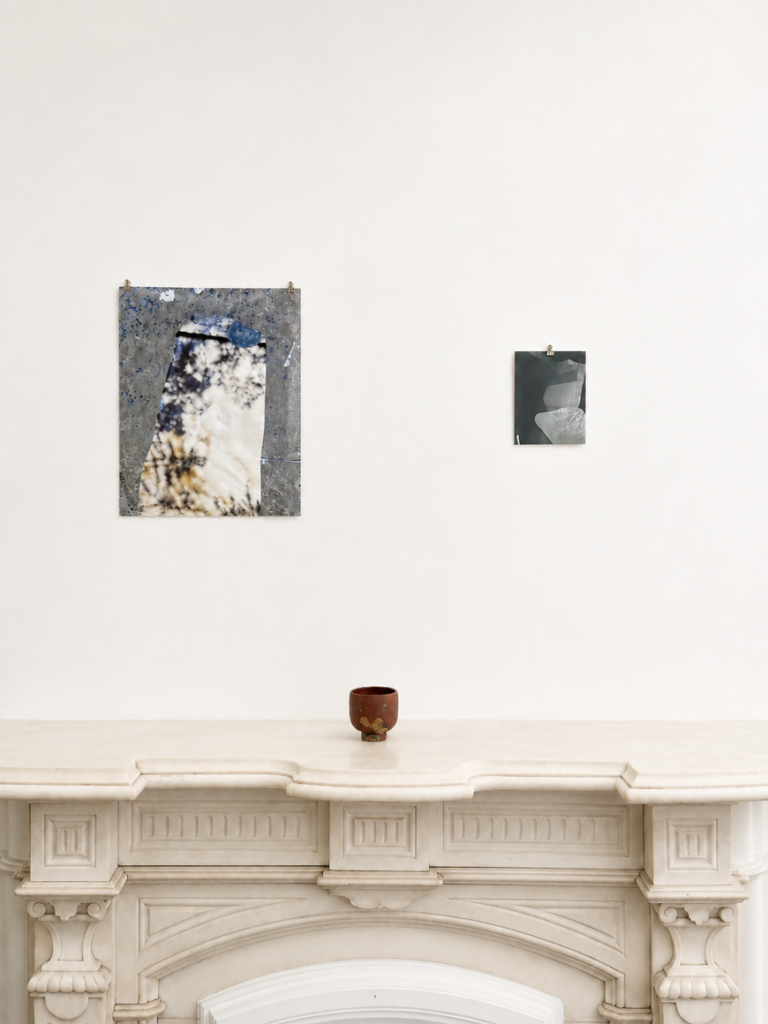
“snow #98” (2026) is also a 6 by 8 inch archival inkjet print that mixes up the poor image with the high-res image, the juxtaposition of which provides moments of transition between the two collaged areas. Their contrast also points to a hierarchy in the economy of the image, in which the high-res image usually takes on a central role, but, in Lu’s work, the low-res gives off a delightful and pleasant sensation due to its relaxed and blurred nature. To an observant mind, this work inverts the traditional hierarchy that assigns premium to high-resolution imagery.
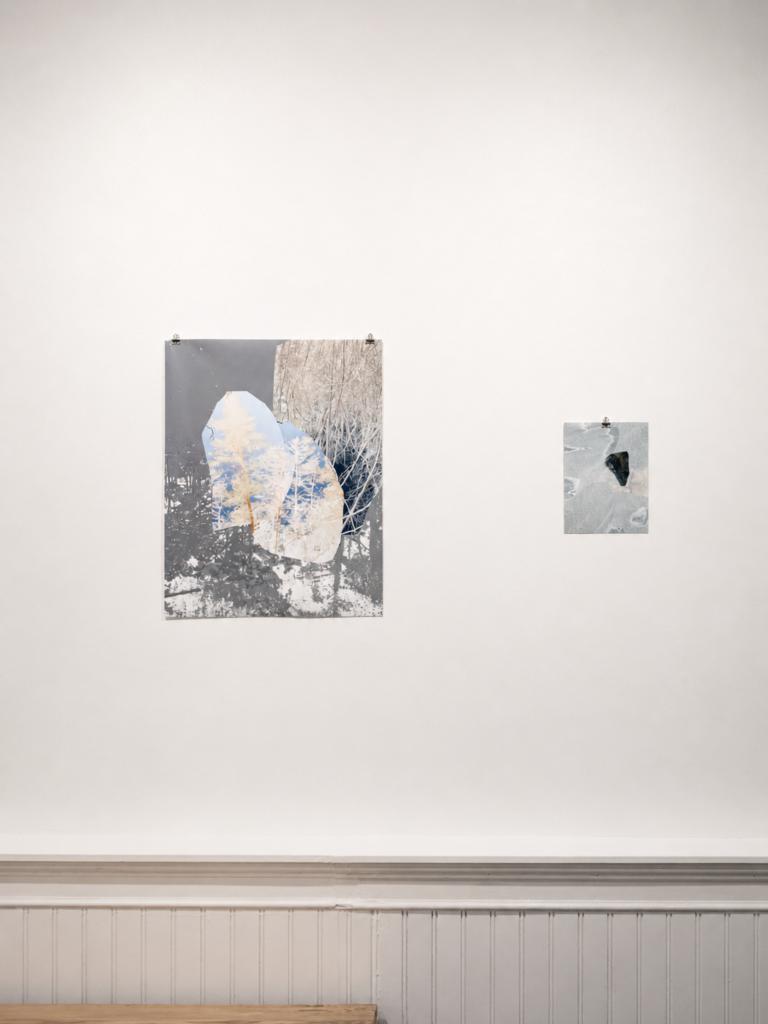
“into the night” (2026) is a 15 by 20 inch archival inkjet print that depicts two overlayed, lung-like colored collages onto a mostly monochromatic space. The collages are sourced from views of pine trees and the sky above them, but the colors are greatly manipulated to be “overexposed,” which exposes the warm reddish tone of the tree trunk and the yellowish tone of the leaves. The meaning of the collage is akin to the introduction of spring and warmth to a cold and abandoned winter landscape. Or it is perhaps the act of imagination of an alternate reality. In any case, the choice to make use of collage gives the work this kind of particular meaning.
It should be noted that Bing Lu sources some of the raw images for her photos from the internet and also in collaboration with her partner, whose identity is not revealed. This act of appropriation is reminiscent of Richard Prince and Robert Rauschenberg, but they are more attuned to the digital era, with the digital aesthetics that embrace ultra-high definition as much as making use of low-res, poor images. In a day and age when millions of images are being produced around the world per day, what is the purpose of originating an image? Many photographers who are conceptually tuned into the developments within contemporary photography and sociocultural situations cease to make original images, but rather source them via appropriation, which becomes a process of research, curation, and discovery.
The next step for Bing Lu, as she herself discussed, would be to produce a book that one can flip through to review the works, remember the feelings, and observe new thoughts and sensations that arise from experiencing them. In photography, the image becomes complete when it is printed as a work of art or in a book format.
This is important for Lu as she has never produced a book as a major project within her photography practice, and she is interested in the ability of images and the viewers to recollect as much as to have new and fresh experiences through the visual encounters.
What remains after the image? It is the image that appears to make the visual observations and the subsequent thoughts and feelings permanent in a continual feedback loop between the viewer and the work. The image makes the viewers pause and persist in a continual communication and interaction with the work, evolving alongside the work within their subjectivity.
It may be better to just leave the question unanswered than to settle for a definitive conclusion on the question that is embedded within Lu’s exhibition title. And what remains after the image may not be a question that matters anymore if Lu can substitute the exhibition with her books, which can act as permanent records or a diary of sorts. But to answer the question, what remains after the image is a changed person and a viewer whose persona and spirit have altered and transformed, possibly meliora, for the better. The image leaves a series of interactions, which are visual, psychological, emotional, and recollective, as records or traces on the surface of the body, as inscriptions that change the person without her or his knowing.
Courtesy of Gallery 60 NYC
Bing Lu: Solo Exhibition, “what remains after the image,” at Gallery 60 NYC
August 13 to August 25, 12-6 PM (Sun to Tue Appointments Only)
208 East 60th St., New York, NY 10022
@gallery60nyc
@lbm128_photo
About the writer: Chunbum Park, also known as Chun, is an artist from South Korea, where they were born in 1991. They received their BFA in Fine Arts from the School of Visual Arts in 2020 and their MFA in Fine Arts Studio from the Rochester Institute of Technology in 2022, where they changed their pronouns. Born a male, Park likes to cross-dress and depicts themselves as a woman in their paintings. They are the inventor of the ArtBid art auction card game and run the Roundcube Collective (currently merged with the Brooklyn to Gangnam website), where they interview other artists. Park writes exhibition reviews for various print and online magazines, including the New Visionary Magazine. They currently reside in Cliffside Park, New Jersey. @chun.park.7