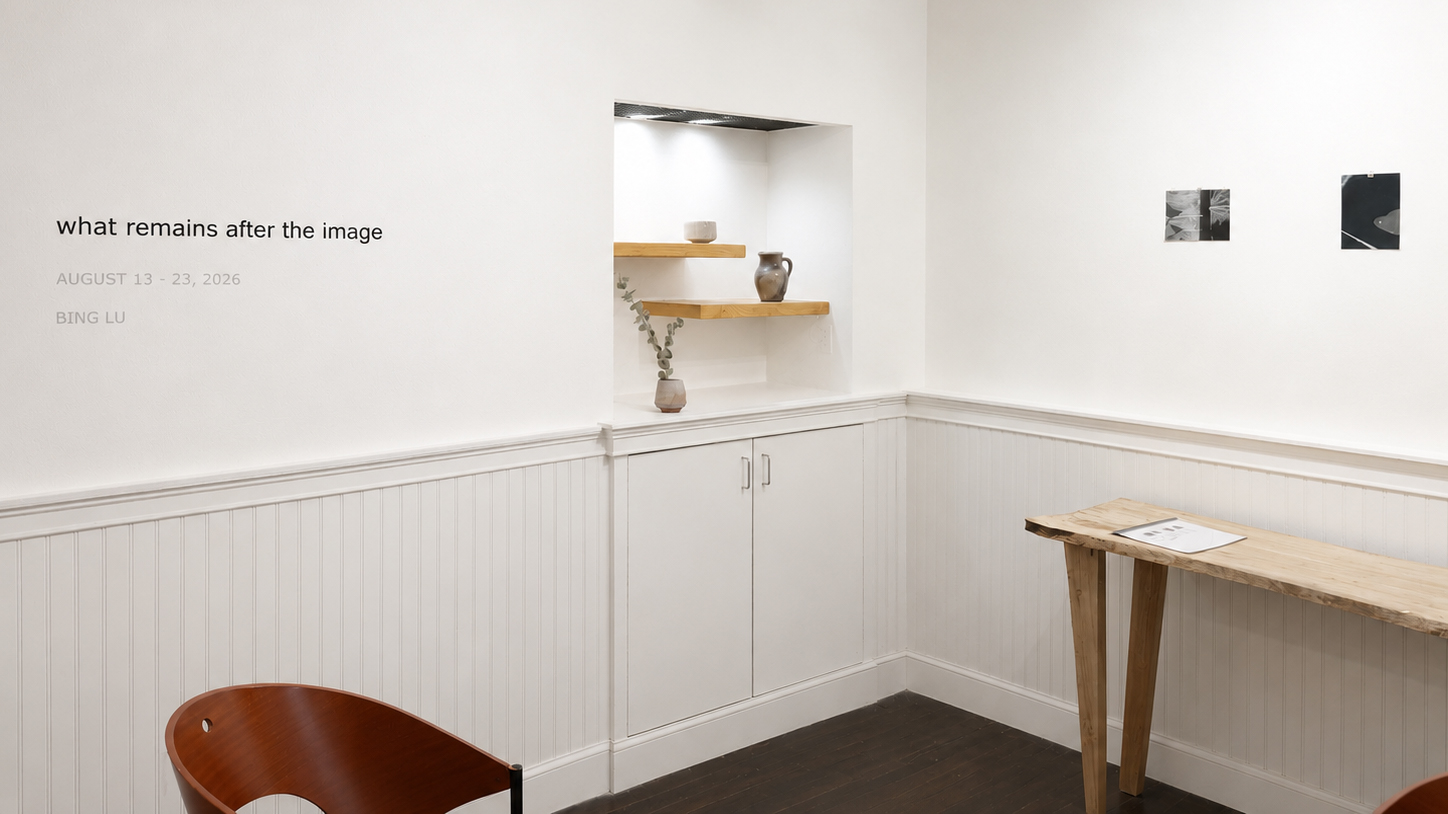
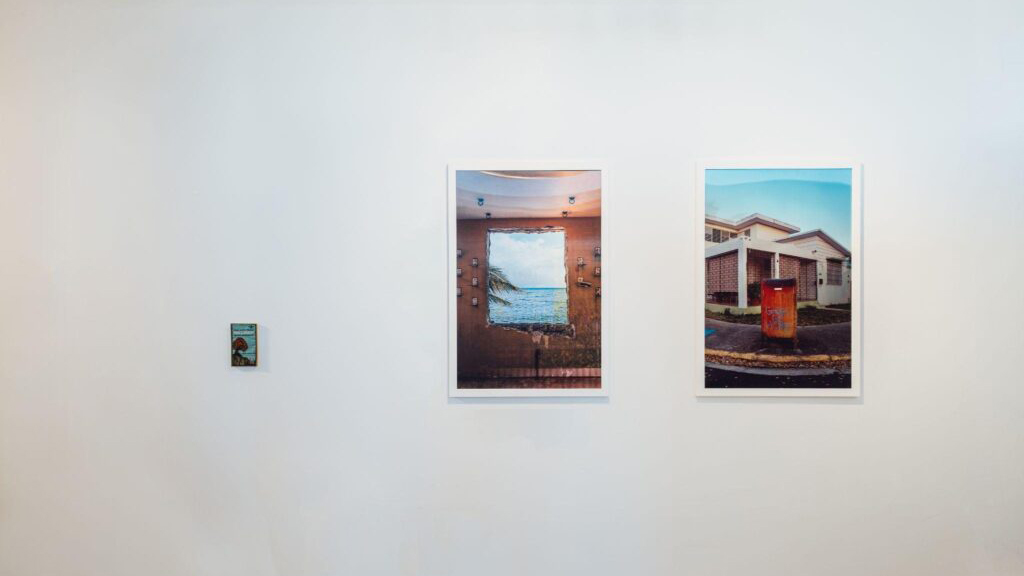
Bing Lu’s solo exhibition, “what remains after the image,” at Gallery 60 NYC is an endeavor of multifaceted inquiries concerning the nature of photography and image production, abstraction, and the artist’s own personal life. Featuring 13 photographic works that utilize digital collaging and color manipulation techniques, the exhibition is an exercise in experimental spirit for Lu to continually push the boundaries and investigate the abstract and experimental language of photography.
Continue reading “Bing Lu: The Queries that Remain After the Image”Funny Weather at Kunstraum: Upheavals and new assumptions
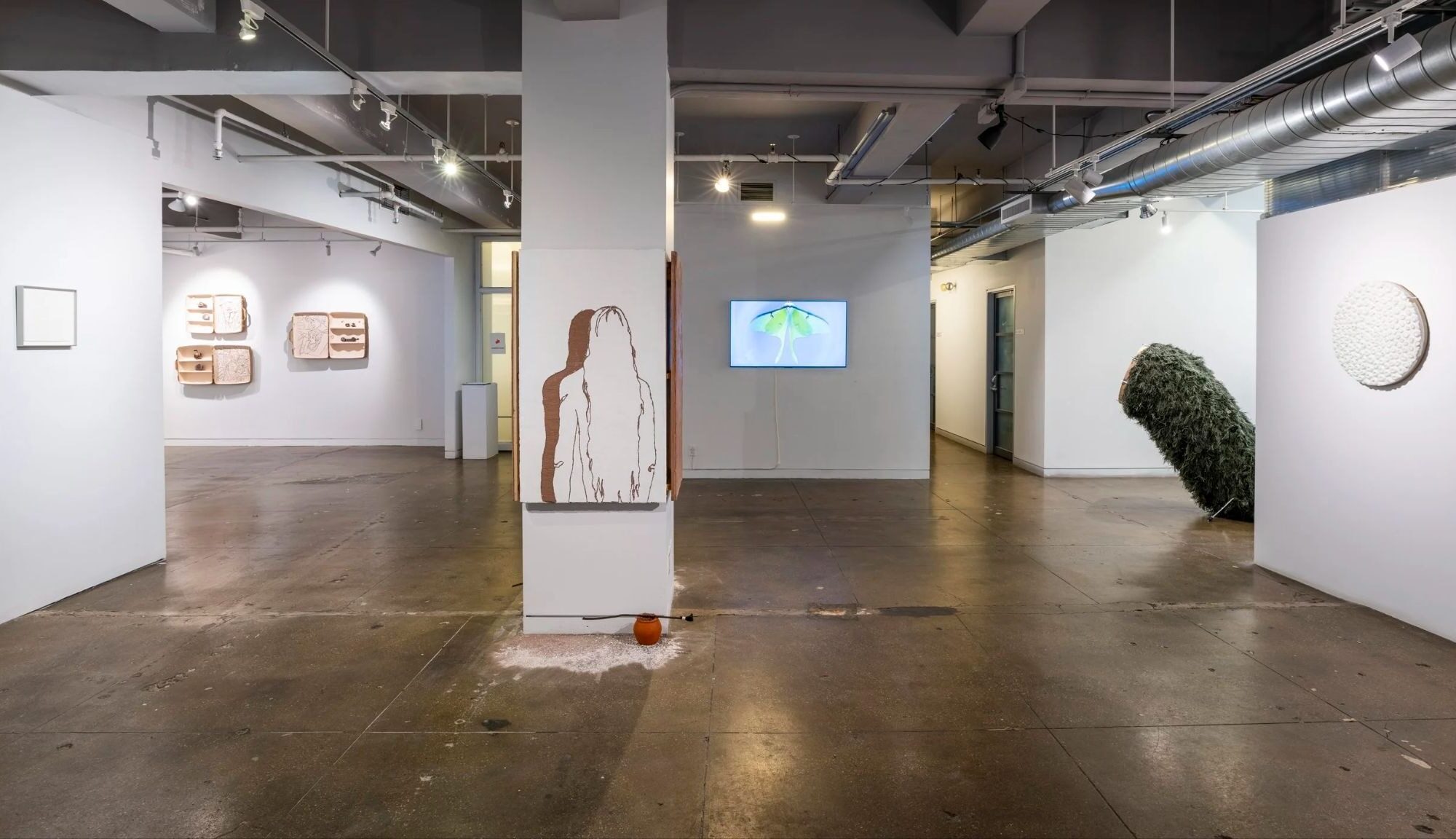
In the exhibition Funny Weather, curated by Imogen Aukland, four artists present distinct takes on reconstructions and uncertainty. A timely, unsettled feeling meanders through the space — sculptures that depict typically threatening objects unexpectedly softened, or photos that capture moments that physically change as you walk around them. Both the unexpected and a sense of upheaval are prominent themes throughout, whilst also giving us a “weather forecast” that changes by area, mood, and experience. This grants viewers the opportunity to question what art does: what an art object stirs within us, and how much our assumptions about something can shift when viewed from different perspectives.
Continue reading “Funny Weather at Kunstraum: Upheavals and new assumptions”After the Rains – How Nature Roots Us Home
When one thinks of nature, the first thing that comes to mind would be a park filled with leafy trees or perhaps a bouquet of vibrant flowers. With EFA Studio’s newest exhibition, After the Rains, artists challenge the idea of how nature can be represented.
Continue reading “After the Rains – How Nature Roots Us Home “Hospitality, Narrative Grace, and the Warm Head
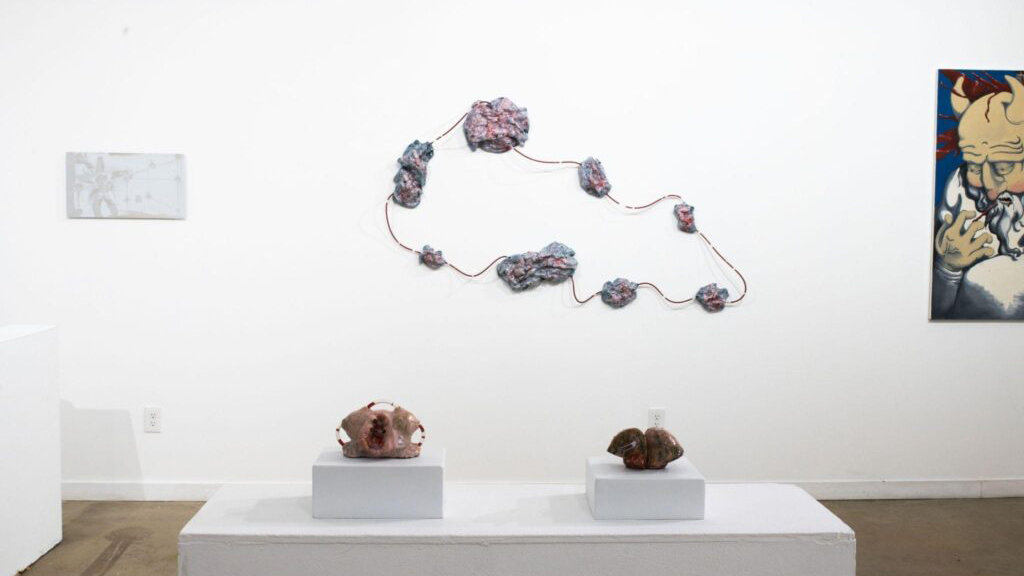
Derrida once pursued the question of hospitality. Can you welcome someone whose name you do not yet know? Can you open the door before knowing who is arriving? If you can, the welcome is sincere; if you cannot, hospitality has already become part of border management. Unconditional hospitality is therefore always impossible: if the host retains sovereignty, they cannot be fully open; if they become fully open, they are no longer the host. The name thus becomes the first step in the subject’s enclosure. This exhibition is built precisely upon this impossibility.
Continue reading “Hospitality, Narrative Grace, and the Warm Head”Run by Artists, Built for Artists: OyG and the Cornell MFA
What does a gallery look like when the artists are in charge? Founded in 2013, Ortega y Gasset Projects (OyG) is an artist-run collective with no fixed curatorial line and a non-hierarchical structure shared equally among its eight co-directors. Since 2023, it has become the annual New York home for Cornell University’s MFA thesis exhibition — a partnership built on a simple premise: artist-run spaces value experimentation, innovation, and risk-taking, giving graduate artists the freedom to present work without commercial constraints or curatorial imperatives.
Continue reading “Run by Artists, Built for Artists: OyG and the Cornell MFA”On the Edge of Meaning: Lucy Sante’s Collages

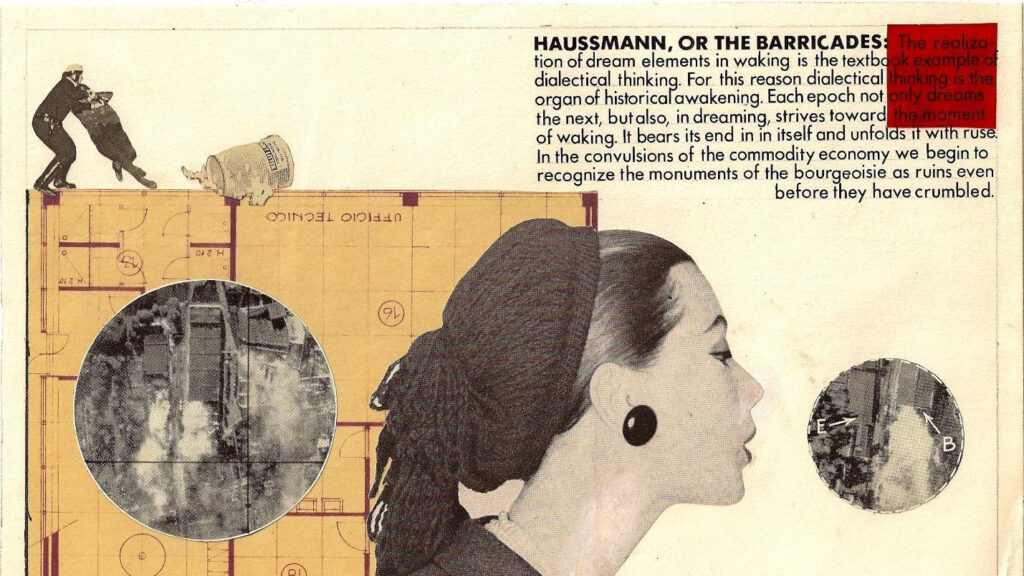
Interspersed throughout the stately library of the Academy of Arts and Letters in Washington Heights, in and around shelves holding works by Academy members like John Cheever, Pearl S. Buck, and Grace Paley, a new exhibition of collages by the cultural critic, essayist, and Dylanologist Lucy Sante is on display. Knots, organized by curator Kristin Poor, features mostly recent works from the last few years, save one, Haussmann, or the Barricades, which dates to 1979.
Continue reading “On the Edge of Meaning: Lucy Sante’s Collages”Xinyu Liu’s Fool’s Hour at Art Cake: Finding a home to Carry Onward
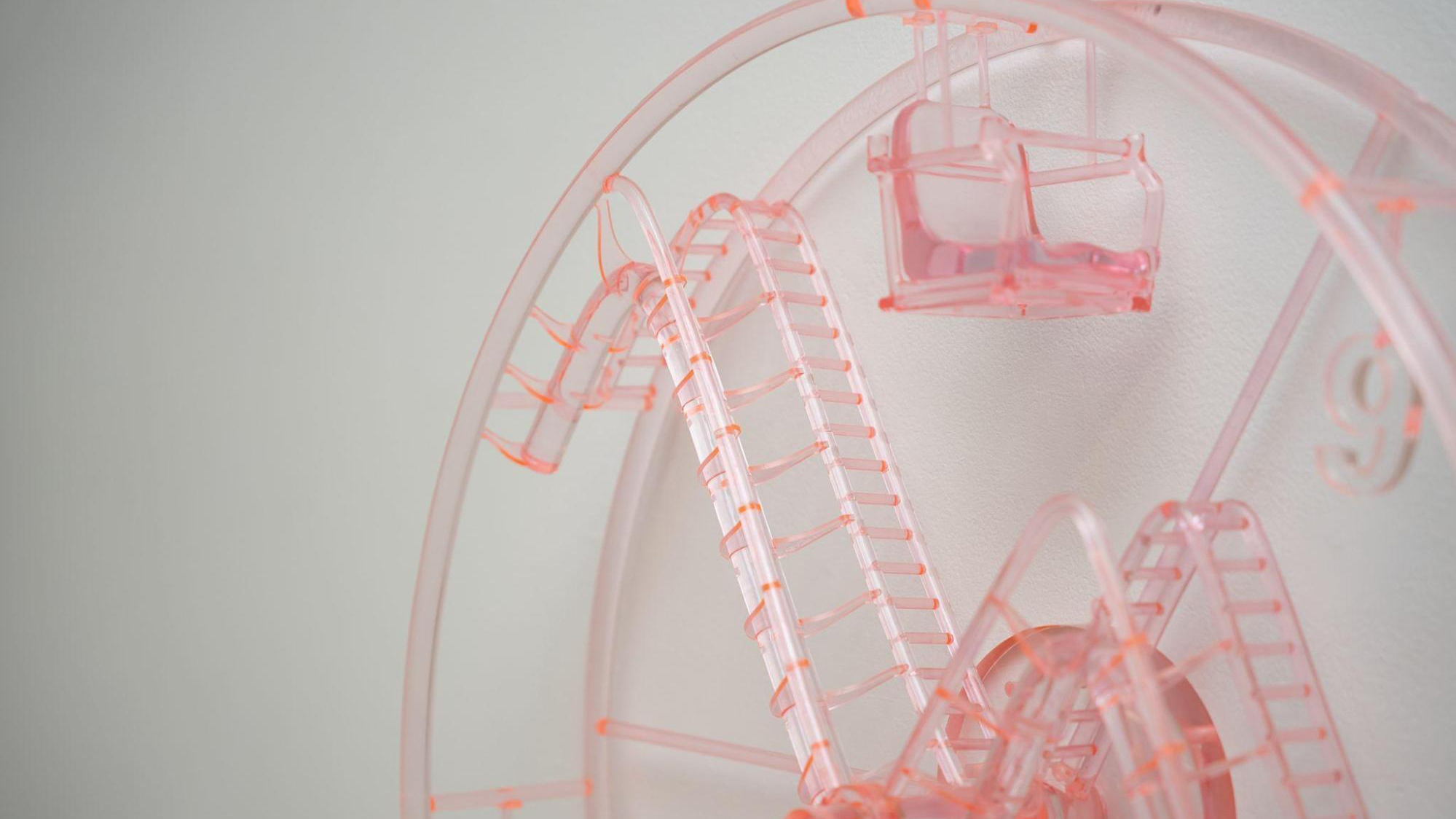
Upon entering the exhibition, you are greeted by pieces of various sizes and mediums, full of intricacies and exploration. With the pieces being smaller in size, besides the Ferris wheel, you have to get close to see the small details or the depth of space that opens into a world of its own within each piece. Within the works, Liu offers locations such as cities, darkened spaces, carnivals, and other places of transition. Places that one may find themselves when they are beginning to traverse or transition into someplace new. I appreciated that each work was either on the wall or a shelf, giving each a sense of its own place. The space around the pieces gives them an opportunity to breathe and allows viewers to look closely at one and flow seamlessly into the next.
Continue reading “Xinyu Liu’s Fool’s Hour at Art Cake: Finding a home to Carry Onward”Departing From The Flat World: Jong Oh’s Sixth Solo Exhibition At Marc Straus Gallery
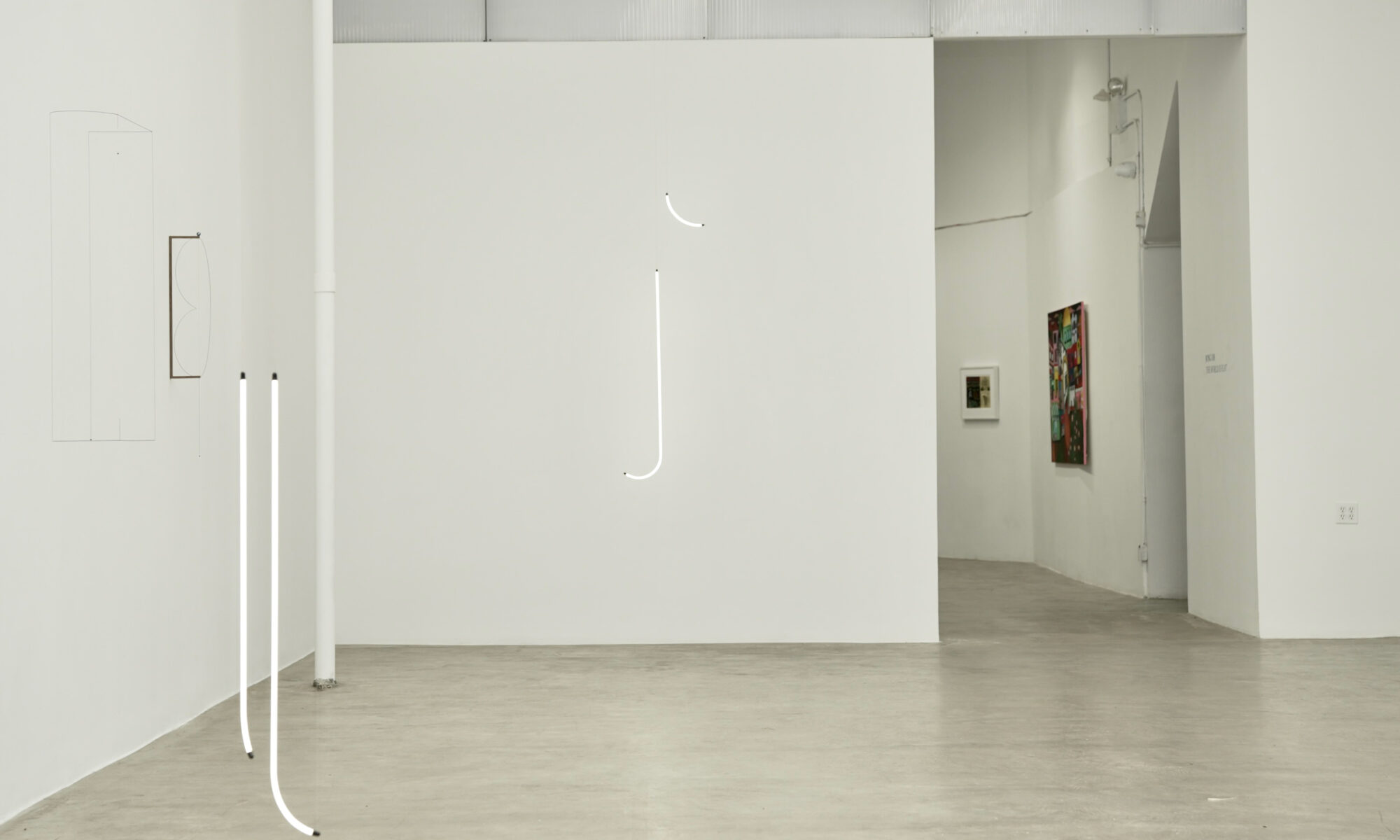
“The world is flat” is perhaps humans’ most primitive sense of physical surroundings. It was also a cosmological conclusion drawn from honest bodily perception, because the land beneath our feet is indeed still and level, and the universe unfolds as an infinitely extending plane. This perceptual honesty is where Jong Oh begins.
Continue reading “Departing From The Flat World: Jong Oh’s Sixth Solo Exhibition At Marc Straus Gallery”Unreliable Narrators: Rochelle Voyles
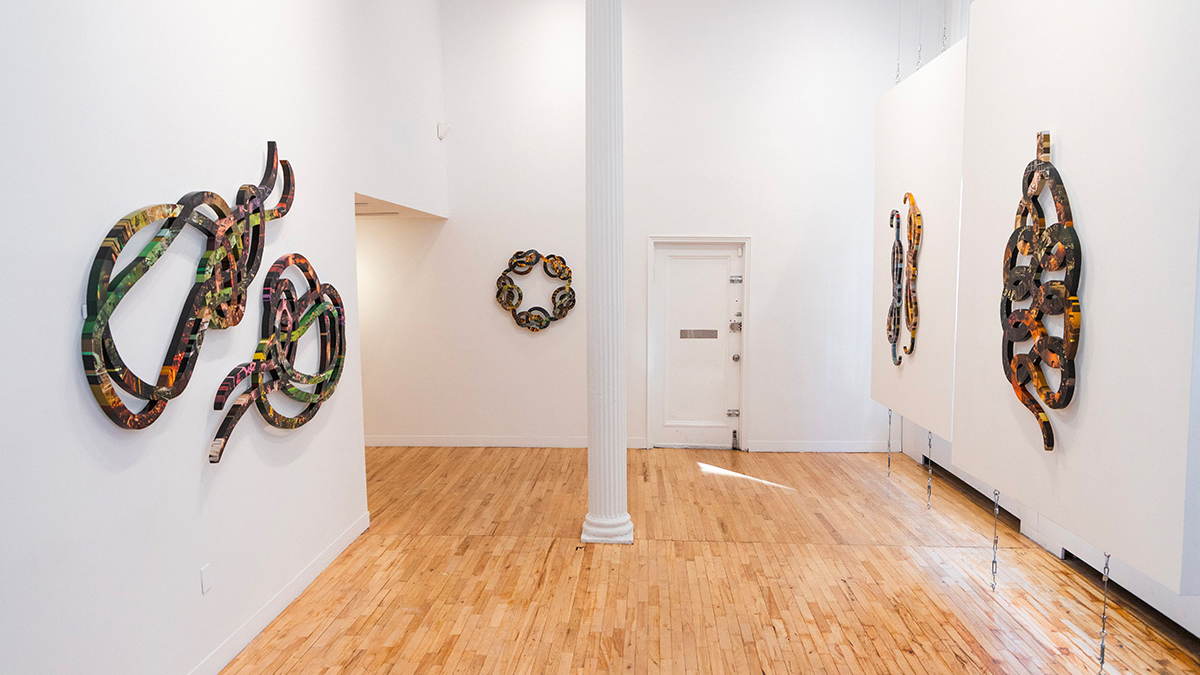
In Unreliable Narrators, Rochelle Voyles’s collages hold both a capacious nihilism and a hope to build stories from the void. From this fulcrum, I think of Joan Didion’s classic essay The White Album, and its opening truism: “We tell ourselves stories in order to live.” Voyles’s compositions of found photographs extend to viewers, a branch, a bone, a tool in making sense of the randomness that seems to rule our lives. Cutouts layered into loops capture chaos, but the care in each cut, the curation, and the collision of hyperspecific images betray a belief in an idiosyncratic order. These works are at once figurative mazes of manifold meaning, and objects calculated to short-circuit our thinking and experience pure sensation.
Continue reading “Unreliable Narrators: Rochelle Voyles”The 15th Shanghai Biennale: Does the Flower Hear the Bees?
Botany, I read in Zoë Schlanger’s bestseller The Light Eaters: How the Unseen World of Plant Intelligence Offers a New Understanding of Life on Earth, is full of groundbreaking discoveries these days (Schlanger 2024). We now know that plants have cellular conduits that allow propagation of electrical charges, that some plants release chemicals in the air to alert neighbors of insects, and that evening primrose increases its nectar’s sweetness when it senses the frequency of the hum of bee wings. While such plant-feeling, plant-talking, and plant-listening are not sustained by the same biological apparatus as ours, the functional parallel is apparent. Perhaps it is time to broaden our understanding of intelligence.
Continue reading “The 15th Shanghai Biennale: Does the Flower Hear the Bees?”