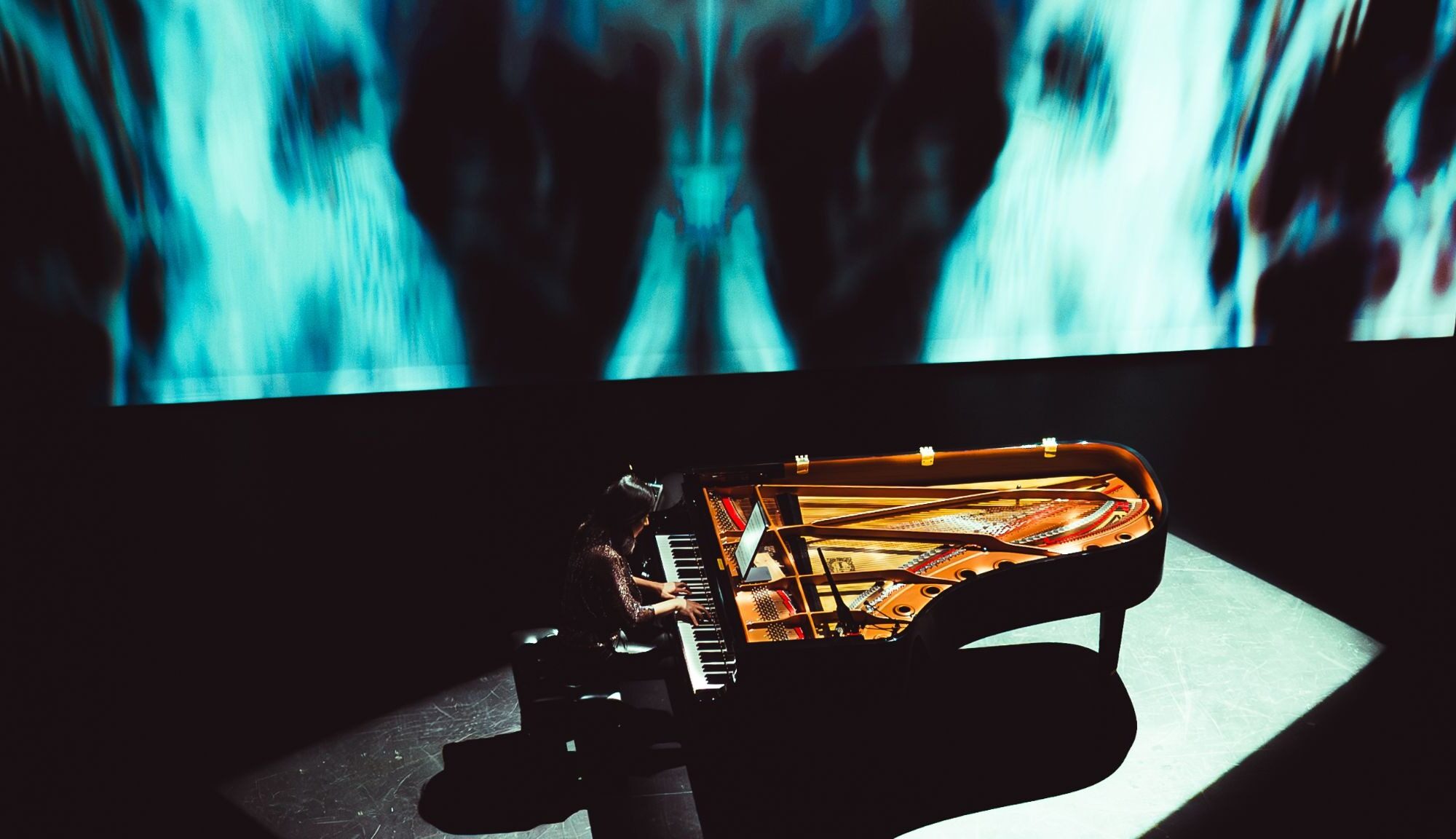
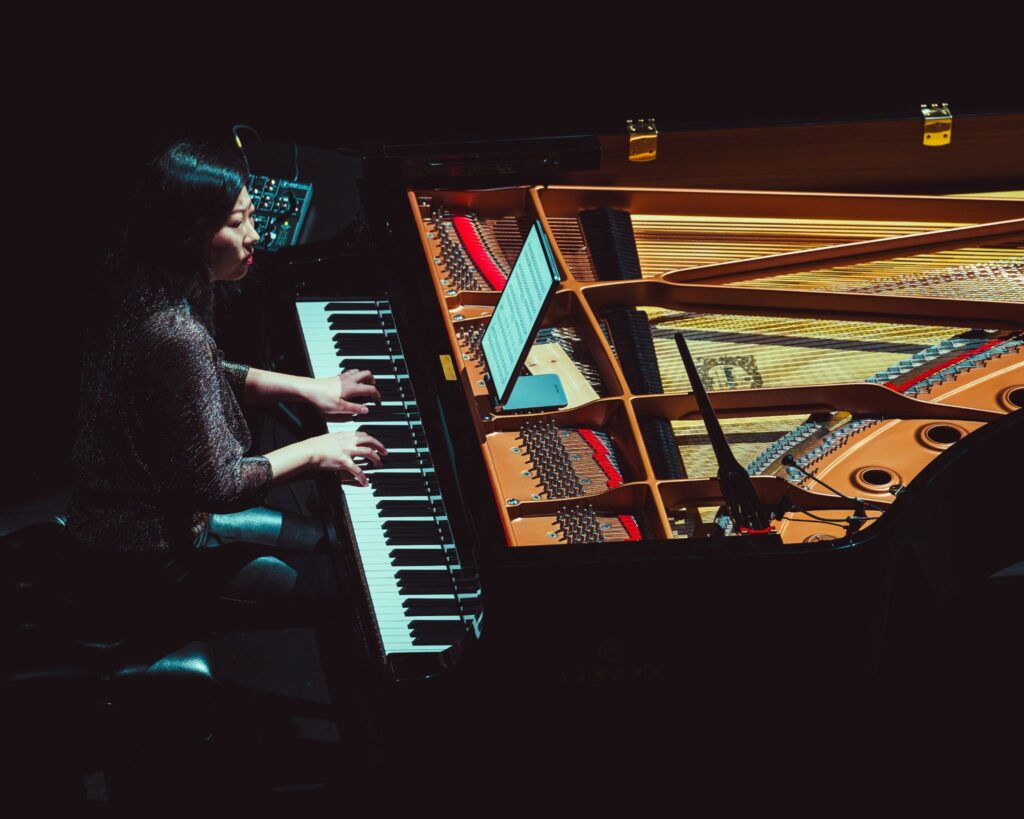
The Baryshnikov Arts Center celebrates its 20th anniversary with a dazzling work that perfectly reflects the institution’s spirit of innovation. Ex Machina, a collaboration between pianist Clara Yang and visual artist Xuan, is not simply a concert, an art exhibition, or a multimedia performance. It is a thrilling encounter between piano sound and painterly images that transforms the stage into a living canvas.
From the moment Yang’s fingers touch the keys of the grand piano, the enormous screen behind her awakens with a lively video. Colors burst into existence. Lines race across the wall. Shapes collide, dissolve, and reappear in new forms. The paintings do not merely accompany the music—they seem to emerge from it, as if the piano itself were painting with light.
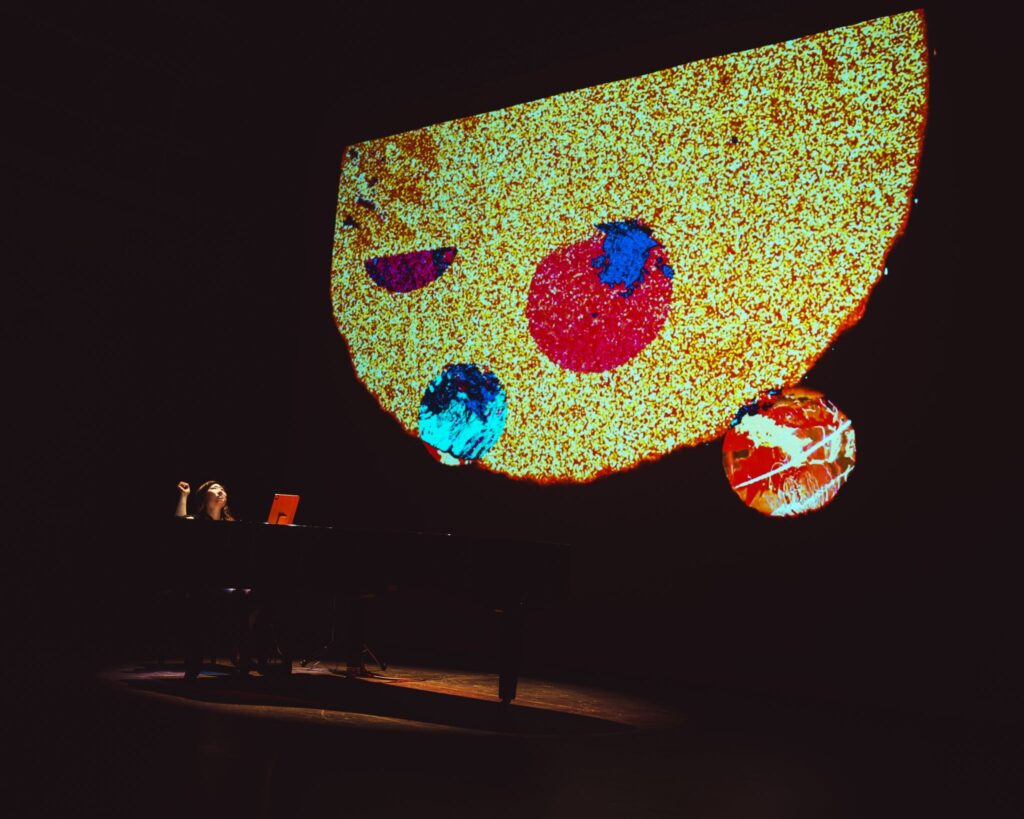
At times, it feels like giant brushstrokes sweep across the screen with explosive force, hurling reds, blues, and golds in every direction. At other moments, delicate forms drift quietly through space, responding to the gentlest musical phrases. The audience watches with anticipation, never knowing what image will appear next. Audible gasps ripple through the theater as visual surprises unfold. Heads turn, eyes widen, and viewers lean forward in their seats, drawn into a mesmerizing dialogue between what they hear and what they see.
What makes Ex Machina so exciting is that it allows us to witness art in the act of becoming. Traditionally, audiences see a painting only after it has been completed. The creative struggle, the decision-making, and the emotional impulses that shape the work remain hidden in the artist’s mind and studio. Here, however, the process itself becomes the joint piano-and-painting performance.
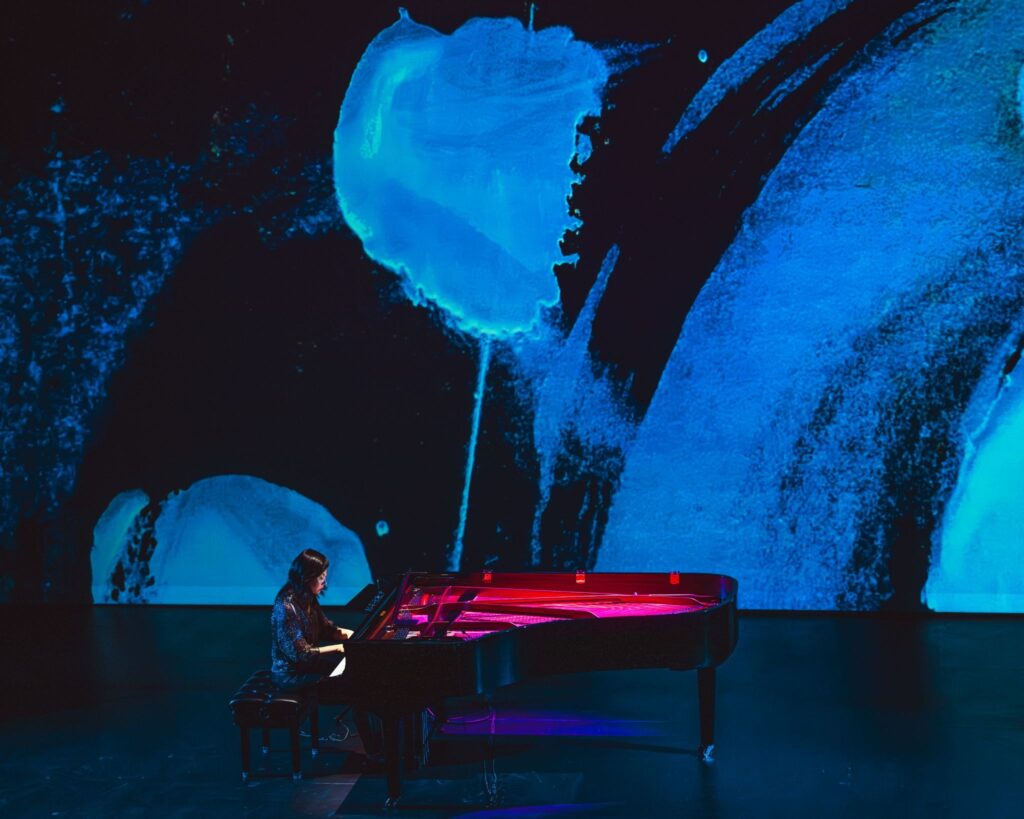
As the music unfolds, we seem to enter the artists’ minds. We experience the energy, tension, uncertainty, and exhilaration of creation in real time. The visual imagery grows, changes, and sometimes appears to battle against itself before arriving at moments of harmony and resolution, a journey through the creative imagination. And the audience enjoys the ride all the way through it.
The innovation lies in the seamless integration of disciplines. Technology is often used in performance as decoration or a backdrop. In Ex Machina, technology becomes a creative partner. Music generates visual responses; images develop their own narrative; together they create an entirely new artistic language. Neither element dominates. Instead, sound and image become inseparable, each enriching and transforming the other.
The program features works by contemporary American composers Reena Esmail, Christopher Cerrone, and Philip Glass, performed with remarkable sensitivity and virtuosity by Yang. Xuan’s visual world responds not by illustrating the music but by conversing with it, challenging it, and occasionally surprising it. The result is an immersive theatrical experience that explores the relationship between technology and humanity while expanding our understanding of both.
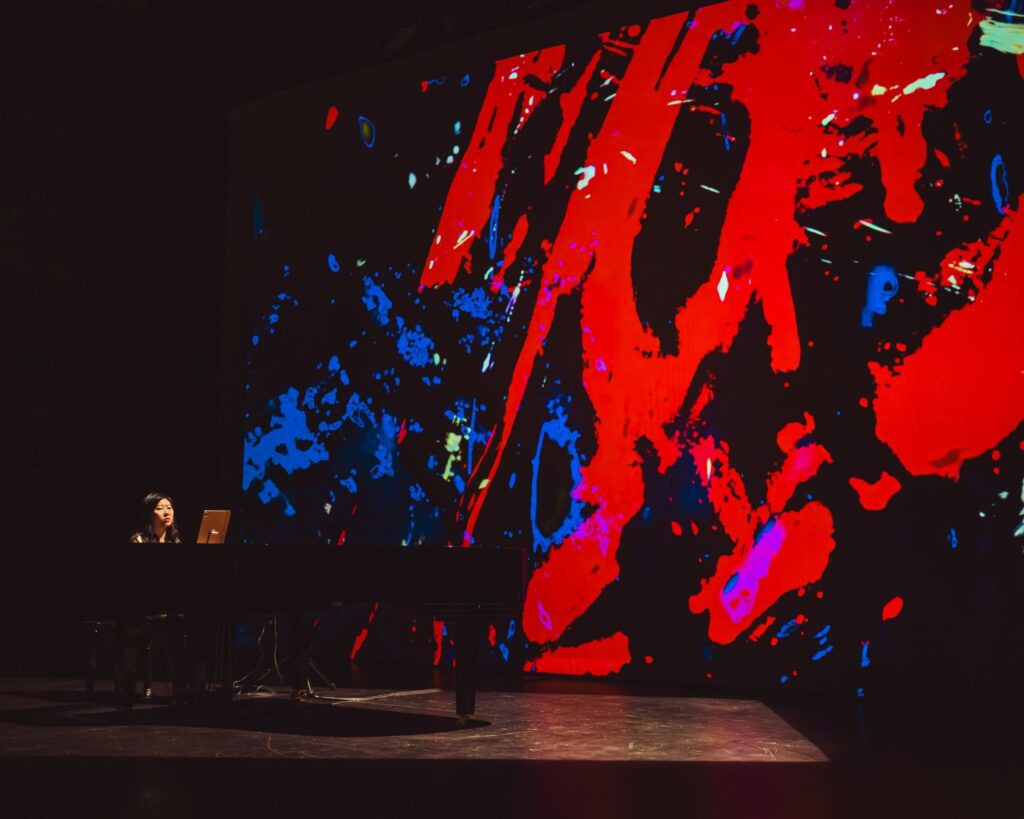
Experiences such as Ex Machina reveal why the Baryshnikov Arts Center has become one of New York City’s most important multidisciplinary arts institutions. Founded in 2005 by legendary dancer and choreographer Mikhail Baryshnikov, the center was created as a place where artists could experiment freely across disciplines and push beyond traditional boundaries. Over the past two decades, it has become a creative laboratory for dancers, musicians, filmmakers, theater artists, and visual artists, encouraging collaborations that might not happen anywhere else.
What distinguishes Baryshnikov Arts is its embrace of visual art as a living, evolving force rather than a static object. The center consistently presents work that dissolves the barriers between artistic disciplines, inviting audiences to experience art in unexpected ways. Ex Machina is a brilliant example of that mission in action.
This performance is part of United in Sound: America at 250, a celebration of the nation’s upcoming 250th anniversary. The occasion brought me back to a memorable moment in my own life.
On July 4, 1986, Mikhail Baryshnikov and I became American citizens during the Statue of Liberty Centennial celebrations on Ellis Island, 200 immigrants from 90 countries were sworn in by Chief Justice Warren Burger. We arrived in America from the Soviet Union through different journeys, I via Israel, he in a not conventional way, but shared a belief in the power of freedom and opportunity.
Baryshnikov’s own path was extraordinary. After defecting from the Soviet Union in 1974 while touring in Canada with the Kirov Ballet, he sought the artistic freedom that would allow him to grow beyond the limitations imposed by the Soviet system. That search for creative freedom eventually led him to establish the Baryshnikov Arts Center.
Watching Ex Machina, I was reminded of how profoundly that vision continues to resonate. Twenty years after its founding, the center remains a place where artists are encouraged to take risks, challenge conventions, and invent new forms of expression. I hope that the organization I founded 37 years ago, CITYarts, will soon present him with the Making a Difference Through the Arts award for the extraordinary work of the Baryshnikov Arts Center.
As the final notes faded and the last bursts of color dissolved into darkness, the audience responded with enthusiastic applause. What lingered was not only admiration for the performers but a sense of wonder. We had witnessed something more than a concert and more than an exhibition. We had experienced the creative process itself—alive, unfolding, and constantly transforming before our eyes.
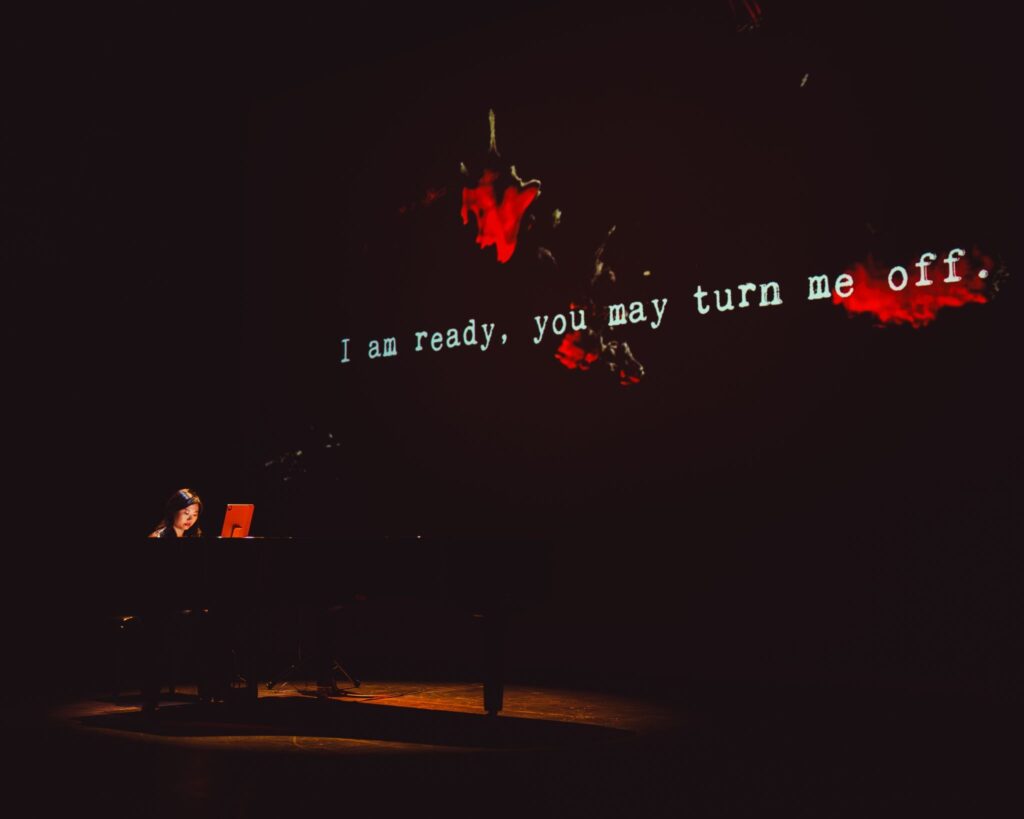
Ex Machina is a fitting celebration of the Baryshnikov Arts Center’s first twenty years and a powerful reminder that the future of art lies not in the separation of disciplines, but in their convergence. Here, music paints, images sing, and imagination knows no boundaries.
Ex Machina, Baryshnikov Arts Center, 450 W 37th St, New York, NY 10018. Performed as part of the Baryshnikov Arts Center’s 20th Anniversary season and United in Sound: America at 250. Performance featuring Clara Yang and Xuan, with music by Reena Esmail, Christopher Cerrone, and Philip Glass.
Make your tax-deductible donation today and help Art Spiel continue to thrive. DONATE
About the writer: Tsipi Inberg Ben-Haim is an art critic, poet, curator, and cultural visionary. She has dedicated her career to transforming neighborhoods into open-air galleries where art becomes a catalyst for dialogue, community, and hope.
She is the founder, executive, and creative director of CITYarts, a 37 years old New York nonprofit that has empowered young people through public art for more than three decades.
A SoHo resident since 1979, Ben-Haim has been an active participant in the neighborhood’s artistic evolution. She created the SoHo Artists History Art Walk and is currently working on its accompanying book, where she celebrates the pioneering artists who transformed SoHo into one of the world’s most influential creative communities, preserving their stories for future generations.