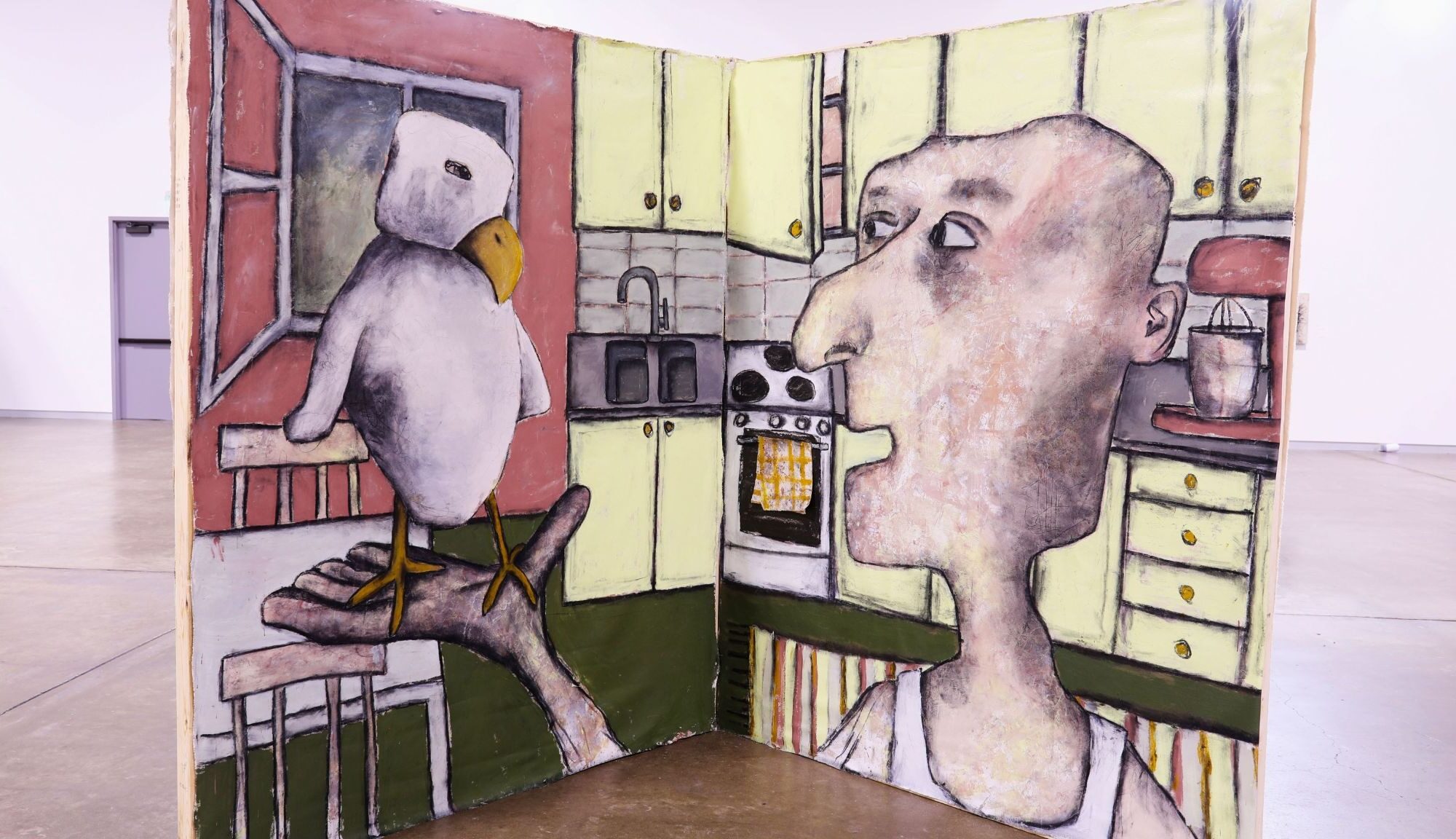
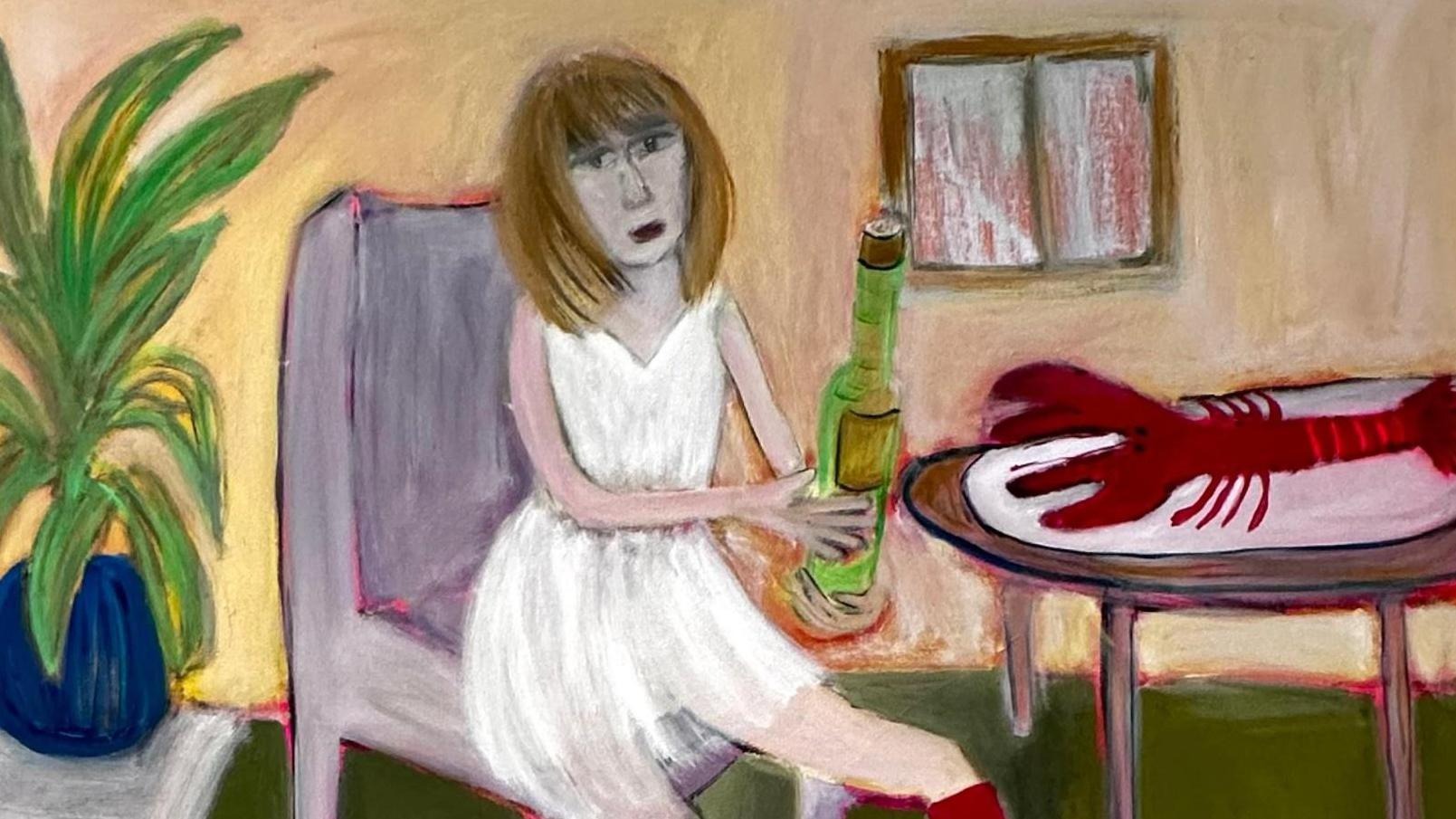
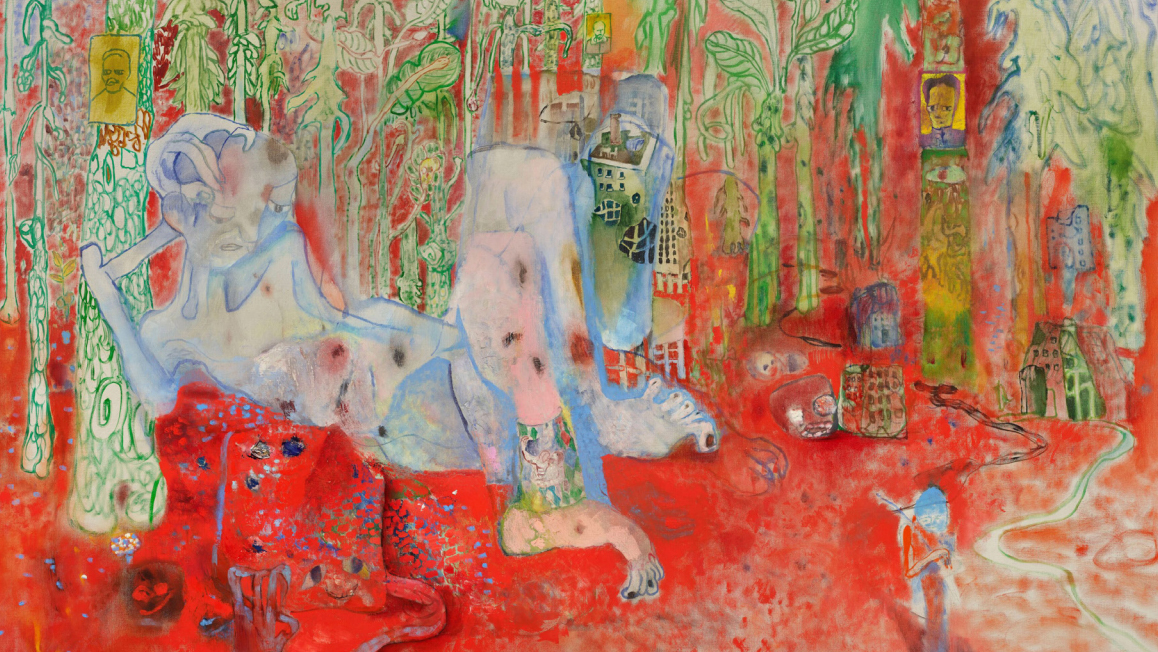
Emelie Stenhammar’s works echo the aims of Elizabeth Murray to reshape our relationship with painting. Cozy rectangular formats are denied. Twisted Perspective prevails. Both artists’ depictions of domestic spaces reflect a mutual fondness for cartoons and whimsy. Stenhammar paints compelling allegory about the human condition, with a compassionate gaze akin to that of Kathe Kollwitz.
Continue reading “How Unexpected: Encounters With the Divine, Emelie Stenhammar”The Luckiest Show You Will See This Summer
What would you do if you wanted to bring more luck into your life? Drawing from her observations of how people across cultures use rituals and superstitions to summon luck, Gail M Boykewich’s show Into the Wolf’s Mouth feels almost like a field guide to how we pray, wish for good fortune, and stay hopeful enough to keep moving forward. Rather than treating luck as simple optimism, Gail presents it as a language of survival — a way people negotiate uncertainty, longing, heartbreak, and the desire for a better future. The title is inspired by the Italian idiom “in bocca al lupo”, a phrase used to wish someone luck as they enter danger. It beautifully implies a universal experience: the desire for more, for solutions, for security, or simply for a way to feel better, especially within our current turbulent and unstable political status quo.
Continue reading “The Luckiest Show You Will See This Summer”What Remains: in dialogue with Arghavan Khosravi
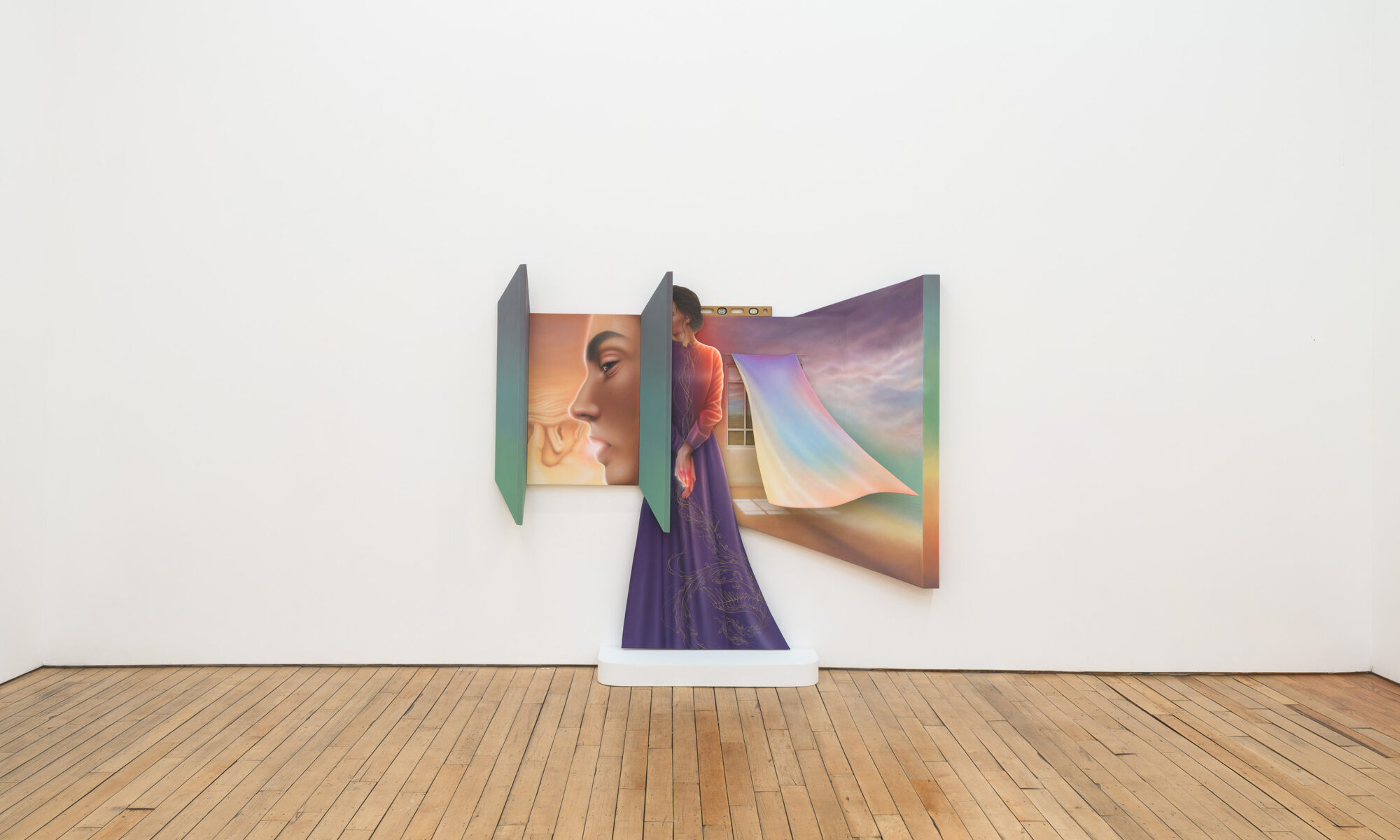
Altarpieces—historically sites of devotion, revelation, and spiritual certainty—become something altogether different in Arghavan Khosravi’s What Remains, currently on view at Uffner & Liu through July 2. The exhibition brings together large-scale wall works, a freestanding sculpture, and an intimate suite of new altar-inspired paintings that continue Khosravi’s ongoing exploration of the forces that shape women’s lives under political, cultural, and religious systems of control. Drawing equally from Persian miniature painting and medieval European iconography, the artist constructs layered worlds where architectural structures become psychological spaces, symbols migrate across histories, and moments of resistance emerge within conditions of constraint. Rather than offering resolution, the works linger in states of suspension—between freedom and captivity, memory and displacement, devotion and doubt.
Continue reading “What Remains: in dialogue with Arghavan Khosravi”It Takes a Village at Freight and Volume
The most subtle acts are often the most cathartic. In times of relentless upheaval and injustice, simple moments can feel Herculean by measure. The current exhibition at Freight and Volume, It Takes A Village, focuses on daily ritual as a gate of entry. Artists Andrea Castillo, Nancy Elsamanoudi, and Baran Shafiey blend nuanced elements with doses of surreality, resulting in invitations into spaces that delightfully offer more questions than answers. Each work is a reckoning with the quietude of in-betweenness. Each artist is a painter working in figuration; yet the similarities end there, and the departures are as varied as one can imagine.
Continue reading “It Takes a Village at Freight and Volume”Memories, Recollections and Everyday Life, Xiangjie Rebecca Wu at Latitude Gallery
Upon entering the exhibition at Latitude Gallery, you are greeted with a poem as a silent welcome, the cadence of the poem setting both the scene and the pace of the exhibition, titled A Room Rehearses its Own. In this exhibition, the paintings of Xiangjie Rebecca Wu piece together place, memory, and silence, with an impactful portrayal through both presence and absence.
Continue reading “Memories, Recollections and Everyday Life, Xiangjie Rebecca Wu at Latitude Gallery “Narratives and expressive figures in Judy Glantzman’s Playing with Dolls at P.P.O.W
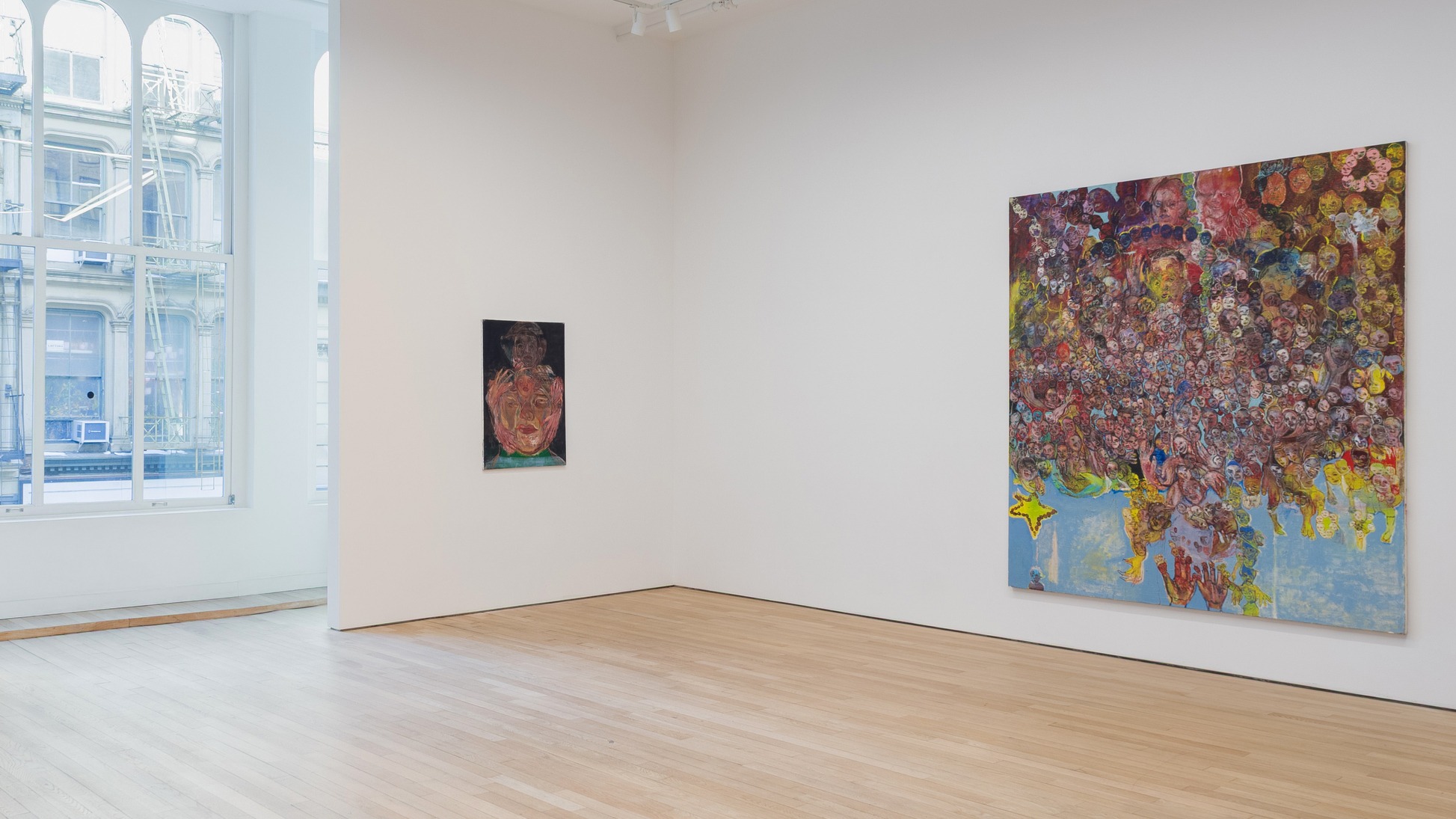
Glantzman’s heroically scaled works immerse viewers in the energetic world that she creates. I really appreciate the diversity in scale of the works in this show. The smaller-sized canvases offer a snapshot, still detailed but a more compact telling of the world she is creating. Whereas the larger works allow viewers to step in and entangle themselves within the forms, narratives, symbols, and ideas that Glantzman offers. Walking into the gallery brought an immediate sense of excitement, wonder, and a need for exploration and adventure within the pieces. The paintings introduce the characters and scenes, while the ceramics are the pieces Glantzman chooses to pluck directly from the compositions and bring into 3D forms.
Continue reading “Narratives and expressive figures in Judy Glantzman’s Playing with Dolls at P.P.O.W”Qiu Xiaofei: The Theater of Wither and Thrive at Hauser & Wirth
At first glance, Qiu Xiaofei’s paintings appear weightless, washed in vaporous blues and fractured light. They hover between memory and dream, suspended in a luminous haze. But sustained looking alters the experience. The mist does not dissolve — it thickens. What seemed ethereal becomes anatomical. The viewer descends from the sky into the soil, and then further still into the ruptured systems, broken bodies, and unstable architectures that structure human existence. Beneath the atmospheric softness lies something closer to the bowels of what we call life: exposed nerves of paint, skeletal fragments, windows that stare back like watchful eyes. The work stages, narrates, and exposes modes of excavation.
Continue reading “Qiu Xiaofei: The Theater of Wither and Thrive at Hauser & Wirth”Salman Toor and Intimate Histories at Luhring Augustine

This exhibition of Salman Toor’s paintings acts like snapshots in a story or a movie, each depicting a separate experience. Every piece draws you in and carries a true push and pull within the composition. The push and pull that drew me in was the idea of public versus private that emanates from within the work, the dream and reality, and just how much intimacy Toor decides to share with us. The feelings of intimacy and vulnerability come from witnessing the lives of the figures Toor presents, leaving us to wonder if we are allowed to bear witness to these moments, or if we’ve just “walked into” something meant to be entirely private.
Continue reading “Salman Toor and Intimate Histories at Luhring Augustine”Robert Yarber- Regard and Abandon at Nicodim Gallery

Neon nights are brought to life within Robert Yarber’s paintings. The large-scale paintings in Nicodim Gallery’s survey of his works bring viewers along for a wild ride. Whether it’s pulling us into a dark hotel room, lit solely by the blue light of a droning, static television set, or throwing us outside, into the life of the party, and possibly, over the balcony and into the air- we are left in suspense of what comes next. It’s as if we were sitting in a dark movie theater, watching someone’s life story unfold.
Continue reading “Robert Yarber- Regard and Abandon at Nicodim Gallery”The Lands of Kats Kill
The Lands of Kats Kill is the second in a series of three interrelated experimental pieces that combine graphics, text, and hyperlinks based on themes coming out of my Crazy River project, for which I gave an interview on this website on May 16th. Crazy River takes a wide-angle view of the climate crisis, ranging from my own climate grief to an in-depth focus on the many causes and effects of rapid environmental changes on the West Branch of the Neversink in Ulster County. In this piece I investigate the idea of the Catskills as a region, and an incongruous bundle of contradictions and coincidences. The Lands of Kats Kill weaves three timelines together: the geologic, the historical, and the personal. This structure repeats throughout my Crazy River project. The previous piece in this series, Invaders, took apart the idea of invasive species. The following will explore the concept of the Golden Spike in stratigraphy as fact and metaphor.
Continue reading “The Lands of Kats Kill”