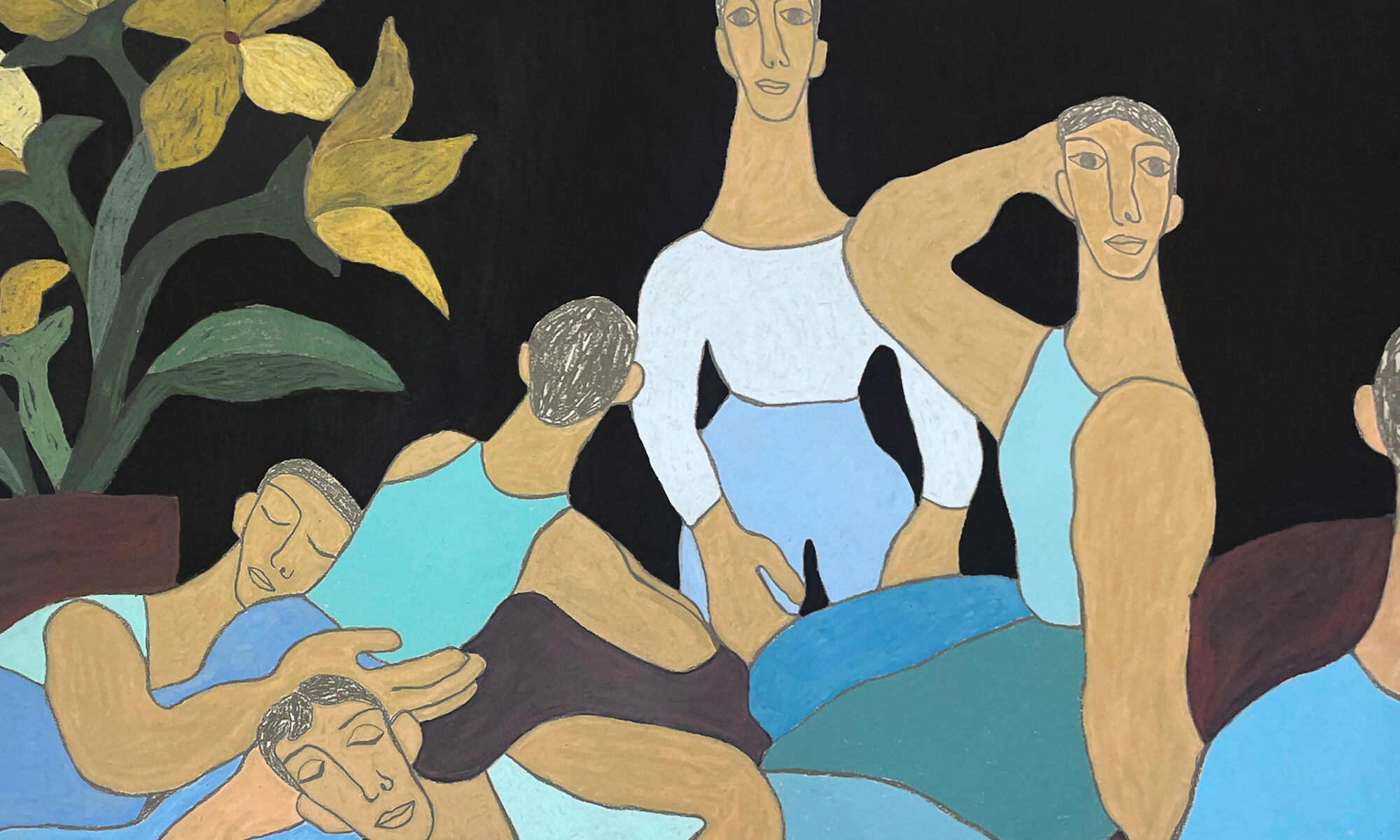
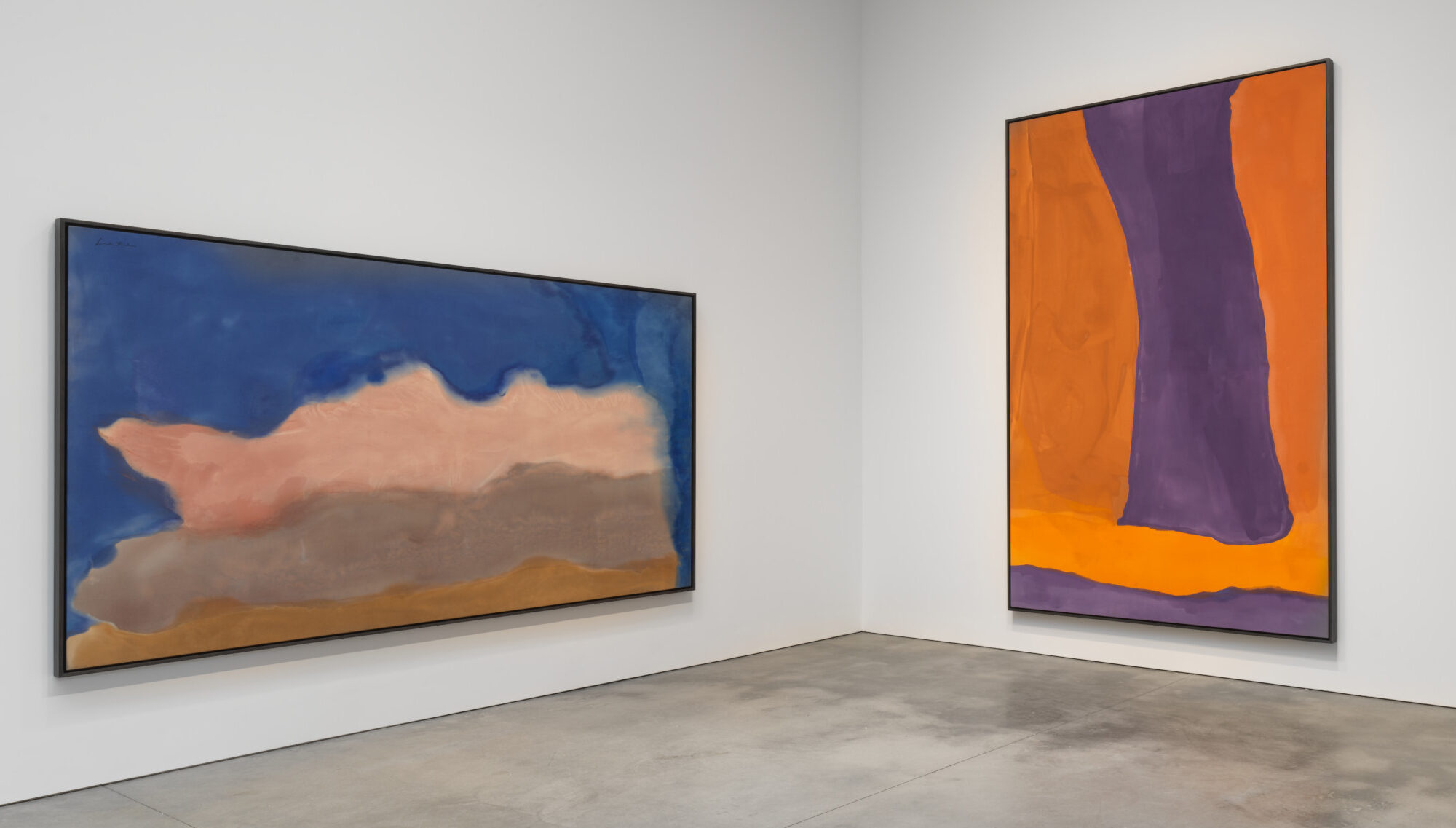
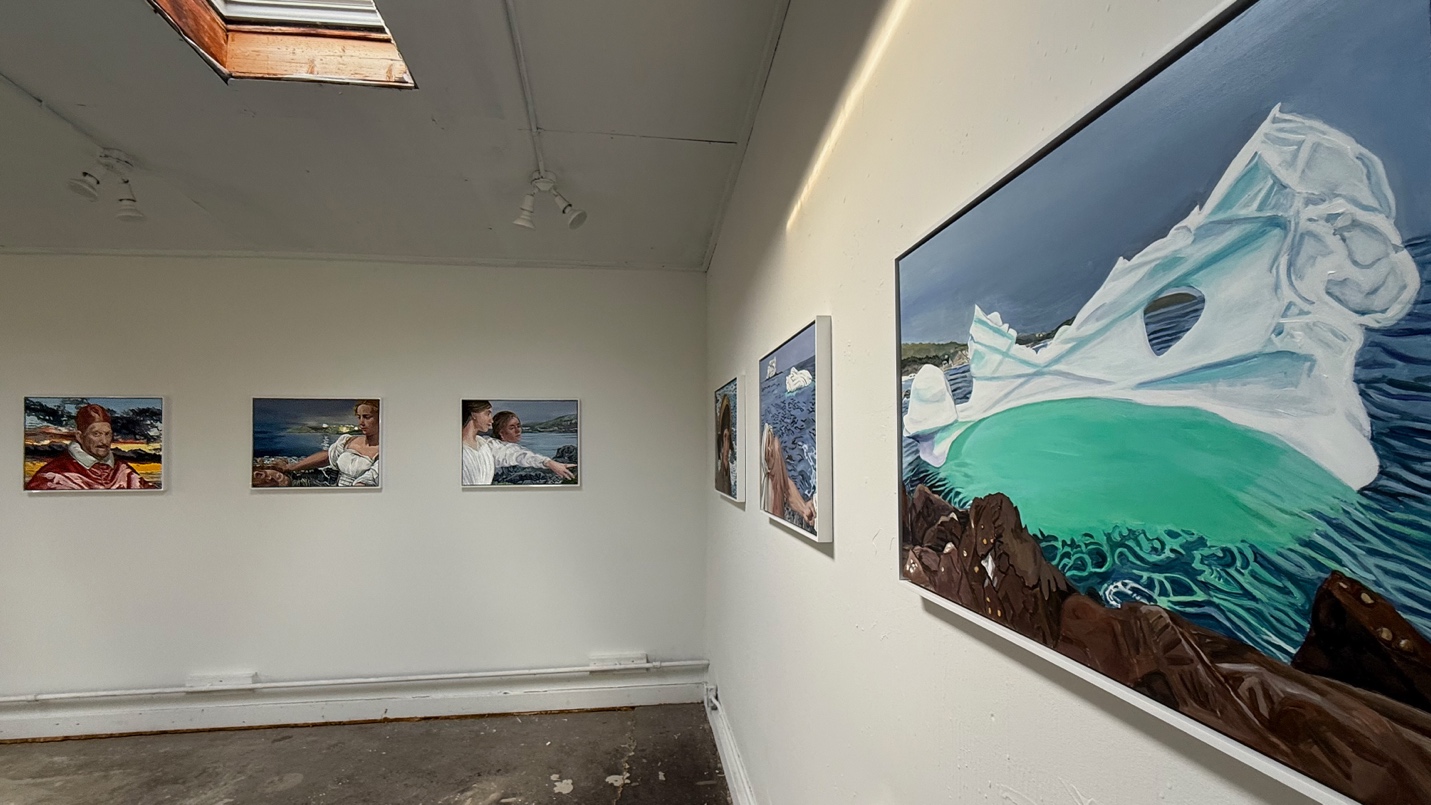
Lee Sherry (1947–2012) showed paintings in New York and Boston through the 1970s and 1980s, moved in the circles of the Language poets, and left behind a body of work that almost no one knew existed. Seeing and Recognition, on view at Field of Play Gallery in Brooklyn through June 28th, is the first survey of her paintings — assembled by curator and artist David McDonough, artist Susan Bee, who was a close friend of Sherry’s in the 1970s, and artist and archivist Zak Vreeland, who acquired works directly from her studio after her death. The show brings together paintings that span decades, from early experiments made in dialogue with minimalism to luminous, layered late work that unfolds the longer you look. We spoke with David McDonough, Susan Bee, and Zak Vreeland about how the show came together, what the paintings do, and why Sherry’s work went unseen for so long.
Continue reading “Seeing and Recognition: The Paintings of Lee Sherry”Voices In Minor Keys: 2026 Venice Biennale
In Minor Keys, the central exhibition of the 61st Venice Biennale, arrived with a quiet proposition. The late curator Koyo Kouho envisioned a show that reflects practices requiring time and sustained commitment — some of them lifetime, even generational — and in doing so created a deliberate antithesis to the Biennale spectacle. Drawing almost exclusively on artists from Africa, the Middle East, and the Caribbean, the exhibition is anchored in political concerns — identity, immigration, the environment — yet so many of the works felt personal, while reaching toward art history and even toward Venice itself. What follows is an account of its visual depth and strength.
Continue reading “Voices In Minor Keys: 2026 Venice Biennale”A Studio That Became a Gallery: 81 Leonard
What began as Nancy Pantirer’s studio in 1996 has grown, over nearly three decades, into a gallery with a clear sense of purpose. Rooted in years of open studios and informal salon gatherings, 81 Leonard formalized its public presence in 2019, building a platform shaped by artists, for artists. Co-run with Hannah Rothbard, the gallery supports emerging and mid-career artists at pivotal moments in their careers, with a program that prizes beauty, technical competence, and community. Group shows grow organically from the artists themselves. We spoke with Nancy Pantirer and Hannah Rothbard about how 81 Leonard came to be, what drives its program, and what it means to run a gallery with no plans to be anywhere else.
Continue reading “A Studio That Became a Gallery: 81 Leonard”Funny Weather at Kunstraum: Upheavals and new assumptions
In the exhibition Funny Weather, curated by Imogen Aukland, four artists present distinct takes on reconstructions and uncertainty. A timely, unsettled feeling meanders through the space — sculptures that depict typically threatening objects unexpectedly softened, or photos that capture moments that physically change as you walk around them. Both the unexpected and a sense of upheaval are prominent themes throughout, whilst also giving us a “weather forecast” that changes by area, mood, and experience. This grants viewers the opportunity to question what art does: what an art object stirs within us, and how much our assumptions about something can shift when viewed from different perspectives.
Continue reading “Funny Weather at Kunstraum: Upheavals and new assumptions”After the Rains – How Nature Roots Us Home
When one thinks of nature, the first thing that comes to mind would be a park filled with leafy trees or perhaps a bouquet of vibrant flowers. With EFA Studio’s newest exhibition, After the Rains, artists challenge the idea of how nature can be represented.
Continue reading “After the Rains – How Nature Roots Us Home “Hospitality, Narrative Grace, and the Warm Head
Derrida once pursued the question of hospitality. Can you welcome someone whose name you do not yet know? Can you open the door before knowing who is arriving? If you can, the welcome is sincere; if you cannot, hospitality has already become part of border management. Unconditional hospitality is therefore always impossible: if the host retains sovereignty, they cannot be fully open; if they become fully open, they are no longer the host. The name thus becomes the first step in the subject’s enclosure. This exhibition is built precisely upon this impossibility.
Continue reading “Hospitality, Narrative Grace, and the Warm Head”Maria Gil Lucientes: Letting the Materials Misbehave
Maria Gil Lucientes paints in the slim margin where a system starts to come undone. She begins with a constraint, a single color, a periodic screen, a piece of medical gauze, then lets the materials misbehave. In Pareidolia, gauze shifted by air becomes the suggestion of a face. A Spanish-born painter who studied mathematics, physics, and computer science before a decade in tech, Lucientes brings a system-builder’s discipline to a practice that hinges on chance. Here, she reflects on the path from science to painting, the dialogue between control and surprise in her process, and the new Moiré series taking shape in her studio.
Continue reading “Maria Gil Lucientes: Letting the Materials Misbehave”Run by Artists, Built for Artists: OyG and the Cornell MFA
What does a gallery look like when the artists are in charge? Founded in 2013, Ortega y Gasset Projects (OyG) is an artist-run collective with no fixed curatorial line and a non-hierarchical structure shared equally among its eight co-directors. Since 2023, it has become the annual New York home for Cornell University’s MFA thesis exhibition — a partnership built on a simple premise: artist-run spaces value experimentation, innovation, and risk-taking, giving graduate artists the freedom to present work without commercial constraints or curatorial imperatives.
Continue reading “Run by Artists, Built for Artists: OyG and the Cornell MFA”Kosuke Kawahara’s Without Innocence, Dissecting and Reassembling at RAINRAIN Gallery
Stepping into the exhibition Without Innocence at RAINRAIN gallery, you are greeted with a plethora of various mediums, ideas, influences, and experimentations. The paintings carry with them several levels of looking, small details to explore, and multiple dimensions within the edges. The photographs set the scene, allowing you to enter another space just as the paintings do, left to explore the worlds that Kawahara creates and builds within it all. The press release introduces a quote from Donna Haraway’s A Cyborg Manifesto, “…we are living through a movement from an organic, industrial society to a polymorphous, information system—from all work to all play, a deadly game (p 28).” This statement lingers alongside my thoughts throughout the exhibition, as I begin to notice more details, connections, and mechanisms that make this exhibition immensely similar to a cyborg in the making. Kawahara takes pieces of the body and fractions of different spaces within the canvas to build something entirely new out of all of these information systems.
Continue reading “Kosuke Kawahara’s Without Innocence, Dissecting and Reassembling at RAINRAIN Gallery”It Takes a Village at Freight and Volume
The most subtle acts are often the most cathartic. In times of relentless upheaval and injustice, simple moments can feel Herculean by measure. The current exhibition at Freight and Volume, It Takes A Village, focuses on daily ritual as a gate of entry. Artists Andrea Castillo, Nancy Elsamanoudi, and Baran Shafiey blend nuanced elements with doses of surreality, resulting in invitations into spaces that delightfully offer more questions than answers. Each work is a reckoning with the quietude of in-betweenness. Each artist is a painter working in figuration; yet the similarities end there, and the departures are as varied as one can imagine.
Continue reading “It Takes a Village at Freight and Volume”