Pouch Power Women: with Brenda Zlamany

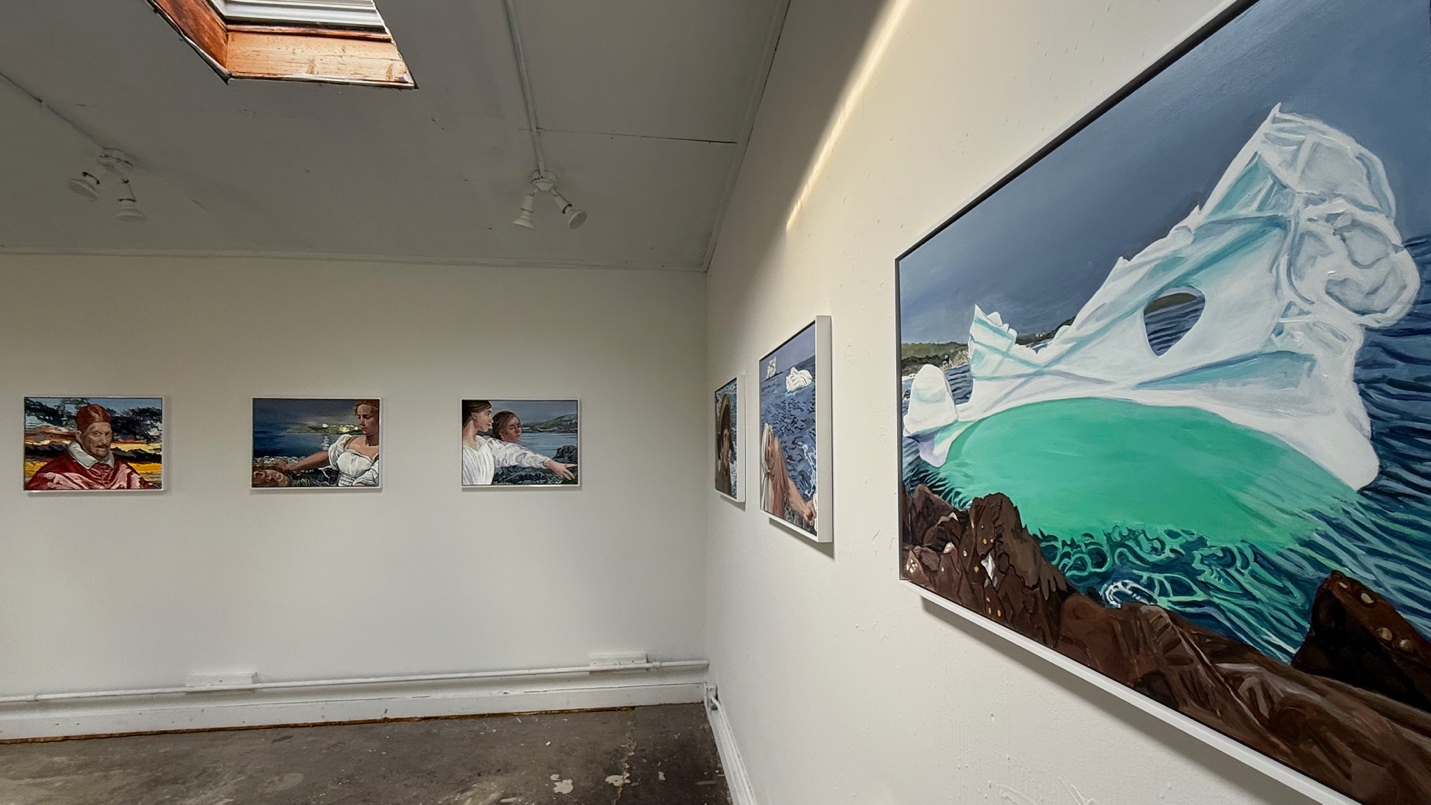
Installation view, Seven Women Chase Icebergs, The Re Institute

What starts as an open call and a group text to trusted friends becomes, two years later, an exhibition that feels inevitable. Seven Women Chase Icebergs, on view at The Re Institute in Millerton, NY, brings together seven painters whose friendships span decades and continents: Rome, Skowhegan, Triangle, Braziers. Organized by Brooklyn-based artist Brenda Zlamany — creator of The Itinerant Portraitist and a painter whose practice has long centered on community as both subject and method — the show grew from a month-long residency at Pouch Cove, Newfoundland, where the group painted, hiked, shared meals, and chased icebergs along the edge of the Atlantic. We spoke with Zlamany about friendship as curatorial logic, landscape as psychological mirror, and what it means to build something together at the edge of the world.

Continue reading “Pouch Power Women: with Brenda Zlamany”

Seeing and Recognition: The Paintings of Lee Sherry

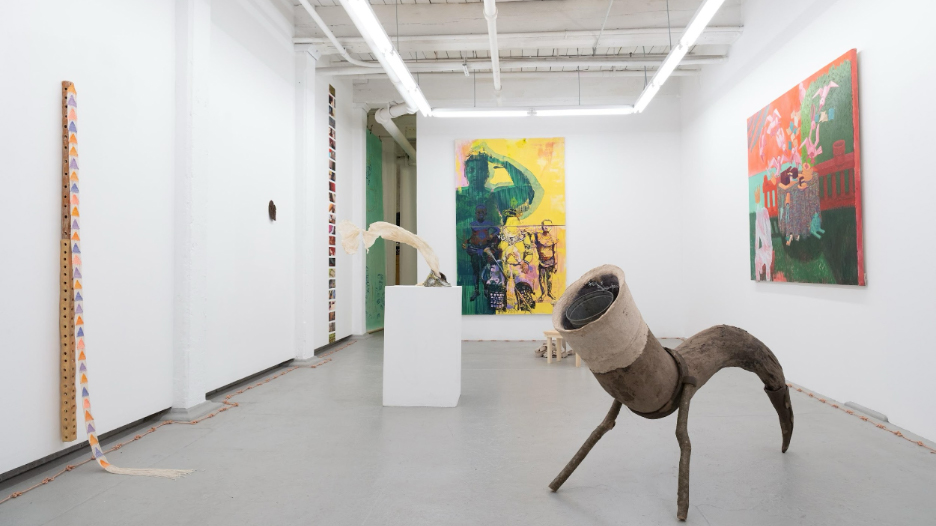
Lee Sherry, Installation view, Seeing and Recognition

Lee Sherry (1947–2012) showed paintings in New York and Boston through the 1970s and 1980s, moved in the circles of the Language poets, and left behind a body of work that almost no one knew existed. Seeing and Recognition, on view at Field of Play Gallery in Brooklyn through June 28th, is the first survey of her paintings — assembled by curator and artist David McDonough, artist Susan Bee, who was a close friend of Sherry’s in the 1970s, and artist and archivist Zak Vreeland, who acquired works directly from her studio after her death. The show brings together paintings that span decades, from early experiments made in dialogue with minimalism to luminous, layered late work that unfolds the longer you look. We spoke with David McDonough, Susan Bee, and Zak Vreeland about how the show came together, what the paintings do, and why Sherry’s work went unseen for so long.

Continue reading “Seeing and Recognition: The Paintings of Lee Sherry”

Maria Gil Lucientes: Letting the Materials Misbehave

Maria Gil Lucientes, Circles series backdrop

Maria Gil Lucientes paints in the slim margin where a system starts to come undone. She begins with a constraint, a single color, a periodic screen, a piece of medical gauze, then lets the materials misbehave. In Pareidolia, gauze shifted by air becomes the suggestion of a face. A Spanish-born painter who studied mathematics, physics, and computer science before a decade in tech, Lucientes brings a system-builder’s discipline to a practice that hinges on chance. Here, she reflects on the path from science to painting, the dialogue between control and surprise in her process, and the new Moiré series taking shape in her studio.

Continue reading “Maria Gil Lucientes: Letting the Materials Misbehave”

Run by Artists, Built for Artists: OyG and the Cornell MFA

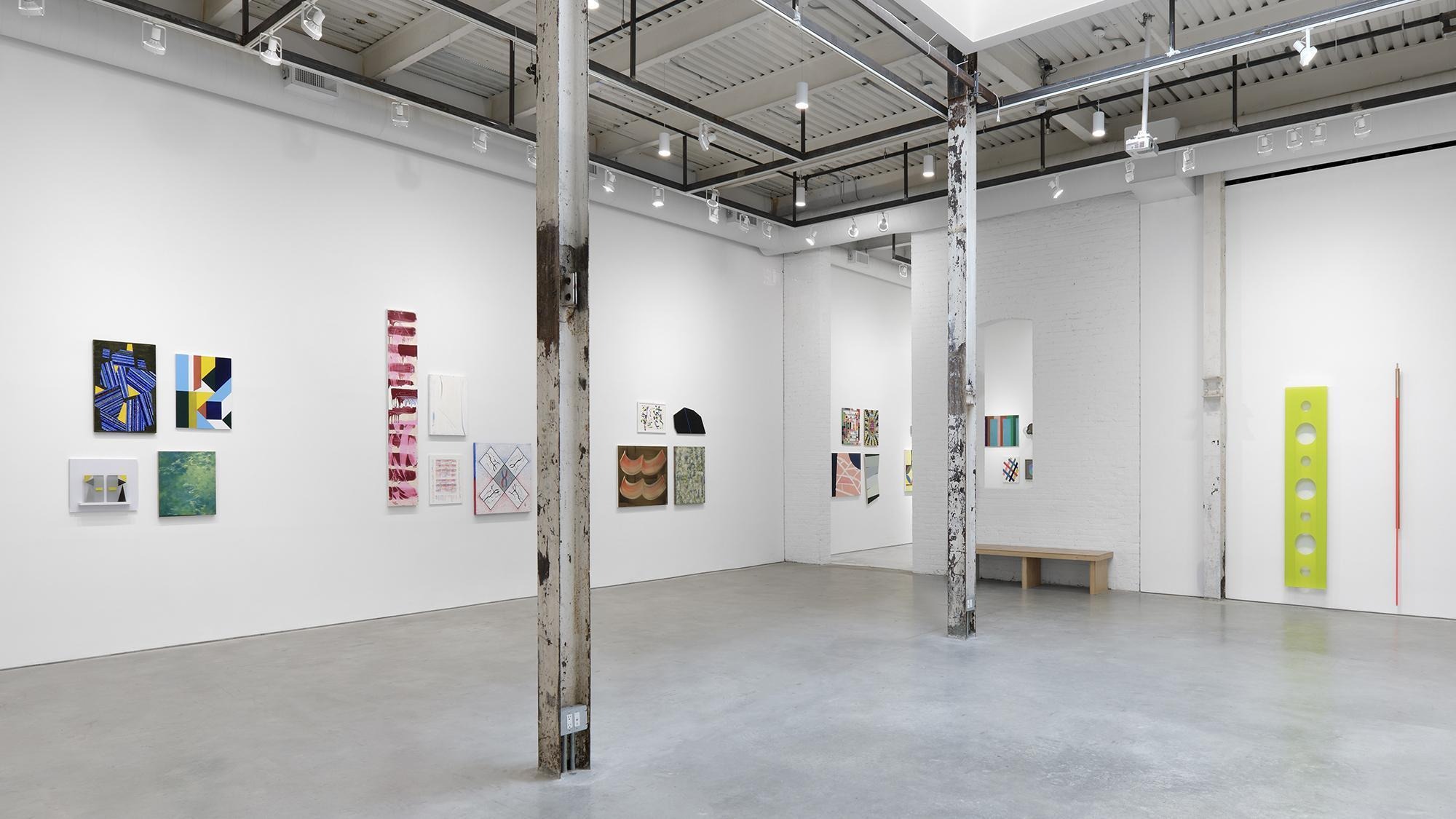
What does a gallery look like when the artists are in charge? Founded in 2013, Ortega y Gasset Projects (OyG) is an artist-run collective with no fixed curatorial line and a non-hierarchical structure shared equally among its eight co-directors. Since 2023, it has become the annual New York home for Cornell University’s MFA thesis exhibition — a partnership built on a simple premise: artist-run spaces value experimentation, innovation, and risk-taking, giving graduate artists the freedom to present work without commercial constraints or curatorial imperatives.

Continue reading “Run by Artists, Built for Artists: OyG and the Cornell MFA”

Still Abstract at 90: American Abstract Artists 

American Abstract Artists turns 90 this year, an unusual achievement for an artist-run group. Its anniversary show, Abstract by Definition: An Index, opened in April at Art Cake in Brooklyn, curated by Saul Ostrow, who brought 88 current members together under a single roof: a curatorial puzzle, an organizational feat, and a long-running argument about what abstraction can be. A companion exhibition at D. Wigmore Fine Art on West 57th Street focuses on the group’s founders and work made between 1936 and 1950 and runs through July. Here, painter Jacob Cartwright, who serves as AAA’s Secretary, reflects on the group’s nomination-only structure, how a show this size actually comes together, and where he wants AAA to go next.

Continue reading “Still Abstract at 90: American Abstract Artists “

Philadelphia Artist Studio Visits: Deirdre Murphy 2026

I met Dierdre Murphy for our studio visit at Rolling Hill Park on one of the first true days of spring. She strode up the forested lane with a bright smile, and I followed her to a yellow cottage nestled among the trees and many meandering hiking trails. Bathed in the sound of tweeting of birds, Murphy explained her long history of working with the Lower Merion Conservancy both as a volunteer and as their Climate Artist-in-Residence. There, she has created several site-specific works, including a spectacular mural translating bird migration data into bright organic shapes.

Continue reading “Philadelphia Artist Studio Visits: Deirdre Murphy 2026”

Masako Miki: Midnight March – A Galaxy of Joyful Transformation

As the founding Executive and Artistic Director of the MassArt Art Museum (MAAM), Lisa Tung has continually focused on bringing immersive exhibitions to the public and establishing an institution that champions art education, contemporary art practices, and the accessibility of art. Having seen and admired the work of Masako Miki, Tung brought Miki’s imaginative creations to MAAM, where they come alive in Midnight March, curated by Alison Gass and Meghan Smith. 

Midnight March transforms the Paine Gallery into a galaxy, filled with Miki’s large-scale, felted interpretations of Japanese folklore spirits, yōkai. Through their materiality, scale, color, and design, the typically alienated spirits are presented through a contrasting portrayal from their traditionally frightening depiction, shown as playful, respected, and not so different from ourselves. Through an animistic approach, Midnight March reimagines myth, highlighting our similarities, spirituality, and the power of sculptural storytelling.

Continue reading “Masako Miki: Midnight March – A Galaxy of Joyful Transformation”

Natalie Moore: Capturing Mirage

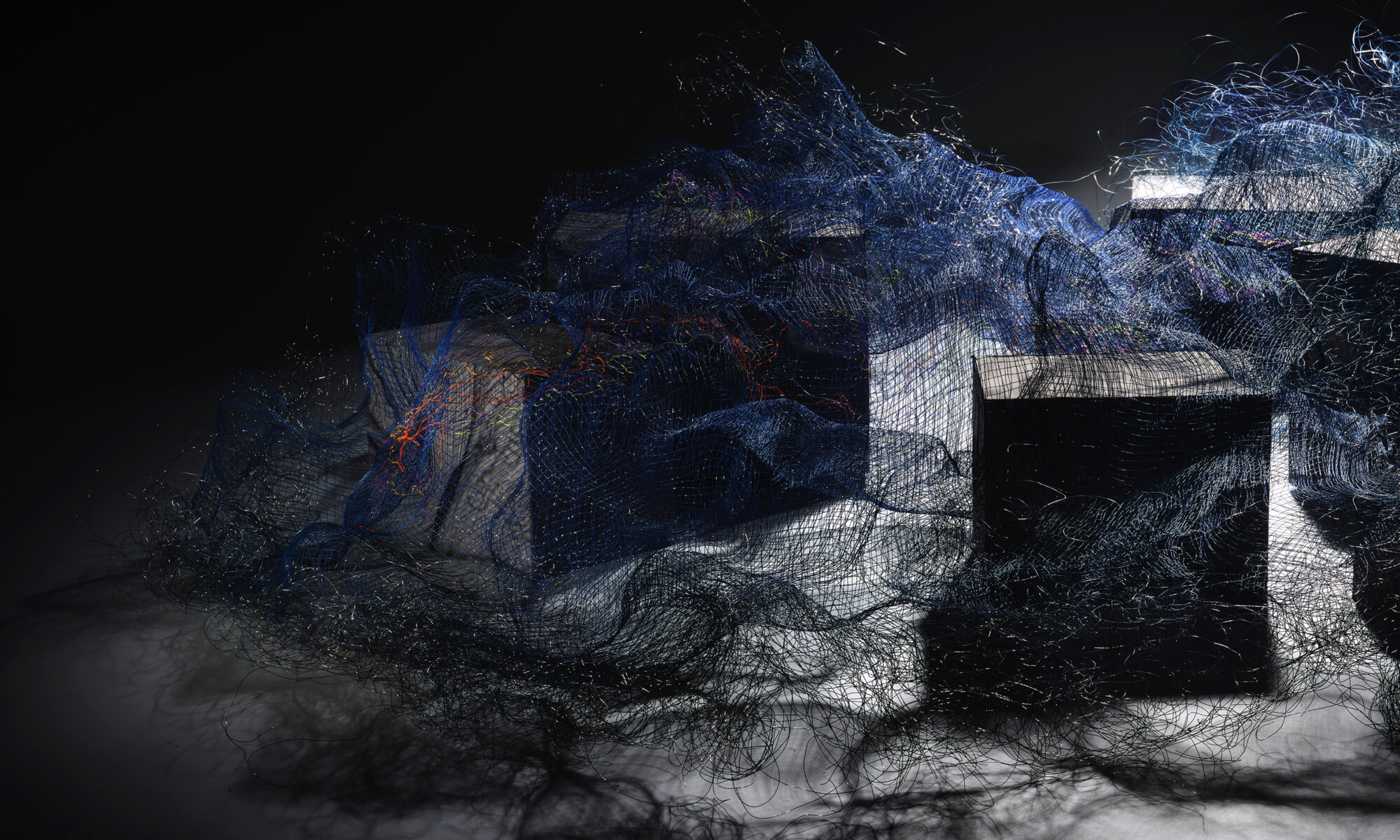
Natalie Moore, Spill, 2025,68”x 60” x 20”h, hand woven stainless steel wire, non-acrylic polymer, thread. Photo ©Martin Seck

Natalie Moore grew up in San Diego, California, and spent many summers in Norway with her mother’s family. Although she has lived in New York for much longer, the dramatic Californian and Norwegian landscapes remain a lasting influence. Climate and ecology have also become more present in her work over the last decade, as the climate crisis worsens and governments and corporations continue to minimize the effects of carbon emissions, pollution, water use, and chemical waste.

Continue reading “Natalie Moore: Capturing Mirage”

Linnéa Spransy: Stockpiles of Potential

A picture containing a studio wall with frosted mylar drawing and the artists seated in front of it.

Linnéa Gabriella Spransy in her studio with ‘Chronos’, an ink drawing on frosted mylar, laminated and partially suspended from the wall.

For LA based, multi-disciplinary artist Linnéa Gabriella Spransy, limits are the core subject. Her curiosity about science, philosophy, cultural theory, physics, history, theology and, as she puts it, “a healthy dose of science fiction”, has led her to notice patterns and contradictions in commonplace assumptions. For instance, the belief that unlimited freedom is the optimal state of being, an idea that is flatly contradicted by the fact that no one is absolutely free, as we are all bound by a certain era, language, and people in our lives. Furthermore, Spransy says, some would argue that knowledge itself is a limit, especially knowledge about the future. She is grappling with big questions such as—does knowledge that deals with predicting the behavior of systems prevent freedom? Do we live in a deterministic universe merely garnished with the illusion of autonomy, or do we live in a genuinely open one? Throughout her reading and experience in the studio, she began to suspect that limitations are not barriers to freedom, but rather gateways.

Continue reading “Linnéa Spransy: Stockpiles of Potential”