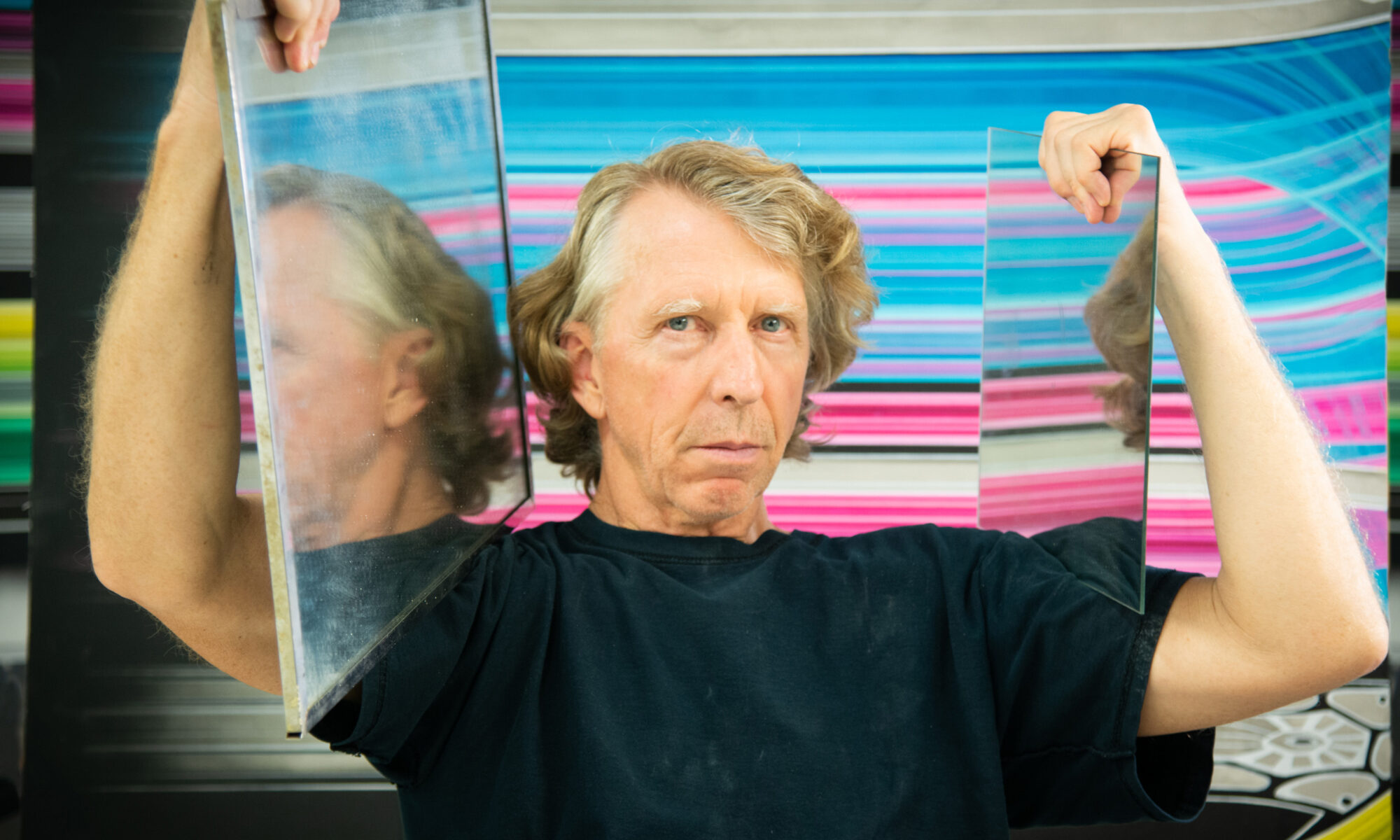
This is Me Looking: In Dialogue with Wen-You Cai on Collaborating with Her Six-Year-Old Self

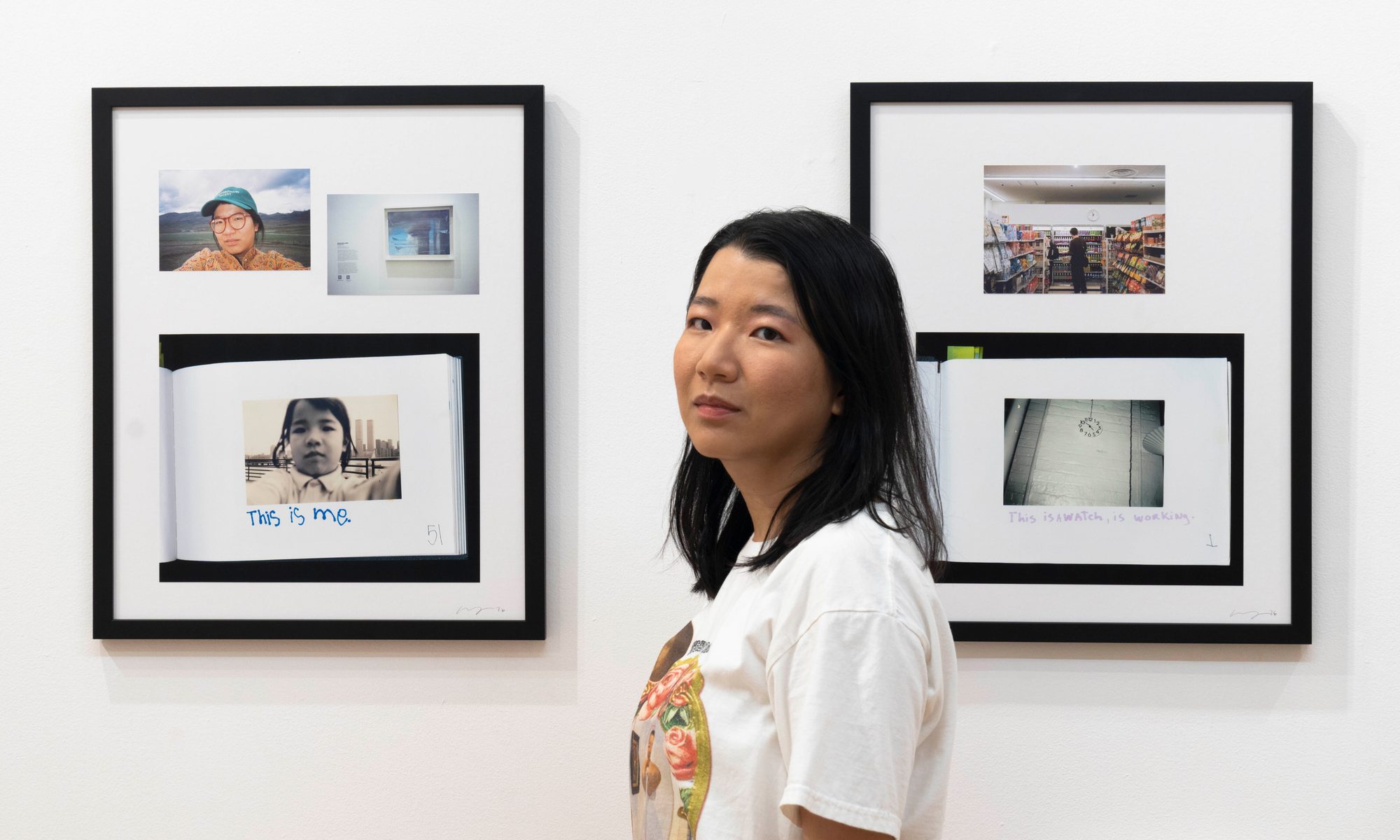
Wen-You Cai, This is Me Looking

In 1996, a six-year-old child was given a camera and sent out to capture the world through her eyes. She aimed the lens at her father’s back against the Twin Towers, at her own blurred hand, at a sculpture in a museum, at Buddhist drawings on the wall. She had recently arrived in the United States, and the world in front of her was made of curiosity, novelty, and strangeness.

Continue reading “This is Me Looking: In Dialogue with Wen-You Cai on Collaborating with Her Six-Year-Old Self”

Atay Ilgun and Jonathan Carmel on ./spiral at Fondazione Aversano

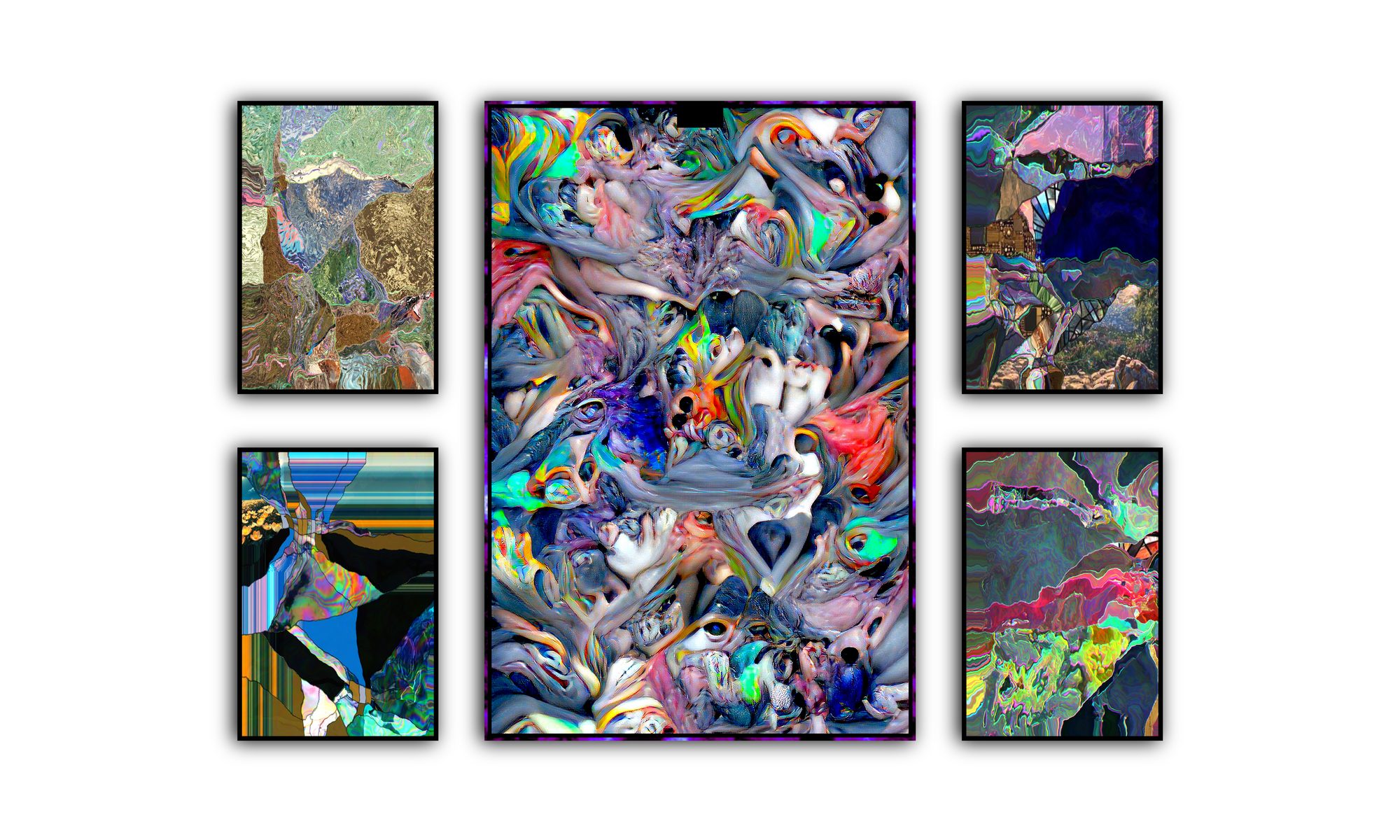
Atay Ilgun, Otherness

How does a field barely a decade old start to have a past? ./spiral takes up that question, gathering eleven artists who were present at the early days of AI, code, and blockchain art and asking each to pick up a formative work, tool, or loose end and carry it forward from where they are now. For co-curator Atay Ilgun, a London-based artist and technologist, the burst of new tools between 2017 and 2022 has only lately settled far enough into the past to be seen clearly. His fellow curator, SuperRare’s Jonathan Carmel, describes the return as a way of moving forward by first turning around. The works cross from screen into matter along the way, Helena Sarin’s ceramics drawing AI imagery toward ancient clay, Robbie Barrat’s Plexiglas prints nudging it back toward the glow of a monitor. Presented by SuperRare at Justin Aversano’s Fondazione Aversano in New York, September 3–10. Here, Ilgun and Carmel discuss how the show came together, the move from screen to object, and the histories their artists carry forward.

Continue reading “Atay Ilgun and Jonathan Carmel on ./spiral at Fondazione Aversano”

Cantilevers at Roundabouts Now

Installation view of Cantilevers - Katy Fischer & Marie Lorenz

Katy Fischer and Marie Lorenz go back to the mid-90s and the printmaking department at RISD, where the sheer amount there was to learn on a technical level sealed both of their paths as artists. Cantilevers, their two-person exhibition at Roundabouts Now in Kingston, includes no printmaking at all — yet a printmaker’s habit of setting up a repeatable process and then letting it devolve runs through both bodies of work. Lorenz, who has operated a tide taxi in New York Harbor since 2005 in boats she designs and builds, shows kinetic, pendulum-based sculptures weighted with porcelain casts of objects found on the beach. Fischer’s script-like porcelain shapes and new mosaics draw on techniques with roots reaching back 1,500 years. In the conversation that follows, the two artists discuss their shared history, the systems behind their work, and the tension of balancing porcelain on a single point.

Continue reading “Cantilevers at Roundabouts Now”

Polychrome at Bernay Fine Arts

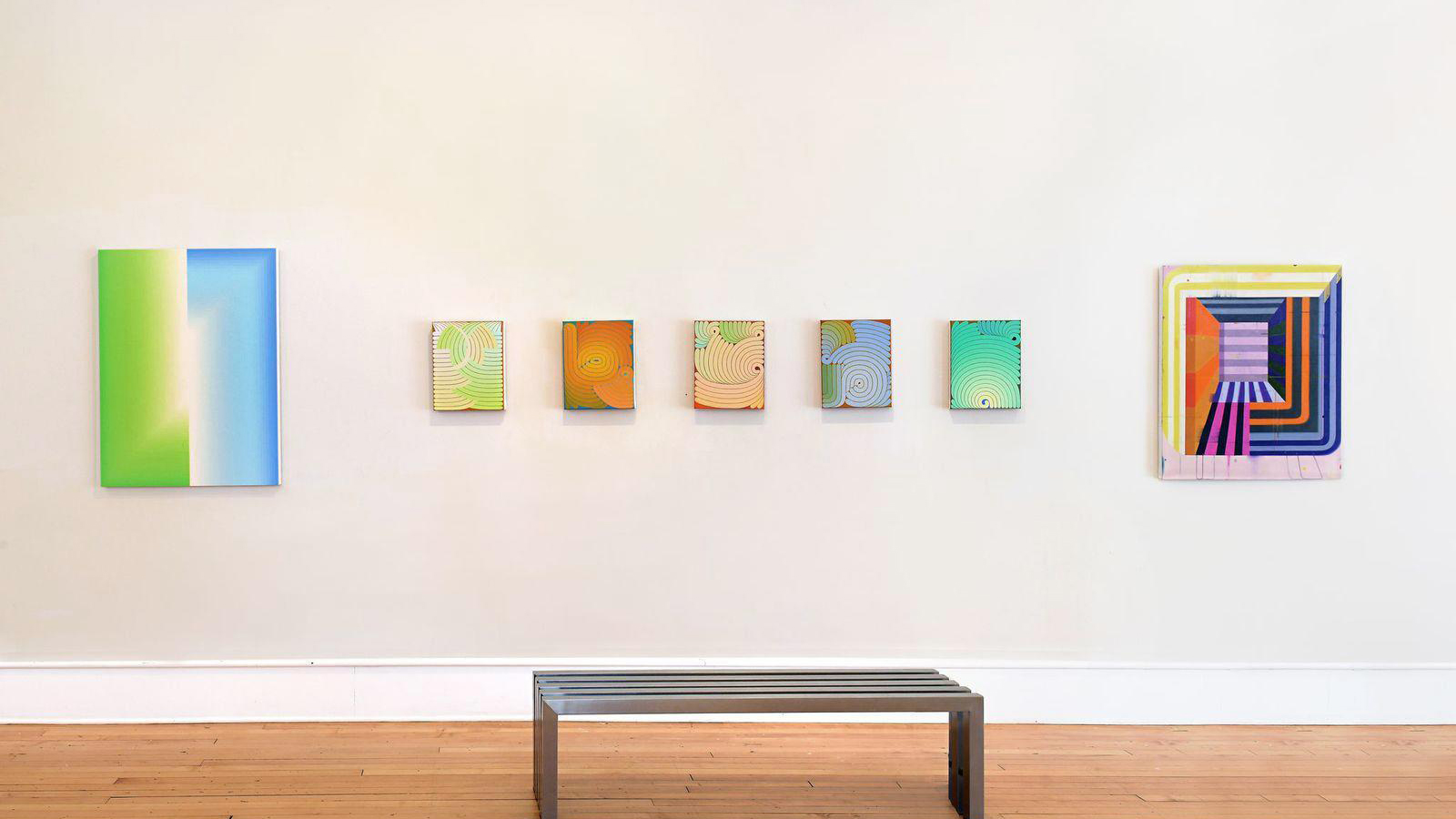
Installation view: Polychrome, Bernay Fine Art

Polychrome, on view at Bernay Fine Arts, brings together paintings by Jenny Kemp, Audrey Stone, and Deborah Zlotsky in an exhibition on abstraction and geometric structure. Across three distinct practices, the artists use color as structure and sensory experience, although each arrives at abstraction through her own internal logic. Here abstraction is a form of concentration, examining the texture of experience: how can attention intensify and shift? How can time accumulate? How can systems hold together and slip apart? Artist Meg Lipke, a long-time colleague and friend of the artists, visited the show and addressed questions for the following conversation.

Continue reading “Polychrome at Bernay Fine Arts”

Timothy Makepeace: From Thirty Feet to One Million Miles 

Timothy Makepeace in the Studio

Timothy Makepeace has spent nine years making art about one of the most complex machines humanity has ever built. Since his first visit to NASA’s Goddard Space Flight Center in 2016, the artist has developed an expansive body of work in response to the James Webb Space Telescope — its gold-plated beryllium mirrors, its acoustic test chambers, the light it gathers from increasingly distant points in time. The culmination of that inquiry is Ghost in the Machine, on view at the American University Museum at the Katzen Arts Center in Washington, DC, through August 9, 2026. We spoke with Makepeace about working with NASA engineers, the formal decisions behind his square-format drawings, and what kept drawing him back to a telescope now orbiting the Sun a million miles from Earth.

Continue reading “Timothy Makepeace: From Thirty Feet to One Million Miles “

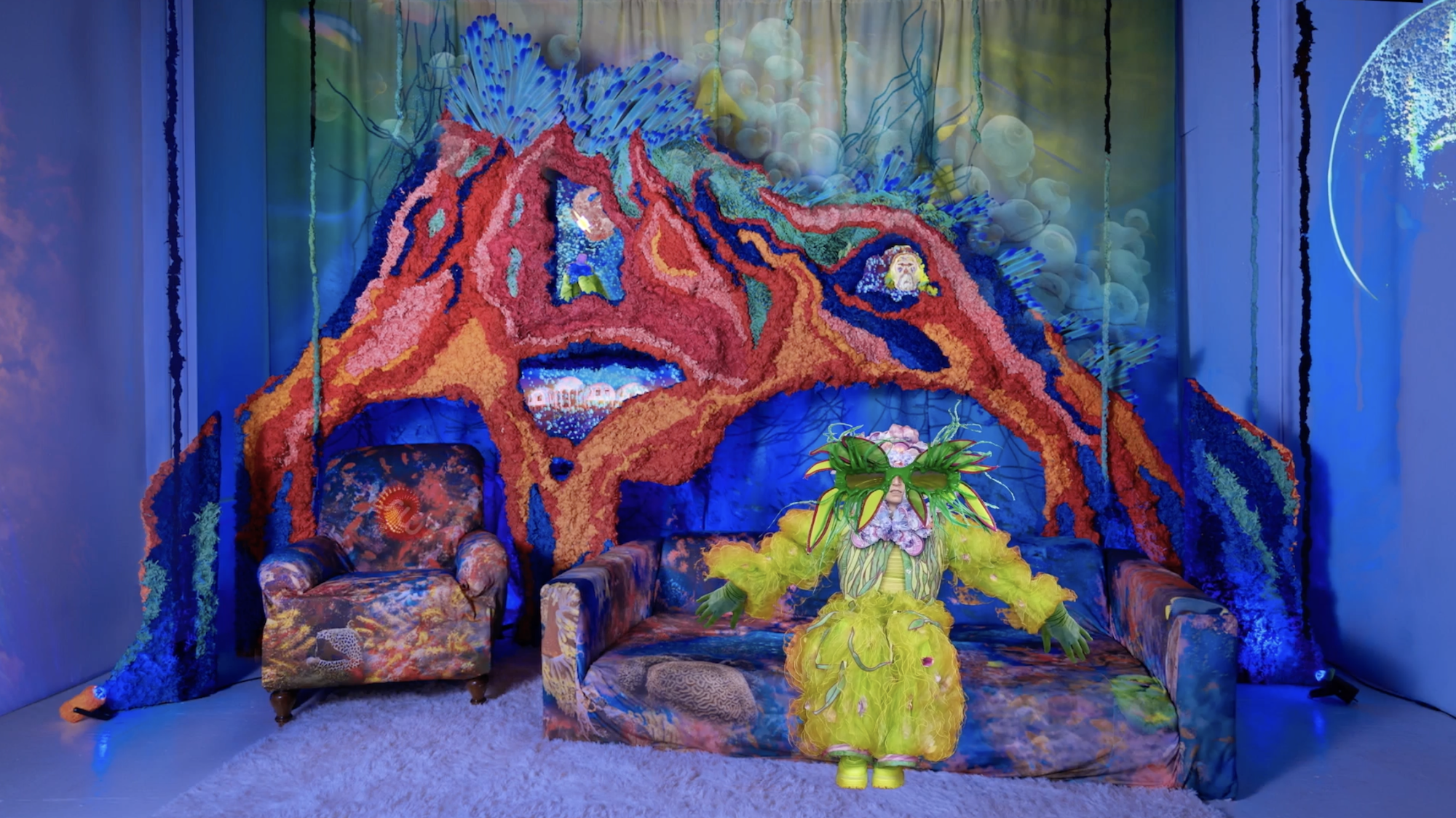
Dakota Gearhart: All Matter Is Alive

Dakota Gearhart grew up on a Florida coastline where algae blooms, sewage outflows, and bikini contests share the same shoreline, and her work has been carrying that mix of beauty, decay, and amusement into a much bigger frame ever since. Across animation, sculpture, performance, and sound, she builds video worlds where pixels sing, electricity becomes sentient, and the nonhuman shows up on equal footing with the rest of the cast. Her ongoing animated series Life Touching Life is hosted by Tiffany, a half-algae, half-woman figure who guides viewers through episodes shaped with collaborators — poets, scientists, activists, caretakers — whose lives already reflect the worldview the work is reaching toward. It’s funny, strange, and serious in roughly equal measure, which turns out to be the right register for the worlds it stages.

Continue reading “Dakota Gearhart: All Matter Is Alive”

The Whole Water of a River at TSA Brooklyn with Byron Toledo

The Whole Water of a River, installation view

A dead opossum lying in a fetal position along a contaminated riverbank in Quito became, for Byron Toledo, both an encounter and a sculpture. That moment, tender and violent at once, is at the heart of The Whole Water of a River at Tiger Strikes Asteroid Brooklyn, an exhibition that follows the Machángara River from its mountain source through the city. Ceramic animals, distilled plant aromas, and sound recordings gathered along the watershed map the river as a living system that connects hills, ravines, plants, people, and the city itself. The project carries unusual stakes: in 2024, an Ecuadorian court ruled that the rights of the Machángara had been violated, a ruling for which Toledo’s own video work served as evidence. We spoke with the artist about walking the river, collaborating across disciplines, and what it means to make art inside an ecosystem fighting to survive.

Continue reading “The Whole Water of a River at TSA Brooklyn with Byron Toledo”

Pouch Power Women: with Brenda Zlamany

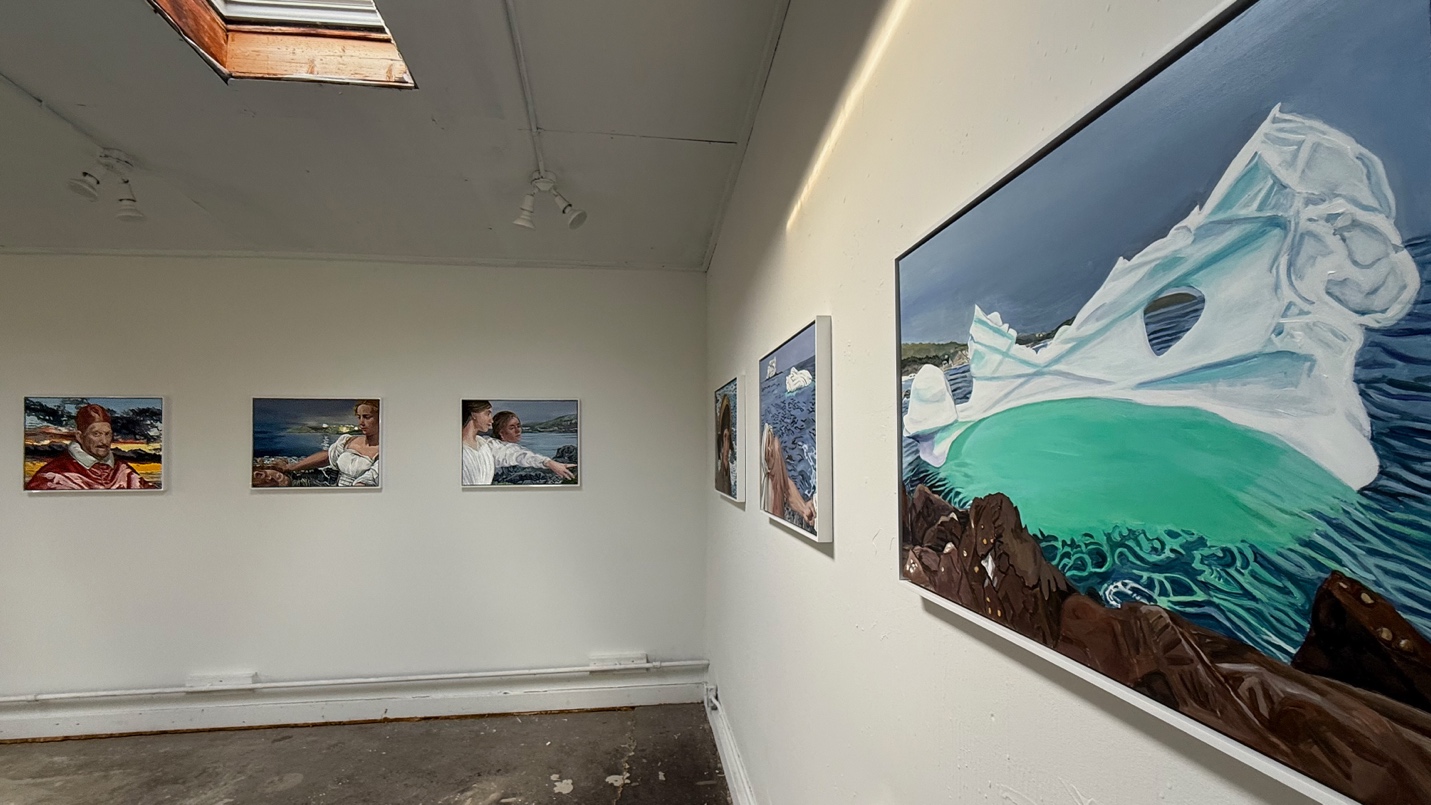
Installation view, Seven Women Chase Icebergs, The Re Institute

What starts as an open call and a group text to trusted friends becomes, two years later, an exhibition that feels inevitable. Seven Women Chase Icebergs, on view at The Re Institute in Millerton, NY, brings together seven painters whose friendships span decades and continents: Rome, Skowhegan, Triangle, Braziers. Organized by Brooklyn-based artist Brenda Zlamany — creator of The Itinerant Portraitist and a painter whose practice has long centered on community as both subject and method — the show grew from a month-long residency at Pouch Cove, Newfoundland, where the group painted, hiked, shared meals, and chased icebergs along the edge of the Atlantic. We spoke with Zlamany about friendship as curatorial logic, landscape as psychological mirror, and what it means to build something together at the edge of the world.

Continue reading “Pouch Power Women: with Brenda Zlamany”

Seeing and Recognition: The Paintings of Lee Sherry

Lee Sherry, Installation view, Seeing and Recognition

Lee Sherry (1947–2012) showed paintings in New York and Boston through the 1970s and 1980s, moved in the circles of the Language poets, and left behind a body of work that almost no one knew existed. Seeing and Recognition, on view at Field of Play Gallery in Brooklyn through June 28th, is the first survey of her paintings — assembled by curator and artist David McDonough, artist Susan Bee, who was a close friend of Sherry’s in the 1970s, and artist and archivist Zak Vreeland, who acquired works directly from her studio after her death. The show brings together paintings that span decades, from early experiments made in dialogue with minimalism to luminous, layered late work that unfolds the longer you look. We spoke with David McDonough, Susan Bee, and Zak Vreeland about how the show came together, what the paintings do, and why Sherry’s work went unseen for so long.

Continue reading “Seeing and Recognition: The Paintings of Lee Sherry”

Maria Gil Lucientes: Letting the Materials Misbehave

Maria Gil Lucientes, Circles series backdrop

Maria Gil Lucientes paints in the slim margin where a system starts to come undone. She begins with a constraint, a single color, a periodic screen, a piece of medical gauze, then lets the materials misbehave. In Pareidolia, gauze shifted by air becomes the suggestion of a face. A Spanish-born painter who studied mathematics, physics, and computer science before a decade in tech, Lucientes brings a system-builder’s discipline to a practice that hinges on chance. Here, she reflects on the path from science to painting, the dialogue between control and surprise in her process, and the new Moiré series taking shape in her studio.

Continue reading “Maria Gil Lucientes: Letting the Materials Misbehave”