
The Hessel Center for Curatorial Studies at Bard College has mounted a lavish retrospective on the work of artist and art dealer Betty Parsons. The first such exhibit in 25 years, it covers her career from beginning to end.
The exhibition contains two beautifully produced films about Parsons. One is a little academic in nature, explaining her importance in the post-WWII New York art world and highlighting the artists she championed. It’s a handsome film and well designed for the novice who might be new to Parsons’ work and influence. The second is a more intimate portrait of Parsons as a person and an artist. Together they create a compelling portrait of a complex, important, and visionary artist.
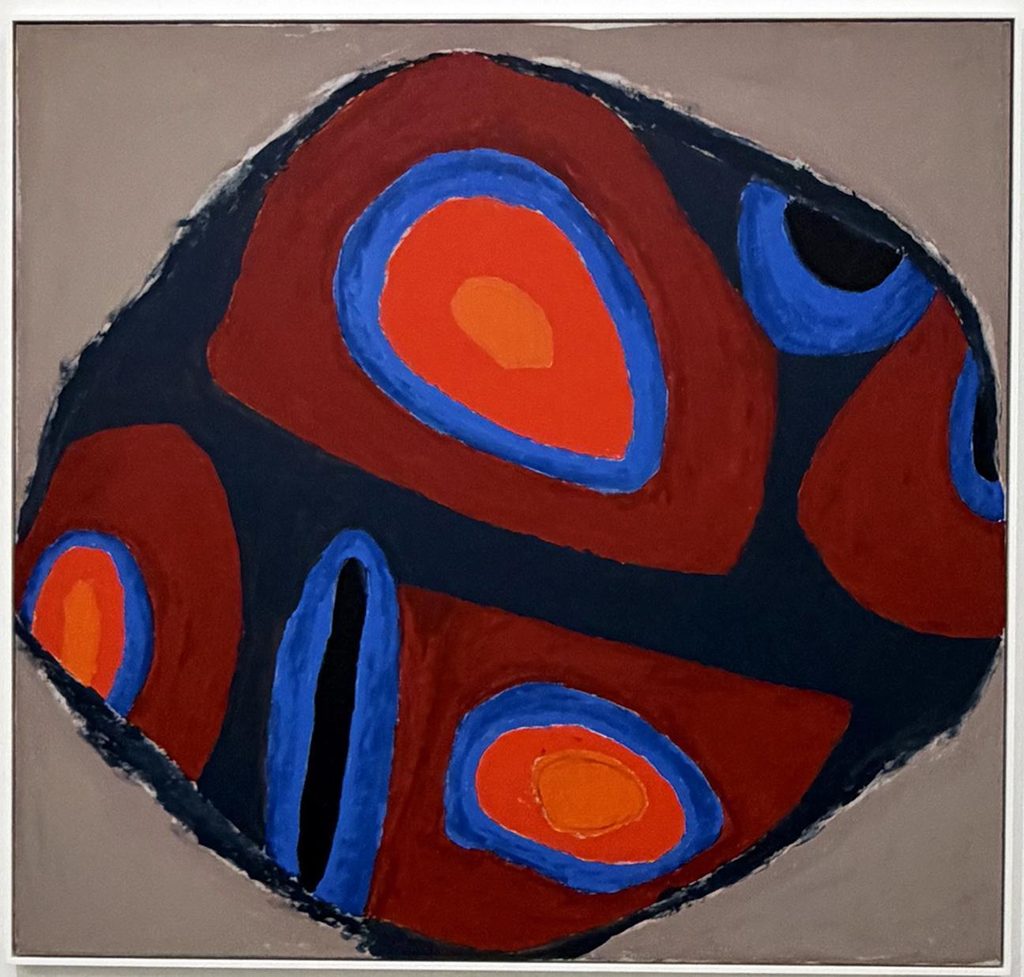
Parsons, born in 1900, was a well-born, well-educated New Yorker who wanted to be an artist rather than a society lady. She decamped to Paris in 1919, an older, wealthy husband in tow. The marriage dissolved, but Parsons stayed in Paris and studied until 1936. She returned to NYC and almost immediately had a successful exhibition of her watercolors. This led to assistant jobs in various NYC galleries. During this period, her own artistic production took a backseat to curatorial interests. In 1946, she finally opened her own space and began championing the extraordinary roster of artists whose work excited her and whom she knew were important. The list is mind-boggling, and this is only a partial list – Jackson Pollock, Clyfford Still, Theodoros Stamos, Ellsworth Kelly, Mark Rothko, Hedda Stearne, Forrest Bass, Barnett Newman, Robert Rauschenberg, Jasper Johns, Agnes Martin, Richard Pousette – Dart, Jeanne Reynal. Parsons discovered great artists and promoted them. All of them showed with her early in their careers, well before they were widely recognized. Truly, she was a visionary art dealer with an impeccable eye.
And while you have likely heard of these artists and you may even have heard of the art dealer Betty Parsons, I bet you didn’t know– or only vaguely knew that she was also an artist.
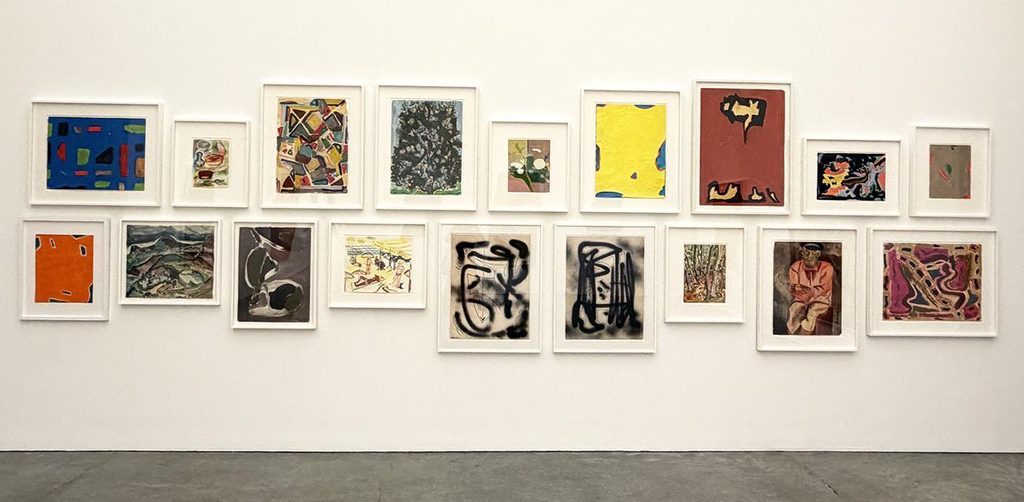
This exhibition does an admirable job of beginning to correct that narrative. I loved the long wall of Parsons’ early watercolor works. We see landscapes, figures, still lifes, and the beginnings of Parsons’ exploration of abstraction, which is where she seems to have found her artistic home as a painter.
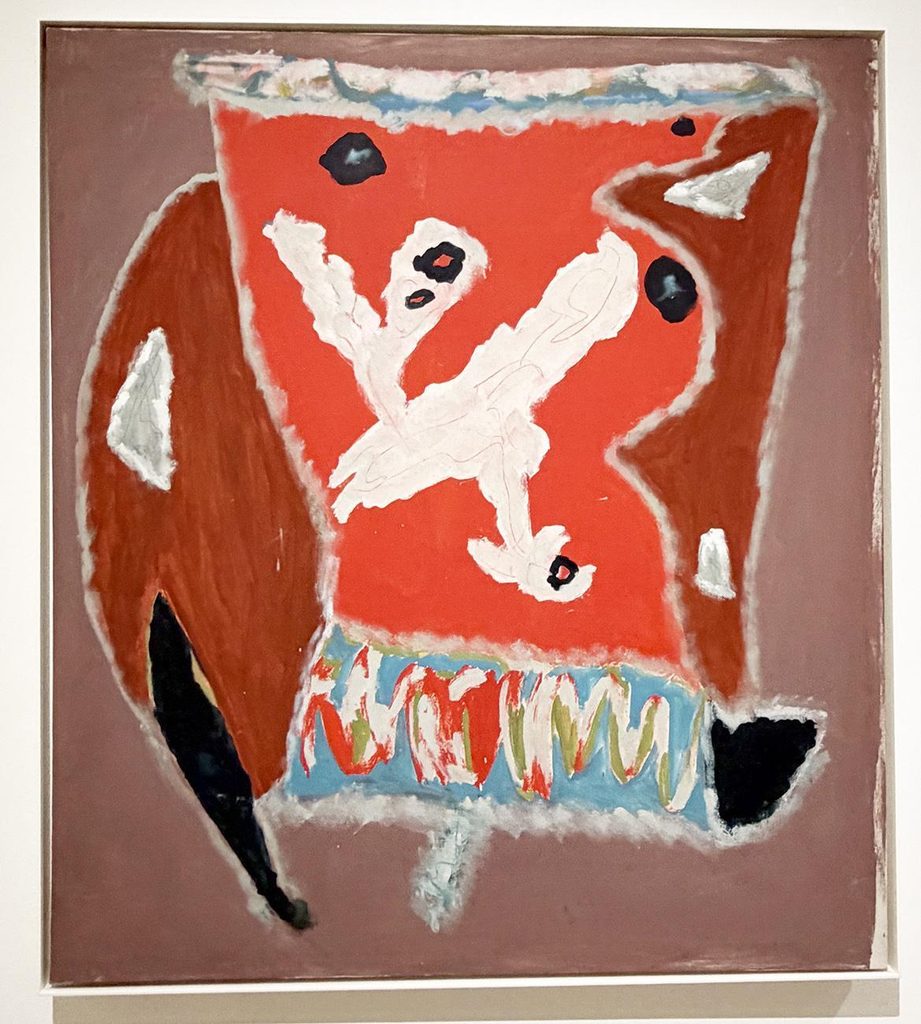
A footnote that I find fascinating- according to the museum signage, Parsons’ inaugural show at her gallery was called Northwest Coast Indian Art. Having written my anthropology thesis on the traditional art of this region, I was both thrilled and intrigued. This was not in any way work that was fashionable at the time, yet its power, palette, imagery, and meaning clearly spoke to Parsons and influenced her own work. I see a strong connection to the traditional work of Haida and Kwakiutl artists in Parsons’ abstractions.
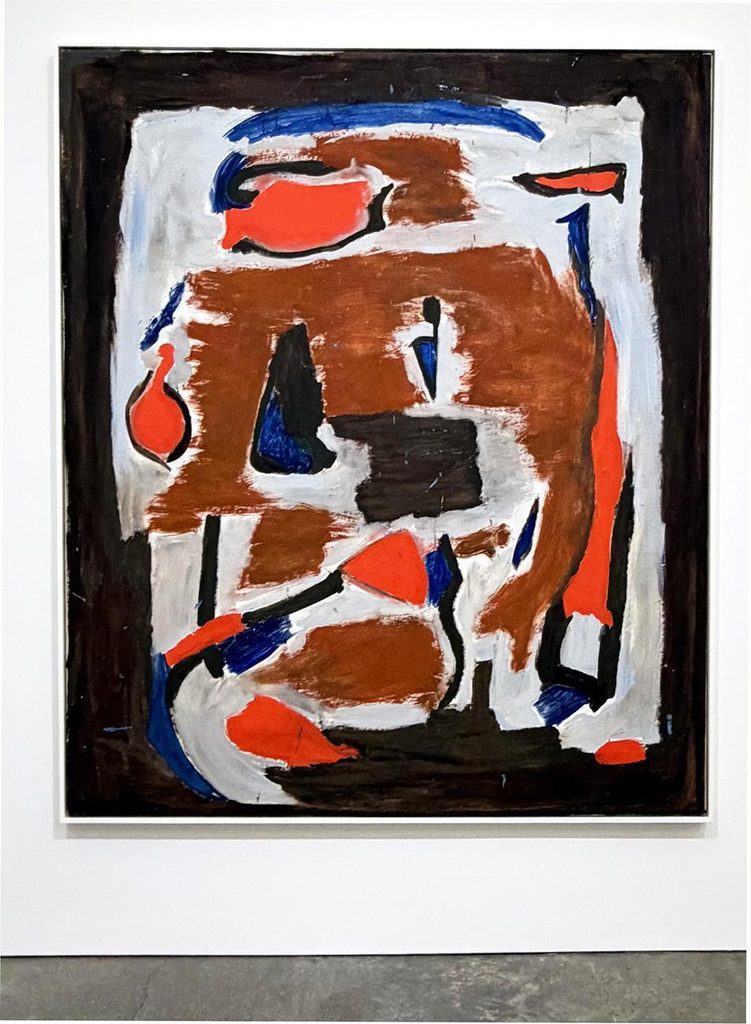
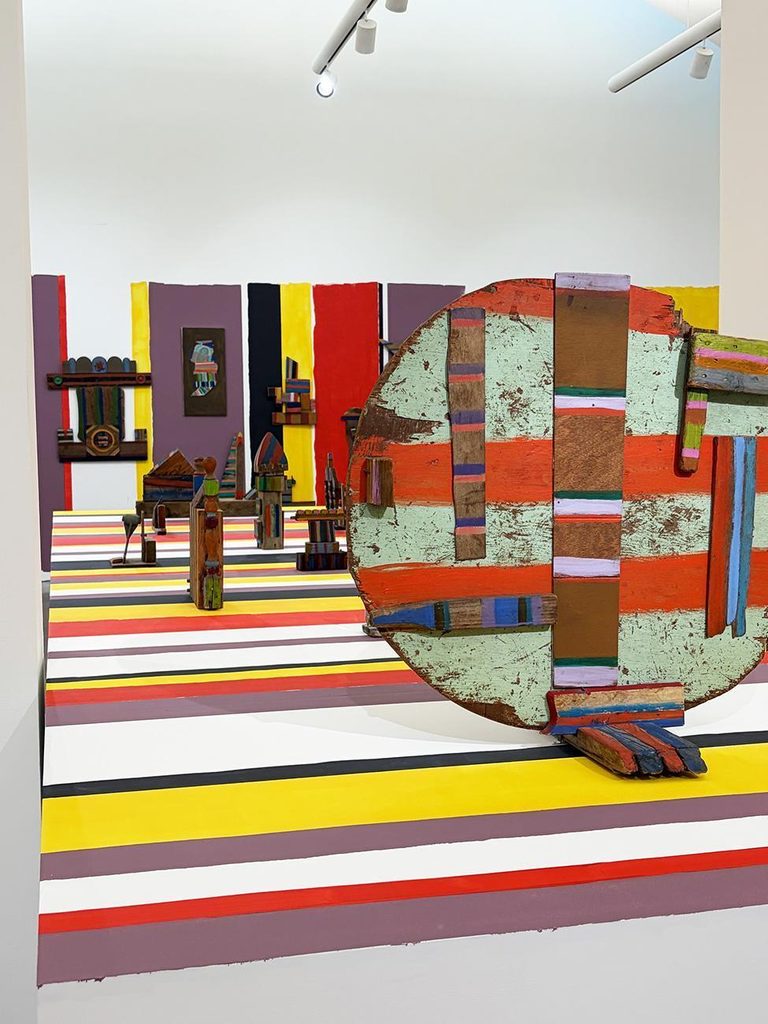
Sadly, the exhibition was far less compelling for me in its display of Parsons’ work as a sculptor. She became committed to making sculpture in the mid 1960’s, a continuation of a lifelong love of the medium. Collecting found wood and wooden objects on the beach, out on Long Island, she created brilliant contemporary abstract sculpture that is bold, beautiful, and an important part of her oeuvre. The work is connected to that of self-taught artists and art from other cultures, but also to contemporary (at the time) abstraction. Her impeccable sense of design, color, as well as a delicious sense of “looseness,” is in full force in her sculptural work.
The curators of the exhibition chose to ask Amy Sillman (actually, she is one of the two curators) to paint a wall-sized mural on which to show the sculptures. The stripes leave the wall and continue onto a series of plinths that display freestanding work. While bold and pretty, for me this decorative element wildly trivializes the sculptures.
I love oddball installations and am a fan of colored walls that interact with an exhibition, but the caveat is that they should be a polite dance partner with the artwork, not dominate it. The mural at Bard, utilizing an odd and very bright palette, dominates the sculpture, which is hung densely upon it, salon style. The bold stripes of the wall treatment often dissect the sculptures in odd ways, and the faded, soft, subtle colors of Parsons’ sculptures disappear under the weight of the stripes. The paintings, by contrast, are hung in a thoughtful and respectful way, allowing the viewer to fully bathe in the richness of her work.
Betty Parsons died in 1982, having had an extraordinary life. As a child, she went to the 1910 Armory Show and saw firsthand Duchamp’s infamous Nude Descending a Staircase. She lived through the Depression, WWII, and became a quiet powerhouse in the development of post-war American abstract art. She was a rare gem in the art world- an artist and an art dealer who seemed to love her life in both realms. The Hessel and its curators have created an important exhibition of a seminal figure in mid-20th-century American art.
Featured image credit: CCS Bard College.
Betty Parsons: An Expanded World. At the Hessel Museum of Art at Bard College. The exhibition runs through Oct. 18.
Make your tax-deductible donation today and help Art Spiel continue to thrive. DONATE
About the Writer: Melissa Stern lives in NYC and the Hudson Valley. Her mixed-media sculpture and drawings are in corporate and museum collections throughout the US. Her multi-media project, The Talking Cure, has been touring the United States since 2012. She wrote about art and culture for The New York Press and CityArts for eight years and has been a contributing writer to Hyperallergic and Artcritical. Melissa has joined Art Spiel as a contributing writer.