There are exhibitions shaped less by what is installed than by what fails to arrive. I did not plan for this to be one of them. Where Form Remembers was conceived as a two-person presentation: Julie Gladstone’s mixed-media works traveling from Toronto, Avani Patel’s drawings from Brooklyn. The premise was a dialogue between two practices in proximity, each distinct enough that the distance between them would produce something worth engaging over time. What it became was different.
Gladstone’s work entered customs and did not come out the other side. Located somewhere in the system without being delivered, it wasn’t exactly lost, yet it was nowhere to be found. There may be a bureaucratic term for this, but not a curatorial one.
At first, I treated it as a delay. Something to manage. A problem with a resolution ahead of it. I waited. Made calls. Waited more. Made more calls. At some point, days spilling into weeks, I stopped waiting for resolution and started looking at what was actually in the room.
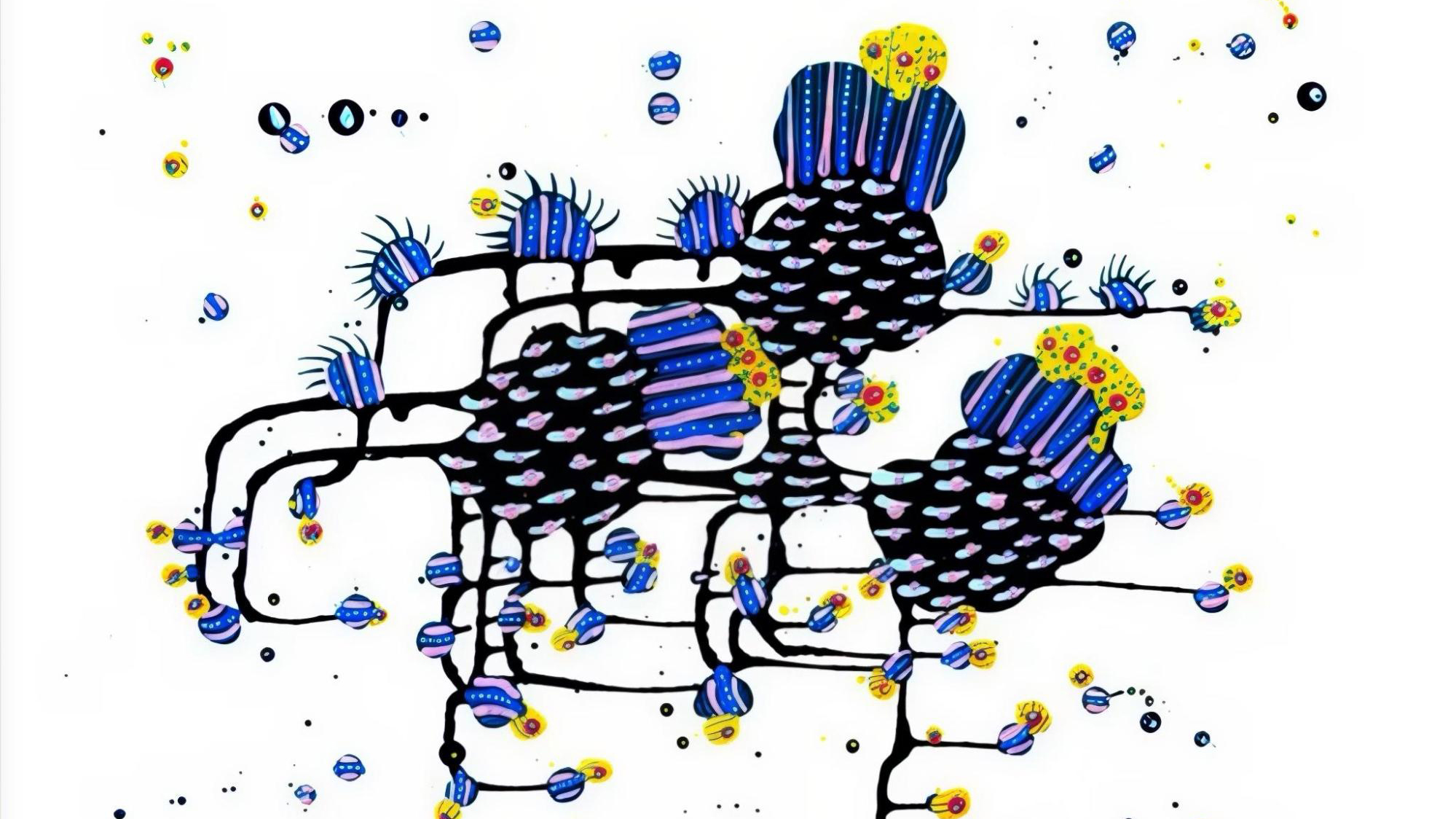
Patel’s colorful drawings were present from the beginning. Modest in scale, precise in their attention, they did exactly what drawings do when they are working: they asked to be looked at slowly, drawing the viewer closer to their amoeba-like forms and dense saturated color.
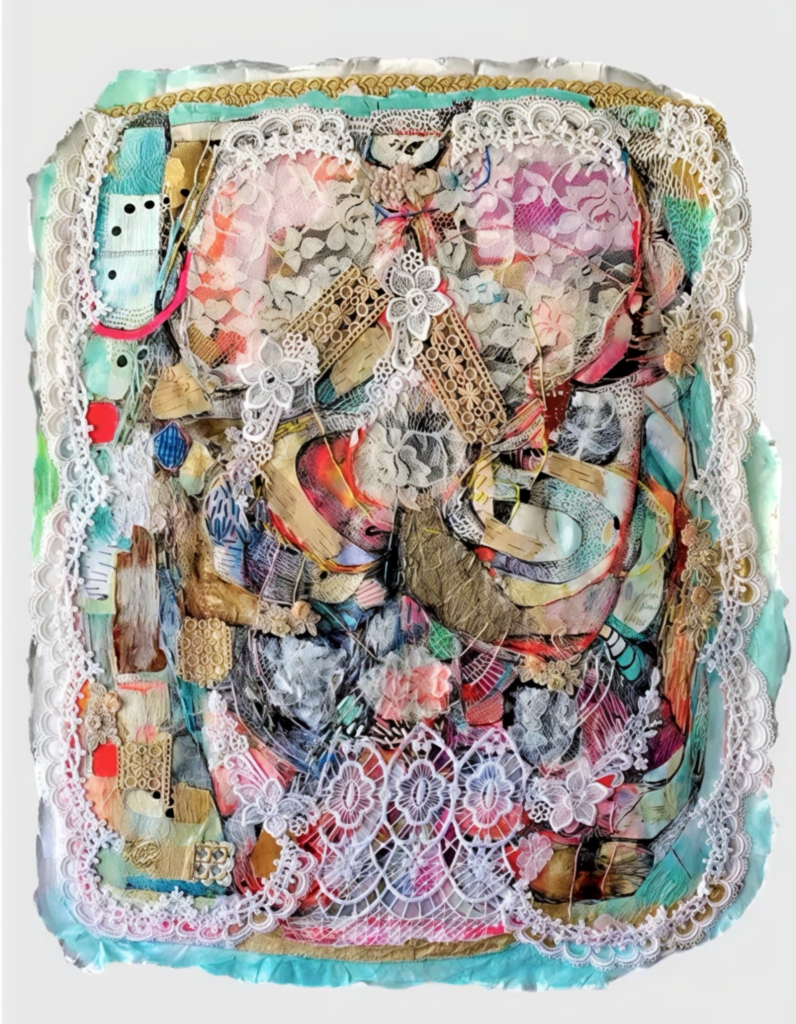
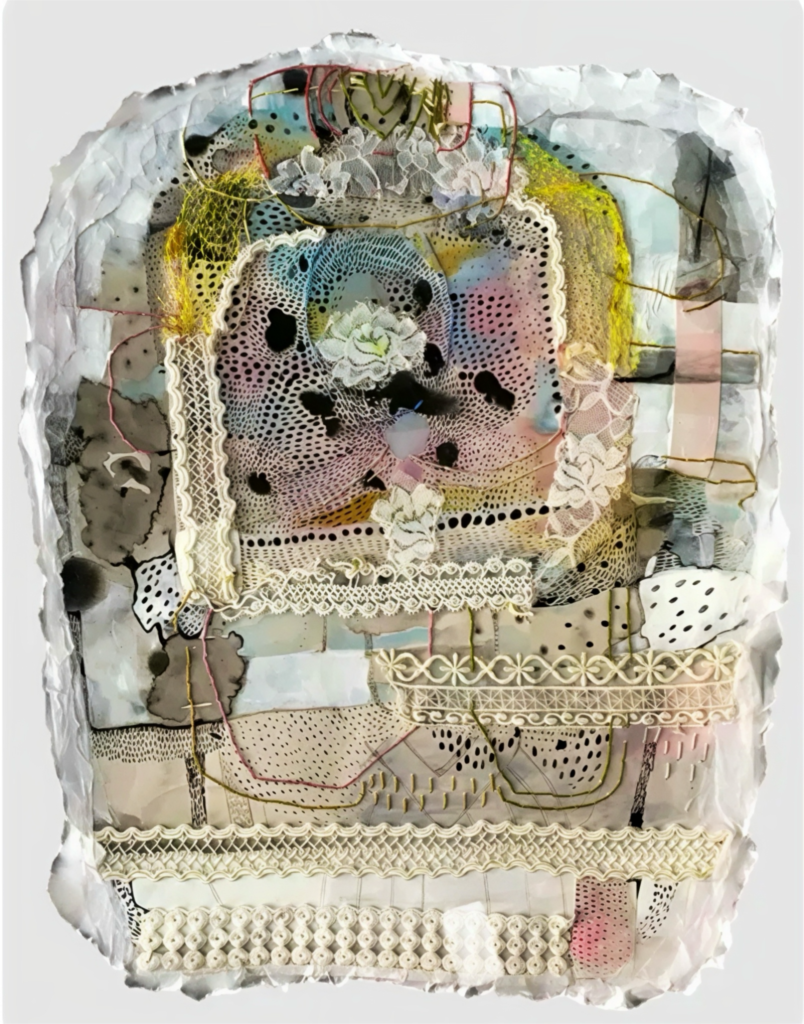
Gladstone’s pieces, equally tactile in their making, remained absent. I invited her to respond to the situation rather than wait it out. Instead of replacing the work, we exhibited what we called the “ghosts” of the pieces through a digital sequence installed on small screens in the gallery, displaying photographed images of the missing works.
I kept returning to what it means for a work to exist in the state her pieces occupied for those months. Not definitively lost, yet definitely not accessible. Prisoners of a system gone in tilt that could not release them. If the exhibit were to write its own title, it could very well have been present in record, absent in fact.
Gladstone and I spent a lot of that time in late-night text exchanges. We worried. We raged. We checked tracking updates that did not change. We went from practical problem-solving to genuine fear that the works were gone for good. At some point, somewhere in the middle of the night, she mentioned the Year of the Horse. A good omen, we agreed. We held onto it.
And then, in one of those late messages, she wrote something that I keep returning to:
I’ve come to really think about these digital stand-ins, the slippery interchangeability between the tactile and the digital. The irony of this body of work going missing is how incredibly tactile the making of these pieces was. The absence I feel with them is almost physical, like my fingers have a memory of the textures and the gel and the needle eternally embedded within them.
That is not a curatorial statement. It is what an artist writes at midnight when her work is somewhere she cannot reach. But it is also, without intending to be, the most precise description of what the exhibition became about. The digital sequence she produced did not stand in for the physical objects. It registered what the hands already knew. The absence was not only visual. It was in the fingers.
Does the work end at the object? Or does it extend into everything that happened to the object, including the months it spent held at a border while the artist’s hands remembered making it? Gladstone’s digital “ghosts” would not answer this, and it feels like the only right answer.
Three months after the opening, the works were returned to the artist. They had never reached the gallery, but they had not disappeared into thin air either. Their movement through the system remained largely invisible, except through the effects it produced. By then, the exhibition had already taken form without them, shaped into a show about what absence does when it becomes unrefutable rather than about missing artworks.
There is a kind of absence that a curator imposes deliberately, as a conceptual position. And there is a kind of situation that imposes, and you either absorb it or you refuse it.
Where Form Remembers absorbed it, because both artists were willing to let what happened become the material rather than the problem.
About the writer: Odeta Xheka is an Albanian-born artist, writer, and curator. She is the founder and director of OXH Gallery in Tampa, Florida, dedicated exclusively to women artists. www.oxhgallery.com
Where Form Remembers, OXH Gallery, December 2025 – January 2026
Make your tax-deductible donation today and help Art Spiel continue to thrive. DONATE