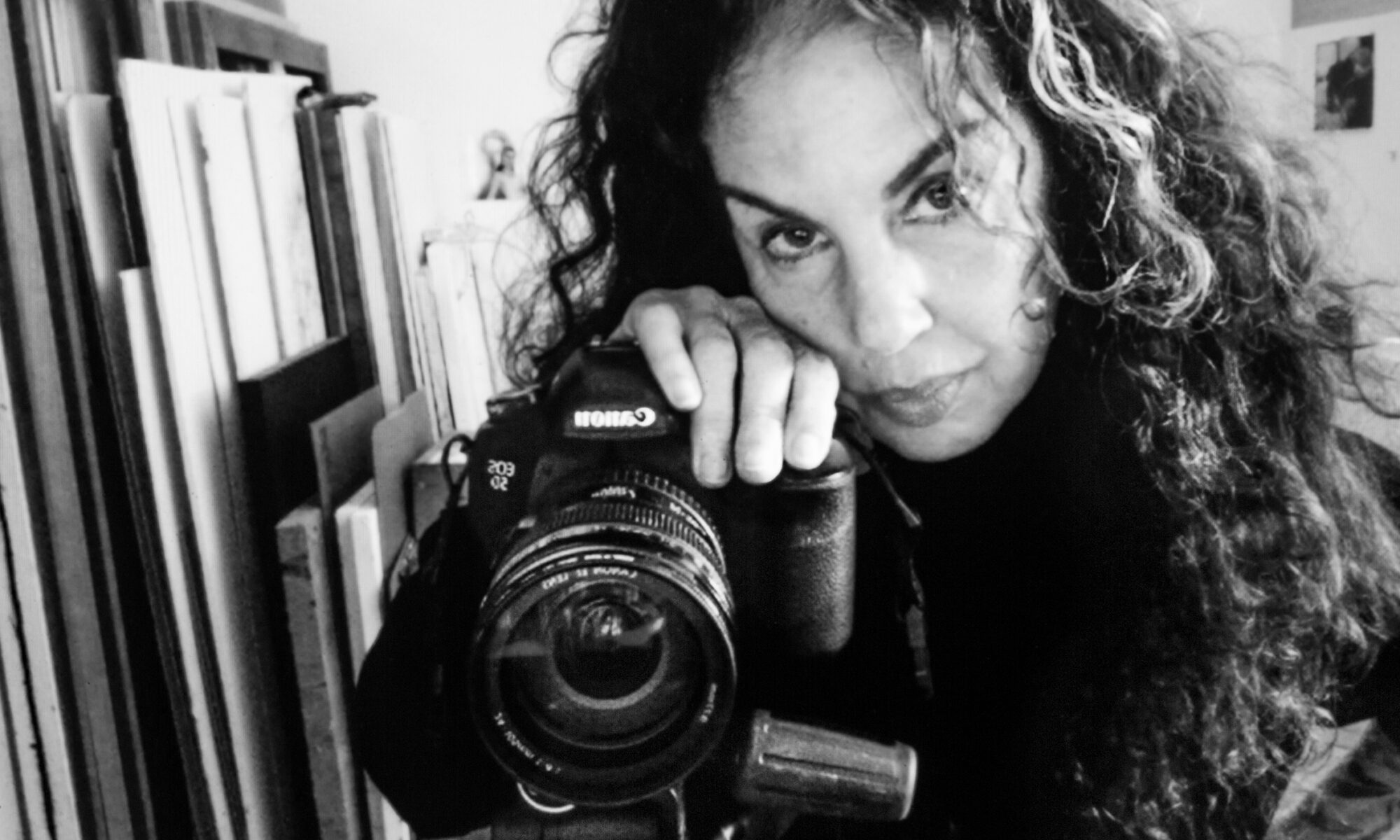
Grace Roselli’s Pandora’s BoxX Project began as something personal: a way to reconnect with a world of artists she’d drifted from while raising two daughters, much of it as a single mother. She started by photographing the few women artists she still knew; each led her to another, and the project grew by conversation and recommendation rather than plan. Nearly 360 portraits later — of artists alongside curators, writers, historians, educators, and museum directors — it had become a record of a community whose influence has rarely been seen whole. Roselli photographs each sitter in their own home or studio, in available light. She then lets them choose the final image, because the portrait isn’t finished until both of them recognize the person in it. Roselli discusses the project’s origins, her way of working, and what nearly 360 encounters revealed.
Continue reading “The Pandora’s BoxX Project: Grace Roselli”Cutaway at Brandeis University
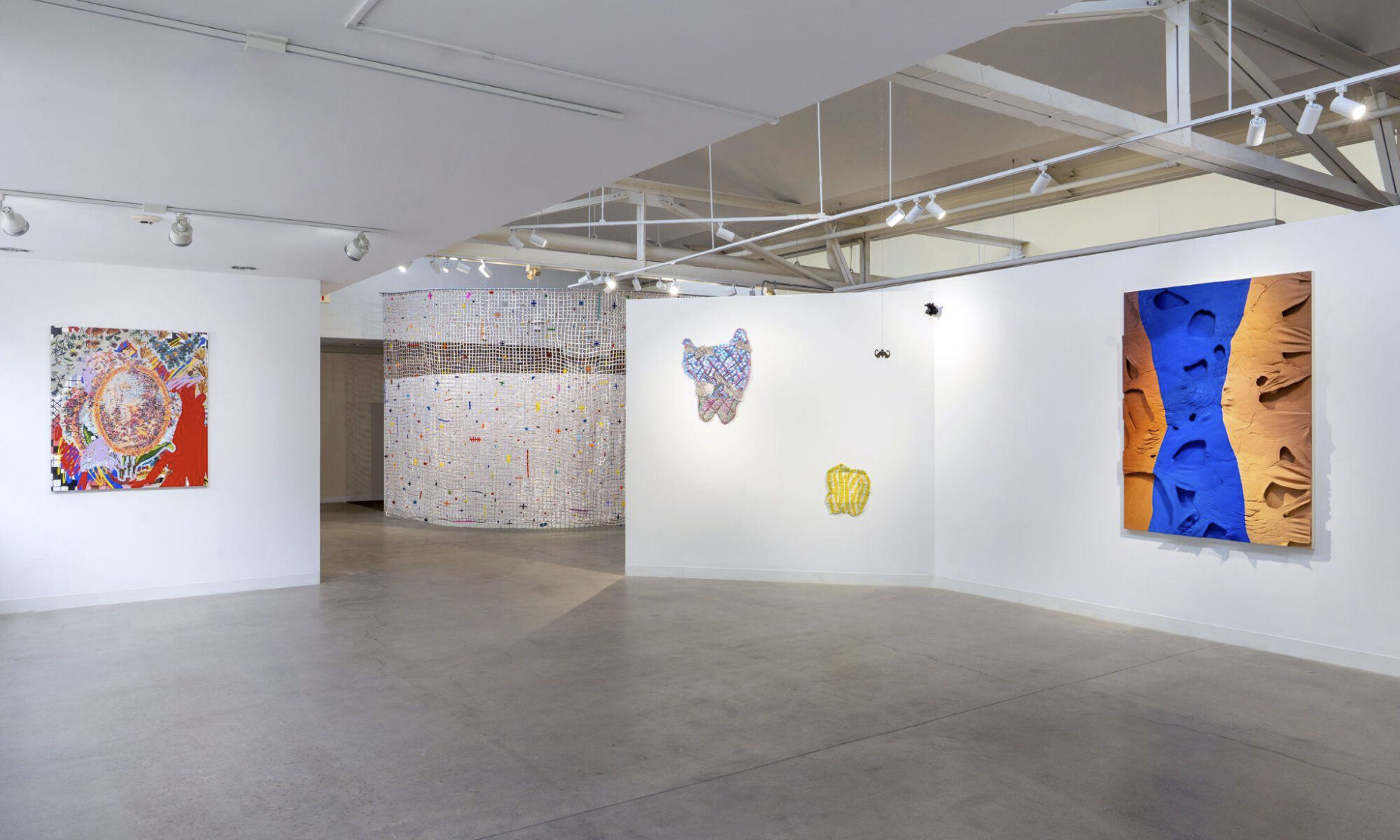
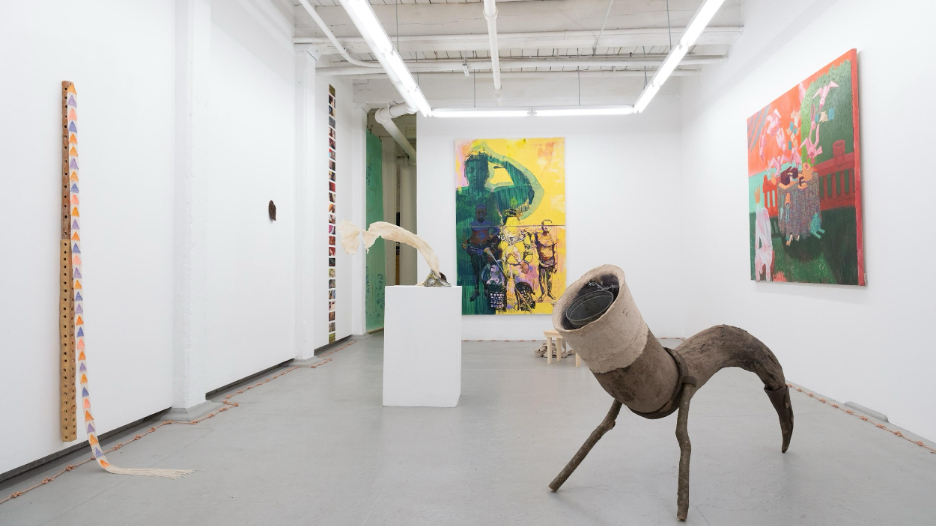
For Cutaway, curator Olivia Baldwin worked the way she does in her own studio — building from the ground up, beginning with the artists rather than a theme. She had followed Eleanor Anderson, J Stoner Blackwell, Lucy Kim, Kirstin Lamb, and Hai-Wen Lin for years, looking for where their materials might overlap and where they might productively rub against one another. Meeting with them, a shared concern surfaced: how each artist asserts and then loosens the limits of an object, a body, a pattern. Their means are strikingly varied — discarded plastic bags, cross stitch, dyed silk and chain, cast flounder and teeth, a kite pitched toward the upper windows — bound by saturated color and touch. The body recurs throughout, rarely pictured, more often left as a trace in the material. Baldwin discusses the show’s bottom-up beginnings, what its materials share, and the withholding behind its title.
Continue reading “Cutaway at Brandeis University”Melora Kuhn’s Power of Erasure and Material Revision
History has always depended on materials. Marble, oil paint, bronze, woodcuts, engravings, museum vitrines, and photographic reproductions preserve the past as well as determine how events, ideas, and narratives are represented. Over time, images become durable, gaining a certain kind of truth value because they acquire material permanence and spread through copies. Mythological heroines, biblical women, allegorical figures, and historical subjects return across centuries through the persistence of artistic media, carrying with them the assumptions, hierarchies, and ideologies embedded in their forms. Melora Kuhn‘s solo exhibition, The Legacy of Disembodiment, on view at Private Public Gallery, starts with the recognition that if representation has helped naturalize and proliferate the narratives these images and forms carry, then materials themselves can be a site of political intervention.
Continue reading “Melora Kuhn’s Power of Erasure and Material Revision”What Remains: in dialogue with Arghavan Khosravi
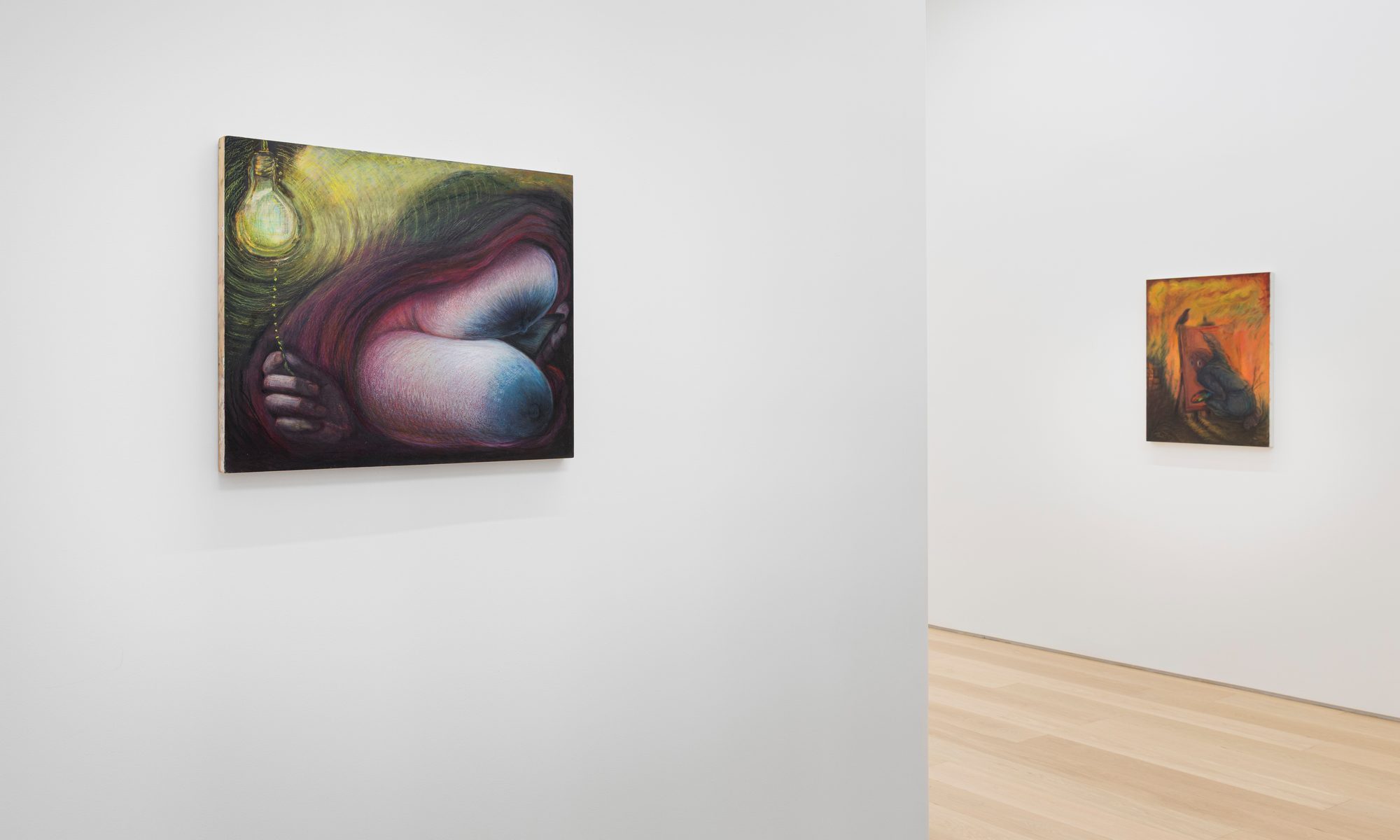
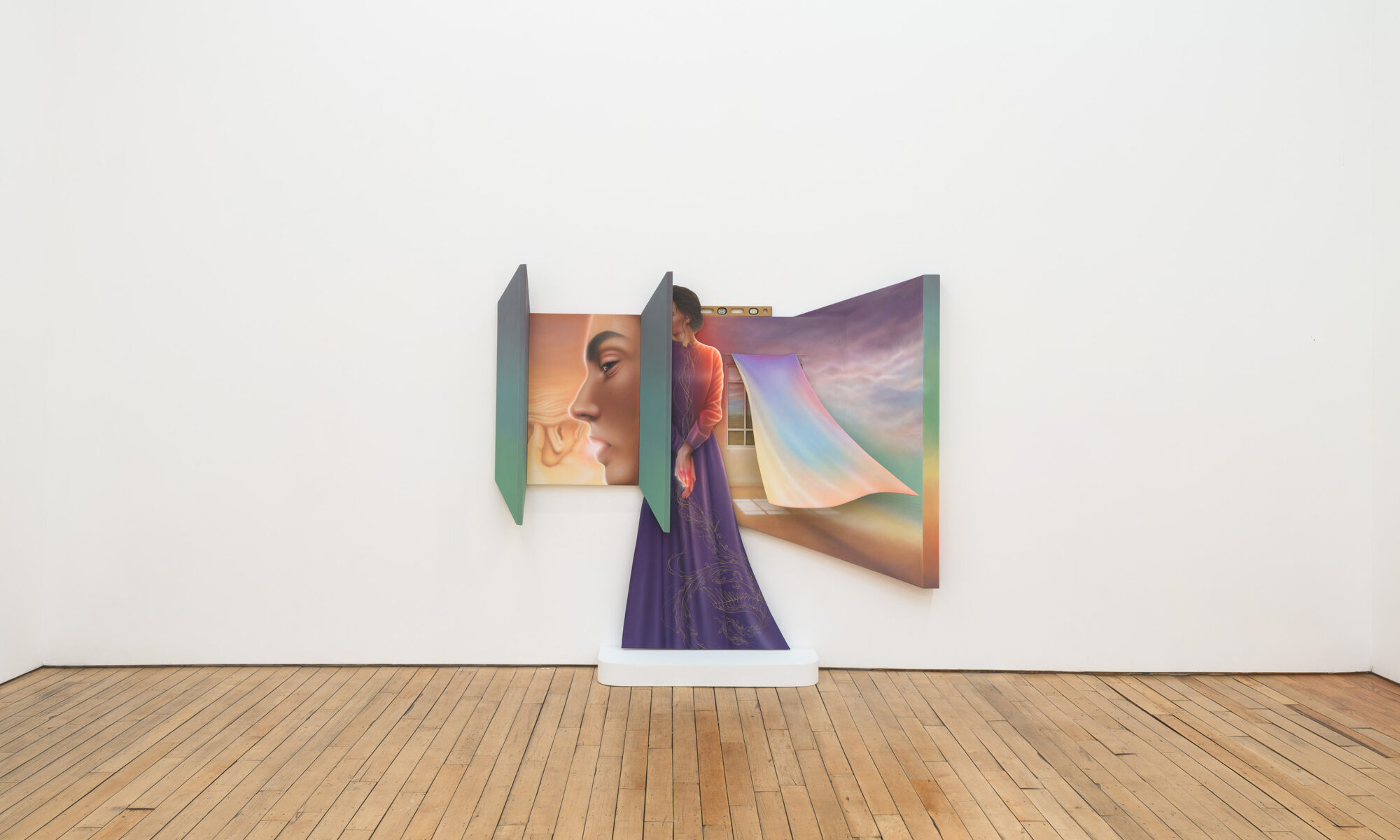
Altarpieces—historically sites of devotion, revelation, and spiritual certainty—become something altogether different in Arghavan Khosravi’s What Remains, currently on view at Uffner & Liu through July 2. The exhibition brings together large-scale wall works, a freestanding sculpture, and an intimate suite of new altar-inspired paintings that continue Khosravi’s ongoing exploration of the forces that shape women’s lives under political, cultural, and religious systems of control. Drawing equally from Persian miniature painting and medieval European iconography, the artist constructs layered worlds where architectural structures become psychological spaces, symbols migrate across histories, and moments of resistance emerge within conditions of constraint. Rather than offering resolution, the works linger in states of suspension—between freedom and captivity, memory and displacement, devotion and doubt.
Continue reading “What Remains: in dialogue with Arghavan Khosravi”Run by Artists, Built for Artists: OyG and the Cornell MFA
What does a gallery look like when the artists are in charge? Founded in 2013, Ortega y Gasset Projects (OyG) is an artist-run collective with no fixed curatorial line and a non-hierarchical structure shared equally among its eight co-directors. Since 2023, it has become the annual New York home for Cornell University’s MFA thesis exhibition — a partnership built on a simple premise: artist-run spaces value experimentation, innovation, and risk-taking, giving graduate artists the freedom to present work without commercial constraints or curatorial imperatives.
Continue reading “Run by Artists, Built for Artists: OyG and the Cornell MFA”The Absence is in the Fingers
There are exhibitions shaped less by what is installed than by what fails to arrive. I did not plan for this to be one of them. Where Form Remembers was conceived as a two-person presentation: Julie Gladstone’s mixed-media works traveling from Toronto, Avani Patel’s drawings from Brooklyn. The premise was a dialogue between two practices in proximity, each distinct enough that the distance between them would produce something worth engaging over time. What it became was different.
Continue reading “The Absence is in the Fingers “At Some Point, Every Household Object Stops Being Innocent
No one ever thinks the plate is going to become a problem.
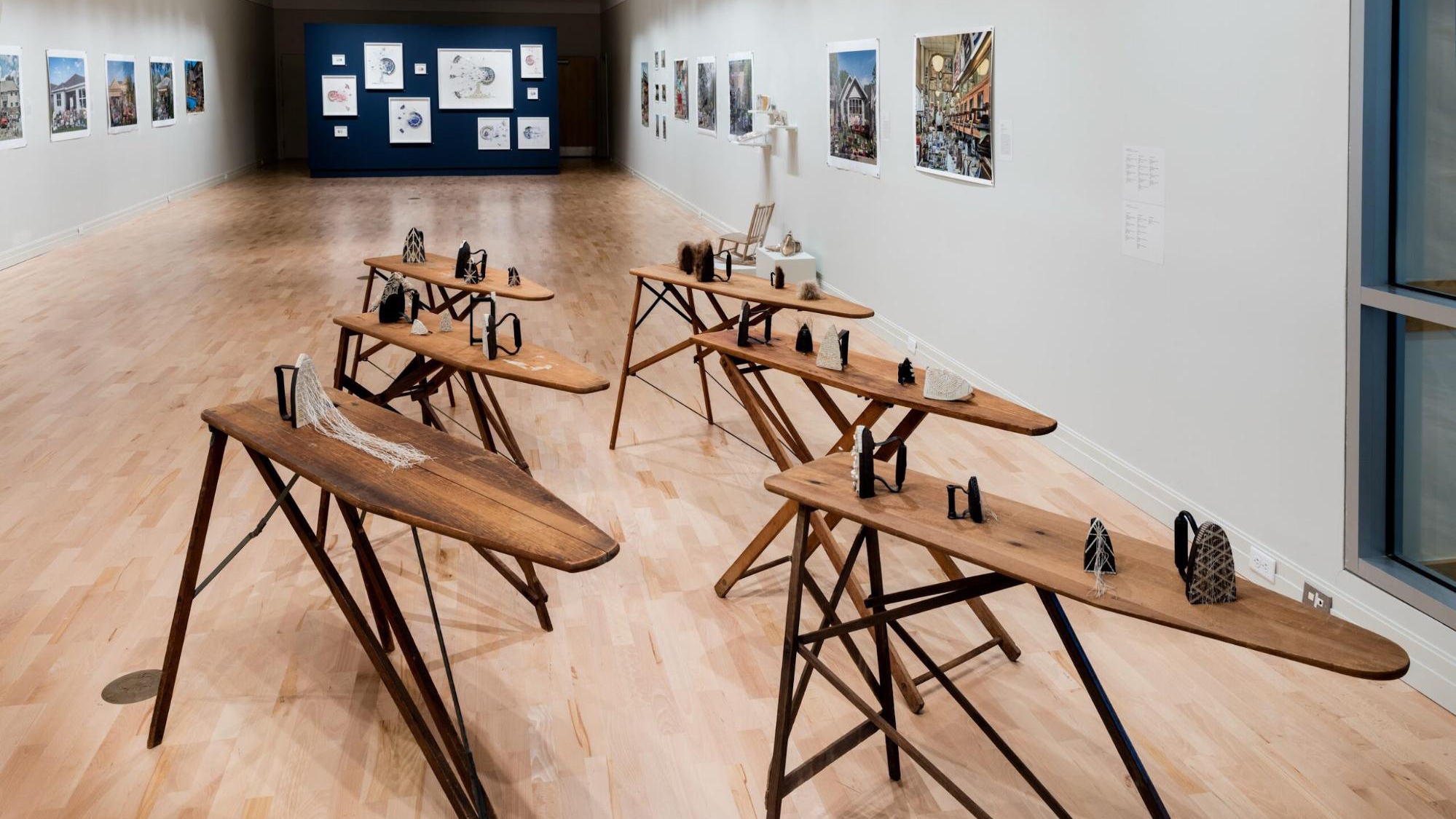
A plate survives three apartments and one bad Thanksgiving. A suitcase gets hauled across borders or shoved beneath beds; sometimes it is packed in hope, sometimes because someone has no choice. An iron presses school clothes and funeral clothes, then outlives its usefulness and sits in a closet somewhere, still holding the pressure of human hands.
That is the animating idea behind extraORDINARY things, the quietly arresting exhibition at the Flinn Gallery in Greenwich Library.
Continue reading “At Some Point, Every Household Object Stops Being Innocent”GODDESSES 3.0: Feminist Ritual and Resistance Across Generations
New York-based artist, curator, and filmmaker D. Kessinger explores feminism across history through oil paint, wax, and Liquitex on linen, alongside her curatorial approach that focuses on collaborative and inclusive practices. Her current curation, GODDESSES 3.0, is on view at the Berrie Center Galleries at Ramapo College of New Jersey.
The exhibit highlights artists across generations who explore feminism within fine art, film, media, and the digital culture of the post-internet world. Kessinger’s curation not only echoes the past but also exhibits it alongside current feminist contemporary art, emphasizing the interconnected nature of multigenerational feminism. The exhibit meditates on ritual as reclamation, resistance, and resilience, and the body as a medium, message, and monument, a space where feminist ideologies harmonize across generations and set the tone for those to come.
Continue reading “GODDESSES 3.0: Feminist Ritual and Resistance Across Generations”The $650 Show Art History Forgot, Thirteen Women, One Wet Floor, Zero Permission
At 33 Bleecker Street, history does not politely vacate.
In the 19th century, Herman Melville grew up at this address, long before the current building rose here in 1900. A century later, Joel Shapiro kept an early studio in the building before moving on to larger quarters. This winter, the ground-floor gallery Zürcher has been restaging a 1972 exhibition titled 13 Women Artists. Museum curators made the trip to NoHo. Emails arrived from outside the city asking for more time.
Continue reading “The $650 Show Art History Forgot, Thirteen Women, One Wet Floor, Zero Permission”