Hollis Heichemer: Transcension over Anthropocentrism and Breakaway into Landscapes

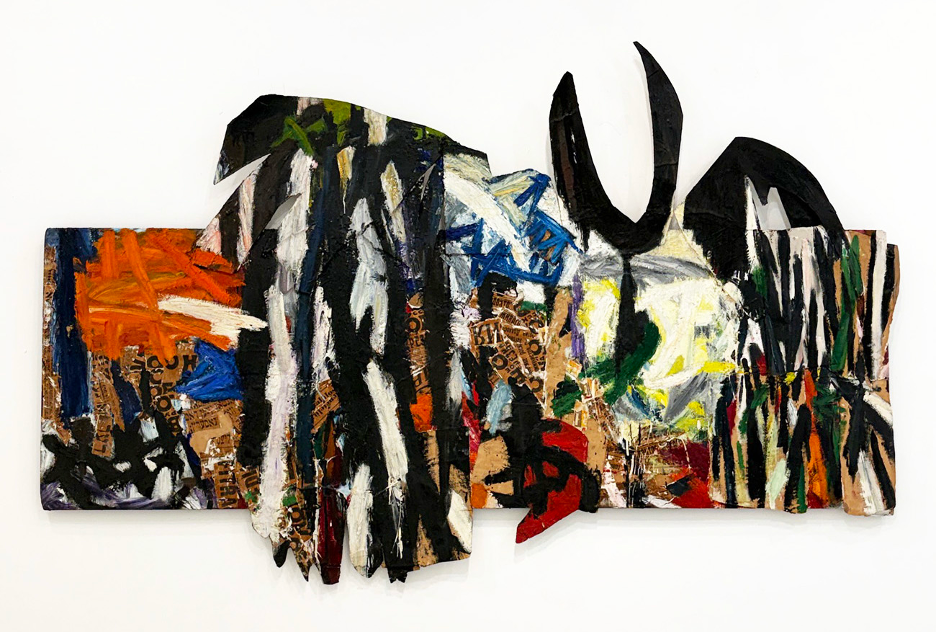
Hollis Heichemer, Come to the Surface

Hollis Heichemer’s solo exhibition at Hollis Taggart titled “moving in stillness” is a profound investigation of existence and the meaning of the world through the study of landscapes and Mother Nature. Is Humanism an anthropocentric perspective that is ultimately flawed and furnishes humanity with the arrogance to destroy the environment and disregard the principles of empathy? How can we overcome the diseased thought that humans have the right to master or exploit nature for profit? And how has the artist found great peace and liberation through her lifelong study of Mother Nature and her generous nourishment and wisdom? Does Heichemer apply the paint purely as a formal exercise of abstract colors and relationships, or does the paint become the flesh of Mother Nature, by the observation of which we can become and live through the painting as landscapes?

Continue reading “Hollis Heichemer: Transcension over Anthropocentrism and Breakaway into Landscapes”

Women Across America 1945-1979 at Eric Firestone

Eric Firestone Gallery, in its continuing support of underrepresented and female artists in the 20th and 21st centuries, has mounted an ambitious and interesting exhibition on now through July 11 at the gallery’s location on Great Jones Street in NYC. The exhibition is devoted to women who worked in abstraction from 1945 to 1979, thus giving the curators a very specific window within which to work.

Continue reading “Women Across America 1945-1979 at Eric Firestone”

Hum and Song: Helen Frankenthaler’s The Moment and the Distance at Gagosian examined alongside Babara Guest’s writings

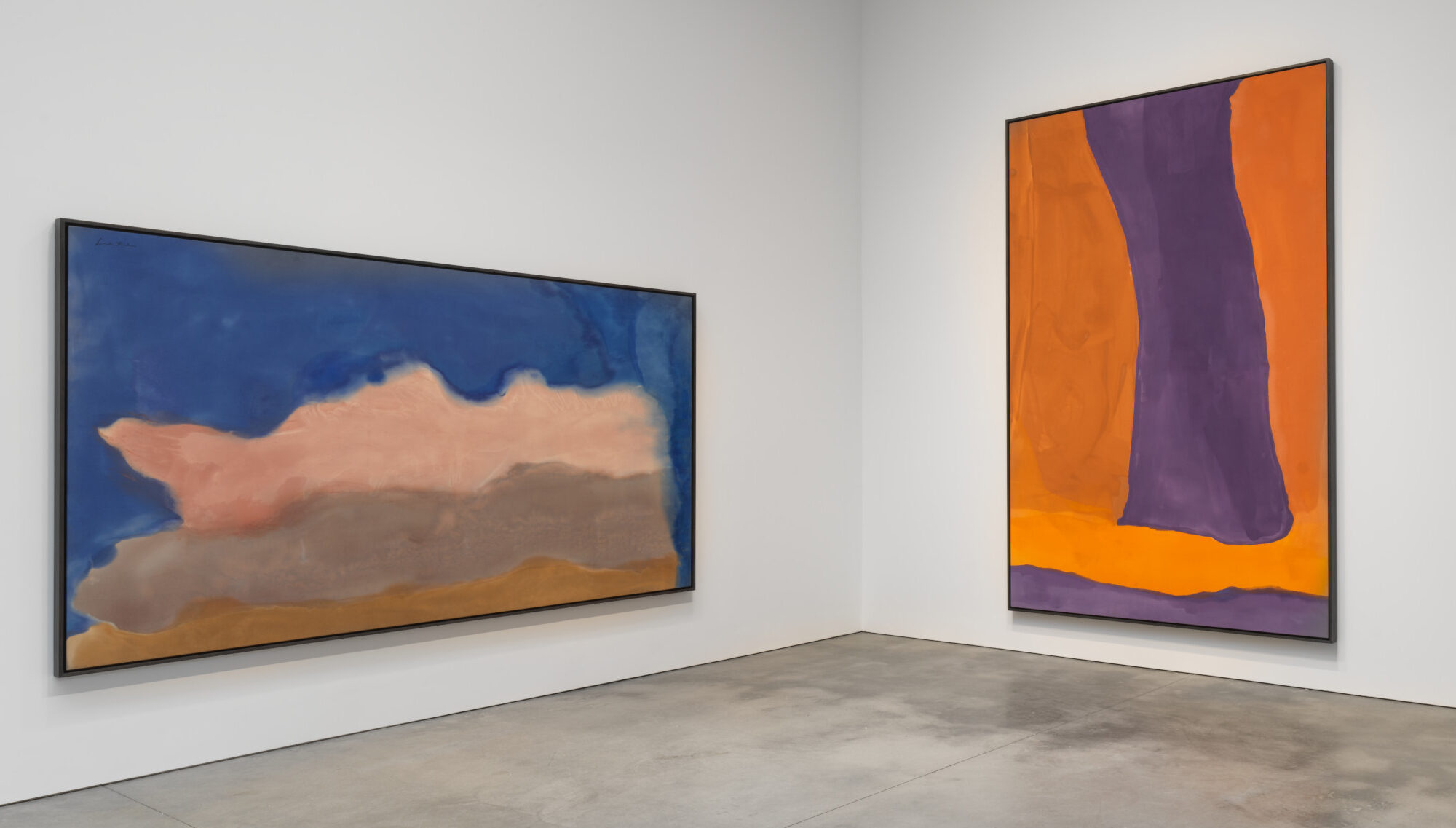
Helen Frankenthaler, The Moment and the Distance, 2026, installation view

Helen Frankenthaler’s show at Gagosian New York, The Moment & The Distance is a beautiful retrospective survey of her work. The title is inspired by a mid-career essay by Barbara Guest that encapsulates the essence of Frankenthaler’s work. In the  1975 essay Guest defines Frankenthaler’s oeuvre in terms of music. She reflects that while there is beautiful “humming” in Frankenthaler’s early work, over her career it becomes  “song”. As her work matures, Guest argues, Frankenthaler becomes more decisive, methodical and assured in her practice, less spontaneous or reliant on happy accidents. Beyond demonstrating the present moment in the paintings, she walks the effortful distance to “consolidate her terms”.  

Continue reading “Hum and Song: Helen Frankenthaler’s The Moment and the Distance at Gagosian examined alongside Babara Guest’s writings”

Still Abstract at 90: American Abstract Artists 

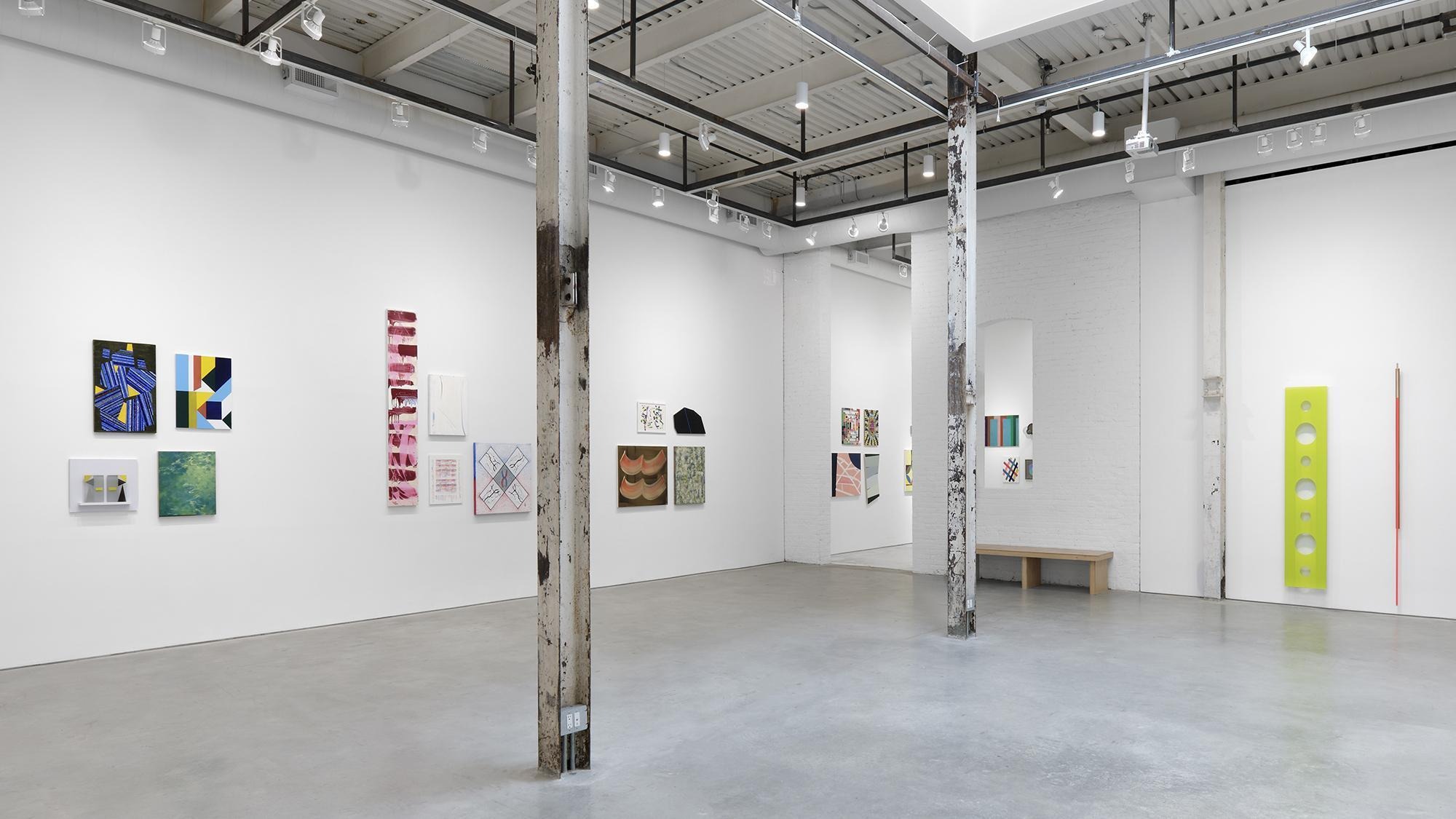
American Abstract Artists turns 90 this year, an unusual achievement for an artist-run group. Its anniversary show, Abstract by Definition: An Index, opened in April at Art Cake in Brooklyn, curated by Saul Ostrow, who brought 88 current members together under a single roof: a curatorial puzzle, an organizational feat, and a long-running argument about what abstraction can be. A companion exhibition at D. Wigmore Fine Art on West 57th Street focuses on the group’s founders and work made between 1936 and 1950 and runs through July. Here, painter Jacob Cartwright, who serves as AAA’s Secretary, reflects on the group’s nomination-only structure, how a show this size actually comes together, and where he wants AAA to go next.

Continue reading “Still Abstract at 90: American Abstract Artists “

Johnny g mullen: Rehearsals in Movement

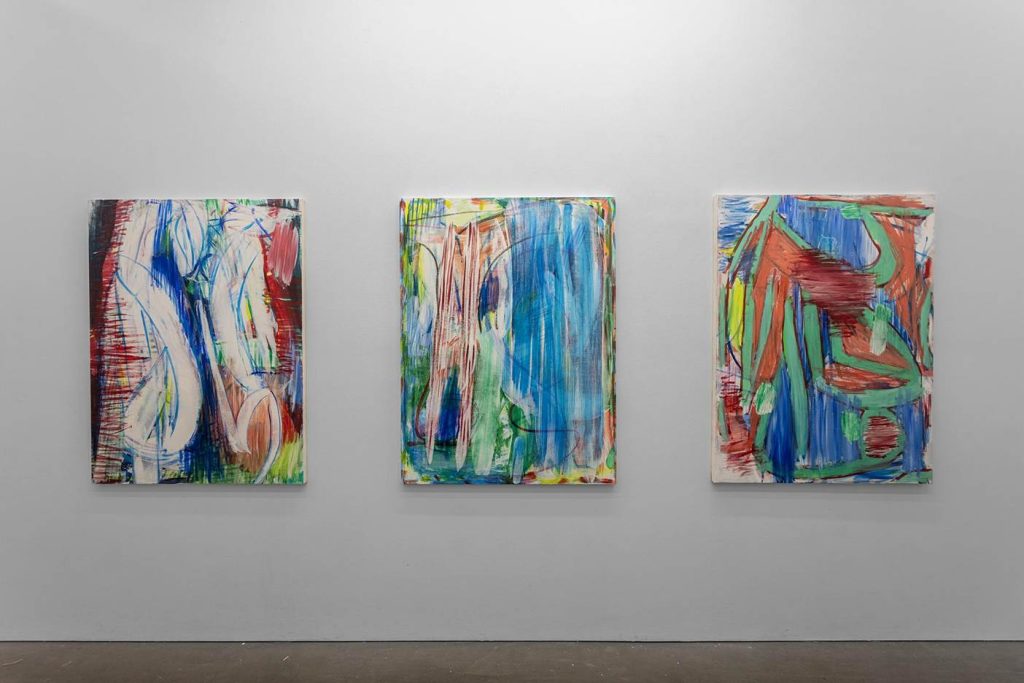
Installation View, (photo courtesy of Yanmei Jiang)

Walking into Peninsula gallery, an intimate space in the Two Bridges neighborhood, viewers are greeted with the energetic and punchy paintings in Johnny Mullen’s solo show- rehearsals in movement. Mullen has pinpointed his focus on layering paint, motion, and plays with both transparency and opacity in this new series. With the gallery itself being so intimate, you get a close and personal view of the works, a deeper look that proves very rewarding. Meandering from one painting to the next, each of a consistent size, you get to join mullen on his explorations within each piece. Expanding from his interest in color theory, Mullen has added an expanded investigation of layering and gesture within the pieces.

Continue reading “Johnny g mullen: Rehearsals in Movement”

The Bone and Muscle: A Conversation with Dona Nelson

In Dialogue
Dona Nelson in her studio

For decades, Dona Nelson has dissolved the formal boundaries of painting: refusing to apply pigment to just one side of the canvas, mounting the stretchers of her double-sided paintings on freestanding metal stands, and letting them occupy gallery floors like sculptural interlopers. In her current two-person show with Andrew Ross at Thomas Erben Gallery, however, the painter has ceded the floor space entirely, anchoring her three new works squarely to the wall.

Continue reading “The Bone and Muscle: A Conversation with Dona Nelson”

Sensuously Severe: Why Artists Call Don Voisine the Real Deal

Lift Off, 2024, Oil on wood panel, 24 x 20 inches

Don Voisine doesn’t do studio visits for Instagram. He doesn’t paint to please an algorithm. And he definitely doesn’t care if you call his new show “timely.” For over forty years, he’s explored the same visual territory—taut geometric abstraction with a personal twist—and somehow, he’s still finding fresh ground.

Continue reading “Sensuously Severe: Why Artists Call Don Voisine the Real Deal”

Contours and Strokes: Between Traditional and Contemporary Art Forms

Mika Kanemura performing at the gallery. calligrapher: Komei

When one looks at Franz Kline’s Abstract Expressionist paintings involving Gestural Abstraction, they cannot help but read a Chinese or Japanese character in calligraphic form. In fact, a relationship can be established between Kline’s “abstract” lines and marks from the calligraphic strokes of Sumi ink made by the masters of the traditional art form—Japanese calligraphy.

Continue reading “Contours and Strokes: Between Traditional and Contemporary Art Forms”

Erika Ranee: Feelings at Duck Creek

Erika Ranee, Sunset Beach, 2024, ink, shellac and oil pastel on canvas, 10 x 8 inches

I’ve been following Erika Ranee’s work since the mid-90s after I saw a handful of her works in person throughout a collector’s home. I recall a few key elements from that earlier work: medium to large scale, painted using a poured technique, and figurative or rather stenciled elements like references of figures and faces. Early on, Ranee’s work recalled a similarity to Donald Baechler’s. Think of a series of expressively painted applications layered upon one another and then codifying with a silhouette or stenciled image atop the coated process. I lost track of Ranee’s work for over a decade, then I came across it when she had a studio at The Marie Walsh Sharpe Art Foundation Program in 2011. I’ve been following her work and have had the pleasure of seeing it evolve steadily. Since my first encounter with the work, she has done away with a direct reference to figuration and seems to use titles to locate outside influences. Her work has grown, and her career is blossoming.

Continue reading “Erika Ranee: Feelings at Duck Creek”