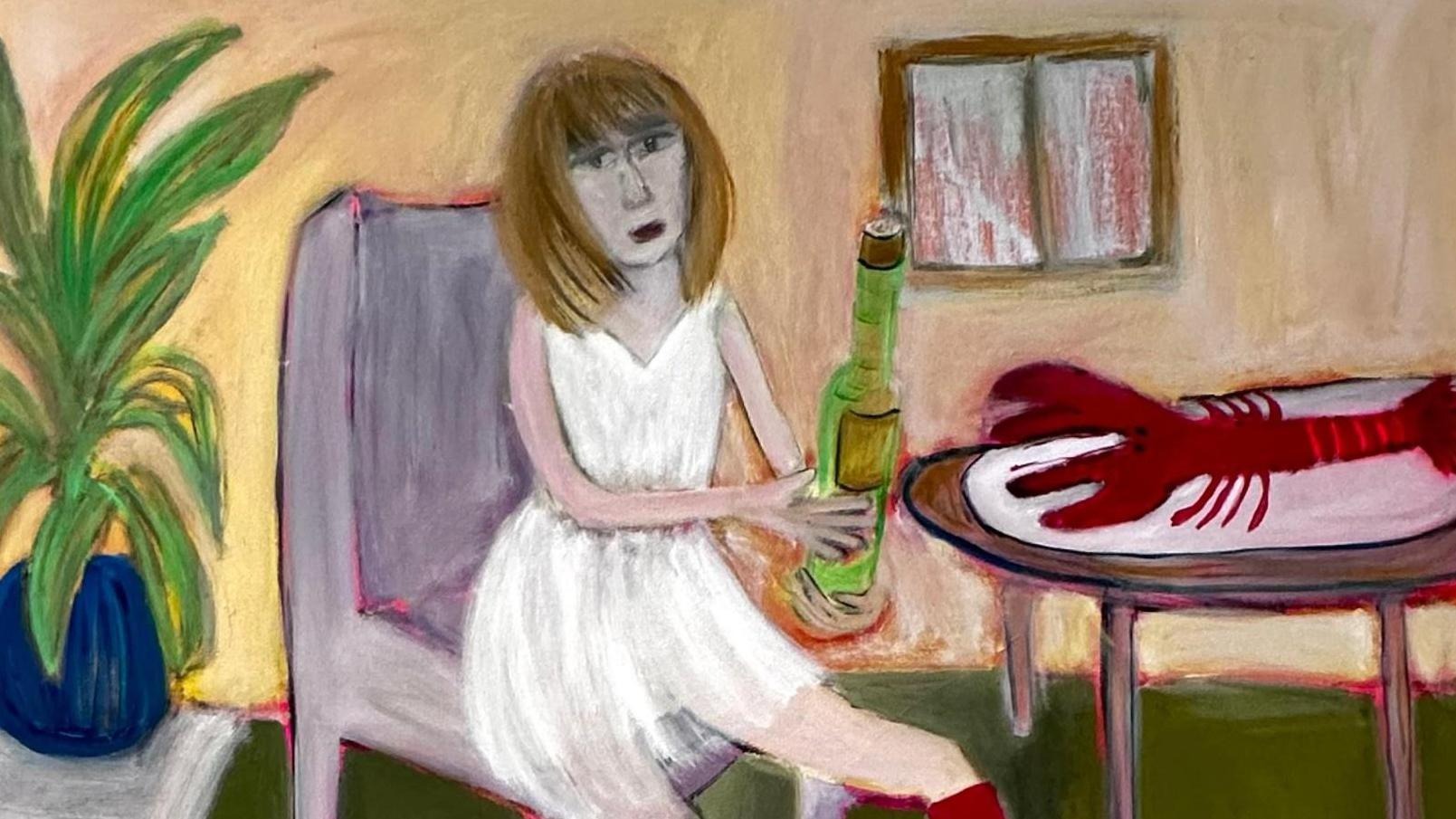
History has always depended on materials. Marble, oil paint, bronze, woodcuts, engravings, museum vitrines, and photographic reproductions preserve the past as well as determine how events, ideas, and narratives are represented. Over time, images become durable, gaining a certain kind of truth value because they acquire material permanence and spread through copies. Mythological heroines, biblical women, allegorical figures, and historical subjects return across centuries through the persistence of artistic media, carrying with them the assumptions, hierarchies, and ideologies embedded in their forms. Melora Kuhn‘s solo exhibition, The Legacy of Disembodiment, on view at Private Public Gallery, starts with the recognition that if representation has helped naturalize and proliferate the narratives these images and forms carry, then materials themselves can be a site of political intervention.
Continue reading “Melora Kuhn’s Power of Erasure and Material Revision”Growing After the Embers: A Review of Bùi Thanh Tâm’s Solo Exhibition Here on and after
For a long time, when I was young, I felt distant from the idea of “history.” In textbooks, history always appeared through years, wars, reforms, and changes of political power, as if it were made of events already organized and settled. Yet the history that truly remains in the body often appears in more hidden forms. It may be a silence within family narratives, a memory that one generation chooses to avoid, a recurring pattern in festive images, or a color that seems joyful while quietly carrying a wound. Very often, history continues to exist in another form, lingering in images, bodies, and everyday experience.
Continue reading “Growing After the Embers: A Review of Bùi Thanh Tâm’s Solo Exhibition Here on and after”Kosuke Kawahara’s Without Innocence, Dissecting and Reassembling at RAINRAIN Gallery
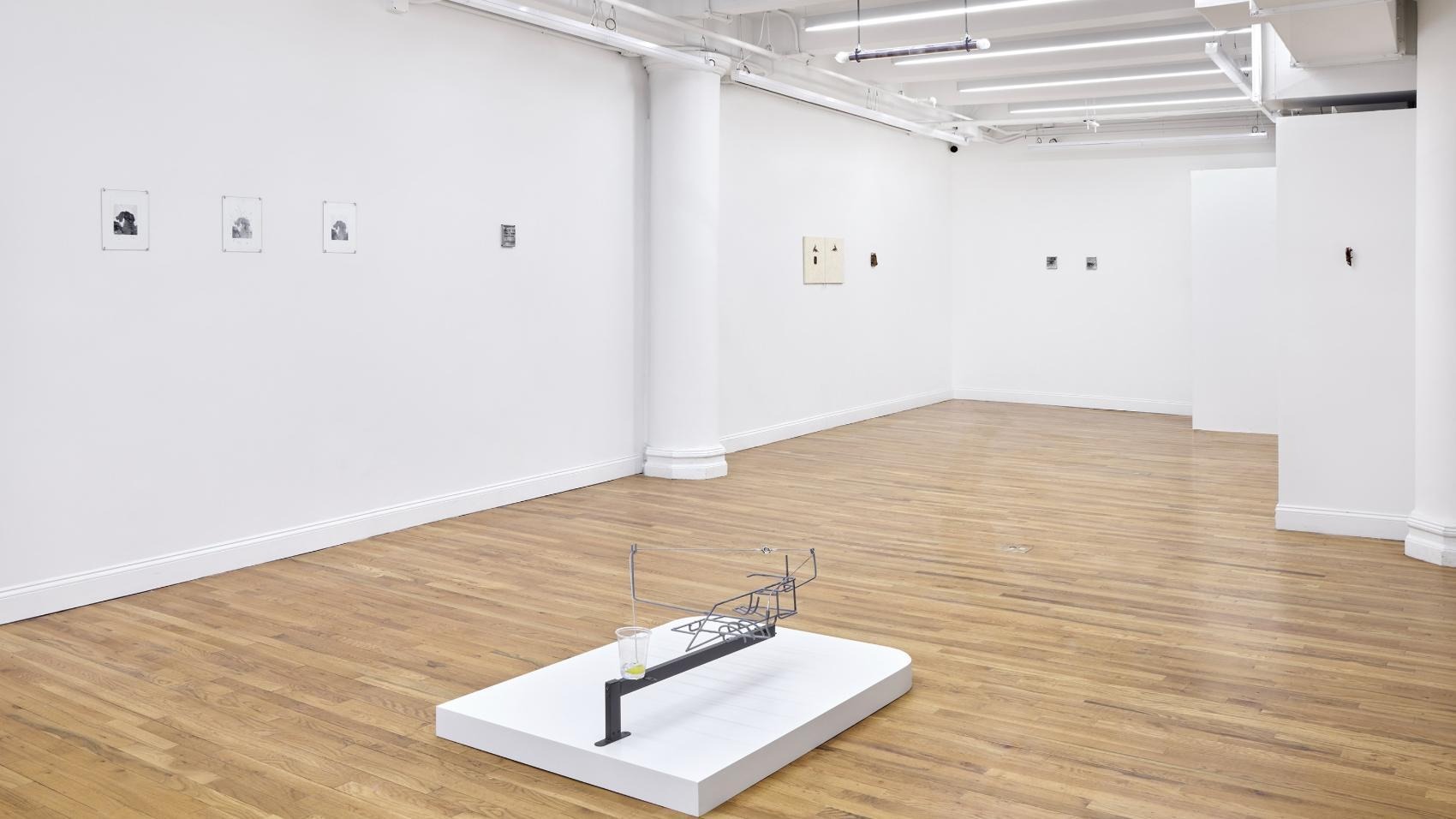
Stepping into the exhibition Without Innocence at RAINRAIN gallery, you are greeted with a plethora of various mediums, ideas, influences, and experimentations. The paintings carry with them several levels of looking, small details to explore, and multiple dimensions within the edges. The photographs set the scene, allowing you to enter another space just as the paintings do, left to explore the worlds that Kawahara creates and builds within it all. The press release introduces a quote from Donna Haraway’s A Cyborg Manifesto, “…we are living through a movement from an organic, industrial society to a polymorphous, information system—from all work to all play, a deadly game (p 28).” This statement lingers alongside my thoughts throughout the exhibition, as I begin to notice more details, connections, and mechanisms that make this exhibition immensely similar to a cyborg in the making. Kawahara takes pieces of the body and fractions of different spaces within the canvas to build something entirely new out of all of these information systems.
Continue reading “Kosuke Kawahara’s Without Innocence, Dissecting and Reassembling at RAINRAIN Gallery”It Takes a Village at Freight and Volume
The most subtle acts are often the most cathartic. In times of relentless upheaval and injustice, simple moments can feel Herculean by measure. The current exhibition at Freight and Volume, It Takes A Village, focuses on daily ritual as a gate of entry. Artists Andrea Castillo, Nancy Elsamanoudi, and Baran Shafiey blend nuanced elements with doses of surreality, resulting in invitations into spaces that delightfully offer more questions than answers. Each work is a reckoning with the quietude of in-betweenness. Each artist is a painter working in figuration; yet the similarities end there, and the departures are as varied as one can imagine.
Continue reading “It Takes a Village at Freight and Volume”At Some Point, Every Household Object Stops Being Innocent
No one ever thinks the plate is going to become a problem.
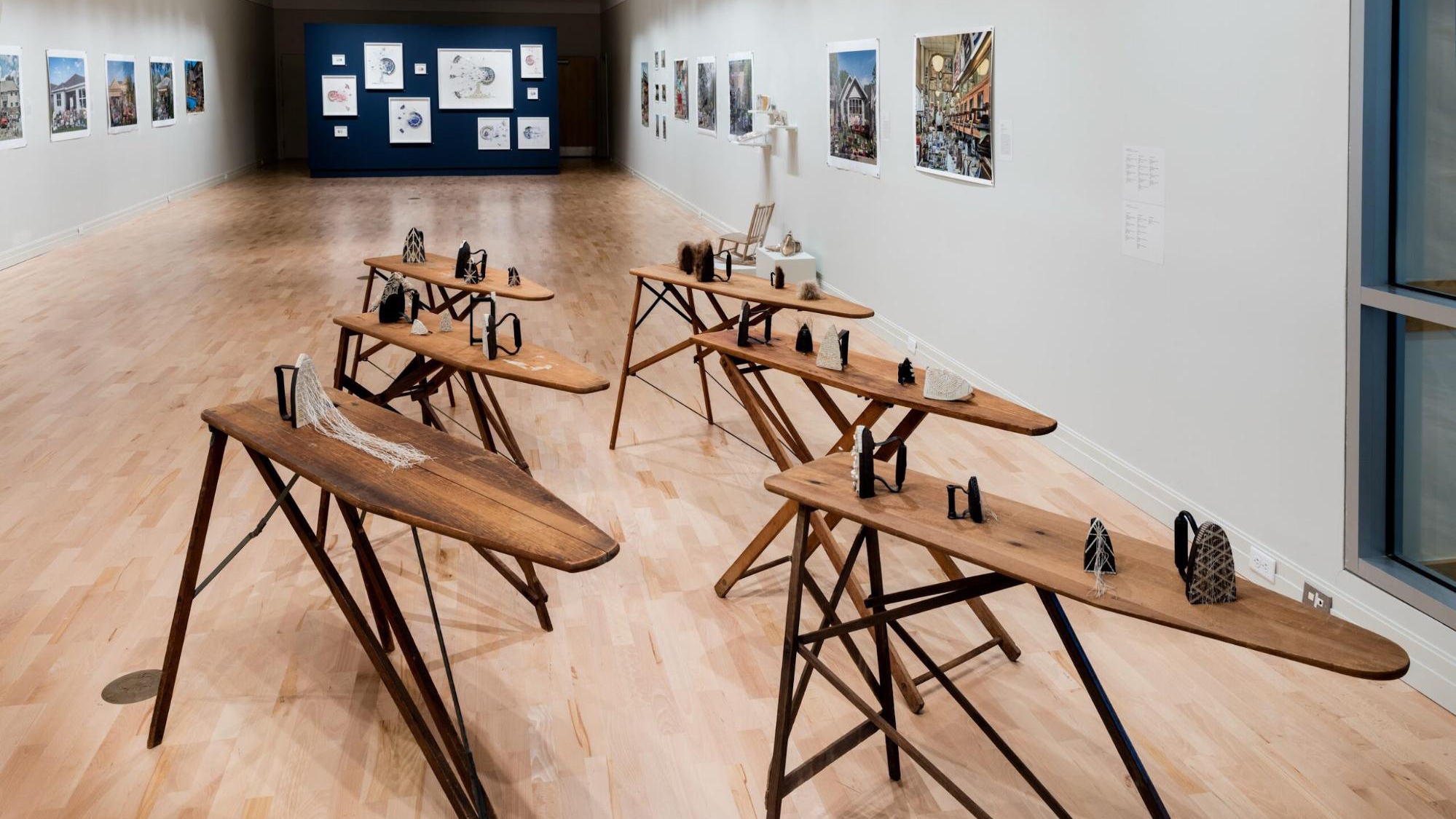
A plate survives three apartments and one bad Thanksgiving. A suitcase gets hauled across borders or shoved beneath beds; sometimes it is packed in hope, sometimes because someone has no choice. An iron presses school clothes and funeral clothes, then outlives its usefulness and sits in a closet somewhere, still holding the pressure of human hands.
That is the animating idea behind extraORDINARY things, the quietly arresting exhibition at the Flinn Gallery in Greenwich Library.
Continue reading “At Some Point, Every Household Object Stops Being Innocent”Learning Where There Is No Bottom: On the Thresholds of Swim Lessons
When I first learned how to swim as a child, my instructor told me to hold onto the edge of the pool and practice kicking. He counted the rhythm aloud, occasionally adjusting the angle of my body. Water kept splashing into my face, yet I could not make myself move forward. The actions had been broken down into steps: kicking, stroking, breathing, and I seemed to complete each one, but they never came together as a whole. Then, at some point, I stopped sinking. I still cannot say what exactly happened in that moment.
Continue reading “Learning Where There Is No Bottom: On the Thresholds of Swim Lessons”Unreliable Narrators: Rochelle Voyles
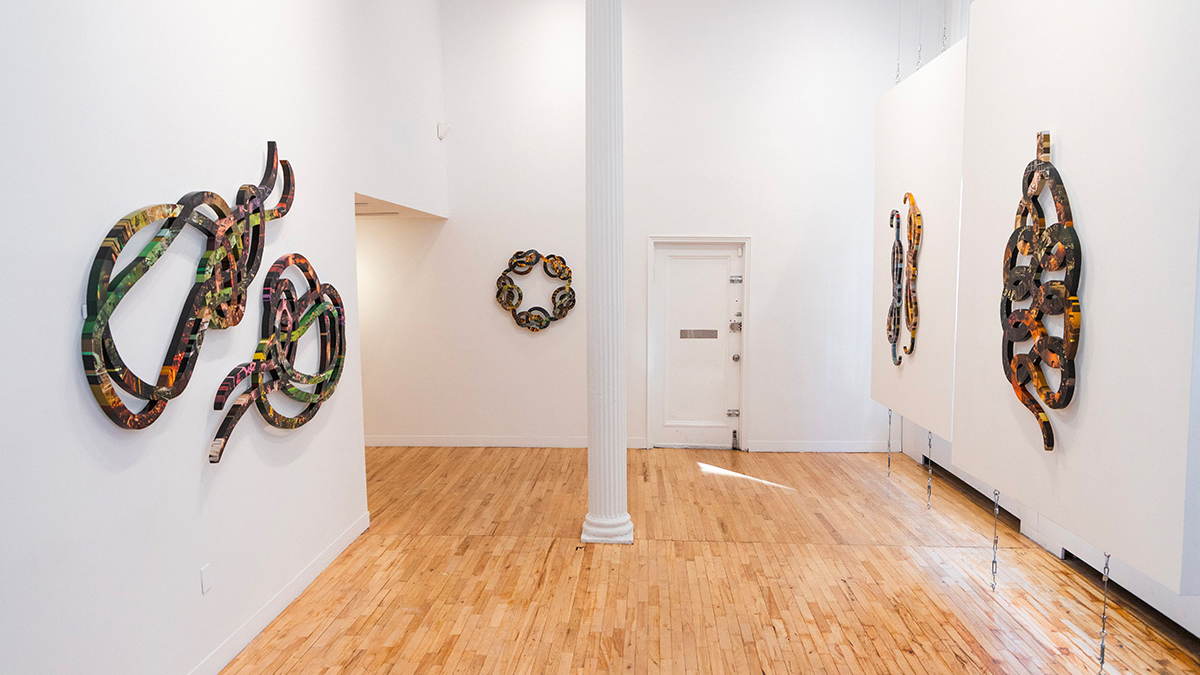
In Unreliable Narrators, Rochelle Voyles’s collages hold both a capacious nihilism and a hope to build stories from the void. From this fulcrum, I think of Joan Didion’s classic essay The White Album, and its opening truism: “We tell ourselves stories in order to live.” Voyles’s compositions of found photographs extend to viewers, a branch, a bone, a tool in making sense of the randomness that seems to rule our lives. Cutouts layered into loops capture chaos, but the care in each cut, the curation, and the collision of hyperspecific images betray a belief in an idiosyncratic order. These works are at once figurative mazes of manifold meaning, and objects calculated to short-circuit our thinking and experience pure sensation.
Continue reading “Unreliable Narrators: Rochelle Voyles”Fall Reads: Nine to Note
Book Review

Here’s a set of reviews of nine recently published and forthcoming books I’ve enjoyed reading, reflecting on, and recommending of late. In the mix are two emotionally trenchant novels, a narratively enigmatic novella, a gauzily glowing volume of poetry, a vast survey of contemporary text-based art, a history of groundbreaking women photographers, a critical examination of the sociopolitics of walking, a collection of interdisciplinary essays about narrative slowness, and a revised historical glimpse into the early days of US comic strips. They’re all worthy titles to add to your fall reading list. Several would also make excellent additions to a fall or spring syllabus.
Continue reading “Fall Reads: Nine to Note”