Laurie Fader: Opium Dreams

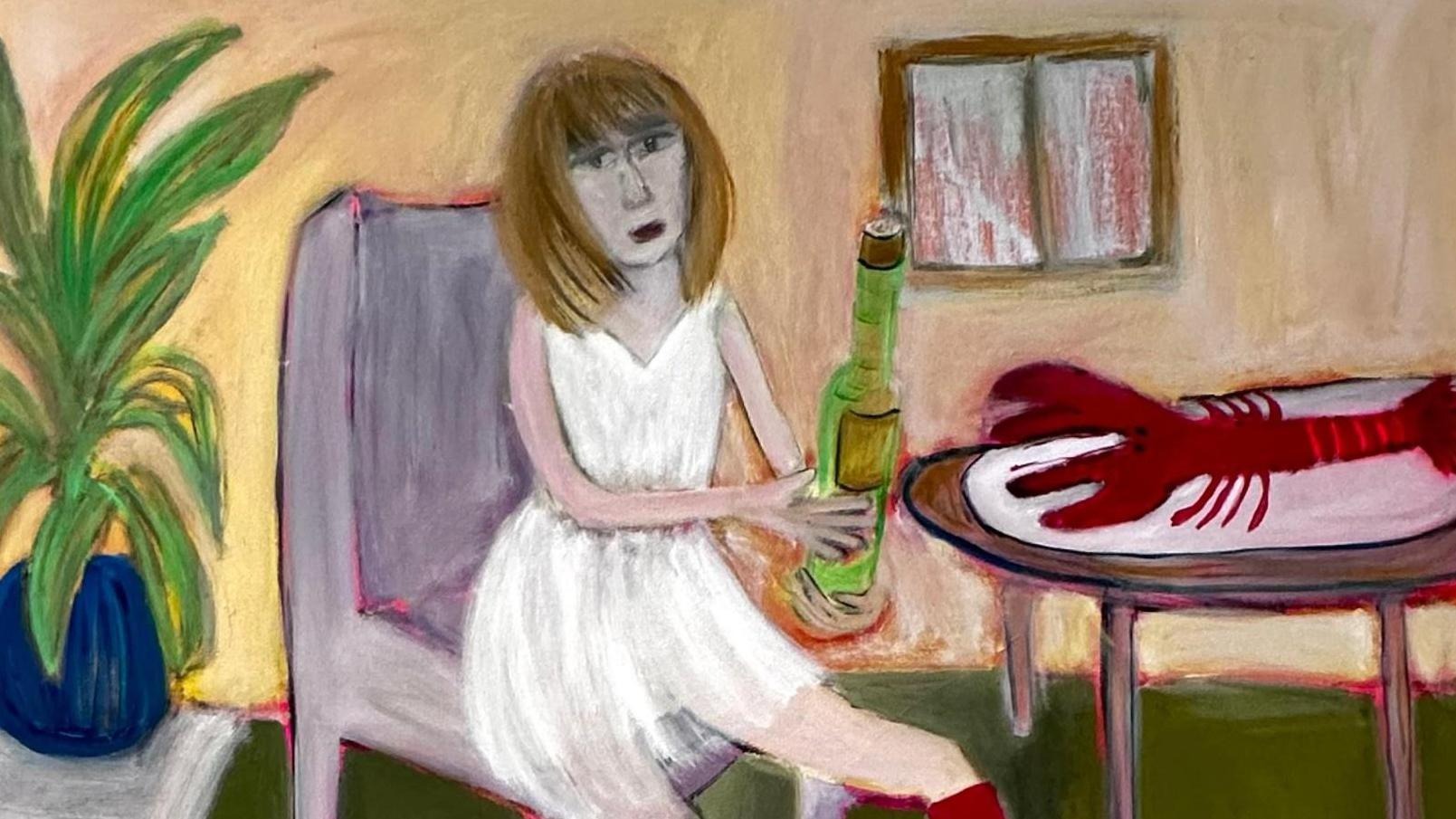
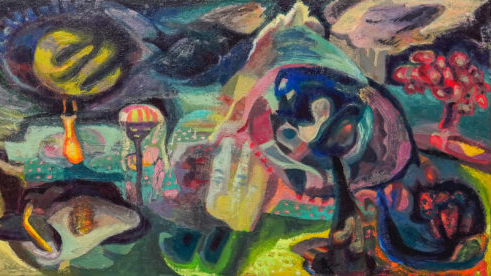
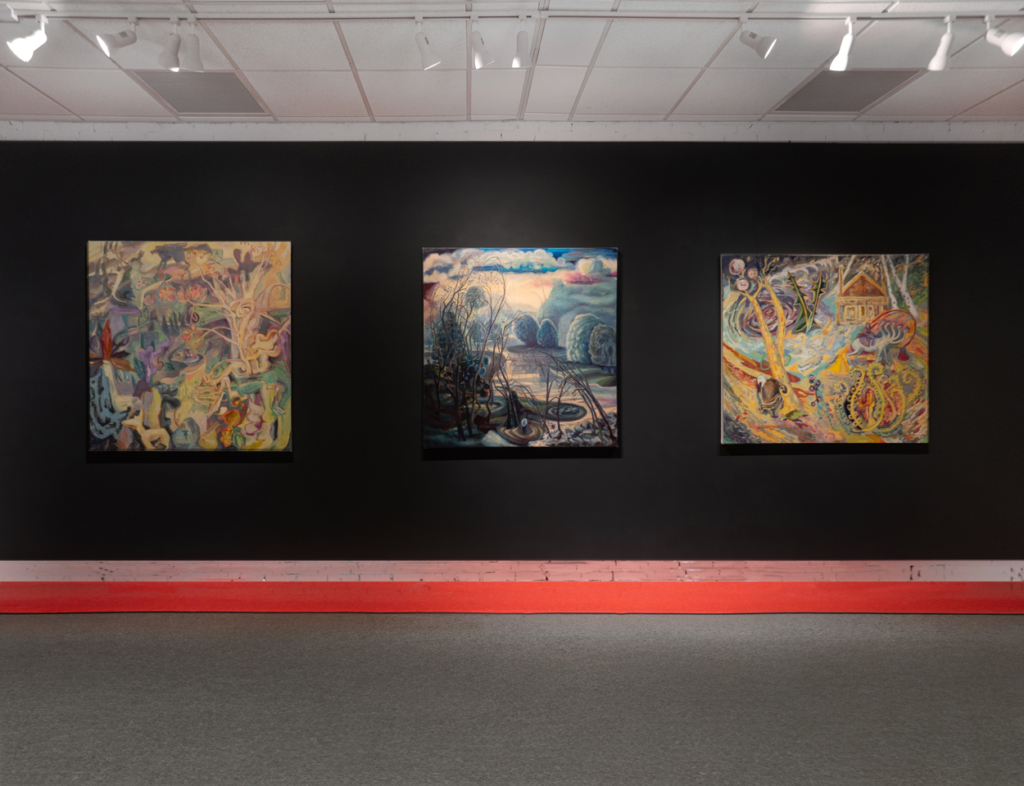
Opium Dreams, the exhibition of Laurie Fader’s pictures at the Susan Moremen Gallery, is an update of the artist’s bold transition from oil sketches of Umbrian hillsides to a psychological map of contemporary insecurities and vulnerabilities. She addresses our economic, political, and ecological ructions with exuberant irrationality, improbable scale-shifting, and a highly personal landscape vocabulary. Surreal humor and fantasy are her touch points, rather than anguish and despair.  

Continue reading “Laurie Fader: Opium Dreams”
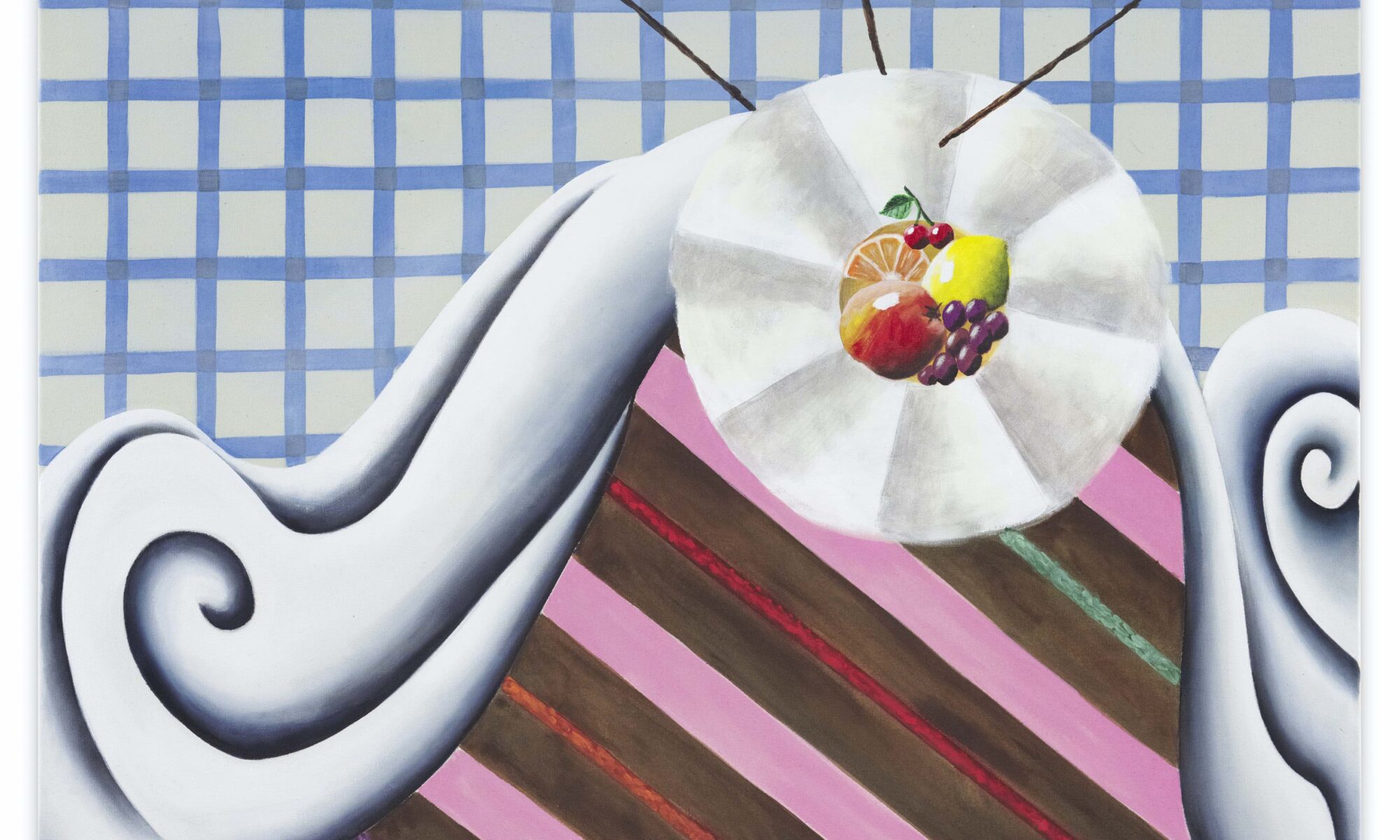
Andreas Schulze’s exploration of color in the cool pastures of cake

Andreas Schulze, Untitled (Her)

In his show Cake (2026) at Sprüth Magers, New York, Andreas Schulze explores the visual effects of saturated color and geometric form, using cake as the setting for his investigation.

In his paintings, Schulze creates an inner three-dimensional universe, which serves as a bell jar. In his imaginary pastures, Schulze creates surreal interiorscapes, built of geometric shapes and flat backdrops of color-gradient skies, juxtaposed with rounded spheres and spirals painted in three-dimensional perspective, with depth and shadow. The pictorial space he builds gives a stage for him to explore various phenomena, in this case, cake, and he does so with a playful seriousness, experimenting with the basic forms and images that make up cakes: candles, frosting, fruit, sprinkles, and layers.

Continue reading “Andreas Schulze’s exploration of color in the cool pastures of cake”

Women Across America 1945-1979 at Eric Firestone

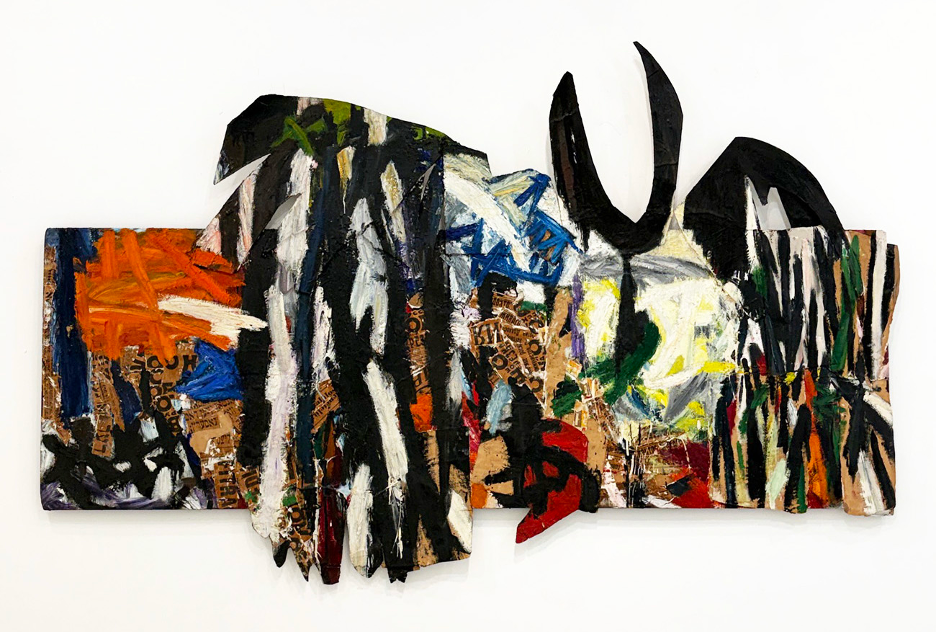
Eric Firestone Gallery, in its continuing support of underrepresented and female artists in the 20th and 21st centuries, has mounted an ambitious and interesting exhibition on now through July 11 at the gallery’s location on Great Jones Street in NYC. The exhibition is devoted to women who worked in abstraction from 1945 to 1979, thus giving the curators a very specific window within which to work.

Continue reading “Women Across America 1945-1979 at Eric Firestone”

Kosuke Kawahara’s Without Innocence, Dissecting and Reassembling at RAINRAIN Gallery

Kosuke Kawahara, Untitled

Stepping into the exhibition Without Innocence at RAINRAIN gallery, you are greeted with a plethora of various mediums, ideas, influences, and experimentations. The paintings carry with them several levels of looking, small details to explore, and multiple dimensions within the edges. The photographs set the scene, allowing you to enter another space just as the paintings do, left to explore the worlds that Kawahara creates and builds within it all. The press release introduces a quote from Donna Haraway’s A Cyborg Manifesto, “…we are living through a movement from an organic, industrial society to a polymorphous, information system—from all work to all play, a deadly game (p 28).” This statement lingers alongside my thoughts throughout the exhibition, as I begin to notice more details, connections, and mechanisms that make this exhibition immensely similar to a cyborg in the making. Kawahara takes pieces of the body and fractions of different spaces within the canvas to build something entirely new out of all of these information systems. 

Continue reading “Kosuke Kawahara’s Without Innocence, Dissecting and Reassembling at RAINRAIN Gallery”

It Takes a Village at Freight and Volume

The most subtle acts are often the most cathartic. In times of relentless upheaval and injustice, simple moments can feel Herculean by measure. The current exhibition at Freight and Volume, It Takes A Village, focuses on daily ritual as a gate of entry. Artists Andrea Castillo, Nancy Elsamanoudi, and Baran Shafiey blend nuanced elements with doses of surreality, resulting in invitations into spaces that delightfully offer more questions than answers. Each work is a reckoning with the quietude of in-betweenness. Each artist is a painter working in figuration; yet the similarities end there, and the departures are as varied as one can imagine. 

Continue reading “It Takes a Village at Freight and Volume”

Carol Bouyoucos: Eden After Us

Carol Bouyoucos

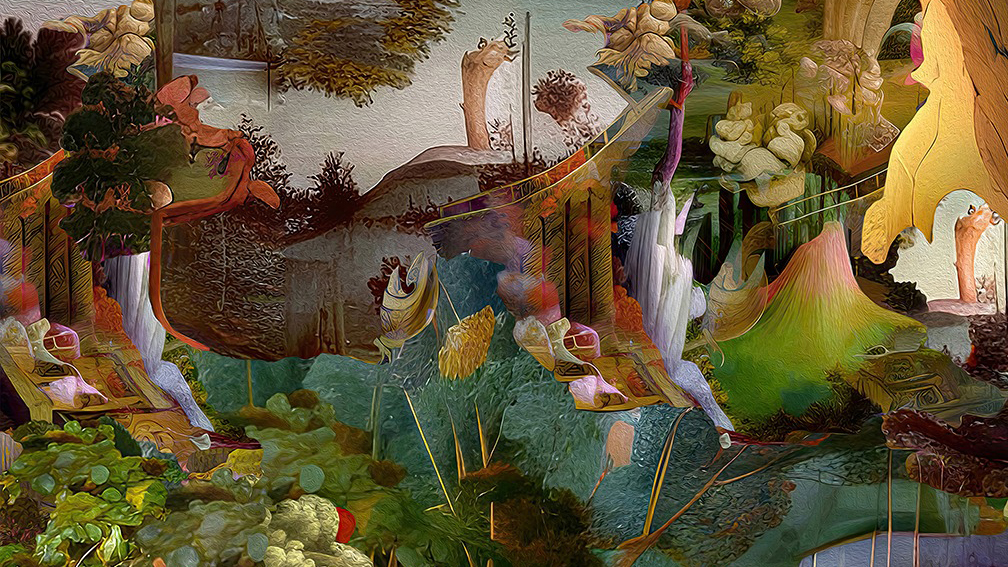
Trained as a photographer, Carol Bouyoucos has spent the last several years pushing past the camera’s claims to truth—folding her own images into AI systems, digital layering, and the slow accidents of computational misreading. The landscapes that emerge read as propositions about what nature might become once human authorship loosens its grip.Her recent work, increasingly ambitious in scale and mythic in register, marks a notable departure from the botanical and landscape series that established her vocabulary. In this conversation, she speaks about the terrain that shaped her eye, the painters and visionaries whose company she keeps, and the strange logic of making images in a moment when both ecosystems and pictures behave less and less predictably. What follows is a portrait of an artist thinking out loud about control, instability, and the worlds that emerge when she relinquishes both.

Continue reading “Carol Bouyoucos: Eden After Us”

At Some Point, Every Household Object Stops Being Innocent

No one ever thinks the plate is going to become a problem.

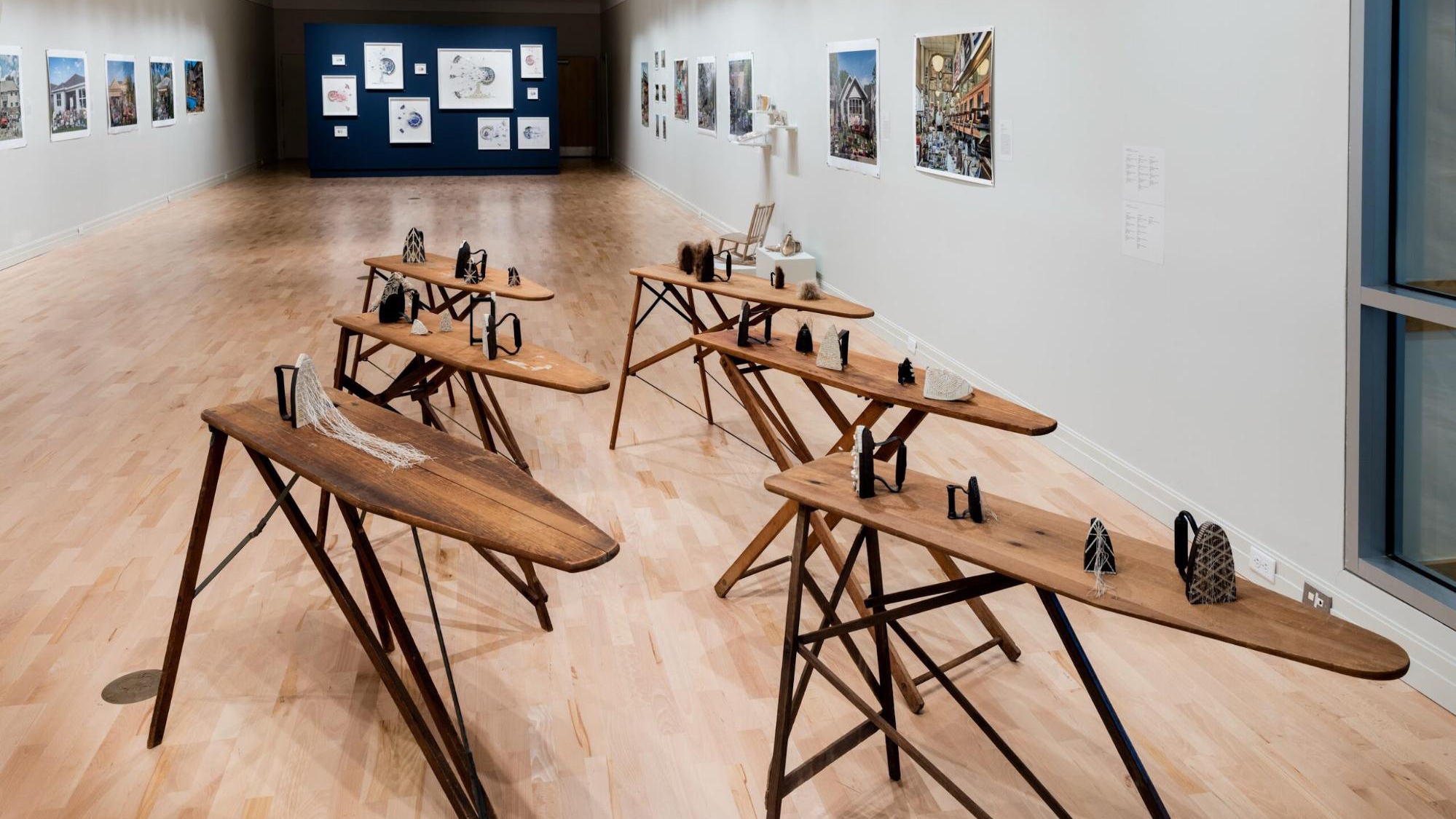
A plate survives three apartments and one bad Thanksgiving. A suitcase gets hauled across borders or shoved beneath beds; sometimes it is packed in hope, sometimes because someone has no choice. An iron presses school clothes and funeral clothes, then outlives its usefulness and sits in a closet somewhere, still holding the pressure of human hands.

That is the animating idea behind extraORDINARY things, the quietly arresting exhibition at the Flinn Gallery in Greenwich Library.

Continue reading “At Some Point, Every Household Object Stops Being Innocent”

Unreliable Narrators: Rochelle Voyles

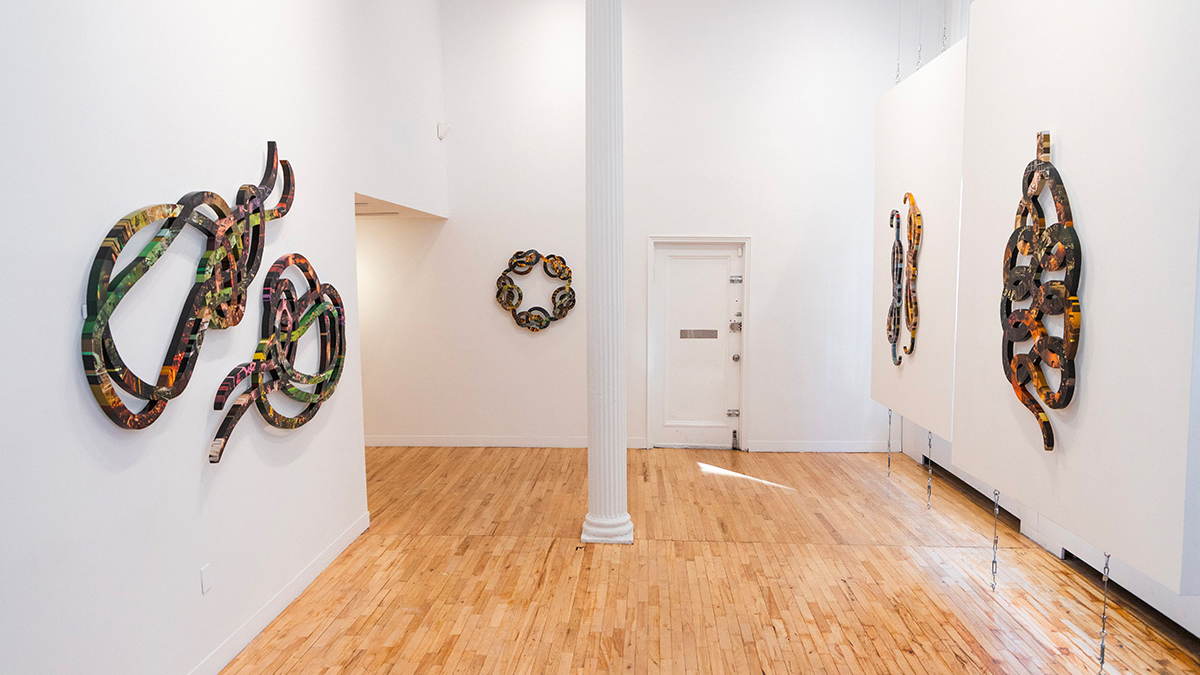
In Unreliable Narrators, Rochelle Voyles’s collages hold both a capacious nihilism and a hope to build stories from the void. From this fulcrum, I think of Joan Didion’s classic essay The White Album, and its opening truism: “We tell ourselves stories in order to live.”  Voyles’s compositions of found photographs extend to viewers, a branch, a bone, a tool in making sense of the randomness that seems to rule our lives. Cutouts layered into loops capture chaos, but the care in each cut, the curation, and the collision of hyperspecific images betray a belief in an idiosyncratic order. These works are at once figurative mazes of manifold meaning, and objects calculated to short-circuit our thinking and experience pure sensation. 

Continue reading “Unreliable Narrators: Rochelle Voyles”

Maureen McCabe: Feminine Surrealism, Witch Culture and the Original Goth

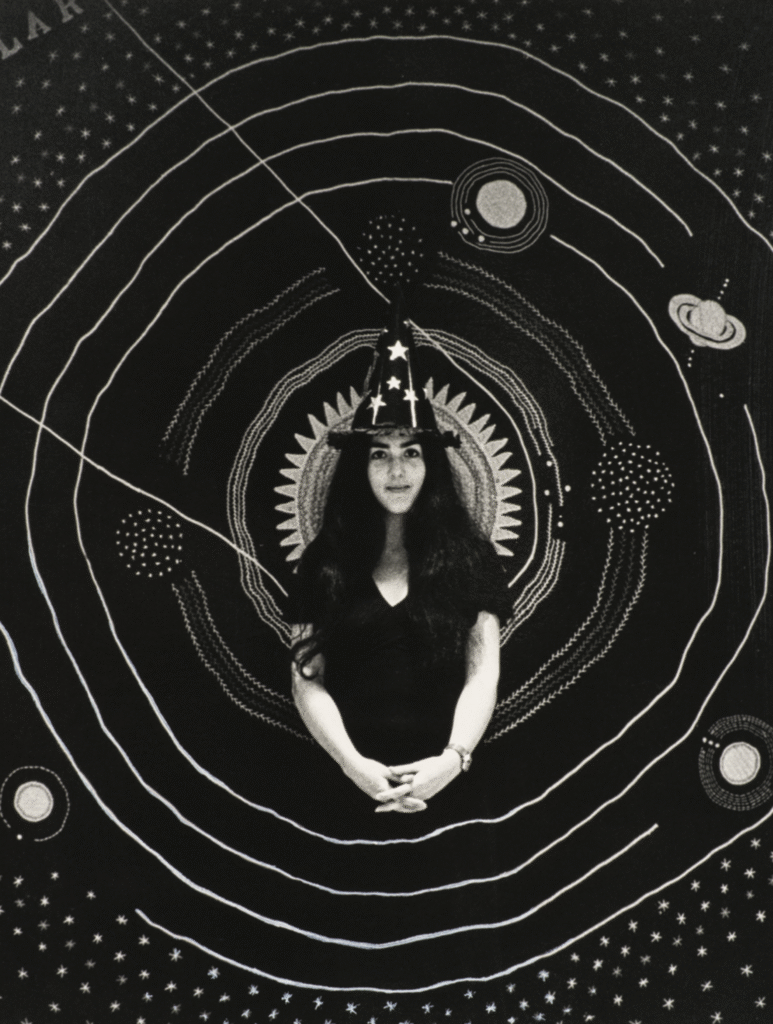
Tod Gangler (b. 1953), Professor Maureen McCabe, 1975, Hand-altered photograph, 5″ × 4⅜”

I’ve never been to a séance; however, walking into Maureen McCabe’s exhibition Fate and Magic at the William Benton Museum of Art invokes strong séance vibes. Artworks on black slate whisper, engravings of shooting stars, goddesses, brew potions, and long-forgotten stage magicians appear at the Benton like reliquaries of the past.  For over six decades, Maureen McCabe has been an overlooked alchemist of memory, transmuting her personal experiences and arcane cultural references into this intimate magical retrospective.

Continue reading “Maureen McCabe: Feminine Surrealism, Witch Culture and the Original Goth”

Yi Hsuan Lai: The Ontology of the Body at SoMad

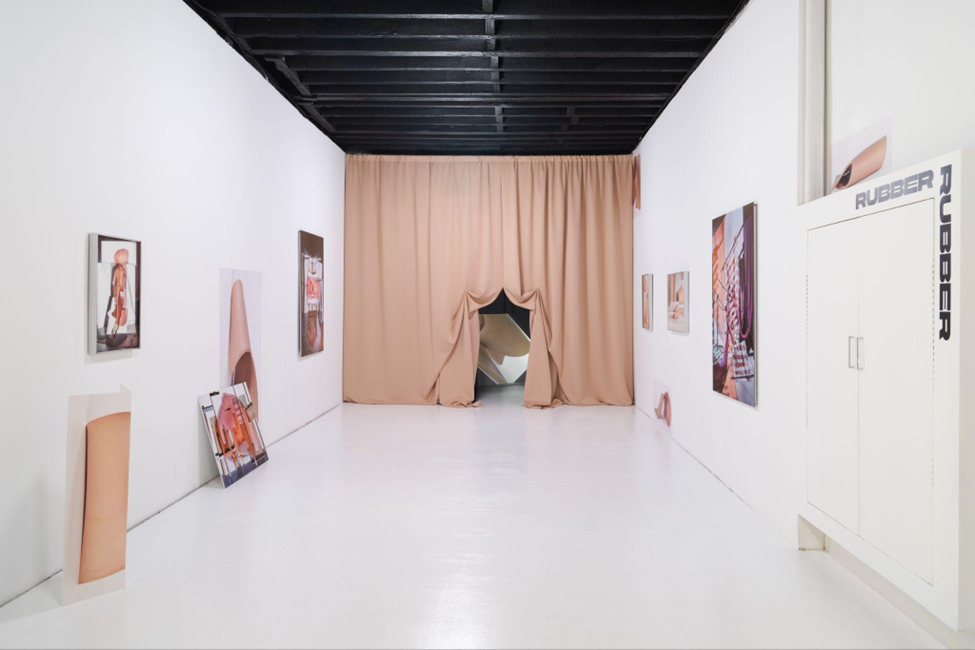
Yi Hsuan Lai, Rubber, Rubber. Installation view in SoMad, 2025. Imagery courtesy of SoMad and the artist

Yi Hsuan Lai exhibits her works in a solo show at SoMad, a femme- and queer-led art space that serves as a platform for emerging artists to experiment, collaborate, and challenge conventions. SoMad comprises a combined gallery and artist residency program, a production house, and an event space. The name “SoMad” reflects both the physical location — south of Madison Square Park — and the collective’s frustration with the current landscape of resources and support structures available for emerging artists, particularly artists from marginalized communities.

Continue reading “Yi Hsuan Lai: The Ontology of the Body at SoMad”