History has always depended on materials. Marble, oil paint, bronze, woodcuts, engravings, museum vitrines, and photographic reproductions preserve the past as well as determine how events, ideas, and narratives are represented. Over time, images become durable, gaining a certain kind of truth value because they acquire material permanence and spread through copies. Mythological heroines, biblical women, allegorical figures, and historical subjects return across centuries through the persistence of artistic media, carrying with them the assumptions, hierarchies, and ideologies embedded in their forms. Melora Kuhn‘s solo exhibition, The Legacy of Disembodiment, on view at Private Public Gallery, starts with the recognition that if representation has helped naturalize and proliferate the narratives these images and forms carry, then materials themselves can be a site of political intervention.
Continue reading “Melora Kuhn’s Power of Erasure and Material Revision”Growing After the Embers: A Review of Bùi Thanh Tâm’s Solo Exhibition Here on and after
For a long time, when I was young, I felt distant from the idea of “history.” In textbooks, history always appeared through years, wars, reforms, and changes of political power, as if it were made of events already organized and settled. Yet the history that truly remains in the body often appears in more hidden forms. It may be a silence within family narratives, a memory that one generation chooses to avoid, a recurring pattern in festive images, or a color that seems joyful while quietly carrying a wound. Very often, history continues to exist in another form, lingering in images, bodies, and everyday experience.
Continue reading “Growing After the Embers: A Review of Bùi Thanh Tâm’s Solo Exhibition Here on and after”Dakota Gearhart: All Matter Is Alive
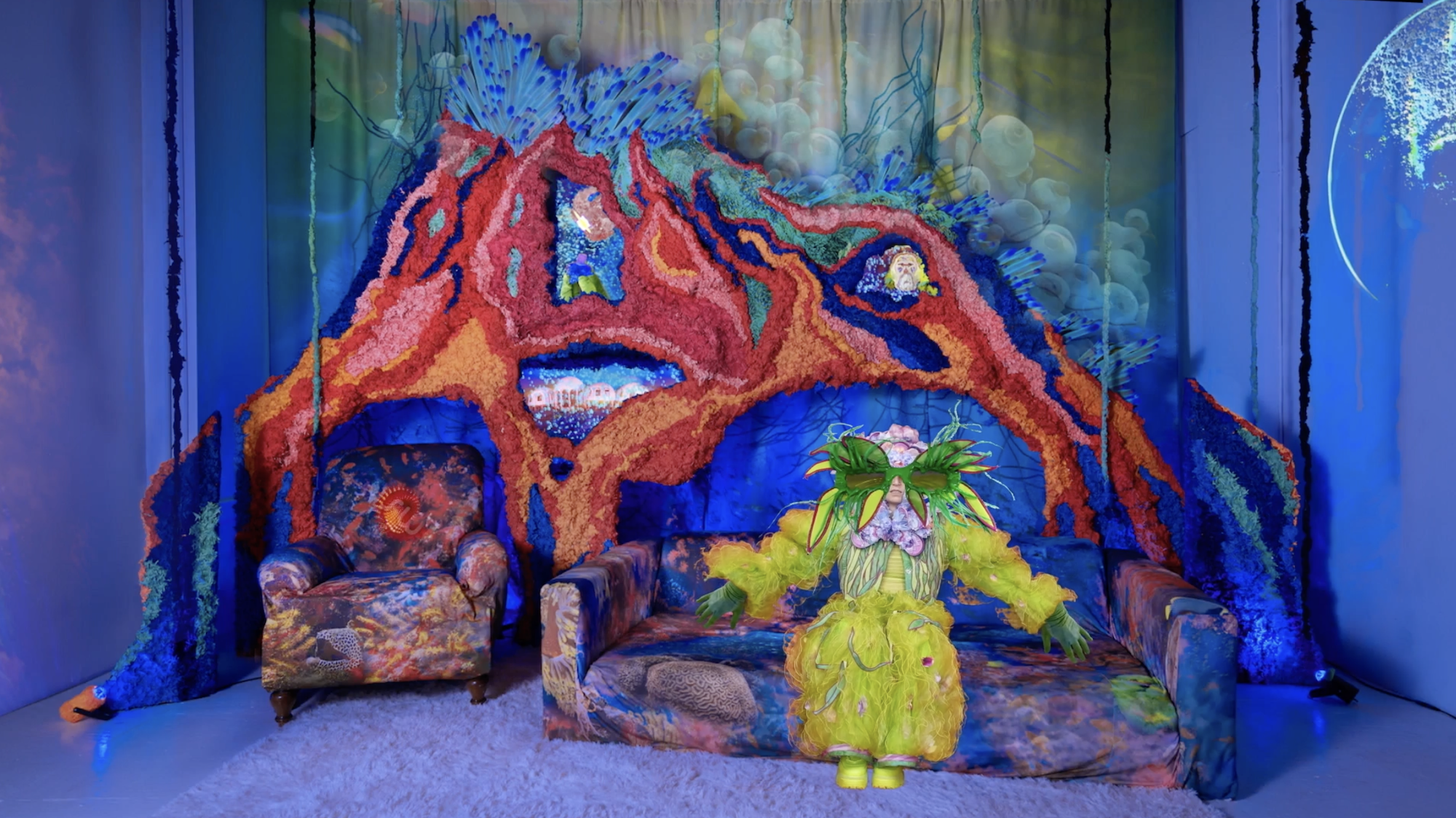
Dakota Gearhart grew up on a Florida coastline where algae blooms, sewage outflows, and bikini contests share the same shoreline, and her work has been carrying that mix of beauty, decay, and amusement into a much bigger frame ever since. Across animation, sculpture, performance, and sound, she builds video worlds where pixels sing, electricity becomes sentient, and the nonhuman shows up on equal footing with the rest of the cast. Her ongoing animated series Life Touching Life is hosted by Tiffany, a half-algae, half-woman figure who guides viewers through episodes shaped with collaborators — poets, scientists, activists, caretakers — whose lives already reflect the worldview the work is reaching toward. It’s funny, strange, and serious in roughly equal measure, which turns out to be the right register for the worlds it stages.
Continue reading “Dakota Gearhart: All Matter Is Alive”No Walls Required: Stay Frosty Comes to Kingston
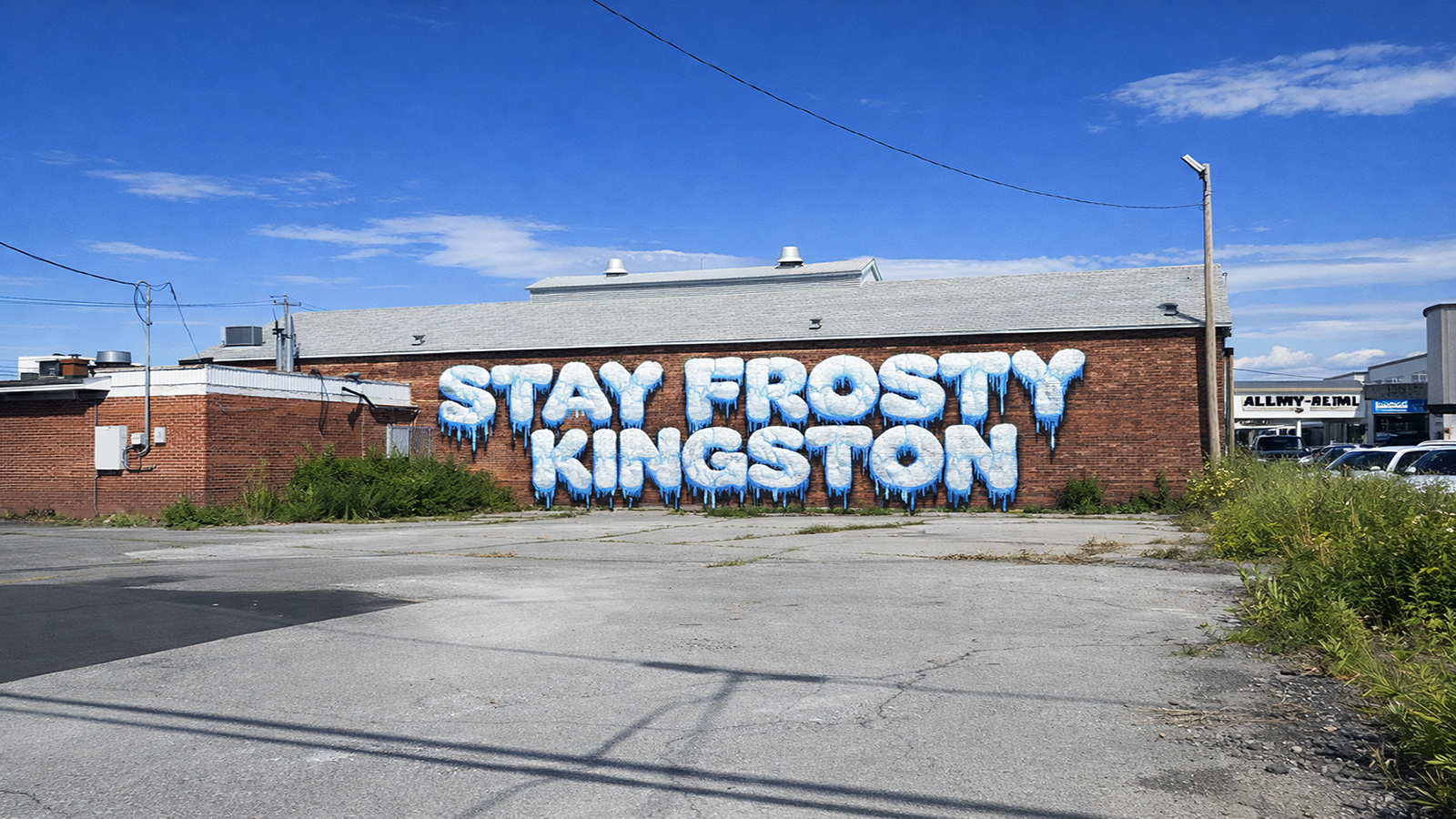
The gallery is a parking lot. The walls are car hoods, trunks, dashboards, and glove compartments. That is the premise of Stay Frosty, the itinerant art project launched by New York’s BravinLee programs that arrives in Kingston this June as part of Upstate Art Weekend, in collaboration with ArtPort Kingston. After a debut edition in Harlem that transformed a parking lot into a temporary neighborhood, Stay Frosty is now on home ground — a community where the car is less symbol than necessity, and where ArtPort Kingston has spent years weaving contemporary art into everyday public life. We spoke with BravinLee’s Karin Bravin and John Lee, and ArtPort Kingston’s Laurie De Chiara, about what brought them together, what they’re building, and why some of the most exciting art right now might be happening in a parking lot.
Continue reading “No Walls Required: Stay Frosty Comes to Kingston”The Absence is in the Fingers
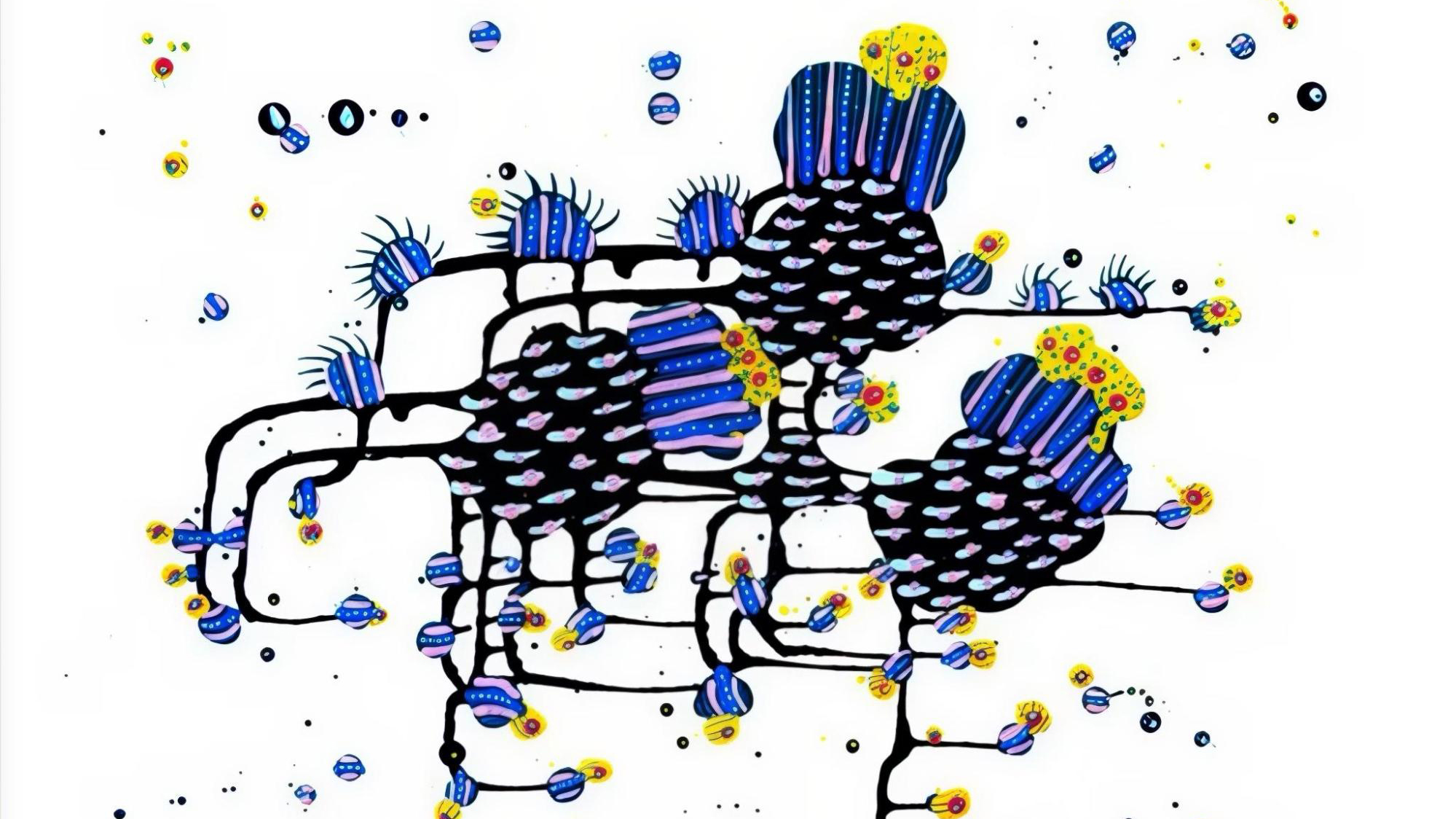
There are exhibitions shaped less by what is installed than by what fails to arrive. I did not plan for this to be one of them. Where Form Remembers was conceived as a two-person presentation: Julie Gladstone’s mixed-media works traveling from Toronto, Avani Patel’s drawings from Brooklyn. The premise was a dialogue between two practices in proximity, each distinct enough that the distance between them would produce something worth engaging over time. What it became was different.
Continue reading “The Absence is in the Fingers “Karla Black civilizes the drives in her pastel-colored Gilded Age-style show at Rodder
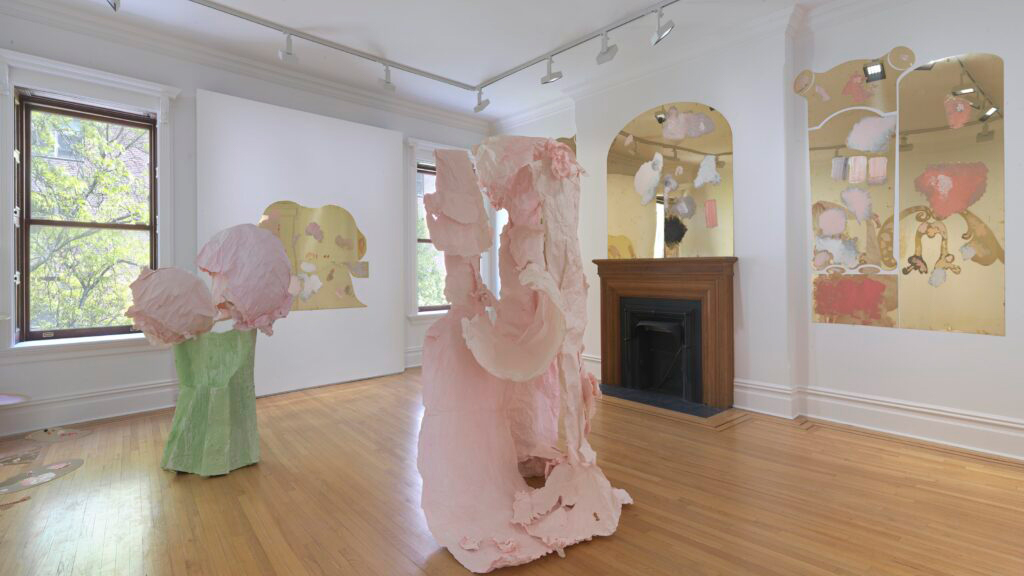
Karla Black presents her first show in New York City since 2016, and inaugurates Rodder’s expanded Upper East Side gallery space.
Karla Black is a canonized Scottish artist known for working with basic art materials like plaster, paper, and chalk, alongside beauty products like bath bombs, rouge, Vaseline, and lipstick, all in shy pastel colors to create womb-like, abstracted dreamscapes. At Rodder, she creates a site-specific installation, painting Rococo silhouettes in light hues on mirrors as well as constructing monumentally delicate, scented sculptures that glide through the space, chiming in on somatic echoes of the building’s historical narrative, and celebrating feminine beautification rituals.
Continue reading “Karla Black civilizes the drives in her pastel-colored Gilded Age-style show at Rodder”At Some Point, Every Household Object Stops Being Innocent
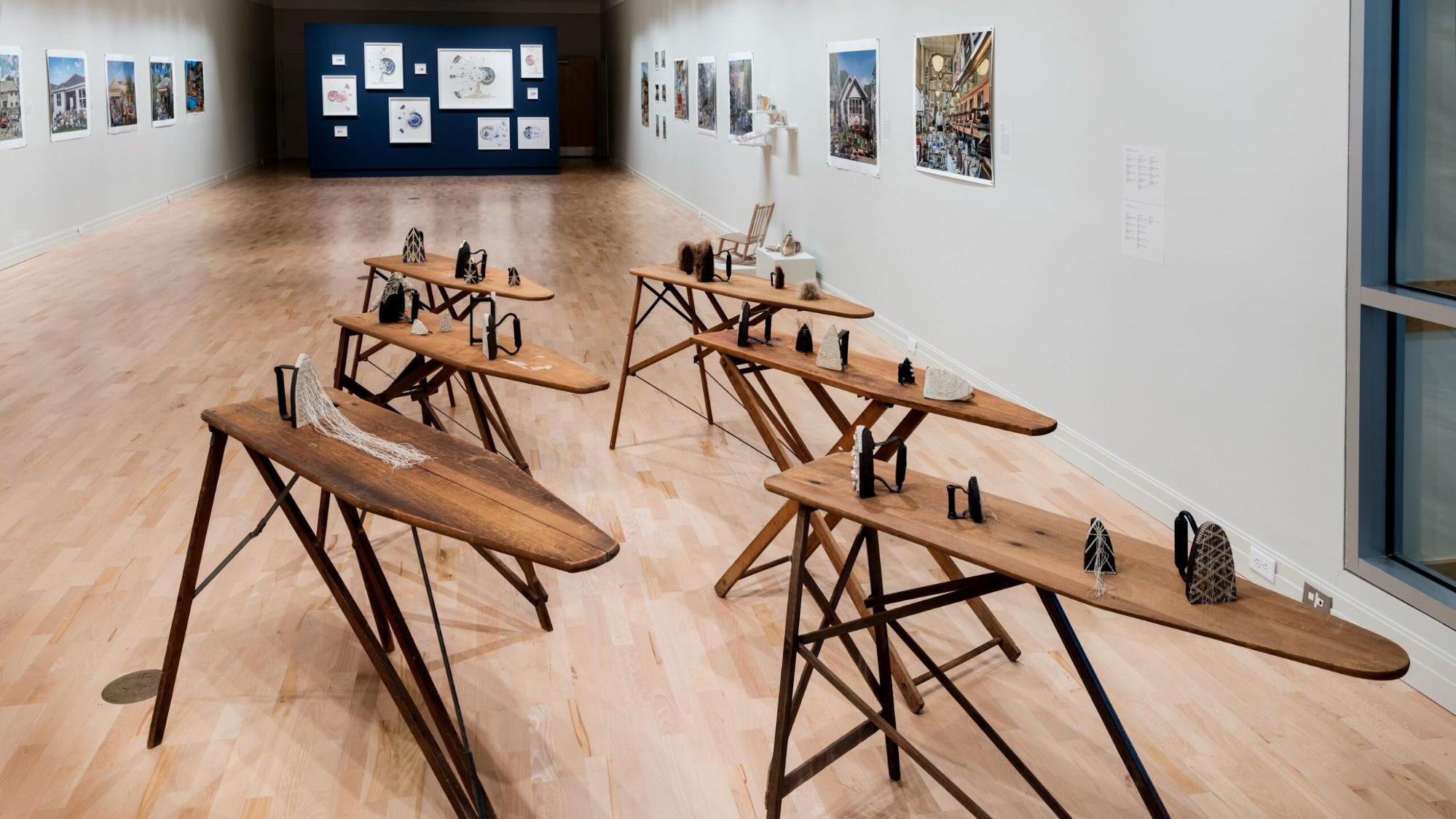
No one ever thinks the plate is going to become a problem.
A plate survives three apartments and one bad Thanksgiving. A suitcase gets hauled across borders or shoved beneath beds; sometimes it is packed in hope, sometimes because someone has no choice. An iron presses school clothes and funeral clothes, then outlives its usefulness and sits in a closet somewhere, still holding the pressure of human hands.
That is the animating idea behind extraORDINARY things, the quietly arresting exhibition at the Flinn Gallery in Greenwich Library.
Continue reading “At Some Point, Every Household Object Stops Being Innocent”On the Edge of Meaning: Lucy Sante’s Collages

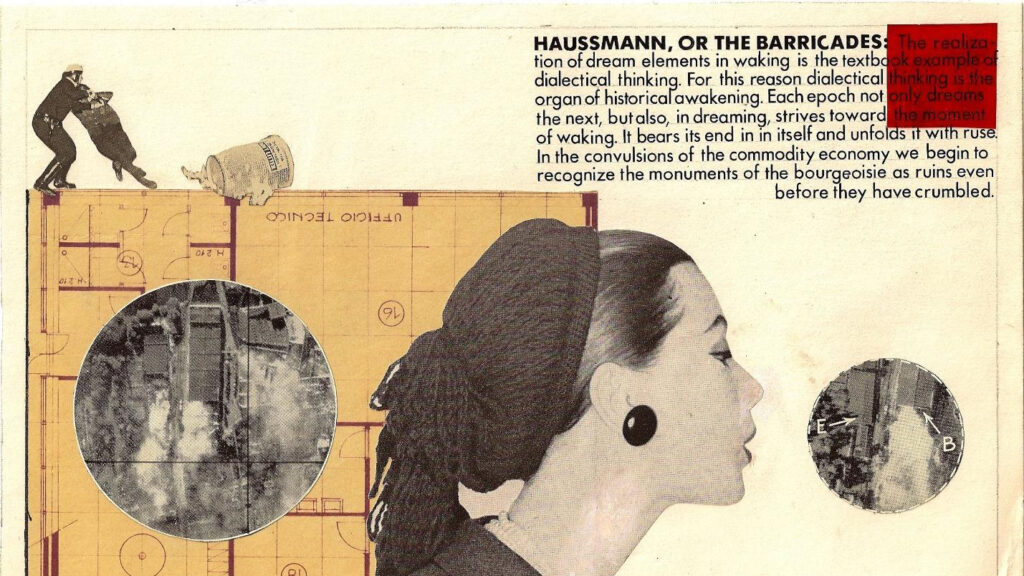
Interspersed throughout the stately library of the Academy of Arts and Letters in Washington Heights, in and around shelves holding works by Academy members like John Cheever, Pearl S. Buck, and Grace Paley, a new exhibition of collages by the cultural critic, essayist, and Dylanologist Lucy Sante is on display. Knots, organized by curator Kristin Poor, features mostly recent works from the last few years, save one, Haussmann, or the Barricades, which dates to 1979.
Continue reading “On the Edge of Meaning: Lucy Sante’s Collages”Yuyo- Julián Kreimer at the Sarah Lawrence Heimbold Visual Arts Center
Before his artist talk, Julián Kreimer set a small brown valise on the table and opened it. Inside, folders held drawings on paper, each made in response to a photographic slide from his parents’ archive. The valise was not part of the exhibition; it was the working material behind it, a private archive he had been drawing through for years. Encountering it set the terms for the room next door: Yuyo is what happens when that interior is opened out.
Continue reading “Yuyo- Julián Kreimer at the Sarah Lawrence Heimbold Visual Arts Center”Cynthia Pareja Dubin at the Oyster Point Hotel
The Artist in Residence program at The Oyster Point Hotel was launched in 2020 and curated by Ellen Martin, with the support of Kevin Barry, the hotel’s President. Its premise is straightforward: contemporary art belongs not only in galleries but in the spaces where people actually live, rest, and move through their days. Each year, a selected artist’s work inhabits the hotel’s guest rooms, common areas, and the fabric of the place itself, encountered by thousands of visitors during their stay.
Continue reading “Cynthia Pareja Dubin at the Oyster Point Hotel “