Unreliable Narrators: Rochelle Voyles

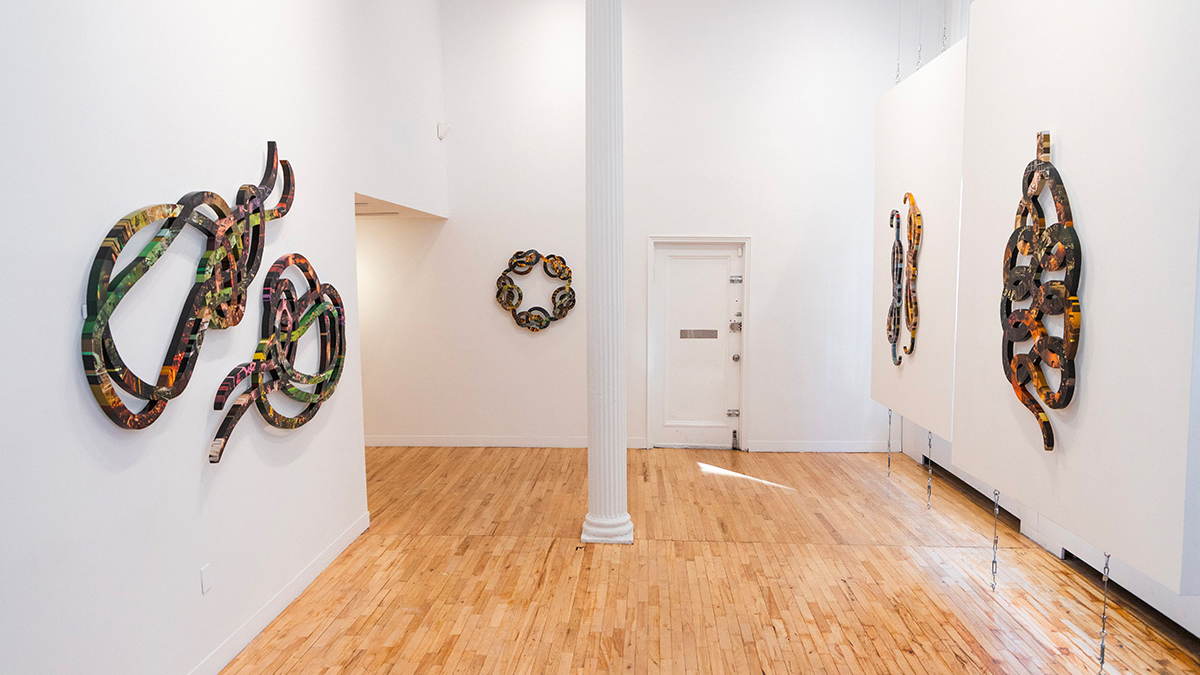
In Unreliable Narrators, Rochelle Voyles’s collages hold both a capacious nihilism and a hope to build stories from the void. From this fulcrum, I think of Joan Didion’s classic essay The White Album, and its opening truism: “We tell ourselves stories in order to live.”  Voyles’s compositions of found photographs extend to viewers, a branch, a bone, a tool in making sense of the randomness that seems to rule our lives. Cutouts layered into loops capture chaos, but the care in each cut, the curation, and the collision of hyperspecific images betray a belief in an idiosyncratic order. These works are at once figurative mazes of manifold meaning, and objects calculated to short-circuit our thinking and experience pure sensation. 

Continue reading “Unreliable Narrators: Rochelle Voyles”

Kylie Heidenheimer: Attenuated Figuration

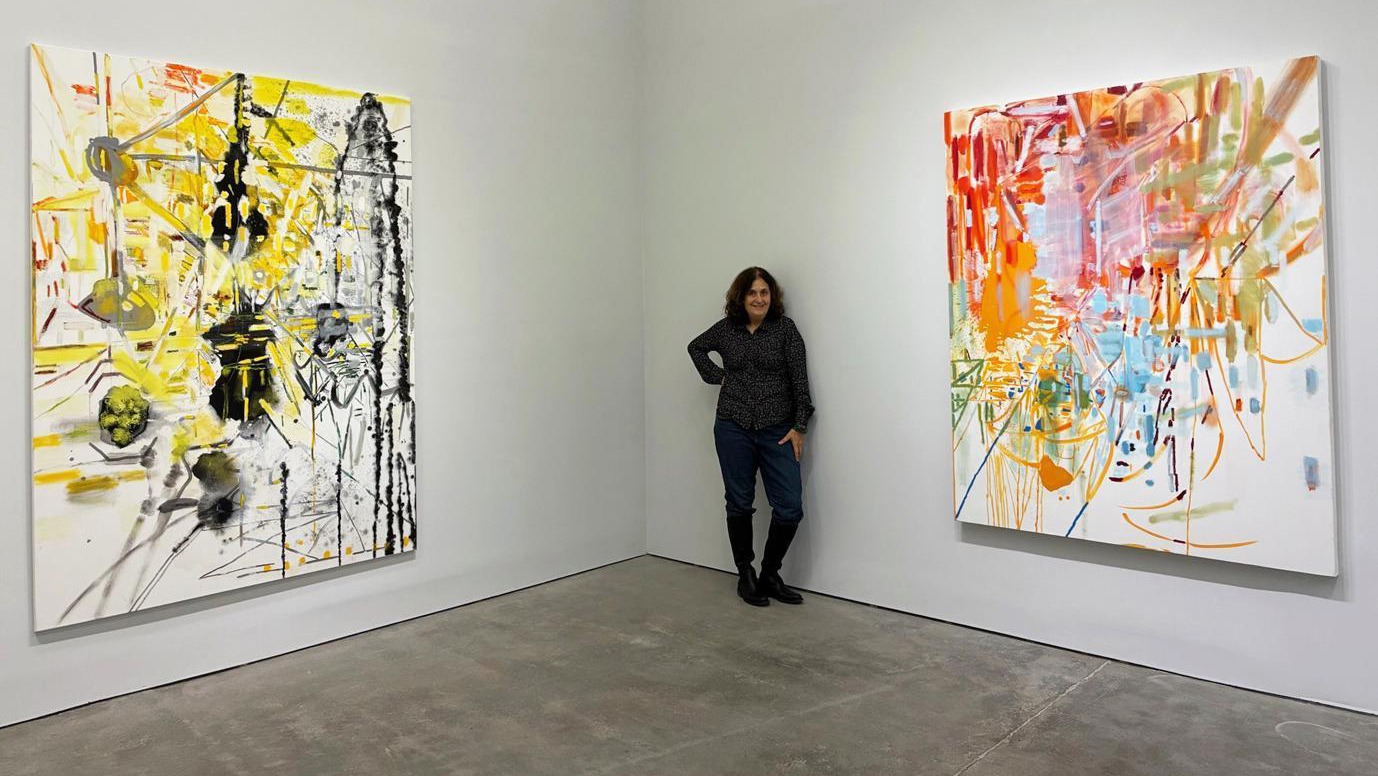
Kylie Heidenheimer came to painting through an early interest in art restoration. After high school, she attended Grinnell College in Iowa, where she studied chemistry, art history, and 2-D studio art. Following her freshman year, she spent the summer as an art restoration intern at the Museum für Völkerkunde in then West Berlin. While there, she began drawing and painting with gouache on paper on her own. By the end of that summer, she had decided to pursue art seriously. Not long after, her focus shifted to oil painting. 

Her path toward abstraction grew out of a strong foundation in figurative work. After her sophomore year at Grinnell, she returned to St. Louis to attend art school at Washington University. The core program was rigorous and heavily figurative, with intensive anatomy drawing and figure sculpture classes, followed by a return to painting.

Continue reading “Kylie Heidenheimer: Attenuated Figuration”

Lacey McKinney: Where Bodies Blur

Born and raised in New York, Lacey McKinney is a New York-based fine artist whose work explores the tensions between interspecies dynamics, gender and ecology, the paradox of life and death, and bodily transformation and decay. Having exhibited nationally, received major grants such as the NYFA/NYSCA Project Grant, and completed residencies including the McColl Center, McKinney’s practice continues to evolve. Her work meditates on the complexities of existence, as self and in relation to others, unraveling the differences that separate us, and highlighting the interdependence entangled within all species, ecosystems, and identities. 

McKinney’s gestural material application and stylistic dynamism merge, meld, reconfigure, and transform figures, flora, and fauna, creating liminal compositions that blur where form begins and ends. Her pigments and paints examine the relationship between predator and prey, a relationship that, though antagonistic, still relies on reciprocity to survive. Insides become outsides, differences become diffused, and touch becomes transformative.

Continue reading “Lacey McKinney: Where Bodies Blur”
John Kelly: A FRIEND GAVE ME A BOOK at PPOW 

I walked into the PPOW gallery the morning my friend Riki died. The 182-panel illustrated small drawings by New York artist John Kelly, which extend as an open graphic memoir around the gallery, captured me instantly, letting me in on a personal journey of mortality, pain, and beauty. There was something generous in the way Kelly handed his notebook and shared the manuscript of his injury. It resonated with my thoughts of investigating and dwelling on mourning and mortality. 

Continue reading “John Kelly: A FRIEND GAVE ME A BOOK at PPOW “

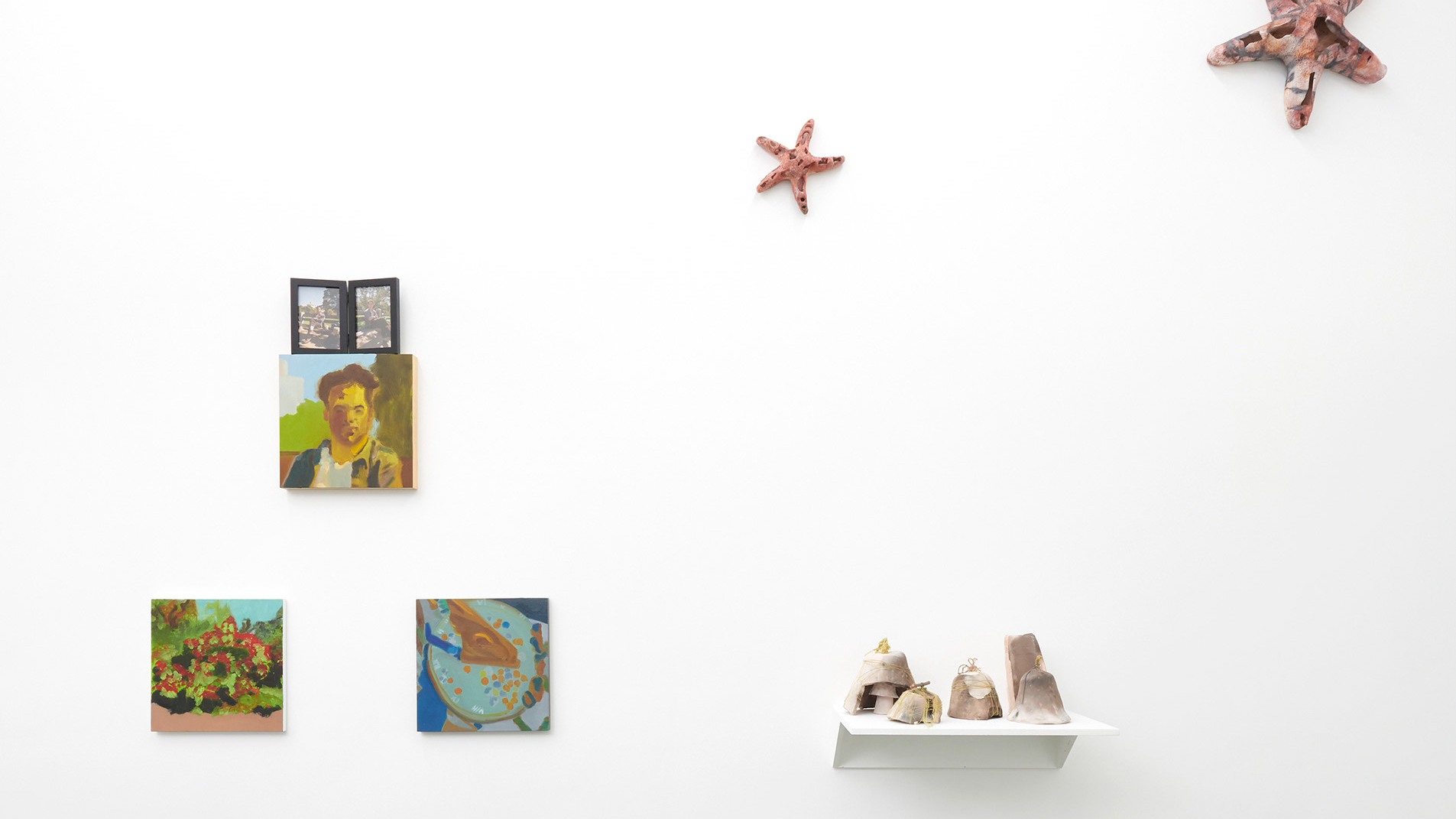
Community and Belonging: Grit of the Hearth Beyond the Brambles at Field of Play

The exhibition titled Grit of the Hearth Beyond the Brambles creates a sense of place, wonder, and belonging. The title itself invites introspection, especially after reading the poem in the press release. It offers an exhale to the stressed, a release from tension, and a bright light to those who may be unsure.

Continue reading “Community and Belonging: Grit of the Hearth Beyond the Brambles at Field of Play”

Still / Moving at San Luis Obispo Museum

Still / Moving, San Luis Obispo Museum of Art
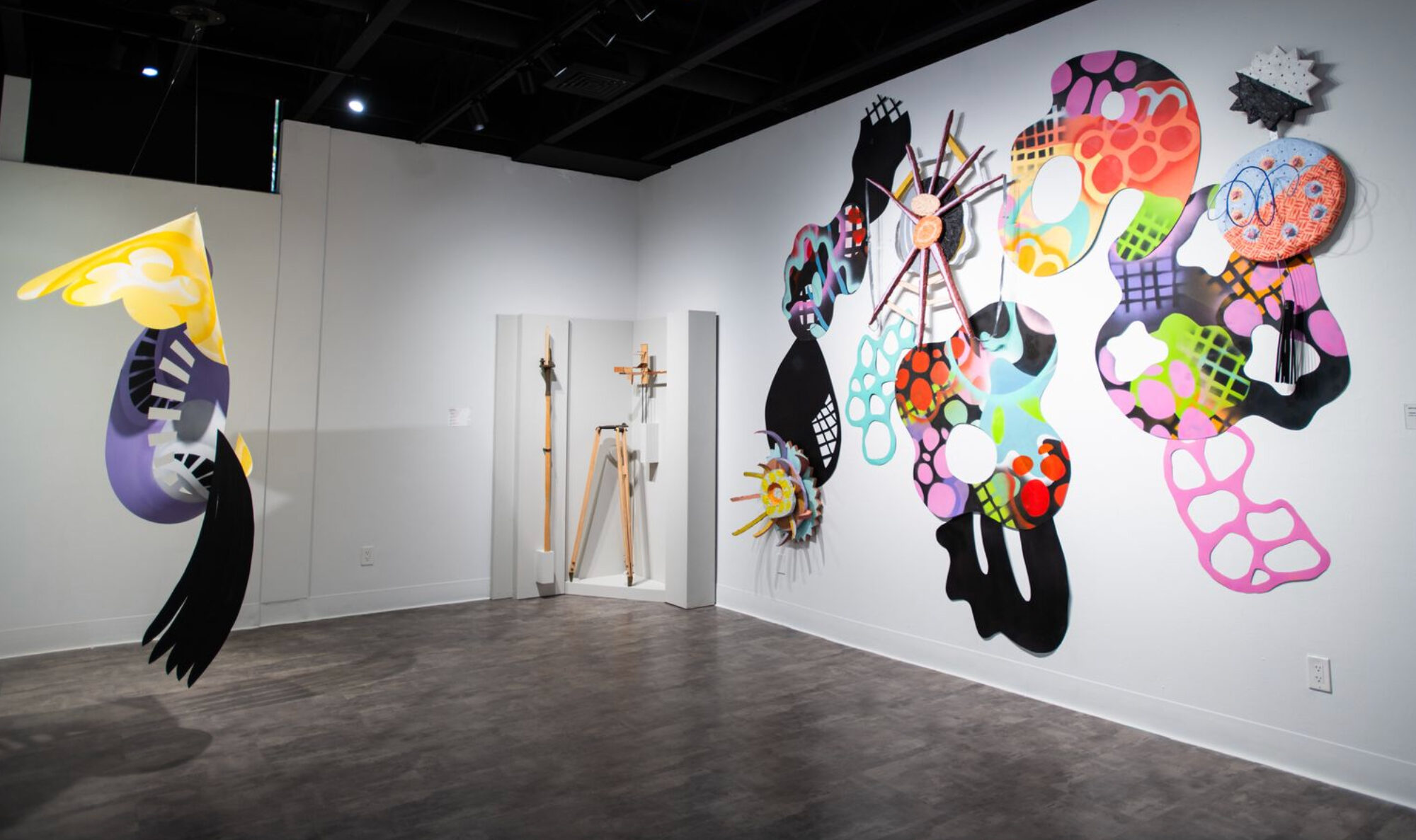
In Dialogue

Adria Arch and Keith Wiley had never met before working on Still / Moving, their exhibition at the San Luis Obispo Museum of Art. Living on opposite coasts—Arch in Boston and Wiley in Atascadero—they developed the project from afar, connecting through shared images, ideas, and a common interest in movement and form. In the exhibition, Arch’s bright paintings and hanging shapes reach outward with color and rhythm. Her flowing, curving forms feel energetic and playful, as if they are moving through the air. Wiley’s portal-like sculptures draw viewers closer. Built from small marks and quiet details, they invite pause and careful looking, with openings that pull you inward. Emma Saperstein, the exhibition curator, discusses her curatorial vision and reflects on the museum as a venue for this project.

Continue reading “Still / Moving at San Luis Obispo Museum”

John Avelluto: AI, Synthetic Memory, and the Fabrication of Identity

John Avelluto

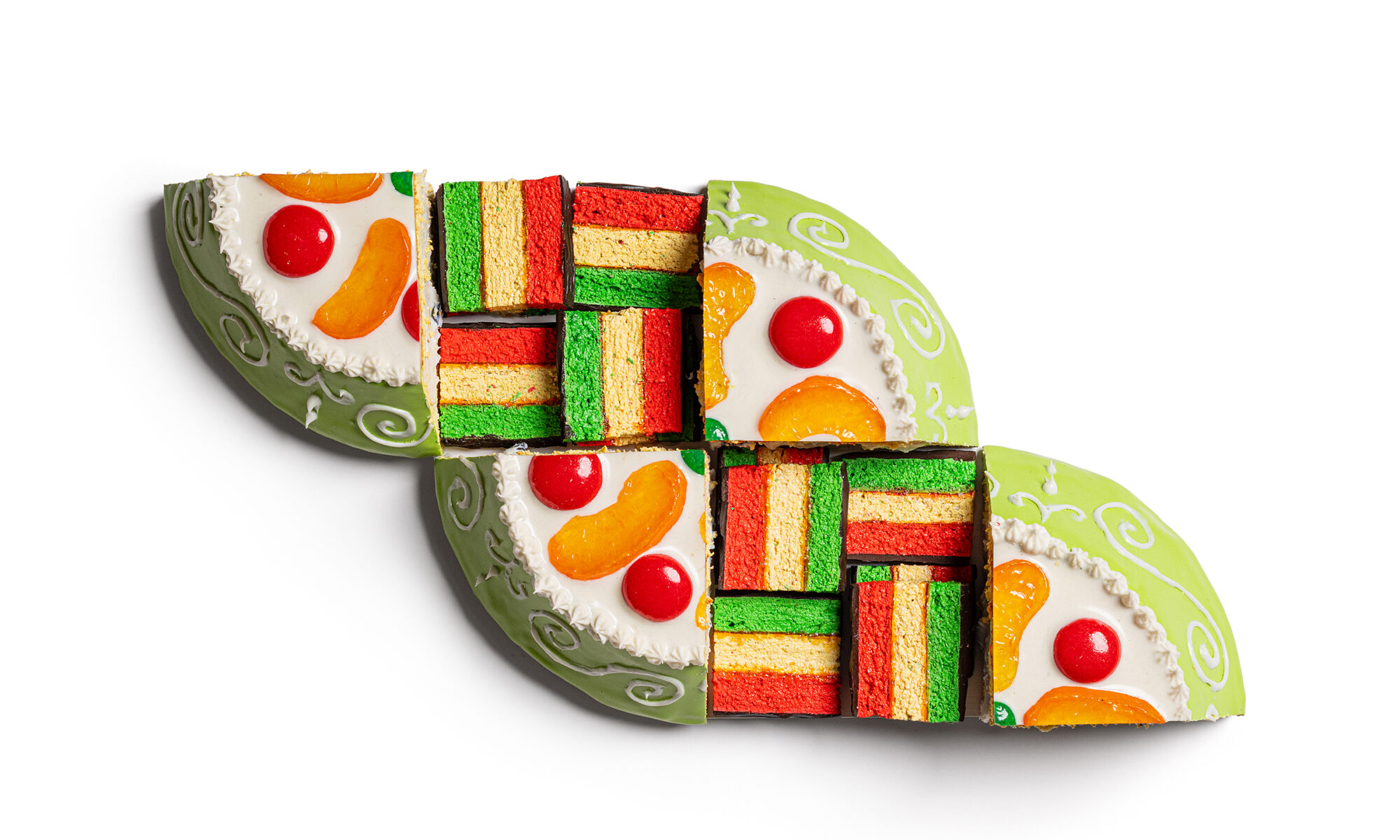
For many years now, John Avelluto has used trompe-l’œil and sculptural hyperrealism to unsettle the stereotypical trappings of Italian American identity, particularly its relationship to food. As in many other migrant communities, food functions as a vessel of memory and belonging, often bearing a disproportionate symbolic charge. Avelluto’s lifelike slices of acrylic mortadella and mounds of rainbow cookies confront this issue directly: they turn the charged history of foodways and their role in shaping communal narratives into something at once seductive and ridiculous. Viewers are forced to contend with the absurdity of articulating an entire national identity through piles of candies, pastries, and cold cuts elevated to the status of icons.

Continue reading “John Avelluto: AI, Synthetic Memory, and the Fabrication of Identity”

Mia Westerlund Roosen: Then and Now

Mia Westerlund Roosen: Then and Now

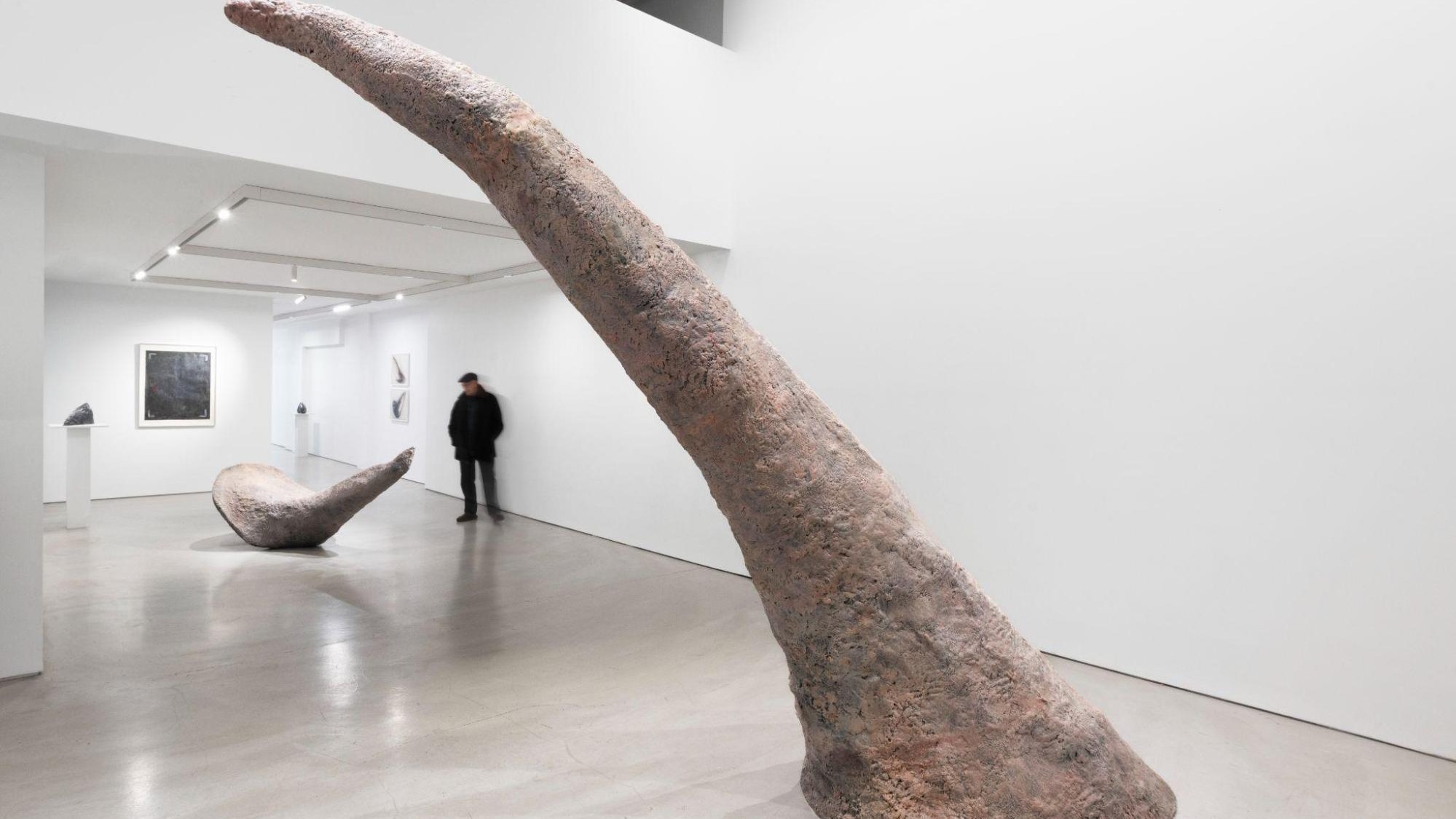
When I enter Nunu Fine Art in SoHo, New York, my body registers Mia Westerlund Roosen’s work before my mind does. Two tall forms, Heat (1981) and Conical (1981), lean into the room with a quiet insistence, their weight felt rather than announced. They rise from the floor with muscular arcs, tapering upward, commanding space without spectacle. I slow down instinctively, adjusting my path. These are not sculptures to be glanced at; they ask to be circled, negotiated, endured.

Continue reading “Mia Westerlund Roosen: Then and Now”

Natalie Moore: Capturing Mirage

Natalie Moore, Spill, 2025,68”x 60” x 20”h, hand woven stainless steel wire, non-acrylic polymer, thread. Photo ©Martin Seck

Natalie Moore grew up in San Diego, California, and spent many summers in Norway with her mother’s family. Although she has lived in New York for much longer, the dramatic Californian and Norwegian landscapes remain a lasting influence. Climate and ecology have also become more present in her work over the last decade, as the climate crisis worsens and governments and corporations continue to minimize the effects of carbon emissions, pollution, water use, and chemical waste.

Continue reading “Natalie Moore: Capturing Mirage”

Anne Russinof – Gestural Symphony at Equity Gallery

Anne Russinof

Emily Berger met the late painter and artist, Anne Russinof, twenty years ago at The Painting Center in New York. Russinof’s intelligence and presence were immediate. A friendship formed around their work—studio visits, openings, exhibitions, and eventually, showing together. Both were committed to abstract painting and supported each other’s practice. Berger curated this exhibition of Russinof’s elegant, rigorous paintings at Equity Gallery to bring them wider recognition. What Russinof left behind is a powerful body of work. “I believe she would be pleased with the exhibition, the beautiful catalog designed by Patricia Fabricant, and the thoughtful, poetic writing from Paul D’Agostino and friends,” Berger says.

Continue reading “Anne Russinof – Gestural Symphony at Equity Gallery”