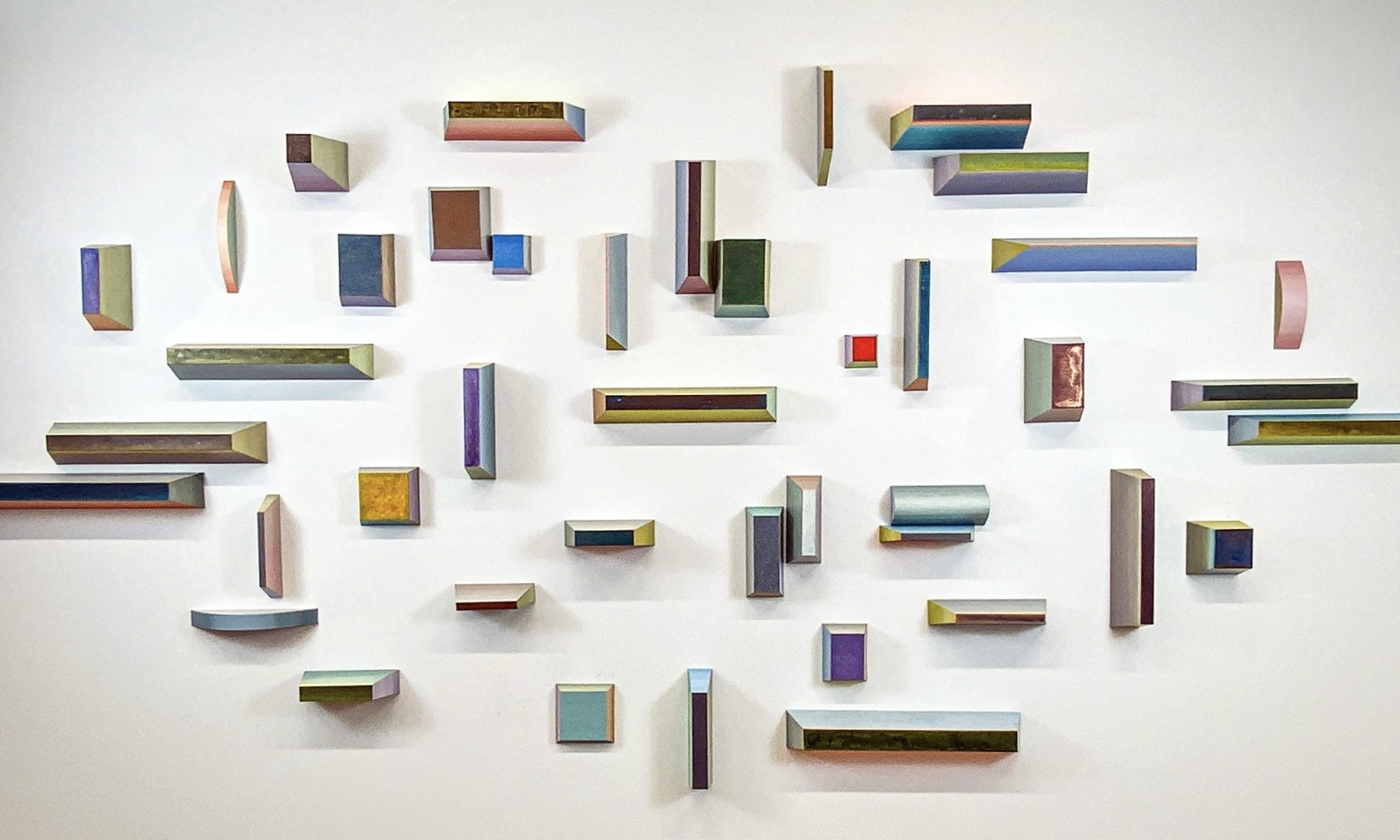
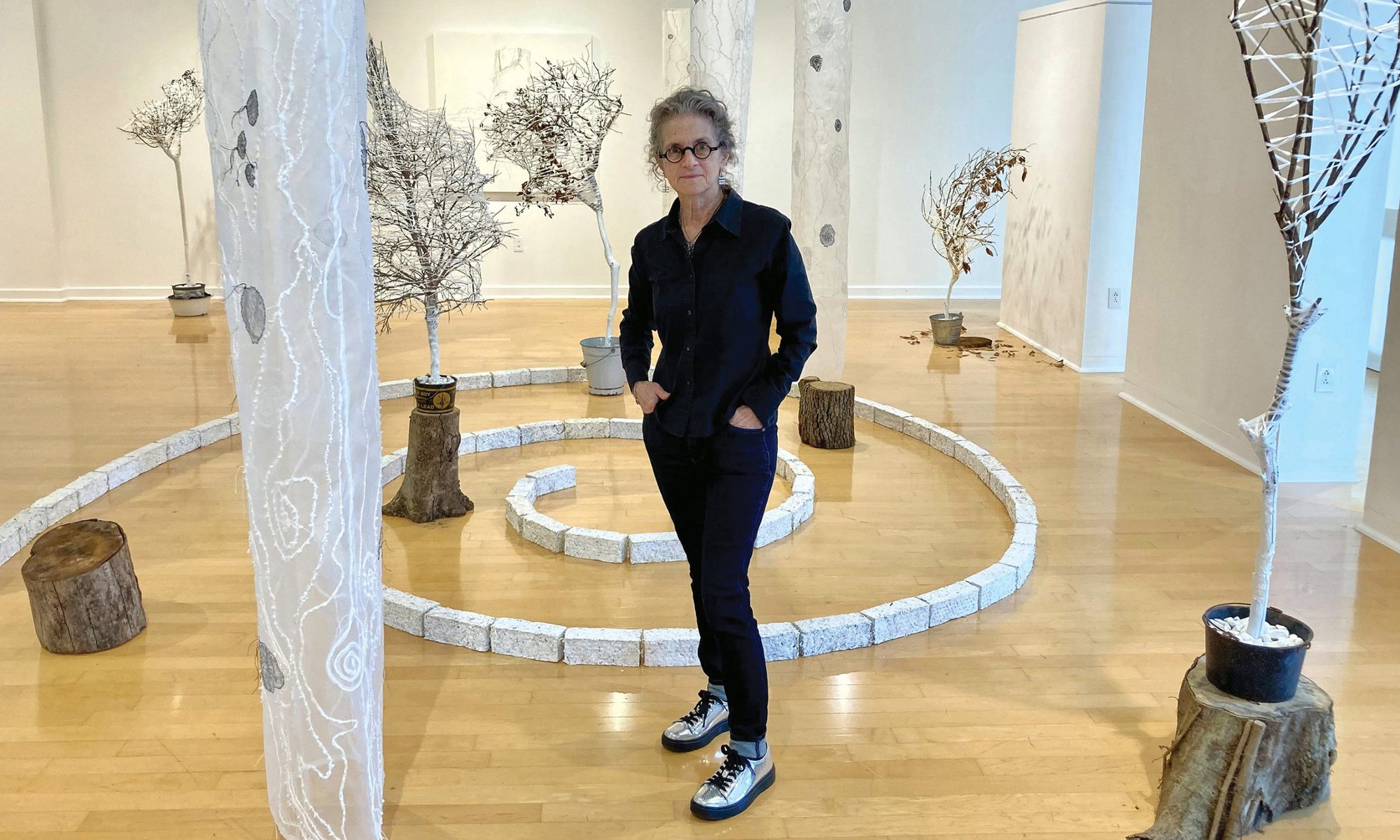
For two decades, Babs Reingold has reflected throughout her mixed media work on the intersections of poverty, climate change, and beauty in the environment. In her current solo show, Forest Bathing at Leepa-Rattner Museum of Art, Tarpon Springs, Florida, brings together two ongoing series, Hair Nest and Lost Trees. Both series mark a deliberate shift toward celebrating the beauty and resilience of nature. Whether confronting social inequities, ecological destruction, or the persistence of beauty amid crisis, her work arises from a deep belief that art can create both awareness and change. By transforming unconventional materials—human hair, salvaged wood, silk organza—into immersive environments, Reingold invites visitors to think about their place within larger systems of survival, destruction, and renewal. We discussed this exhibition in the context of her larger body of work.
Continue reading “Babs Reingold: Forest Bathing at Leepa-Rattner Museum of Art “Fall Exhibitions at The Hammond Museum
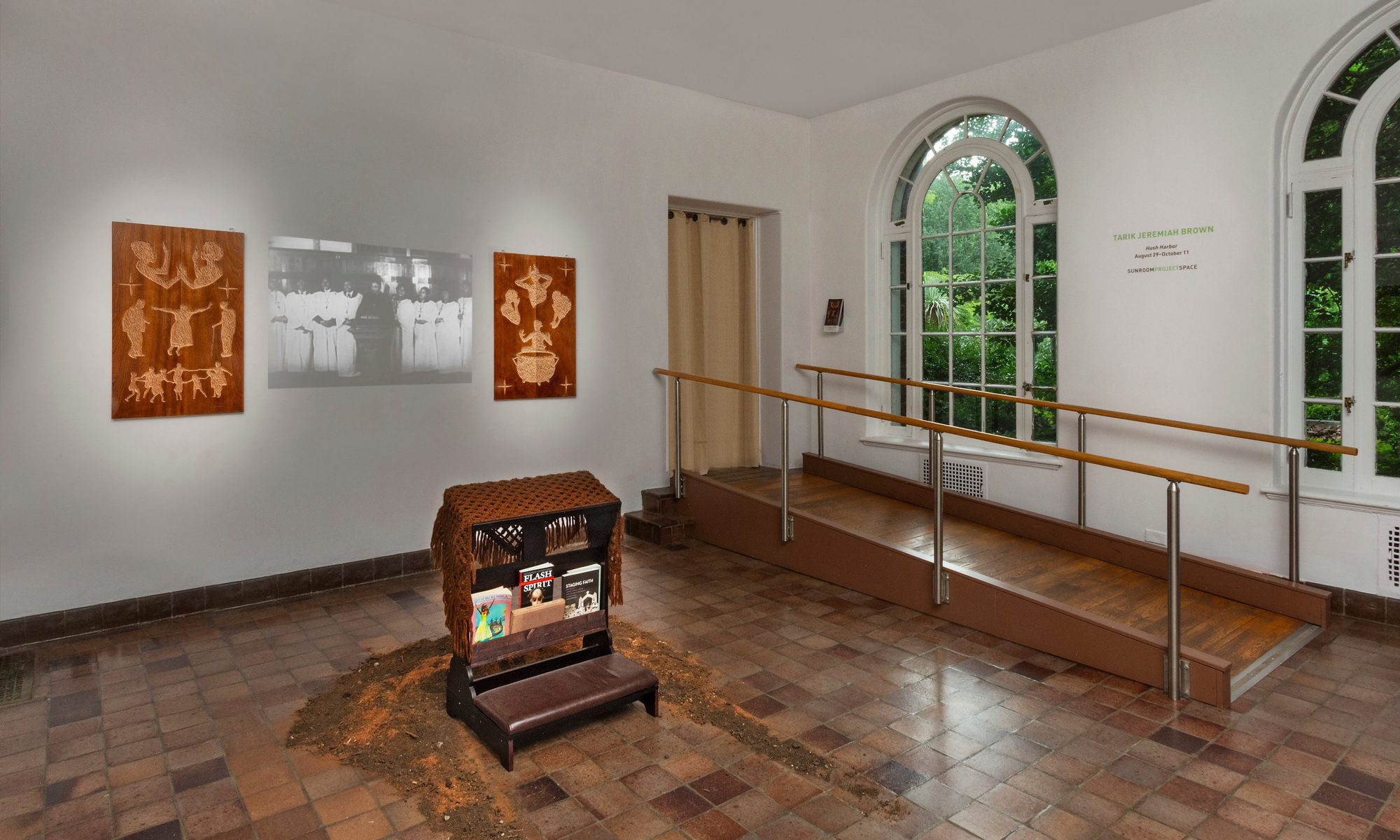
At the Hammond Museum and Japanese Stroll Garden in North Salem, New York, art doesn’t stay inside the galleries. Since 1964, the museum has staged exhibitions that move from its gallery walls to its patio, tea hut, and garden paths, with about fifteen shows a year and the number growing. Contemporary and historical, drawn from many styles and cultural traditions, the exhibitions often aim to build cross-cultural understanding, while those set outdoors open a dialogue between art, nature, and personal reflection. This fall, five shows fill the grounds: Tomoko Amaki Abe’s Heaven Come Down in the Main Gallery, Meg Hitchcock’s Fang in the Hays and Goelet Galleries, Soli Pierce’s Poetry of Place in the Tea Hut, Matthew Weber’s Ground Shift on the Patio, and Kurt Steger’s In the Garden along the Japanese Stroll Garden. In this conversation, the museum team talks about how the Exhibition Committee selects its shows and how each one carries the museum’s mission forward.
Continue reading “Fall Exhibitions at The Hammond Museum”Autumn Exhibitions at Wave Hill
An autumnal lineup of exhibitions at Wave Hill delve into the splendor of the landscape through intersections of nature, societal transmission, history, and political climate. These engagements are created through processes involving acts of listening, archival practices, explorations of bodily autonomy and mythologies. The following is an interview with Wave Hill curators Rachel Gugelberger and Gabriel de Guzman, unpacking key takeaways about its most recent projects.
Continue reading “Autumn Exhibitions at Wave Hill”Meet at the Ferris Wheel: Kathleen Beausoleil’s Plein Air Paintings Combine Psychology and Light
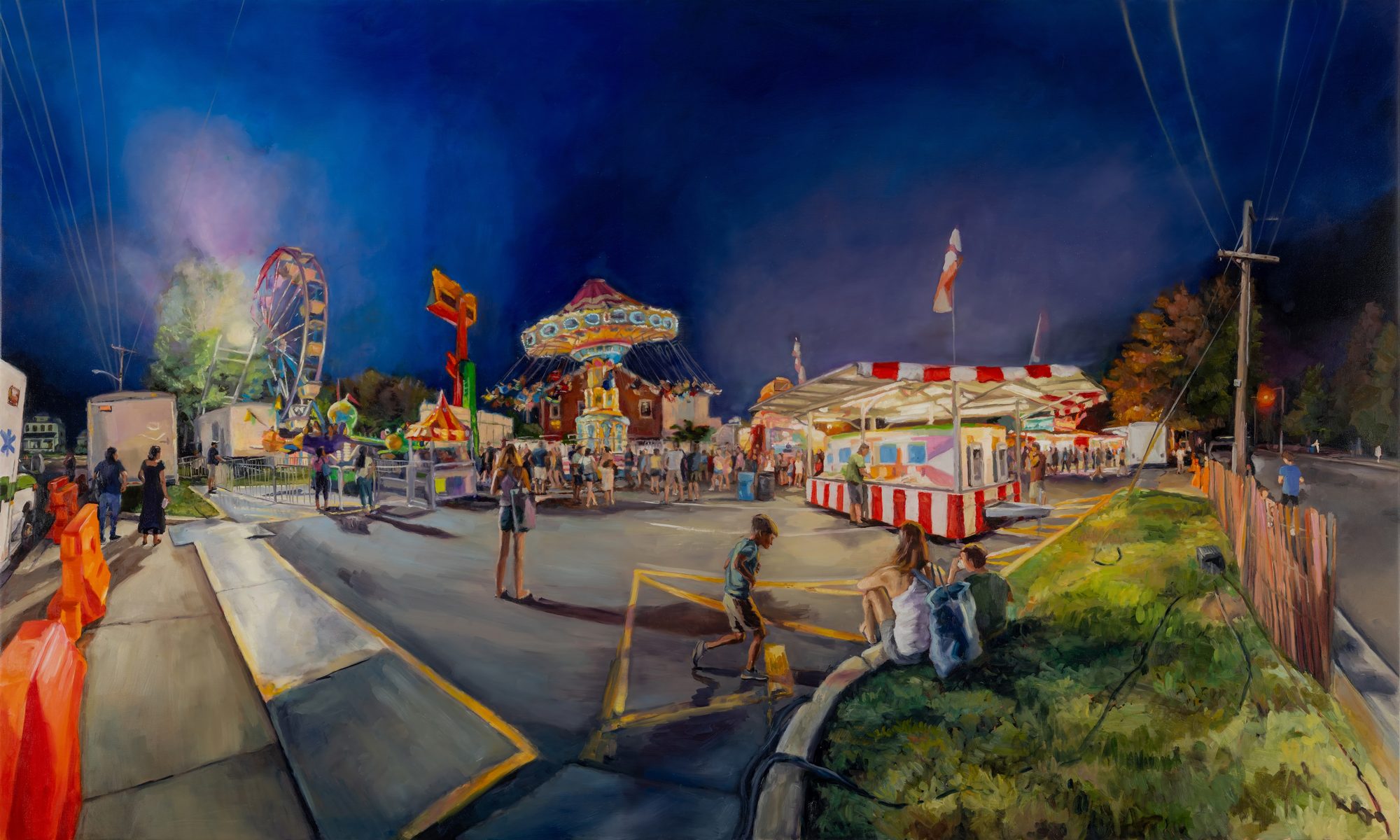
Painter Kathleen Beausoleil is enamored by her backyard, literally. The fair grounds and beaches that are synonymous to her home state, New Jersey, form her primary subjects. Visiting local fairgrounds each summer, she paints plein air, out in the open, and on view in her latest solo show at The Painting Center are works that beautifully capture the light, vibrancy, and togetherness of these places. After speaking with the artist, I understand that Beausoleil’s scenes are not only advanced in their painterly technique, but created through perspectives cleverly scaffolded by sociological terms around gathering and group behaviour.
Continue reading “Meet at the Ferris Wheel: Kathleen Beausoleil’s Plein Air Paintings Combine Psychology and Light”Two Shows in Dialogue: A Conversation with Tatyana Kazakova and Anna Shukeylo
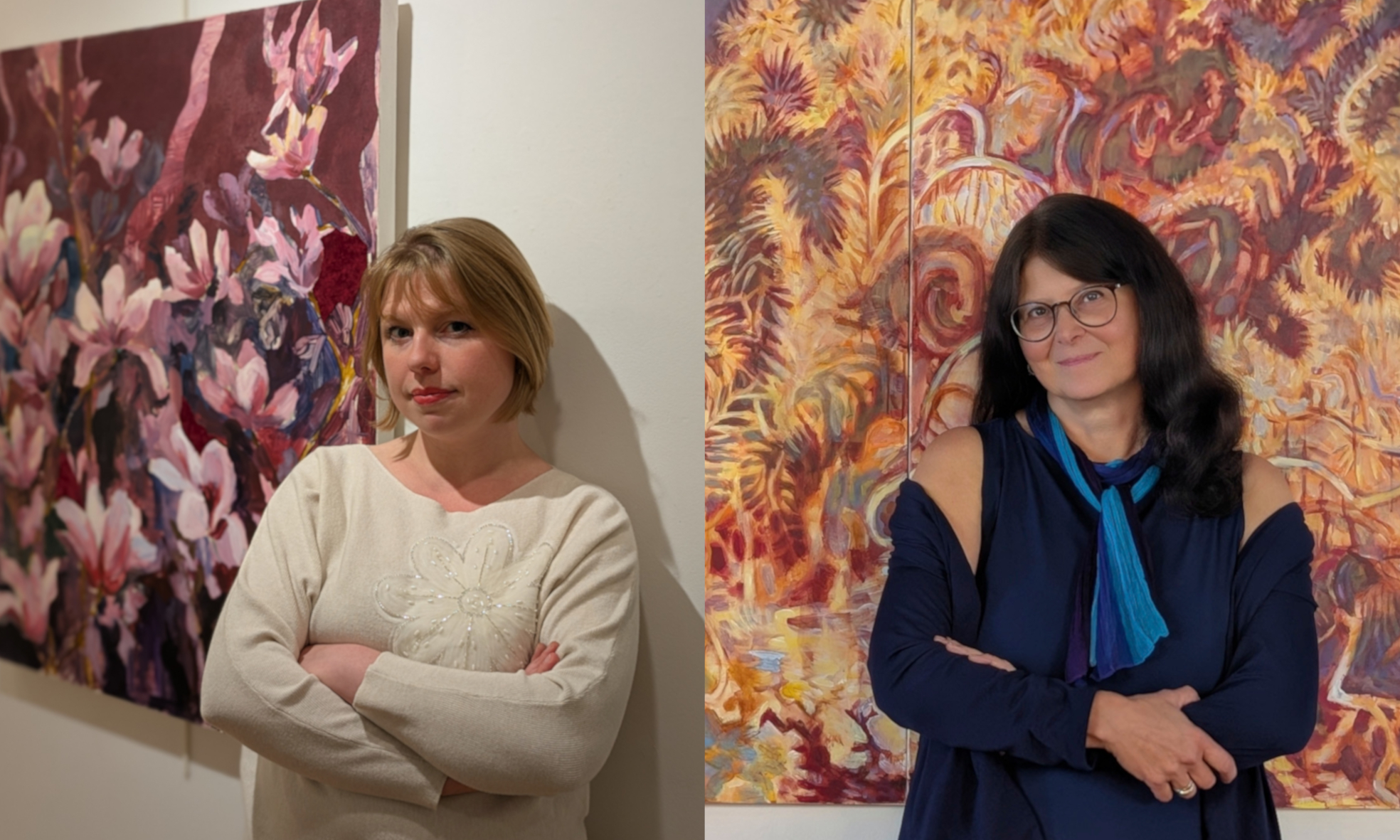
New Jersey’s Watchung Arts Center brings together two distinct solo exhibitions: Entropic Flora by Anna Shukeylo and Symphony for the Unnoticed by Tatyana Kazakova. Both artists weave between abstraction and realism to create intimate portraits of nature, but their styles and vantage points diverge in dynamic ways. Kazakova fills the sprawling upstairs gallery with large drawings and paintings that pack the space with thickets, foliage, and tangled old growth, inviting viewers to contemplate the boundaries between wild spaces. In the lower gallery, Shukeylo’s compositions erupt with vibrant gestural brushmarks that capture fleeting moments of blooming flowers at their peak splendor. In this conversation, Kazakova and Shukeylo discuss their work, studio practices, and thematic vantage points, revealing the very different paths they take to create their images of nature.
Continue reading “Two Shows in Dialogue: A Conversation with Tatyana Kazakova and Anna Shukeylo”Joyce Polance: The Patient Looks Back: Portraits of My Therapist
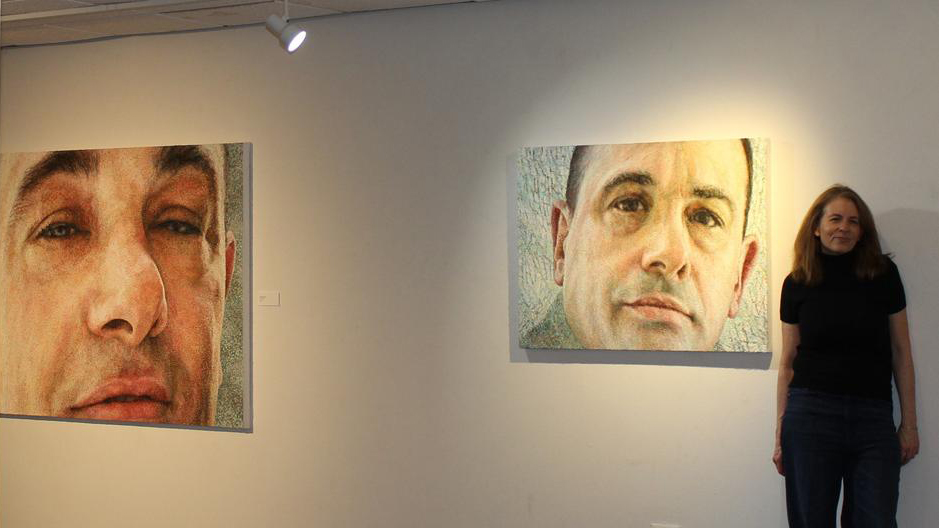
Joyce Polance has spent three years painting the same therapist nineteen times, in oil with fingers, and always from photographs taken at the close of a session. Polance inverts a familiar asymmetry: in therapy, Polance is the one exposed and observed, and here the therapist is the subject of long study, a figure whose features have grown more familiar to Polance yet, in many ways, remain a stranger. That paradox drives this body of work and gives the exhibition its title, The Patient Looks Back. It opened this September at Vassar College’s James W. Palmer III Gallery. What began as a single painting became something more persistent: a reflection on how difficult it is to truly know another person, even under the closest attention.
Continue reading “Joyce Polance: The Patient Looks Back: Portraits of My Therapist”Serena Scapagnini: Painting Memory
Memory is a fickle thing. However, when viewed through a neuroscientific lens, memory is also a biological process. Serena Scapagnini’s artistic practice, her recent Saliency, La Memoria Cangiante (2026) in particular, explores the retrieval of memory in its interdisciplinary entirety. Inaugurated on June 4th as a permanent installation at the Wu Tsai Institute at Yale University, Saliency, La Memoria Cangiante opens a wider reflection on the position of memory, whether as process or personal attachment, in Scapagnini’s work and current projects.
Continue reading “Serena Scapagnini: Painting Memory”This is Me Looking: In Dialogue with Wen-You Cai on Collaborating with Her Six-Year-Old Self
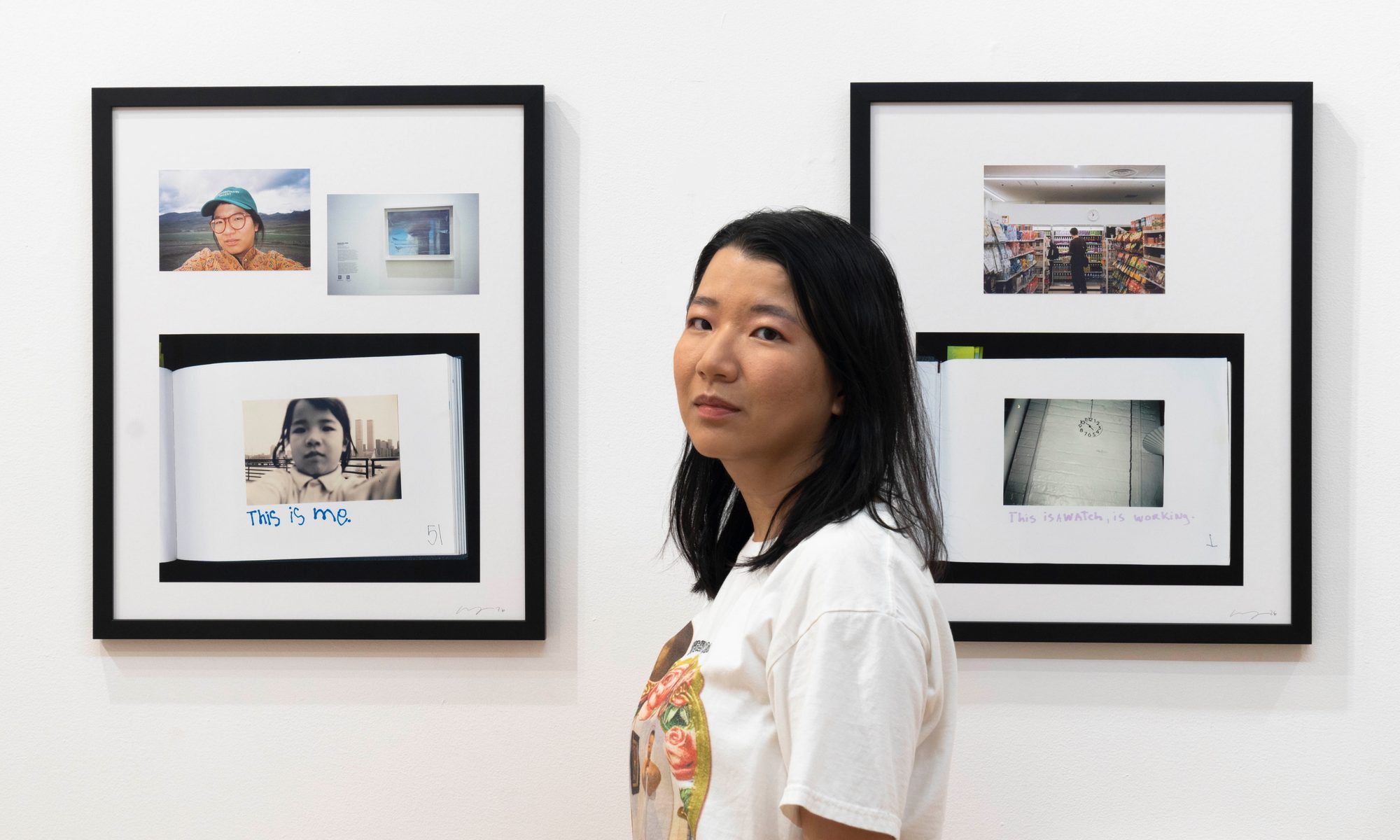
In 1996, a six-year-old child was given a camera and sent out to capture the world through her eyes. She aimed the lens at her father’s back against the Twin Towers, at her own blurred hand, at a sculpture in a museum, at Buddhist drawings on the wall. She had recently arrived in the United States, and the world in front of her was made of curiosity, novelty, and strangeness.
Continue reading “This is Me Looking: In Dialogue with Wen-You Cai on Collaborating with Her Six-Year-Old Self”Interview with Daina Higgins: On Graffiti, Risk, and the Art of Impermanence
Pioneer graffiti artist and painter Daina Higgins explores the shifting visual identity of urban spaces across the American Northeast. Our conversation, centered on Daina, also reads as a message to the emerging women graffiti artists she encounters on the streets. A how-to guide including the rules- yes, graffiti has rules- a way to value yourself as an artist, and a sisterhood joining the past and present.
Continue reading “Interview with Daina Higgins: On Graffiti, Risk, and the Art of Impermanence”Zachary Keeting: Reconciling Layered Energies

In Zachary Keeting’s restless and complex paintings swirls of vivid purples, yellows, and reds float by or contained within geometric shapes of subdued browns and pinkish off-whites. Together they orchestrate distinct rhythms and create a sense of luminosity. Keeting’s alluring colors often generate dynamic pictorial spaces filled with an imaginative array of fragmented forms which remind me of mirror shards prisms against a shifting light, particles in a quantum physics lab, or visual transcriptions of sounds. Although each of these parts, whether biomorphic or geometric, appears to assume a distinct characteristic, the overall sense we get is—what we see now is on the verge of changing within the next second.
Continue reading “Zachary Keeting: Reconciling Layered Energies”