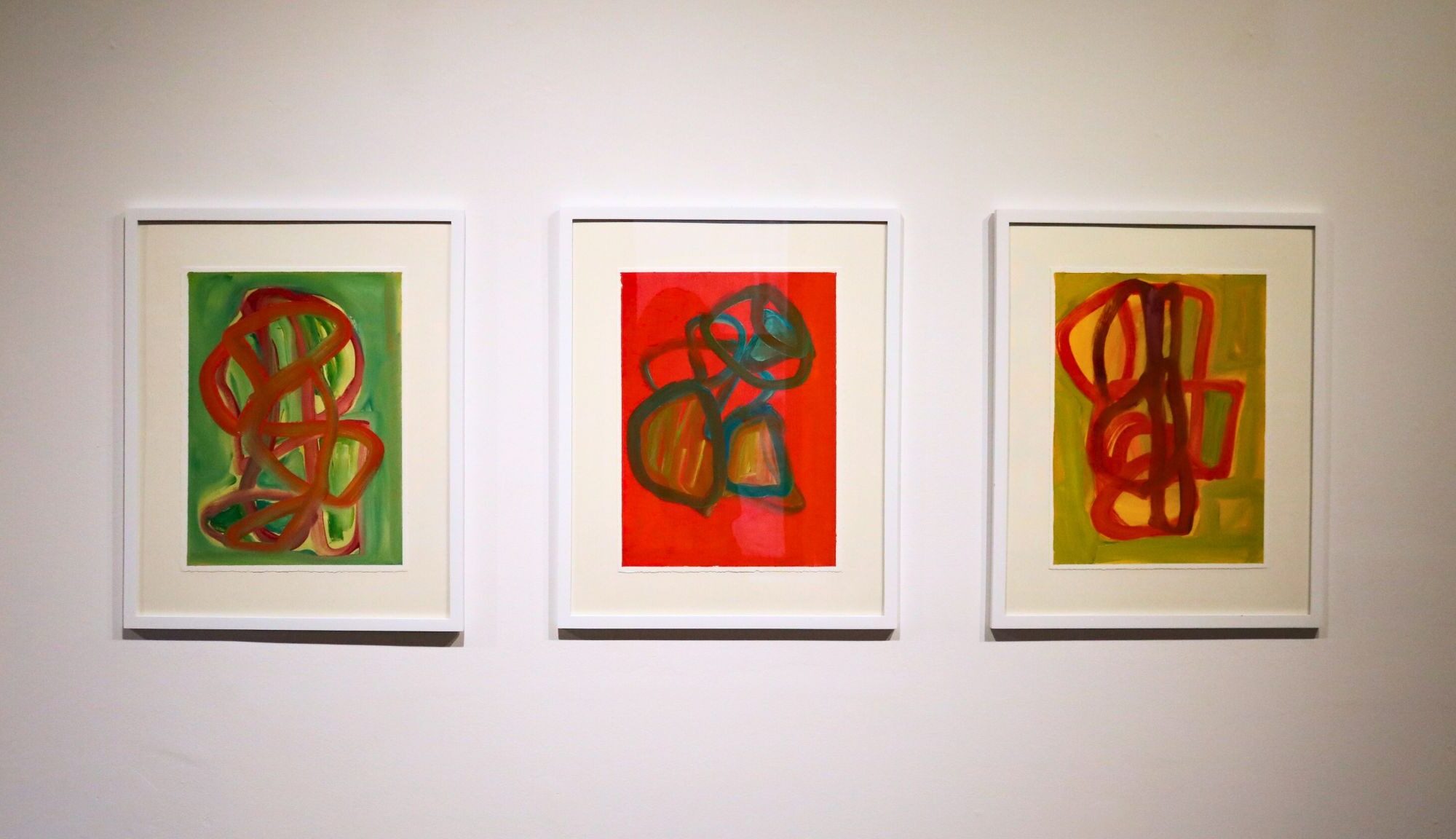
Well, Hell. Beautiful. Mary Shah and Rachael Wren at Rick Wester Fine Art

Rachael Wren, Invitation

No one was supposed to say “beautiful.” Oh God, no. Not in the mid-1990s art scene I knew, when I worked at a then-trendy, high-gloss art magazine and beauty had all the social standing of a shrimp cocktail at a theory seminar. Beauty was too easy and too ready to come in smiling and ruin everyone’s severe little mood. A serious work could resist you from across the room. But beautiful? Beautiful was what your aunt said when she had run out of things to say.

Then I walked into Mary Shah and Rachael Wren’s In the Ecstasy of the Sun at Rick Wester Fine Art and thought: well, hell. Beautiful.

Continue reading “Well, Hell. Beautiful. Mary Shah and Rachael Wren at Rick Wester Fine Art”
At Some Point, Every Household Object Stops Being Innocent

No one ever thinks the plate is going to become a problem.

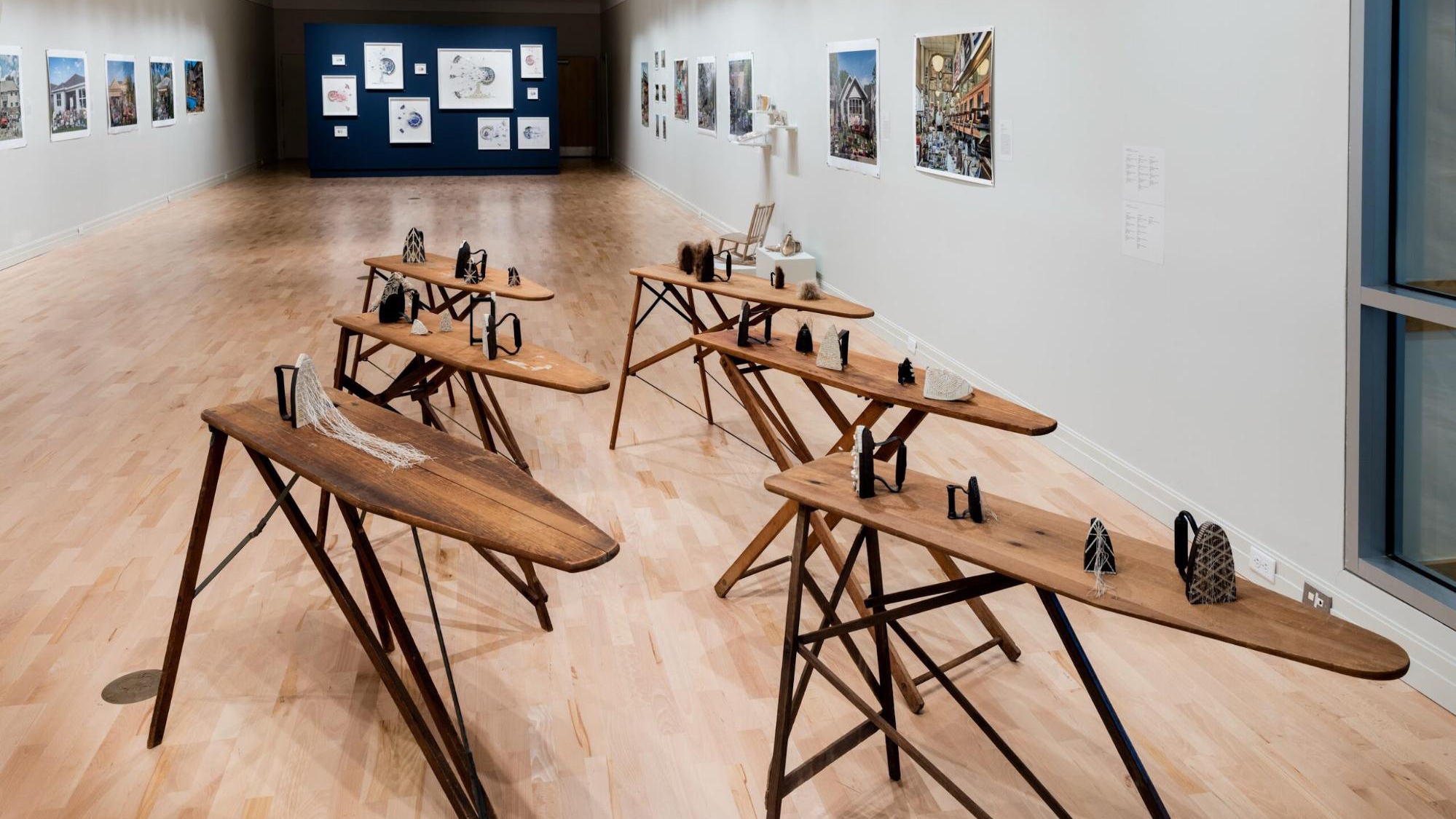
A plate survives three apartments and one bad Thanksgiving. A suitcase gets hauled across borders or shoved beneath beds; sometimes it is packed in hope, sometimes because someone has no choice. An iron presses school clothes and funeral clothes, then outlives its usefulness and sits in a closet somewhere, still holding the pressure of human hands.

That is the animating idea behind extraORDINARY things, the quietly arresting exhibition at the Flinn Gallery in Greenwich Library.

Continue reading “At Some Point, Every Household Object Stops Being Innocent”

The $650 Show Art History Forgot, Thirteen Women, One Wet Floor, Zero Permission

At 33 Bleecker Street, history does not politely vacate.

In the 19th century, Herman Melville grew up at this address, long before the current building rose here in 1900. A century later, Joel Shapiro kept an early studio in the building before moving on to larger quarters. This winter, the ground-floor gallery Zürcher has been restaging a 1972 exhibition titled 13 Women Artists. Museum curators made the trip to NoHo. Emails arrived from outside the city asking for more time.

Continue reading “The $650 Show Art History Forgot, Thirteen Women, One Wet Floor, Zero Permission”

Rifka Milder Paints Downtown Without the Downtown Act

Rifka Milder, Madrid #6, #15, #14

New York City loves a label the way it loves a line outside a new restaurant: there is the promise of significance and the reassurance that someone else has already decided what matters. The label flatters, then quietly ends the conversation. The oil painter Rifka Milder’s work refuses that bargain. Call her a “downtown painter,” and you’re not wrong, but her new solo show at Helm Contemporary, GREAT JONES, is what happens when someone who actually grew up downtown, in a household run on paint and argument, makes abstraction that declines to become neighborhood branding. Art in America once called her “an oil painter’s painter.”

Continue reading “Rifka Milder Paints Downtown Without the Downtown Act”

Double Vision: One Artist, Two Solo Shows, Double the Stripes

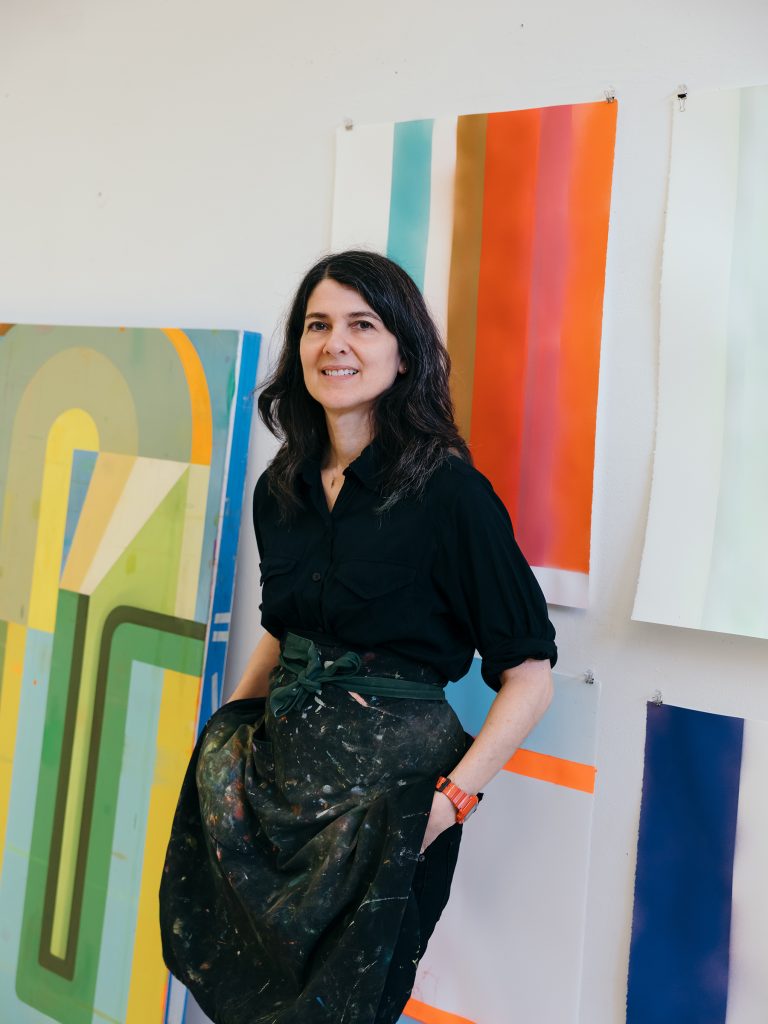
Portrait of the artist, photo courtesy of Elizabeth Haynes

In early September, painter Deborah Zlotsky pulled off what few artists even attempt: two solo shows opening at once, on opposite sides of Manhattan. The Light Gets In filled McKenzie Fine Art on the Lower East Side, while Genealogies took over Kathryn Markel Fine Arts in Chelsea. A double dip in one city, on one calendar page. It might sound like a scheduling accident, yet standing in front of her candy-striped canvases, the simultaneity feels deliberate. Zlotsky thrives on overlap: order brushing against disorder, geometry trembling at its edges, patterns that carry memory while stumbling into the present.

Continue reading “Double Vision: One Artist, Two Solo Shows, Double the Stripes”

Why Black Art Is Rarely Just Abstract

Algernon Miller’s work bends space, time, and expectations, redefining what abstraction means when history isn’t optional

Algernon Miller Afrofuturism and Beyond, Installation view, courtesy of Ethan Cohen Gallery

I met Algernon Miller the way I tend to meet people in the art world: by asking too many earnest questions at a panel. That day, at a Mel Edwards talk at Hauser & Wirth, I caught a smile from the soft-spoken man next to me. We chatted and clicked. Two native New Yorkers—he from Harlem, I from the Lower East Side—drawn together by chance, we followed each other with no particular reason, and what felt like nothing quietly became something.

Continue reading “Why Black Art Is Rarely Just Abstract”

Sensuously Severe: Why Artists Call Don Voisine the Real Deal

Lift Off, 2024, Oil on wood panel, 24 x 20 inches

Don Voisine doesn’t do studio visits for Instagram. He doesn’t paint to please an algorithm. And he definitely doesn’t care if you call his new show “timely.” For over forty years, he’s explored the same visual territory—taut geometric abstraction with a personal twist—and somehow, he’s still finding fresh ground.

Continue reading “Sensuously Severe: Why Artists Call Don Voisine the Real Deal”

Biophilia: Nature Hacked, Art Rewired

Installation image featuring Sui Park and Loren Eiferman (back wall). Photo credit: Patrick Vingo

Imagine nature got hacked. If it could rewrite its own DNA—absorbing industrial waste, pixels, and plastic—what would it become? Welcome to Biophilia. This six-artist exhibition at the Flinn Gallery in Greenwich, CT, curated by Ellen Hawley, doesn’t just depict nature—it reimagines and reconstructs it. The organic and the artificial no longer exist as opposites. Featuring Carol Bouyoucos, Julie Evans, Loren Eiferman, Christina Massey, Heide Follin, and Sui Park, Biophilia brings together artists who push past nostalgia for an untouched Eden to present nature as something restless, resilient, and constantly evolving. The result is a visual feast—bold, kinetic, and utterly alive. This is no polite, whisper-in-the-gallery experience. It lunges, sprawls, and twists. It pulses with energy, daring you to chase its shifting forms.

Continue reading “Biophilia: Nature Hacked, Art Rewired”

Judy Pfaff Taught Them to Break the Rules—Now They’re Sharing the Stage

A room with art pieces on the wall

AI-generated content may be incorrect.
Installation view

Judy Pfaff has never played by the rules—her art bends them, her teaching breaks them, and her career is proof she never needed them. A MacArthur “Genius” who reshaped installation art, she has spent five decades throwing order out the window in favor of energy, movement, and sheer creative force. That ethos is on full display at Art Cake in Brooklyn, where Pfaff and three former students have reunited—not in a classroom, but as equals in a space that refuses to sit still.

Continue reading “Judy Pfaff Taught Them to Break the Rules—Now They’re Sharing the Stage”