The Biennale That Broke Itself

Kambui Olujimi, In Minor Keys

The 61st International Art Exhibition arrives in grief, political fury, and institutional crisis. It is one of the more galvanizing editions in recent memory.

The lagoon light still flatters everything it touches, but this year, Venice has the feel of a city that stayed up too late arguing. May 7, 2026 — the one morning of the press preview period spared by both rain and protest — was the kind of day Venice is famous for: blue sky and large cinematic cumuli drifting above the Queen of the Adriatic. Police stood watch outside the Israeli and Russian pavilions. The queues at the Giardini were long; those at the Arsenale were longer. In years of attending press previews, I have rarely encountered such a congested or physically demanding environment — the crowd, indistinguishable from a general-public opening, consumed by the compulsive and indiscriminate act of photographing everything in sight.

Continue reading “The Biennale That Broke Itself”
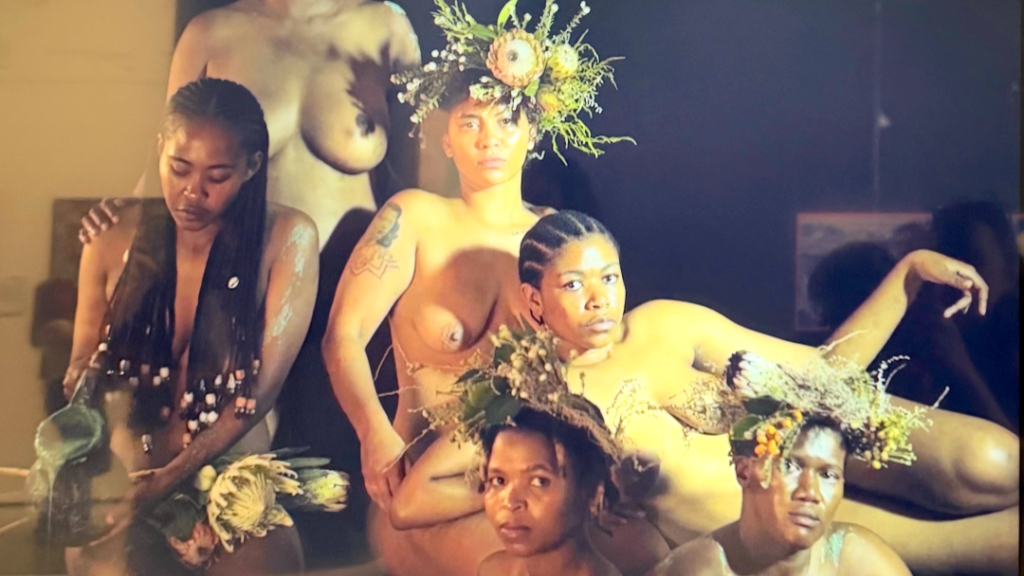
Voices In Minor Keys: 2026 Venice Biennale

In Minor Keys, the central exhibition of the 61st Venice Biennale, arrived with a quiet proposition. The late curator Koyo Kouho envisioned a show that reflects practices requiring time and sustained commitment — some of them lifetime, even generational — and in doing so created a deliberate antithesis to the Biennale spectacle. Drawing almost exclusively on artists from Africa, the Middle East, and the Caribbean, the exhibition is anchored in political concerns — identity, immigration, the environment — yet so many of the works felt personal, while reaching toward art history and even toward Venice itself. What follows is an account of its visual depth and strength.

Continue reading “Voices In Minor Keys: 2026 Venice Biennale”

Playarts: Cultivating Creativity in our Community

Featured Project: Music and Dance at Parkside Plaza with Davalois Fearon Dance

Davalois Fearon in rehearsal for Finding Herstory – Photo by Anya Kress

PLG Arts (Prospect Lefferts Gardens Arts), in collaboration with Davalois Fearon Dance (DFD), presents Music and Dance at Parkside Plaza, an outdoor, block party-style event that celebrates the rich Caribbean heritage of Flatbush/ Prospect-Lefferts Gardens (PLG) and the growing community of local artists. The free performance will take place on October 17th at 2 pm at Parkside Plaza, located at Parkside Ave and Ocean Ave, Brooklyn, NY 11226. The event will feature live drumming by Ryan Greenidge, Agyei Phillip, and Rasaan Green, and the music of composer and woodwind player Mike McGinnis, Dancehall, and Reggae facilitated by D.J. Ayanna Heaven, and a site-specific performance of Finding Herstory and community dance-along led by Davalois Fearon, the founder and artistic director of Davalois Fearon Dance Company. In addition, she shares with Art Spiel her reflections on this public project.

Continue reading “Playarts: Cultivating Creativity in our Community”

The Immigrant Artist Biennial: Abena Motaboli


Abena Motaboli, The Pieces that hang far up above – in you, in me, in I, in We, in Us, 2019 Plastic Tarp. Dimensions variable approximate 12ft x 12ft x 12ft. Photo courtesy the artist

The Immigrant Artist Biennial (TIAB) is a volunteer, female-led, artist-run project. TIAB 2020 launched in March in New York City at Brooklyn Museum, and continued in September through December at EFA Project Space, Greenwood Cemetery, and virtually, presenting 60+ artists. This interview series features 10 participating artists.

Abena Motaboli is a Southern African born educator, visual artist, and writer based in Chicago. She grew up in Lesotho, a landlocked country in Southern Africa, before moving to the U.S where she obtained her bachelor’s degree in Fine Arts at Columbia College Chicago and at L’Institut Catholique de Paris in Paris, France. With a strong commitment to social justice work in the South and West sides of Chicago and being an immigrant, her artwork comments on displacement, immigration, the African diaspora, and the loss of the sense of home. In her intricate plastic installations and meditative line-work in her paintings, she uses ephemeral material such as plastic, tea, dirt, and coffee to comment on colonialism, past memories, and the culture of creating.

Continue reading “The Immigrant Artist Biennial: Abena Motaboli”