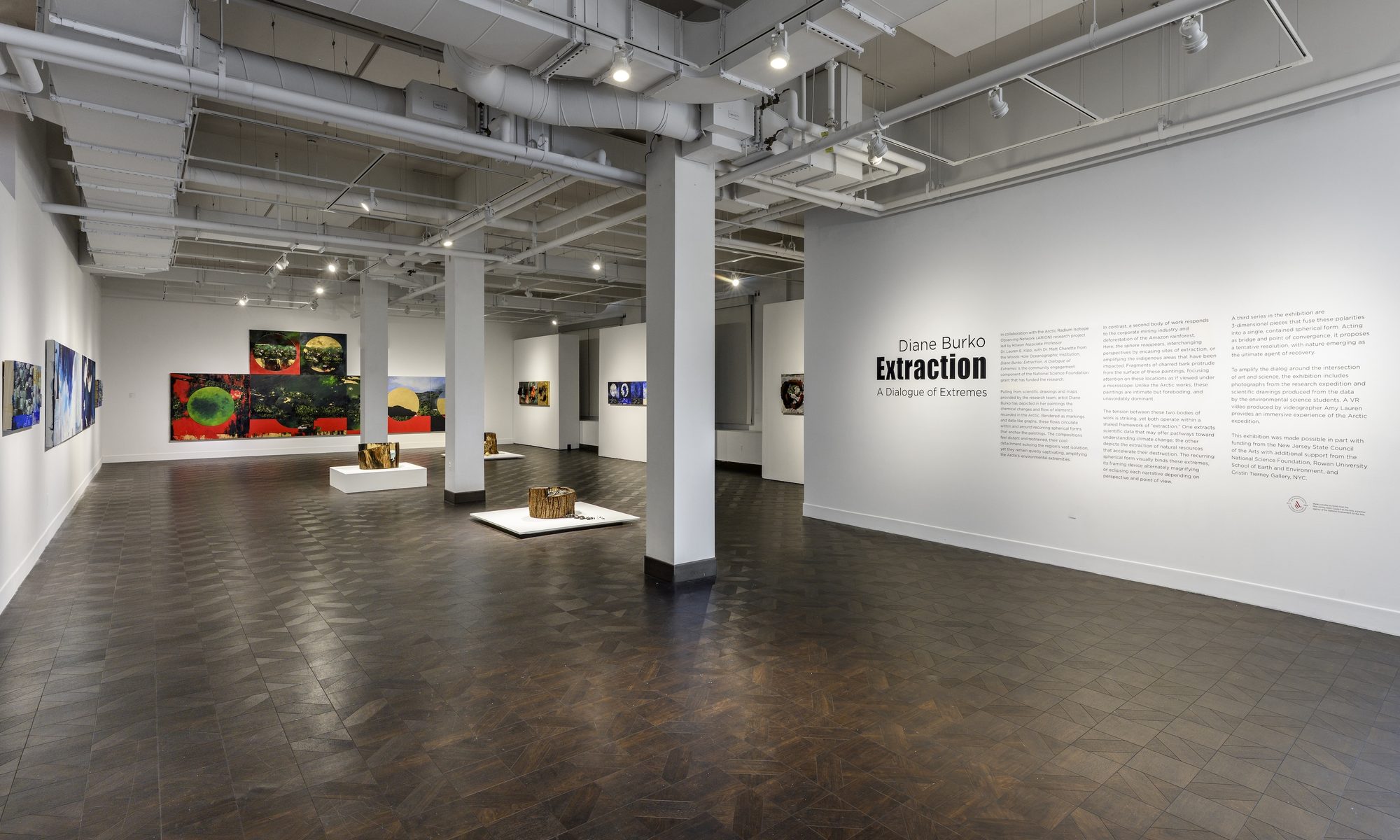
Extraction, A Dialogue of Extremes, Diane Burko’s solo exhibition at Rowan University Museum of Contemporary Art, pairs two bodies of work: Arctic paintings based on NSF-funded climate research and works on Amazon mining and deforestation. The show was created as the research grant’s community engagement component. In this interview, curator Mary Salvante discusses how the exhibition came together, the tension between the two series, how the work uses beauty to address climate change, and what the museum hopes visitors take away.
The exhibition Extraction, A Dialogue of Extremes grew out of an NSF-funded science project, the ARION research led by Dr. Lauren Kipp with Woods Hole, as its community engagement component. How did the museum come to build a show around a scientific grant, and what made Burko the right artist to translate that research into art?
Dr. Kipp initiated the collaboration with Diane as part of her NSF grant, which required a community engagement component. She decided that an exhibition featuring art that responded to her research would be the most accessible and meaningful way to engage the public. DB brings her own research into her work to address various forms and causes of climate change and its impacts on the natural environment, so Lauren decided she would be a good fit to work with on the project. They proposed the concept to me, and I saw an opportunity to bring an interdisciplinary exhibition exploring the intersection of art and science to RUMOCA.
The exhibition turns on one word used in two opposite ways: scientists extracting Arctic data to understand climate change, and mining extracting resources that destroy the Amazon. How did that become the show’s spine?
Once I agreed to curate and produce this show, I visited Diane’s studio to see the work she was creating based on Dr. Kipp’s research. Once there, I saw other work Diane was developing and immediately recognized the connection between the Arctic and Amazon work. In both bodies of work, Diane uses a sphere shape that, in the Arctic paintings, indicates the Earth to show where the research was located; in the Amazon series, the sphere frames the locations in the Amazon where corporate mining sites are located. One sphere acts as a map; the other as a portal. Together, the two bodies of work complete the narrative thread of climate change’s complexities.
The two bodies of work feel very different. The Arctic paintings are cool and data-like; the Amazon works are intimate and foreboding, with charred bark breaking the surface. How does the installation make that tension felt?
When entering the gallery, the first encounter is the enormous multi-panel painting Secret Airstrip installed on the back wall. It takes up the entire wall, making it imposing and drawing the viewer in. This is critical because we have to navigate obstructions in the gallery, such as columns located almost exactly in the center. The large, powerful painting will move the viewer’s eyes beyond that.
Once in the gallery, the viewer will be pulled back and forth from the coolness of Arctic paintings on one side to the dynamics of the Amazon paintings on the other. The two main bodies of work push against each other, creating that tension. The 3 sculptures on the floor also guide visitors around the room, pushing them closer to the Arctic paintings at one point and back to the Amazon paintings at another.
The recurring sphere resolves in a third group of 3-D pieces the text calls a point of convergence, with nature as the ultimate agent of recovery. Why end on that tentative resolution?
We end there because the 3D work bridges the exhibition’s two extremes. Each tree hollow incorporates materials that speak back to the paintings – gold, ice, and charcoal, which represent the main three elements that are impacting or have been impacted by climate change. The sphere shape itself – the hollows, which are also round by nature – suggests a continuous circle of debate, dialogue, discovery, and research. The phrase is ambiguous by design, so visitors can reach their own conclusions about the outcomes and impacts of the causes and solutions.
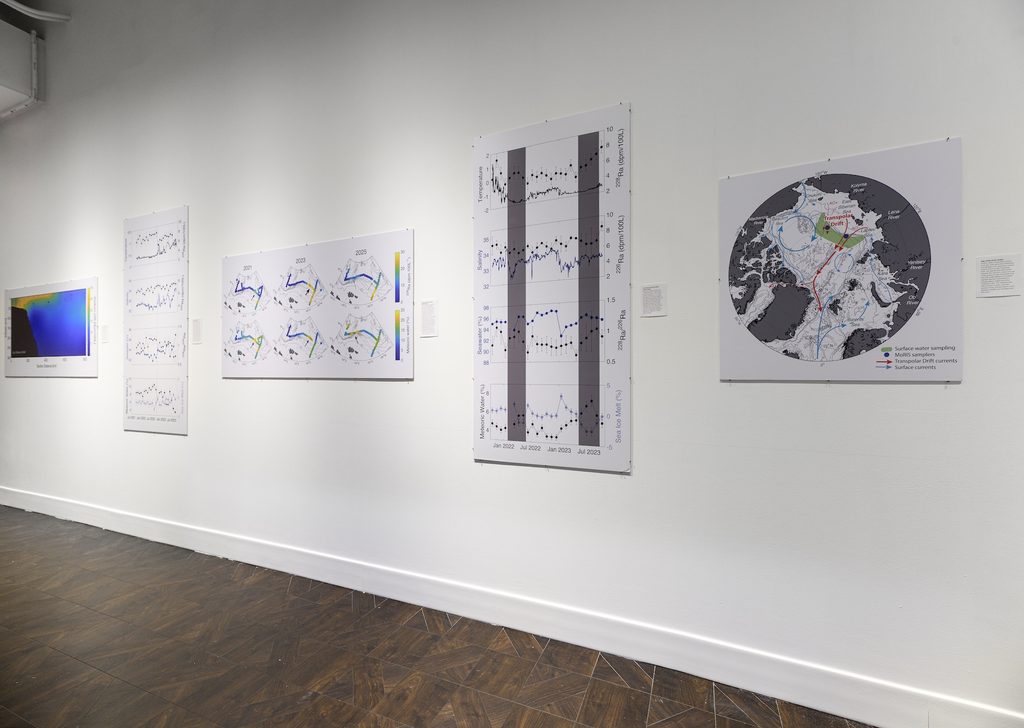
Alongside the paintings, the show brings in expedition photographs, students’ scientific drawings, and Amy Lauren’s VR film of the Arctic. What does the actual research add to Burko’s work, and how do you keep art and science in balance?
Diane’s paintings respond to the science and the concerns and issues we are grappling with. It is not meant to provide a solution or to provide a literal translation. Science provides the content that motivates her to create an emotional and visually subjective translation. The video and slides show how VR headsets are in an area of the gallery where visitors are introduced to the concept before entering the exhibition area. In this location, visitors can get their bearings, mentally orient themselves for the experience, and pause to reflect on this interdisciplinary relationship.
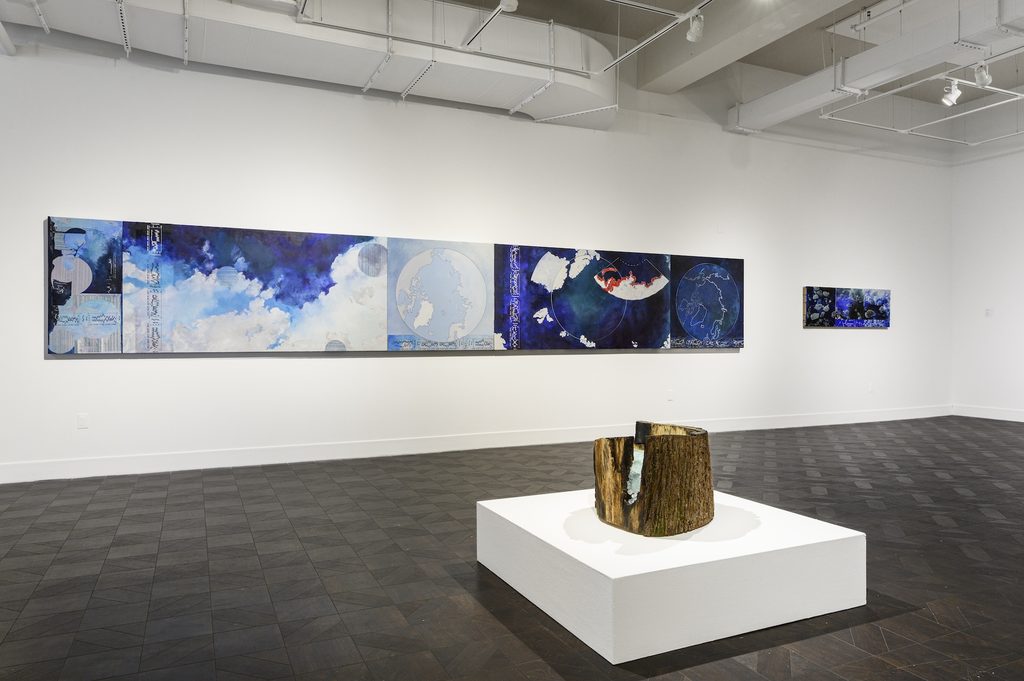
Burko writes that she wants to “seduce the viewer emotionally through beauty” while carrying urgent facts. Where’s the risk, and the power, in using beauty to speak about climate collapse and indigenous land loss?
As she says, Burko utilizes the beauty of painting to seduce the viewer – what she is doing is bringing them into her realm, but once there and upon further investigation, her message emerges. This is the power of seduction – the Amazon paintings are dynamic and imposing. The viewer may be seduced by the Arctic paintings, but they will be enveloped by the Amazon paintings
The show sits at the intersection of art, science, and a university museum’s mission. What do you hope Rowan’s students and the wider community take from it?
This exhibition is one of many interdisciplinary shows we have produced, and this one brings together art and science. We hope visitors will explore the science component and, from there, the art, and make the connection. We are not dictating a particular point of view; rather, we hope visitors are inspired by the art and science and motivated to learn more about climate change and support efforts to fight its causes.
Diane Burko: Extraction, A Dialogue of Extremes at Rowan University Museum of Contemporary Art
August 24 – October 17, 2026 @rowanuartmuseum
All the images are courtesy of RUMOCA and photography by Constance Mensh
Featured Image: Diane Burko, Extraction, A Dialogue of Extremes, Installation view