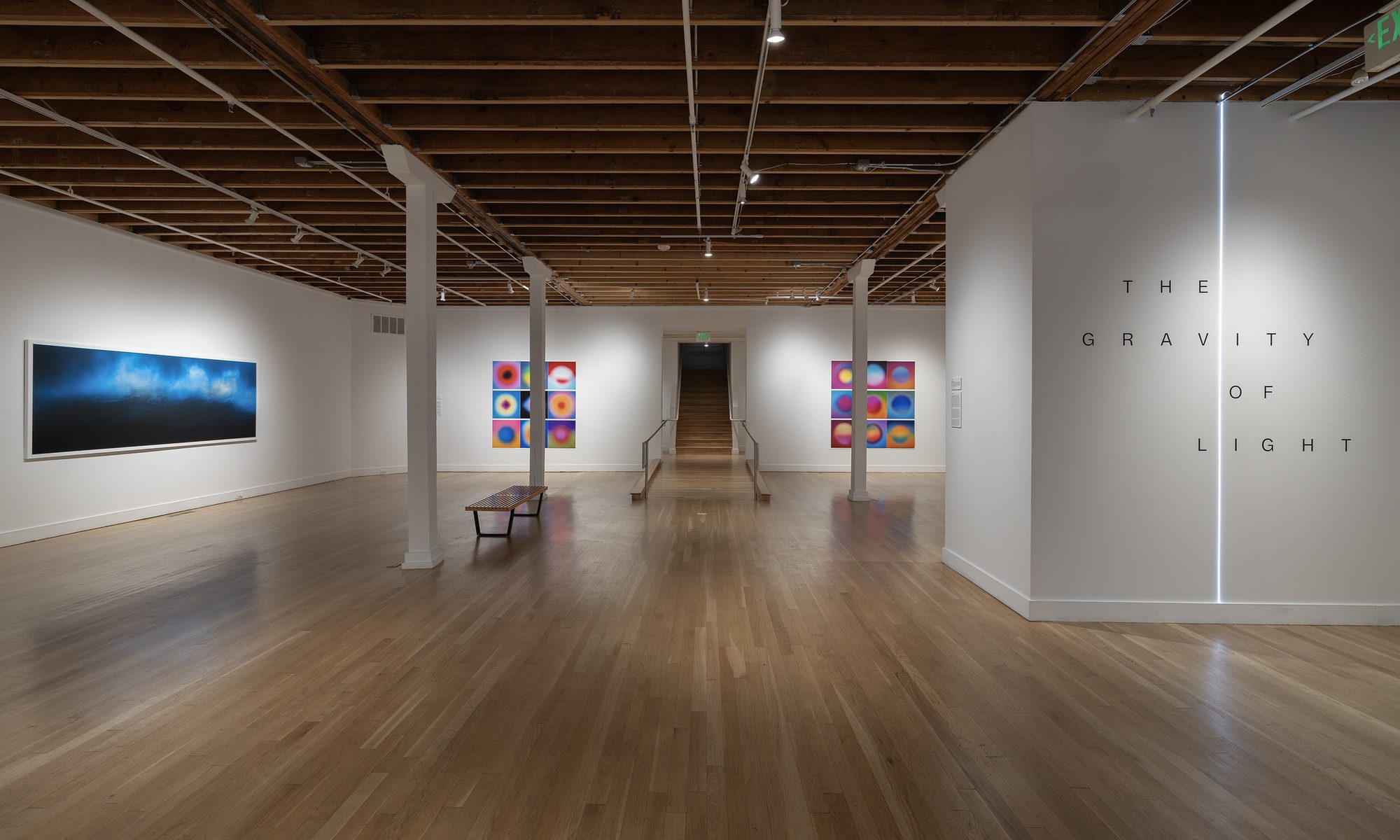
The Gravity of Light, on view at the Boulder Museum of Contemporary Art (BMoCA), features seven artists who use light as a key element in their work: Sami Al Karim, Bill Armstrong, Alyson Denny, Chuck Kelton, Anne Lindberg, Elizabeth Mead, and Gelah Penn. The media include photography, cameraless chemograms, video, drawing, and site-responsive installation, and several works were created specifically for the show. New York-based artist Kate Petley curated the exhibition; her own work combines photography and painting, which shaped her interest in light. Here, Petley discusses how the exhibition came together, the idea behind it, how the works sit together across the museum’s three spaces, and what she hopes light can offer viewers right now.
You’ve described light as familiar yet mysterious, something the body experiences through a complex array of responses to color, temperature, location, and time. What first drew you to build an exhibition around light?
I am an artist, and my interest in light originates from within my process, which fuses photography and painting. Over time, I assembled a list of other artists who work with light, and that led to the collection of artists for The Gravity of Light at BMOCA. Artists have addressed the subject of light for centuries and, despite its familiarity, I felt it had more to reveal.
The title pairs “gravity” with “light,” weight with weightlessness. How did you arrive at it, and what tension were you hoping to hold between light as material and lightness as a physical experience?
Titles are challenging. For this exhibition, I wanted the words to convey a sense of what we perceive. We physically experience light and lightness through a complex system of sensations that also includes the contrasting elements of shadow, density, and weight. I wanted the title to reflect light and shadow, to include heaviness and implied darkness.
The show brings together seven artists working in photography, video, drawing, and installation. How did you select them, and what connects their different approaches to light?
The selection of artists was organic and intuitive. Once the concept took shape, the artists’ work fell into place because it was clear to me that each contributed to the broader theme of light. Research was necessary. The seven artists work with light as material and/or as it is physically experienced, but their approaches vary greatly, and that difference is central to the subject.
The exhibition contains photography, both analog and digital, as well as chemograms. Drawing, site-responsive installation, and video are included as well. Large-scale works were created for this exhibition.
Could you walk us through a few of the works in the show and how they sit together in the space?
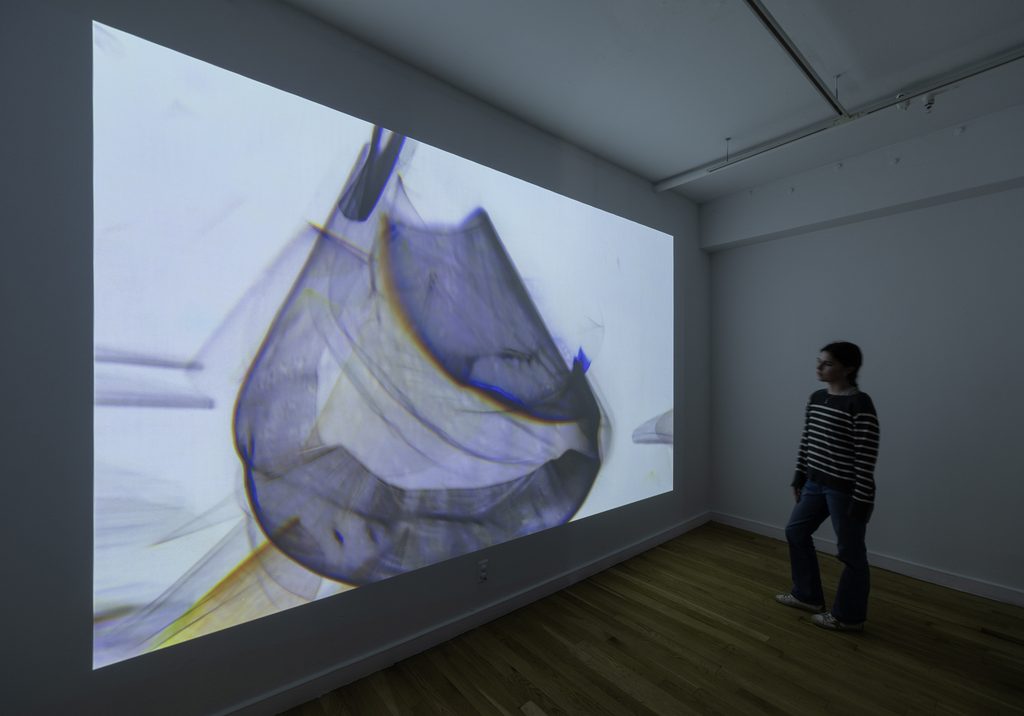
The museum has three spaces: two galleries on the main floor and one smaller space upstairs. Alyson Denny presented two videos upstairs, deliberately isolated to control the ambient light and optimize her work. Bands and shards of color and light move into and away from each other, colliding and separating.
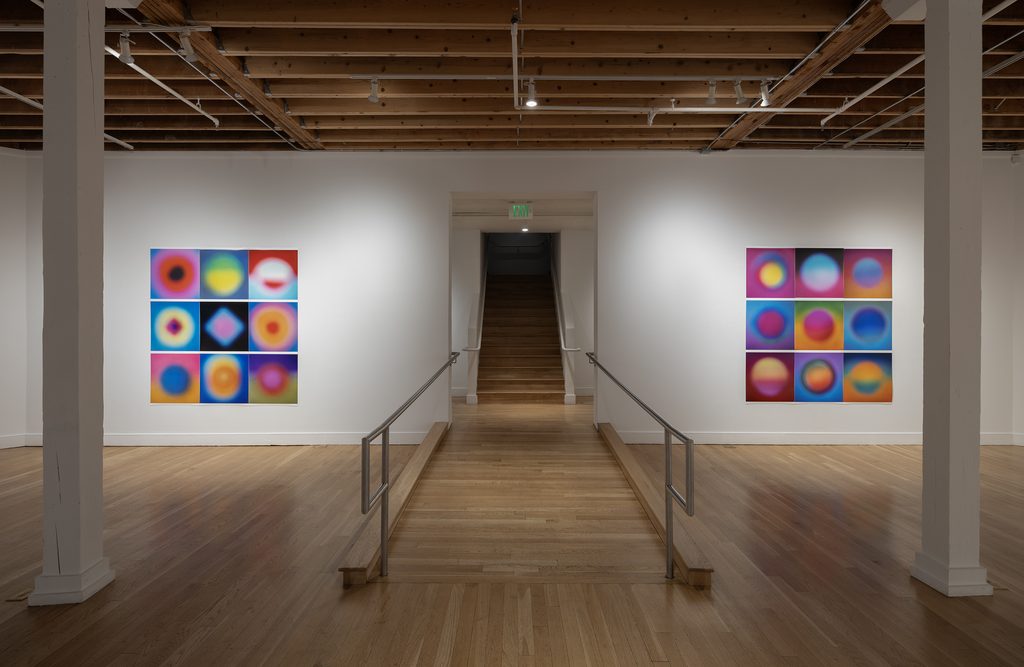
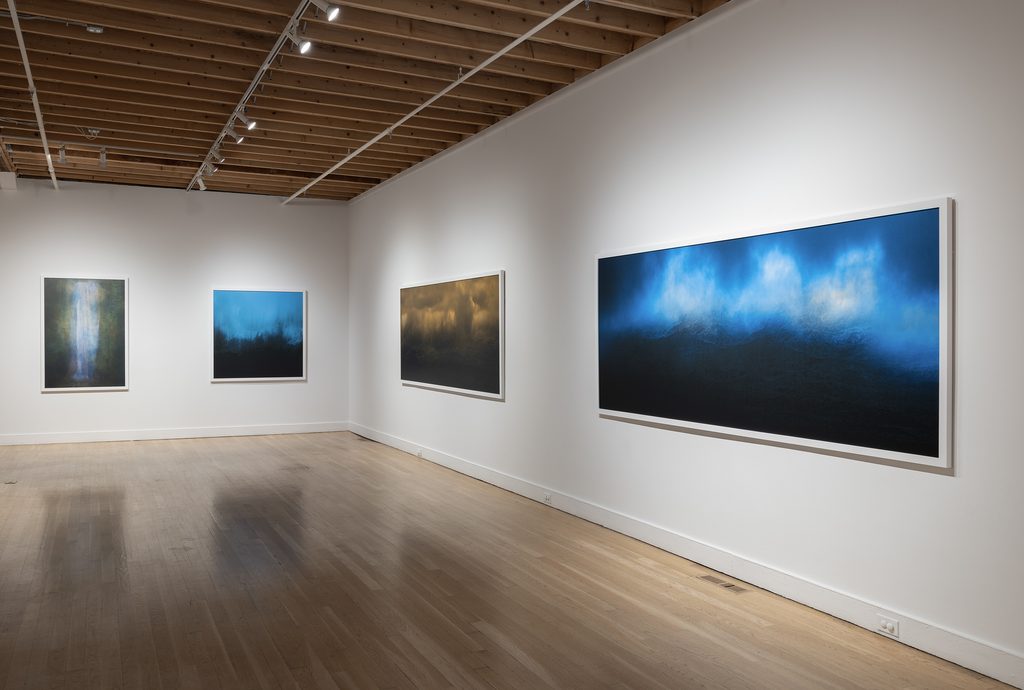
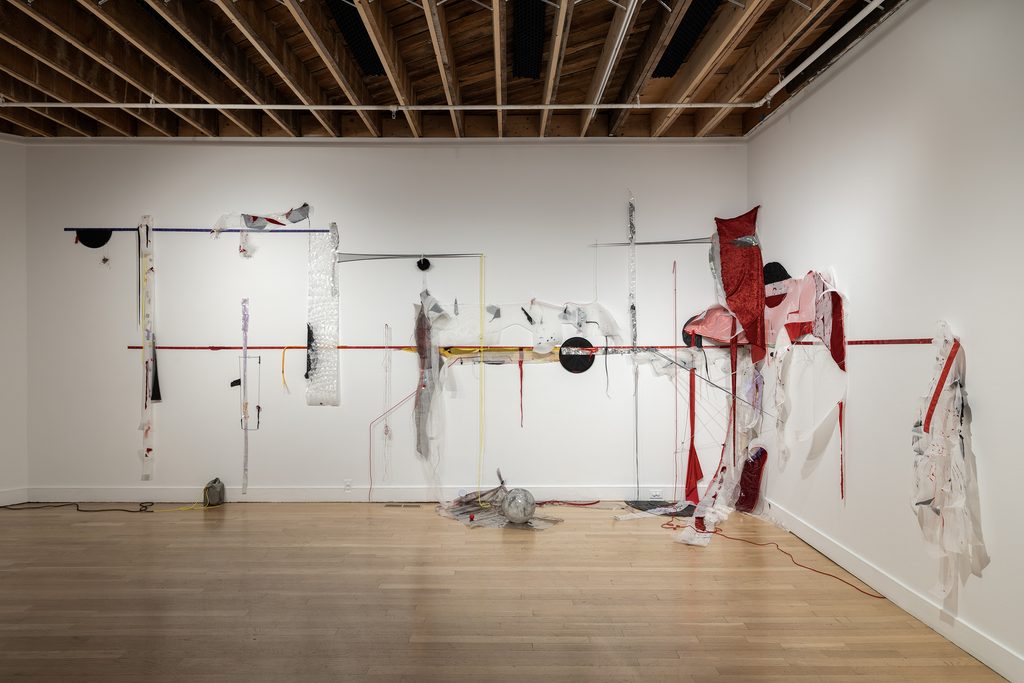
Sami Al Karim, Gelah Penn, and Bill Armstrong have work in the front gallery, which is large and open. Visitors enter this gallery first, and I wanted the combination of works to be dramatic. Color and scale dominate, and the spacing allows plenty of room for each artist’s work. Al Karim and Armstrong presented large photographs, using digital and analog processes in combination. Al Karim’s work combines landscape, sea and skyscapes to make images that feel like paintings made from a memory of place and time. Armstrong photographs handmade collages with an intentional blur that eliminates recognition of the original object, leaving only color and light. Penn created a site-responsive installation using materials such as synthetic mesh. Referencing her interest in film noir, the installation contrasts lightness (the materials selected are weightless) with tension and shadow.
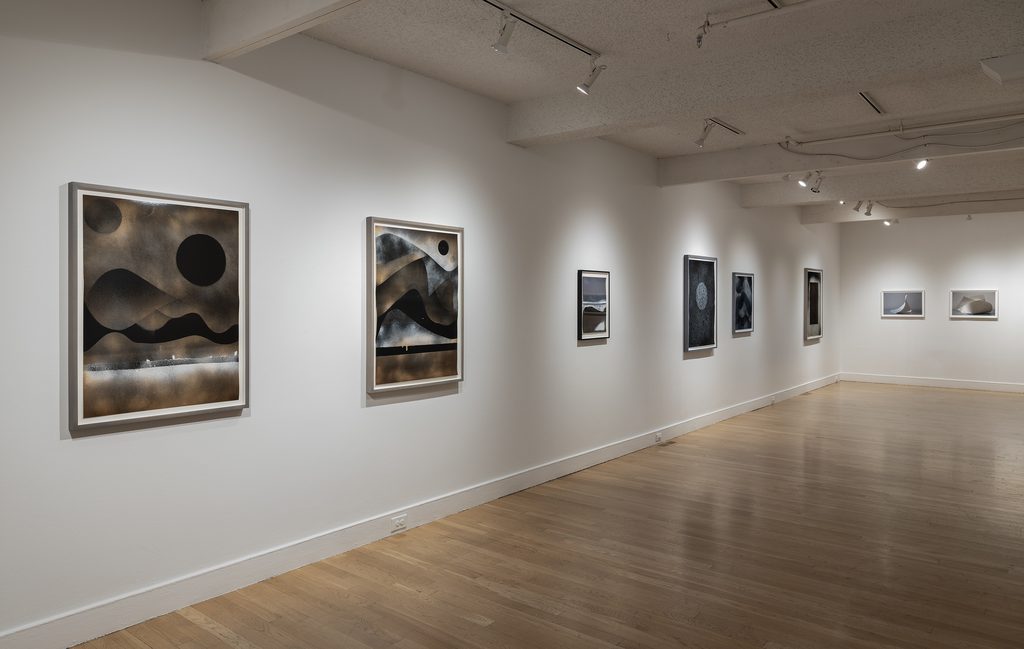
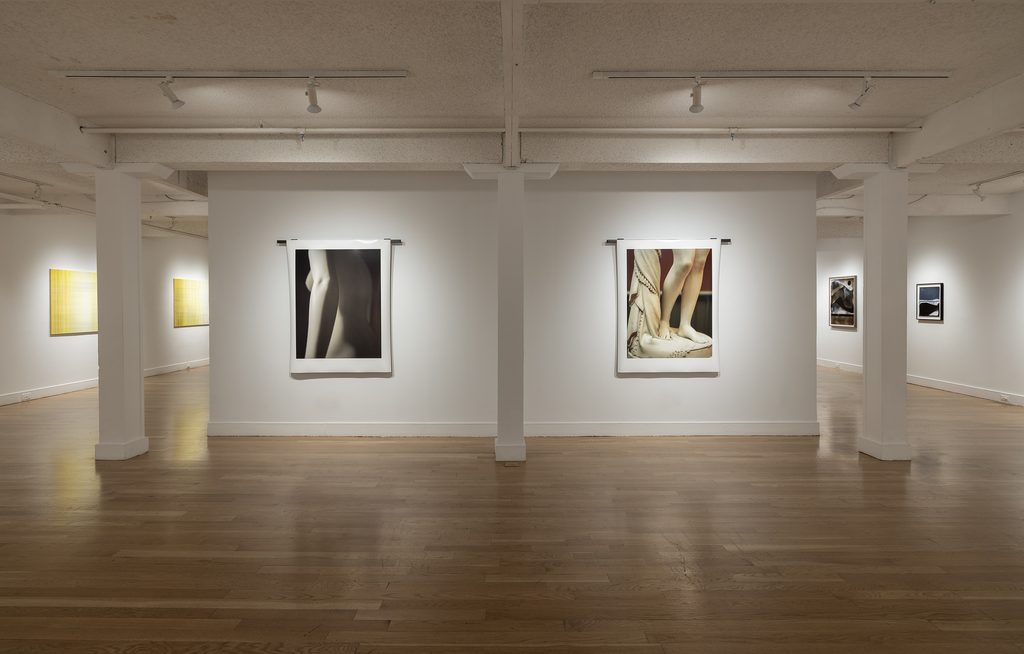
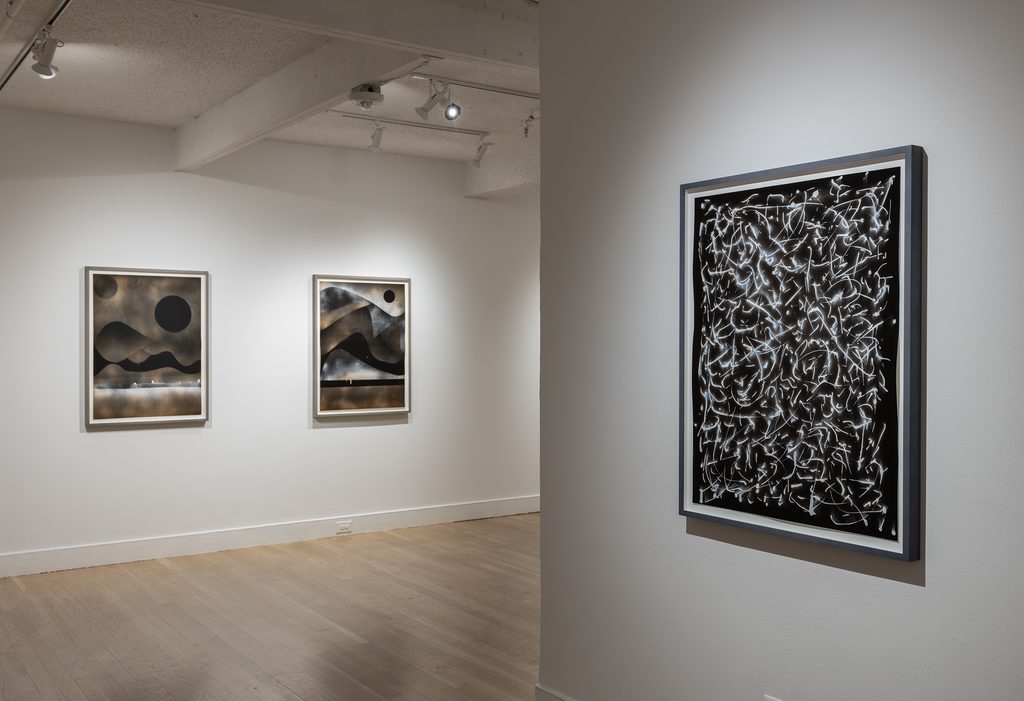
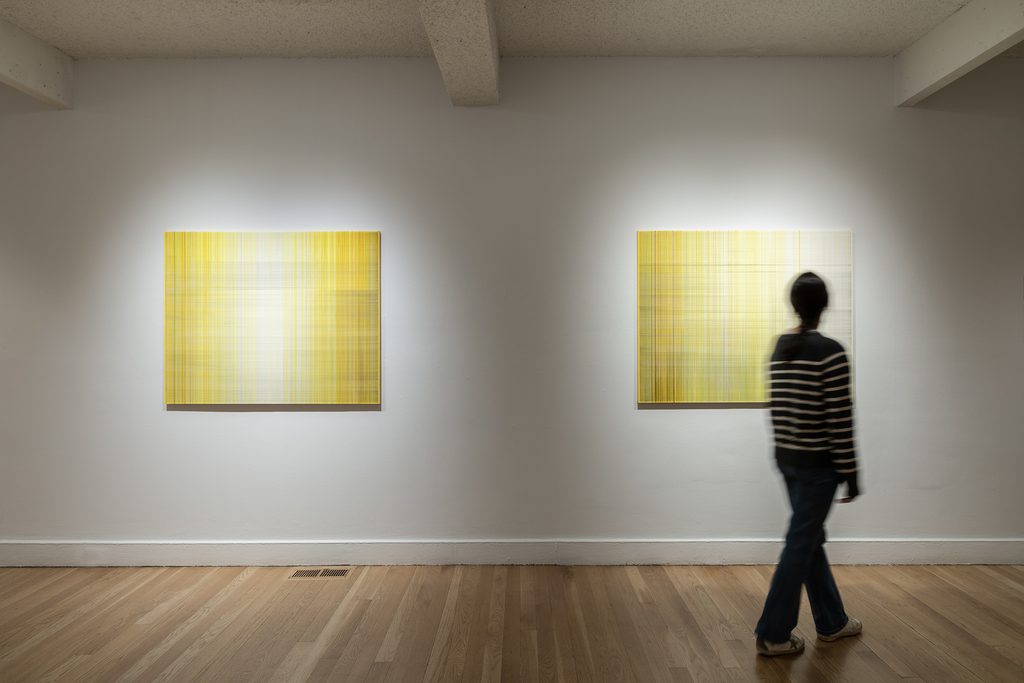
The next gallery opens through the front gallery and features work by Anne Lindberg, Elizabeth Mead, and Chuck Kelton. These works are smaller overall, and color is more subdued compared to the other works in the exhibition. Mead and Kelton are photographers, but Kelton makes cameraless chemograms that reference landscape and the night sky. Mead uses large-format analog and digital photography to capture natural light on forms that she makes or finds. For example, there are two large photographs of The Greek Slave, marble statues from 1844. Lindberg makes drawings using only colored pencil and graphite for perfect grids that radiate a tangible glow. Her drawings have a sense of time and temperature that is hypnotic and compelling.
David Dadone, BMoCA’s Executive Director and Chief Curator, has described the show as inviting us “to experience light not only as something we see, but as something we feel.” The exhibition is paired with experiential programs, from golden-hour photography tours to the “Between Light & Shadow” sessions. How does the show aim to make light a felt, physical encounter rather than only a visual one?
I find that the most memorable visual experiences carry into physical sensation and are remembered for that impact. These distinctions are challenging to separate, because the senses involved are immediate and automatic. Scale is one factor in shifting from visual to physical experience, and the exhibition considers that. Intensity also contributes to the way visual information is physically retained, and this was important. Light is the measurement of time, and some of the artists use processes that have a direct relationship to time, beyond what might be normally expected. Recognizing this aspect changes the response.
While I do not have a role in creating the museum’s exhibition programming, I support their efforts to reach the diverse community it serves through programming that educates and enhances visitors’ experience.
The release frames light as a longstanding symbol of hope. Do you see The Gravity of Light as responding to something in the present moment, and if so, what do you hope it offers people right now?
The exhibition presents the archetypes of light and darkness, with an emphasis on light, both literally and metaphorically. These opposing forces are inherently linked. People are facing challenges from all directions, and I would like to offer a sense of hopefulness that is palpable. This is not something that can be directed or forced, it has to come from the work.
Having worked with BMoCA on this show and on The Stubborn Influence of Painting in 2021, how do you see The Gravity of Light fitting the museum’s vision as a non-collecting institution focused on amplifying artists and serving its community, and what does a show like this add to what BMoCA offers its audiences?
As a guest curator, I am honored to work with the museum to advance its positive impact on the regional community. I lived in Colorado before moving to New York and understand the need for programming that reaches a broad audience. BMOCA’s visitors benefit from exposure to artists that they would not otherwise meet and concepts that unite diverse processes. The artists in both exhibitions I’ve presented are from across the US and London, and they are working at a masterful level. BMOCA has embraced their work and believes it should be seen. This support is rare and much appreciated.
Make your tax-deductible donation today and help Art Spiel continue to thrive. DONATE
The Gravity of Light at Boulder Museum of Contemporary Art (BMOCA)
September 24, 2026 – January 4, 2027 @bmoca
Kate Petley’s work originates with a temporary sculpture, moves through photography, and results in a painting through a process that is a performative still life. Petley was awarded a 2025 Pollock Krasner Foundation Grant. Her work is represented by Von Lintel Gallery, Robischon Gallery, and Manneken Press. She is a Ucross Foundation fellowship recipient and received an NEA/Rockefeller Foundation grant. She has participated in solo and group exhibitions at the MCA Denver, FotoFest Houston, PhotoIreland Dublin, CU Art Museum, Museum of South Texas, Grinnell College Museum of Art, the Museum of the Southwest and others. Petley has been Guest Curator at the Boulder Museum of Contemporary Art (BMOCA) in 2021 and 2026. Collections include the Museum of Fine Arts Houston, CU Art Museum, Boulder CO; Grinnell College Museum of Art, Grinnell IA; the Polsinelli Collection, the Federal Reserve Bank, Kansas City KS; George Bush Intercontinental Airport, Houston TX; and more. She lives and works in Peekskill, New York. @katepetley