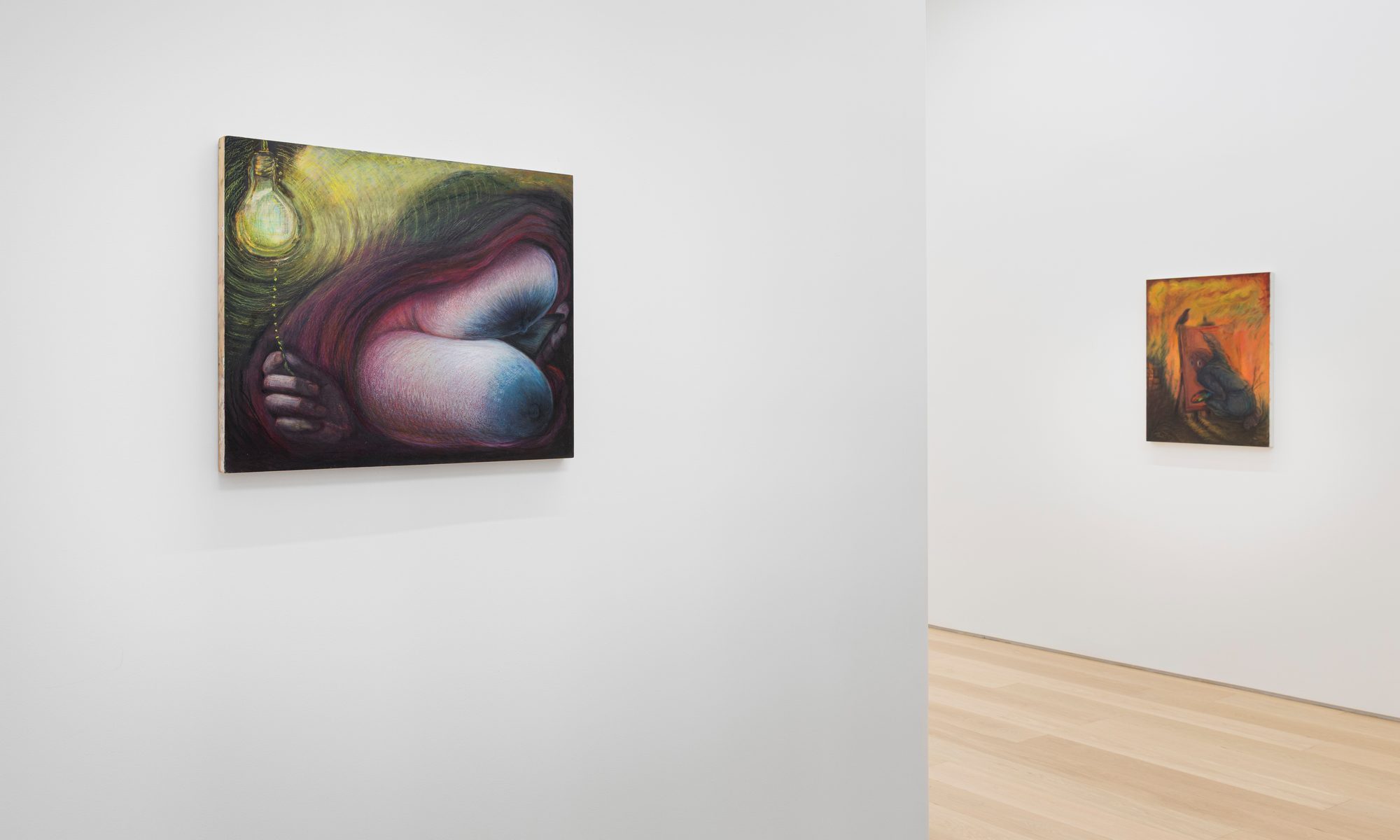
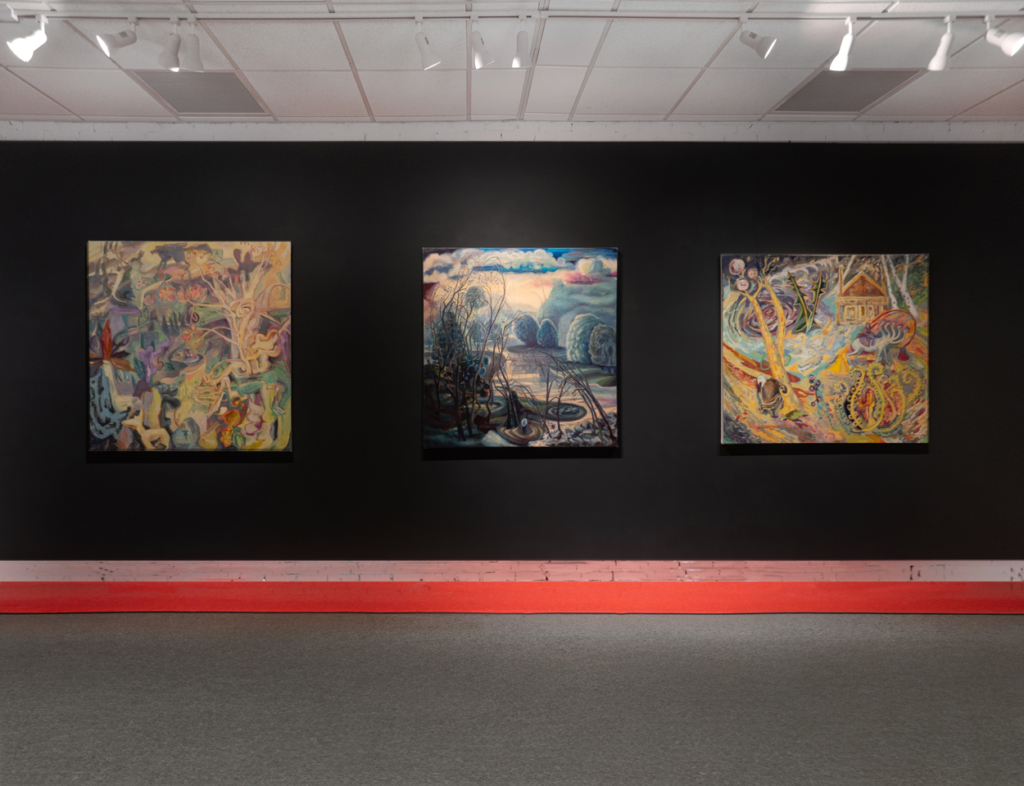
Rebecca Morgan’s exhibition Painting in the Age of Apocalypse is a bit of a roadmap for viewers. Morgan tackles the question of how to present images in the face of a raging political landscape, how to keep moving forward, and how to maintain oneself and some humor about it all. And most importantly to me, how to open up one’s painting style and allow both the work and the process to support you through this tumultuous and often unbelievable terrain we may find ourselves within. In this exhibition, Morgan engages potent themes from all her eras: sympathy for her rural background, feminist reappraisal of art history, and an unbridled excitement at infusing humor and technical prowess into her critique. Here, Morgan fuses all of these themes well, all the while showing us a fresh, looser style of painting that captures the frenetic energy of the moment.
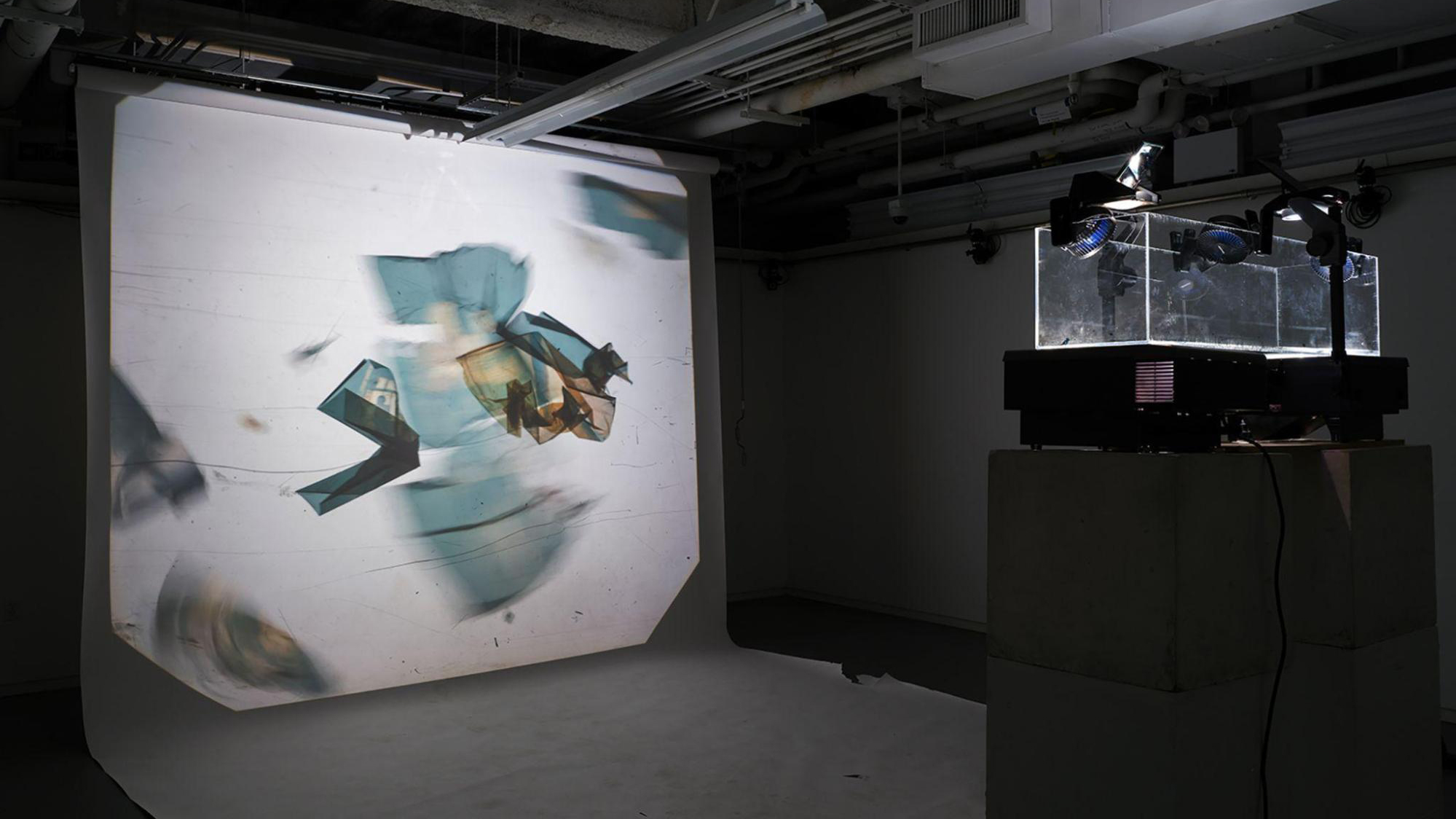
Since its invention in the early 1800s, photography has evolved from merely capturing moments. Over time, photography became intertwined with other traditional art mediums and slowly became a more accepted medium in the fine arts space. Now, with Parsons’ 2026 Photography MFA thesis show, Latency continues to expand what photography can be, literally.
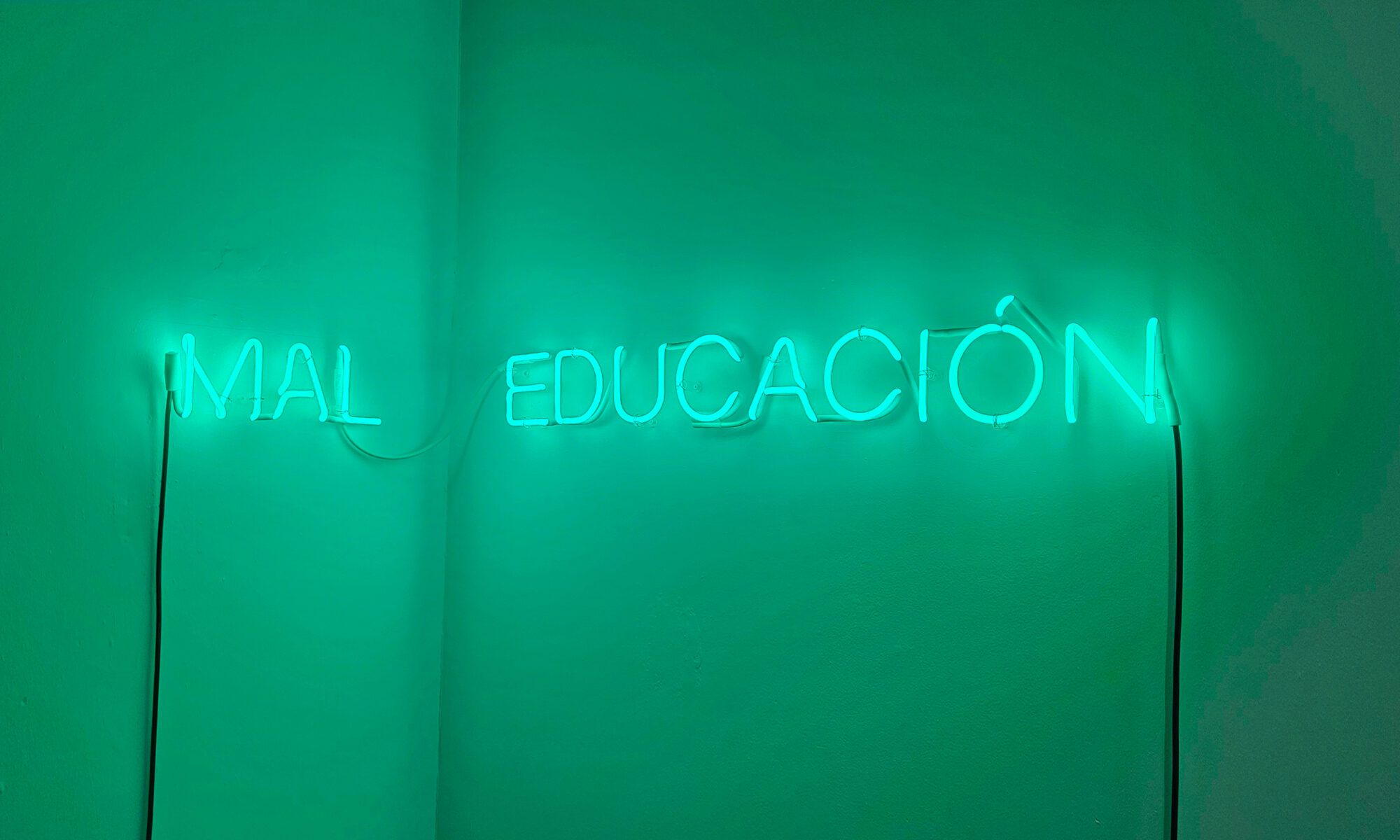
Crossing the threshold of the “Veieja Escuelera” exhibition at Synesthesia Gallery, Brooklyn, visitors find themselves enveloped in an eerie haze of green light that is both sensuous and disquieting. This is not the only defamiliarizing element since the floor is carpeted with artificial grass and the light works encompass phrases in multiple languages. On Anne Katrine Senstad’s turf, nothing is what it seems at first sight. A Norwegian artist living between New York and Oslo, she uses light both environmentally and sculpturally to expose the interdependence between perceptual experience, cognition, and ideological beliefs. Her practice engages both with the phenomenological inquiries of minimalist artists such as Dan Flavin and Robert Irwin and with the tongue-in-cheek propositions of Conceptual artists such as Joseph Kosuth and Bruce Nauman who have paired neon light with text to invite reflection on the function of art as sign.
I think it’s safe to say that everyone dreads turning on the news nowadays, with the turmoil of politics and world events. If it’s not on the TV, stressful headlines take over email news updates or flood social media platforms. However, for an artist, it can either bring one’s mood down or inspire one to take action by creating one’s own interpretation of a solution. Blair Saxon-Hill is the latter. With Saxon-Hill’s newest solo show at SHRINE, Saxon-Hill’s oil paintings, which portray mostly flowers, provide serenity to this chaotic state of American politics.
Opium Dreams, the exhibition of Laurie Fader’s pictures at the Susan Moremen Gallery, is an update of the artist’s bold transition from oil sketches of Umbrian hillsides to a psychological map of contemporary insecurities and vulnerabilities. She addresses our economic, political, and ecological ructions with exuberant irrationality, improbable scale-shifting, and a highly personal landscape vocabulary. Surreal humor and fantasy are her touch points, rather than anguish and despair.
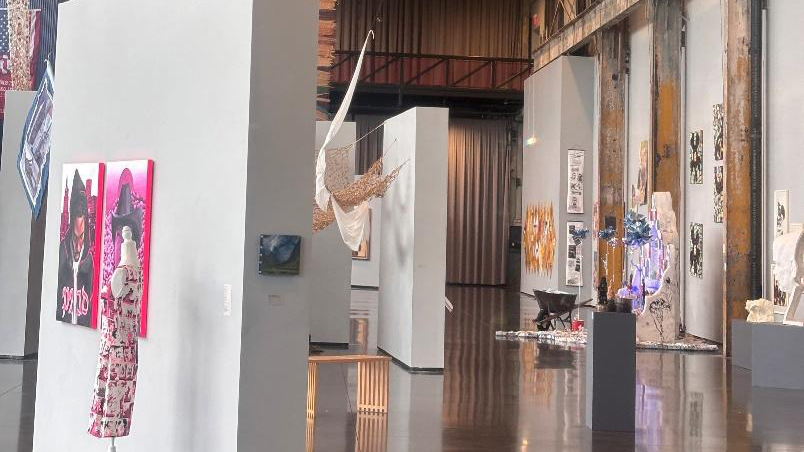
America, Unfinished?!, a national exhibit at WaterFire Arts Center in Providence, RI, features the work of 80 artists from 13 states and territories. I visited the 15,000-square-foot former rubber factory on a hot July day. The light-filled space is several stories high and could dwarf almost anything smaller than a jet, so it took me a while to find my bearings and focus on the work.
The 61st International Art Exhibition arrives in grief, political fury, and institutional crisis. It is one of the more galvanizing editions in recent memory.
The lagoon light still flatters everything it touches, but this year, Venice has the feel of a city that stayed up too late arguing. May 7, 2026 — the one morning of the press preview period spared by both rain and protest — was the kind of day Venice is famous for: blue sky and large cinematic cumuli drifting above the Queen of the Adriatic. Police stood watch outside the Israeli and Russian pavilions. The queues at the Giardini were long; those at the Arsenale were longer. In years of attending press previews, I have rarely encountered such a congested or physically demanding environment — the crowd, indistinguishable from a general-public opening, consumed by the compulsive and indiscriminate act of photographing everything in sight.
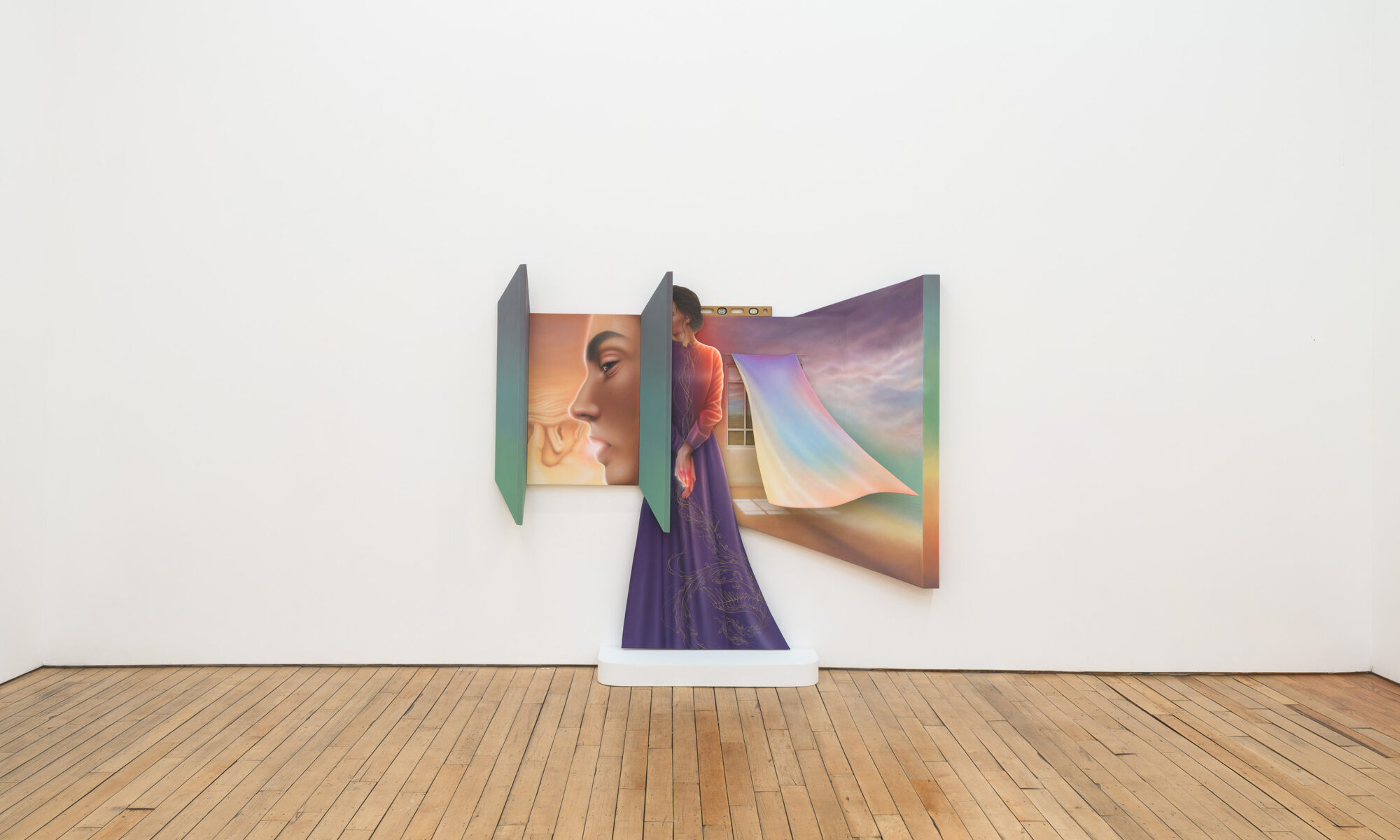
Altarpieces—historically sites of devotion, revelation, and spiritual certainty—become something altogether different in Arghavan Khosravi’s What Remains, currently on view at Uffner & Liu through July 2. The exhibition brings together large-scale wall works, a freestanding sculpture, and an intimate suite of new altar-inspired paintings that continue Khosravi’s ongoing exploration of the forces that shape women’s lives under political, cultural, and religious systems of control. Drawing equally from Persian miniature painting and medieval European iconography, the artist constructs layered worlds where architectural structures become psychological spaces, symbols migrate across histories, and moments of resistance emerge within conditions of constraint. Rather than offering resolution, the works linger in states of suspension—between freedom and captivity, memory and displacement, devotion and doubt.
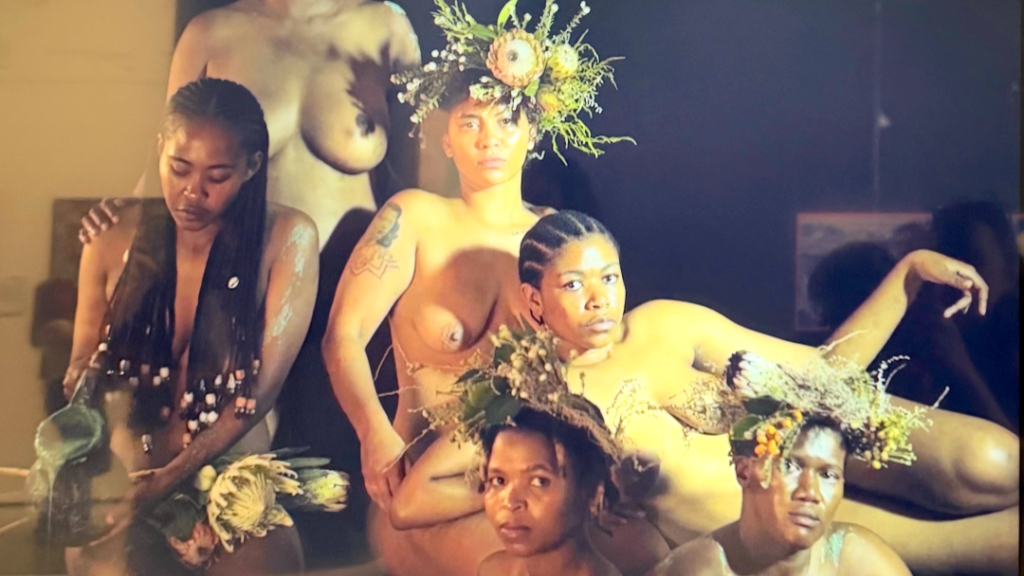
InMinor Keys, the central exhibition of the 61st Venice Biennale, arrived with a quiet proposition. The late curator Koyo Kouho envisioned a show that reflects practices requiring time and sustained commitment — some of them lifetime, even generational — and in doing so created a deliberate antithesis to the Biennale spectacle. Drawing almost exclusively on artists from Africa, the Middle East, and the Caribbean, the exhibition is anchored in political concerns — identity, immigration, the environment — yet so many of the works felt personal, while reaching toward art history and even toward Venice itself. What follows is an account of its visual depth and strength.
Kuu Moments of Circularity On View Through: April 30, 2026 Featuring Jinn Yagi and Mabo Curated by Vida Sabbaghi Empire Stores’ Gallery 55, Brooklyn, NY @cope_nyc @jinnjinny @mabo.works @iwgallery @empirestoresdumbo
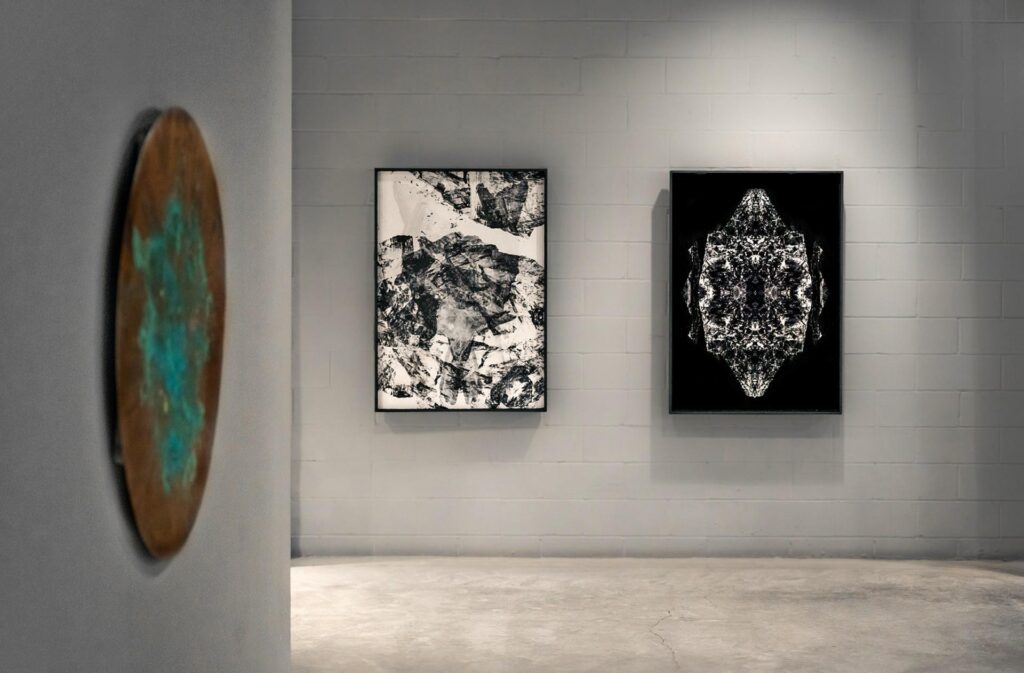
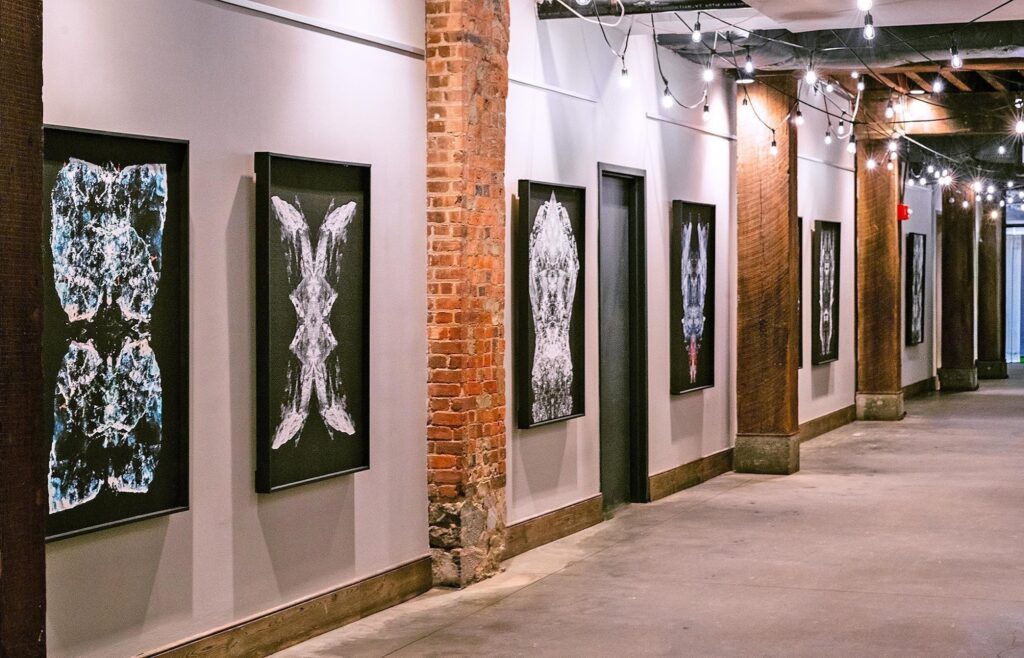
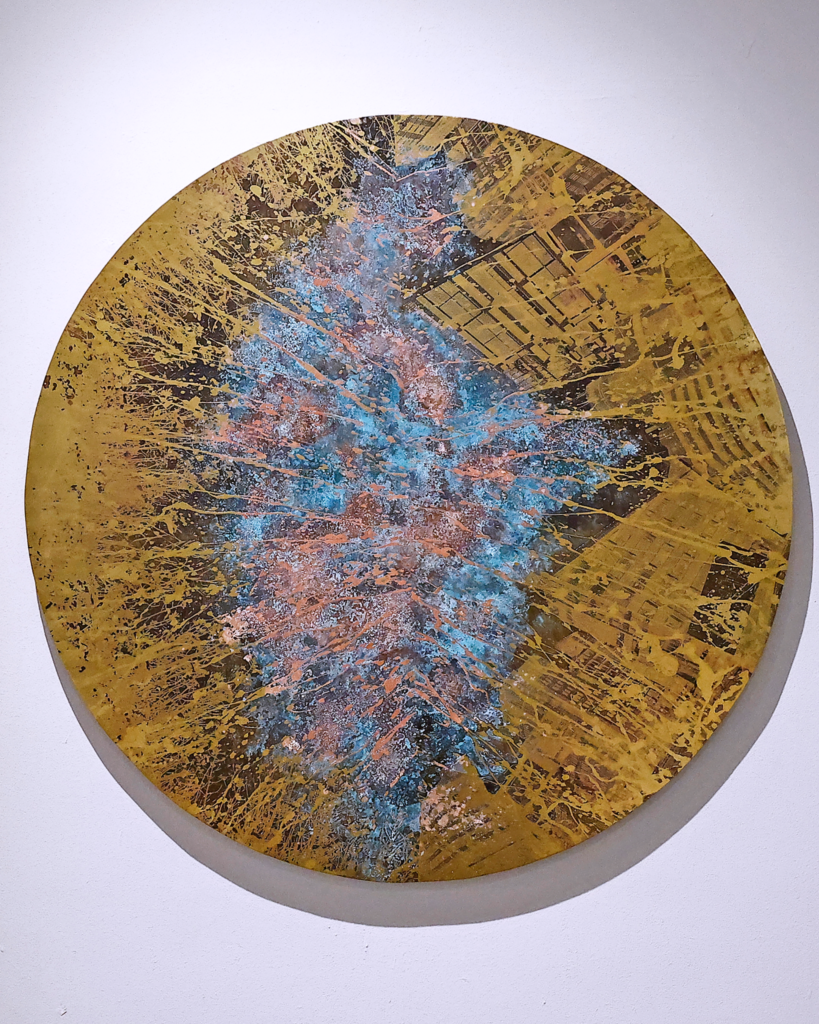
Kuu Moments of Circularity brings together artists Jinn Yagi and Mabo from Japan to the US for the first time in a two-person exhibition curated by Vida Sabbaghi. Transforming the popular high-traffic area into a space of contemplation, Sabbaghi embraces the materially rich and expressive works of Mabo and Yagi in an installation that speaks to the richness of the structural beams, slick concrete, and industrial feel of the environment.
Artwork by Jinn Yagi; image courtesy of Luckey Cruz
Artwork by Mabo; image courtesy of Manonce
The images we see in the final presentation result from countless layers of reexamining prior photographs taken by Yagi, from the micro to the macro, delving into philosophical explorations of depth, time, space, and existence. As the textures of paint are built up, a Rorschach aesthetic emerges, inviting the viewer to find meanings through these abstract revelations. With breathtaking views of the river mere steps away, one is apt to remember how exceptional this particular geographical point is, and an opportunity to engage in the multilayered concepts presented by the artists is offered through these works.
The building up in Yagi’s process feels like a seamless dance with Mabo’s scraping away of the metallic surfaces to reveal discoveries beyond its gleaming facade. This push-pull of tension is an alchemical dialogue that opens up lines of inquiry between the viewer and artists. As abstracted images meld and sway, parallels with the woodgrain and metal fixtures they share space with emerge. Similarly to how nature is extracted and transformed into interior landscapes, so too are the materials that the artists incorporate and draw inspiration from. Yagi’s work combines photography and painting onto Juraku-shi, an eco-friendly paper derived from limestone. This dialogue between Mabo and Yagi that Sabbaghi brings together is seamless, sophisticated, and still very accessible to the wide audiences they serve within the bustling environment in which they commune. With Dumbo Open Studios approaching, it’s a welcome stop to weave into the weekend festivities.
One Blue Bead Sargent’s Daughters 370 Broadway, New York, NY Closes April 18, 2026 Featuring: Wendy Red Star @sargentsdaughters
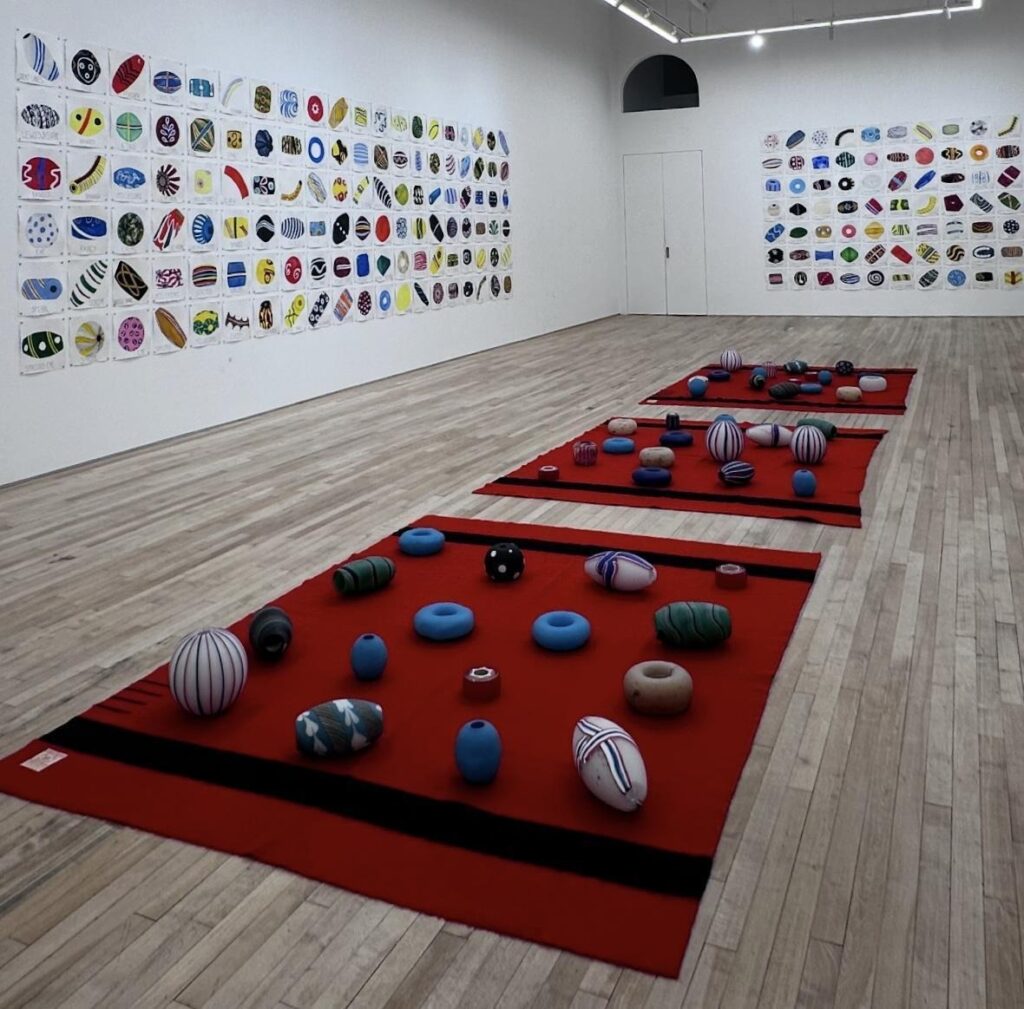
Wendy Red Star’s One Blue Bead took shape as a powerful exhibition at Sargent’s Daughters. Centering stories, archives, ancestral knowledge, and lived experiences of tribal members of the Apsáalooke Nation, the artist retraced the colonized language, white-washed histories, and manipulative valuations used by the Dutch when the land was “purchased” from members of the Munsee tribe in exchange for beads in 1626. With no real record of said transaction, Red Star set out to explore the historical exchanges of beads through many forms, including trade routes, markets and values, production, and the aesthetics of beads as objects.
This thoughtful investigation included enlarged, scaled-up versions of beads on the floor, as well as walls lined with stunning watercolor studies of beads. Upon entering the gallery, visitors were welcome to take the interactive newspaper that contained important historical context and information, such as the valuations of beads and routes they would have been traded along. This exhibition contemplated and challenged institutionalized colonization in an engaging way, while reflecting on place and the many aspects of Manhattan that remain at the center of it all.
Listening All Night to the Rain On View Through: April 25, 2026 Lisson Featuring John Akomfrah 508 W 24th St. New York, NY @lisson_gallery
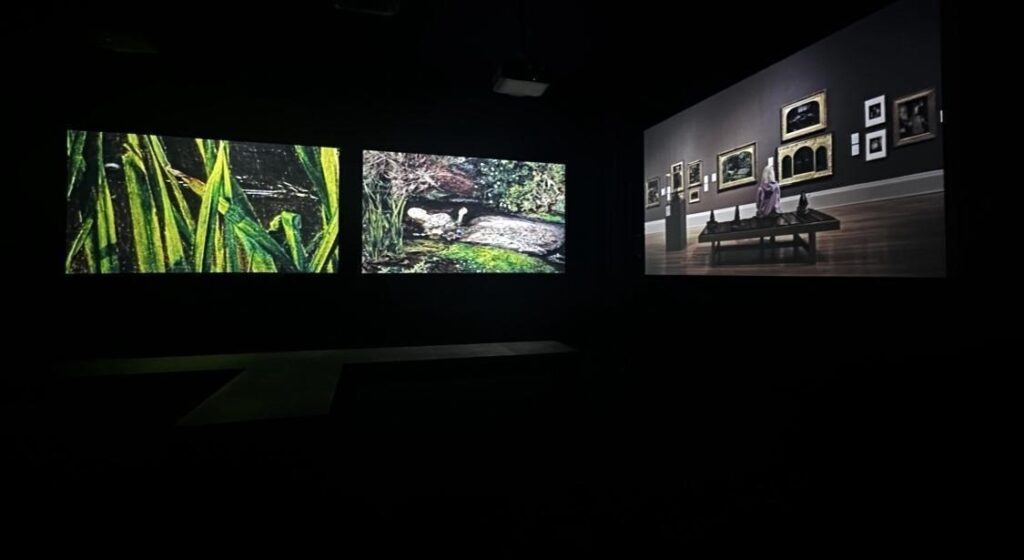
Listening All Night to the Rain, featuring a multi-channel installation by John Akomfrah,is a captivating experience, drawing together powerful footage of social uprisings across the globe, highlighting freedom and independence movements, including the Mau Mau rebellion in Kenya; Nigeria’s fight for nationhood;the Congo’s fight for independence from Belgium; and the 1947 Partition of India.The United States is also centered on an examination of action around civil rights, women’s liberation, and non-violent protest, particularly through the Student Non-Violent Coordinating Committee (SNCC).The culling together of this footage is interwoven with natural habitats, lush and green, stormy and watery, dynamic and meditative. Voices narrate, and a range of vibrant sounds craft elevated ways of connecting to the content in visceral ways that expand beyond the visual and auditory, into an elevated state of consciousness. The lived experiences on screen are heartened, and in a sense, prescient. The experience is just as much about listening as it is about watching. More importantly, it is about feeling. In the dark environment, the expansive projections envelop visitors on all walls of the viewing room. Through this capsule, we are transported, transfixed, and hopefully, transformed. It is a melding of archival footage, set in a cinematic setting that resonates deeply with its audience through the audio and visual components that depict the many emotions and experiences that have been defined and forever changed through human actions and interactions. Liberation and devastation are connected through geopolitical decisions that can feel distant, yet so immediate. With the title inspired by Su Dongpo’s poetry, a millennium later, we are asked to reckon with how and what has changed in all these years since. As we continue to fight back against the age-old war machine and colonial limbs of the wicked empire, we must study past movements to organize, exercise rights, and continue to build upon the hard and brave work started by our predecessors. This is a must-see that should be on everyone’s list.
About the writer: Yasmeen Abdallah is an interdisciplinary artist, writer, curator, and educator examining history, contemporary culture, materiality, allegory, and space. She has been an artist/lecturer at institutions including New Museum, Pratt Institute, Sarah Lawrence College, Residency Unlimited, BRIC, Kean University, Parsons, Columbia University, Children’s Museum of NYC, El Barrio Artspace, Fairleigh Dickinson, and University of Massachusetts. She holds Bachelor’s degrees in Anthropology (focus in Historical Archaeology) and in Studio Art with honors, with a Minor in Women’s, Gender & Sexuality Studies from the University of Massachusetts; and received an MFA in Fine Arts, with distinction, from Pratt Institute. Exhibitions include Art in Odd Places; the Boiler; Bronx Art Space; Clemente Soto Velez Cultural Center; Cornell University; Ed Varie; Elizabeth Foundation; NARS Foundation; Open Source; Pratt Institute; PS122 Gallery; Spring Break Art Show; University of Massachusetts; and Westbeth. Publications include Anthropology of Consciousness; Ante Art; Art Observed; Bust Magazine; Emergency Index; Hyperallergic; Papergirl Brooklyn; Free City Radio; Radio Alhara; Tussle Magazine; the Urban Activist; and Transborder Art. Her work is in public, private, and traveling collections in the U.S. and abroad. @86cherrycherry