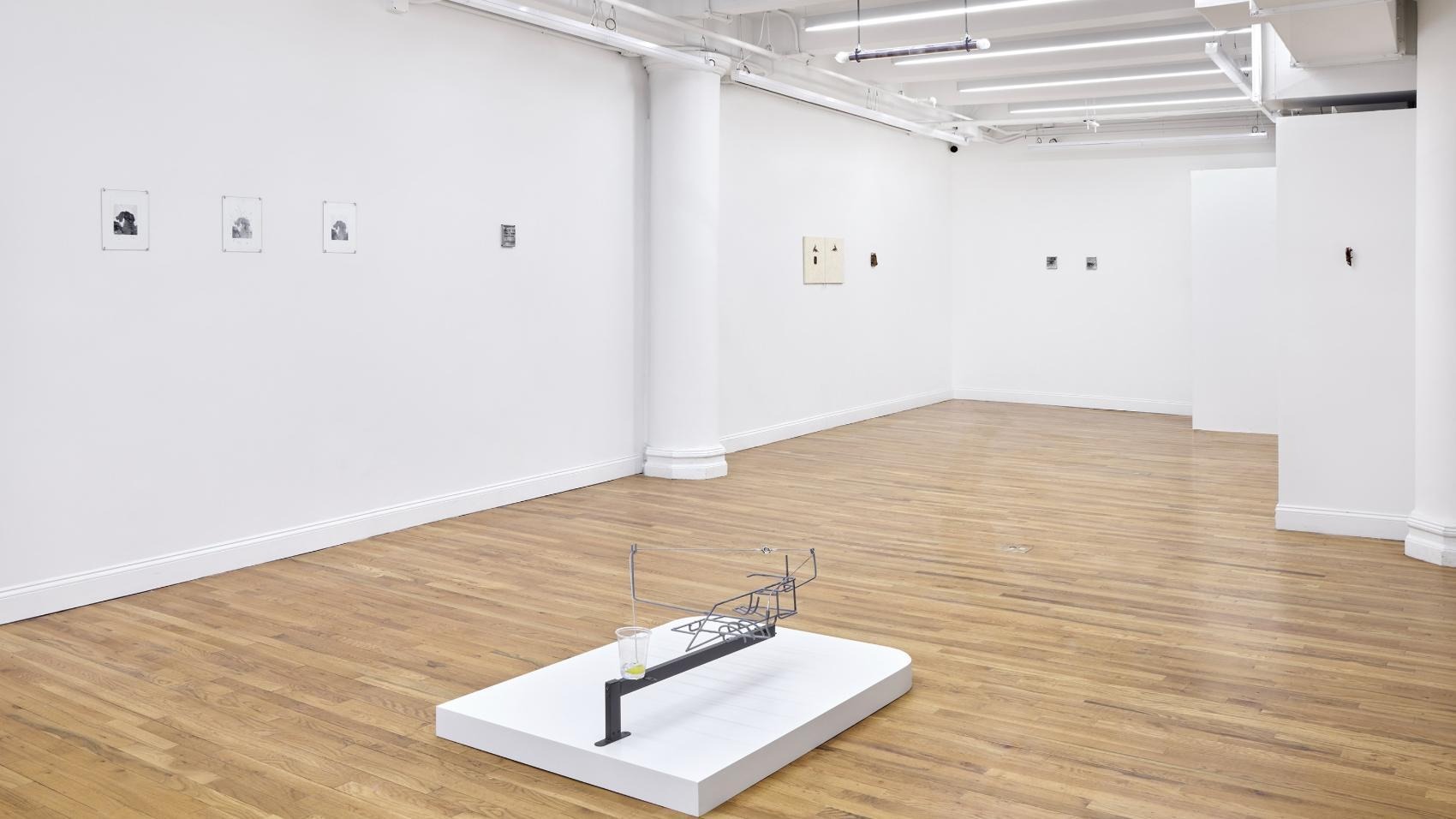
Maria Gil Lucientes paints in the slim margin where a system starts to come undone. She begins with a constraint, a single color, a periodic screen, a piece of medical gauze, then lets the materials misbehave. In Pareidolia, gauze shifted by air becomes the suggestion of a face. A Spanish-born painter who studied mathematics, physics, and computer science before a decade in tech, Lucientes brings a system-builder’s discipline to a practice that hinges on chance. Here, she reflects on the path from science to painting, the dialogue between control and surprise in her process, and the new Moiré series taking shape in her studio.
Continue reading “Maria Gil Lucientes: Letting the Materials Misbehave”Yuyo- Julián Kreimer at the Sarah Lawrence Heimbold Visual Arts Center
Before his artist talk, Julián Kreimer set a small brown valise on the table and opened it. Inside, folders held drawings on paper, each made in response to a photographic slide from his parents’ archive. The valise was not part of the exhibition; it was the working material behind it, a private archive he had been drawing through for years. Encountering it set the terms for the room next door: Yuyo is what happens when that interior is opened out.
Continue reading “Yuyo- Julián Kreimer at the Sarah Lawrence Heimbold Visual Arts Center”Learning Where There Is No Bottom: On the Thresholds of Swim Lessons
When I first learned how to swim as a child, my instructor told me to hold onto the edge of the pool and practice kicking. He counted the rhythm aloud, occasionally adjusting the angle of my body. Water kept splashing into my face, yet I could not make myself move forward. The actions had been broken down into steps: kicking, stroking, breathing, and I seemed to complete each one, but they never came together as a whole. Then, at some point, I stopped sinking. I still cannot say what exactly happened in that moment.
Continue reading “Learning Where There Is No Bottom: On the Thresholds of Swim Lessons”Gabriele Münter – Contouring a World
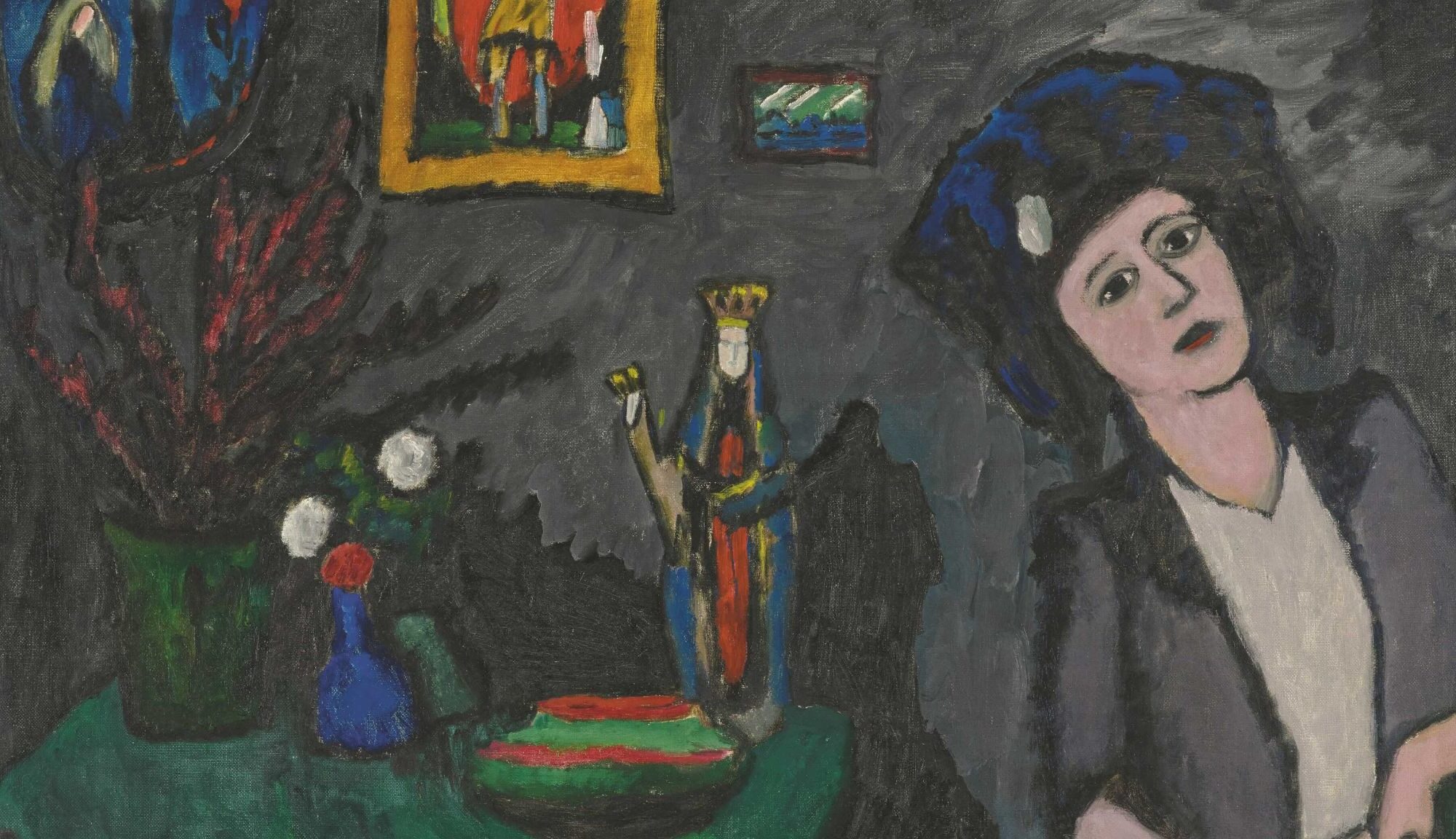
Entering the fourth floor of the Guggenheim, you are met with fields, mountains, lakes of the Bavarian Alps, daily objects, and people—bright, saturated colors held together by dark edges. The exhibition brings together landscapes, portraits, and still lifes, with a focus on Münter’s early Expressionist years alongside later paintings.
Continue reading “Gabriele Münter – Contouring a World”The 15th Shanghai Biennale: Does the Flower Hear the Bees?
Botany, I read in Zoë Schlanger’s bestseller The Light Eaters: How the Unseen World of Plant Intelligence Offers a New Understanding of Life on Earth, is full of groundbreaking discoveries these days (Schlanger 2024). We now know that plants have cellular conduits that allow propagation of electrical charges, that some plants release chemicals in the air to alert neighbors of insects, and that evening primrose increases its nectar’s sweetness when it senses the frequency of the hum of bee wings. While such plant-feeling, plant-talking, and plant-listening are not sustained by the same biological apparatus as ours, the functional parallel is apparent. Perhaps it is time to broaden our understanding of intelligence.
Continue reading “The 15th Shanghai Biennale: Does the Flower Hear the Bees?”